
Report Feature
Dental Lithium Disilicate Market Trends and Forecast
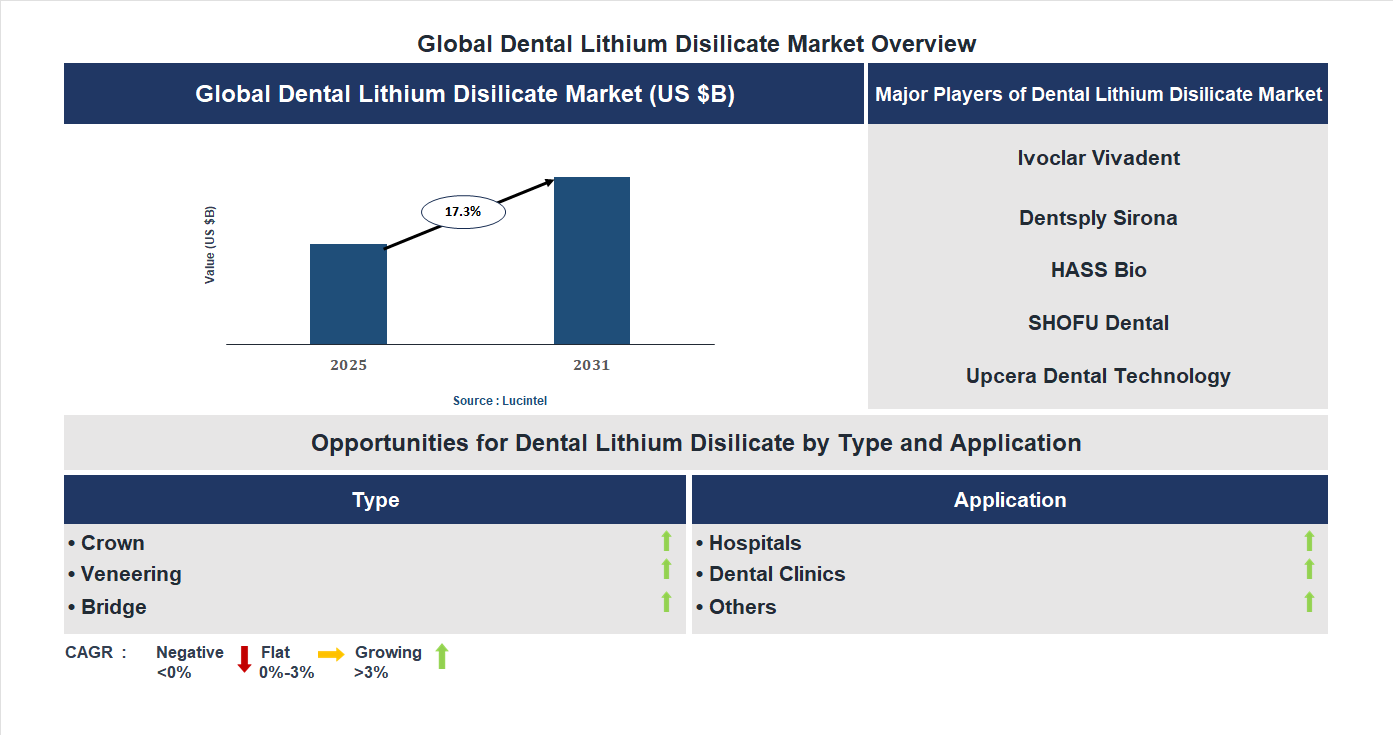
The future of the global dental lithium disilicate market looks promising with opportunities in the hospital and dental clinic markets. The global dental lithium disilicate market is expected to grow with a CAGR of 17.3% from 2025 to 2031. The major drivers for this market are the increasing demand for durable dental restorations, the rising adoption of aesthetic ceramic materials, and the growing preference for minimally invasive dentistry.• Lucintel forecasts that, within the type category, crown is expected to witness the highest growth over the forecast period.
• Within the application category, hospital is expected to witness higher growth.
• In terms of region, APAC is expected to witness the highest growth over the forecast period. Gain valuable insights for your business decisions with our comprehensive 150+ page report. Sample figures with some insights are shown below.
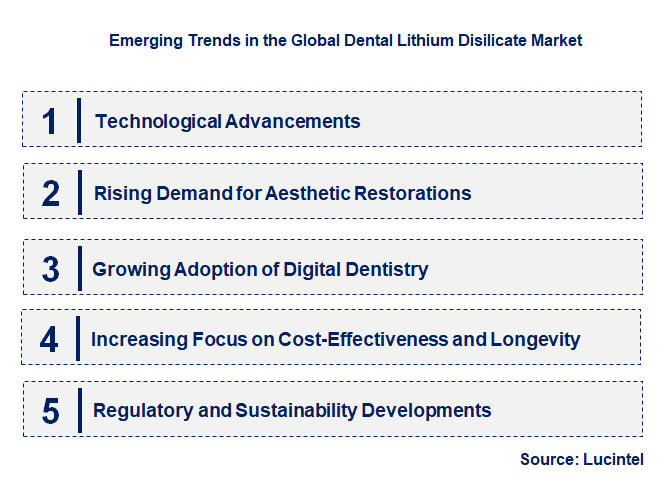
Emerging Trends in the Dental Lithium Disilicate Market
The dental lithium disilicate market is experiencing rapid growth driven by technological advancements, increasing demand for aesthetic dental solutions, and evolving patient preferences. As dental practices adopt innovative materials to improve outcomes, the market landscape is shifting towards more durable, natural-looking, and cost-effective options. These developments are influenced by regulatory changes, rising awareness of oral health, and the integration of digital dentistry. Understanding these emerging trends is crucial for stakeholders aiming to capitalize on new opportunities and stay competitive in this dynamic environment. The following key trends highlight the major shifts shaping the future of the Dental Lithium Disilicate Market.• Technological Advancements: The integration of CAD/CAM technology is revolutionizing the fabrication process of lithium disilicate restorations. Digital workflows enable precise, faster, and more efficient production, reducing turnaround times and improving fit and aesthetics. Innovations in material formulations also enhance strength and translucency, making restorations more natural-looking and durable. These technological improvements are expanding the application scope and increasing adoption among dental practitioners, ultimately driving market growth and elevating standards of care.
• Rising Demand for Aesthetic Restorations: Patients increasingly prioritize natural appearance and minimal invasiveness in dental treatments. Lithium disilicate’s superior translucency and color-matching capabilities make it a preferred choice for crowns, veneers, and inlays. The demand for minimally invasive procedures that preserve tooth structure is fueling the preference for lithium disilicate materials. This trend is encouraging dental clinics to adopt more aesthetic solutions, thereby expanding the market and encouraging manufacturers to develop more advanced, visually appealing products.
• Growing Adoption of Digital Dentistry: The shift towards digital dentistry is significantly impacting the lithium disilicate market. Digital impressions, 3D printing, and computer-aided design enable precise customization and streamlined workflows. This integration reduces errors, enhances patient comfort, and shortens treatment times. As digital adoption becomes more widespread, the demand for compatible materials like lithium disilicate increases, fostering innovation and expanding market opportunities. This trend is also facilitating better collaboration among dental professionals and laboratories, further accelerating market growth.
• Increasing Focus on Cost-Effectiveness and Longevity: Dental practitioners and patients are seeking materials that offer long-term durability at a reasonable cost. Lithium disilicate’s high strength and resistance to fracture make it a cost-effective solution over time, reducing the need for replacements or repairs. Market players are investing in developing more affordable yet high-quality products to meet this demand. This focus on value-driven solutions is expanding the market, especially in emerging economies, and encouraging broader adoption of lithium disilicate restorations.
• Regulatory and Sustainability Developments: Evolving regulations regarding biocompatibility and environmental impact are influencing market dynamics. Manufacturers are adopting sustainable practices, such as eco-friendly production processes and recyclable materials, to meet regulatory standards and consumer preferences. Additionally, certifications and approvals are becoming more stringent, ensuring safety and quality. These developments are fostering trust among practitioners and patients, encouraging wider acceptance and integration of lithium disilicate products. The emphasis on sustainability and compliance is shaping a more responsible and resilient market landscape. In summary, these emerging trends are collectively transforming the Dental Lithium Disilicate Market by enhancing product quality, expanding application scope, and improving operational efficiencies. The integration of digital technologies, focus on aesthetics and cost-effectiveness, and adherence to regulatory standards are driving innovation and market expansion. As these trends continue to evolve, they are reshaping the industry into a more sophisticated, patient-centric, and sustainable sector, offering significant opportunities for growth and development.
Recent Development in the Dental Lithium Disilicate Market
The dental lithium disilicate market has experienced significant growth driven by technological advancements, increasing demand for aesthetic dental restorations, and rising awareness of oral health. As patients seek durable and natural-looking solutions, manufacturers are innovating to meet these needs. The market’s evolution is also influenced by regulatory changes, expanding applications, and the integration of digital dentistry. These developments are shaping a competitive landscape, prompting companies to invest in research and development. The following key developments highlight the recent trends and shifts within this dynamic market, reflecting its trajectory towards enhanced product offerings and broader adoption.• Technological Innovations: Introduction of CAD/CAM technology has revolutionized fabrication processes, enabling precise, efficient, and customizable restorations. This advancement improves patient outcomes and reduces turnaround times, boosting market growth and competitiveness.
• Rising Demand for Aesthetic Restorations: Increasing consumer preference for natural-looking dental solutions has driven demand for lithium disilicate ceramics. This trend enhances market revenue and encourages manufacturers to develop more translucent and lifelike materials.
• Regulatory Approvals and Standards: New approvals and updated standards for dental ceramics have facilitated market expansion by ensuring safety and efficacy. These regulatory frameworks foster trust among practitioners and patients, promoting wider adoption.
• Expansion of Application Scope: Lithium disilicate is now used in a broader range of dental procedures, including veneers, crowns, inlays, and onlays. This diversification increases market size and offers new revenue streams for industry players.
• Digital Dentistry Integration: The adoption of digital workflows, including 3D printing and digital impressions, has streamlined production and improved accuracy. This integration enhances patient experience and operational efficiency, further propelling market growth. In summary, these developments are collectively transforming the Dental Lithium Disilicate Market by improving product quality, expanding applications, and integrating innovative technologies. The market is becoming more competitive and customer-centric, with sustained growth driven by technological progress and increasing demand for aesthetic dental solutions.
Strategic Growth Opportunities in the Dental Lithium Disilicate Market
The dental lithium disilicate market is experiencing rapid growth driven by technological advancements, increasing demand for aesthetic dental solutions, and rising awareness of oral health. As patients seek durable, natural-looking restorations, key applications are expanding across various dental procedures. This evolution presents significant opportunities for industry players to innovate and capture market share. Understanding these growth opportunities across different applications can help stakeholders strategize effectively and meet the evolving needs of dental professionals and patients alike.• Restorative Dentistry: Expanding use of lithium disilicate in crowns and bridges : This application benefits from the material’s superior strength and aesthetics, leading to increased adoption for anterior and posterior restorations. It enhances patient satisfaction and reduces the need for replacements, thereby boosting market growth.
• Veneers and Laminates: Rising demand for minimally invasive cosmetic procedures : Lithium disilicate’s translucency and natural appearance make it ideal for veneers, driving growth in cosmetic dentistry. This application attracts a broader patient base seeking aesthetic improvements.
• Implantology: Use in implant-supported restorations : The material’s biocompatibility and durability make it suitable for implant-supported crowns and bridges. This expands the scope of implant procedures, offering long-lasting, aesthetic solutions.
• Pediatric Dentistry: Adoption for durable, safe restorations : Increasing focus on child oral health encourages the use of lithium disilicate for pediatric crowns and restorations. Its strength and safety profile support its growing application in this segment.
• Endodontics: Application in post and core systems : Lithium disilicate is increasingly used for post and core restorations due to its strength and bonding capabilities. This enhances the longevity of endodontic treatments and broadens application options. In summary, these growth opportunities across key applications are significantly impacting the Dental Lithium Disilicate Market by driving innovation, expanding patient options, and increasing adoption of durable, aesthetic dental restorations. This trend is expected to sustain market growth and foster competitive advancements in the industry.
Dental Lithium Disilicate Market Driver and Challenges
The dental lithium disilicate market is influenced by a variety of technological, economic, and regulatory factors that shape its growth trajectory. Advances in dental materials technology, increasing demand for aesthetic restorations, and evolving regulatory standards are key drivers. Economic factors such as rising disposable incomes and expanding healthcare coverage further propel market expansion. However, the market also faces challenges including high material costs, stringent regulatory approvals, and competition from alternative materials. Understanding these drivers and challenges is essential for stakeholders to navigate the dynamic landscape effectively and capitalize on emerging opportunities. The factors responsible for driving the dental lithium disilicate market include:-• Technological Advancements: The development of high-strength, durable lithium disilicate ceramics has revolutionized restorative dentistry. Innovations in CAD/CAM technology enable precise, efficient fabrication of restorations, increasing adoption among dental practitioners. These advancements improve aesthetic outcomes and longevity, making lithium disilicate a preferred choice. As technology continues to evolve, costs decrease and accessibility increases, further fueling market growth. The integration of digital workflows enhances patient satisfaction and reduces chair time, contributing to a broader market reach and higher adoption rates globally.
• Rising Demand for Aesthetic Dental Restorations: Increasing patient awareness and preference for natural-looking, minimally invasive dental solutions drive demand for lithium disilicate restorations. The material’s translucency and color-matching capabilities make it ideal for crowns, veneers, and inlays. The trend toward cosmetic dentistry, coupled with social media influence, encourages patients to seek aesthetically pleasing solutions, thereby expanding the market. Additionally, the aging population requiring restorative procedures further boosts demand, as lithium disilicate offers durable, biocompatible options that meet aesthetic and functional needs.
• Growing Dental Tourism and Healthcare Expenditure: The expansion of dental tourism in regions like Asia-Pacific and Latin America has increased access to advanced dental materials, including lithium disilicate. Patients from developed countries seek affordable, high-quality dental treatments abroad, boosting demand. Simultaneously, rising healthcare expenditure and insurance coverage in emerging economies enable more patients to afford advanced restorative procedures. This economic growth facilitates the adoption of lithium disilicate materials, supporting market expansion across diverse geographic regions.
• Regulatory Approvals and Standards: Stringent regulatory frameworks and approval processes in major markets such as the US, Europe, and Japan influence market dynamics. Approval from agencies like the FDA and CE marking ensures safety and efficacy, fostering trust among practitioners and patients. Regulatory standards also drive innovation, as manufacturers develop compliant products with improved properties. However, navigating these complex approval processes can delay product launches and increase costs, posing challenges for market players. Overall, regulatory compliance remains a critical factor shaping product development and market access. The challenges facing the dental lithium disilicate market include:-
• High Material and Manufacturing Costs: Lithium disilicate ceramics involve complex manufacturing processes and high-quality raw materials, resulting in elevated costs. These expenses translate into higher prices for dental clinics and patients, potentially limiting adoption in cost-sensitive markets. Additionally, the need for specialized equipment and trained personnel increases operational costs for dental practices. This financial barrier can hinder widespread adoption, especially in developing regions, thereby constraining market growth and limiting access to advanced restorative options.
• Stringent Regulatory and Certification Processes: The need to meet rigorous safety, efficacy, and quality standards imposes significant hurdles for manufacturers. Lengthy approval timelines and compliance costs can delay product launches and increase overall expenses. Smaller companies may struggle to navigate these regulatory landscapes, reducing market competition and innovation. Moreover, evolving standards require continuous updates and testing, adding to the complexity and financial burden faced by industry players, which can slow down market expansion.
• Competition from Alternative Materials: The market faces stiff competition from other dental restorative materials such as zirconia, composite resins, and traditional porcelain. These alternatives often offer lower costs or specific advantages like higher strength or easier handling. The presence of multiple options forces manufacturers to innovate continuously and justify the higher costs associated with lithium disilicate. This competitive landscape can limit market share growth and pressure profit margins, challenging the dominance of lithium disilicate in certain applications. In summary, the Dental Lithium Disilicate Market is driven by technological innovations, aesthetic demand, economic growth, and regulatory support. However, high costs, regulatory hurdles, and competition pose significant challenges. These factors collectively influence market dynamics, requiring stakeholders to adapt strategies to sustain growth. While opportunities for expansion are substantial, addressing cost and regulatory barriers is crucial for long-term success. Overall, the market’s future hinges on balancing innovation with affordability and compliance, ensuring broader access and continued development.
List of Dental Lithium Disilicate Companies
Companies in the market compete on the basis of product quality offered. Major players in this market focus on expanding their manufacturing facilities, R&D investments, infrastructural development, and leverage integration opportunities across the value chain. With these strategies dental lithium disilicate companies cater increasing demand, ensure competitive effectiveness, develop innovative products & technologies, reduce production costs, and expand their customer base. Some of the dental lithium disilicate companies profiled in this report include-• Ivoclar Vivadent
• Dentsply Sirona
• HASS Bio
• SHOFU Dental
• Upcera Dental Technology
• Cendres +Métaux
• VITA Zahnfabrik
Dental Lithium Disilicate Market by Segment
The study includes a forecast for the global dental lithium disilicate market by type, application, and region.Dental Lithium Disilicate Market by Type [Value from 2019 to 2031]:
• Crown
• Veneering
• Bridge
Dental Lithium Disilicate Market by Application [Value from 2019 to 2031]:
• Hospitals
• Dental Clinics
• Others
Dental Lithium Disilicate Market by Region [Value from 2019 to 2031]:
• North America
• Europe
• Asia Pacific
• The Rest of the World
Country Wise Outlook for the Dental Lithium Disilicate Market
The dental lithium disilicate market has experienced significant growth driven by technological advancements, increasing demand for aesthetic dental restorations, and expanding dental healthcare infrastructure worldwide. As the industry evolves, key markets such as the United States, China, Germany, India, and Japan are witnessing notable developments that shape the global landscape. These countries are adopting innovative materials, expanding production capacities, and implementing regulatory changes to meet rising patient needs and improve clinical outcomes. The following summaries highlight recent trends and advancements in each of these major markets, reflecting their unique contributions and challenges within the global dental lithium disilicate industry.• United States: The US market has seen a surge in the adoption of lithium disilicate ceramics due to rising cosmetic dentistry procedures and technological innovations. Dental clinics increasingly prefer these materials for their durability and aesthetic appeal. Major players are investing in R&D to develop stronger, more natural-looking restorations. Regulatory approvals and reimbursement policies are also evolving to support advanced dental materials. Additionally, the growing awareness of minimally invasive dentistry is boosting demand for lithium disilicate-based restorations, making the US a leading market for innovation and growth.
• China: China’s dental market is rapidly expanding, driven by increasing disposable incomes and a growing middle class seeking aesthetic dental solutions. Local manufacturers are investing heavily in production capacity and quality improvements to meet domestic and export demands. The government’s focus on healthcare infrastructure and dental education is further supporting market growth. Technological adoption, including CAD/CAM systems, is rising, enabling precise and efficient fabrication of lithium disilicate restorations. Challenges remain in regulatory standards and quality control, but overall, China is emerging as a significant player in the global lithium disilicate market.
• Germany: Germany remains a key European hub for dental materials, with a strong emphasis on research and development. The country’s stringent quality standards and focus on innovation have led to the development of high-performance lithium disilicate products. Dental practitioners favor these materials for their excellent mechanical properties and aesthetic qualities. Germany’s robust healthcare system and high dental care standards contribute to steady market growth. Additionally, collaborations between academia and industry are fostering new material formulations and improved fabrication techniques, maintaining Germany’s position as a leader in dental material innovation.
• India: The Indian dental market is witnessing rapid growth due to increasing awareness of cosmetic dentistry and expanding dental clinics. Cost-effective lithium disilicate restorations are gaining popularity among middle-class populations. Local manufacturers are focusing on affordable yet high-quality products to capture market share. The adoption of digital dentistry tools like CAD/CAM is accelerating, improving the precision of restorations. Government initiatives to improve healthcare infrastructure and dental education are further supporting market expansion. Despite challenges related to regulatory standards, India’s market is poised for substantial growth driven by rising demand and technological adoption.
• Japan: Japan’s dental market is characterized by high technological adoption and a focus on minimally invasive procedures. The demand for durable, aesthetically pleasing restorations is increasing among aging populations seeking long-lasting solutions. Japanese manufacturers are investing in advanced materials and fabrication techniques, including digital workflows, to enhance product quality. Regulatory frameworks are strict, ensuring high standards for dental materials. The integration of AI and digital dentistry is also influencing market trends. Overall, Japan’s market remains innovative, with a focus on improving patient outcomes through cutting-edge lithium disilicate solutions.

Features of the Global Dental Lithium Disilicate Market
Market Size Estimates: Dental lithium disilicate market size estimation in terms of value ($B). Trend and Forecast Analysis: Market trends (2019 to 2024) and forecast (2025 to 2031) by various segments and regions. Segmentation Analysis: Dental lithium disilicate market size by type, application, and region in terms of value ($B). Regional Analysis: Dental lithium disilicate market breakdown by North America, Europe, Asia Pacific, and Rest of the World. Growth Opportunities: Analysis of growth opportunities in different types, applications, and regions for the dental lithium disilicate market. Strategic Analysis: This includes M&A, new product development, and competitive landscape of the dental lithium disilicate market. Analysis of competitive intensity of the industry based on Porter’s Five Forces model.
FAQ
Q1. What is the growth forecast for dental lithium disilicate market? Answer: The global dental lithium disilicate market is expected to grow with a CAGR of 17.3% from 2025 to 2031. Q2. What are the major drivers influencing the growth of the dental lithium disilicate market? Answer: The major drivers for this market are the increasing demand for durable dental restorations, the rising adoption of aesthetic ceramic materials, and the growing preference for minimally invasive dentistry. Q3. What are the major segments for dental lithium disilicate market? Answer: The future of the dental lithium disilicate market looks promising with opportunities in the hospital and dental clinic markets. Q4. Who are the key dental lithium disilicate market companies? Answer: Some of the key dental lithium disilicate companies are as follows:• Ivoclar Vivadent
• Dentsply Sirona
• HASS Bio
• SHOFU Dental
• Upcera Dental Technology
• Cendres +Métaux
• VITA Zahnfabrik Q5. Which dental lithium disilicate market segment will be the largest in future? Answer: Lucintel forecasts that, within the type category, crown is expected to witness the highest growth over the forecast period. Q6. In dental lithium disilicate market, which region is expected to be the largest in next 5 years? Answer: In terms of region, APAC is expected to witness the highest growth over the forecast period. Q7. Do we receive customization in this report? Answer: Yes, Lucintel provides 10% customization without any additional cost.
Table of Contents
List of Figures
List of Tables
Methodology
- In-depth interviews of the major players in this market
- Detailed secondary research from competitors’ financial statements and published data
- Extensive searches of published works, market, and database information pertaining to industry news, company press releases, and customer intentions
- A compilation of the experiences, judgments, and insights of Lucintel’s professionals, who have analyzed and tracked this market over the years.


Buy Now
Choose a license that fits your team. Instant PDF delivery.
Prices exclude taxes. Instant delivery. Custom licensing available on request.
Key Questions
- • What are some of the most promising, high-growth opportunities for the dental lithium disilicate market by type (crown, veneering, and bridge), application (hospitals, dental clinics, and others), and region (North America, Europe, Asia Pacific, and the Rest of the World)?
- • Which segments will grow at a faster pace and why?
- • Which region will grow at a faster pace and why?
- • What are the key factors affecting market dynamics? What are the key challenges and business risks in this market?
- • What are the business risks and competitive threats in this market?
- • What are the emerging trends in this market and the reasons behind them?
- • What are some of the changing demands of customers in the market?
- • What are the new developments in the market? Which companies are leading these developments?
- • Who are the major players in this market? What strategic initiatives are key players pursuing for business growth?
- • What are some of the competing products in this market and how big of a threat do they pose for loss of market share by material or product substitution?
- • What M&A activity has occurred in the last 5 years and what has its impact been on the industry? For any questions related to Dental Lithium Disilicate Market, Dental Lithium Disilicate Market Size, Dental Lithium Disilicate Market Growth, Dental Lithium Disilicate Market Analysis, Dental Lithium Disilicate Market Report, Dental Lithium Disilicate Market Share, Dental Lithium Disilicate Market Trends, Dental Lithium Disilicate Market Forecast, Dental Lithium Disilicate Companies, write Lucintel analyst at email: helpdesk@lucintel.com. We will be glad to get back to you soon.


