
Market Report · July 31, 2026

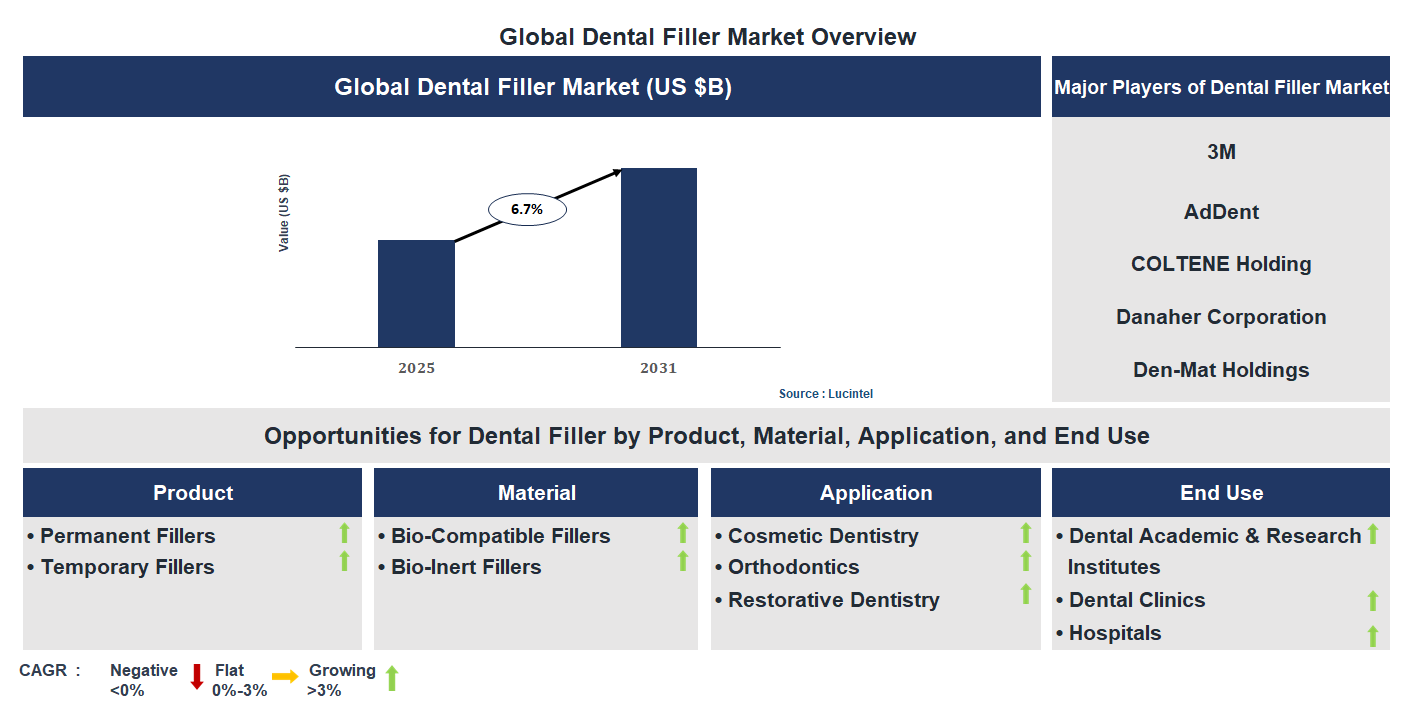
Key data points: The growth forecast = 6.7% annually for the next 7 years. Scroll below to get more insights. This market report covers trends, opportunities and forecasts in dental filler market to 2031 by product (permanent fillers and temporary fillers), material (bio-compatible fillers and bio-inert fillers), application (cosmetic dentistry, orthodontics, and restorative dentistry), end use (dental academic & research institutes, dental clinics, and hospitals), and region (North America, Europe, Asia Pacific, and the Rest of the World)
We'll send your sample report shortly.
• Lucintel forecasts that, within the product category, temporary filler is expected to witness higher growth over the forecast period.
• Within the end use category, dental clinic is expected to witness the highest growth.
• In terms of region, APAC is expected to witness the highest growth over the forecast period. Gain valuable insights for your business decisions with our comprehensive 150+ page report. Sample figures with some insights are shown below.
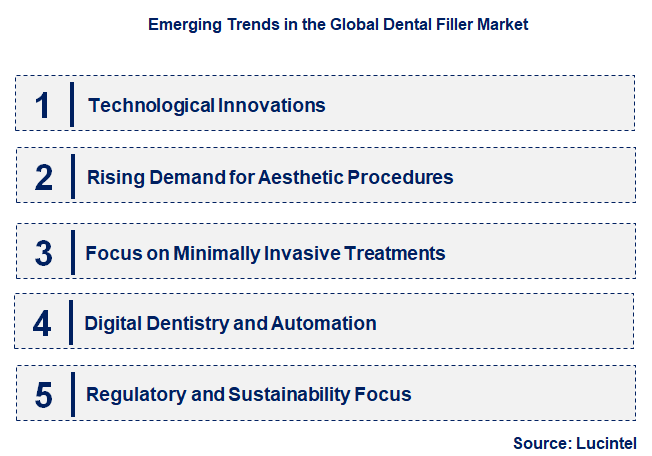
• Technological Innovations: The integration of 3D imaging, CAD/CAM technology, and biocompatible materials is revolutionizing dental fillers. These advancements enable precise placement, customization, and improved safety, leading to better aesthetic and functional results. As technology becomes more accessible, practitioners can offer minimally invasive procedures with faster recovery times, boosting patient confidence and satisfaction. This trend is also fostering the development of novel filler formulations that mimic natural tissue properties, further enhancing treatment outcomes.
• Rising Demand for Aesthetic Procedures: Increasing awareness and societal emphasis on appearance are driving demand for cosmetic dental fillers. Patients seek natural-looking, minimally invasive solutions to enhance their smile and facial features. This trend is particularly prominent among younger demographics and in regions with high aesthetic consciousness. As a result, dental clinics are expanding their service offerings, and manufacturers are developing a broader range of filler products tailored to diverse aesthetic needs, fueling market growth.
• Focus on Minimally Invasive Treatments: Patients prefer procedures that require less downtime and pose fewer risks. Dental fillers are increasingly used as a non-surgical alternative to more invasive procedures like implants or surgeries. This shift is encouraging practitioners to adopt advanced filler techniques and materials that ensure safety and efficacy. The trend also aligns with the broader healthcare movement toward less invasive, patient-friendly treatments, thereby expanding the market to a wider demographic.
• Digital Dentistry and Automation: The adoption of digital tools such as 3D imaging, virtual planning, and automated injection systems is transforming the delivery of dental fillers. These technologies improve precision, reduce procedure time, and enhance patient comfort. Automation and digital workflows are also streamlining manufacturing processes, reducing costs, and enabling mass customization. This trend is making advanced dental filler treatments more accessible and consistent, ultimately elevating the standard of care and expanding market reach.
• Regulatory and Sustainability Focus: Increasing regulatory scrutiny ensures the safety and efficacy of dental fillers, prompting companies to adhere to stricter standards. Simultaneously, there is a growing emphasis on sustainable and eco-friendly materials, driven by consumer demand and environmental concerns. Companies are investing in biodegradable, biocompatible fillers and environmentally responsible manufacturing practices. These trends are fostering trust among consumers and practitioners, encouraging market expansion while aligning with global sustainability goals. In summary, these emerging trends are reshaping the dental filler market by fostering innovation, enhancing patient-centric care, and promoting sustainable practices. They are driving market growth, expanding application scopes, and improving overall treatment quality, positioning the industry for continued evolution and success.
• Technological Innovations: Introduction of advanced filler materials such as bioactive and resorbable fillers has improved safety and efficacy, leading to higher patient satisfaction and broader application scope. These innovations are enabling more natural results and longer-lasting effects, thus expanding market opportunities.
• Regulatory Approvals: Recent approvals by health authorities for new dental filler products have facilitated market entry and increased consumer confidence. Stricter regulations also ensure product safety, encouraging manufacturers to invest in high-quality, compliant solutions.
• Rising Demand for Aesthetic Procedures: Increasing awareness of cosmetic dentistry and social media influence have driven demand for dental fillers for smile makeovers and facial rejuvenation. This trend is boosting market growth, especially among younger demographics seeking non-invasive enhancements.
• Geographic Expansion: Emerging markets in Asia-Pacific and Latin America are witnessing rapid growth due to rising disposable incomes, expanding dental clinics, and increasing awareness. This geographic diversification is creating new revenue streams and competitive dynamics.
• Sustainability and Biocompatibility Focus: Growing emphasis on eco-friendly and biocompatible materials has led to the development of sustainable filler options. This shift is impacting product development strategies and aligning the market with global health and environmental standards. In summary, these developments are collectively propelling the dental filler market toward increased innovation, safety, and accessibility. The focus on technological advancements, regulatory support, aesthetic demand, geographic expansion, and sustainability is fostering a robust growth trajectory. As a result, the market is becoming more competitive, diverse, and aligned with patient needs, promising sustained expansion in the coming years.
• Cosmetic Dentistry: Growing demand for aesthetic enhancements is driving the adoption of dental fillers for smile makeovers, lip augmentation, and wrinkle reduction. This segment benefits from increasing awareness and social media influence, leading to higher patient acceptance and market growth.
• Restorative Dentistry: Dental fillers are increasingly used in restorative procedures to rebuild damaged or decayed teeth, offering durable and biocompatible solutions. This application enhances the longevity and functionality of dental restorations, attracting both practitioners and patients.
• Orthodontics: The integration of dental fillers in orthodontic treatments helps in tissue augmentation and gum contouring, improving overall treatment outcomes. This opportunity supports more comprehensive and minimally invasive orthodontic procedures.
• Periodontal Therapy: Dental fillers are utilized in periodontal treatments to promote tissue regeneration and reduce inflammation. This application improves periodontal health, leading to better long-term oral health outcomes and expanding market scope.
• Implantology: The use of dental fillers in implant procedures for bone augmentation and soft tissue management is increasing. This enhances implant success rates and broadens the range of implant options available to patients. In summary, these growth opportunities across key applications are significantly impacting the dental filler market by expanding its scope, improving treatment efficacy, and meeting diverse patient needs. This evolution is fostering innovation, increasing market competitiveness, and driving sustained growth in the industry.
• Technological Advancements: The development of innovative dental filler materials, such as biocompatible composites and resins, has significantly improved treatment outcomes. These advancements enable dentists to perform minimally invasive procedures with enhanced durability and aesthetic appeal. The integration of digital dentistry and 3D imaging further streamlines treatment planning and execution, increasing patient satisfaction. As technology continues to evolve, the market benefits from new product launches and improved procedural efficiency, fueling growth and expanding the scope of dental filler applications.
• Rising Cosmetic Dentistry Demand: Increasing awareness about oral health and aesthetics has led to a surge in demand for cosmetic dental procedures, including dental fillers. Patients seek minimally invasive options to improve their smile appearance, driving clinics to adopt advanced filler solutions. The growing popularity of social media and celebrity culture amplifies this trend, encouraging more individuals to pursue aesthetic enhancements. This demand boost directly correlates with market expansion, as providers invest in high-quality fillers to meet patient expectations and improve treatment outcomes.
• Aging Population: The global aging demographic is a significant driver for the Dental Filler Market. Older adults often experience tooth loss, gum recession, and other oral health issues that require restorative and aesthetic treatments. Dental fillers offer effective solutions for volume restoration, wrinkle reduction, and overall facial rejuvenation, making them highly suitable for this demographic. As the aging population continues to grow, the demand for non-invasive, quick, and effective dental filler procedures is expected to rise, contributing to sustained market growth.
• Increasing Healthcare Expenditure: Rising healthcare spending across various regions supports the adoption of advanced dental treatments, including fillers. Governments and private insurers are increasingly covering cosmetic and restorative procedures, making them more accessible to a broader population. Additionally, higher disposable incomes enable consumers to invest in elective dental procedures, boosting market sales. This economic support facilitates research and development, leading to the introduction of improved filler products and expanding market reach. The challenges facing the dental filler market include:-
• Regulatory and Safety Concerns: Stringent regulatory standards and safety protocols for dental fillers pose significant hurdles for manufacturers. Ensuring compliance with evolving regulations requires substantial investment in clinical trials and quality assurance, which can delay product launches. Safety concerns related to allergic reactions, adverse effects, and long-term stability also impact consumer confidence and market growth. Navigating complex regulatory landscapes across different regions remains a critical challenge for companies aiming to expand globally.
• High Cost of Advanced Fillers: The development and use of innovative dental fillers often involve high costs, which are passed on to consumers. This can limit accessibility for price-sensitive patients and restrict market growth in developing regions. Additionally, the expense associated with training practitioners to use new materials and techniques further hampers widespread adoption. Cost barriers may slow down the integration of advanced fillers into routine dental practice, affecting overall market expansion.
• Competition and Market Saturation: The Dental Filler Market faces intense competition from numerous local and international players, leading to market saturation in certain regions. Price wars and product differentiation challenges make it difficult for new entrants to establish a foothold. Moreover, the proliferation of similar products can lead to reduced profit margins and innovation stagnation. Market saturation also limits growth opportunities in mature markets, requiring companies to explore emerging regions or diversify their product portfolios. In summary, the dental filler market is driven by technological innovations, increasing aesthetic awareness, demographic shifts, and rising healthcare investments. However, regulatory hurdles, high costs, and intense competition present notable challenges. These factors collectively influence market dynamics, requiring stakeholders to adapt strategies that leverage growth opportunities while addressing obstacles. Overall, the market’s future hinges on balancing innovation with regulatory compliance and cost management to sustain long-term growth.
• 3M
• AdDent
• COLTENE Holding
• Danaher Corporation
• Den-Mat Holdings
• Dental Technologies
• Dentsply Sirona
• GC Corporation
• Ivoclar Vivadent
• Kerr Corporation
• Permanent Fillers
• Temporary Fillers
• Bio-Compatible Fillers
• Bio-Inert Fillers
• Cosmetic Dentistry
• Orthodontics
• Restorative Dentistry
• Dental Academic & Research Institutes
• Dental Clinics
• Hospitals
• North America
• Europe
• Asia Pacific
• The Rest of the World
• United States: The US dental filler market has seen rapid innovation with the introduction of bioactive and composite materials that offer enhanced durability and aesthetics. Growing patient awareness and cosmetic dentistry trends drive demand, supported by advanced dental practices and insurance coverage. Regulatory bodies like the FDA have approved new materials, boosting market confidence. The rise of minimally invasive procedures and digital dentistry further accelerates growth, with key players investing heavily in R&D to develop more biocompatible and long-lasting fillers.
• China: China’s dental filler market is expanding swiftly due to increasing disposable incomes and rising awareness of oral health. The country’s large population and growing dental clinics contribute to high demand for affordable yet effective fillers. Local manufacturers are innovating with cost-effective materials, while international companies are expanding their presence through strategic partnerships. Government initiatives to improve healthcare infrastructure and dental education also support market growth. Additionally, the adoption of digital dentistry and aesthetic procedures is on the rise, fueling demand for advanced dental fillers.
• Germany: Germany’s market is characterized by high-quality standards and a focus on innovative, biocompatible materials. The country emphasizes research and development, leading to the introduction of cutting-edge fillers with improved longevity and safety profiles. The aging population increases demand for restorative dental procedures, including fillers. Strict regulatory frameworks ensure product safety and efficacy, fostering consumer confidence. Germany’s strong dental care infrastructure and emphasis on sustainable, eco-friendly materials also influence market trends, with companies investing in environmentally conscious solutions.
• India: The Indian dental filler market is witnessing rapid growth driven by increasing awareness of oral health, rising disposable incomes, and expanding dental tourism. The affordability of materials and services remains a key factor, with local manufacturers offering cost-effective options. The surge in cosmetic dentistry and orthodontic procedures boosts demand for dental fillers. Government initiatives to improve healthcare access and the proliferation of dental clinics across urban and rural areas further support market expansion. Technological adoption, including digital imaging and advanced materials, is gradually increasing, contributing to the evolving landscape.
• Japan: Japan’s market is characterized by high technological adoption and a focus on minimally invasive procedures. The aging population creates a steady demand for restorative and aesthetic dental treatments, including fillers. Japanese companies are pioneering in developing innovative, durable, and biocompatible materials that meet strict safety standards. The integration of digital dentistry and laser technologies enhances treatment precision and outcomes. Consumer preference for natural-looking results and high-quality materials drives market growth. Additionally, government policies promoting oral health and advanced healthcare infrastructure support ongoing development in this sector.


• 3M
• AdDent
• COLTENE Holding
• Danaher Corporation
• Den-Mat Holdings
• Dental Technologies
• Dentsply Sirona
• GC Corporation
• Ivoclar Vivadent
• Kerr Corporation Q5. Which dental filler market segment will be the largest in future? Answer: Lucintel forecasts that, within the product category, temporary filler is expected to witness higher growth over the forecast period. Q6. In dental filler market, which region is expected to be the largest in next 5 years? Answer: In terms of region, APAC is expected to witness the highest growth over the forecast period. Q7. Do we receive customization in this report? Answer: Yes, Lucintel provides 10% customization without any additional cost.


Choose a license that fits your team. Instant PDF delivery.
Prices exclude taxes. Instant delivery. Custom licensing available on request.
Market Report · July 31, 2026
Market Report · July 31, 2026
Market Report · July 31, 2026
Trusted partner for strategic intelligence and business growth


Receive a complimentary market analysis tailored to your industry. Our analysts will identify key growth opportunities and competitive dynamics specific to your business.

Market size, growth rate, and key trend analysis for your specific sector.

Top competitor positioning and market share analysis.

Strategic recommendations backed by data-driven insights.
Get curated market intelligence and competitive moves straight to your inbox.
By subscribing, you agree to receive our monthly insights. Unsubscribe anytime.
Receive a complimentary market analysis tailored to your industry. Our analysts will identify key growth opportunities and competitive dynamics specific to your business.
Market size, growth rate, and key trend analysis for your specific sector.
Top competitor positioning and market share analysis.
Strategic recommendations backed by data-driven insights.
Get curated market intelligence, emerging trends, and competitive moves straight to your inbox each month.
By subscribing, you agree to receive our monthly insights. Unsubscribe anytime.
We'll send your sample report shortly.