
Market Report · July 22, 2026

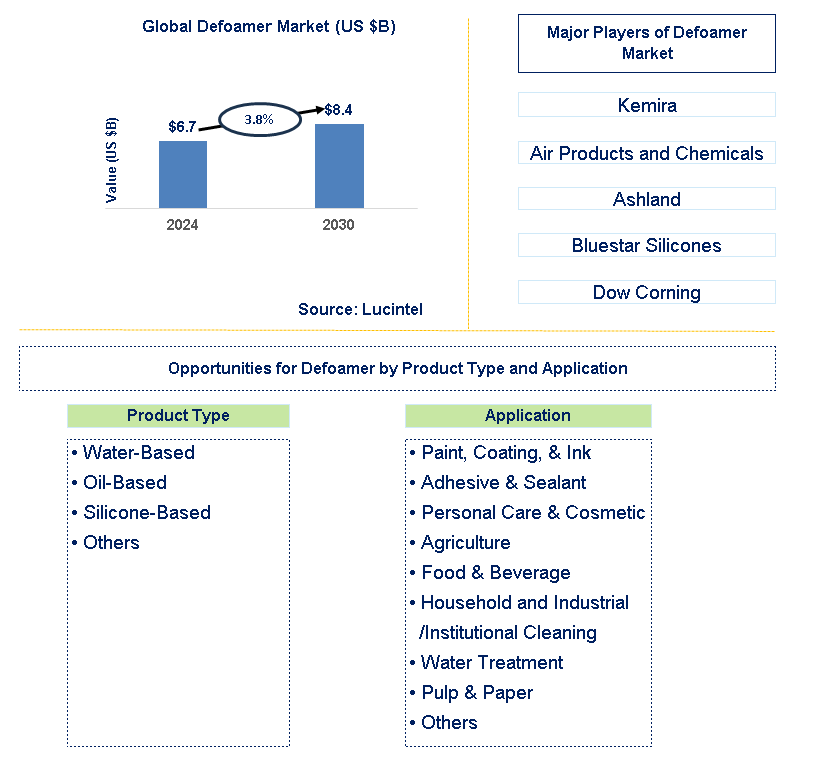
Key data points: The growth forecast = 5% annually for the next 7 years. Scroll below to get more insights. This market report covers trends, opportunities and forecasts in defoamer market to 2031 by product (water-based, oil-based, silicone-based, and others), end use (paints, coatings, & inks, adhesives & sealants, personal care & cosmetics, agriculture, food & beverages, household & industrial/institutional cleaning, water treatment, and others), and region (North America, Europe, Asia Pacific, and the Rest of the World)
We'll send your sample report shortly.
• Lucintel forecasts that, within the product category, silicone-based is expected to witness the highest growth over the forecast period.
• Within the end use category, paint, coating, & ink is expected to witness the highest growth.
• In terms of region, APAC is expected to witness the highest growth over the forecast period. Gain valuable insights for your business decisions with our comprehensive 150+ page report. Sample figures with some insights are shown below.
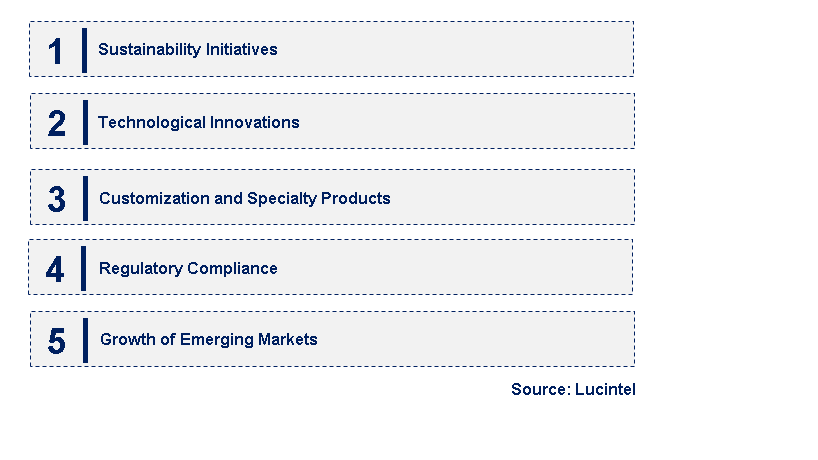
• Shift Toward Eco-Friendly Defoamers: Increasing environmental concerns and stricter regulations are pushing the market towards biodegradable and bio-based defoamers. These eco-friendly alternatives reduce environmental impact, cater to green manufacturing practices, and appeal to industries aiming for sustainability certifications, thereby driving innovation and market demand.
• Rise of Silicone-Based Defoamers: Silicone-based defoamers continue to dominate due to their excellent defoaming efficiency and stability. Advancements in silicone chemistry have led to enhanced formulations that are less toxic and more compatible with various industrial processes, making them a preferred choice in paints, coatings, and wastewater treatment.
• Growth in Waterborne Formulations: The transition from solvent-based to waterborne products is influencing defoamer formulations. Waterborne defoamers are gaining traction because of their low VOC emissions and environmental benefits, aligning with global efforts to reduce air pollution and meet regulatory standards in industries like coatings and adhesives.
• Expansion in End-Use Applications: The defoamer market is expanding beyond traditional industries into electronics, pharmaceuticals, and food processing. These sectors require specialized defoamers that meet stringent quality and safety standards, driving innovation in product development to cater to these niche markets.
• Technological Innovations in Formulation: New formulations combining silicone and non-silicone components offer improved defoaming performance and versatility. Nanotechnology and advanced additives enhance foam control in challenging applications, improving product efficiency and cost-effectiveness, which is crucial for competitive positioning. These trends are reshaping the defoamer market by enhancing product sustainability, performance, and application diversity. Eco-friendly and technologically advanced defoamers meet evolving regulatory and industrial demands, driving growth and encouraging further innovation. The market is becoming more competitive and aligned with global environmental priorities.
• Development of Biodegradable Defoamers: Manufacturers have introduced biodegradable defoamers made from natural oils and renewable materials. These products minimize environmental impact and comply with stricter regulations, making them attractive for industries aiming to reduce carbon footprints and waste, especially in Europe and Asia.
• Innovations in Silicone Technology: Enhanced silicone-based defoamers with lower toxicity and improved dispersion are being developed. These advancements result in superior foam control in diverse applications, including paints, coatings, and pulp & paper, strengthening the market’s product portfolio.
• Growth of Waterborne Defoamers: There is an increasing shift to waterborne defoamers driven by environmental regulations limiting VOC emissions. Waterborne defoamers offer safer, eco-friendly alternatives suited for modern industrial processes, facilitating market expansion in coatings and adhesives sectors.
• Integration of Nanotechnology: Nanotechnology is being applied to improve defoamer efficiency by controlling particle size and enhancing dispersion. This leads to more effective foam suppression with smaller quantities, reducing costs and environmental impact in industries like wastewater treatment.
• Expansion into New End-Use Sectors: Defoamers are increasingly used in electronics, pharmaceuticals, and food processing, where foam control is critical for product quality and process efficiency. This diversification is opening new revenue streams and driving specialized product development. These developments are propelling the defoamer market towards higher efficiency, sustainability, and application diversity. They help manufacturers meet regulatory requirements and customer expectations, while expanding into new sectors, thus driving sustained growth and innovation.
• Paints and Coatings Industry: Defoamers are essential in paints and coatings to ensure smooth finishes and prevent defects. Growing construction and automotive sectors drive demand for advanced defoamers that improve product quality while meeting environmental standards, offering significant growth potential.
• Pulp and Paper Sector: The pulp and paper industry uses defoamers to control foam in processing and wastewater management. Innovations in biodegradable defoamers present opportunities for sustainable manufacturing, particularly in regions enforcing strict environmental regulations, supporting market expansion.
• Wastewater Treatment: Foam control is critical in wastewater treatment plants to maintain operational efficiency. Increasing awareness of water pollution and stricter discharge norms are propelling demand for effective, environmentally friendly defoamers tailored for this sector.
• Textile Industry: In textile processing, defoamers prevent foam-related defects during dyeing and finishing. Rising textile production and focus on eco-friendly processing provide growth opportunities for defoamers designed to meet industry-specific requirements, including biodegradability.
• Food Processing Applications: Defoamers in food processing improve quality and safety by controlling foam during cooking and packaging. With increasing consumer demand for high-quality and hygienic food products, specialized food-grade defoamers are creating new market avenues. These strategic opportunities are driving the defoamer market’s expansion by addressing industry-specific needs and sustainability goals. Leveraging advancements in eco-friendly and application-specific defoamers enables manufacturers to capture new markets and enhance competitive advantage.
• Kemira
• Air Products and Chemicals
• Ashland
• Bluestar Silicones International
• Dow
• Evonik Industries
• Wacker Chemie
• Shin-Etsu Chemical
• BASF
• Elementis
• Water-Based
• Oil-Based
• Silicone-Based
• Others
• Paints, Coatings, & Inks
• Adhesives & Sealants
• Personal Care & Cosmetics
• Agriculture
• Food & Beverages
• Household & Industrial/Institutional Cleaning
• Water Treatment
• Others
• North America
• Europe
• Asia Pacific
• The Rest of the World
• United States: The U.S. defoamer market is witnessing increased demand driven by the booming construction and automotive sectors. There is a focus on developing environmentally friendly defoamers compliant with EPA regulations. Technological advancements in silicone-based and non-silicone defoamers are improving efficiency and reducing toxicity, making the market more sustainable and competitive.
• China: China’s defoamer market is expanding rapidly, propelled by growth in the paper and textile industries. Local manufacturers are investing in R&D to produce cost-effective, high-performance defoamers. Additionally, stricter environmental regulations are pushing the adoption of bio-based and eco-friendly defoamers to minimize industrial pollution and enhance product safety.
• Germany: Germany leads in innovation with a strong emphasis on sustainable and high-performance defoamer formulations. The country’s stringent environmental standards are driving research into biodegradable and low-VOC defoamers. German manufacturers are focusing on specialized defoamers for the automotive, chemical, and food processing industries, emphasizing quality and regulatory compliance.
• India: India’s defoamer market growth is supported by increased industrial activities in paper, textiles, and paints sectors. Demand for affordable yet effective defoamers is growing, with manufacturers enhancing formulations for compatibility with local raw materials. Government initiatives promoting sustainable manufacturing are encouraging the use of bio-based defoamers, although adoption is still in early stages.
• Japan: Japan is advancing in the defoamer market with a focus on high-tech industries such as electronics and pharmaceuticals. Innovations in silicone and organic defoamers improve performance in precision applications. The market is also responding to strict regulatory environments by developing low-toxicity, environmentally safe defoamers to meet both domestic and export demands.


• Kemira
• Air Products and Chemicals
• Ashland
• Bluestar Silicones International
• Dow
• Evonik Industries
• Wacker Chemie
• Shin-Etsu Chemical
• BASF
• Elementis Q5. Which defoamer market segment will be the largest in future? Answer: Lucintel forecasts that, within the product category, silicone-based is expected to witness the highest growth over the forecast period. Q6. In defoamer market, which region is expected to be the largest in next 5 years? Answer: In terms of region, APAC is expected to witness the highest growth over the forecast period. Q7. Do we receive customization in this report? Answer: Yes, Lucintel provides 10% customization without any additional cost.


Choose a license that fits your team. Instant PDF delivery.
Prices exclude taxes. Instant delivery. Custom licensing available on request.
Market Report · July 22, 2026
Market Report · July 15, 2026
Market Report · June 30, 2026
Trusted partner for strategic intelligence and business growth


Receive a complimentary market analysis tailored to your industry. Our analysts will identify key growth opportunities and competitive dynamics specific to your business.

Market size, growth rate, and key trend analysis for your specific sector.

Top competitor positioning and market share analysis.

Strategic recommendations backed by data-driven insights.
Get curated market intelligence and competitive moves straight to your inbox.
By subscribing, you agree to receive our monthly insights. Unsubscribe anytime.
Receive a complimentary market analysis tailored to your industry. Our analysts will identify key growth opportunities and competitive dynamics specific to your business.
Market size, growth rate, and key trend analysis for your specific sector.
Top competitor positioning and market share analysis.
Strategic recommendations backed by data-driven insights.
Get curated market intelligence, emerging trends, and competitive moves straight to your inbox each month.
By subscribing, you agree to receive our monthly insights. Unsubscribe anytime.
We'll send your sample report shortly.