
Report Feature
Defense Aircraft Material Market Trends and Forecast
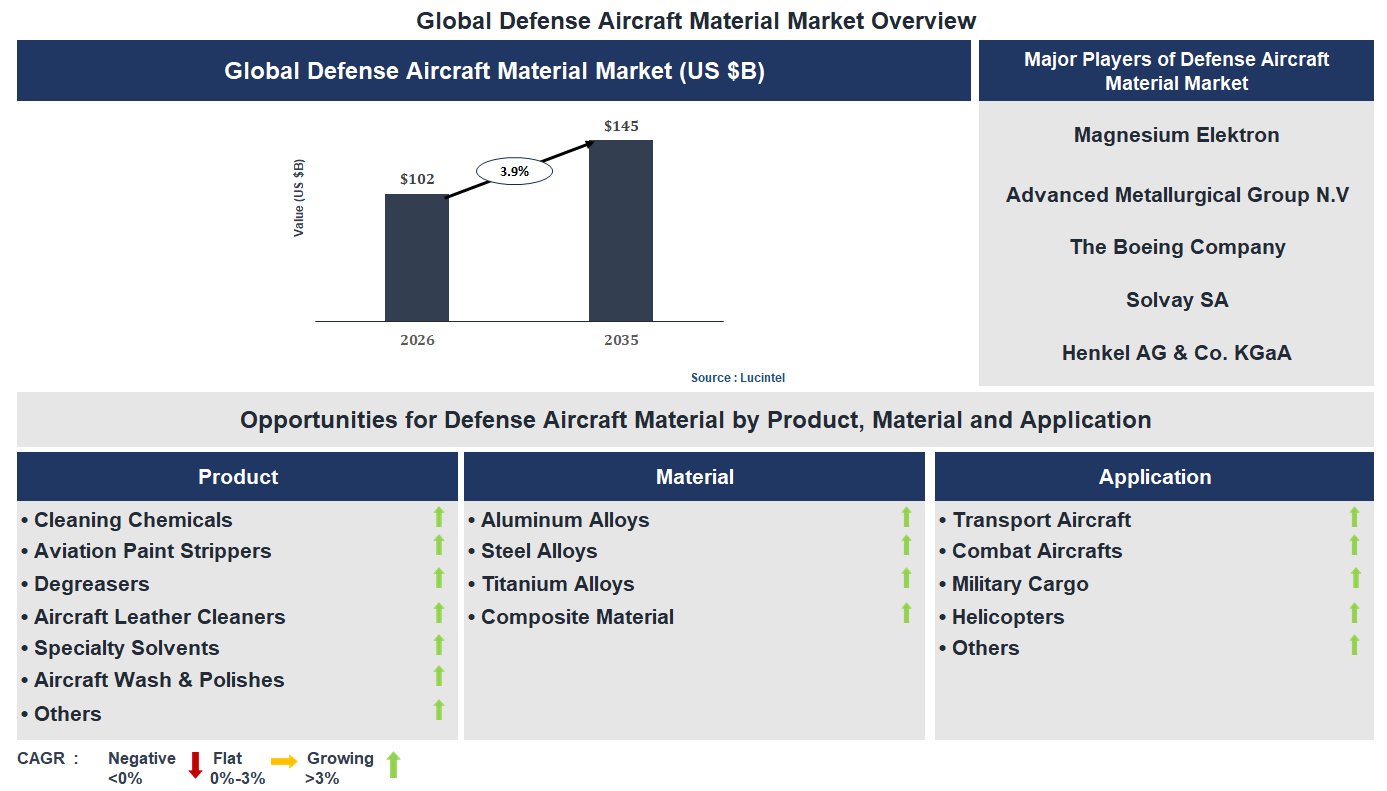
The future of the global defense aircraft material market looks promising with opportunities in the transport aircraft, combat aircraft, military cargo, and helicopter markets. The global defense aircraft material market is expected to reach an estimated $45 billion by 2035 with a CAGR of 5.8% from 2026 to 2035. The major drivers for this market are the increasing demand for lightweight military materials, the rising need for advanced aircraft durability, and the growing focus on defense aircraft modernization.• Lucintel forecasts that, within the product category, cleaning chemical is expected to witness the highest growth over the forecast period.
• Within the application category, transport aircraft is expected to witness the highest growth.
• In terms of region, APAC is expected to witness the highest growth over the forecast period. Gain valuable insights for your business decisions with our comprehensive 150+ page report. Sample figures with some insights are shown below.
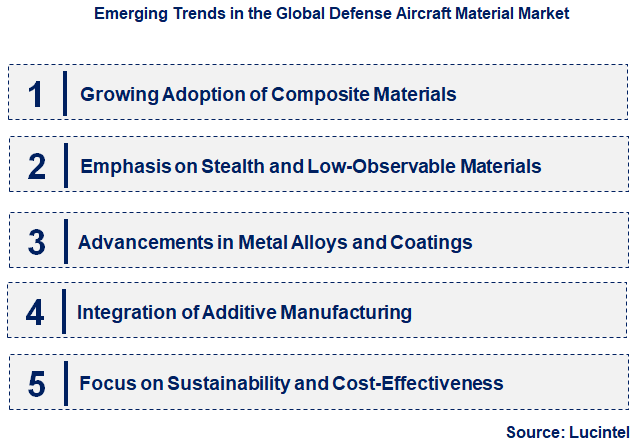
Emerging Trends in the Defense Aircraft Material Market
The defense aircraft material market is experiencing rapid evolution driven by technological advancements, geopolitical shifts, and increasing defense budgets worldwide. As nations seek to enhance their military capabilities, the demand for advanced, lightweight, and durable materials is surging. Innovations in composite materials, metals, and coatings are transforming aircraft design and performance. Additionally, the focus on sustainability and cost-efficiency is influencing material selection. These developments are not only improving aircraft performance but also redefining supply chains and manufacturing processes. The following key trends highlight the major forces shaping this dynamic market landscape.• Growing Adoption of Composite Materials: The increasing use of composites such as carbon fiber-reinforced polymers is driven by their lightweight and high-strength properties. These materials reduce aircraft weight, improve fuel efficiency, and enhance performance, making them highly attractive for military aircraft. Advances in manufacturing techniques are making composites more cost-effective and easier to produce at scale. As defense agencies prioritize stealth and agility, composite materials are becoming essential in aircraft design, leading to a significant shift from traditional metals to advanced composites.
• Emphasis on Stealth and Low-Observable Materials: The demand for stealth capabilities is fueling innovation in radar-absorbing and low-observable materials. These materials help aircraft evade detection, providing strategic advantages. Developments include specialized coatings and composites that absorb or deflect radar signals. The integration of such materials into aircraft structures is increasing, influencing material selection and manufacturing processes. This trend is critical for modern defense aircraft, especially in contested environments, and is prompting ongoing research into more effective stealth materials.
• Advancements in Metal Alloys and Coatings: High-performance alloys such as titanium and aluminum-lithium are being increasingly utilized for their strength-to-weight ratios and corrosion resistance. Innovations in coatings, including anti-corrosion and thermal barrier coatings, extend the lifespan of aircraft components and improve operational efficiency. These materials are vital for high-stress parts like engines and structural elements. The development of new alloys and coatings is driven by the need for durability, weight reduction, and operational reliability, significantly impacting aircraft maintenance and lifecycle costs.
• Integration of Additive Manufacturing: Additive manufacturing is revolutionizing the production of defense aircraft materials by enabling complex geometries, reducing waste, and accelerating prototyping. It allows for on-demand manufacturing of spare parts and customized components, reducing lead times and costs. This technology also facilitates the development of novel materials with tailored properties. As additive manufacturing matures, it is expected to become a standard in aerospace material production, offering greater design flexibility and supply chain resilience, ultimately transforming how defense aircraft are built and maintained.
• Focus on Sustainability and Cost-Effectiveness: Environmental considerations are increasingly influencing material choices, with a push toward recyclable and environmentally friendly materials. Efforts include developing bio-based composites and reducing reliance on scarce or hazardous materials. Cost-effectiveness is also a priority, driving innovations that lower manufacturing and maintenance costs without compromising performance. This trend aligns with broader defense strategies to enhance sustainability, reduce logistical burdens, and ensure long-term operational readiness, shaping future material development and procurement strategies in the defense aircraft market. These trends are collectively reshaping the defense aircraft material market by fostering innovation, enhancing aircraft capabilities, and promoting sustainable practices. The shift toward advanced composites, stealth materials, high-performance alloys, additive manufacturing, and sustainability initiatives is driving a new era of military aircraft design and production, ultimately leading to more efficient, durable, and technologically sophisticated defense systems.
Recent Development in the Defense Aircraft Material Market
The defense aircraft material market is experiencing rapid advancements driven by technological innovations, increasing defense budgets, and evolving military requirements. These developments are shaping the future of military aviation, enhancing aircraft performance, durability, and safety. As nations invest heavily in modernizing their air forces, the demand for advanced materials is surging. This dynamic environment presents significant growth opportunities for industry players, fostering innovation and competitive advantages in the global defense sector.• Material Innovation and Lightweight Composites: The development of advanced composites and lightweight materials is revolutionizing defense aircraft. These materials reduce aircraft weight, improve fuel efficiency, and enhance maneuverability. Innovations such as carbon fiber-reinforced polymers are increasingly adopted, leading to longer service life and better performance. This trend is driven by the need for stealth, speed, and operational efficiency, making lightweight materials a critical focus area for defense manufacturers.
• Enhanced Durability and Corrosion Resistance: Modern defense aircraft require materials that withstand harsh environments and prolonged operational stress. Recent developments include corrosion-resistant alloys and coatings that extend aircraft lifespan and reduce maintenance costs. These materials improve safety and reliability, especially in extreme climates and combat zones. The focus on durability is crucial for military readiness, enabling aircraft to perform consistently over extended periods without significant degradation.
• Adoption of Smart Materials and Adaptive Technologies: The integration of smart materials, such as shape-memory alloys and self-healing composites, is transforming defense aircraft design. These materials enable adaptive functionalities like vibration damping, structural health monitoring, and damage repair. Such innovations enhance aircraft resilience, reduce downtime, and improve mission success rates. The adoption of smart materials signifies a shift towards more intelligent, responsive aircraft systems capable of adapting to operational demands.
• Focus on Stealth and Radar-Absorbing Materials: Stealth technology remains a priority, prompting the development of radar-absorbing and electromagnetic interference (EMI) shielding materials. These materials reduce the radar cross-section of aircraft, enhancing survivability against advanced threats. Recent advancements include nanomaterial-based coatings that offer superior absorption and durability. The focus on stealth materials is critical for maintaining tactical advantages and ensuring mission success in contested environments.
• Growing Demand for High-Performance Alloys: The market is witnessing increased use of high-performance alloys such as titanium and nickel-based superalloys. These materials provide exceptional strength-to-weight ratios, high-temperature stability, and corrosion resistance. They are essential for engine components, structural parts, and weapon systems. The development of new alloys tailored for defense applications is expanding capabilities, enabling aircraft to operate efficiently at higher speeds and altitudes, thus broadening operational scope and effectiveness. These recent developments in defense aircraft materials are significantly impacting the market by enabling the production of more efficient, durable, and stealth-capable aircraft. The focus on lightweight composites, smart materials, and high-performance alloys is driving innovation, reducing costs, and enhancing operational capabilities. As these advancements continue, the defense aircraft material market is poised for substantial growth, supporting modern military strategies and strengthening national security through superior aircraft technology.
Strategic Growth Opportunities in the Defense Aircraft Material Market
The defense aircraft material market is experiencing rapid growth driven by technological advancements, increasing defense budgets, and the need for lightweight, durable materials to enhance aircraft performance. Innovations in composite materials, metal alloys, and manufacturing processes are creating new opportunities for defense contractors and suppliers. As nations modernize their air forces, the demand for advanced materials that improve fuel efficiency, safety, and operational capabilities is expected to surge, shaping the future landscape of defense aviation.• Increasing Demand for Lightweight Composite Materials to Improve Aircraft Performance: The rising need for fuel-efficient, high-performance aircraft is fueling the adoption of lightweight composite materials. These materials reduce overall weight, enhance speed, and improve fuel economy, making them essential for modern defense aircraft. Advances in carbon fiber and polymer composites are enabling manufacturers to develop stronger, lighter structures that meet stringent military standards. This trend is expected to continue as defense agencies prioritize agility and operational range.
• Development of High-Temperature Resistant Materials for Enhanced Durability: The need for materials that withstand extreme operational environments is driving innovation in high-temperature resistant alloys and composites. These materials are crucial for engine components, heat shields, and structural parts exposed to high thermal stresses. Improved durability extends aircraft lifespan, reduces maintenance costs, and enhances safety. Ongoing research aims to develop materials capable of withstanding higher temperatures, supporting next-generation fighter jets and surveillance aircraft.
• Growing Adoption of Metal Alloys for Structural Components: Metal alloys such as titanium and aluminum are increasingly used in defense aircraft for their strength-to-weight ratio and corrosion resistance. These materials are vital for fuselage, wing structures, and landing gear, providing structural integrity while minimizing weight. Advances in alloy formulations and manufacturing techniques are enabling the production of more resilient, lightweight components. The demand for such materials is expected to grow with the modernization of military fleets worldwide.
• Integration of Advanced Manufacturing Technologies to Accelerate Production: Additive manufacturing, robotics, and automation are transforming the production of defense aircraft materials. These technologies enable complex geometries, reduce material waste, and shorten lead times. They also facilitate rapid prototyping and customization, essential for military applications. As defense budgets increase, investment in advanced manufacturing is expected to enhance supply chain efficiency, reduce costs, and support the development of innovative materials tailored for specific operational needs.
• Rising Focus on Stealth and Radar-Absorbing Materials for Modern Warfare: The evolution of stealth technology necessitates materials that absorb radar signals and reduce aircraft visibility. Radar-absorbing coatings and composites are increasingly integrated into aircraft design to enhance survivability against advanced threats. These materials must maintain structural integrity while providing electromagnetic stealth. The growing emphasis on electronic warfare and stealth capabilities is expected to drive innovation and demand for specialized defense aircraft materials in the coming years. The overall market growth is poised to accelerate as these opportunities converge, fostering innovation and competitiveness. The integration of advanced materials and manufacturing techniques will significantly enhance aircraft capabilities, safety, and operational efficiency, shaping the future of defense aviation and ensuring strategic superiority.
Defense Aircraft Material Market Driver and Challenges
The defense aircraft material market is influenced by a complex interplay of technological advancements, economic conditions, and regulatory frameworks. Rapid innovations in aerospace technology drive demand for lightweight, durable, and high-performance materials. Economic factors such as government defense budgets and geopolitical tensions significantly impact market growth. Additionally, stringent safety and environmental regulations shape material development and adoption. These drivers and challenges collectively determine the markets trajectory, requiring stakeholders to adapt swiftly to changing technological standards, economic shifts, and regulatory requirements to maintain competitiveness and ensure national security. The factors responsible for driving the defense aircraft material market include:• Technological Innovation: The continuous development of advanced materials like composites, titanium alloys, and ceramics enhances aircraft performance by reducing weight, increasing fuel efficiency, and improving durability. These innovations enable defense aircraft to meet evolving operational demands, such as stealth capabilities and high-speed maneuvers. As aerospace technology advances, the demand for specialized materials that can withstand extreme conditions grows, fueling market expansion. Companies investing in R&D are at the forefront of creating next-generation materials, which further propels market growth and offers a competitive edge in defense applications.
• Increasing Defense Budgets: Governments worldwide are increasing their defense spending to modernize their military fleets and enhance national security. Elevated defense budgets facilitate procurement of advanced aircraft and associated materials, boosting demand for specialized defense aircraft materials. This financial support allows for large-scale R&D initiatives, leading to the development of innovative materials tailored for military aircraft. As geopolitical tensions persist, countries prioritize upgrading their defense capabilities, which directly correlates with increased market opportunities for suppliers of high-performance aircraft materials.
• Geopolitical Tensions and Security Concerns: Rising geopolitical conflicts and regional tensions compel nations to invest heavily in modernizing their air forces. The need for stealth, survivability, and high-performance aircraft drives demand for cutting-edge materials that meet stringent military specifications. These tensions also prompt procurement of new aircraft equipped with advanced materials capable of withstanding hostile environments. Consequently, defense contractors focus on developing and sourcing materials that enhance aircraft resilience, thereby expanding the market as countries seek to maintain strategic superiority.
• Regulatory and Environmental Standards: Stringent safety, environmental, and quality regulations influence material selection and manufacturing processes within the defense sector. Compliance with international standards such as MIL-STD and ISO ensures material reliability and safety, but also increases development costs and timeframes. Additionally, environmental regulations push for the adoption of eco-friendly materials and manufacturing practices, which can limit the use of certain traditional materials. Navigating these regulatory landscapes requires continuous innovation and adaptation, impacting market dynamics by shaping product development and procurement strategies.
• Growing Demand for Lightweight Materials: The need to improve aircraft fuel efficiency and payload capacity drives the adoption of lightweight materials like composites and advanced alloys. These materials contribute to reduced aircraft weight, leading to lower operational costs and enhanced performance. The push for lighter, more efficient aircraft in defense applications accelerates research and adoption of innovative lightweight materials. This trend is further supported by technological advancements that enable the production of stronger, lighter composites, making them a preferred choice for next-generation military aircraft. The challenges facing the defense aircraft material market include:
• High R&D and Manufacturing Costs: Developing advanced defense materials involves significant investment in research, testing, and certification processes. These costs can be prohibitive, especially for smaller firms, limiting innovation and market entry. Additionally, manufacturing high-performance materials requires specialized facilities and expertise, increasing operational expenses. The lengthy development cycles and stringent testing protocols further delay product commercialization, impacting profitability and market growth. Balancing innovation with cost-efficiency remains a critical challenge for stakeholders aiming to stay competitive.
• Stringent Regulatory Compliance: The defense sector is subject to rigorous standards and regulations that govern material safety, performance, and environmental impact. Ensuring compliance involves extensive testing, documentation, and certification, which can be time-consuming and costly. Non-compliance risks include legal penalties, project delays, and loss of credibility. As regulations evolve, companies must continuously update their processes and materials, increasing complexity and operational costs. Navigating this regulatory landscape is essential but challenging, often requiring substantial resources and expertise.
• Supply Chain Disruptions: The global supply chain for specialized aerospace materials is vulnerable to geopolitical tensions, trade restrictions, and logistical issues. Dependence on specific suppliers or regions can lead to delays and shortages, impacting production schedules and project timelines. Disruptions can also increase costs due to scarcity and transportation challenges. Ensuring a resilient supply chain involves diversifying sources and maintaining strategic inventories, which can be costly. Managing these risks is crucial for maintaining steady market growth and meeting defense procurement deadlines. The defense aircraft material market is shaped by rapid technological progress, increased defense spending, geopolitical tensions, and evolving regulatory standards. While these drivers present significant growth opportunities, challenges such as high R&D costs, regulatory compliance, and supply chain vulnerabilities pose risks to market stability. Stakeholders must navigate these factors carefully, investing in innovation and resilient supply chains to capitalize on emerging opportunities. Overall, the markets future depends on balancing technological advancements with regulatory and economic realities, ensuring sustainable growth and enhanced defense capabilities.
List of Defense Aircraft Material Companies
Companies in the market compete on the basis of product quality offered. Major players in this market focus on expanding their manufacturing facilities, R&D investments, infrastructural development, and leverage integration opportunities across the value chain. With these strategies defense aircraft material companies cater increasing demand, ensure competitive effectiveness, develop innovative products & technologies, reduce production costs, and expand their customer base. Some of the defense aircraft material companies profiled in this report include-• Magnesium Elektron
• Advanced Metallurgical Group N.V
• The Boeing Company
• Solvay SA
• Henkel AG & Co. KGaA
• Allegheny Technologies Incorporated
• Saudi Basic Industries Corporation
• Toray Composite Materials America
• Constellium NV
• Pratt & Whitn
Defense Aircraft Material Market by Segment
The study includes a forecast for the global defense aircraft material market by product, material, application, and region.Defense Aircraft Material Market by Product [Value from 2019 to 2035]:
• Cleaning Chemicals
• Aviation Paint Strippers
• Degreasers
• Aircraft Leather Cleaners
• Specialty Solvents
• Aircraft Wash & Polishes
• Others
Defense Aircraft Material Market by Material [Value from 2019 to 2035]:
• Aluminum Alloys
• Steel Alloys
• Titanium Alloys
• Composite Material
Defense Aircraft Material Market by Application [Value from 2019 to 2035]:
• Transport Aircraft
• Combat Aircrafts
• Military Cargo
• Helicopters
• Others
•
Defense Aircraft Material Market by Region [Value from 2019 to 2035]:
• North America
• Europe
• Asia Pacific
• The Rest of the World
Country Wise Outlook for the Defense Aircraft Material Market
The defense aircraft material market is experiencing rapid evolution driven by technological advancements, geopolitical shifts, and increasing defense budgets worldwide. Countries are investing heavily in developing lighter, stronger, and more durable materials to enhance aircraft performance, survivability, and operational efficiency. Innovations in composites, alloys, and manufacturing processes are shaping the future of military aviation. As nations seek strategic advantages, the market is witnessing significant research and development activities, collaborations, and procurement of advanced materials. These developments reflect a global push toward modernizing defense capabilities and ensuring technological superiority in aerial combat and defense operations.• United States: The US defense aircraft material market is characterized by significant innovation and high R&D investment. Leading companies are developing advanced composites and lightweight alloys to improve aircraft fuel efficiency and durability. The US government is prioritizing the integration of stealth materials and high-performance composites in next-generation fighter jets and unmanned aerial vehicles (UAVs). Recent collaborations between defense agencies and private firms aim to enhance material resilience against extreme conditions, ensuring operational superiority. The market is also witnessing increased procurement of advanced materials for upgrading existing aircraft fleets and developing new platforms.
• China: China is rapidly expanding its defense aircraft material capabilities through substantial government funding and strategic partnerships. The focus is on developing indigenous materials that offer high strength-to-weight ratios and resistance to extreme environments. Recent advancements include the production of advanced composites and ceramic matrix composites for stealth and high-speed aircraft. China’s emphasis on self-reliance is driving domestic innovation, reducing dependence on foreign suppliers. The country is also investing in research to improve manufacturing processes, aiming to produce lighter, more durable materials for its expanding military aviation fleet.
• Germany: Germany’s defense aircraft material market is driven by its strong aerospace industry and integration within European defense initiatives. The focus is on developing lightweight composites and high-performance alloys to enhance aircraft efficiency and survivability. Recent developments include the adoption of advanced fiber-reinforced composites in military aircraft and upgrades to existing platforms with improved materials. Germany is also investing in sustainable and environmentally friendly materials, aligning with broader European Union regulations. Collaborations with international partners are fostering innovation, ensuring that German defense aircraft materials remain at the forefront of technological advancements.
• India: India is actively enhancing its defense aircraft material capabilities through indigenous research and international collaborations. The focus is on developing lightweight composites and high-strength alloys suitable for its expanding fleet of fighter jets and transport aircraft. Recent initiatives include the development of advanced materials for stealth features and durability under harsh operational conditions. The government’s Make in India program is encouraging domestic manufacturing of defense materials, reducing reliance on imports. India is also investing in research to improve manufacturing techniques, aiming to produce cost-effective, high-performance materials for future military aircraft.
• Japan: Japan’s defense aircraft material market is characterized by technological innovation and strategic modernization efforts. The country is focusing on developing advanced composites and alloys to improve aircraft performance and reduce weight. Recent advancements include the integration of stealth materials and corrosion-resistant composites in military aircraft. Japan is also investing in research to enhance material durability and thermal resistance, crucial for high-speed and high-altitude operations. Collaborations with international aerospace firms are facilitating access to cutting-edge materials and manufacturing technologies. Japan’s efforts aim to strengthen its defense capabilities amid regional security challenges.

Features of the Global Defense Aircraft Material Market
Market Size Estimates: Defense aircraft material market size estimation in terms of value ($B). Trend and Forecast Analysis: Market trends (2019 to 2025) and forecast (2026 to 2035) by various segments and regions. Segmentation Analysis: Defense aircraft material market size by product, material, application, and region in terms of value ($B). Regional Analysis: Defense aircraft material market breakdown by North America, Europe, Asia Pacific, and Rest of the World. Growth Opportunities: Analysis of growth opportunities in different products, materials, applications, and regions for the defense aircraft material market. Strategic Analysis: This includes M&A, new product development, and competitive landscape of the defense aircraft material market. Analysis of competitive intensity of the industry based on Porter’s Five Forces model.
FAQ
Q1. What is the defense aircraft material market size? Answer: The global defense aircraft material market is expected to reach an estimated $45 billion by 2035. Q2. What is the growth forecast for defense aircraft material market? Answer: The global defense aircraft material market is expected to grow with a CAGR of 5.8% from 2026 to 2035. Q3. What are the major drivers influencing the growth of the defense aircraft material market? Answer: The major drivers for this market are the increasing demand for lightweight military materials, the rising need for advanced aircraft durability, and the growing focus on defense aircraft modernization. Q4. What are the major segments for defense aircraft material market? Answer: The future of the defense aircraft material market looks promising with opportunities in the transport aircraft, combat aircraft, military cargo, and helicopter markets. Q5. Who are the key defense aircraft material market companies? Answer: Some of the key defense aircraft material companies are as follows:• Magnesium Elektron
• Advanced Metallurgical Group N.V
• The Boeing Company
• Solvay SA
• Henkel AG & Co. KGaA
• Allegheny Technologies Incorporated
• Saudi Basic Industries Corporation
• Toray Composite Materials America
• Constellium NV
• Pratt & Whitney Q6. Which defense aircraft material market segment will be the largest in future? Answer: Lucintel forecasts that, within the product category, cleaning chemical is expected to witness the highest growth over the forecast period. Q7. In defense aircraft material market, which region is expected to be the largest in next 8 years? Answer: In terms of region, APAC is expected to witness the highest growth over the forecast period. Q8. Do we receive customization in this report? Answer: Yes, Lucintel provides 10% customization without any additional cost.
Table of Contents
List of Figures
List of Tables
Methodology
- In-depth interviews of the major players in this market
- Detailed secondary research from competitors’ financial statements and published data
- Extensive searches of published works, market, and database information pertaining to industry news, company press releases, and customer intentions
- A compilation of the experiences, judgments, and insights of Lucintel’s professionals, who have analyzed and tracked this market over the years.


Key Questions
- • What are some of the most promising, high-growth opportunities for the defense aircraft material market by product (cleaning chemicals, aviation paint strippers, degreasers, aircraft leather cleaners, specialty solvents, aircraft wash & polishes, and others), material (aluminum alloys, steel alloys, titanium alloys, and composite material), application (transport aircraft, combat aircrafts, military cargo, helicopters, and others), and region (North America, Europe, Asia Pacific, and the Rest of the World)?
- • Which segments will grow at a faster pace and why?
- • Which region will grow at a faster pace and why?
- • What are the key factors affecting market dynamics? What are the key challenges and business risks in this market?
- • What are the business risks and competitive threats in this market?
- • What are the emerging trends in this market and the reasons behind them?
- • What are some of the changing demands of customers in the market?
- • What are the new developments in the market? Which companies are leading these developments?
- • Who are the major players in this market? What strategic initiatives are key players pursuing for business growth?
- • What are some of the competing products in this market and how big of a threat do they pose for loss of market share by material or product substitution?
- • What M&A activity has occurred in the last 5 years and what has its impact been on the industry? For any questions related to Defense Aircraft Material Market, Defense Aircraft Material Market Size, Defense Aircraft Material Market Growth, Defense Aircraft Material Market Analysis, Defense Aircraft Material Market Report, Defense Aircraft Material Market Share, Defense Aircraft Material Market Trends, Defense Aircraft Material Market Forecast, Defense Aircraft Material Companies, write Lucintel analyst at email: helpdesk@lucintel.com. We will be glad to get back to you soon.


