
Market Report · July 15, 2026

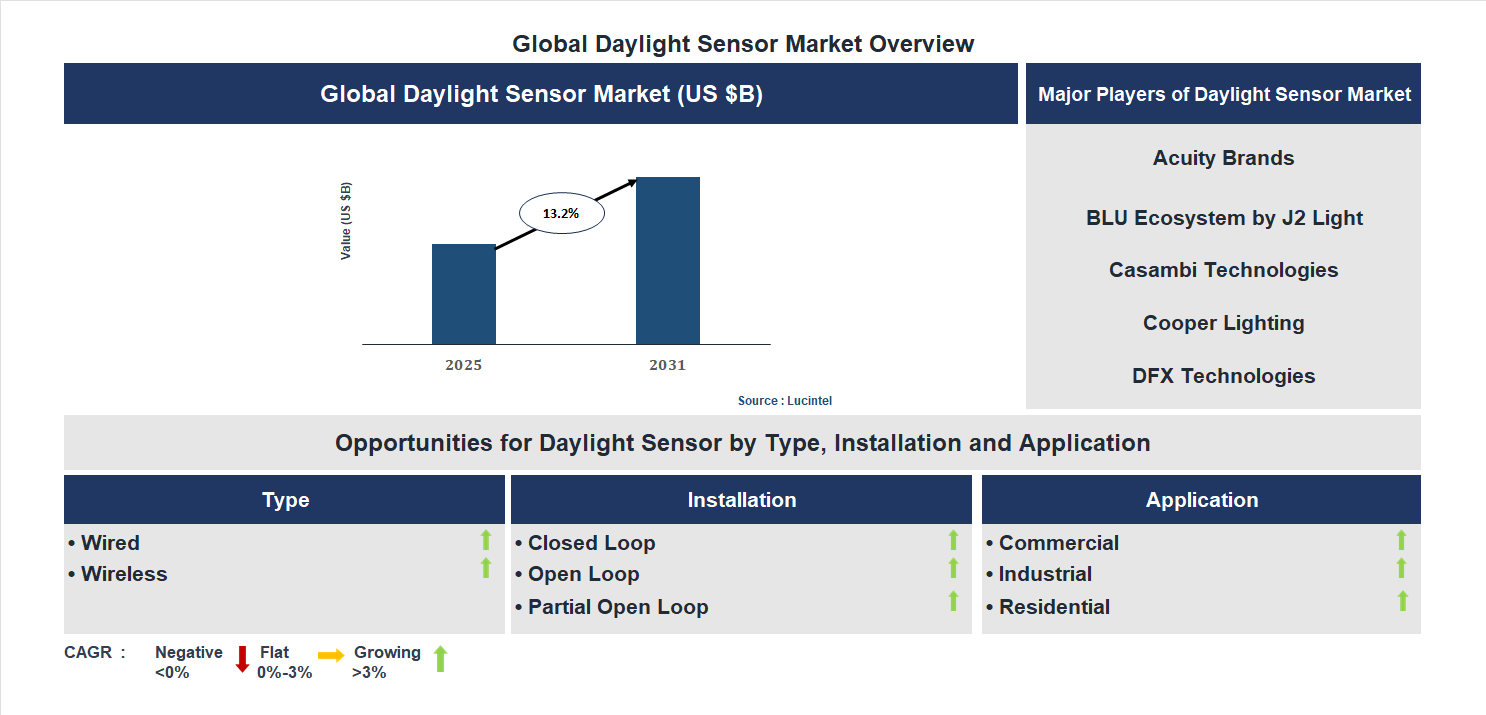
Key data points: The growth forecast = 13.2% annually for the next 7 years. Scroll below to get more insights. This market report covers trends, opportunities and forecasts in daylight sensor market to 2031 by type (wired and wireless), installation (closed loop, open loop, and partial open loop), application (commercial, industrial, and residential), and region (North America, Europe, Asia Pacific, and the Rest of the World)
We'll send your sample report shortly.
• Lucintel forecasts that, within the type category, wireless is expected to witness higher growth over the forecast period.
• Within the application category, industrial is expected to witness the highest growth.
• In terms of region, APAC is expected to witness the highest growth over the forecast period. Gain valuable insights for your business decisions with our comprehensive 150+ page report. Sample figures with some insights are shown below.
• Integration with Smart Building Systems: The trend involves daylight sensors being integrated into comprehensive smart building management systems. This integration allows for real-time data collection and automated lighting adjustments based on occupancy and natural light levels. It enhances energy efficiency, reduces operational costs, and improves occupant comfort. As IoT technology advances, these sensors are becoming more intelligent, enabling seamless communication with other building systems. This trend is driving the market toward more interconnected, automated, and sustainable building environments, making daylight sensors a vital component of smart infrastructure.
• Increasing Adoption of IoT and Wireless Technologies: The shift toward IoT-enabled daylight sensors is a significant trend, offering wireless connectivity, remote monitoring, and data analytics capabilities. Wireless sensors eliminate the need for extensive wiring, reducing installation costs and complexity. IoT integration allows for predictive maintenance, energy optimization, and better data-driven decision-making. This trend is expanding the market by making daylight sensors more accessible and easier to deploy across various building types. The adoption of wireless and IoT technologies is also fostering innovation, leading to smarter, more adaptable lighting solutions.
• Focus on Energy Efficiency and Sustainability Regulations: Governments and regulatory bodies worldwide are implementing stricter energy efficiency standards and sustainability policies. This trend encourages building owners and developers to adopt daylight sensors to comply with regulations and achieve green building certifications. The sensors help optimize natural light use, reduce artificial lighting, and lower overall energy consumption. As sustainability becomes a core priority, the demand for daylight sensors is expected to grow significantly. This regulatory push is a key driver for market expansion and innovation in sensor technology.
• Advancements in Sensor Technology and Accuracy: Continuous technological improvements are enhancing the sensitivity, accuracy, and reliability of daylight sensors. Innovations include multi-spectral sensors, AI-powered analytics, and adaptive algorithms that better interpret natural light conditions. These advancements improve the precision of daylight harvesting, ensuring optimal lighting levels and energy savings. Enhanced sensor performance also reduces false triggers and maintenance needs. As technology progresses, the market will see more sophisticated sensors capable of supporting complex lighting control strategies, further boosting adoption in commercial and residential sectors.
• Rising Demand in Commercial and Residential Sectors: The commercial sector, including offices, retail spaces, and hospitality, is increasingly adopting daylight sensors to reduce energy costs and improve occupant well-being. Similarly, residential buildings are integrating these sensors for smarter lighting control and energy conservation. The growing awareness of energy efficiency benefits and the proliferation of smart home and building automation systems are fueling this demand. This trend is expanding the market beyond traditional industrial applications, making daylight sensors a standard feature in modern building design and renovation projects. In summary, these emerging trends are collectively reshaping the daylight sensor market by promoting smarter, more efficient, and sustainable lighting solutions. The integration with IoT, advancements in sensor technology, regulatory influences, and expanding applications are driving market growth and innovation. As these trends continue, the market is poised for significant expansion, contributing to the development of smarter, greener buildings worldwide.

• Advancements in Sensor Technology: Improved accuracy and sensitivity have been achieved through innovative materials and design, enabling better daylight detection and energy savings. These enhancements allow for more precise lighting control, reducing electricity consumption and operational costs for buildings. The increased reliability of sensors also boosts user confidence and broadens application scope across various environments.
• Integration with IoT and Smart Systems: Daylight sensors are increasingly integrated with Internet of Things (IoT) platforms and building management systems. This connectivity facilitates real-time data sharing, remote monitoring, and automated adjustments, leading to smarter, more responsive lighting solutions. The integration enhances energy efficiency, occupant comfort, and operational management, driving market growth.
• Expansion into Residential and Small Commercial Markets: Traditionally focused on large commercial buildings, daylight sensors are now penetrating residential and small commercial sectors. Compact, cost-effective designs and easy installation are making these sensors accessible to a broader customer base. This expansion broadens market reach and accelerates adoption in diverse settings.
• Development of Wireless and Battery-Powered Sensors: The shift towards wireless, battery-operated daylight sensors offers greater flexibility and ease of installation, especially in retrofit projects. These sensors eliminate the need for extensive wiring, reducing installation costs and time. Their portability and scalability are attracting a wider range of users, fueling market expansion.
• Focus on Sustainability and Regulatory Compliance: Increasing environmental regulations and sustainability initiatives are encouraging the adoption of daylight sensors. Manufacturers are developing eco-friendly sensors with low power consumption and recyclable components. Compliance with standards such as LEED and BREEAM enhances market credibility and promotes widespread adoption. In summary, these developments are significantly impacting the daylight sensor market by enhancing sensor performance, expanding application areas, and integrating advanced technologies. The focus on sustainability and ease of installation is driving broader adoption, positioning the market for sustained growth and innovation in energy-efficient lighting solutions.
• Commercial Buildings: Enhanced energy efficiency and sustainability initiatives are driving adoption. Daylight sensors automatically adjust artificial lighting based on natural light levels, reducing electricity costs and supporting green building certifications like LEED. This not only lowers operational expenses but also aligns with corporate sustainability goals, making commercial spaces more attractive to tenants and investors.
• Residential Complexes: Growing consumer awareness and smart home integration are fueling demand. Daylight sensors enable homeowners to automate lighting, improving convenience and energy savings. As smart home ecosystems expand, these sensors become essential components, offering personalized lighting experiences and contributing to overall home automation trends.
• Retail Spaces: Optimized lighting enhances customer experience and reduces operational costs. Retailers use daylight sensors to maximize natural light, creating inviting environments while minimizing energy consumption. This application supports brand image and sustainability commitments, attracting eco-conscious consumers and improving sales performance.
• Healthcare Facilities: Improved patient comfort and energy management are key drivers. Daylight sensors help regulate lighting in hospitals and clinics, ensuring appropriate illumination levels that support healing and well-being. They also contribute to energy savings, reducing operational costs in these high-demand environments.
• Educational Institutions: Focus on sustainable campuses and cost-effective operations boost adoption. Daylight sensors in schools and universities optimize classroom lighting, enhancing learning environments and reducing energy bills. Their integration supports institutional sustainability goals and promotes environmentally responsible practices. In summary, these growth opportunities are significantly impacting the daylight sensor market by promoting energy efficiency, sustainability, and smart building integration across diverse applications. As demand increases, innovation and technological advancements will further expand market potential, making daylight sensors a vital component of modern, eco-friendly infrastructure.
• Technological Advancements: The continuous development of more accurate, affordable, and easy-to-install daylight sensors has significantly propelled market growth. Innovations such as wireless connectivity, smart integration with building automation systems, and improved sensor sensitivity enhance user experience and energy savings. These technological improvements enable widespread adoption across commercial, residential, and industrial sectors, fostering market expansion. As sensor technology becomes more sophisticated and cost-effective, manufacturers can offer better solutions, driving demand further and supporting the transition toward smart, energy-efficient lighting systems.
• Rising Energy Efficiency Regulations: Governments worldwide are implementing strict energy efficiency standards and regulations to reduce carbon emissions and promote sustainable development. These policies incentivize the adoption of daylight sensors as they optimize natural light utilization, reduce electricity consumption, and lower operational costs. Building codes increasingly mandate the integration of daylight-responsive lighting controls, creating a favorable regulatory environment. This regulatory push not only accelerates market growth but also encourages innovation in sensor design and functionality, aligning industry offerings with sustainability goals and compliance requirements.
• Growing Adoption in Commercial and Industrial Sectors: The commercial and industrial sectors are increasingly adopting daylight sensors to meet energy-saving targets and improve operational efficiency. Large-scale office buildings, warehouses, and retail spaces benefit from automated lighting systems that adjust based on natural light availability. This trend is driven by corporate sustainability initiatives, cost reduction strategies, and the desire to enhance occupant comfort. As these sectors expand and prioritize energy-efficient solutions, the demand for daylight sensors is expected to rise significantly, fueling market growth and encouraging manufacturers to develop sector-specific products.
• Integration with Smart Building Technologies: The integration of daylight sensors with broader smart building management systems is a major growth driver. These sensors enable real-time data collection and automation, allowing buildings to optimize lighting, heating, and cooling systems dynamically. The rise of IoT-enabled infrastructure facilitates seamless communication between devices, leading to improved energy management and operational efficiency. This integration not only enhances user comfort but also provides valuable data insights for facility management. As smart building adoption accelerates globally, the demand for integrated daylight sensing solutions is expected to increase, further expanding the market.
• Cost Reduction and Increasing Awareness: The declining costs of sensor manufacturing and installation have made daylight sensors more accessible to a broader customer base. Simultaneously, increasing awareness about energy conservation and environmental sustainability has driven consumers and businesses to adopt these technologies. Educational campaigns, industry standards, and corporate social responsibility initiatives promote the benefits of daylight sensors, encouraging widespread adoption. This combination of affordability and awareness is crucial for market penetration, especially in emerging economies, and supports sustained growth as stakeholders recognize the long-term cost savings and environmental benefits. The challenges facing this daylight sensor market include:-
• High Installation and Maintenance Costs: Despite falling sensor prices, the initial installation and ongoing maintenance costs can be significant, especially for large-scale or complex building systems. These expenses may deter small and medium-sized enterprises from adopting daylight sensors, limiting market penetration. Additionally, technical expertise is required for proper installation and calibration, which can add to costs. Maintenance issues such as sensor calibration, replacement, and system integration further impact total cost of ownership, potentially hindering widespread adoption and slowing market growth.
• Technological Integration and Compatibility Issues: Integrating daylight sensors with existing building management systems can be complex due to compatibility issues and varying standards. Lack of interoperability between different brands and technologies can lead to implementation challenges, increased costs, and suboptimal performance. These technical barriers may cause delays in deployment and reduce confidence among potential users. Overcoming these integration issues requires industry-wide standardization and robust technical support, which can be time-consuming and costly, thereby impeding market expansion.
• Regulatory Uncertainty and Lack of Standardization: The absence of clear, uniform standards and regulations for daylight sensor deployment creates uncertainty for manufacturers and consumers. Variations in building codes and energy policies across regions can complicate compliance and product development. This regulatory ambiguity may slow innovation, increase market entry barriers, and discourage investment. Additionally, frequent policy changes can disrupt market stability, making it difficult for stakeholders to plan long-term strategies, ultimately affecting overall market growth. In summary, the daylight sensor market is driven by technological innovations, regulatory support, sectoral adoption, smart integration, and cost reductions. However, high installation costs, integration challenges, and regulatory uncertainties pose significant hurdles. These factors collectively influence market dynamics, requiring stakeholders to focus on technological standardization, cost-effective solutions, and regulatory clarity. Addressing these challenges while leveraging growth drivers will be crucial for sustained expansion and innovation in the daylight sensor industry.
• Acuity Brands
• BLU Ecosystem by J2 Light
• Casambi Technologies
• Cooper Lighting
• DFX Technologies
• Dynaluxx Lighting Industrial Limited
• Eaton Corporation
• Enerlites
• Feit Electric Company
• General Electric Company
• Wired
• Wireless
• Closed Loop
• Open Loop
• Partial Open Loop
• Commercial
• Industrial
• Residential
• North America
• Europe
• Asia Pacific
• The Rest of the World
• United States: The US market has seen rapid adoption of daylight sensors in commercial and residential sectors, driven by energy efficiency regulations and smart building initiatives. Major tech companies are integrating advanced sensors with IoT platforms for better automation and data analytics. Innovations include sensors with improved sensitivity, wireless connectivity, and integration with HVAC systems, enhancing overall energy savings. Government incentives and green building standards like LEED are further propelling market growth, with increased focus on retrofit projects and new constructions adopting daylight-responsive lighting controls.
• China: China is experiencing robust growth in daylight sensor deployment, especially in urban infrastructure and commercial real estate. The government’s emphasis on sustainable development and energy conservation has led to widespread adoption of daylight-responsive lighting systems. Recent advancements include the integration of sensors with AI and big data analytics to optimize energy use dynamically. The expansion of smart city projects and green building certifications are also fueling demand. Local manufacturers are innovating with cost-effective, high-performance sensors tailored for large-scale applications, making China a key player in the global daylight sensor market.
• Germany: Germany’s market is characterized by a strong focus on energy efficiency and environmental sustainability. The country has seen increased adoption of daylight sensors in public buildings, offices, and industrial facilities, supported by strict regulations and incentives. Technological advancements include the development of highly accurate sensors with adaptive lighting controls and seamless integration into building automation systems. Germany’s emphasis on renewable energy integration and smart grid compatibility is driving innovations in sensor technology, with a growing trend toward retrofit solutions that enhance existing infrastructure’s energy performance.
• India: The Indian market for daylight sensors is rapidly expanding, driven by government initiatives promoting energy conservation and green building standards like IGBC and GRIHA. The increasing urbanization and construction activities are creating demand for smart lighting solutions. Recent developments include affordable, robust sensors suitable for diverse climatic conditions and large-scale deployment in commercial complexes, educational institutions, and government buildings. The integration of sensors with IoT platforms for remote monitoring and control is gaining traction. Market players are focusing on cost-effective solutions to cater to the price-sensitive Indian market while supporting sustainable development goals.
• Japan: Japan’s daylight sensor market is characterized by high technological sophistication and a focus on energy efficiency. The country’s aging infrastructure and energy conservation policies have spurred innovations in sensor accuracy and integration with advanced building management systems. Recent developments include sensors with enhanced sensitivity, weather adaptability, and seamless integration with smart grid systems. Japan is also exploring the use of daylight sensors in disaster-resilient buildings and smart city projects. The emphasis on eco-friendly construction and government incentives continues to drive market growth, with a focus on retrofit solutions and high-performance sensor technologies.


• Acuity Brands
• BLU Ecosystem by J2 Light
• Casambi Technologies
• Cooper Lighting
• DFX Technologies
• Dynaluxx Lighting Industrial Limited
• Eaton Corporation
• Enerlites
• Feit Electric Company
• General Electric Company Q5. Which daylight sensor market segment will be the largest in future? Answer: Lucintel forecasts that, within the type category, wireless is expected to witness higher growth over the forecast period. Q6. In daylight sensor market, which region is expected to be the largest in next 5 years? Answer: In terms of region, APAC is expected to witness the highest growth over the forecast period. Q7. Do we receive customization in this report? Answer: Yes, Lucintel provides 10% customization without any additional cost.


Choose a license that fits your team. Instant PDF delivery.
Prices exclude taxes. Instant delivery. Custom licensing available on request.
Market Report · July 15, 2026
Market Report · July 13, 2026
Market Report · July 13, 2026
Trusted partner for strategic intelligence and business growth


Receive a complimentary market analysis tailored to your industry. Our analysts will identify key growth opportunities and competitive dynamics specific to your business.

Market size, growth rate, and key trend analysis for your specific sector.

Top competitor positioning and market share analysis.

Strategic recommendations backed by data-driven insights.
Get curated market intelligence and competitive moves straight to your inbox.
By subscribing, you agree to receive our monthly insights. Unsubscribe anytime.
Receive a complimentary market analysis tailored to your industry. Our analysts will identify key growth opportunities and competitive dynamics specific to your business.
Market size, growth rate, and key trend analysis for your specific sector.
Top competitor positioning and market share analysis.
Strategic recommendations backed by data-driven insights.
Get curated market intelligence, emerging trends, and competitive moves straight to your inbox each month.
By subscribing, you agree to receive our monthly insights. Unsubscribe anytime.
We'll send your sample report shortly.