
Market Report · July 31, 2026

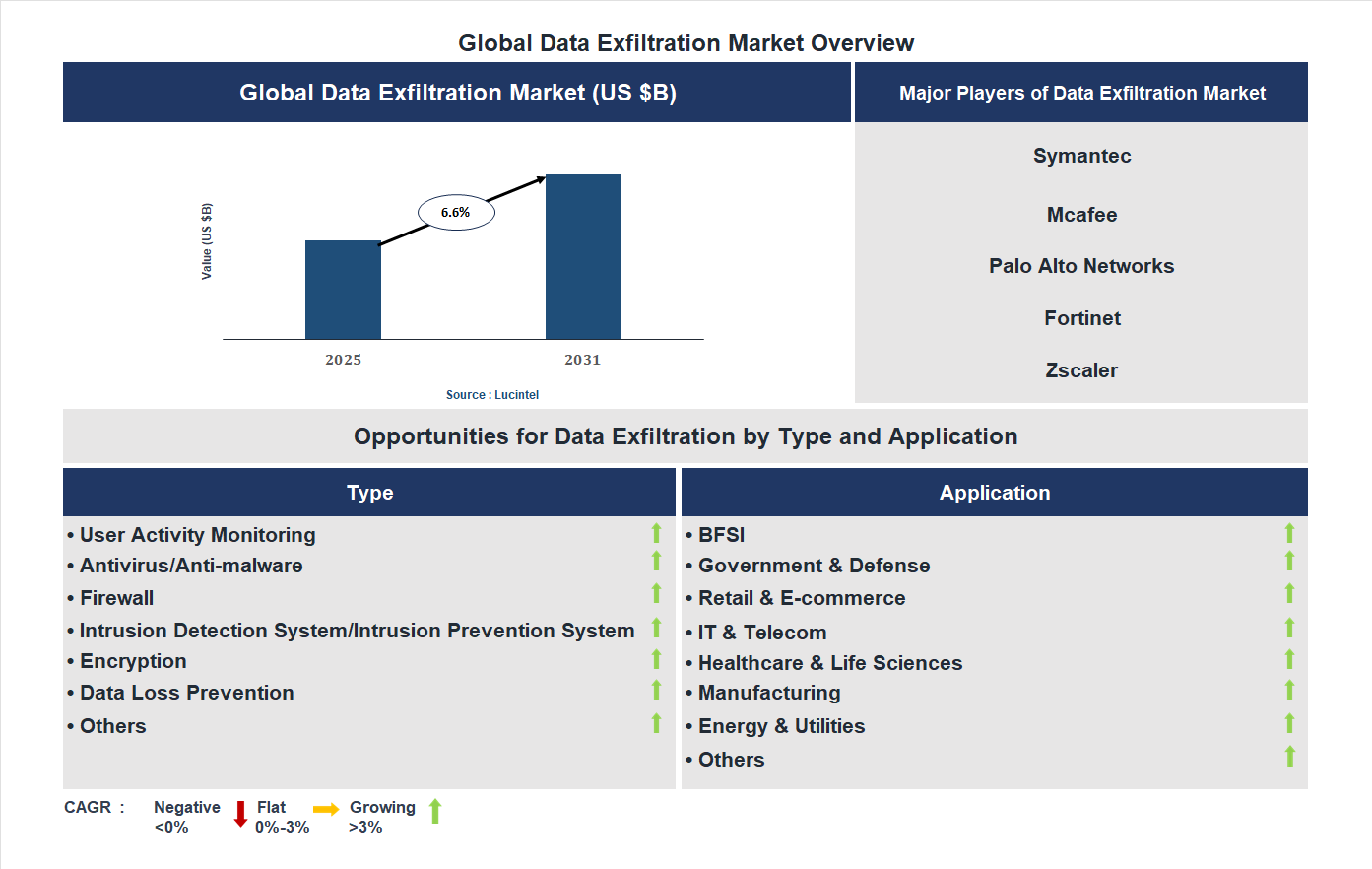
Key data points: The growth forecast = 6.6% annually for the next 7 years. Scroll below to get more insights. This market report covers trends, opportunities and forecasts in data exfiltration market to 2031 by type (user activity monitoring, antivirus/anti-malware, firewall, intrusion detection system/intrusion prevention system, encryption, data loss prevention, and others), application (BFSI, government & defense, retail & E-commerce, IT & telecom, healthcare & life sciences, manufacturing, energy & utilities, and others), and region (North America, Europe, Asia Pacific, and the Rest of the World)
We'll send your sample report shortly.
• Lucintel forecasts that, within the type category, intrusion detection system/intrusion prevention system is expected to witness the highest growth over the forecast period.
• Within the application category, healthcare & life science is expected to witness the highest growth.
• In terms of region, APAC is expected to witness the highest growth over the forecast period. Gain valuable insights for your business decisions with our comprehensive 150+ page report. Sample figures with some insights are shown below.
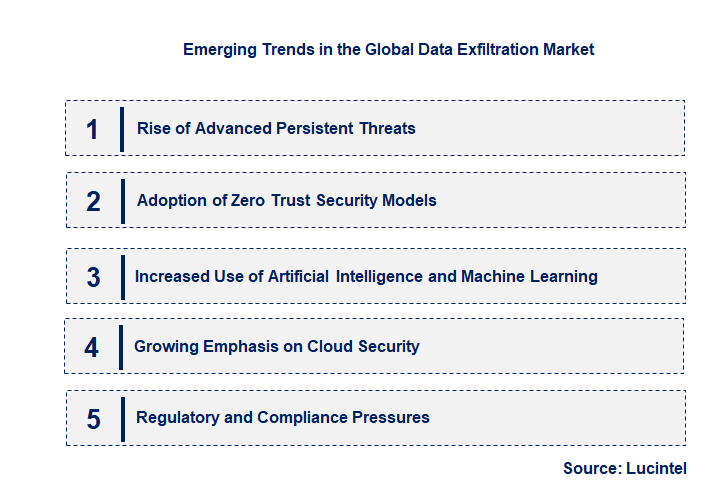
• Rise of Advanced Persistent Threats (APTs): APTs are becoming more sophisticated, targeting specific organizations over extended periods. These threats often involve stealthy, multi-stage attacks designed to exfiltrate data without detection. As cybercriminals develop more complex methods, the market is seeing increased demand for advanced detection and response solutions that can identify subtle signs of infiltration. This trend underscores the need for continuous monitoring, threat intelligence, and proactive security measures to prevent data breaches and minimize damage.
• Adoption of Zero Trust Security Models: Zero Trust architecture is gaining traction as organizations move away from perimeter-based security. This model assumes no implicit trust and verifies every access request, whether inside or outside the network. Implementing Zero Trust reduces the risk of data exfiltration by limiting lateral movement and enforcing strict access controls. The market is witnessing growth in solutions that support Zero Trust principles, such as micro-segmentation, multi-factor authentication, and continuous validation, which collectively enhance data security and reduce vulnerabilities.
• Increased Use of Artificial Intelligence (AI) and Machine Learning (ML): AI and ML are transforming data exfiltration detection by enabling real-time analysis of vast amounts of network data. These technologies can identify anomalous behaviors indicative of exfiltration attempts more accurately than traditional methods. Their deployment helps organizations quickly respond to threats, minimize data loss, and improve overall security posture. As cyber threats evolve, AI and ML-driven solutions are becoming essential components of comprehensive data security strategies, driving innovation and market growth.
• Growing Emphasis on Cloud Security: The migration to cloud environments introduces new challenges for data protection. Cloud-based data exfiltration solutions are emerging to address these vulnerabilities, offering real-time monitoring, encryption, and access controls tailored for cloud platforms. The market is expanding as organizations seek to secure their data across hybrid and multi-cloud environments. Cloud security solutions help prevent unauthorized data transfers, ensure compliance, and provide visibility into cloud activities, making them critical in the evolving landscape of data exfiltration threats.
• Regulatory and Compliance Pressures: Increasing regulations such as GDPR, CCPA, and HIPAA are compelling organizations to enhance their data security measures. Non-compliance can lead to hefty fines and reputational damage, prompting investments in advanced exfiltration prevention tools. The market is witnessing a surge in solutions that facilitate compliance reporting, data loss prevention, and audit trails. These regulatory pressures are driving innovation and adoption of comprehensive security frameworks, ensuring organizations can protect sensitive data while meeting legal requirements. In summary, these emerging trends are significantly reshaping the data exfiltration market by fostering more sophisticated, proactive, and integrated security solutions. The focus on advanced threat detection, zero trust models, AI/ML, cloud security, and regulatory compliance is creating a more resilient environment for data protection. As threats continue to evolve, the market is poised for continued growth and innovation, emphasizing the importance of adaptive and comprehensive security strategies to safeguard sensitive information.
• Rise of AI-Powered Detection Tools: The integration of artificial intelligence in data exfiltration detection has enhanced real-time monitoring and anomaly detection, enabling faster response times and reducing data breach risks. This development improves overall security posture and minimizes potential damages from cyberattacks.
• Increased Adoption of Zero Trust Architecture: Organizations are increasingly implementing zero trust models, which assume no implicit trust within the network. This approach limits access to sensitive data, making exfiltration more difficult and reducing the attack surface, thereby strengthening data security.
• Growing Use of Cloud Security Solutions: As cloud adoption accelerates, vendors are developing specialized security tools to monitor and prevent data exfiltration in cloud environments. These solutions address unique challenges posed by cloud infrastructure, ensuring data remains protected across hybrid and multi-cloud setups.
• Regulatory and Compliance Pressures: Governments and industry bodies are imposing stricter data protection regulations, such as GDPR and CCPA. These regulations compel organizations to adopt robust exfiltration prevention measures, influencing market growth and encouraging innovation in compliance-focused security solutions.
• Emergence of Deception Technologies: Deception-based security tools, such as honeypots and decoys, are gaining traction to detect and divert exfiltration attempts. These technologies provide early warning and help organizations understand attack vectors, enhancing overall threat intelligence. In summary, these developments are significantly impacting the data exfiltration market by driving innovation, improving detection and prevention capabilities, and emphasizing compliance. The market is becoming more sophisticated and resilient, enabling organizations to better defend against evolving cyber threats and protect their critical data assets.
• Healthcare: Enhanced Data Security Solutions : The healthcare sector is increasingly adopting advanced data security solutions to protect patient records and comply with regulations like HIPAA. This growth reduces the risk of data breaches, improves patient trust, and ensures regulatory compliance, thereby expanding the market for specialized exfiltration prevention tools.
• Finance: Real-Time Monitoring and Response : Financial institutions are investing in real-time data monitoring and response systems to detect and prevent unauthorized data transfers instantly. This capability minimizes financial losses and reputational damage, driving demand for sophisticated exfiltration detection technologies within the finance sector.
• Government: Secure Data Sharing Platforms : Governments are developing secure data sharing platforms to facilitate inter-agency collaboration while safeguarding sensitive information. This creates opportunities for solutions that enable controlled data exfiltration, ensuring operational efficiency without compromising security.
• Retail: Advanced Endpoint Security : The retail industry is deploying advanced endpoint security solutions to prevent data theft from POS systems and customer databases. This growth opportunity enhances customer trust, reduces fraud, and supports compliance, fueling the expansion of exfiltration prevention tools tailored for retail environments.
• Manufacturing: Industrial Control System Security : Manufacturing firms are focusing on securing industrial control systems against data exfiltration, especially with the rise of Industry 4.0. This creates a demand for specialized security solutions that protect intellectual property and operational data, fostering market growth. In summary, these growth opportunities across key applications are significantly impacting the data exfiltration market by driving innovation, increasing demand for tailored security solutions, and enabling organizations to better safeguard their critical data assets. As these sectors adopt more advanced and integrated security measures, the market is poised for sustained expansion and technological advancement.
• Increasing Cybersecurity Threats: The surge in cyberattacks, including ransomware, phishing, and malware, has heightened the need for advanced data protection solutions. Organizations face significant risks of data breaches, which can lead to financial losses, reputational damage, and legal penalties. This escalating threat landscape compels companies to invest heavily in detection and prevention technologies, fueling market growth. As cybercriminals develop more sophisticated methods, the demand for innovative exfiltration detection tools continues to rise, making cybersecurity a critical driver in this market.
• Adoption of Cloud Computing and Remote Work: The widespread adoption of cloud services and remote working arrangements has expanded the attack surface for data exfiltration. Cloud environments, while offering flexibility and scalability, pose unique security challenges that require specialized solutions. Remote work increases reliance on digital communication channels, which can be exploited by malicious actors. Consequently, organizations are investing in advanced monitoring and data loss prevention tools to secure their cloud and remote infrastructure, significantly driving market expansion as businesses seek to mitigate these emerging risks.
• Regulatory Compliance and Data Privacy Laws: Stringent regulations such as GDPR, HIPAA, and CCPA mandate organizations to implement robust data protection measures. Non-compliance can result in hefty fines and legal repercussions, incentivizing companies to adopt comprehensive security solutions. These regulations also require continuous monitoring and reporting of data exfiltration attempts, boosting demand for specialized tools. The evolving legal landscape compels organizations to prioritize data security, making regulatory compliance a key driver for growth in the data exfiltration market.
• Increasing Investment in Cybersecurity Infrastructure: Governments and private enterprises are increasing their budgets for cybersecurity infrastructure to combat rising cyber threats. This investment includes deploying advanced threat detection systems, encryption technologies, and security analytics platforms. The focus on proactive security measures to prevent data exfiltration incidents encourages market expansion. As organizations recognize the importance of safeguarding their data assets, the demand for innovative exfiltration detection and prevention solutions accelerates, fueling overall market growth.
• Growing Awareness and Digital Transformation: As organizations undergo digital transformation, awareness of data security issues has heightened. Businesses recognize that data exfiltration can lead to severe operational and financial consequences. This awareness drives the adoption of comprehensive security strategies, including real-time monitoring and incident response solutions. The push towards digital maturity necessitates robust data security measures, thereby propelling the market forward as companies seek to protect their digital assets from exfiltration threats. The challenges facing this data exfiltration market include:
• Evolving and Sophisticated Cyber Threats: Cybercriminals continually develop more advanced techniques to bypass security measures, making data exfiltration harder to detect and prevent. These threats include encrypted exfiltration channels, fileless attacks, and insider threats, which require sophisticated and adaptive security solutions. The rapid evolution of attack methods demands ongoing innovation and resource investment from organizations, posing a significant challenge to maintaining effective defenses and increasing the complexity of the market landscape.
• High Implementation and Maintenance Costs: Deploying comprehensive data exfiltration detection and prevention systems can be expensive, especially for small and medium-sized enterprises. The costs associated with acquiring, integrating, and maintaining advanced cybersecurity tools can be prohibitive, limiting adoption. Additionally, ongoing staff training and system updates add to operational expenses. These financial barriers hinder widespread implementation, creating a challenge for market growth, particularly in regions with limited cybersecurity budgets.
• Regulatory and Compliance Complexities: While regulations drive demand, they also introduce complexities that organizations must navigate carefully. Differing regional laws and standards can create compliance challenges, requiring tailored solutions and increased administrative efforts. Non-compliance risks penalties and reputational damage, but the complexity of aligning security measures with diverse legal requirements can be daunting. This regulatory landscape complicates market expansion and necessitates specialized expertise, posing a significant challenge for vendors and organizations alike. In summary, the data exfiltration market is shaped by a combination of technological innovations, regulatory pressures, and increasing cyber threats. While these drivers foster growth by encouraging investment in advanced security solutions, challenges such as evolving threats, high costs, and regulatory complexities pose obstacles. The markets future will depend on how effectively organizations and vendors can adapt to these dynamics, balancing innovation with cost-efficiency and compliance. Overall, the market is poised for growth, driven by the urgent need to protect sensitive data in an increasingly digital world, despite the hurdles that must be addressed.
• Symantec
• Mcafee
• Palo Alto Networks
• Fortinet
• Zscaler
• Sophos
• Trend Micro
• Check Point Software Technologies
• Juniper Networks
• Fireeye
• User Activity Monitoring
• Antivirus/Anti-malware
• Firewall
• Intrusion Detection System/Intrusion Prevention System
• Encryption
• Data Loss Prevention
• Others
• BFSI
• Government & Defense
• Retail & E-commerce
• IT & Telecom
• Healthcare & Life Sciences
• Manufacturing
• Energy & Utilities
• Others
• North America
• Europe
• Asia Pacific
• The Rest of the World
• United States: The US market is experiencing rapid growth due to increased cyberattacks targeting critical infrastructure and enterprises. Major players are developing advanced threat detection systems, including AI-powered solutions. Regulatory frameworks like CCPA and HIPAA are prompting organizations to enhance data security measures. Investments in cloud security and zero-trust architectures are rising, with government agencies adopting stricter compliance standards. The US also sees a surge in startups innovating in data loss prevention (DLP) and endpoint security, contributing to a dynamic and competitive landscape.
• China: China is focusing on strengthening its cybersecurity infrastructure amid rising cyber threats and government initiatives. The government has implemented strict data localization laws, impacting how companies handle data exfiltration risks. Domestic firms are investing heavily in AI-driven security solutions to monitor and prevent data breaches. The market is also driven by increased adoption of cloud services and digital transformation efforts. Regulatory policies emphasize data sovereignty, prompting companies to adopt localized security measures. Overall, China’s market is characterized by rapid technological adoption and government-led initiatives to secure data assets.
• Germany: Germany’s data exfiltration market is shaped by stringent EU data protection regulations, notably GDPR, which compel organizations to adopt robust security measures. The country is witnessing increased deployment of advanced encryption and monitoring tools to prevent data leaks. German companies are investing in integrated security solutions that combine threat detection with compliance management. The market also benefits from a strong industrial sector, which is vulnerable to targeted cyber espionage. Public-private partnerships and government initiatives are promoting cybersecurity awareness and innovation, positioning Germany as a leader in data security within Europe.
• India: India’s market is expanding rapidly due to digital growth, increased cyberattacks, and government initiatives like Digital India. Organizations are adopting advanced security solutions, including AI and machine learning-based detection tools, to combat data exfiltration. The rise of cloud adoption and remote working has increased vulnerabilities, prompting investments in endpoint security and data encryption. The government’s focus on cybersecurity policies and national cyber defense strategies is fostering a conducive environment for market growth. Startups and local firms are innovating in threat detection, making India a significant emerging player in the data exfiltration security landscape.
• Japan: Japan is strengthening its cybersecurity framework amid rising cyber threats targeting its industrial and financial sectors. The government has introduced new regulations and guidelines to improve data security practices. Japanese firms are investing in advanced security technologies such as behavioral analytics and AI-based monitoring systems. The market is also driven by increased awareness of data privacy and compliance requirements. Collaborations between government agencies and private companies are fostering innovation in threat detection and response. Japan’s focus on securing critical infrastructure and promoting cybersecurity resilience positions it as a key player in the regional data exfiltration market.


• Symantec
• Mcafee
• Palo Alto Networks
• Fortinet
• Zscaler
• Sophos
• Trend Micro
• Check Point Software Technologies
• Juniper Networks
• Fireeye Q5. Which data exfiltration market segment will be the largest in future? Answer: Lucintel forecasts that, within the type category, intrusion detection system/intrusion prevention system is expected to witness the highest growth over the forecast period. Q6. In data exfiltration market, which region is expected to be the largest in next 5 years? Answer: In terms of region, APAC is expected to witness the highest growth over the forecast period. Q7. Do we receive customization in this report? Answer: Yes, Lucintel provides 10% customization without any additional cost.


Choose a license that fits your team. Instant PDF delivery.
Prices exclude taxes. Instant delivery. Custom licensing available on request.
Market Report · July 31, 2026
Market Report · July 31, 2026
Market Report · July 31, 2026
Trusted partner for strategic intelligence and business growth


Receive a complimentary market analysis tailored to your industry. Our analysts will identify key growth opportunities and competitive dynamics specific to your business.

Market size, growth rate, and key trend analysis for your specific sector.

Top competitor positioning and market share analysis.

Strategic recommendations backed by data-driven insights.
Get curated market intelligence and competitive moves straight to your inbox.
By subscribing, you agree to receive our monthly insights. Unsubscribe anytime.
Receive a complimentary market analysis tailored to your industry. Our analysts will identify key growth opportunities and competitive dynamics specific to your business.
Market size, growth rate, and key trend analysis for your specific sector.
Top competitor positioning and market share analysis.
Strategic recommendations backed by data-driven insights.
Get curated market intelligence, emerging trends, and competitive moves straight to your inbox each month.
By subscribing, you agree to receive our monthly insights. Unsubscribe anytime.
We'll send your sample report shortly.