
Market Report · July 31, 2026

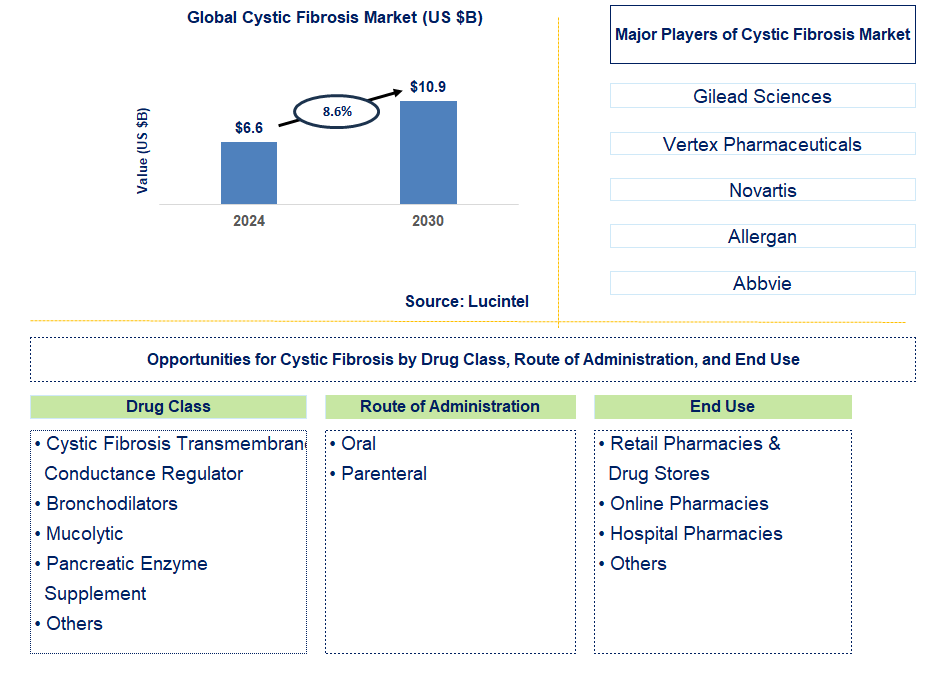
Key data points: The market size in 2030 = $10.9 billion, growth forecast = 8.6% annually next 6 years. Scroll below to get more insights. This market report covers trends, opportunities, and forecasts in the global cystic fibrosis market to 2030 by drug class (cystic fibrosis transmembrane conductance regulator (CFTR), bronchodilators, mucolytic, pancreatic enzyme supplement, and others), route of administration (oral and parenteral), end use (retail pharmacies & drug stores, online pharmacies, hospital pharmacies, and others), and region (North America, Europe, Asia Pacific, and the Rest of the World)
We'll send your sample report shortly.
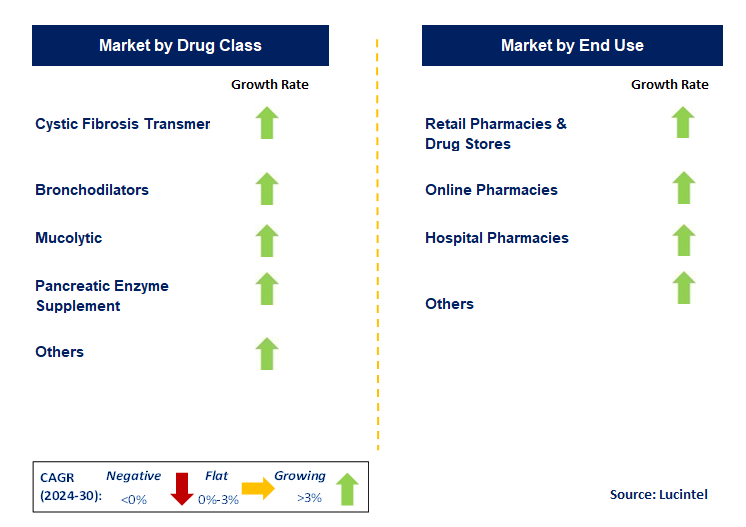
• Lucintel forecasts that, within the drug class category, cystic fibrosis transmembrane conductance regulator is expected to witness highest growth over the forecast period due to its expanding use to improve cellular body function, enhance patients' quality of life, and lessen lung flare-ups and respiratory symptoms.
• Within the end use category, Online pharmacy is expected to witness highest growth over the forecast period.
• In terms of regions, North America is expected to witness highest growth over the forecast period due to increasing number of people with various respiratory diseases, continuous healthcare infrastructural advancement, and presence of key players in the region. Gain valuable insights for your business decisions with our comprehensive 150+ page report.
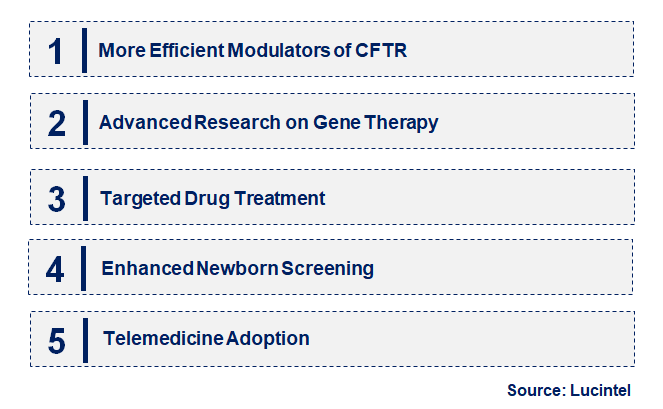
• More Efficient Modulators of CFTR: Among the prominent trends is the invention of more effective drugs like Trikafta, which relates to the CFTR modulators. These cause significant improvements in lung function and alleviation of symptoms in persons suffering from cystic fibrosis by addressing the primary causes of the condition.
• Advanced Research on Gene Therapy: The treatment of cystic fibrosis through gene therapy is fast becoming a reality. Current studies are directed toward finding methods to repair the genomes responsible for cystic fibrosis, thus enabling long-term control or a cure for the condition.
• Targeted Drug Treatment: The use of targeted drug therapies is being emphasized more, including the use of a person’s genetics to choose the appropriate treatment. This is done for better efficacy of therapy and fewer adverse events where specific genetic mutations are targeted.
• Enhanced Newborn Screening: There is a trend of increasing CF newborn screening programs in countries worldwide. With the overall screening process, early diagnosis of patients can be done in time, which can help them intervene and manage the progress of the disease, leading to better long-term prognosis.
• Telemedicine Adoption: There is an increasing trend of incorporating telemedicine into the system of care for cystic fibrosis. With the use of telehealth services, there are options for consultations, monitoring, and support services from different locations, thus improving access to care and making patient management easier, especially in low-resource settings.
• Nutrition and Other Care: There is also a growing trend toward strengthening nutritional and supportive care in cystic fibrosis management. Such comprehensive plans factor in dietary therapy, physiotherapy, and psychological therapy aimed at enhancing the health of the patient.
• Research Networks: There is a growing partnership between research institutions, pharmaceutical firms, and patient advocacy groups. These networks promote the use of common research, speed up the process of drug development, and encourage the emergence of more efficient cystic fibrosis therapies. These trends are changing the cystic fibrosis market by expanding available therapeutic alternatives and therapies, increasing patient satisfaction, and promoting development in research and care.
• Approval of CFTR Modulators: After the approval of the drug Trikafta, which acts on CFTR gene mutations, there is notable improvement in lung health and general well-being among cystic fibrosis patients. This is a major step forward in the history of cystic fibrosis management.
• Emergence of Gene Therapy: Research in the area of gene therapy aims to combine all known mutations to provide a solution to the genetic deficiency in cystic fibrosis. Current studies aimed at mutating the CFTR gene are being developed for future long-term use.
• Increased Access to Treatments in China: China is widening the range of available treatments for cystic fibrosis, including the provision of infrastructure for implementing newer CF therapeutics. New drug development is on the horizon, and more funding is available for research.
• Personalized Medicine Initiatives in Germany: In Germany, greater attention is being paid to cystic fibrosis personalized medicine, where the patient's genetic profile is used to influence treatment methods. This trend is predicted to improve treatment methods and patient outcomes.
• Improved Diagnostic Tools in Japan: Japan is acquiring advanced cystic fibrosis diagnostic tools, including tests aimed at CF screening and optimization of the disease. This timely communication between diseases and their management is of great importance.
• Expansion of Newborn Screening Programs: With the international opening of newborn screening programs for cystic fibrosis, early recognition of the disease is followed by timely therapy and management.
• Telemedicine Incorporation: More telemedicine is being incorporated into cystic fibrosis care as patients have access to online consultations and follow-ups. This trend positively impacts patient care and helps patients live better with the disease. Such advancements are influencing the cystic fibrosis market by providing improved treatment options and diagnoses, and helping in care accessibility.
• Formulation and Optimization of CFTR Modulators: Developing new CFTR modulators for various mutations with better efficacy deserves priority. Research in this area and funding for those efforts will be beneficial in achieving better therapeutic results and reaching more patients.
• Novel Gene Therapy Applications: One area where the market can experience transformational growth is associated with gene therapy. Developing a controlled and safe method of gene editing to correct CFTR mutations may change the nature of therapy and possibly even cure the illness.
• Growth of Newborn Screening Initiatives: There is also an opportunity to prevent and treat certain conditions through the growth of newborn screening initiatives across the globe. Effective screening programs can improve patient care and create a market for diagnostic and therapeutic products.
• Incorporation of Electronic Health Technologies: Wearable health monitoring devices and telehealth technologies facilitate remote monitoring and provide tailored treatment, hence the integration of these health technologies is useful. These technologies are emphasized in the treatment and management of patient care.
• Improvement of Supportive Care Services: Also, prospective inclusive care, such as expanding nutritional and physiotherapy support, holds promise. It is possible to improve quality of life and healthcare outcomes through comprehensive care approaches that address the global needs of patients suffering from cystic fibrosis. These opportunities for growth are affecting the cystic fibrosis market through innovation, diversity of treatment approaches, and improvements in support models.
• Improvements of CFTR Lamodulators: A key thrust for growth is the creation and the approval of the CFTR modulators, such as Trikafta. These drugs have been proven to help the cancer patients regain their lungs and improve their quality of life, which makes them on high demand and increase the market share.
• Gene Therapy Development: There is an increasing market for cystic fibrosis therapies because of stimulant developments in this forms of therapy. It is possible that gene therapy aimed at the corrective measures of the mentioned genes with attributes of cystic fibrosis could be achieved.
• Increasing Newborn Screening: A significant reason is the rise of newborn screening programs. Timely diagnosis ensures timely treatment and management of the disease, and hence more such effective treatments and diagnostic tools are required.
• Technological Development: Owing to development of digital health technologies and diagnostic tools the market is also expanding. Better technologies increase the quality of care for patients, allow patients to be monitored from afar, and enable better diagnostics than currently possible.
• Emerging Demography and Increasing Awareness: Market increase is also influenced by the growing awareness about cystic fibrosis and attempts in developing countries to make treatments available. Improved access to therapies improves disease management and patients’ quality of life as well. Challenges in the cystic fibrosis market are:
• Expensive Treatments: Access may be impeded by the rather expensive revised CFTR modulator drugs and gene therapies. Economic factors, however, limit the number of patients who can afford to access care and also constrain the market in low and middle-income countries.
• Diverse Regulatory Issues: Seeking approval for new therapeutics and diagnostics involves a myriad of regulatory challenges. Different jurisdictions have different legal provisions which makes it difficult to market the product where it is required.
• Small Patient Population: The niche how big is the cystic fibrosis population size and that would limit further market growth and spending on research and development. The niche also needs specific approaches for growth in the within acceptable limits. these drivers and challenges are affecting the Cystic Fibrosis market in terms of the way treatment development, treatment access, and regulations have to be done. There are these rest factors which the market is changing to these in order to take care of the patients better.
• Gilead Sciences
• Vertex Pharmaceuticals
• Novartis
• Allergan
• AbbVie
• Teva Pharmaceutical Industries
• F. Hoffmann-La Roche
• Pharmaxis
• Mylan
• GlaxoSmithKline
• Cystic Fibrosis Transmembrane Conductance Regulator (CFTR)
• Bronchodilators
• Mucolytic
• Pancreatic Enzyme Supplement
• Others
• Oral
• Parenteral
• Retail Pharmacies & Drug Stores
• Online Pharmacies
• Hospital Pharmacies
• Others
• North America
• Europe
• Asia Pacific
• The Rest of the World
• United States: The U.S. is embracing the approval and use of highly effective CFTR modulators, including Trikafta, which have proved to be game-changers, demonstrating effectiveness in treatment and improving quality of life and lung function in most cases. Current studies aim to broaden the scope of therapies and target gene therapy development.
• China: China is enhancing its cystic fibrosis treatment landscape with the introduction of newer drugs and increased access to advanced therapies. The country is also investing in research to address the high prevalence of cystic fibrosis in certain regions.
• Germany: In Germany, the incorporation of CFTR modulators into treatment protocols has been achieved in a manner consistent with European policy directions. Attention is slowly shifting toward personalized medicine and the quest for mutation-specific therapies.
• India: In India, there is increased availability of cystic fibrosis treatments and growing awareness of the disease. Efforts are ongoing to facilitate access to new medicines and assist research programs aimed at improving cystic fibrosis management.
• Japan: Japan shows a trend toward improvements in cystic fibrosis treatment as new drugs and therapies are approved. The country’s efforts also include enhancing services to patients by applying improved diagnostic solutions and increasing alternative treatment options.


• Gilead Sciences
• Vertex Pharmaceuticals
• Novartis
• Allergan
• AbbVie
• Teva Pharmaceutical Industries
• F. Hoffmann-La Roche
• Pharmaxis
• Mylan
• GlaxoSmithKline Q6. Which cystic fibrosis market segment will be the largest in future? Answer: Lucintel forecasts that cystic fibrosis transmembrane conductance regulator is expected to witness highest growth over the forecast period due to its expanding use to improve cellular body function, enhance patients' quality of life, and lessen lung flare-ups and respiratory symptoms. Q7. In cystic fibrosis market, which region is expected to be the largest in next 5 years? Answer: North America is expected to witness highest growth over the forecast period due to increasing number of people with various respiratory diseases, continuous healthcare infrastructural advancement, and presence of key players in the region. Q.8 Do we receive customization in this report? Answer: Yes, Lucintel provides 10% customization without any additional cost.


Choose a license that fits your team. Instant PDF delivery.
Prices exclude taxes. Instant delivery. Custom licensing available on request.
Market Report · July 31, 2026
Market Report · July 31, 2026
Market Report · July 31, 2026
Trusted partner for strategic intelligence and business growth


Receive a complimentary market analysis tailored to your industry. Our analysts will identify key growth opportunities and competitive dynamics specific to your business.

Market size, growth rate, and key trend analysis for your specific sector.

Top competitor positioning and market share analysis.

Strategic recommendations backed by data-driven insights.
Get curated market intelligence and competitive moves straight to your inbox.
By subscribing, you agree to receive our monthly insights. Unsubscribe anytime.
Receive a complimentary market analysis tailored to your industry. Our analysts will identify key growth opportunities and competitive dynamics specific to your business.
Market size, growth rate, and key trend analysis for your specific sector.
Top competitor positioning and market share analysis.
Strategic recommendations backed by data-driven insights.
Get curated market intelligence, emerging trends, and competitive moves straight to your inbox each month.
By subscribing, you agree to receive our monthly insights. Unsubscribe anytime.
We'll send your sample report shortly.