
Report Feature
Cycling Helmet Market Trends and Forecast
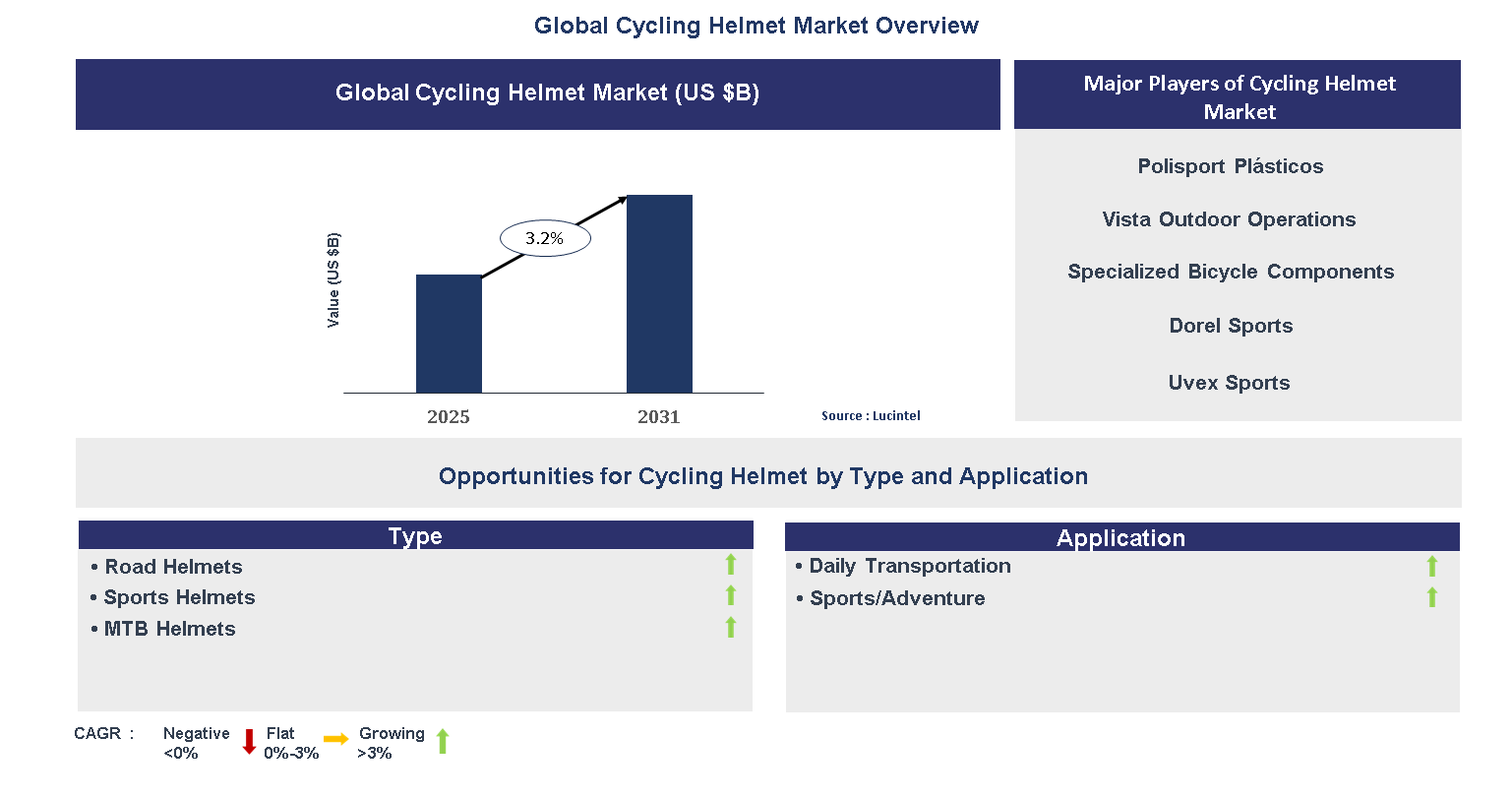
The future of the global cycling helmet market looks promising with opportunities in the daily transportation and sports/adventure markets. The global cycling helmet market is expected to grow with a CAGR of 3.2% from 2025 to 2031. The major drivers for this market are the increasing participation in recreational cycling activities, the rising awareness about cycling safety standards, and the growing demand for lightweight, high-performance helmets.• Lucintel forecasts that, within the type category, MTB helmet is expected to witness the highest growth over the forecast period.
• Within the application category, sports/adventure is expected to witness higher growth.
• In terms of region, APAC is expected to witness the highest growth over the forecast period. Gain valuable insights for your business decisions with our comprehensive 150+ page report. Sample figures with some insights are shown below.
Emerging Trends in the Cycling Helmet Market
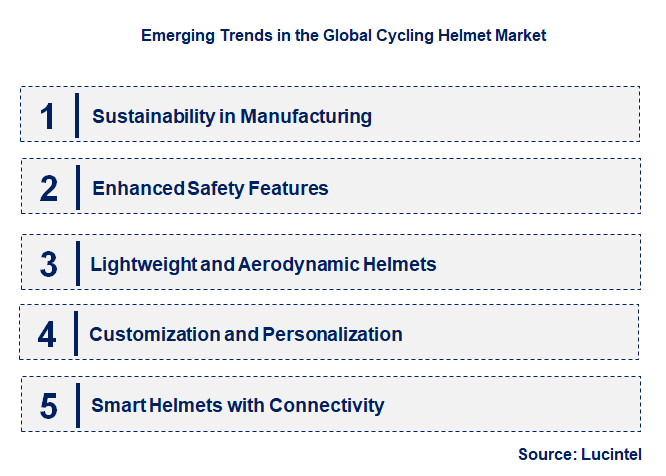
The cycling helmet market is evolving, driven by trends such as increased safety, technological integration, and consumer demand for comfort and style. These trends are reshaping how cycling helmets are designed, manufactured, and marketed, as both recreational and professional cyclists seek improved protection and a better overall cycling experience.• Sustainability in Manufacturing: Sustainability is becoming a key focus in the cycling helmet market, with more manufacturers using eco-friendly materials such as recycled plastics and biodegradable foams. As consumer awareness about environmental impact rises, brands are adapting by implementing green manufacturing practices. This trend is reshaping the market by appealing to eco-conscious riders who prioritize sustainable products.
• Enhanced Safety Features: The integration of advanced safety features like MIPS (Multi-directional Impact Protection System) and WaveCel technology is transforming helmet designs. These innovations reduce rotational forces during impacts, offering better protection to cyclists. As safety concerns continue to dominate, these features are becoming standard in high-end helmets, leading to a safer cycling experience for users.
• Lightweight and Aerodynamic Helmets: Lightweight and aerodynamic helmets are increasingly sought after, particularly by competitive cyclists. By using materials like carbon fiber and advanced foams, manufacturers are creating helmets that reduce weight while improving performance. These helmets provide better comfort and reduce wind resistance, appealing to professional athletes and avid cyclists seeking high-performance gear.
• Customization and Personalization: Customization is becoming a major trend, with consumers seeking helmets that fit their specific needs in terms of design, fit, and comfort. Adjustable fit systems, personalized colors, and removable padding are some features gaining popularity. This trend allows cyclists to tailor their helmets to individual preferences, driving both comfort and style in the market.
• Smart Helmets with Connectivity: Smart helmets, integrated with Bluetooth, GPS, and communication systems, are rapidly gaining traction. These helmets allow cyclists to stay connected, navigate with ease, and communicate with others while cycling. As technology becomes a central part of everyday cycling gear, smart helmets offer convenience and safety, particularly for urban and commuter cyclists. Emerging trends in the cycling helmet market, including smart helmets, sustainability, and advanced safety technologies, are transforming how helmets are designed and used. As consumers demand more personalized, eco-friendly, and high-performance products, manufacturers are responding by adopting innovative solutions to meet these expectations. These trends are creating a more dynamic, competitive, and safety-conscious helmet market.
Recent Development in the Cycling Helmet Market
Recent developments in the cycling helmet market reflect advancements in technology, materials, and consumer demand. These innovations aim to improve safety, comfort, and overall user experience. As cycling continues to grow in popularity, manufacturers are investing in research and development to create helmets that cater to diverse market segments and comply with global safety standards.• Smart Technology Integration: One of the most significant developments in cycling helmets is the integration of smart technology. Helmets now come equipped with Bluetooth, GPS navigation, and communication systems, enhancing the cycling experience. These features help cyclists stay connected, navigate routes, and communicate with fellow riders, making smart helmets a popular choice among tech-savvy cyclists.
• Advanced Safety Features: The introduction of advanced safety technologies like MIPS and WaveCel has revolutionized helmet design. MIPS, for example, reduces rotational forces on the brain in case of an impact. These technologies are becoming more common, particularly in higher-end helmets, providing cyclists with additional layers of protection against head injuries.
• Lightweight Materials: Cycling helmet manufacturers are increasingly using lightweight materials like carbon fiber and polycarbonate shells to reduce helmet weight without compromising on safety. Lighter helmets improve comfort and performance, particularly for professional cyclists who require helmets that do not hinder their speed or endurance during long rides.
• Focus on Sustainability: Sustainability is a growing concern in the helmet market. Brands are shifting towards eco-friendly materials, such as biodegradable foams and recycled plastics, in response to consumer demand for greener products. These innovations help reduce the environmental impact of manufacturing while maintaining the helmet’s safety and durability.
• Custom Fit and Aesthetics: Customization is a key trend, with helmets now available in a range of sizes, colors, and adjustable features for a better fit. Manufacturers are offering personalized options for consumers, such as custom padding, straps, and vent placements, enhancing both comfort and style. This trend is particularly appealing to recreational and professional cyclists alike. Recent developments in the cycling helmet market are largely focused on enhancing safety, comfort, and user experience through technological advancements, lightweight materials, and customization options. These changes are driving the market toward a more diverse and consumer-focused landscape, with growing emphasis on sustainability and cutting-edge safety features that appeal to both everyday cyclists and professionals.
Strategic Growth Opportunities in the Cycling Helmet Market
The cycling helmet market presents several strategic growth opportunities as demand for cycling increases globally. Key opportunities lie in expanding product offerings, addressing specific consumer needs, and leveraging technological advancements to create helmets that offer superior performance, safety, and style. Manufacturers are focusing on diverse applications, from recreational cycling to professional sports.• Growing Demand for Smart Helmets: The increasing integration of smart technologies in helmets, such as Bluetooth connectivity and GPS navigation, presents a significant growth opportunity. As cyclists seek more connected and tech-driven experiences, manufacturers can capitalize on this trend by developing advanced helmets with features like communication systems, health tracking, and navigation capabilities.
• Expansion in Emerging Markets: As cycling gains popularity in countries like India and China, there is a growing demand for affordable yet safe helmets. Manufacturers have an opportunity to expand their market reach by offering helmets that meet local safety standards and cater to the needs of emerging cycling enthusiasts, particularly in urban areas with growing cycling infrastructure.
• Focus on Womens Cycling Helmets: There is an increasing focus on designing helmets specifically for women, addressing fit and comfort issues unique to female cyclists. Manufacturers can tap into this underserved segment by developing more stylish, lightweight, and comfortable helmets for women, encouraging more female participation in cycling across recreational and professional levels.
• Eco-Friendly Helmet Production: Sustainability is a key growth driver, and there is an opportunity for brands to invest in eco-friendly materials and processes. Helmets made from recycled plastics, biodegradable foams, and other sustainable materials appeal to environmentally conscious consumers. As sustainability becomes a priority, brands that lead in green innovation will attract a loyal customer base.
• Customization and Personalization: Offering personalized helmets with customizable features, such as fit, color, and design, presents a growth opportunity in the market. This trend is particularly appealing to enthusiasts and professional cyclists who want helmets tailored to their specific needs. By expanding customization options, manufacturers can differentiate themselves and build stronger customer loyalty. Strategic growth opportunities in the cycling helmet market are driven by innovation in smart technologies, customization, and sustainability. Manufacturers that capitalize on these trends can position themselves to meet the diverse needs of a growing and evolving market. As cycling continues to expand globally, these opportunities will shape the future of the helmet market.
Cycling Helmet Market Driver and Challenges
The cycling helmet market is influenced by technological advancements, rising safety awareness, and shifting consumer preferences. However, challenges like regulatory compliance, high production costs, and market competition present obstacles. Understanding these drivers and challenges is essential for manufacturers aiming to stay competitive and innovate in this growing market. The factors responsible for driving the cycling helmet market include: 1. Rising Safety Awareness: Increased awareness of head injuries and safety has driven the demand for high-quality helmets. Consumers are now more conscious of the importance of wearing helmets, leading to higher adoption rates among cyclists of all ages. 2. Technological Advancements: The integration of advanced technologies like MIPS, Bluetooth, and GPS in helmets is enhancing safety and comfort. These innovations are appealing to cyclists who seek smarter, more functional gear. 3. Growing Cycling Popularity: With the rise in cycling for fitness, recreation, and commuting, there is a growing demand for helmets. The increased popularity of cycling as a healthy, eco-friendly mode of transportation is contributing to the market’s growth. 4. Government Regulations: Stricter regulations and safety standards across regions have pushed helmet manufacturers to improve product safety. These regulations ensure helmets meet international standards and provide better protection for cyclists. 5. Rising Environmental Consciousness: As consumers demand more sustainable products, manufacturers are focusing on eco-friendly materials and processes. Helmets made from recycled or biodegradable materials cater to the growing environmentally conscious market. Challenges in the cycling helmet market are: 1. High Production Costs: The development of advanced safety features, smart technologies, and sustainable materials increases production costs. Manufacturers must balance innovation with price to remain competitive in the market. 2. Market Competition: The cycling helmet market is highly competitive, with numerous global and local players. Differentiating products and maintaining brand loyalty is a key challenge for manufacturers. 3. Regulatory Complexity: Complying with different regional standards and regulations can be challenging for global manufacturers. Each market has its own safety requirements, which increases complexity and cost for companies aiming to expand internationally. The cycling helmet market is driven by safety concerns, technological advancements, and rising consumer demand. However, challenges like high production costs, market competition, and regulatory compliance must be navigated to ensure long-term success. Manufacturers who can innovate while addressing these challenges will be well-positioned to lead in the evolving market.List of Cycling Helmet Companies
Companies in the market compete on the basis of product quality offered. Major players in this market focus on expanding their manufacturing facilities, R&D investments, infrastructural development, and leverage integration opportunities across the value chain. With these strategies cycling helmet companies cater increasing demand, ensure competitive effectiveness, develop innovative products & technologies, reduce production costs, and expand their customer base. Some of the cycling helmet companies profiled in this report include-• Polisport Plásticos
• Vista Outdoor Operations
• Specialized Bicycle Components
• Dorel Sports
• Uvex Sports
• Trek Bicycle Corporation
• ET-Helmets
• Limar
• Orbea
• SCOTT Sports
Cycling Helmet Market by Segment
The study includes a forecast for the global cycling helmet market by type, application, and region.Cycling Helmet Market by Type [Value from 2019 to 2031]:
• Road Helmets
• Sports Helmets
• MTB Helmets
Cycling Helmet Market by Application [Value from 2019 to 2031]:
• Daily Transportation
• Sports/Adventure
Cycling Helmet Market by Region [Value from 2019 to 2031]:
• North America
• Europe
• Asia Pacific
• The Rest of the World
Country Wise Outlook for the Cycling Helmet Market
The cycling helmet market is experiencing significant growth, driven by increasing awareness of safety, technological innovations, and growing cycling popularity. Countries like the United States, China, Germany, India, and Japan are seeing diverse developments in helmet design, materials, and consumer demand. As cycling becomes a mainstream activity, there is a strong push for helmets that combine safety with comfort, style, and sustainability.• United States: In the U.S., the cycling helmet market has seen innovations in smart helmets with integrated technology such as Bluetooth, speakers, and communication systems. Growing demand for high-performance helmets among both recreational and professional cyclists has led to improvements in aerodynamics, ventilation, and impact resistance. Environmental awareness is also prompting manufacturers to adopt sustainable materials.
• China: China’s cycling helmet market is growing rapidly, driven by an increasing number of urban cyclists and a push for improved safety standards. Many local manufacturers are focusing on affordable yet safe helmets, while international brands are expanding their presence in the market. Additionally, the integration of advanced materials and lightweight designs is becoming more prominent.
• Germany: Germany, known for its strong cycling culture, has seen developments focused on integrating innovative safety features such as MIPS (Multi-directional Impact Protection System). Sustainability is also a priority, with German manufacturers opting for eco-friendly materials and production processes. The market is also witnessing a rise in custom-made helmets tailored to meet specific cycling needs.
• India: In India, the cycling helmet market is in the early stages of growth, with increasing awareness of safety among urban cyclists. Demand is driven by the rapid expansion of cycling infrastructure and the rising popularity of cycling for fitness. Local brands are focusing on providing affordable helmets that meet international safety standards, while international players are entering the market.
• Japan: Japan’s cycling helmet market has witnessed steady growth, with a focus on high-quality materials and comfort. Japanese consumers prioritize both functionality and aesthetics in helmet design, leading to a rise in custom helmets with superior fit. Additionally, innovation in lightweight materials, ventilation systems, and enhanced protection technologies is helping Japanese manufacturers stay competitive globally.

Features of the Global Cycling Helmet Market
Market Size Estimates: Cycling helmet market size estimation in terms of value ($B). Trend and Forecast Analysis: Market trends (2019 to 2024) and forecast (2025 to 2031) by various segments and regions. Segmentation Analysis: Cycling helmet market size by type, application, and region in terms of value ($B). Regional Analysis: Cycling helmet market breakdown by North America, Europe, Asia Pacific, and Rest of the World. Growth Opportunities: Analysis of growth opportunities in different types, applications, and regions for the cycling helmet market. Strategic Analysis: This includes M&A, new product development, and competitive landscape of the cycling helmet market. Analysis of competitive intensity of the industry based on Porter’s Five Forces model.
FAQ
Q1. What is the growth forecast for cycling helmet market? Answer: The global cycling helmet market is expected to grow with a CAGR of 3.2% from 2025 to 2031. Q2. What are the major drivers influencing the growth of the cycling helmet market? Answer: The major drivers for this market are the increasing participation in recreational cycling activities, the rising awareness about cycling safety standards, and the growing demand for lightweight, high-performance helmets. Q3. What are the major segments for cycling helmet market? Answer: The future of the cycling helmet market looks promising with opportunities in the daily transportation and sports/adventure markets. Q4. Who are the key cycling helmet market companies? Answer: Some of the key cycling helmet companies are as follows:• Polisport Plásticos
• Vista Outdoor Operations
• Specialized Bicycle Components
• Dorel Sports
• Uvex Sports
• Trek Bicycle Corporation
• ET-Helmets
• Limar
• Orbea
• SCOTT Sports Q5. Which cycling helmet market segment will be the largest in future? Answer: Lucintel forecasts that, within the type category, MTB helmet is expected to witness the highest growth over the forecast period. Q6. In cycling helmet market, which region is expected to be the largest in next 5 years? Answer: In terms of region, APAC is expected to witness the highest growth over the forecast period. Q7. Do we receive customization in this report? Answer: Yes, Lucintel provides 10% customization without any additional cost.
Table of Contents
List of Figures
List of Tables
Methodology
- In-depth interviews of the major players in this market
- Detailed secondary research from competitors’ financial statements and published data
- Extensive searches of published works, market, and database information pertaining to industry news, company press releases, and customer intentions
- A compilation of the experiences, judgments, and insights of Lucintel’s professionals, who have analyzed and tracked this market over the years.


Buy Now
Choose a license that fits your team. Instant PDF delivery.
Prices exclude taxes. Instant delivery. Custom licensing available on request.
Key Questions
- • What are some of the most promising, high-growth opportunities for the cycling helmet market by type (road helmets, sports helmets, and MTB helmets), application (daily transportation and sports/adventure), and region (North America, Europe, Asia Pacific, and the Rest of the World)?
- • Which segments will grow at a faster pace and why?
- • Which region will grow at a faster pace and why?
- • What are the key factors affecting market dynamics? What are the key challenges and business risks in this market?
- • What are the business risks and competitive threats in this market?
- • What are the emerging trends in this market and the reasons behind them?
- • What are some of the changing demands of customers in the market?
- • What are the new developments in the market? Which companies are leading these developments?
- • Who are the major players in this market? What strategic initiatives are key players pursuing for business growth?
- • What are some of the competing products in this market and how big of a threat do they pose for loss of market share by material or product substitution?
- • What M&A activity has occurred in the last 5 years and what has its impact been on the industry? For any questions related to Cycling Helmet Market, Cycling Helmet Market Size, Cycling Helmet Market Growth, Cycling Helmet Market Analysis, Cycling Helmet Market Report, Cycling Helmet Market Share, Cycling Helmet Market Trends, Cycling Helmet Market Forecast, Cycling Helmet Companies, write Lucintel analyst at email: helpdesk@lucintel.com. We will be glad to get back to you soon.


