
Report Feature
Crude Oil Carrier Market Trends and Forecast
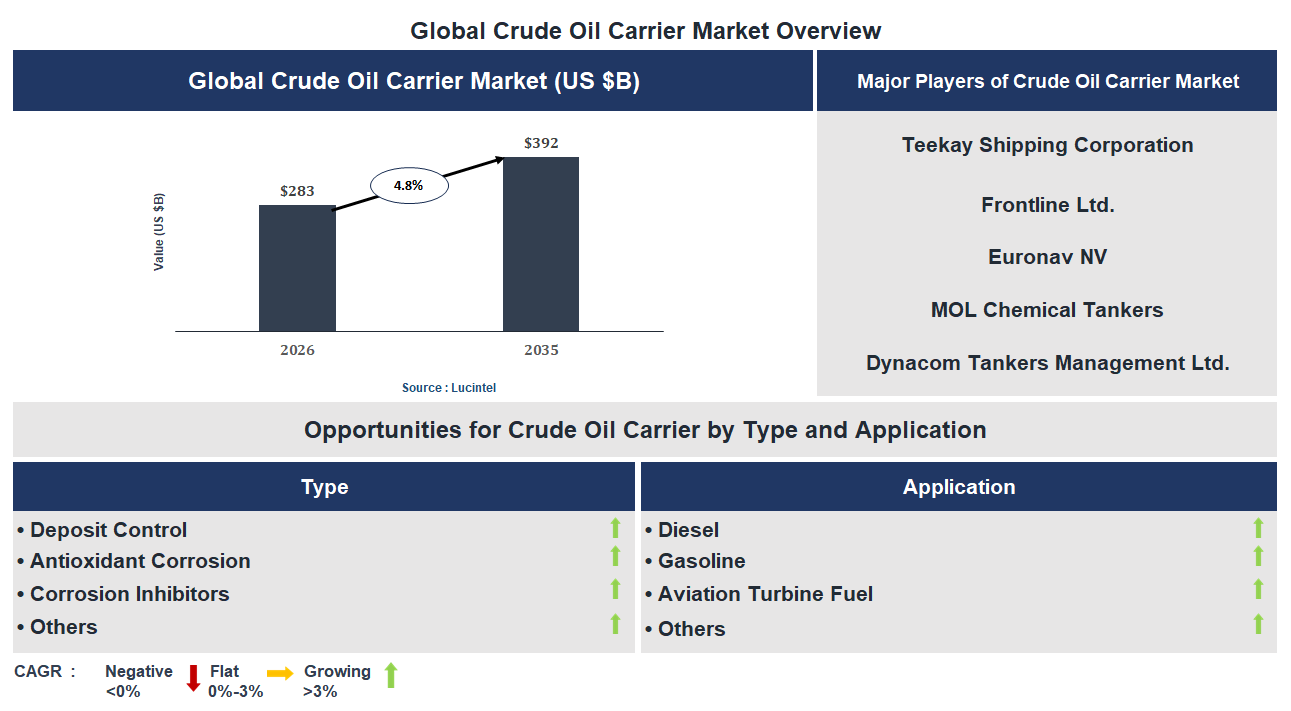
The future of the global crude oil carrier market looks promising with opportunities in the diesel, gasoline, and aviation turbine fuel markets. The global crude oil carrier market is expected to reach an estimated $392 billion by 2035 with a CAGR of 4.8% from 2026 to 2035. The major drivers for this market are the increasing demand for seaborne crude oil transportation, the rising investments in tanker fleet expansion, and the growing need for efficient oil logistics systems.• Lucintel forecasts that, within the type category, corrosion inhibitor is expected to witness the highest growth over the forecast period.
• Within the application category, diesel is expected to witness the highest growth.
• In terms of region, North America is expected to witness the highest growth over the forecast period. Gain valuable insights for your business decisions with our comprehensive 150+ page report. Sample figures with some insights are shown below.
Emerging Trends in the Crude Oil Carrier Market
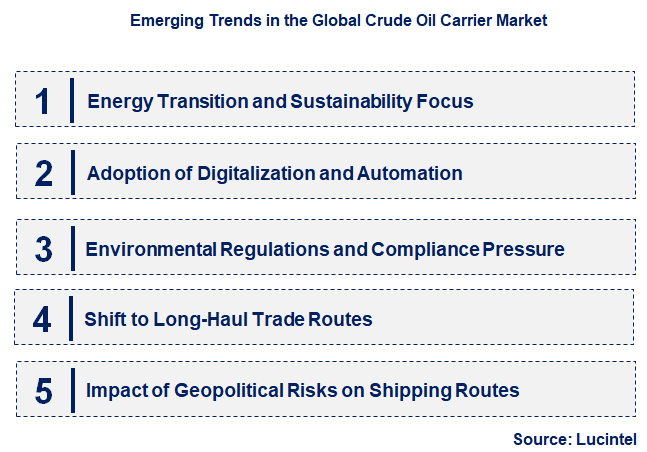
The crude oil carrier market is undergoing several transformations driven by new technologies, environmental considerations, and evolving trade patterns. These trends are reshaping the way oil is transported globally, with a significant focus on sustainability, efficiency, and regulatory compliance.• Energy Transition and Sustainability Focus: As global awareness of climate change grows, the crude oil carrier market is being influenced by the broader energy transition. Companies are investing in more energy-efficient vessels and exploring alternative fuels such as LNG (liquefied natural gas) and hydrogen. These developments are aimed at reducing emissions from shipping, which is a significant contributor to global pollution. Sustainability initiatives and adherence to international regulations like IMO 2020 are pushing carriers toward cleaner technologies, ensuring that the industry evolves in a more environmentally responsible direction.
• Adoption of Digitalization and Automation: The shipping industry is increasingly adopting digital technologies to improve operational efficiency. Automation, big data analytics, and AI-based systems are enabling better route optimization, predictive maintenance, and real-time tracking of shipments. This technological shift is improving safety, reducing costs, and enhancing the overall performance of crude oil carriers. Additionally, digitalization is helping operators better manage fleet logistics and respond more quickly to changing market conditions, making the crude oil shipping process more transparent and efficient.
• Environmental Regulations and Compliance Pressure: Environmental regulations, particularly the IMO 2020 sulfur cap, have significantly impacted the crude oil carrier market. Vessels are being retrofitted with scrubbers or adopting alternative fuels like low-sulfur fuel oil (LSFO) to comply with these rules. Additionally, stricter regulations around carbon emissions are pushing the industry toward further investment in greener technologies. Compliance with environmental standards is becoming a critical competitive factor for carriers, influencing fleet modernization and driving innovation in fuel efficiency and emissions reduction technologies.
• Shift to Long-Haul Trade Routes: Geopolitical shifts, such as changes in oil production and new trade agreements, are driving the demand for long-haul shipping. As countries like the U.S. increase their crude oil exports, tankers are being used more frequently for longer routes, such as from the U.S. to Asia and Europe. This shift is increasing demand for larger vessels, such as VLCCs (Very Large Crude Carriers), and pushing companies to expand their fleets to meet the growing need for long-distance transportation.
• Impact of Geopolitical Risks on Shipping Routes: Geopolitical risks, including tensions in oil-rich regions like the Middle East, have made shipping routes less predictable. The disruption of oil flows from key regions can lead to price volatility and shipping delays. This trend is causing oil producers to diversify their supply routes, including seeking alternative tanker routes to minimize risk. As a result, shipping companies are increasingly investing in secure and flexible transportation solutions to mitigate the impacts of geopolitical instability on their operations. The trends reshaping the crude oil carrier market are creating a more dynamic and competitive environment. With a growing emphasis on sustainability and digital transformation, the market is moving toward greater efficiency and environmental responsibility. At the same time, geopolitical risks and regulatory pressures are influencing shipping strategies, compelling companies to innovate and adapt to new global realities.
Recent Developments in the Crude Oil Carrier Market
The crude oil carrier market has witnessed notable changes due to various factors, including shifting global oil dynamics, technological advancements, and evolving regulatory landscapes. These developments have had a significant impact on the industry, driving modernization, efficiency, and sustainability initiatives.• Rise in U.S. Crude Oil Exports: The U.S. has seen a surge in crude oil exports, particularly due to its growing shale oil production. This has led to an increased demand for crude oil carriers, as American oil is shipped to new markets, especially in Asia. U.S. shipping companies are investing in larger vessels to handle the growing export volumes. The increase in exports has also prompted U.S. refineries to focus on improving their capacity, which, in turn, drives demand for more efficient shipping solutions.
• Expansion of China’s Tanker Fleet: China has continued to expand its tanker fleet in response to its growing demand for crude oil. As the largest importer of oil globally, China has made significant investments in both new tankers and modernizing existing fleets. Chinese companies are also focusing on the development of eco-friendly tankers to comply with international environmental regulations. These moves are part of China’s broader strategy to strengthen its energy security and support its Belt and Road Initiative by ensuring reliable access to oil.
• Germany’s Green Shipping Push: Germany has emerged as a leader in adopting green shipping practices, driven by its commitment to sustainability and the European Unions carbon reduction goals. The country has implemented stricter regulations for its shipping industry, pushing companies to invest in vessels with lower emissions. German carriers are also exploring alternative fuel options, such as LNG and hydrogen, to reduce their environmental impact. These efforts align with Germany’s broader energy transition and decarbonization objectives.
• India’s Modernization of its Tanker Fleet: India is undergoing a major overhaul of its crude oil carrier fleet. As one of the largest importers of crude oil, India is investing in modernizing its fleet to ensure more efficient and cost-effective transportation. Indian companies are focusing on upgrading their vessels to comply with IMO 2020 regulations, using cleaner fuels and adopting energy-efficient technologies. This modernization is crucial for meeting the country’s growing energy needs while adhering to global environmental standards.
• Japan’s Investment in Hybrid Vessels: Japan has made significant strides in improving the efficiency of its crude oil carriers by investing in hybrid vessels that combine traditional fuel with battery-powered systems. This investment is part of Japan’s broader efforts to reduce its carbon footprint and comply with international environmental regulations. Hybrid tankers are expected to reduce emissions and fuel consumption, making them a more sustainable option for transporting crude oil over long distances. These developments are driving the crude oil carrier market towards modernization and sustainability. The shift towards larger, more fuel-efficient vessels, combined with environmental regulations, is transforming the way crude oil is transported. The focus on green shipping technologies and the increasing adoption of digital solutions are reshaping the industry, ensuring that it remains competitive in an evolving global energy landscape.
Strategic Growth Opportunities in the Crude Oil Carrier Market
The crude oil carrier market offers numerous growth opportunities, particularly as countries continue to increase oil production, importation, and demand for cleaner shipping solutions. These opportunities are opening new avenues for businesses to expand their operations and improve efficiency.• Investing in Larger Tankers for Long-Haul Routes: As demand for long-haul crude oil transport increases, particularly between the U.S. and Asia, investing in larger tankers such as VLCCs presents a significant growth opportunity. These vessels can carry more crude, reducing unit transport costs and providing a competitive edge for shipping companies. The rise in U.S. oil exports, combined with growing energy demand in Asia, has created a need for more efficient, larger vessels that can handle these long-distance shipments.
• Green and Sustainable Shipping Solutions: With growing pressure to reduce carbon emissions, investing in green shipping technologies represents a major growth opportunity. Companies are exploring alternatives such as LNG-powered vessels and hybrid ships that combine traditional fuels with renewable energy sources. As international regulations continue to tighten, adopting these eco-friendly technologies will become a critical factor for carriers to stay competitive and compliant with global sustainability goals.
• Expanding Fleet Capabilities for Emerging Markets: Emerging markets, particularly in Asia and Africa, are experiencing rapid growth in energy demand, presenting an opportunity for shipping companies to expand their fleets and capture market share. As these regions continue to industrialize, the need for crude oil imports and efficient transportation networks will rise. Expanding fleet capabilities to cater to these emerging markets provides a significant opportunity for crude oil carriers to grow and diversify their revenue streams.
• Technology-Driven Operational Efficiencies: Investing in digital technologies, such as AI, big data, and automation, offers opportunities to optimize crude oil carrier operations. Improved route planning, predictive maintenance, and digital fleet management systems can increase efficiency, reduce operational costs, and improve safety. These technological advancements help companies respond more effectively to market fluctuations, improving profitability in a highly competitive market.
• Strategic Partnerships and Alliances: Strategic partnerships between oil producers, shipping companies, and technology firms offer growth opportunities through shared resources and knowledge. Collaborations to develop new tanker designs, share fleet capabilities, or implement sustainable practices can lead to reduced operational costs and increased market access. These partnerships also allow companies to pool expertise in dealing with geopolitical risks and regulatory challenges in the crude oil shipping industry. These growth opportunities are reshaping the crude oil carrier market by encouraging innovation, enhancing sustainability, and expanding market reach. By capitalizing on advancements in fleet capabilities, green technologies, and digital solutions, shipping companies are positioning themselves for long-term growth while meeting global energy demands and environmental expectations.
Crude Oil Carrier Market Driver and Challenges
The crude oil carrier market is shaped by numerous drivers and challenges, which include technological advancements, economic factors, and regulatory pressures. Understanding these forces is key to navigating the industrys complexities and seizing opportunities for growth. The factors responsible for driving the crude oil carrier market include:• Increase in Global Oil Production: The rise in global oil production, particularly from shale oil in the U.S., has increased the demand for crude oil carriers. This surge in production has resulted in more long-haul shipments, which requires larger vessels like VLCCs. The increase in oil output, especially from countries outside the OPEC framework, has created a stable demand for tankers, contributing to fleet expansion and modernization.
• Technological Advancements in Fleet Management: Advancements in digital technology, such as AI-driven analytics and blockchain for cargo tracking, are improving the efficiency of crude oil carriers. These technologies allow for better route optimization, predictive maintenance, and real-time tracking of shipments. The integration of these systems is reducing operational costs, enhancing safety, and increasing overall fleet productivity, benefiting both shippers and end customers.
• Environmental Regulations Driving Fleet Modernization: Environmental regulations, including IMO 2020, are pushing shipping companies to invest in cleaner, more energy-efficient vessels. The need to comply with these regulations is accelerating investments in low-emission technologies, such as scrubbers, LNG-powered ships, and hybrid vessels. Companies are also retrofitting older ships to meet new standards, ensuring that their fleets remain competitive in a more eco-conscious market.
• Rising Demand from Emerging Markets: Emerging economies, particularly in Asia and Africa, are fueling increased crude oil imports due to industrialization and population growth. As energy demand rises in these regions, crude oil imports and the need for oil carriers increase. Shipping companies are targeting these high-growth markets by expanding their fleets and improving operational efficiencies, creating new opportunities for carriers worldwide.
• Volatility in Oil Prices and Shipping Rates: Fluctuations in global oil prices affect the demand for crude oil transport, as lower oil prices can reduce production and trade volumes. Conversely, high oil prices can drive more shipping activity, as countries scramble to secure energy supplies. Shipping rates often fluctuate with these price movements, creating both opportunities and risks for crude oil carriers. The challenges facing the crude oil carrier market include:
• Geopolitical Instability: Geopolitical instability in key oil-producing regions, such as the Middle East and Venezuela, can disrupt shipping routes and lead to higher shipping costs. Oil sanctions, trade tariffs, and conflicts may also make certain shipping routes risky, affecting the profitability of tanker operations.
• Environmental Compliance Costs: Compliance with stringent environmental regulations, such as IMO 2020 and future carbon emission targets, requires significant investment in new technologies and vessel retrofits. These costs can impact the profitability of crude oil carriers, especially smaller companies that may struggle to meet new standards.
• Competition and Overcapacity: The crude oil carrier market is highly competitive, with numerous global players vying for market share. Overcapacity in certain segments, such as VLCCs, can lead to falling shipping rates and squeezed margins. Shipping companies must adapt to market fluctuations and improve efficiency to remain profitable in this competitive environment. The drivers of growth in the crude oil carrier market, such as increased oil production, technological advancements, and regulatory changes, present significant opportunities. However, challenges such as geopolitical instability, environmental compliance costs, and market competition must be managed strategically to ensure sustained growth and profitability in a rapidly evolving market.
List of Crude Oil Carrier Companies
Companies in the market compete on the basis of product quality offered. Major players in this market focus on expanding their manufacturing facilities, R&D investments, infrastructural development, and leverage integration opportunities across the value chain. With these strategies crude oil carrier companies cater increasing demand, ensure competitive effectiveness, develop innovative products & technologies, reduce production costs, and expand their customer base. Some of the crude oil carrier companies profiled in this report include-• Teekay Shipping Corporation
• Frontline Ltd.
• Euronav NV
• MOL Chemical Tankers
• Dynacom Tankers Management Ltd.
• AET Tankers
• Knock Nevis
• Berge Bulk
• Maersk Tankers
• China Shipping Tanker
Crude Oil Carrier Market by Segment
The study includes a forecast for the global crude oil carrier market by type, application, and region.Crude Oil Carrier Market by Type [Value from 2019 to 2035]:
• Deposit Control
• Antioxidant Corrosion
• Corrosion Inhibitors
• Others
Crude Oil Carrier Market by Application [Value from 2019 to 2035]:
• Diesel
• Gasoline
• Aviation Turbine Fuel
• Others
Crude Oil Carrier Market by Region [Value from 2019 to 2035]:
• North America
• Europe
• Asia Pacific
• The Rest of the World
Country Wise Outlook for the Crude Oil Carrier Market
The crude oil carrier market plays a crucial role in transporting oil to meet the demands of energy markets around the world. In recent years, key players like the United States, China, Germany, India, and Japan have witnessed significant changes, driven by factors such as shifts in energy consumption, regulatory pressures, and supply chain disruptions. These countries have adapted to evolving geopolitical tensions, oil price fluctuations, and technological advancements in the shipping industry. Below is a snapshot of these developments, highlighting each countrys response to the changing crude oil carrier landscape.• United States: The U.S. has been focusing on increasing its crude oil production and exports, which has spurred demand for oil carriers. With the rise of shale oil production, particularly in Texas, the U.S. has become a key player in the crude oil shipping market. In response to increased production, U.S. shipping companies are upgrading their fleets to handle larger volumes. Environmental regulations such as the IMO 2020 have also impacted U.S. carriers, pushing them toward more energy-efficient ships to comply with sulfur emissions standards. Moreover, trade tensions and tariffs have also influenced U.S. oil export routes and shipping strategies.
• China: China, as the worlds largest importer of crude oil, continues to drive demand for crude oil carriers. The country has ramped up its efforts to modernize its fleet to support its growing oil imports. With Chinas Belt and Road Initiative (BRI), there has been an increasing focus on expanding trade routes and infrastructure, leading to more investment in energy and shipping sectors. China’s growing energy demands and its efforts to diversify energy sources have further contributed to shaping its crude oil carrier market. Environmental concerns and regulatory standards have also prompted Chinese companies to focus on cleaner technologies in their fleets.
• Germany: Germany, being one of the leading industrialized nations in Europe, has witnessed shifts in its crude oil import strategies. While it is not a major oil producer, Germanys role as a transit hub for crude oil imports into Europe has increased. The country has been at the forefront of the push for cleaner and more sustainable shipping practices. Germanys adoption of IMO regulations and its growing commitment to green energy have led to investments in low-emission tanker vessels. As part of the European Union’s decarbonization goals, Germany is also prioritizing the reduction of carbon emissions in its shipping sector.
• India: India is one of the largest importers of crude oil, with a growing demand driven by industrial growth and transportation needs. India’s crude oil carrier market has been expanding as the country focuses on diversifying its energy sources and improving the efficiency of its oil imports. As part of the country’s efforts to boost domestic refining capacity, India is also investing in modernizing its tanker fleet. Furthermore, India is under pressure to comply with international environmental regulations like IMO 2020, which has led to Indian companies upgrading to more fuel-efficient and eco-friendly ships.
• Japan: Japan, with limited domestic oil resources, is highly dependent on crude oil imports for its energy needs. The country has seen a steady demand for crude oil tankers due to its significant energy consumption. However, Japan is increasingly focused on reducing its carbon footprint and embracing clean energy. Japanese companies are investing in next-generation tankers, including LNG-fueled and hybrid vessels, to reduce emissions. Japan’s efforts to comply with stringent international regulations and to address energy security challenges have led to ongoing modernization within its shipping industry.

Features of the Global Crude Oil Carrier Market
Market Size Estimates: Crude oil carrier market size estimation in terms of value ($B). Trend and Forecast Analysis: Market trends (2019 to 2025) and forecast (2026 to 2035) by various segments and regions. Segmentation Analysis: Crude oil carrier market size by type, application, and region in terms of value ($B). Regional Analysis: Crude oil carrier market breakdown by North America, Europe, Asia Pacific, and Rest of the World. Growth Opportunities: Analysis of growth opportunities in different types, applications, and regions for the crude oil carrier market. Strategic Analysis: This includes M&A, new product development, and competitive landscape of the crude oil carrier market. Analysis of competitive intensity of the industry based on Porter’s Five Forces model.
FAQ
Q1. What is the crude oil carrier market size? Answer: The global crude oil carrier market is expected to reach an estimated $392 billion by 2035. Q2. What is the growth forecast for crude oil carrier market? Answer: The global crude oil carrier market is expected to grow with a CAGR of 4.8% from 2026 to 2035. Q3. What are the major drivers influencing the growth of the crude oil carrier market? Answer: The major drivers for this market are the increasing demand for seaborne crude oil transportation, the rising investments in tanker fleet expansion, and the growing need for efficient oil logistics systems. Q4. What are the major segments for crude oil carrier market? Answer: The future of the crude oil carrier market looks promising with opportunities in the diesel, gasoline, and aviation turbine fuel markets. Q5. Who are the key crude oil carrier market companies? Answer: Some of the key crude oil carrier companies are as follows:• Teekay Shipping Corporation
• Frontline Ltd.
• Euronav NV
• MOL Chemical Tankers
• Dynacom Tankers Management Ltd.
• AET Tankers
• Knock Nevis
• Berge Bulk
• Maersk Tankers
• China Shipping Tanker Q6. Which crude oil carrier market segment will be the largest in future? Answer: Lucintel forecasts that, within the type category, corrosion inhibitor is expected to witness the highest growth over the forecast period. Q7. In crude oil carrier market, which region is expected to be the largest in next 8 years? Answer: In terms of region, North America is expected to witness the highest growth over the forecast period. Q8. Do we receive customization in this report? Answer: Yes, Lucintel provides 10% customization without any additional cost.
Table of Contents
List of Figures
List of Tables
Methodology
- In-depth interviews of the major players in this market
- Detailed secondary research from competitors’ financial statements and published data
- Extensive searches of published works, market, and database information pertaining to industry news, company press releases, and customer intentions
- A compilation of the experiences, judgments, and insights of Lucintel’s professionals, who have analyzed and tracked this market over the years.


Buy Now
Choose a license that fits your team. Instant PDF delivery.
Prices exclude taxes. Instant delivery. Custom licensing available on request.
Key Questions
- • What are some of the most promising, high-growth opportunities for the crude oil carrier market by type (deposit control, antioxidant corrosion, corrosion inhibitors, and others), application (diesel, gasoline, aviation turbine fuel, and others), and region (North America, Europe, Asia Pacific, and the Rest of the World)?
- • Which segments will grow at a faster pace and why?
- • Which region will grow at a faster pace and why?
- • What are the key factors affecting market dynamics? What are the key challenges and business risks in this market?
- • What are the business risks and competitive threats in this market?
- • What are the emerging trends in this market and the reasons behind them?
- • What are some of the changing demands of customers in the market?
- • What are the new developments in the market? Which companies are leading these developments?
- • Who are the major players in this market? What strategic initiatives are key players pursuing for business growth?
- • What are some of the competing products in this market and how big of a threat do they pose for loss of market share by material or product substitution?
- • What M&A activity has occurred in the last 5 years and what has its impact been on the industry? For any questions related to Crude Oil Carrier Market, Crude Oil Carrier Market Size, Crude Oil Carrier Market Growth, Crude Oil Carrier Market Analysis, Crude Oil Carrier Market Report, Crude Oil Carrier Market Share, Crude Oil Carrier Market Trends, Crude Oil Carrier Market Forecast, Crude Oil Carrier Companies, write Lucintel analyst at email: helpdesk@lucintel.com. We will be glad to get back to you soon.


