
Market Report · July 31, 2026

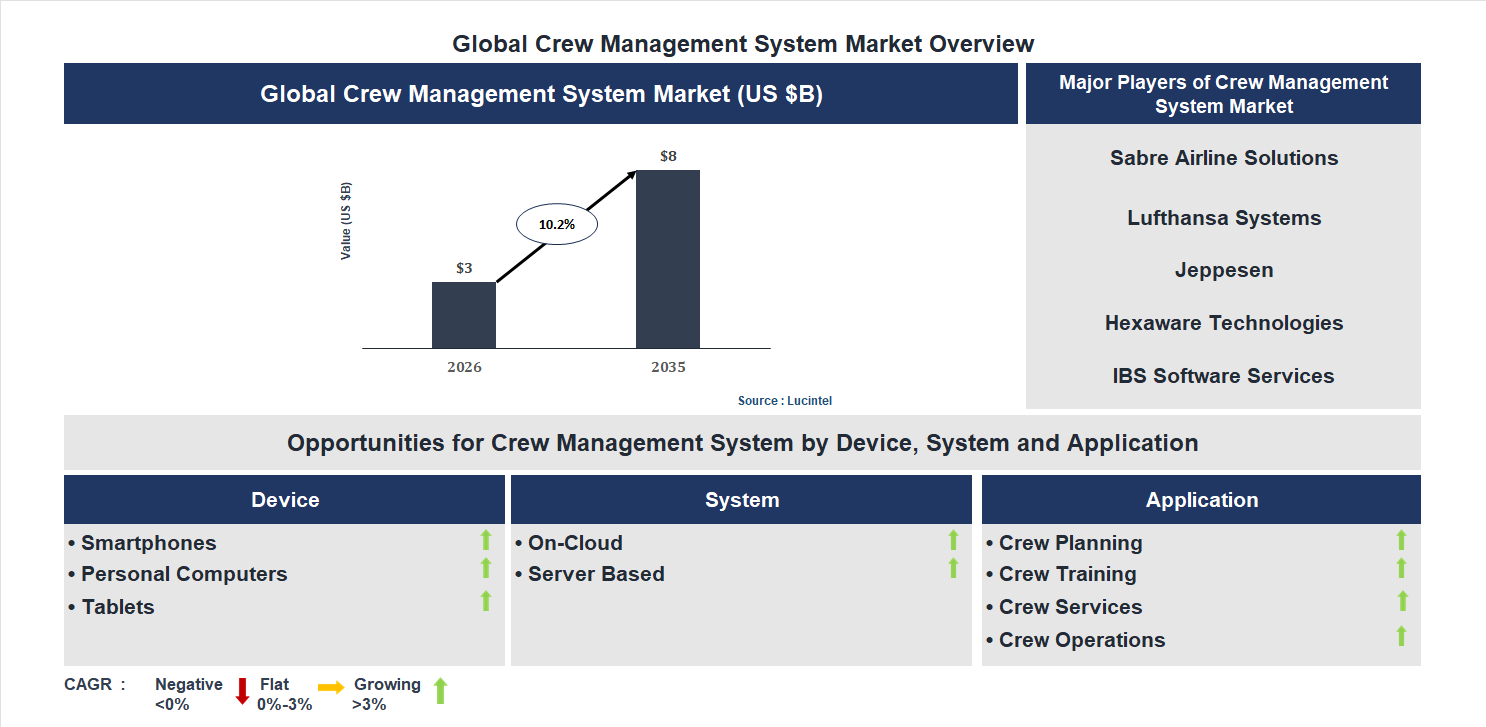
Key data points: The market size in 2035 = $8 billion, growth forecast = 10.2% annually for the next 8 years. Scroll below to get more insights. This market report covers trends, opportunities and forecasts in crew management system market to 2035 by device (smartphones, personal computers, and tablets), system (on-cloud and server based), application (crew planning, crew training, crew services, and crew operations), and region (North America, Europe, Asia Pacific, and the Rest of the World)
We'll send your sample report shortly.
• Lucintel forecasts that, within the device category, smartphone is expected to witness the highest growth over the forecast period.
• Within the application category, crew planning is expected to witness the highest growth.
• In terms of region, APAC is expected to witness the highest growth over the forecast period. Gain valuable insights for your business decisions with our comprehensive 150+ page report. Sample figures with some insights are shown below.
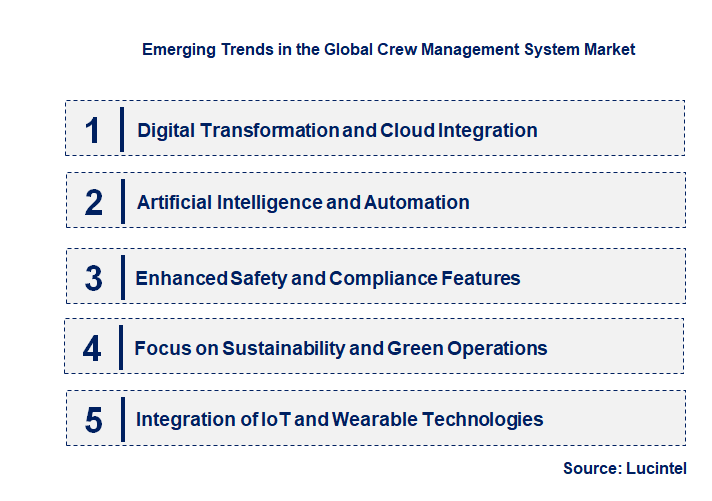
• Digital Transformation and Cloud Integration: The adoption of cloud-based crew management solutions is revolutionizing data accessibility and collaboration. Cloud platforms enable real-time updates, seamless communication, and centralized data management, reducing manual errors and operational delays. This trend enhances scalability and flexibility, allowing organizations to adapt quickly to changing demands. Cloud integration also facilitates remote access, supporting global operations and remote workforce management. As a result, companies can improve efficiency, reduce costs, and ensure compliance with industry standards more effectively.
• Artificial Intelligence and Automation: AI-driven tools are increasingly being integrated into crew management systems to automate scheduling, predictive maintenance, and compliance monitoring. These technologies analyze vast amounts of data to optimize crew allocation, predict potential issues, and streamline decision-making processes. Automation reduces human error, accelerates response times, and enhances safety protocols. AI-powered chatbots and virtual assistants are also improving communication and support for crew members. This trend is significantly increasing operational efficiency and safety, making crew management more proactive and data-driven.
• Enhanced Safety and Compliance Features: With stricter regulatory requirements across industries, crew management systems are incorporating advanced safety and compliance modules. These include real-time monitoring of crew health, automated documentation, and compliance reporting tools. Such features ensure adherence to safety standards, reduce legal risks, and improve overall safety culture. The integration of biometric verification and health tracking is also gaining traction, especially in response to health crises like COVID-19. These enhancements are vital for maintaining operational integrity and safeguarding personnel.
• Focus on Sustainability and Green Operations: Environmental concerns are prompting the industry to adopt eco-friendly practices within crew management. This includes optimizing routes to reduce fuel consumption, scheduling crew shifts to minimize energy use, and implementing digital documentation to cut paper waste. Sustainable crew management practices not only reduce carbon footprints but also align with corporate social responsibility goals. As regulations tighten around emissions, companies are increasingly investing in green technologies and practices, which are becoming integral to modern crew management solutions.
• Integration of IoT and Wearable Technologies: The use of Internet of Things (IoT) devices and wearable tech is enhancing crew safety, health monitoring, and operational efficiency. Wearables can track vital signs, fatigue levels, and location, providing real-time data to managers. IoT sensors monitor equipment and environmental conditions, enabling predictive maintenance and hazard detection. This integration facilitates proactive safety measures, improves crew well-being, and reduces downtime. As IoT adoption grows, crew management systems are becoming more intelligent, responsive, and capable of supporting complex, safety-critical operations. These emerging trends are fundamentally reshaping the crew management system market by making operations more digital, automated, safe, sustainable, and technologically advanced. These developments are driving efficiency, safety, and compliance, positioning organizations to better meet the demands of a rapidly evolving industry landscape.
• Digital Integration and Cloud-Based Solutions: The shift towards cloud-based crew management platforms enhances real-time data access, scalability, and collaboration. These solutions enable airlines to streamline scheduling, automate compliance checks, and improve communication across departments. Cloud adoption reduces infrastructure costs and increases flexibility, allowing airlines to adapt quickly to operational changes. This technological evolution improves overall efficiency, reduces manual errors, and supports remote management, making crew management more agile and responsive to market demands.
• Artificial Intelligence and Predictive Analytics: AI-driven tools are revolutionizing crew scheduling by optimizing resource allocation based on predictive analytics. These systems analyze historical data, weather patterns, and passenger loads to forecast staffing needs accurately. The impact includes reduced crew fatigue, improved compliance with regulations, and enhanced operational efficiency. AI also facilitates proactive decision-making, minimizes delays, and enhances safety protocols. As a result, airlines can achieve better cost management and improved crew satisfaction, fostering a more resilient operational environment.
• Regulatory Compliance and Safety Standards: Evolving international safety regulations are prompting airlines to upgrade their crew management systems. These systems now incorporate automated compliance tracking, real-time reporting, and audit readiness features. The impact is increased safety, reduced legal risks, and streamlined certification processes. Enhanced compliance capabilities help airlines meet stringent standards set by authorities like ICAO and FAA, ensuring operational continuity and passenger trust. This focus on safety and regulation adherence is a key driver for system upgrades and technological investments.
• Enhanced User Experience and Mobile Accessibility: The integration of mobile platforms into crew management systems improves usability and accessibility for crew members and managers. Mobile apps facilitate real-time communication, shift updates, and document management, increasing operational transparency. The impact includes higher crew engagement, reduced administrative workload, and faster response times to scheduling conflicts. This development supports a flexible work environment, boosts productivity, and enhances overall operational efficiency, especially in remote or dynamic operational settings.
• Market Consolidation and Strategic Partnerships: The industry is witnessing increased mergers, acquisitions, and collaborations among key players to expand product offerings and market reach. Strategic alliances enable the integration of complementary technologies such as biometric verification and biometric-based security. The impact includes accelerated innovation, broader customer base, and improved competitive positioning. These consolidations foster the development of comprehensive, end-to-end crew management solutions, driving market growth and providing airlines with more robust, scalable options to meet evolving operational needs. These developments are significantly transforming the crew management system market by enhancing operational efficiency, safety, and user engagement. Cloud-based platforms, AI, regulatory compliance, mobile accessibility, and strategic partnerships are creating a more agile, innovative, and competitive landscape. As a result, airlines can better manage crew resources, reduce costs, and improve passenger experiences, ultimately driving growth and technological advancement across the industry.
• Digital Transformation in Crew Management: The integration of cloud-based platforms and AI-driven tools is revolutionizing crew scheduling, communication, and compliance processes. These digital solutions enable real-time data access, automated rostering, and predictive analytics, reducing operational costs and improving efficiency. The adoption of digital crew management systems is particularly prominent in aviation and maritime sectors, where complex logistics demand streamlined workflows and enhanced decision-making capabilities.
• Increasing Focus on Regulatory Compliance and Safety Standards: Stricter international and regional regulations are compelling companies to upgrade their crew management practices. Systems that facilitate compliance with safety protocols, working hours, and certification requirements are in high demand. Advanced crew management solutions help organizations monitor adherence, generate necessary documentation, and ensure safety standards are met, thereby minimizing legal risks and enhancing overall safety performance across industries.
• Growing Adoption of Automation and Artificial Intelligence: Automation tools and AI algorithms are transforming crew planning, training, and performance monitoring. These technologies enable predictive maintenance, fatigue management, and personalized training programs, leading to improved crew productivity and safety. The deployment of intelligent systems is particularly impactful in maritime and aviation sectors, where complex scheduling and safety considerations benefit from automation, reducing human error and operational delays.
• Expansion of Crew Management Solutions in Emerging Markets: Rapid industrialization and infrastructure development in regions like Asia-Pacific and Latin America are driving demand for advanced crew management systems. These markets are adopting integrated solutions to support expanding fleets, increasing safety standards, and optimizing workforce management. Local vendors are also entering the market, offering tailored solutions that address regional regulatory requirements and operational challenges, fostering market growth and technological adoption.
• Integration of Crew Management with Other Enterprise Systems: The convergence of crew management with HR, payroll, and enterprise resource planning (ERP) systems is creating comprehensive operational platforms. This integration enhances data consistency, reduces administrative overhead, and improves decision-making. Companies are increasingly investing in unified solutions that streamline workflows, facilitate compliance, and provide holistic insights into workforce management, thereby supporting strategic growth and operational excellence. The overall impact of these opportunities is a dynamic, innovative market that is better equipped to meet the evolving needs of the transportation and logistics industries. Enhanced efficiency, safety, and compliance will drive market expansion, foster technological advancements, and enable companies to gain competitive advantages in a rapidly changing environment.
• Technological Innovation: The rapid development of digital platforms, cloud computing, and data analytics has enabled more efficient and integrated crew management solutions. These innovations facilitate real-time communication, streamlined scheduling, and improved safety compliance, which are critical for the maritime, aviation, and transportation sectors. As technology continues to evolve, companies are increasingly adopting these systems to enhance operational efficiency, reduce costs, and improve crew safety and satisfaction. The integration of AI and IoT further enhances predictive maintenance and decision-making capabilities, making crew management more proactive and responsive.
• Rising Maritime and Aviation Activities: The global increase in maritime trade, passenger flights, and cargo transportation has led to a higher demand for effective crew management systems. These sectors require meticulous scheduling, compliance with international safety standards, and efficient resource allocation. As the volume of activities grows, companies seek advanced systems to manage crew logistics, certifications, and training, ensuring seamless operations across borders. This surge in activity directly correlates with market expansion, as organizations recognize the importance of reliable crew management solutions to maintain competitiveness.
• Regulatory Compliance and Safety Standards: Stringent international and regional regulations, such as SOLAS, IMO, and FAA standards, necessitate comprehensive crew management systems to ensure compliance. These systems help monitor crew certifications, working hours, and safety protocols, reducing the risk of violations and penalties. The increasing emphasis on safety and regulatory adherence drives organizations to invest in advanced solutions that automate compliance tracking and reporting, thereby minimizing human error and enhancing safety culture within organizations.
• Cost Optimization and Operational Efficiency: Companies are under constant pressure to reduce operational costs while maintaining high safety and service standards. Crew management systems enable optimized scheduling, reduce downtime, and improve resource utilization, leading to significant cost savings. Automation of administrative tasks and real-time data access streamline decision-making processes, allowing organizations to respond swiftly to operational challenges. This focus on efficiency is a key driver for the adoption of advanced crew management solutions across various transportation sectors. The challenges facing the crew management system market include:-
• High Implementation Costs: The initial investment required for deploying advanced crew management systems can be substantial, especially for small and medium-sized enterprises. These costs include software procurement, hardware setup, staff training, and ongoing maintenance. The high capital expenditure can act as a barrier to adoption, particularly in regions with limited financial resources or where budget constraints are prevalent. This challenge necessitates demonstrating clear ROI to justify the investment and encouraging phased or scalable implementation strategies.
• Data Security and Privacy Concerns: As crew management systems handle sensitive personal and operational data, ensuring data security is paramount. Cybersecurity threats, data breaches, and compliance with data protection regulations such as GDPR pose significant risks. Organizations must invest in robust security measures, which can increase costs and complexity. Failure to adequately protect data can lead to legal liabilities, loss of trust, and operational disruptions, making data security a critical challenge in the market.
• Integration with Existing Systems: Many organizations already operate legacy systems that may not be compatible with new crew management solutions. Integrating these systems can be complex, time-consuming, and costly, often requiring customization and extensive testing. Poor integration can lead to data silos, operational inefficiencies, and user resistance. Overcoming these technical challenges is essential for seamless adoption and maximizing the benefits of modern crew management systems. The crew management system market is driven by technological advancements, increasing maritime and aviation activities, regulatory requirements, and the need for operational efficiency. However, high implementation costs, data security issues, and integration challenges pose significant hurdles. These drivers and challenges collectively influence the pace and direction of market growth, requiring stakeholders to balance innovation with risk management. Successful navigation of these factors will determine the markets future trajectory, with opportunities for growth aligned with strategic investments and technological adoption.
• Sabre Airline Solutions
• Lufthansa Systems
• Jeppesen
• Hexaware Technologies
• IBS Software Services
• Smartphones
• Personal Computers
• Tablets
• On-Cloud
• Server Based
• Crew Planning
• Crew Training
• Crew Services
• Crew Operations
• North America
• Europe
• Asia Pacific
• The Rest of the World
• United States: The US market has seen rapid adoption of cloud-based crew management solutions, driven by major airlines and shipping companies seeking operational efficiency. Innovations in AI and data analytics are improving crew scheduling and compliance management. Regulatory frameworks are encouraging digital transformation, and partnerships between tech firms and industry leaders are fostering advanced system integrations. The US also emphasizes cybersecurity measures to protect sensitive crew data, further boosting system reliability and trust.
• China: China’s crew management market is expanding due to the rapid growth of its aviation and shipping sectors. The focus is on integrating AI-driven scheduling tools and automation to handle large-scale operations efficiently. Government initiatives support digital infrastructure development, encouraging local vendors to innovate. Chinese companies are also investing in mobile-friendly platforms to facilitate real-time crew communication and management, aligning with the country’s broader digital economy goals.
• Germany: Germany’s market is characterized by a strong emphasis on compliance, safety, and sustainability. Leading firms are adopting advanced crew management systems that incorporate environmental considerations and regulatory standards. The country’s focus on Industry 4.0 principles has led to the integration of IoT and automation technologies, enhancing real-time monitoring and decision-making. German companies are also collaborating with European regulators to ensure systems meet stringent safety and data privacy standards.
• India: The Indian crew management market is witnessing rapid growth fueled by expanding aviation and maritime industries. Companies are adopting cost-effective, scalable solutions that support multilingual interfaces and mobile access. Government initiatives promoting digitalization and ease of doing business are facilitating market expansion. Local vendors are developing customized systems to address regional operational challenges, and there is a rising trend of integrating crew management with broader enterprise resource planning (ERP) systems.
• Japan: Japan’s market is driven by technological innovation and a focus on safety and efficiency. The adoption of AI and machine learning for predictive maintenance and crew scheduling is prominent. Japanese firms emphasize high-quality, reliable systems that comply with strict safety standards. The integration of IoT devices for real-time monitoring and automation is also advancing, supported by government policies promoting digital transformation in transportation sectors. Collaboration with global tech companies is enhancing system capabilities and interoperability.


• Sabre Airline Solutions
• Lufthansa Systems
• Jeppesen
• Hexaware Technologies
• IBS Software Services Q6. Which crew management system market segment will be the largest in future? Answer: Lucintel forecasts that, within the device category, smartphone is expected to witness the highest growth over the forecast period. Q7. In crew management system market, which region is expected to be the largest in next 8 years? Answer: In terms of region, APAC is expected to witness the highest growth over the forecast period. Q8. Do we receive customization in this report? Answer: Yes, Lucintel provides 10% customization without any additional cost.


Choose a license that fits your team. Instant PDF delivery.
Prices exclude taxes. Instant delivery. Custom licensing available on request.
Market Report · July 31, 2026
Market Report · July 31, 2026
Market Report · July 31, 2026
Trusted partner for strategic intelligence and business growth


Receive a complimentary market analysis tailored to your industry. Our analysts will identify key growth opportunities and competitive dynamics specific to your business.

Market size, growth rate, and key trend analysis for your specific sector.

Top competitor positioning and market share analysis.

Strategic recommendations backed by data-driven insights.
Get curated market intelligence and competitive moves straight to your inbox.
By subscribing, you agree to receive our monthly insights. Unsubscribe anytime.
Receive a complimentary market analysis tailored to your industry. Our analysts will identify key growth opportunities and competitive dynamics specific to your business.
Market size, growth rate, and key trend analysis for your specific sector.
Top competitor positioning and market share analysis.
Strategic recommendations backed by data-driven insights.
Get curated market intelligence, emerging trends, and competitive moves straight to your inbox each month.
By subscribing, you agree to receive our monthly insights. Unsubscribe anytime.
We'll send your sample report shortly.