
Report Feature
Costume Jewelry Market Trends and Forecast
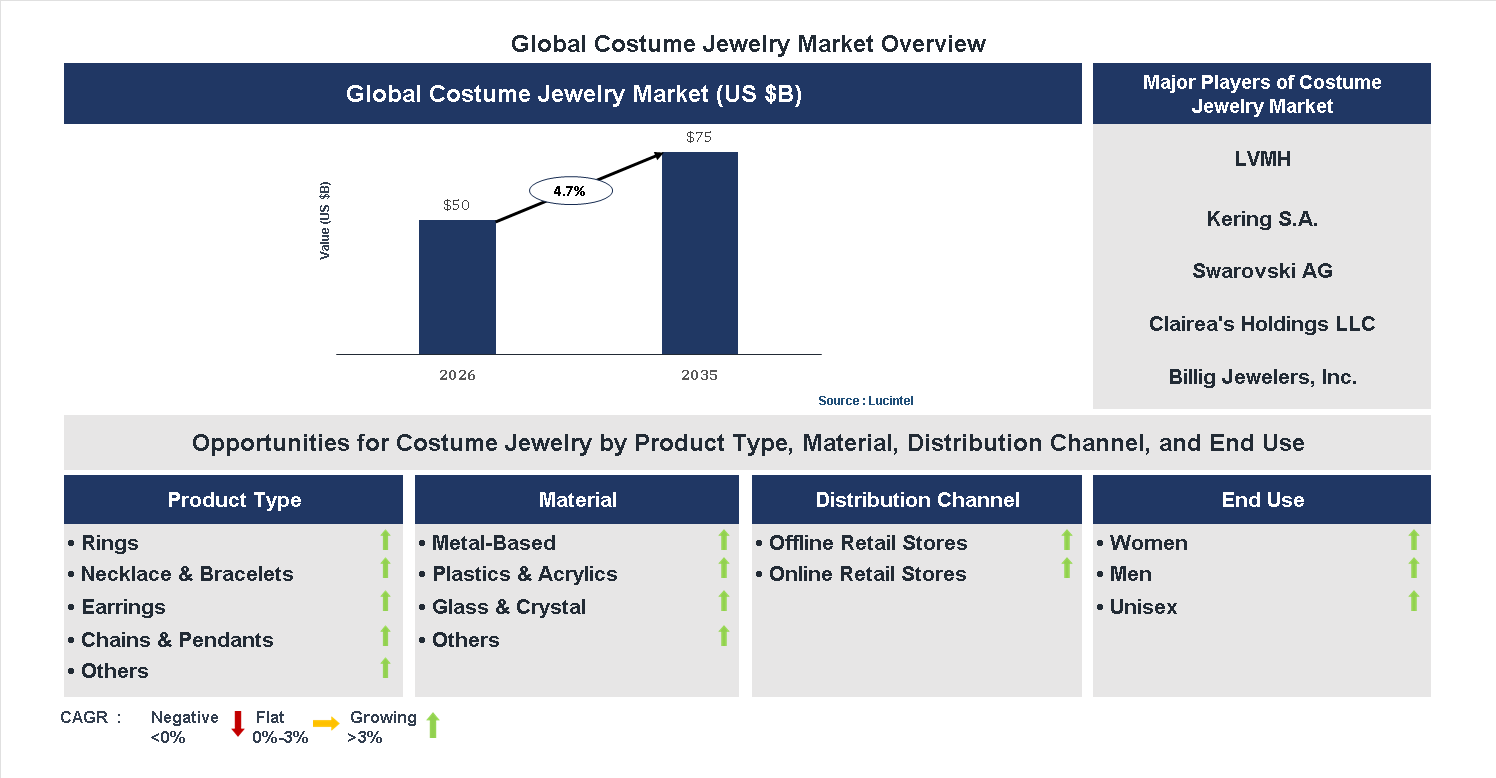
The future of the global costume jewelry market looks promising with opportunities in the women, men, and unisex markets. The global costume jewelry market is expected to reach an estimated $75.0 billion by 2035 with a CAGR of 4.7% from 2026 to 2035. The major drivers for this market are the increasing consumer preference for affordable accessories, the rising trend of fashion-conscious millennials, and the growing influence of social media marketing.• Lucintel forecasts that, within the product type category, necklace & bracelet is expected to witness the highest growth over the forecast period.
• Within the end use category, women is expected to witness higher growth.
• In terms of region, APAC is expected to witness the highest growth over the forecast period. Gain valuable insights for your business decisions with our comprehensive 150+ page report. Sample figures with some insights are shown below.
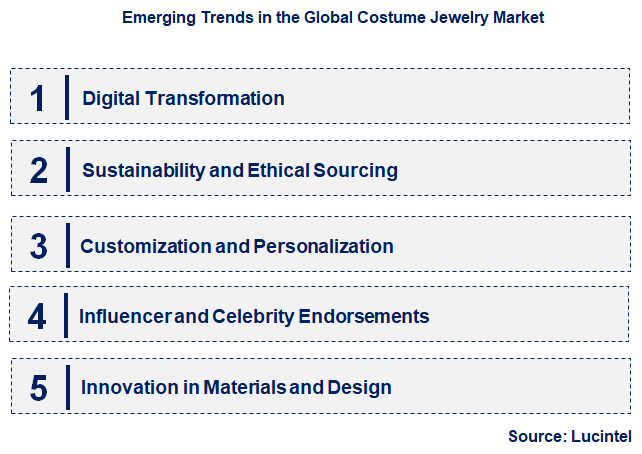
Emerging Trends in the Costume Jewelry Market
The costume jewelry market is experiencing rapid evolution driven by changing consumer preferences, technological advancements, and shifting fashion trends. As consumers seek affordable, stylish, and customizable accessories, manufacturers are innovating to meet these demands. The market is also influenced by digitalization, sustainability concerns, and the rise of e-commerce platforms, which expand reach and accessibility. These developments are reshaping how costume jewelry is designed, marketed, and purchased, creating new opportunities and challenges for industry players. Understanding these emerging trends is crucial for stakeholders aiming to stay competitive and capitalize on the markets growth potential.• Digital Transformation: The integration of e-commerce and social media platforms has revolutionized the distribution and marketing of costume jewelry. Online channels enable brands to reach a global audience, offer personalized shopping experiences, and leverage influencer marketing. Virtual try-ons and augmented reality tools enhance customer engagement, making shopping more interactive and convenient. This shift reduces reliance on traditional retail stores and accelerates sales cycles, allowing brands to adapt quickly to consumer preferences and trends.
• Sustainability and Ethical Sourcing: Consumers are increasingly prioritizing eco-friendly and ethically produced products. Brands are adopting sustainable materials such as recycled metals, eco-conscious packaging, and cruelty-free practices. Transparency in sourcing and manufacturing processes builds trust and brand loyalty. This trend not only aligns with global environmental goals but also differentiates brands in a competitive market, appealing to environmentally conscious consumers and encouraging responsible consumption.
• Customization and Personalization: The demand for unique, personalized jewelry is rising as consumers seek to express their individuality. Manufacturers are offering customizable options, including engraved pieces, mix-and-match designs, and bespoke collections. Digital tools facilitate easy customization, enabling consumers to design their own accessories. This trend enhances customer engagement, fosters brand loyalty, and allows brands to cater to niche markets, ultimately driving sales and market differentiation.
• Influencer and Celebrity Endorsements: Influencers and celebrities play a significant role in shaping consumer preferences in the costume jewelry market. Collaborations with popular personalities boost brand visibility and credibility. Social media campaigns featuring influencer endorsements generate buzz and drive demand for new collections. This trend accelerates trend adoption, influences purchasing decisions, and helps brands connect with younger, trend-conscious audiences, thereby expanding market reach.
• Innovation in Materials and Design: Continuous innovation in materials, such as resin, acrylic, and unconventional metals, enables the creation of diverse and trendy designs at affordable prices. Designers are experimenting with bold colors, unique textures, and innovative shapes to appeal to fashion-forward consumers. Technological advancements like 3D printing facilitate rapid prototyping and customization. This trend keeps the market dynamic, offering consumers fresh, innovative options and allowing brands to stay ahead of fashion cycles. These emerging trends are fundamentally transforming the costume jewelry market by enhancing digital engagement, emphasizing sustainability, enabling personalization, leveraging influencer marketing, and fostering material innovation. Collectively, they are making the market more accessible, responsible, and aligned with modern consumer values, thereby driving growth and competitiveness in a rapidly evolving industry.
Recent Development in the Costume Jewelry Market
The costume jewelry market is experiencing rapid growth driven by changing consumer preferences, affordability, and fashion trends. Innovations in design and materials are expanding product offerings, attracting a broader customer base. E-commerce platforms are facilitating global reach, while sustainability initiatives are influencing production practices. Market players are focusing on branding and collaborations to enhance visibility. These developments are reshaping the competitive landscape, creating new opportunities for growth and diversification in the costume jewelry industry.• Growing Demand for Affordable Fashion Accessories: The increasing desire for stylish yet affordable jewelry options is fueling market expansion. Consumers, especially younger demographics, seek trendy accessories that complement their outfits without high costs. This trend encourages brands to innovate with cost-effective materials and designs, boosting sales volume. Retailers are expanding their product ranges to meet this demand, leading to increased market penetration and revenue growth across various regions.
• Innovation in Materials and Design: Advances in materials such as resin, acrylic, and eco-friendly options are enabling unique, lightweight, and durable jewelry pieces. Designers are experimenting with bold colors, intricate patterns, and unconventional shapes, attracting fashion-conscious consumers. These innovations allow brands to differentiate their products and stay ahead of trends. The enhanced aesthetic appeal and functionality of new materials are driving consumer interest and increasing market competitiveness.
• Expansion of E-commerce and Digital Platforms: Online sales channels are transforming how consumers purchase costume jewelry. E-commerce platforms offer wider product selections, competitive pricing, and convenient shopping experiences. Social media marketing and influencer collaborations are boosting brand visibility and engagement. This digital shift is enabling brands to reach international markets more effectively, accelerating sales growth and market penetration, especially among tech-savvy and younger consumers.
• Focus on Sustainability and Ethical Practices: Consumers are increasingly prioritizing eco-friendly and ethically produced jewelry. Brands adopting sustainable sourcing, recyclable materials, and transparent supply chains are gaining a competitive edge. This focus on sustainability is influencing product development and marketing strategies, appealing to environmentally conscious buyers. As a result, the market is witnessing a shift towards greener practices, fostering brand loyalty and opening new avenues for growth in eco-conscious segments.
• Strategic Collaborations and Brand Expansions: Partnerships between jewelry brands and fashion designers, celebrities, or influencers are enhancing brand recognition and desirability. Limited-edition collections and co-branded products attract attention and create buzz. These collaborations help brands tap into new customer bases and expand their market presence. Additionally, diversification into related accessories and lifestyle products is broadening revenue streams, strengthening market positioning, and fostering innovation within the costume jewelry industry. The recent developments are significantly impacting the costume jewelry market by increasing accessibility, innovation, and sustainability. These factors are driving consumer engagement, expanding global reach, and fostering competitive differentiation. As a result, the market is poised for sustained growth, with brands leveraging these opportunities to enhance their offerings and capture new customer segments.
Strategic Growth Opportunities in the Costume Jewelry Market
The costume jewelry market is experiencing rapid expansion driven by changing fashion trends, increasing consumer demand for affordable accessories, and the influence of social media. Innovations in design and material sourcing are further fueling growth opportunities across various regions. As consumers seek personalized and unique jewelry pieces, brands are adopting new marketing strategies and expanding their product lines. This dynamic environment presents numerous avenues for market players to capitalize on emerging trends and consumer preferences, ensuring sustained growth and competitive advantage.• Growing Demand for Affordable Fashion Accessories: The increasing popularity of costume jewelry as an affordable alternative to fine jewelry is driving market growth. Consumers, especially younger demographics, seek trendy, stylish pieces that complement their outfits without high costs. Retailers are expanding their product offerings to include diverse designs, materials, and price points, making costume jewelry more accessible. This trend is supported by e-commerce platforms, which facilitate easy access to a wide variety of options, boosting overall sales and market penetration.
• Rising Influence of Social Media and Celebrity Endorsements: Social media platforms and celebrity endorsements significantly impact consumer purchasing decisions in the costume jewelry market. Influencers and fashion icons showcase new styles, creating trends that rapidly spread among followers. Brands leverage these platforms for marketing campaigns, increasing brand visibility and engagement. The viral nature of social media content encourages impulse buying and trend adoption, leading to increased demand for innovative and statement jewelry pieces, thereby expanding market reach and consumer base.
• Innovation in Materials and Design for Unique Offerings: Advances in material technology and design techniques enable brands to create distinctive, lightweight, and durable costume jewelry. Use of eco-friendly, recycled, and unconventional materials appeals to environmentally conscious consumers. Customization options and limited-edition collections attract niche markets seeking exclusivity. These innovations help brands differentiate themselves in a competitive landscape, meet evolving consumer preferences, and foster brand loyalty, ultimately driving market growth through product diversification and enhanced consumer engagement.
• Expansion into Emerging Markets with Growing Middle-Class Populations: Emerging economies with expanding middle-class populations present significant growth opportunities for costume jewelry brands. Rising disposable incomes and increasing fashion consciousness fuel demand for affordable accessories. Companies are establishing local distribution channels and tailoring products to regional tastes and cultural preferences. Market entry strategies such as collaborations with local designers and online retail expansion are facilitating penetration, enabling brands to tap into new customer segments and accelerate overall market growth.
• Adoption of E-commerce and Omnichannel Retail Strategies: The shift towards online shopping and omnichannel retailing is transforming the costume jewelry market. E-commerce platforms offer consumers convenience, wider product selection, and competitive pricing. Brands integrating online and offline channels provide seamless shopping experiences, personalized marketing, and efficient delivery services. Digital marketing campaigns, virtual try-ons, and augmented reality features enhance customer engagement. These strategies increase sales, expand reach, and enable brands to adapt swiftly to changing consumer behaviors, ensuring sustained growth in a highly competitive environment. These growth opportunities collectively shape a vibrant and expanding costume jewelry market. By leveraging consumer preferences for affordability, innovation, and digital engagement, brands can enhance their market presence and profitability. The integration of emerging markets and technological advancements will further accelerate growth trajectories. Overall, these opportunities foster a competitive landscape that encourages innovation, diversification, and strategic expansion, ensuring long-term sustainability and success in the evolving costume jewelry industry.
Costume Jewelry Market Driver and Challenges
The costume jewelry market is influenced by a variety of technological, economic, and regulatory factors that shape its growth and development. Advances in manufacturing technology enable the production of innovative designs at lower costs, making jewelry more accessible to consumers. Economic factors such as rising disposable incomes and changing fashion trends drive demand, while regulatory standards concerning material safety and environmental impact influence production practices. Additionally, digital marketing and e-commerce platforms have expanded market reach, allowing brands to connect directly with consumers worldwide. However, challenges such as fluctuating raw material prices, counterfeit products, and evolving consumer preferences also impact the market dynamics. Understanding these drivers and challenges is essential for stakeholders to navigate the competitive landscape effectively. The factors responsible for driving the costume jewelry market include:• Technological Advancements: The integration of new manufacturing technologies, such as 3D printing and automation, has revolutionized costume jewelry production. These innovations enable manufacturers to create intricate designs with higher precision and at reduced costs, thereby increasing product variety and affordability. Digital design tools also facilitate rapid prototyping, allowing brands to respond swiftly to fashion trends. As a result, consumers benefit from a broader selection of trendy, customizable, and innovative jewelry pieces, fueling market growth. The technological evolution continues to lower entry barriers for new players, fostering increased competition and innovation within the industry.
• Rising Disposable Income and Changing Fashion Trends: As disposable incomes rise globally, consumers are willing to spend more on fashion accessories, including costume jewelry. The increasing popularity of fashion-conscious lifestyles and social media influence has heightened demand for trendy, affordable jewelry options. Consumers seek unique, statement pieces that complement their outfits, driving demand for diverse designs and styles. The affordability of costume jewelry compared to fine jewelry makes it an attractive option for a broad demographic, including younger consumers. This trend is expected to sustain market expansion as fashion trends evolve rapidly, encouraging brands to innovate continually.
• E-commerce and Digital Marketing: The proliferation of online shopping platforms and social media marketing has significantly expanded the reach of costume jewelry brands. E-commerce provides consumers with easy access to a wide range of products, detailed descriptions, and customer reviews, enhancing their shopping experience. Digital marketing strategies, including influencer collaborations and targeted advertising, boost brand visibility and engagement. The convenience of online purchasing, coupled with global accessibility, has led to increased sales volumes and market penetration, especially in emerging markets. This digital shift enables brands to gather valuable consumer data, tailor offerings, and respond swiftly to market trends, thereby accelerating growth.
• Material Innovation and Sustainability: The development of new, eco-friendly materials and sustainable manufacturing practices is a key driver in the costume jewelry market. Consumers are increasingly conscious of environmental and ethical considerations, demanding products made from recycled, biodegradable, or ethically sourced materials. Innovations such as plant-based resins, recycled metals, and non-toxic dyes enhance product appeal while reducing environmental impact. Brands adopting sustainable practices can differentiate themselves in a competitive market, attract eco-conscious consumers, and comply with evolving regulations. Material innovation not only supports sustainability goals but also opens avenues for creative design and product differentiation.
• Global Market Expansion: The expansion into emerging markets presents significant growth opportunities for costume jewelry brands. Rapid urbanization, increasing middle-class populations, and rising fashion awareness in regions like Asia-Pacific, Latin America, and Africa contribute to expanding consumer bases. Localized marketing strategies and product customization cater to diverse cultural preferences, boosting sales. Additionally, international trade agreements and reduced tariffs facilitate easier market entry. As brands establish a presence in these regions, they benefit from increased sales volumes and brand recognition. Global expansion also encourages innovation tailored to regional tastes, further fueling industry growth. The challenges facing the costume jewelry market include:
• Fluctuating Raw Material Prices: The cost of raw materials such as metals, plastics, and gemstones directly impacts production expenses. Price volatility, driven by geopolitical tensions, supply chain disruptions, and fluctuating commodity markets, can lead to increased costs and reduced profit margins. Manufacturers may face difficulties in maintaining consistent pricing strategies, which can affect competitiveness and consumer pricing. Additionally, sudden price hikes may force brands to pass costs onto consumers, potentially reducing demand. Managing supply chain risks and securing stable sourcing are critical to mitigating this challenge and ensuring sustainable growth.
• Counterfeit and Imitation Products: The proliferation of counterfeit costume jewelry poses a significant threat to brand reputation and revenue. Fake products often flood markets, undermining authentic brands and eroding consumer trust. Counterfeits are typically of inferior quality, which can lead to customer dissatisfaction and damage brand image. Enforcement of intellectual property rights and anti-counterfeiting measures is challenging, especially in online marketplaces. The presence of counterfeit products discourages investment in innovation and quality improvements, ultimately hindering market growth. Addressing this issue requires robust legal frameworks, technological solutions, and consumer awareness campaigns.
• Rapidly Changing Consumer Preferences: The fashion industry is characterized by swift shifts in consumer tastes and trends, making it challenging for brands to keep up. Failure to anticipate or respond promptly to new styles can result in excess inventory and financial losses. Additionally, the rise of sustainable and ethically produced jewelry influences consumer choices, requiring brands to adapt their offerings accordingly. The need for continuous innovation and agility increases operational complexity and costs. Brands that cannot swiftly align their product lines with evolving preferences risk losing market share to more adaptable competitors, emphasizing the importance of market intelligence and flexible manufacturing processes. The costume jewelry market is driven by technological innovations, rising disposable incomes, digital marketing, material sustainability, and global expansion. However, it faces challenges such as raw material price fluctuations, counterfeit products, and rapidly changing consumer preferences. These factors collectively influence market dynamics, requiring stakeholders to innovate continuously, adopt sustainable practices, and remain agile. Successfully navigating these drivers and challenges will determine the markets future growth trajectory, with opportunities for expansion and differentiation balanced against operational and competitive risks. Overall, adaptability and innovation are key to thriving in this vibrant industry.
List of Costume Jewelry Companies
Companies in the market compete on the basis of product quality offered. Major players in this market focus on expanding their manufacturing facilities, R&D investments, infrastructural development, and leverage integration opportunities across the value chain. With these strategies costume jewelry companies cater increasing demand, ensure competitive effectiveness, develop innovative products & technologies, reduce production costs, and expand their customer base. Some of the costume jewelry companies profiled in this report include-• LVMH
• Kering S.A.
• Swarovski AG
• Claireas Holdings LLC
• Billig Jewelers, Inc.
• Richemont SA
• Fossil Group Inc.
• BaubleBar Inc.
• H&M Group
• Inditex
Costume Jewelry Market by Segment
The study includes a forecast for the global costume jewelry market by product type, material, distribution channel, end use, and region.Costume Jewelry Market by Product Type [Value from 2019 to 2035]:
• Rings
• Necklace & Bracelets
• Earrings
• Chains & Pendants
• Others
Costume Jewelry Market by Material [Value from 2019 to 2035]:
• Metal-Based
• Plastics & Acrylics
• Glass & Crystal
• Others
Costume Jewelry Market by Distribution Channel [Value from 2019 to 2035]:
• Offline Retail Stores
• Online Retail Stores
Costume Jewelry Market by End Use [Value from 2019 to 2035]:
• Women
• Men
• Unisex
Costume Jewelry Market by Region [Value from 2019 to 2035]:
• North America
• Europe
• Asia Pacific
• The Rest of the World
Country Wise Outlook for the Costume Jewelry Market
The costume jewelry market has experienced significant shifts driven by changing consumer preferences, technological innovations, and global economic factors. As fashion trends evolve rapidly, countries are adopting new materials, sustainable practices, and digital marketing strategies to stay competitive. The rise of e-commerce platforms has expanded access to diverse products, while sustainability concerns are prompting brands to innovate with eco-friendly materials. Additionally, emerging markets are becoming key players, influencing global supply chains and design trends. These developments reflect a dynamic landscape where innovation, sustainability, and digital transformation are shaping the future of costume jewelry worldwide.• United States: The U.S. costume jewelry market has seen a surge in online sales, driven by social media influencers and e-commerce platforms. Brands are focusing on sustainable and ethically sourced materials to appeal to eco-conscious consumers. Customization options and limited-edition collections are gaining popularity, enhancing consumer engagement. The market is also witnessing technological integration, such as augmented reality for virtual try-ons, improving shopping experiences. Additionally, collaborations with fashion designers and celebrities are boosting brand visibility and sales.
• China: China remains a major manufacturing hub for costume jewelry, with a growing domestic market fueled by rising disposable incomes. Local brands are increasingly adopting innovative designs and eco-friendly materials to meet consumer demand. E-commerce platforms like Taobao and Tmall are expanding their offerings, making costume jewelry more accessible. The government’s support for sustainable manufacturing practices is encouraging brands to adopt greener processes. Moreover, digital marketing and live-streaming sales are significantly impacting purchasing behaviors, making China a key player in global costume jewelry trends.
• Germany: The German costume jewelry market emphasizes quality, craftsmanship, and sustainability. Consumers prefer products made from durable, eco-friendly materials, prompting brands to innovate with recycled metals and ethically sourced stones. The market is characterized by a strong presence of boutique brands and artisanal designers. Digital channels are increasingly used for marketing and sales, with a focus on transparency and ethical practices. Germany’s emphasis on environmental responsibility is influencing product development, and collaborations with fashion houses are enhancing the market’s sophistication and appeal.
• India: The Indian costume jewelry market is experiencing rapid growth, driven by a blend of traditional craftsmanship and modern designs. Local artisans are incorporating sustainable materials and innovative techniques to cater to both domestic and international markets. The rise of online shopping platforms has expanded access to a diverse range of products, especially among younger consumers. Festivals and weddings continue to boost demand for ornate, handcrafted jewelry. Additionally, brands are leveraging social media for marketing, and there is a growing trend towards affordable, trendy jewelry that combines traditional aesthetics with contemporary styles.
• Japan: Japan’s costume jewelry market is characterized by a focus on minimalism, quality, and innovative design. Consumers prefer subtle, versatile pieces made from high-quality materials. The market is influenced by Japan’s strong fashion culture and technological advancements, such as virtual try-ons and personalized shopping experiences. Sustainability is also gaining importance, with brands adopting eco-friendly practices. Collaborations with fashion designers and pop culture icons are common, boosting appeal among younger consumers. Overall, Japan’s market balances tradition with innovation, emphasizing craftsmanship and sustainability to meet evolving consumer preferences.

Features of the Global Costume Jewelry Market
Market Size Estimates: Costume jewelry market size estimation in terms of value ($B). Trend and Forecast Analysis: Market trends (2019 to 2025) and forecast (2026 to 2035) by various segments and regions. Segmentation Analysis: Costume jewelry market size by various segments, such as by product type, material, distribution channel, end use, and region in terms of value ($B). Regional Analysis: Costume jewelry market breakdown by North America, Europe, Asia Pacific, and Rest of the World. Growth Opportunities: Analysis of growth opportunities in different product types, materials, distribution channels, end uses, and regions for the costume jewelry market. Strategic Analysis: This includes M&A, new product development, and competitive landscape of the costume jewelry market. Analysis of competitive intensity of the industry based on Porter’s Five Forces model.
FAQ
Q1. What is the costume jewelry market size? Answer: The global costume jewelry market is expected to reach an estimated $75.0 billion by 2035. Q2. What is the growth forecast for costume jewelry market? Answer: The global costume jewelry market is expected to grow with a CAGR of 4.7% from 2026 to 2035. Q3. What are the major drivers influencing the growth of the costume jewelry market? Answer: The major drivers for this market are the increasing consumer preference for affordable accessories, the rising trend of fashion-conscious millennials, and the growing influence of social media marketing. Q4. What are the major segments for costume jewelry market? Answer: The future of the costume jewelry market looks promising with opportunities in the women, men, and unisex markets. Q5. Who are the key costume jewelry market companies? Answer: Some of the key costume jewelry companies are as follows:• LVMH
• Kering S.A.
• Swarovski AG
• Claireas Holdings LLC
• Billig Jewelers, Inc.
• Richemont SA
• Fossil Group Inc.
• BaubleBar Inc.
• H&M Group
• Inditex Q6. Which costume jewelry market segment will be the largest in future? Answer: Lucintel forecasts that, within the product type category, necklace & bracelet is expected to witness the highest growth over the forecast period. Q7. In costume jewelry market, which region is expected to be the largest in next 5 years? Answer: In terms of region, APAC is expected to witness the highest growth over the forecast period. Q8. Do we receive customization in this report? Answer: Yes, Lucintel provides 10% customization without any additional cost.
Table of Contents
List of Figures
List of Tables
Methodology
- In-depth interviews of the major players in this market
- Detailed secondary research from competitors’ financial statements and published data
- Extensive searches of published works, market, and database information pertaining to industry news, company press releases, and customer intentions
- A compilation of the experiences, judgments, and insights of Lucintel’s professionals, who have analyzed and tracked this market over the years.


Buy Now
Choose a license that fits your team. Instant PDF delivery.
Prices exclude taxes. Instant delivery. Custom licensing available on request.
Key Questions
- • What are some of the most promising, high-growth opportunities for the costume jewelry market by product type (rings, necklace & bracelets, earrings, chains & pendants, and others), material (metal-based, plastics & acrylics, glass & crystal, and others), distribution channel (offline retail stores and online retail stores), end use (women, men, and unisex), and region (North America, Europe, Asia Pacific, and the Rest of the World)?
- • Which segments will grow at a faster pace and why?
- • Which region will grow at a faster pace and why?
- • What are the key factors affecting market dynamics? What are the key challenges and business risks in this market?
- • What are the business risks and competitive threats in this market?
- • What are the emerging trends in this market and the reasons behind them?
- • What are some of the changing demands of customers in the market?
- • What are the new developments in the market? Which companies are leading these developments?
- • Who are the major players in this market? What strategic initiatives are key players pursuing for business growth?
- • What are some of the competing products in this market and how big of a threat do they pose for loss of market share by material or product substitution?
- • What M&A activity has occurred in the last 7 years and what has its impact been on the industry? For any questions related to Costume Jewelry Market, Costume Jewelry Market Size, Costume Jewelry Market Growth, Costume Jewelry Market Analysis, Costume Jewelry Market Report, Costume Jewelry Market Share, Costume Jewelry Market Trends, Costume Jewelry Market Forecast, Costume Jewelry Companies, write Lucintel analyst at email: helpdesk@lucintel.com. We will be glad to get back to you soon.


