
Market Report · July 22, 2026

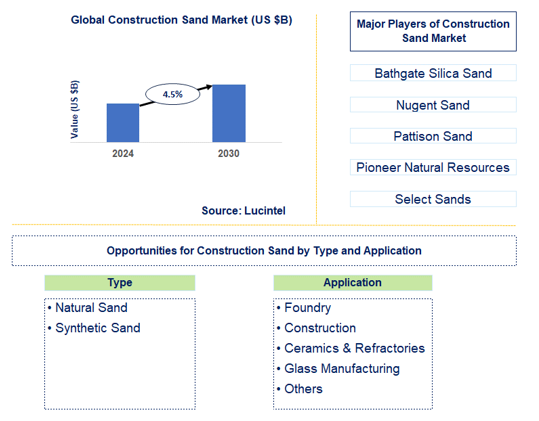
Key data points: The growth forecast = 4.5% annually for the next 6 years. Scroll below to get more insights. This market report covers trends, opportunities, and forecasts in the global construction sand market to 2030 by type (natural sand and synthetic sand), application (foundry, construction, ceramics & refractories, glass manufacturing, and others), and region (North America, Europe, Asia Pacific, and the Rest of the World)
We'll send your sample report shortly.
• United States: In the U.S., the construction sand market is grappling with increased demand driven by extensive infrastructure projects and urban growth. Innovations include the development of sand washing and processing technologies to enhance quality and sustainability. Additionally, there is a growing emphasis on alternative materials, such as crushed rock and manufactured sand, to address the environmental impact of sand mining. Regulatory changes are also pushing for more sustainable extraction practices.
• China: China's construction sand market is experiencing rapid expansion due to massive urbanization and infrastructure development. Recent developments include increased investment in sand mining operations and advancements in processing technology to improve sand quality and efficiency. The Chinese government is also implementing stricter regulations to combat illegal sand mining and promote sustainable practices. The focus is on balancing the high demand for sand with environmental and regulatory concerns.
• Germany: Germany's construction sand market is characterized by a strong emphasis on sustainability and environmental protection. Recent advancements include the use of recycled materials and alternative sands, such as crushed glass and slag, in construction. The market is also witnessing increased investments in efficient sand processing and management technologies. Germany's regulatory environment is stringent, pushing for reduced environmental impact and encouraging sustainable sand sourcing practices.
• India: In India, the construction sand market is growing rapidly due to urban expansion and infrastructure development. Key developments include increased use of manufactured sand (M-sand) as a substitute for natural sand to address supply shortages and environmental concerns. The Indian government is also implementing policies to regulate sand mining and promote sustainable practices. Innovations in sand processing and efforts to curb illegal mining are central to recent market changes.
• Japan: Japan's construction sand market is focused on sustainability and resource efficiency due to limited natural sand resources. Recent developments include the adoption of recycled and alternative sand materials, such as glass and industrial by-products. Japan is also investing in advanced sand processing technologies and exploring new sources of sand to meet construction demands while minimizing environmental impact. The market is influenced by strict environmental regulations and a push for innovative materials.
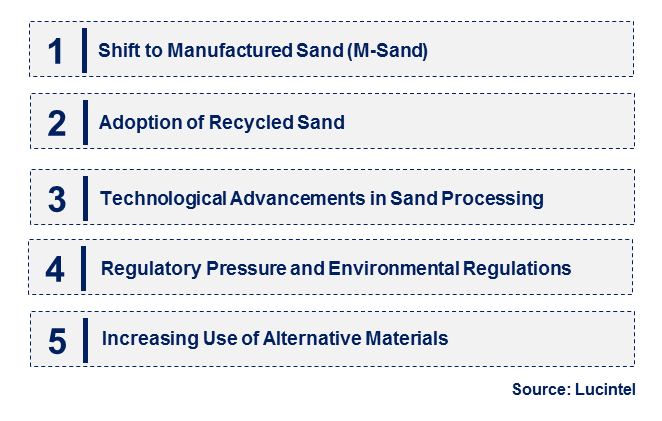
• Shift to Manufactured Sand (M-Sand): The shift towards manufactured sand (M-sand) is gaining momentum as a substitute for natural sand. M-sand, produced by crushing rocks, offers a sustainable alternative to depleting natural sand resources. It helps address supply shortages and reduces environmental impact. The growing acceptance of M-sand in concrete production is driven by its quality and cost-effectiveness.
• Adoption of Recycled Sand: Recycled sand, derived from construction and demolition waste, is becoming a significant trend. This practice not only conserves natural resources but also reduces landfill waste. Recycled sand is increasingly used in various construction applications, contributing to circular economy principles and promoting sustainability in the industry.
• Technological Advancements in Sand Processing: Innovations in sand processing technologies are enhancing the quality and efficiency of sand production. Advanced washing and classification systems are improving the cleanliness and consistency of sand, meeting stricter quality standards. These technological advancements help optimize resource utilization and reduce environmental impact.
• Regulatory Pressure and Environmental Regulations: Stricter environmental regulations are influencing the construction sand market by pushing for more sustainable practices. Governments are implementing policies to control sand mining, reduce environmental degradation, and promote the use of alternative materials. Compliance with these regulations is driving changes in sand sourcing and processing methods.
• Increasing Use of Alternative Materials: The use of alternative materials, such as crushed glass, industrial by-products, and other substitutes, is on the rise. These materials provide viable options to traditional sand, addressing supply constraints and environmental concerns. The adoption of alternatives is driven by the need for sustainable construction solutions and resource efficiency. These emerging trends are transforming the construction sand market by promoting sustainability, technological innovation, and regulatory compliance. The shift towards manufactured and recycled sands, along with advancements in processing technologies and the use of alternative materials, is reshaping the industry. These trends are addressing supply challenges and environmental concerns, driving the market towards more sustainable practices.
• Expansion of M-Sand Production Facilities: The expansion of M-sand production facilities is a major development in the construction sand market. Investments in new plants and technologies are increasing the availability of manufactured sand, which helps mitigate natural sand shortages. These facilities are equipped with advanced crushing and screening technologies to produce high-quality M-sand for construction applications.
• Implementation of Sustainable Mining Practices: There is a growing focus on implementing sustainable sand mining practices to minimize environmental impact. This includes adopting techniques to reduce habitat destruction, controlling dust emissions, and improving site restoration processes. Sustainable practices are driven by regulatory pressures and the need for environmentally responsible resource management.
• Development of Advanced Sand Washing Technologies: Innovations in sand washing technologies are improving the efficiency and effectiveness of sand processing. New washing systems remove impurities and enhance the quality of sand, ensuring it meets construction standards. These advancements help increase the usability of sand and reduce the environmental footprint of sand production.
• Regulation and Control of Illegal Sand Mining: Increased regulatory efforts are being made to control illegal sand mining activities. Governments are implementing stricter enforcement measures and monitoring systems to curb illegal operations and ensure compliance with environmental regulations. This development aims to protect natural resources and promote legal and sustainable sand extraction practices.
• Adoption of Alternative Sand Sources: The adoption of alternative sand sources, such as recycled materials and industrial by-products, is growing. This trend is driven by the need to reduce reliance on natural sand and address environmental concerns. Alternative sand sources offer sustainable solutions and contribute to reducing the ecological impact of sand extraction. These recent key developments are significantly impacting the construction sand market by addressing supply and environmental challenges. The expansion of M-sand production, implementation of sustainable practices, and advancements in sand processing technologies are driving market changes. Additionally, regulatory measures and the adoption of alternative sand sources are shaping the future of the industry, promoting sustainability and efficiency.
• Growth in Urban Infrastructure Projects: Urban infrastructure projects, including roads, bridges, and high-rise buildings, drive significant demand for construction sand. The growth in urbanization and infrastructure development creates opportunities for suppliers to meet the increasing sand requirements for these projects. Leveraging this demand can lead to substantial business growth in the construction sand sector.
• Expansion of M-Sand Usage: The expansion of M-sand usage presents a key growth opportunity as a substitute for natural sand. M-sand is increasingly used in concrete and mortar applications due to its consistency and availability. Companies investing in M-sand production and distribution can capitalize on the growing market for this sustainable alternative.
• Development of Sand Recycling Technologies: The development of sand recycling technologies offers growth opportunities by providing solutions for reusing construction and demolition waste. Recycling technologies help reduce the demand for natural sand and address environmental concerns. Companies focusing on sand recycling can contribute to a circular economy and meet regulatory requirements for waste management.
• Adoption of Green Building Standards: The adoption of green building standards and sustainable construction practices creates growth opportunities for suppliers of eco-friendly sand materials. Building projects that adhere to environmental certifications often require recycled or alternative sand products. Embracing green standards can open new market segments and align with industry sustainability goals.
• Investment in Advanced Sand Processing: Investing in advanced sand processing technologies offers growth opportunities by improving the quality and efficiency of sand production. Technologies that enhance sand purity and performance can meet stringent construction standards and cater to high-demand markets. Companies that innovate in sand processing can gain a competitive edge and attract customers seeking superior products. Strategic growth opportunities in the construction sand market span urban infrastructure projects, M-sand expansion, recycling technologies, green building standards, and advanced processing. Each opportunity aligns with market trends and demands for sustainability, efficiency, and quality. Leveraging these opportunities can drive growth and innovation in the construction sand industry, addressing emerging needs and regulatory requirements.
• Increasing Urbanization and Infrastructure Development: Urbanization and infrastructure development are primary drivers of construction sand demand. The growth of cities and large-scale infrastructure projects requires substantial quantities of sand for concrete and building materials. This rising demand fuels the construction sand market, creating opportunities for suppliers to meet the needs of expanding urban areas.
• Technological Advancements in Sand Processing: Technological advancements in sand processing enhance the efficiency and quality of sand production. Innovations such as advanced washing systems and automation improve sand purity and reduce production costs. These advancements drive market growth by enabling better resource utilization and meeting stringent construction standards.
• Growing Demand for Sustainable Construction Practices: The increasing emphasis on sustainable construction practices drives the demand for alternative and recycled sand materials. Builders and regulators are seeking eco-friendly solutions to reduce the environmental impact of sand extraction. This shift towards sustainability creates opportunities for products like M-sand and recycled sand, aligning with market trends and regulatory requirements.
• Regulatory Support for Sustainable Sand Mining: Regulatory support for sustainable sand mining practices encourages responsible resource management. Governments are implementing policies to reduce illegal sand mining and promote environmentally friendly extraction methods. Compliance with these regulations drives market growth by ensuring sustainable practices and protecting natural resources.
• Economic Growth and Construction Activity: Economic growth and increased construction activity contribute to higher demand for construction sand. As economies expand and construction projects rise, the need for sand in various applications grows. Economic stability and investment in infrastructure boost market opportunities for sand suppliers and producers. Challenges in the construction sand market are:
• Environmental Impact of Sand Mining: The environmental impact of sand mining poses a significant challenge. Sand extraction can lead to habitat destruction, water pollution, and erosion. Addressing these environmental concerns requires implementing sustainable mining practices and managing the ecological footprint of sand production.
• Supply Chain Disruptions and Scarcity: Supply chain disruptions and sand scarcity can affect market stability. Factors such as regulatory changes, transportation issues, and resource depletion contribute to supply challenges. Managing these disruptions requires strategic planning and diversification of supply sources to ensure consistent availability.
• Regulatory Compliance and Enforcement: Compliance with regulatory requirements and enforcement of sand mining regulations can be challenging. Navigating complex regulations and ensuring adherence to environmental standards require investment in monitoring systems and legal compliance. Effective regulation and enforcement are essential for sustainable sand production and market stability. The construction sand market is driven by factors such as urbanization, technological advancements, and sustainability demands, while facing challenges related to environmental impact, supply chain disruptions, and regulatory compliance. Balancing these drivers and challenges is crucial for the market’s growth and sustainability. Addressing these issues effectively can lead to a more resilient and innovative construction sand industry.
• Bathgate Silica Sand
• Nugent Sand
• Pattison Sand
• Pioneer Natural Resources
• Select Sands
• Sibelco
• Mitsubishi
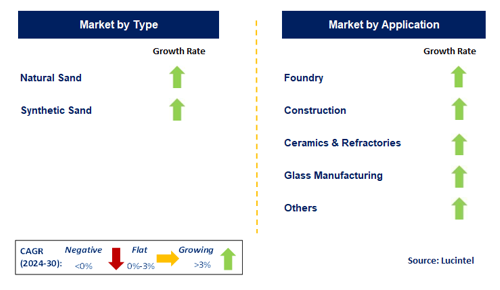
• Natural Sand
• Synthetic Sand
• Foundry
• Construction
• Ceramics & Refractories
• Glass Manufacturing
• Others
• North America
• Europe
• Asia Pacific
• The Rest of the World
• Lucintel forecasts that, within the type category, natural sand is expected to witness higher growth over the forecast period.
• In terms of regions, APAC is expected to witness the highest growth over the forecast period.


• Bathgate Silica Sand
• Nugent Sand
• Pattison Sand
• Pioneer Natural Resources
• Select Sands
• Sibelco
• Mitsubishi Q5. Which construction sand market segment will be the largest in future? Answer: Lucintel forecasts that natural sand is expected to witness higher growth over the forecast period. Q6. In construction sand market, which region is expected to be the largest in next 5 years? Answer: APAC is expected to witness the highest growth over the forecast period. Q.7 Do we receive customization in this report? Answer: Yes, Lucintel provides 10% customization without any additional cost.


Choose a license that fits your team. Instant PDF delivery.
Prices exclude taxes. Instant delivery. Custom licensing available on request.
Market Report · July 22, 2026
Market Report · July 17, 2026
Market Report · July 17, 2026
Trusted partner for strategic intelligence and business growth


Receive a complimentary market analysis tailored to your industry. Our analysts will identify key growth opportunities and competitive dynamics specific to your business.

Market size, growth rate, and key trend analysis for your specific sector.

Top competitor positioning and market share analysis.

Strategic recommendations backed by data-driven insights.
Get curated market intelligence and competitive moves straight to your inbox.
By subscribing, you agree to receive our monthly insights. Unsubscribe anytime.
Receive a complimentary market analysis tailored to your industry. Our analysts will identify key growth opportunities and competitive dynamics specific to your business.
Market size, growth rate, and key trend analysis for your specific sector.
Top competitor positioning and market share analysis.
Strategic recommendations backed by data-driven insights.
Get curated market intelligence, emerging trends, and competitive moves straight to your inbox each month.
By subscribing, you agree to receive our monthly insights. Unsubscribe anytime.
We'll send your sample report shortly.