
Market Report · July 31, 2026

We'll send your sample report shortly.
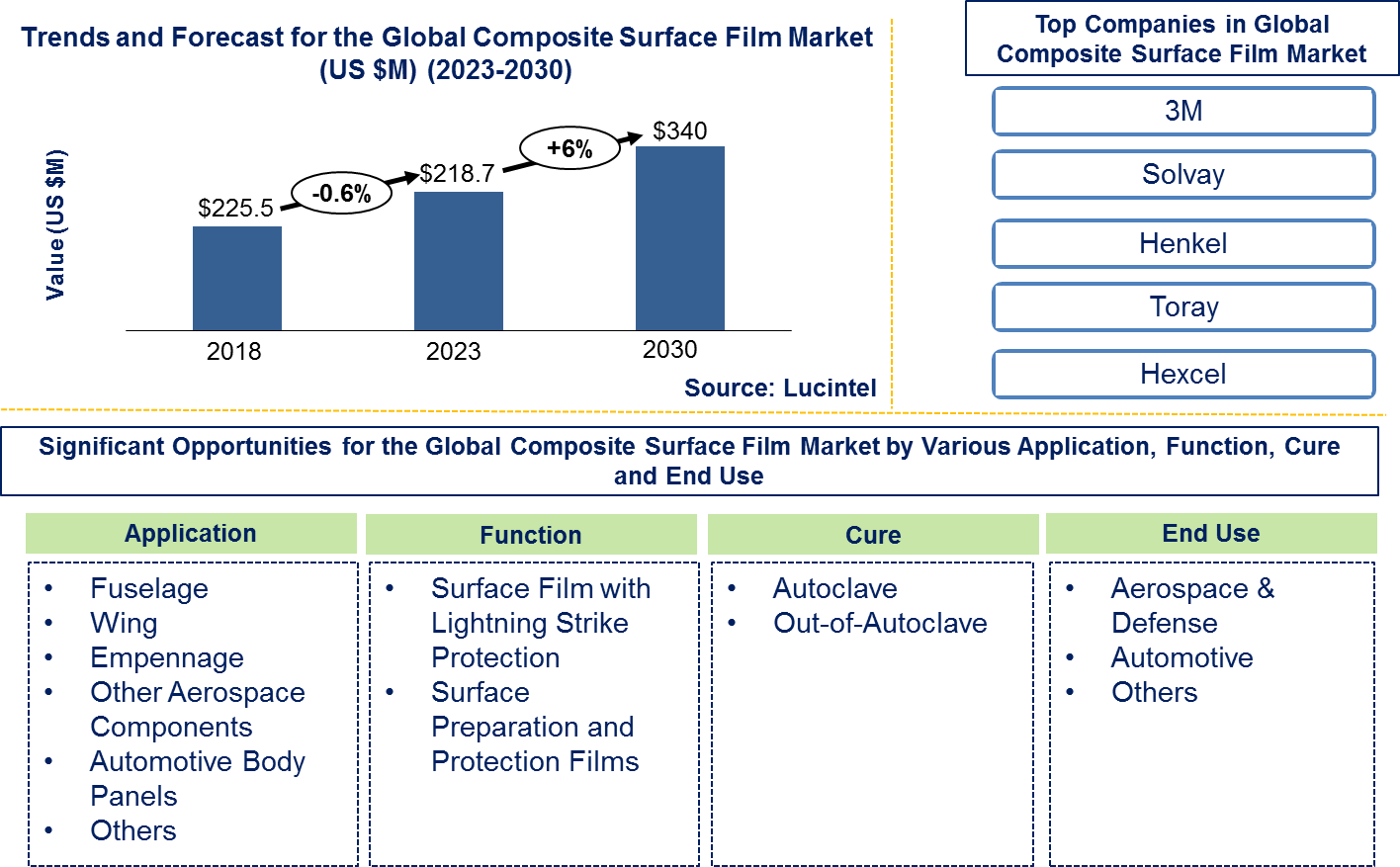
• Lucintel forecasts that wings will remain the largest application segment over the forecast period due to increasing penetration of composites in the segment and higher penetration of composites in new airplane programs for light weight and fuel efficiency.
• Surface preparation and protection film will remain the largest segment over the forecast period due to its property of reduction in the post molding finishing processes, like pit filling and sanding, resulting in ease of painting procedures.
• North America is expected to remain the largest region over the forecast period due to aircraft delivery and increasing penetration of composites in the structural components of aircraft.
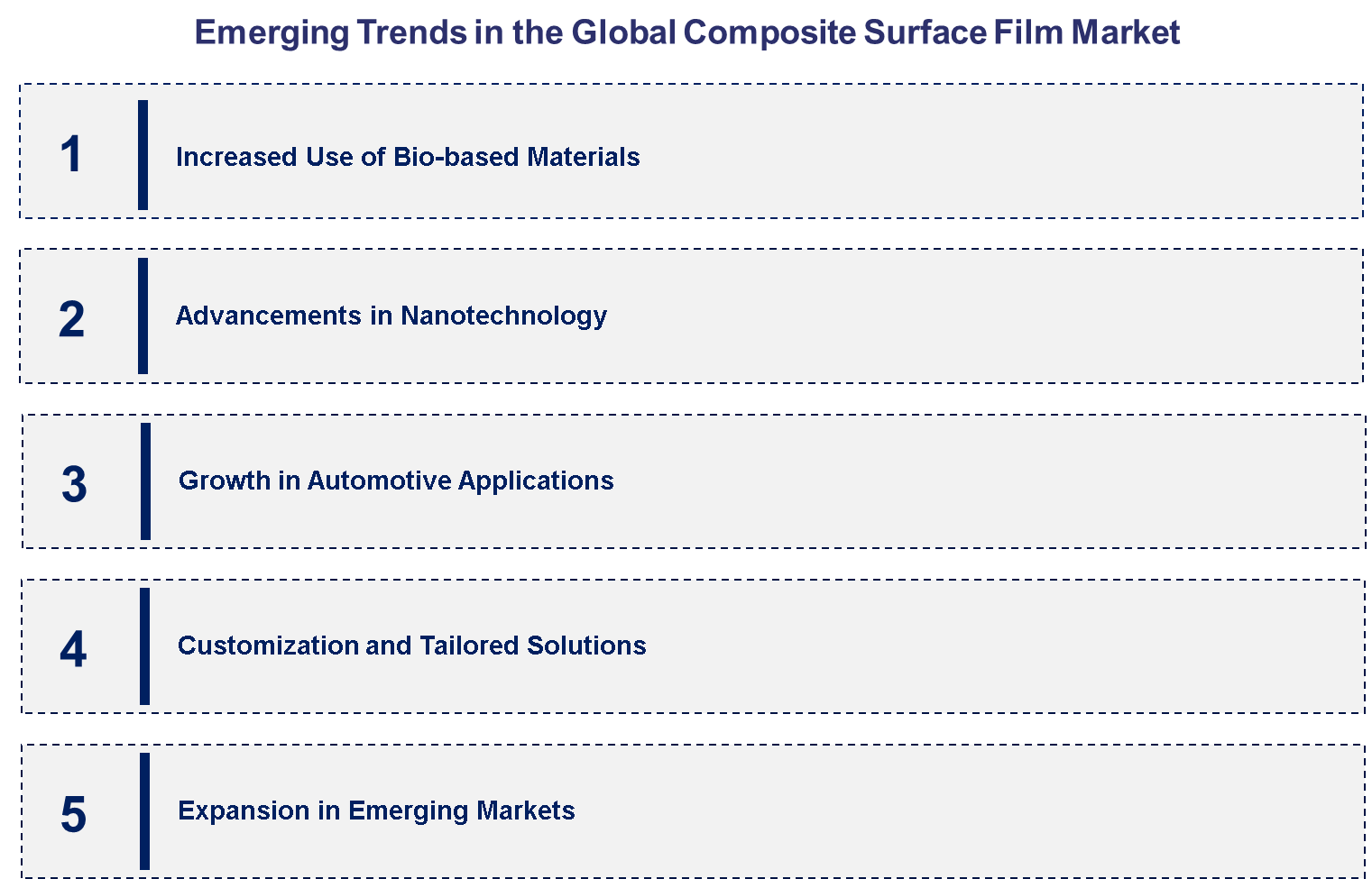
• Increased Use of Bio-based Materials: The shift towards sustainability is prompting manufacturers to explore bio-based composite films made from renewable resources. These materials not only reduce reliance on fossil fuels but also lower carbon footprints, appealing to environmentally conscious consumers and industries. As regulations tighten around emissions and waste, the adoption of bio-based composites is expected to rise, driving innovation and market growth.
• Advancements in Nanotechnology: The integration of nanotechnology in composite surface films is enhancing their mechanical properties and performance. Nanomaterial‘s can improve strength, durability, and resistance to environmental factors, making films more suitable for demanding applications. This trend is particularly significant in aerospace and automotive sectors, where performance and weight reduction are critical, leading to increased efficiency and safety in end products.
• Growth in Automotive Applications: The automotive industry is increasingly adopting composite surface films to reduce vehicle weight and improve fuel efficiency. With the rise of electric vehicles and stringent emissions regulations, manufacturers are seeking lightweight materials that do not compromise safety or performance. This trend is driving innovation in composite film technologies, leading to new applications and market opportunities.
• Customization and Tailored Solutions: There is a growing demand for customized composite surface films that meet specific industry requirements. Manufacturers are investing in R&D to develop tailored solutions that address unique challenges in various applications, such as enhanced thermal stability or specific aesthetic qualities. This trend is fostering closer collaboration between suppliers and end-users, resulting in more effective and innovative products.
• Expansion in Emerging Markets: Emerging economies are witnessing a surge in demand for composite surface films due to rapid industrialization and infrastructure development. As these markets grow, they present new opportunities for manufacturers to expand their reach and introduce advanced composite solutions. This trend is reshaping the competitive landscape, encouraging global players to invest in local production and distribution networks.
• Development of Advanced Materials: Recent innovations in materials science have led to the creation of high-performance composite surface films that offer superior durability and resistance to environmental factors. These advanced materials enhance the longevity and reliability of products, making them more appealing to manufacturers in sectors like aerospace and automotive.
• Growth in Aerospace Applications: The aerospace industry is increasingly adopting composite surface films due to their lightweight properties and ability to improve fuel efficiency. This trend is driving demand for specialized films that can withstand extreme conditions, thereby expanding the market and encouraging further research and development in this area.
• Sustainability Initiatives: There is a growing emphasis on sustainability within the composite surface film market, with manufacturers focusing on eco-friendly materials and production processes. This shift not only meets regulatory requirements but also aligns with consumer preferences for sustainable products, ultimately enhancing brand reputation and market competitiveness.
• Technological Advancements in Production: Innovations in manufacturing techniques, such as 3D printing and automated processes, are streamlining the production of composite surface films. These advancements reduce costs and lead times, allowing companies to respond more quickly to market demands and customize products for specific applications.
• Expansion into Emerging Markets: The composite surface film market is seeing increased penetration in emerging economies, driven by industrial growth and rising investments in infrastructure. This expansion presents new opportunities for manufacturers to tap into diverse markets, fostering competition and innovation within the industry.
• Aerospace: The aerospace sector is increasingly adopting composite surface films to reduce weight and improve fuel efficiency. These films enhance the surface properties of aircraft components, leading to better performance and lower maintenance costs. The demand for lightweight materials in aviation is expected to propel growth in this application.
• Automotive: In the automotive industry, composite surface films are used to improve the aesthetics and durability of vehicle exteriors. With the rise of electric vehicles and stringent regulations on emissions, manufacturers are looking for lightweight solutions that can enhance performance while reducing environmental impact. This trend is likely to drive significant growth in the automotive sector.
• Wind Energy: Composite surface films are gaining importance in the wind energy sector, particularly for protecting wind turbine blades. These films enhance blade durability by offering resistance to erosion, UV exposure, and harsh weather conditions, which extends blade life and reduces maintenance costs, supporting the growth of renewable energy projects.
• Marine: The marine industry employs composite surface films to improve the longevity and performance of boats, yachts, and marine structures. Their resistance to saltwater corrosion, UV degradation, and mechanical damage makes them ideal for harsh marine environments, ensuring durability and reduced upkeep.
• Technological Advancements: Continuous innovations in composite materials enhance performance and application versatility, leading to increased adoption across industries such as aerospace, automotive, and construction. These advancements improve product durability and reduce weight, making composites more appealing for manufacturers seeking efficiency and sustainability.
• Growing Demand for Lightweight Materials: The push for fuel efficiency and reduced emissions in transportation sectors drives the demand for lightweight materials. Composite surface films offer significant weight savings compared to traditional materials, making them essential for meeting regulatory standards and consumer expectations for eco-friendly products.
• Expansion of End-Use Industries: The growth of industries such as aerospace, automotive, and renewable energy fuels the demand for composite surface films. As these sectors expand, they require advanced materials that can withstand harsh conditions while providing superior performance, thus driving market growth.
• Increased Investment in R&D: Companies are investing heavily in research and development to innovate and improve composite surface films. This investment leads to the creation of new products with enhanced properties, which can open up new markets and applications, further stimulating growth.
• Regulatory Support for Sustainable Practices: Governments worldwide are implementing regulations that promote the use of sustainable materials. This regulatory support encourages industries to adopt composite surface films, which are often more environmentally friendly than traditional materials, thus driving market demand.
• High Production Costs: The manufacturing processes for composite surface films can be expensive, which may deter smaller companies from entering the market. High costs can also limit the widespread adoption of these materials, as end-users may opt for cheaper alternatives, impacting overall market growth.
• Stringent Regulatory Compliance: Compliance with environmental and safety regulations can be challenging for manufacturers. The need to meet these standards can increase production complexity and costs, potentially slowing down the market‘s growth as companies navigate these regulatory landscapes.
• Market Volatility: Economic fluctuations can lead to uncertainty in demand for composite surface films. Changes in raw material prices and shifts in consumer preferences can create instability, making it difficult for manufacturers to plan and invest in future production capabilities.
• 3M
• Syensqo
• Henkel
• Toray Industries Inc.
• Hexcel
• Aerospace
• Automotive
• Other End Use Industries
• Fuselage
• Wings
• Empennage
• Automotive Body Panels
• Other Aerospace Parts
• Other Applications
• Surface Film with Lightning Strike Protection
• Surface Preparation and Protection Films
• Autoclave
• Out of Autoclave
• North America
• Europe
• Asia Pacific
• The Rest of the World
• Market Size Estimates: Composite surface film market size estimation in terms of value ($B) and volume (M Sq. Meters).
• Trend and Forecast Analysis: Market trends (2019-2025) and forecast (2026-2035) by various segments and regions.
• Segmentation Analysis: Market size by end use industry, application, function, cure, and region.
• Regional Analysis: Composite surface film market breakdown by North America, Europe, Asia Pacific, and the Rest of the World.
• Growth Opportunities: Analysis of growth opportunities in different end use industry, product type and regions for the composite surface film market.
• Strategic Analysis: This includes M&A, new product development, and competitive landscape for the composite surface film market.
• Analysis of competitive intensity of the industry based on Porter’s Five Forces model.
• Syensqo
• 3M
• Henkel
• Hexcel
• Axiom Materials
• Park Electrochemical Corporation
• Gurit
• Toray Industries Inc.
Q6.Which composite surface film product segment will be the largest in future?

Choose a license that fits your team. Instant PDF delivery.
Prices exclude taxes. Instant delivery. Custom licensing available on request.
Market Report · July 31, 2026
Market Report · May 18, 2026
Market Report · May 16, 2026
Trusted partner for strategic intelligence and business growth


Receive a complimentary market analysis tailored to your industry. Our analysts will identify key growth opportunities and competitive dynamics specific to your business.

Market size, growth rate, and key trend analysis for your specific sector.

Top competitor positioning and market share analysis.

Strategic recommendations backed by data-driven insights.
Get curated market intelligence and competitive moves straight to your inbox.
By subscribing, you agree to receive our monthly insights. Unsubscribe anytime.
Receive a complimentary market analysis tailored to your industry. Our analysts will identify key growth opportunities and competitive dynamics specific to your business.
Market size, growth rate, and key trend analysis for your specific sector.
Top competitor positioning and market share analysis.
Strategic recommendations backed by data-driven insights.
Get curated market intelligence, emerging trends, and competitive moves straight to your inbox each month.
By subscribing, you agree to receive our monthly insights. Unsubscribe anytime.
We'll send your sample report shortly.