
Market Report · May 18, 2026

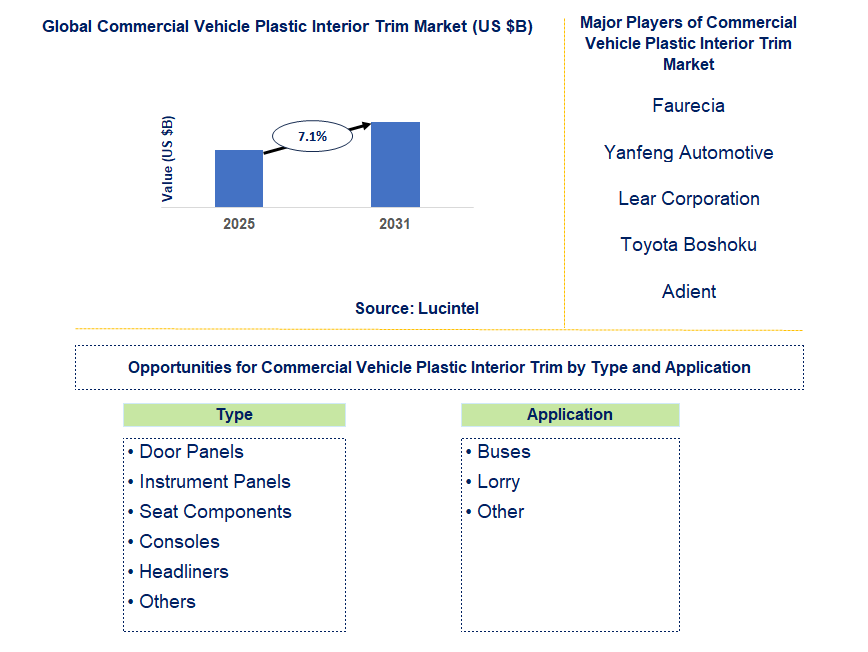
Key data points: The growth forecast = 7.1% annually for the next 7 years. Scroll below to get more insights. This market report covers trends, opportunities and forecasts in commercial vehicle plastic interior trim market to 2031 by type (door panels, instrument panels, seat components, consoles, headliners, and others), application (buses, lorry, and other), and region (North America, Europe, Asia Pacific, and the Rest of the World)
We'll send your sample report shortly.
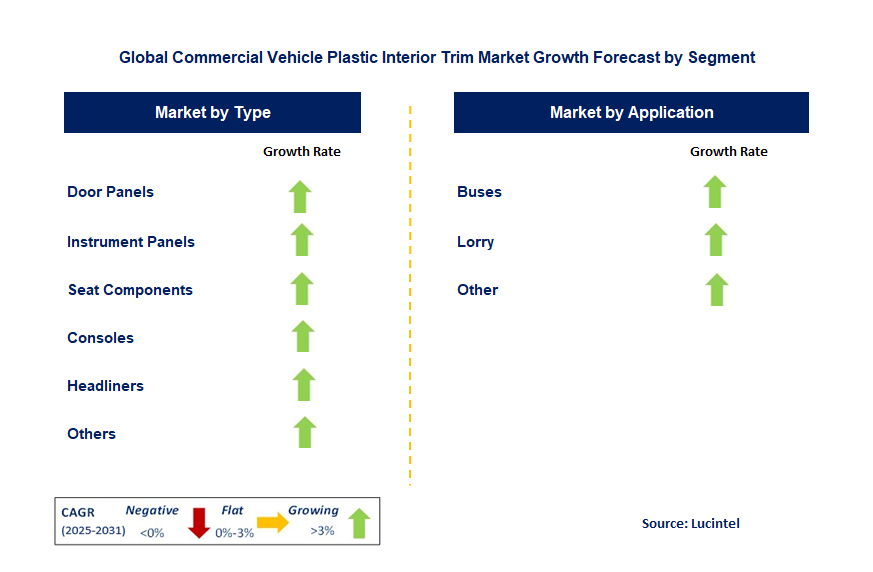
• Lucintel forecasts that, within the type category, door panels are expected to witness the highest growth over the forecast period.
• Within the application category, bus is expected to witness higher growth.
• In terms of region, APAC is expected to witness the highest growth over the forecast period.
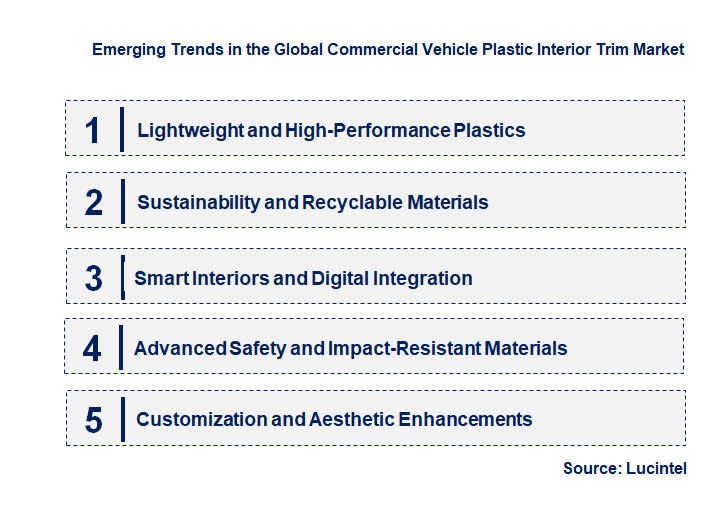
• Lightweight and High-Performance Plastics: Automakers increasingly utilize lightweight polymers to improve fuel efficiency and reduce vehicle weight. Advanced composites and thermoplastics with high impact resistance are replacing traditional materials. This shift supports internal combustion engine (ICE) and electric vehicles (EVs), where weight reduction enhances battery performance. These materials also offer improved durability, extending vehicle life cycles. Manufacturers are investing in new polymer formulations to achieve an optimal balance between strength and cost-effectiveness, ensuring compliance with stringent emission norms.
• Sustainability and Recyclable Materials: The growing focus on sustainability is driving the adoption of bio-based, recycled, and eco-friendly plastics in commercial vehicle interiors. Governments worldwide are imposing regulations that encourage manufacturers to reduce plastic waste and improve recyclability. The use of ocean-recovered plastics and biodegradable polymers is gaining traction. Companies are also developing closed-loop recycling systems to minimize environmental impact. As sustainability becomes a key differentiator, automakers that adopt eco-friendly interior trims are likely to gain a competitive advantage in global markets.
• Smart Interiors and Digital Integration: The rise of connected and autonomous vehicles is leading to increased demand for intelligent interior solutions. Touchscreen dashboards, voice-activated controls, and integrated infotainment systems are becoming standard in commercial vehicles. The use of capacitive touch panels, LED-integrated trims, and digital displays is enhancing driver experience and operational efficiency. Manufacturers are exploring plastic materials that support seamless integration of electronic components, reducing complexity while improving functionality. This trend is particularly prominent in electric and high-end commercial vehicles.
• Advanced Safety and Impact-Resistant Materials: Safety concerns are prompting manufacturers to adopt impact-resistant, flame-retardant, and antimicrobial plastic trims. These materials help meet stringent safety standards and enhance passenger protection. The demand for high-strength, crash-resistant polymers is rising, especially in heavy-duty and public transport vehicles. Additionally, antimicrobial coatings are being incorporated into high-touch areas to improve hygiene and reduce contamination risks. As regulatory bodies enforce stricter safety guidelines, the adoption of such materials will continue to grow.
• Customization and Aesthetic Enhancements: The commercial vehicle segment is seeing increasing demand for customizable interior solutions that improve aesthetics and branding. Fleet operators and logistics companies are investing in visually appealing, ergonomic interiors to enhance driver comfort and brand identity. 3D printing and advanced molding techniques are enabling cost-effective customization of trims. Enhanced color, texture, and finish options are helping automakers cater to diverse market preferences. This trend is particularly notable in premium commercial vehicles and specialized transport applications. The commercial vehicle plastic interior trim market is evolving with advancements in lightweight materials, sustainability initiatives, digital integration, safety enhancements, and customization options. As global regulations push for greener and safer vehicles, manufacturers are focusing on innovative solutions that enhance efficiency and durability. The growing shift toward electric and autonomous commercial vehicles is further reshaping interior design and material choices. Companies that prioritize sustainability, smart technology, and advanced materials will be well-positioned for future market success. These emerging trends indicate a dynamic landscape that will continue to evolve with technological and regulatory developments.
• Adoption of Lightweight and High-Strength Plastics: The shift towards lightweight materials, such as reinforced thermoplastics and composites, is helping reduce vehicle weight, improve fuel efficiency, and enhance durability. This development aligns with emission regulations and contributes to better vehicle performance, especially in electric commercial vehicles.
• Integration of Smart and Digital Interiors: The increasing use of digital dashboards, touchscreen panels, and smart control systems is transforming vehicle interiors. Plastic trims are being designed to support electronic integration, ensuring seamless connectivity and user-friendly interfaces for drivers and fleet operators.
• Sustainability and Eco-Friendly Materials: There is a growing trend towards using recycled plastics and bio-based materials in commercial vehicle interiors. Automakers are adopting closed-loop recycling systems and biodegradable polymers to meet global sustainability goals while maintaining cost efficiency.
• Advanced Safety Features in Plastic Trims: Manufacturers are incorporating impact-resistant and fire-retardant plastics to comply with stringent safety regulations. Additionally, antimicrobial coatings and self-cleaning surfaces are being introduced to enhance hygiene and driver well-being, especially in public transport and logistics fleets.
• Customization and Aesthetic Enhancements: Fleet operators demand customizable interior trims with improved design, texture, and color options. Advanced molding techniques and 3D printing enable cost-effective customization, providing vehicles with enhanced branding and ergonomic benefits. These developments are significantly reshaping the commercial vehicle plastic interior trim market by driving innovation, improving safety, and promoting sustainability. As the industry shifts toward electric and autonomous vehicles, manufacturers must continue adapting to new material requirements and evolving consumer expectations.
• Growing Demand for Lightweight Interior Components: Fuel efficiency and battery performance in electric commercial vehicles are driving demand for lightweight plastic trims. High-performance thermoplastics and composites are gaining traction due to their ability to reduce vehicle weight without compromising durability.
• Expansion in Electric and Autonomous Vehicles: The rise of electric and self-driving commercial vehicles is accelerating the need for interior trims that support digital interfaces and smart functionalities. Manufacturers are investing in innovative plastic materials that integrate seamlessly with electronic control systems.
• Sustainability-Driven Product Innovation: Increasing regulations on plastic waste and carbon emissions are encouraging manufacturers to develop recyclable, bio-based, and eco-friendly plastic interior trims. This presents a strong growth opportunity for companies focusing on green manufacturing processes.
• Rise in Demand for Customization and Ergonomics: Fleet operators and logistics providers are looking for customized interiors that enhance comfort, branding, and efficiency. Advanced molding techniques, including 3D printing, allow for greater personalization in design, improving market competitiveness.
• Increased Adoption of Safety-Enhancing Plastic Trims: Governments and regulatory bodies are pushing for stricter vehicle safety standards. Manufacturers are responding by developing impact-resistant, flame-retardant, and antimicrobial trims that enhance passenger and driver protection in commercial vehicles. These growth opportunities are driving investments in research, material innovation, and digital integration, helping manufacturers cater to evolving market needs. The commercial vehicle plastic interior trim sector will continue to expand, fueled by sustainability trends and technological advancements.
• Faurecia
• Yanfeng Automotive Interiors
• Lear Corporation
• Toyota Boshoku Corporation
• Adient
• Draexlmaier Group
• IAC Group
• Door Panels
• Instrument Panels
• Seat Components
• Consoles
• Headliners
• Others
• Buses
• Lorry
• Other
• North America
• Europe
• Asia Pacific
• The Rest of the World
• United States: The U.S. market for commercial vehicle plastic interior trim market is growing due to stringent emission regulations and demand for fuel efficiency. Automakers are focusing on lightweight, high-performance plastics that enhance interior durability while reducing vehicle weight. The rise of electric trucks is driving innovations in interior design, with increased integration of recycled materials. Additionally, safety regulations are influencing the adoption of fire-resistant and impact-absorbing materials. Major manufacturers are investing in smart interiors, incorporating antimicrobial coatings and ergonomic designs to improve driver comfort and vehicle hygiene. Overall, sustainability and technological advancements are shaping the industry’s future.
• China: The Chinese commercial vehicle plastic interior trim market is experiencing rapid growth, driven by government incentives for electric vehicles and advancements in polymer technology. Domestic manufacturers are developing cost-effective, lightweight plastics to meet efficiency goals. The rise of autonomous trucks is pushing demand for smart interiors with integrated digital controls. Sustainability initiatives are promoting the use of bio-based and recycled plastics. The shift towards localized production due to supply chain disruptions is further boosting domestic material innovation. As China remains a key player in global commercial vehicle production, these developments are significantly influencing global supply chains and market dynamics.
• Germany: The German commercial vehicle plastic interior trim market is advancing through precision engineering and high-quality material innovation. Stringent EU environmental regulations are accelerating the adoption of sustainable, recyclable plastics. With the country's strong push toward electric and hydrogen-powered commercial vehicles, manufacturers are integrating high-performance, lightweight composites to optimize efficiency. Premium vehicle interiors with enhanced durability and noise-reduction capabilities are gaining traction. Leading automotive suppliers are investing in advanced molding techniques to enhance aesthetics and functionality. As Germany continues to be a hub for cutting-edge automotive technology, its developments are setting industry benchmarks for performance and sustainability.
• India: The Indian market is witnessing a shift toward cost-effective yet durable plastic interior trims, driven by increasing commercial vehicle demand. The push for fuel efficiency and emissions control has led to the adoption of lightweight plastics. Local manufacturers are exploring thermoplastic composites to balance cost and performance. Government policies supporting electric mobility are fostering innovations in heat-resistant and recyclable interior materials. Growing concerns over passenger and driver safety have encouraged the use of impact-absorbing trims. With India's expanding logistics and transport sector, demand for robust, affordable interior solutions is expected to continue growing significantly.
• Japan: The Japanese commercial vehicle plastic interior trim market is benefiting from advancements in material science and sustainable manufacturing. Automakers are prioritizing lightweight, high-strength plastics to enhance fuel efficiency. The adoption of smart interior technologies, such as touch-sensitive panels and self-cleaning surfaces, is gaining momentum. With a strong focus on environmental regulations, bio-based plastics and recyclability are key innovation areas. As Japan leads in autonomous vehicle development, interior trim designs are evolving to support user-friendly, high-tech cabins. The country’s expertise in precision engineering is driving the production of high-quality, durable plastic trims that meet global automotive standards.


• Faurecia
• Yanfeng Automotive Interiors
• Lear Corporation
• Toyota Boshoku Corporation
• Adient
• Draexlmaier Group
• IAC Group Q5. Which commercial vehicle plastic interior trim market segment will be the largest in future? Answer: Lucintel forecasts that, within the type category, door panels are expected to witness the highest growth over the forecast period. Q6. In commercial vehicle plastic interior trim market, which region is expected to be the largest in next 5 years? Answer: In terms of region, APAC is expected to witness the highest growth over the forecast period. Q7. Do we receive customization in this report? Answer: Yes, Lucintel provides 10% customization without any additional cost.


Choose a license that fits your team. Instant PDF delivery.
Prices exclude taxes. Instant delivery. Custom licensing available on request.
Market Report · May 18, 2026
Market Report · May 18, 2026
Market Report · May 18, 2026
Trusted partner for strategic intelligence and business growth


Receive a complimentary market analysis tailored to your industry. Our analysts will identify key growth opportunities and competitive dynamics specific to your business.

Market size, growth rate, and key trend analysis for your specific sector.

Top competitor positioning and market share analysis.

Strategic recommendations backed by data-driven insights.
Get curated market intelligence and competitive moves straight to your inbox.
By subscribing, you agree to receive our monthly insights. Unsubscribe anytime.
Receive a complimentary market analysis tailored to your industry. Our analysts will identify key growth opportunities and competitive dynamics specific to your business.
Market size, growth rate, and key trend analysis for your specific sector.
Top competitor positioning and market share analysis.
Strategic recommendations backed by data-driven insights.
Get curated market intelligence, emerging trends, and competitive moves straight to your inbox each month.
By subscribing, you agree to receive our monthly insights. Unsubscribe anytime.
We'll send your sample report shortly.