
Market Report · July 31, 2026

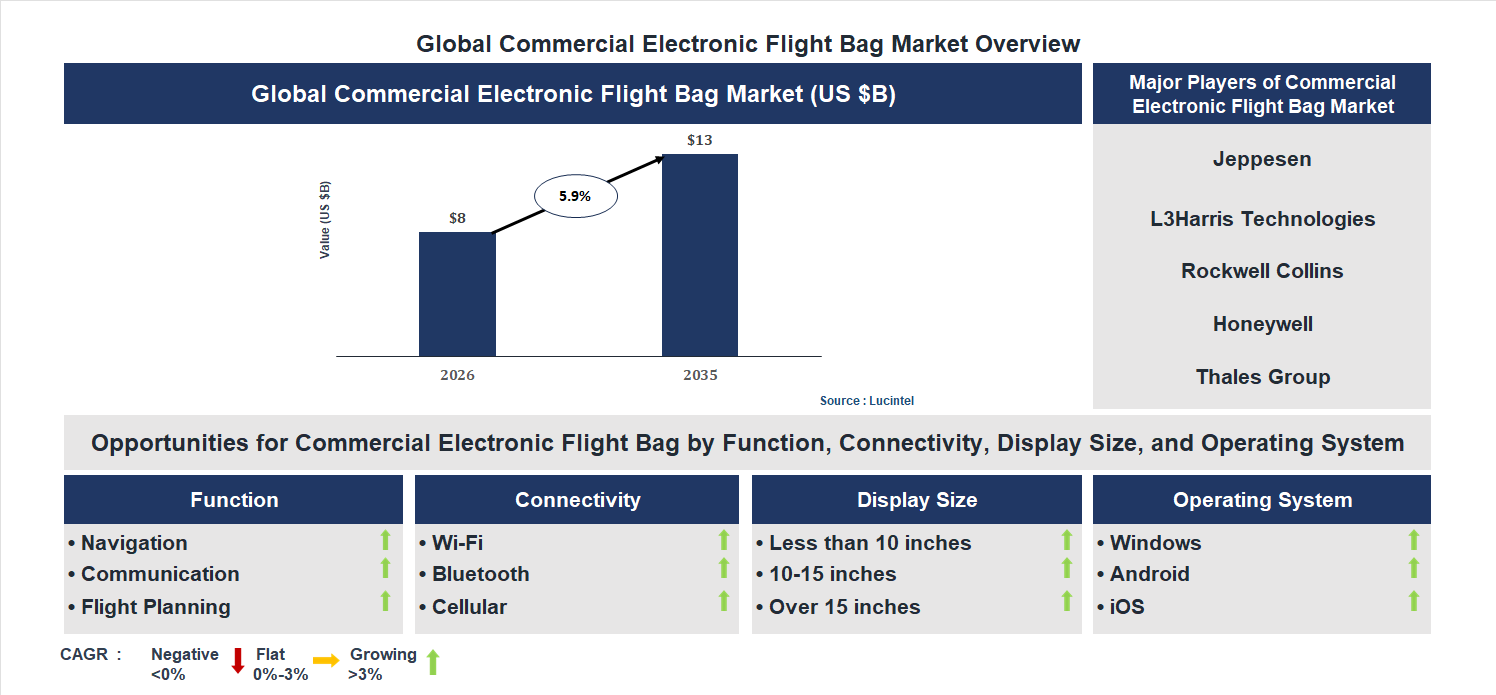
Key data points: The market size in 2035 = $13 billion, growth forecast = 5.9% annually for the next 8 years. Scroll below to get more insights. This market report covers trends, opportunities and forecasts in commercial electronic flight bag market to 2035 by function (navigation, communication, and flight planning), connectivity (Wi-Fi, bluetooth, and cellular), display size (less than 10 inches, 10-15 inches, and over 15 inches), operating system (windows, android, and iOS), and region (North America, Europe, Asia Pacific, and the Rest of the World)
We'll send your sample report shortly.
• Lucintel forecasts that, within the function category, navigation is expected to witness higher growth over the forecast period.
• Within the operating system category, android is expected to witness the highest growth.
• In terms of region, APAC is expected to witness the highest growth over the forecast period. Gain valuable insights for your business decisions with our comprehensive 150+ page report. Sample figures with some insights are shown below.
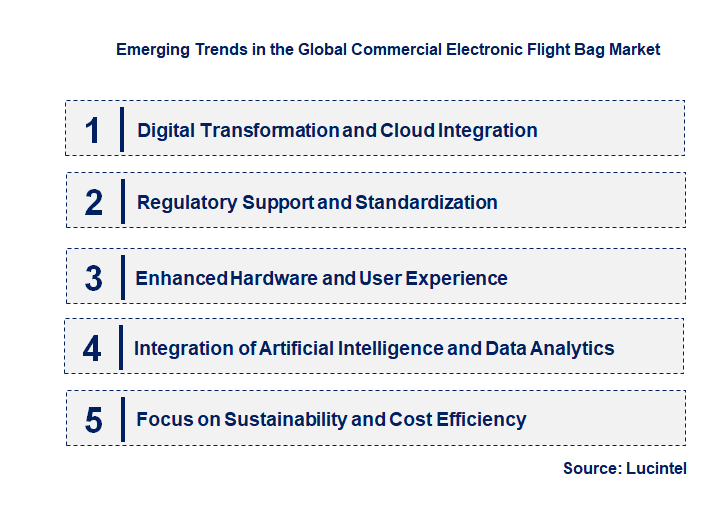
• Digital Transformation and Cloud Integration: The market is witnessing a significant shift towards cloud-based EFB solutions that enable real-time data access and seamless updates. Cloud integration reduces hardware dependency, lowers maintenance costs, and enhances data security. Airlines are increasingly adopting these solutions to improve operational agility, facilitate remote troubleshooting, and enable better collaboration across flight crews and ground staff. This trend is also supporting the deployment of advanced analytics and AI-driven decision-making tools, leading to smarter, more responsive flight operations.
• Regulatory Support and Standardization: Governments and aviation authorities are actively updating regulations to accommodate EFB adoption, emphasizing safety and interoperability. Standardization efforts are ensuring compatibility across different aircraft types and software platforms, reducing integration issues. Regulatory bodies like the FAA and EASA are providing clear guidelines for certification, data security, and operational procedures, which boost airline confidence in deploying EFB solutions. This trend fosters a more uniform market environment, encouraging innovation while maintaining safety standards.
• Enhanced Hardware and User Experience: Advances in hardware, such as lightweight tablets, ruggedized devices, and high-resolution displays, are improving the usability and durability of EFBs. Touchscreen interfaces, voice recognition, and customizable dashboards enhance pilot experience and reduce cognitive load. These improvements lead to faster decision-making, increased safety, and reduced pilot fatigue. The focus on ergonomic design and hardware reliability is critical for widespread adoption, especially in challenging environmental conditions, making EFBs more integral to daily flight operations.
• Integration of Artificial Intelligence and Data Analytics: AI-powered tools are increasingly embedded within EFB platforms to provide predictive maintenance alerts, weather forecasting, and optimized routing. Data analytics enable airlines to analyze operational data for efficiency improvements and cost reductions. AI-driven decision support systems help pilots make informed choices quickly, enhancing safety and operational performance. This trend is transforming EFBs from simple electronic documents into intelligent, proactive systems that significantly impact flight planning and management.
• Focus on Sustainability and Cost Efficiency: Airlines are leveraging EFBs to reduce paper usage, lower fuel consumption, and minimize environmental impact. Digital workflows streamline pre-flight and in-flight procedures, saving time and resources. EFBs also facilitate better fuel management through real-time data and route optimization, contributing to sustainability goals. Cost savings from reduced paper, maintenance, and operational delays are compelling airlines to invest in advanced EFB solutions. This trend aligns with the broader industry push towards greener, more sustainable aviation practices. These emerging trends are fundamentally reshaping the Commercial Electronic Flight Bag Market by promoting digital innovation, enhancing safety and efficiency, and supporting sustainability initiatives. As technology continues to evolve, the market is poised for further growth, driven by the need for smarter, more connected, and environmentally responsible flight operations.
• Technological Advancements in Hardware: Enhanced durability and processing power are revolutionizing EFB devices, enabling real-time data access and improved user interfaces. Rugged tablets and lightweight devices reduce pilot workload and increase reliability. These innovations support more complex applications, such as augmented reality and advanced navigation tools, leading to broader adoption across commercial fleets. The improved hardware also reduces maintenance costs and extends device lifespan, positively impacting airline operational efficiency.
• Regulatory Frameworks Supporting EFB Adoption: Governments and aviation authorities are establishing clear regulations for EFB use, ensuring safety and standardization. Recent approvals from agencies like the FAA and EASA facilitate wider deployment of electronic solutions onboard aircraft. These regulations encourage airlines to transition from paper-based systems, reducing environmental impact and operational costs. The evolving regulatory landscape fosters confidence among stakeholders, accelerating market growth and technological integration.
• Integration of Artificial Intelligence and Data Analytics: AI-driven analytics are transforming EFB functionalities by providing predictive maintenance, optimized flight planning, and real-time decision support. These capabilities enhance safety, reduce delays, and improve fuel efficiency. Airlines leveraging AI can better analyze operational data, leading to more informed decisions. The integration of these technologies is creating smarter, more responsive EFB systems, which are becoming essential for competitive advantage in the aviation industry.
• Growing Adoption in Regional and Low-Cost Carriers: While major airlines have adopted EFBs extensively, regional and low-cost carriers are increasingly integrating these solutions to streamline operations and reduce costs. EFBs enable faster turnaround times, improved communication, and better resource management. This segments growth is driven by cost-effective hardware options and the need for operational agility. As these carriers expand, their adoption of EFBs significantly contributes to overall market expansion and technological diffusion.
• Expansion of Cloud-Based EFB Solutions: Cloud technology is enabling seamless data sharing, remote updates, and enhanced collaboration between ground and flight crews. Cloud-based EFBs reduce hardware dependency and facilitate real-time software upgrades, ensuring pilots have access to the latest information. This development improves operational efficiency, safety, and compliance. The scalability and flexibility of cloud solutions are attracting more airlines, especially those seeking cost-effective, easily upgradable systems, thus accelerating market growth. The overall impact of these developments is a more efficient, safer, and environmentally friendly aviation industry. Enhanced hardware, supportive regulations, AI integration, broader carrier adoption, and cloud solutions are collectively driving market expansion. These innovations are enabling airlines to optimize operations, reduce costs, and improve passenger experience, positioning the Commercial Electronic Flight Bag Market for sustained growth and technological leadership.
• Hardware and Software Integration for Enhanced Flight Operations: The increasing demand for integrated EFB solutions combining hardware and software improves pilot situational awareness, reduces workload, and streamlines data management. Sub-segments like rugged tablets, portable devices, and customized software applications are gaining popularity. Airlines are investing in scalable, user-friendly systems that support real-time data sharing, electronic charts, and flight planning, driving growth in this segment.
• Adoption of Cloud-Based EFB Solutions for Real-Time Data Access: Cloud technology enables airlines to access up-to-date information, such as weather updates, navigation charts, and maintenance data, from any location. This reduces the need for physical storage and simplifies updates, ensuring pilots always have current data. Cloud-based EFBs also facilitate remote management and analytics, improving operational efficiency and safety, which encourages widespread adoption across commercial fleets.
• Increasing Use of EFBs for Maintenance and Ground Operations: EFBs are increasingly used for aircraft maintenance, inventory management, and ground operations, providing real-time access to technical manuals, inspection checklists, and service records. This reduces turnaround times, minimizes errors, and enhances communication between ground staff and flight crews. The growth of digital maintenance solutions and the need for operational efficiency are key drivers in this application segment.
• Regulatory Support and Standardization Promoting Market Expansion: Regulatory bodies like FAA and EASA are establishing guidelines for EFB use, ensuring safety and interoperability. Standardization efforts promote wider acceptance and integration of EFBs into airline operations. Compliance with these standards encourages airlines to upgrade existing systems, fostering market growth and innovation in secure, reliable, and compliant EFB solutions.
• Rising Demand for Lightweight, Portable Devices in Commercial Fleets: The shift towards lightweight, portable EFB devices such as tablets and handheld units enhances pilot convenience and reduces aircraft weight. These devices support various functions, including navigation, communication, and document management. The proliferation of consumer-grade tablets with rugged features and long battery life is driving adoption, especially among low-cost carriers and regional airlines seeking cost-effective, flexible solutions. These growth opportunities are transforming the Commercial EFB Market by fostering technological innovation, regulatory compliance, and operational efficiency. The integration of cloud solutions, portable devices, and maintenance applications will continue to expand market reach, making EFBs indispensable in modern aviation. This evolution promises increased safety, reduced costs, and improved overall airline performance worldwide.
• Technological Advancements: The rapid development of mobile computing, cloud technology, and wireless communication has significantly enhanced EFB capabilities. These innovations enable real-time data access, improved navigation, and streamlined communication between pilots and ground control. As technology continues to evolve, EFBs are becoming more integrated, lightweight, and user-friendly, encouraging airlines to upgrade their existing systems. The increasing availability of high-resolution displays and secure data encryption further boosts market adoption by ensuring safety and reliability. This technological progress is crucial for meeting the growing demand for operational efficiency and safety in the aviation industry.
• Regulatory Support and Safety Standards: Governments and aviation authorities worldwide are establishing stringent safety and operational standards that favor EFB adoption. Regulatory bodies like the FAA and EASA have issued guidelines that promote the use of electronic flight bags to replace traditional paper-based manuals, reducing weight and improving access to critical information. These regulations encourage airlines to invest in compliant EFB solutions to meet safety requirements and streamline certification processes. The regulatory push not only enhances safety but also accelerates market growth by creating a standardized environment for EFB deployment across different regions.
• Cost Efficiency and Operational Benefits: Airlines are increasingly adopting EFBs to reduce operational costs associated with paper manuals, charts, and other traditional resources. EFBs enable quick access to updated information, reducing flight delays and improving turnaround times. They also contribute to fuel savings by decreasing aircraft weight and optimizing flight planning. The ability to update data remotely minimizes printing and distribution costs, providing long-term economic benefits. As airlines seek to improve efficiency and reduce expenses, the cost-saving potential of EFBs makes them an attractive investment, thereby fueling market expansion.
• Increasing Focus on Passenger Experience: The rising demand for enhanced in-flight services and real-time information access is a key driver for EFB adoption. Airlines are leveraging EFBs to provide pilots with better situational awareness, improved navigation, and access to passenger-related data. This focus on passenger experience encourages airlines to invest in advanced EFB solutions that support in-flight entertainment, connectivity, and personalized services. As passenger expectations grow, airlines see EFBs as essential tools to improve service quality, differentiate themselves in competitive markets, and meet evolving customer demands.
• Growing Adoption in Commercial Aviation: The expanding global commercial aviation sector, especially in emerging markets, is a significant driver for EFB market growth. Increasing aircraft orders and fleet modernization initiatives are leading airlines to incorporate advanced digital solutions like EFBs. The rising number of low-cost carriers and regional airlines adopting EFBs to enhance operational efficiency further propels market growth. Additionally, the increasing focus on sustainability and fuel efficiency encourages airlines to implement EFBs for better flight planning and route optimization, contributing to overall market expansion. The challenges facing the commercial electronic flight bag market include:
• Cybersecurity Risks: As EFBs become more integrated with cloud systems and wireless networks, they are increasingly vulnerable to cyber threats. Unauthorized access, data breaches, and malware attacks pose significant safety and operational risks. Ensuring robust cybersecurity measures requires continuous investment in secure infrastructure, which can be costly and complex. A cybersecurity breach could compromise sensitive flight data, disrupt operations, and damage airline reputation. As cyber threats evolve, maintaining the security of EFB systems remains a critical challenge for market stakeholders.
• High Implementation and Maintenance Costs: Although EFBs offer long-term cost savings, the initial investment can be substantial, especially for smaller airlines. Costs include hardware procurement, software licensing, training, and ongoing maintenance. Upgrading existing aircraft and ensuring compatibility with new systems also add to expenses. These high upfront costs can deter some airlines from adopting EFBs, particularly in regions with limited financial resources. Additionally, maintenance and periodic updates require continuous investment, impacting overall profitability and slowing market growth.
• Regulatory Compliance and Certification Challenges: Navigating the complex regulatory landscape remains a significant hurdle for EFB market expansion. Different regions have varying standards and certification processes, which can delay deployment and increase costs. Ensuring compliance with safety, security, and operational regulations requires extensive testing and documentation, adding to the time and expense involved. Regulatory uncertainties and frequent updates can also pose challenges for manufacturers and airlines, potentially hindering rapid adoption and innovation within the market. The Commercial Electronic Flight Bag Market is driven by technological innovations, regulatory support, cost efficiencies, passenger experience enhancements, and expanding aviation markets. However, cybersecurity concerns, high implementation costs, and regulatory complexities present notable challenges. These factors collectively shape the market’s trajectory, requiring stakeholders to balance innovation with risk management. Overall, the market is poised for growth, provided that technological and regulatory hurdles are effectively addressed, enabling airlines to leverage EFBs for safer, more efficient, and passenger-centric operations.
• Jeppesen
• L3Harris Technologies
• Rockwell Collins
• Honeywell
• Thales Group
• Garmin
• Flightaware
• Navigation
• Communication
• Flight Planning
• Wi-Fi
• Bluetooth
• Cellular
• Less than 10 inches
• 10-15 inches
• Over 15 inches
• Windows
• Android
• iOS
• North America
• Europe
• Asia Pacific
• The Rest of the World
• United States: The US market has seen rapid adoption of EFBs, driven by FAA regulations encouraging digital cockpit solutions. Major airlines are upgrading to lightweight, high-capacity tablets and integrated software systems for flight planning, navigation, and maintenance. Innovations include real-time data sharing and enhanced cybersecurity measures. The government’s support for modernization initiatives and partnerships with tech firms has accelerated deployment. Additionally, the US market emphasizes regulatory compliance and safety standards, fostering a competitive environment for EFB providers.
• China: China’s EFB market is expanding swiftly, supported by government initiatives to modernize aviation infrastructure and increase domestic airline capacity. Chinese airlines are investing heavily in digital cockpit solutions to improve operational efficiency and reduce paper-based processes. The market benefits from local technology providers offering cost-effective, customized solutions tailored to regional needs. Recent developments include integration with Chinese air traffic management systems and increased focus on data security. The rapid growth is also driven by the country’s expanding fleet and increasing international flight operations.
• Germany: Germany’s market is characterized by a focus on advanced, integrated EFB systems that enhance safety and operational efficiency. Regulatory bodies like EASA influence standards, ensuring high safety and interoperability levels. German airlines are adopting innovative hardware such as lightweight tablets and sophisticated software for flight management and maintenance. The market also sees collaborations between airlines and tech firms to develop tailored solutions. Emphasis on cybersecurity, data privacy, and compliance with European regulations shapes recent developments, with a trend toward more sustainable and eco-friendly EFB solutions.
• India: The Indian EFB market is witnessing rapid growth due to increasing airline fleet expansion and modernization efforts. Airlines are adopting digital solutions to streamline operations amid rising air traffic and regulatory requirements. Recent developments include the deployment of cost-effective, rugged tablets suitable for diverse operational environments. The government’s push for digital transformation and safety enhancements has accelerated adoption. Local and international vendors are competing to provide scalable, reliable EFB systems. The focus remains on improving operational efficiency, reducing paper reliance, and ensuring compliance with DGCA regulations.
• Japan: Japan’s market is characterized by high technological adoption and stringent safety standards. Airlines are integrating advanced EFB solutions with existing cockpit systems to enhance flight safety and operational efficiency. Recent developments include the deployment of lightweight, durable hardware and sophisticated software for navigation, weather updates, and maintenance management. The Japanese market emphasizes cybersecurity, data integrity, and regulatory compliance, aligning with strict aviation safety standards. Collaborations with global tech firms are common, fostering innovation. The market continues to evolve with a focus on sustainability, energy-efficient solutions, and seamless integration with other aircraft systems.


• Jeppesen
• L3Harris Technologies
• Rockwell Collins
• Honeywell
• Thales Group
• Garmin
• Flightaware Q6. Which commercial electronic flight bag market segment will be the largest in future? Answer: Lucintel forecasts that, within the function category, navigation is expected to witness higher growth over the forecast period. Q7. In commercial electronic flight bag market, which region is expected to be the largest in next 8 years? Answer: In terms of region, APAC is expected to witness the highest growth over the forecast period. Q8. Do we receive customization in this report? Answer: Yes, Lucintel provides 10% customization without any additional cost.


Choose a license that fits your team. Instant PDF delivery.
Prices exclude taxes. Instant delivery. Custom licensing available on request.
Market Report · July 31, 2026
Market Report · July 31, 2026
Market Report · July 31, 2026
Trusted partner for strategic intelligence and business growth


Receive a complimentary market analysis tailored to your industry. Our analysts will identify key growth opportunities and competitive dynamics specific to your business.

Market size, growth rate, and key trend analysis for your specific sector.

Top competitor positioning and market share analysis.

Strategic recommendations backed by data-driven insights.
Get curated market intelligence and competitive moves straight to your inbox.
By subscribing, you agree to receive our monthly insights. Unsubscribe anytime.
Receive a complimentary market analysis tailored to your industry. Our analysts will identify key growth opportunities and competitive dynamics specific to your business.
Market size, growth rate, and key trend analysis for your specific sector.
Top competitor positioning and market share analysis.
Strategic recommendations backed by data-driven insights.
Get curated market intelligence, emerging trends, and competitive moves straight to your inbox each month.
By subscribing, you agree to receive our monthly insights. Unsubscribe anytime.
We'll send your sample report shortly.