
Report Feature
Commercial Aircraft Upholstery Market Trends and Forecast
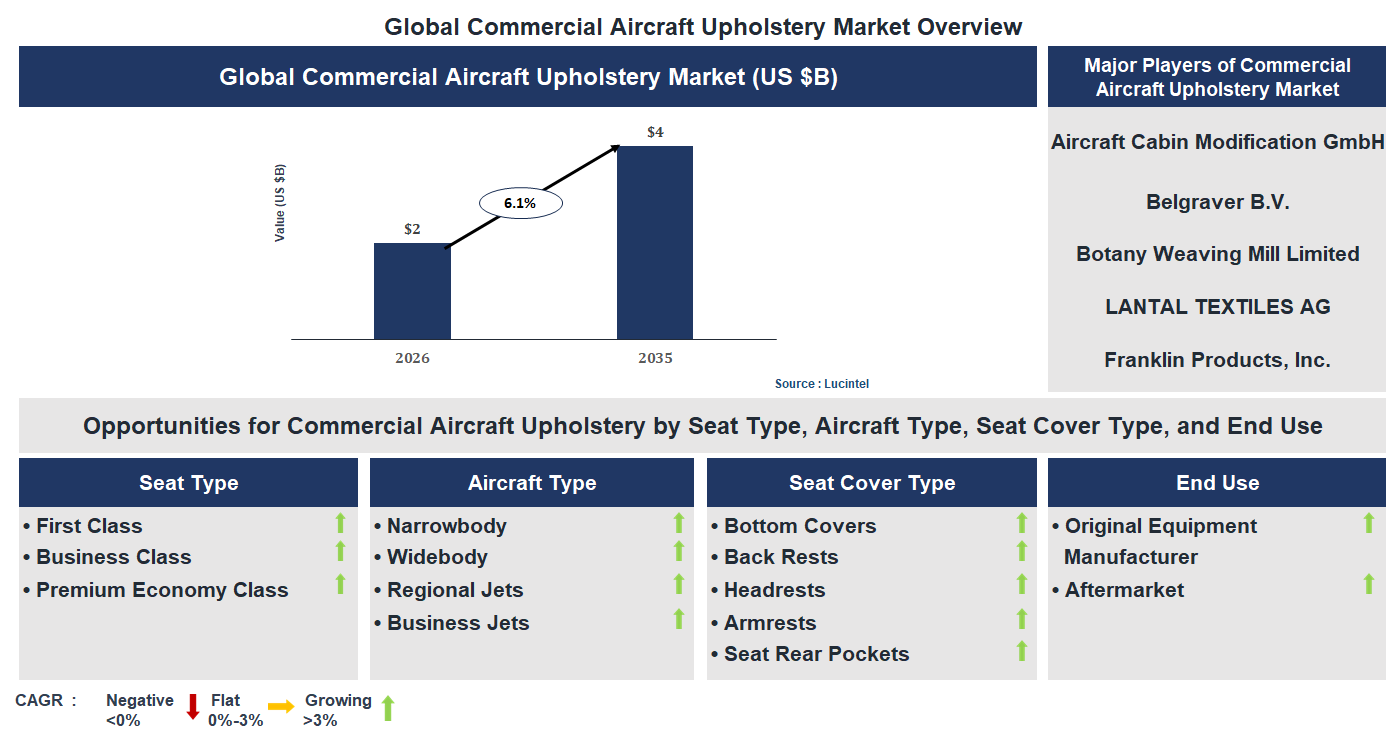
The future of the global commercial aircraft upholstery market looks promising with opportunities in the narrowbody, widebody, regional jet, and business jet markets. The global commercial aircraft upholstery market is expected to reach an estimated $4 billion by 2035 with a CAGR of 6.1% from 2026 to 2035. The major drivers for this market are the increasing demand for luxury aircraft interiors, the rising focus on passenger comfort upgrades, and the growing trend of eco-friendly upholstery materials.• Lucintel forecasts that, within the seat type category, economy class is expected to witness the highest growth over the forecast period.
• Within the aircraft type category, narrowbody is expected to witness the highest growth.
• In terms of region, North America is expected to witness the highest growth over the forecast period. Gain valuable insights for your business decisions with our comprehensive 150+ page report. Sample figures with some insights are shown below.
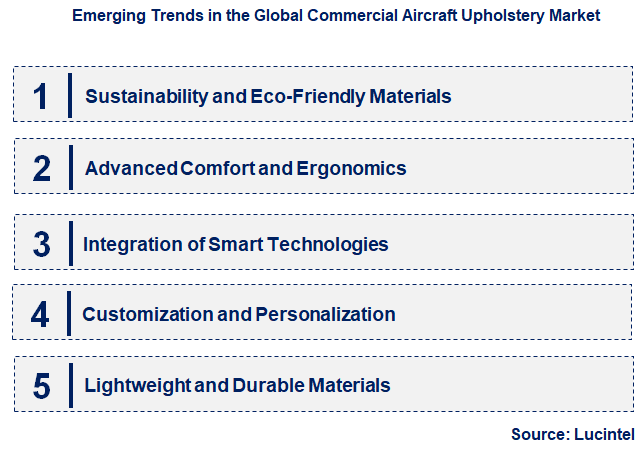
Emerging Trends in the Commercial Aircraft Upholstery Market
The commercial aircraft upholstery market is experiencing significant transformation driven by technological advancements, evolving passenger preferences, and sustainability initiatives. As airlines seek to enhance passenger comfort while reducing environmental impact, the industry is adopting innovative materials and design approaches. Additionally, the integration of smart technologies and customization options is reshaping the market landscape. These developments are not only improving the overall flying experience but also influencing procurement strategies and supply chain dynamics. The following key trends highlight the major shifts currently shaping the commercial aircraft upholstery sector, reflecting a move towards more sustainable, comfortable, and technologically integrated solutions.• Sustainability and Eco-Friendly Materials: The industry is increasingly adopting environmentally sustainable materials such as recycled fabrics, biodegradable foams, and low-VOC dyes. This shift aims to reduce the carbon footprint of aircraft interiors and meet stringent environmental regulations. Airlines are prioritizing eco-friendly options to appeal to environmentally conscious consumers and enhance brand reputation. The use of sustainable materials also encourages innovation in manufacturing processes, leading to lighter, more durable, and recyclable upholstery solutions. This trend is expected to grow as regulatory pressures and consumer awareness continue to rise.
• Advanced Comfort and Ergonomics: Passenger comfort remains a top priority, prompting the development of ergonomic and plush upholstery designs. Innovations include memory foam cushions, adjustable headrests, and breathable fabrics that improve comfort during long flights. These enhancements contribute to a better passenger experience, encouraging loyalty and positive reviews. Airlines are investing in premium and customizable upholstery options to differentiate their services. The focus on comfort also drives the adoption of lightweight yet durable materials, balancing passenger satisfaction with fuel efficiency and cost-effectiveness.
• Integration of Smart Technologies: The incorporation of smart textiles and embedded sensors is transforming aircraft upholstery. These technologies enable real-time monitoring of wear and tear, temperature regulation, and even embedded entertainment options. Smart fabrics can alert maintenance crews to potential issues, reducing downtime and maintenance costs. Additionally, embedded sensors can enhance passenger comfort by adjusting temperature or providing personalized settings. This integration aligns with the broader trend of digitalization in aviation, offering airlines opportunities to improve operational efficiency and passenger engagement through innovative upholstery solutions.
• Customization and Personalization: Airlines are increasingly offering tailored upholstery options to meet diverse passenger preferences and branding requirements. Customization includes choice of colors, patterns, and materials, allowing airlines to create unique cabin environments. Personalization extends to features like adjustable seating and mood lighting integrated with upholstery design. This trend enhances the passenger experience by providing a sense of exclusivity and comfort. It also allows airlines to differentiate themselves in a competitive market. The demand for personalized upholstery is driven by evolving consumer expectations and the desire for a more immersive and comfortable travel experience.
• Lightweight and Durable Materials: The push for fuel efficiency and cost reduction is driving the adoption of lightweight yet durable upholstery materials. Advanced composites, high-performance foams, and innovative fabrics help reduce aircraft weight, leading to significant fuel savings. These materials must also withstand rigorous cleaning, wear, and environmental conditions. The development of lightweight upholstery solutions supports airlines sustainability goals and operational efficiency. As material science advances, the market is witnessing a shift towards more resilient and eco-friendly options that do not compromise on safety or comfort, ultimately contributing to more sustainable and cost-effective aircraft operations. These emerging trends are collectively reshaping the commercial aircraft upholstery market by emphasizing sustainability, passenger comfort, technological integration, customization, and weight reduction. These developments are driving innovation, improving operational efficiency, and enhancing the overall passenger experience, positioning the market for continued growth and evolution in a competitive and environmentally conscious industry.
Recent Development in the Commercial Aircraft Upholstery Market
The commercial aircraft upholstery market is experiencing rapid innovation driven by technological advancements, changing passenger preferences, and sustainability initiatives. These developments are reshaping the industry landscape, creating new opportunities for manufacturers and service providers. As airlines seek to enhance passenger comfort while reducing costs and environmental impact, the market is poised for significant growth. Emerging materials, design innovations, and digital integration are key drivers influencing the future trajectory of this sector.• Growing Demand for Lightweight Materials: The market is shifting towards lightweight, durable fabrics that improve fuel efficiency and passenger comfort. Advanced materials like memory foam and eco-friendly textiles are gaining popularity, reducing aircraft weight and operational costs. This trend supports airlines sustainability goals and enhances overall passenger experience, making upholstery a critical factor in aircraft design and maintenance.
• Adoption of Sustainable and Eco-Friendly Fabrics: Increasing environmental awareness is prompting manufacturers to develop sustainable upholstery options. Biodegradable, recycled, and low-emission fabrics are now being integrated into aircraft interiors. This shift not only aligns with global sustainability standards but also appeals to eco-conscious consumers, providing airlines with a competitive edge and helping reduce the industrys carbon footprint.
• Integration of Smart Technologies in Upholstery: The incorporation of smart textiles and embedded sensors is transforming aircraft interiors. These innovations enable real-time monitoring of fabric condition, temperature regulation, and enhanced passenger comfort. Smart upholstery improves maintenance efficiency, reduces downtime, and offers personalized experiences, thereby increasing passenger satisfaction and operational efficiency for airlines.
• Customization and Design Innovation: Airlines are increasingly seeking bespoke upholstery solutions to differentiate their brand and enhance passenger experience. Advanced manufacturing techniques allow for greater customization in color, pattern, and material. This trend supports airline branding efforts, improves passenger engagement, and enables airlines to adapt quickly to evolving aesthetic and functional demands.
• Expansion of 3D Printing and Rapid Prototyping: 3D printing technology is revolutionizing upholstery manufacturing by enabling rapid prototyping and on-demand production of complex components. This reduces lead times, lowers costs, and allows for greater design flexibility. The adoption of 3D printing accelerates innovation cycles and helps manufacturers meet customized airline requirements efficiently. The overall impact of these developments is a more innovative, sustainable, and customer-centric commercial aircraft upholstery market. These opportunities are driving growth, reducing costs, and enhancing passenger comfort, positioning the industry for sustained expansion and technological leadership.
Strategic Growth Opportunities in the Commercial Aircraft Upholstery Market
The commercial aircraft upholstery market is experiencing significant growth driven by increasing air travel demand, technological advancements, and a focus on passenger comfort. Airlines are investing in durable, lightweight, and customizable materials to enhance cabin aesthetics and functionality. The expansion of airline fleets and refurbishment projects further boost market opportunities. Innovations in eco-friendly fabrics and smart textiles are also shaping future growth, making the market highly dynamic and competitive. Strategic investments and collaborations are essential for capturing emerging opportunities in this evolving landscape.• Growing Demand for Lightweight and Durable Upholstery Materials: The need for lightweight, durable, and fire-resistant fabrics is driving innovation in aircraft upholstery. Airlines seek materials that reduce overall aircraft weight, improve fuel efficiency, and meet safety standards. Advanced textiles such as high-performance synthetic fibers and eco-friendly options are increasingly adopted to enhance passenger comfort while maintaining compliance with stringent regulations. This trend supports the development of sustainable, long-lasting upholstery solutions, fueling market expansion.
• Increasing Refurbishment and Cabin Modernization Projects: Airlines are investing heavily in refurbishing existing aircraft to improve passenger experience and extend fleet lifespan. Modernization projects focus on upgrading seats, headrests, and cabin interiors with innovative upholstery materials that offer better aesthetics, comfort, and ease of maintenance. These initiatives create substantial demand for customized, high-quality upholstery solutions, providing growth opportunities for manufacturers. The trend is particularly prominent in mature markets with aging fleets requiring upgrades.
• Rising Adoption of Eco-Friendly and Sustainable Fabrics: Environmental concerns and regulatory pressures are prompting airlines and manufacturers to adopt sustainable upholstery materials. Biodegradable, recyclable, and low-emission fabrics are gaining popularity, aligning with corporate social responsibility goals. The development of eco-friendly textiles that meet fire safety standards without compromising durability is a key focus. This shift towards sustainability not only enhances brand image but also opens new market segments for eco-conscious products.
• Technological Innovations in Smart and Functional Upholstery: Integration of smart textiles and functional features in aircraft upholstery is transforming passenger experience. Innovations include stain-resistant, antimicrobial, and temperature-regulating fabrics that improve hygiene and comfort. Embedded sensors and IoT-enabled textiles enable real-time monitoring of wear and tear, facilitating predictive maintenance. These technological advancements provide airlines with operational efficiencies and enhanced passenger satisfaction, creating a competitive edge and expanding market opportunities.
• Strategic Collaborations and Customization for Enhanced Passenger Experience: Partnerships between upholstery manufacturers and airlines are driving tailored solutions that meet specific branding and comfort requirements. Customization options, including unique designs, textures, and embedded features, are increasingly sought after. Collaborations facilitate innovation, ensuring products align with evolving passenger preferences and safety standards. This strategic approach helps manufacturers differentiate their offerings, capture niche markets, and foster long-term customer relationships, ultimately fueling market growth. The overall impact of these opportunities is a robust expansion of the commercial aircraft upholstery market, driven by technological, environmental, and customer-centric innovations. As airlines prioritize passenger comfort, safety, and sustainability, manufacturers are poised to capitalize on emerging trends through strategic investments and product development. This dynamic environment promises sustained growth, increased competition, and a focus on high-quality, innovative upholstery solutions that meet the evolving needs of the aviation industry.
Commercial Aircraft Upholstery Market Driver and Challenges
The commercial aircraft upholstery market is influenced by a variety of technological, economic, and regulatory factors that shape its growth and development. Advances in materials science and manufacturing processes drive innovation, while economic fluctuations impact airline spending and investment. Regulatory standards concerning safety, environmental impact, and passenger comfort also play a crucial role. Additionally, evolving customer preferences and the need for sustainable solutions are shaping market dynamics. Navigating these complex drivers and challenges is essential for industry stakeholders to capitalize on opportunities and mitigate risks, ensuring the markets sustainable growth in a highly competitive environment. The factors responsible for driving the commercial aircraft upholstery market include:-• Technological Innovation: The integration of advanced materials such as lightweight, fire-resistant fabrics, and eco-friendly textiles enhances passenger comfort and safety. Innovations in manufacturing processes, like automation and 3D printing, reduce costs and improve quality. These technological advancements enable manufacturers to meet stringent safety standards while offering customizable solutions, thus expanding market opportunities. As airlines seek to improve passenger experience and reduce weight for fuel efficiency, the adoption of innovative upholstery materials becomes a key growth driver.
• Increasing Air Travel Demand: The rising global air travel demand, driven by economic growth, urbanization, and expanding middle-class populations, boosts the need for new aircraft and refurbishments. Airlines are investing in modernizing their fleets to attract passengers, which includes upgrading cabin interiors with new upholstery. This increased demand for aircraft directly correlates with higher upholstery requirements, fueling market expansion. The growth in regional and low-cost carriers further amplifies this trend, creating sustained opportunities for upholstery suppliers.
• Regulatory and Safety Standards: Stringent safety regulations and standards set by aviation authorities such as FAA and EASA mandate the use of fire-resistant, durable, and environmentally compliant materials. Compliance with these standards ensures passenger safety and reduces liability risks for airlines and manufacturers. The evolving regulatory landscape encourages innovation in upholstery materials and designs that meet or exceed safety requirements, thereby driving market growth. Manufacturers investing in compliant products gain a competitive edge in this highly regulated industry.
• Focus on Passenger Comfort and Experience: Airlines are increasingly prioritizing passenger comfort to differentiate themselves in a competitive market. Upgrading cabin interiors with plush, ergonomic, and aesthetically appealing upholstery enhances passenger satisfaction and loyalty. The demand for customized and high-quality fabrics, along with features like noise reduction and temperature regulation, propels the market forward. As airlines seek to improve overall travel experience, the upholstery segment benefits from innovations that combine comfort with functionality.
• Sustainability and Eco-Friendly Materials: Growing environmental concerns and regulatory pressures are pushing the industry toward sustainable solutions. The adoption of eco-friendly, recyclable, and biodegradable upholstery materials reduces the environmental footprint of aircraft interiors. Manufacturers are investing in sustainable textiles that meet safety standards while aligning with airline corporate social responsibility goals. This shift toward sustainability not only appeals to environmentally conscious consumers but also opens new market segments, fostering long-term growth. The challenges facing the commercial aircraft upholstery market include:-
• High Material and Manufacturing Costs: The requirement for specialized, fire-resistant, and lightweight materials increases production costs. Advanced textiles and eco-friendly fabrics often involve higher procurement and processing expenses, which can impact profit margins. Additionally, the need for precision manufacturing and quality control adds to operational costs. These financial pressures may limit the adoption of innovative upholstery solutions, especially among smaller manufacturers or budget-conscious airlines, potentially restraining market growth.
• Regulatory Compliance and Certification Delays: The complex and evolving regulatory landscape necessitates rigorous testing and certification processes for new materials and designs. Lengthy approval timelines can delay product launches and increase costs for manufacturers. Navigating diverse international standards adds complexity, especially for companies operating across multiple regions. These regulatory hurdles can hinder innovation and slow down market expansion, posing significant challenges for industry players.
• Supply Chain Disruptions: The global supply chain for specialized textiles and components is vulnerable to disruptions caused by geopolitical tensions, pandemics, and logistical issues. Shortages of raw materials or delays in transportation can lead to project delays and increased costs. Such uncertainties threaten the timely delivery of upholstery products, impacting customer satisfaction and contractual obligations. Ensuring a resilient supply chain is critical but challenging, especially amid ongoing global uncertainties. The commercial aircraft upholstery market is shaped by technological advancements, increasing air travel, regulatory standards, passenger comfort priorities, and sustainability initiatives. However, high costs, regulatory delays, and supply chain disruptions pose significant challenges. These drivers and obstacles collectively influence the markets trajectory, requiring stakeholders to innovate, adapt, and strategize effectively. The markets future growth hinges on balancing technological progress and regulatory compliance with cost management and supply chain resilience, ensuring sustainable development in a competitive landscape.
List of Commercial Aircraft Upholstery Companies
Companies in the market compete on the basis of product quality offered. Major players in this market focus on expanding their manufacturing facilities, R&D investments, infrastructural development, and leverage integration opportunities across the value chain. With these strategies commercial aircraft upholstery companies cater increasing demand, ensure competitive effectiveness, develop innovative products & technologies, reduce production costs, and expand their customer base. Some of the commercial aircraft upholstery companies profiled in this report include-• Aircraft Cabin Modification GmbH
• Belgraver B.V.
• Botany Weaving Mill Limited
• LANTAL TEXTILES AG
• Franklin Products, Inc.
• Perrone Leather LLC
• Spectra Interior Products, Inc.
• MGR Foamex Ltd.
• Generation Phoenix Limited
• Tapis Corporation
Commercial Aircraft Upholstery Market by Segment
The study includes a forecast for the global commercial aircraft upholstery market by seat type, aircraft type, seat cover type, end use, and region.Commercial Aircraft Upholstery Market by Seat Type [Value from 2019 to 2035]:
• First Class
• Business Class
• Premium Economy Class
Commercial Aircraft Upholstery Market by Aircraft Type [Value from 2019 to 2035]:
• Narrowbody
• Widebody
• Regional Jets
• Business Jets
Commercial Aircraft Upholstery Market by Seat Cover Type [Value from 2019 to 2035]:
• Bottom Covers
• Back Rests
• Headrests
• Armrests
• Seat Rear Pockets
Commercial Aircraft Upholstery Market by End Use [Value from 2019 to 2035]:
• Original Equipment Manufacturer
• Aftermarket
Commercial Aircraft Upholstery Market by Region [Value from 2019 to 2035]:
• North America
• Europe
• Asia Pacific
• The Rest of the World
Country Wise Outlook for the Commercial Aircraft Upholstery Market
The commercial aircraft upholstery market has experienced significant shifts driven by technological innovations, sustainability initiatives, and evolving passenger preferences. As airlines seek to enhance comfort while reducing environmental impact, key players are investing in advanced materials and design solutions. Regulatory standards and supply chain dynamics also influence market trends across different regions. The United States, China, Germany, India, and Japan are notable for their unique contributions and developments in this sector, reflecting broader economic and technological trends shaping the global aviation industry.• United States: The US market has seen increased adoption of lightweight, fire-resistant materials to improve fuel efficiency and passenger safety. Major airlines are investing in sustainable upholstery options, including recycled fabrics and eco-friendly dyes. Innovations in design aim to enhance passenger comfort, with a focus on customization and durability. The presence of leading aerospace manufacturers and research institutions accelerates technological advancements in upholstery solutions.
• China: China’s commercial aircraft upholstery market is rapidly expanding, driven by the growth of domestic airlines and aircraft manufacturing. The focus is on cost-effective, durable materials that meet stringent safety standards. Chinese companies are increasingly adopting innovative textiles that offer better stain resistance and ease of maintenance. The government’s support for aerospace development fosters collaborations and technological progress in upholstery manufacturing.
• Germany: Germany remains a key player in the aerospace upholstery market, emphasizing high-quality, sustainable materials. The country’s focus on eco-friendly production processes aligns with global sustainability goals. German firms are pioneering the use of biodegradable fabrics and advanced fire-retardant textiles. The integration of smart textiles with embedded sensors for passenger comfort and safety is also gaining traction.
• India: The Indian market is witnessing rapid growth due to expanding airline fleets and increasing domestic travel. Cost-effective, durable, and easy-to-maintain upholstery materials are prioritized. Indian manufacturers are exploring innovative textiles that combine comfort with affordability. The government’s push for self-reliance in aerospace manufacturing supports local development of upholstery solutions, fostering innovation and competitiveness.
• Japan: Japan’s commercial aircraft upholstery market is characterized by a focus on advanced, high-performance materials that enhance passenger experience. The country emphasizes the use of lightweight, fire-resistant fabrics with antimicrobial properties. Japanese companies are investing in research on smart textiles and sustainable materials, aligning with their broader technological and environmental initiatives. The integration of comfort-enhancing features and durability remains a key trend.

Features of the Global Commercial Aircraft Upholstery Market
Market Size Estimates: Commercial aircraft upholstery market size estimation in terms of value ($B). Trend and Forecast Analysis: Market trends (2019 to 2025) and forecast (2026 to 2035) by various segments and regions. Segmentation Analysis: Commercial aircraft upholstery market size by various segments, such as by seat type, aircraft type, seat cover type, end use, and region in terms of value ($B). Regional Analysis: Commercial aircraft upholstery market breakdown by North America, Europe, Asia Pacific, and Rest of the World. Growth Opportunities: Analysis of growth opportunities in different seat types, aircraft types, seat cover types, end uses, and regions for the commercial aircraft upholstery market. Strategic Analysis: This includes M&A, new product development, and competitive landscape of the commercial aircraft upholstery market. Analysis of competitive intensity of the industry based on Porter’s Five Forces model.
FAQ
Q1. What is the commercial aircraft upholstery market size? Answer: The global commercial aircraft upholstery market is expected to reach an estimated $4 billion by 2035. Q2. What is the growth forecast for commercial aircraft upholstery market? Answer: The global commercial aircraft upholstery market is expected to grow with a CAGR of 6.1% from 2026 to 2035. Q3. What are the major drivers influencing the growth of the commercial aircraft upholstery market? Answer: The major drivers for this market are the increasing demand for luxury aircraft interiors, the rising focus on passenger comfort upgrades, and the growing trend of eco-friendly upholstery materials. Q4. What are the major segments for commercial aircraft upholstery market? Answer: The future of the commercial aircraft upholstery market looks promising with opportunities in the narrowbody, widebody, regional jet, and business jet markets. Q5. Who are the key commercial aircraft upholstery market companies? Answer: Some of the key commercial aircraft upholstery companies are as follows:• Aircraft Cabin Modification GmbH
• Belgraver B.V.
• Botany Weaving Mill Limited
• LANTAL TEXTILES AG
• Franklin Products, Inc.
• Perrone Leather LLC
• Spectra Interior Products, Inc.
• MGR Foamex Ltd.
• Generation Phoenix Limited
• Tapis Corporation Q6. Which commercial aircraft upholstery market segment will be the largest in future? Answer: Lucintel forecasts that, within the seat type category, economy class is expected to witness the highest growth over the forecast period. Q7. In commercial aircraft upholstery market, which region is expected to be the largest in next 8 years? Answer: In terms of region, North America is expected to witness the highest growth over the forecast period. Q8. Do we receive customization in this report? Answer: Yes, Lucintel provides 10% customization without any additional cost.
Table of Contents
List of Figures
List of Tables
Methodology
- In-depth interviews of the major players in this market
- Detailed secondary research from competitors’ financial statements and published data
- Extensive searches of published works, market, and database information pertaining to industry news, company press releases, and customer intentions
- A compilation of the experiences, judgments, and insights of Lucintel’s professionals, who have analyzed and tracked this market over the years.


Buy Now
Choose a license that fits your team. Instant PDF delivery.
Prices exclude taxes. Instant delivery. Custom licensing available on request.
Key Questions
- • What are some of the most promising, high-growth opportunities for the commercial aircraft upholstery market by seat type (first class, business class, and premium economy class), aircraft type (narrowbody, widebody, regional jets, and business jets), seat cover type (bottom covers, back rests, headrests, armrests, and seat rear pockets), end use (original equipment manufacturer and aftermarket), and region (North America, Europe, Asia Pacific, and the Rest of the World)?
- • Which segments will grow at a faster pace and why?
- • Which region will grow at a faster pace and why?
- • What are the key factors affecting market dynamics? What are the key challenges and business risks in this market?
- • What are the business risks and competitive threats in this market?
- • What are the emerging trends in this market and the reasons behind them?
- • What are some of the changing demands of customers in the market?
- • What are the new developments in the market? Which companies are leading these developments?
- • Who are the major players in this market? What strategic initiatives are key players pursuing for business growth?
- • What are some of the competing products in this market and how big of a threat do they pose for loss of market share by material or product substitution?
- • What M&A activity has occurred in the last 7 years and what has its impact been on the industry? For any questions related to Commercial Aircraft Upholstery Market, Commercial Aircraft Upholstery Market Size, Commercial Aircraft Upholstery Market Growth, Commercial Aircraft Upholstery Market Analysis, Commercial Aircraft Upholstery Market Report, Commercial Aircraft Upholstery Market Share, Commercial Aircraft Upholstery Market Trends, Commercial Aircraft Upholstery Market Forecast, Commercial Aircraft Upholstery Companies, write Lucintel analyst at email: helpdesk@lucintel.com. We will be glad to get back to you soon.


