
Report Feature
Commercial Aircraft Market Trends and Forecast
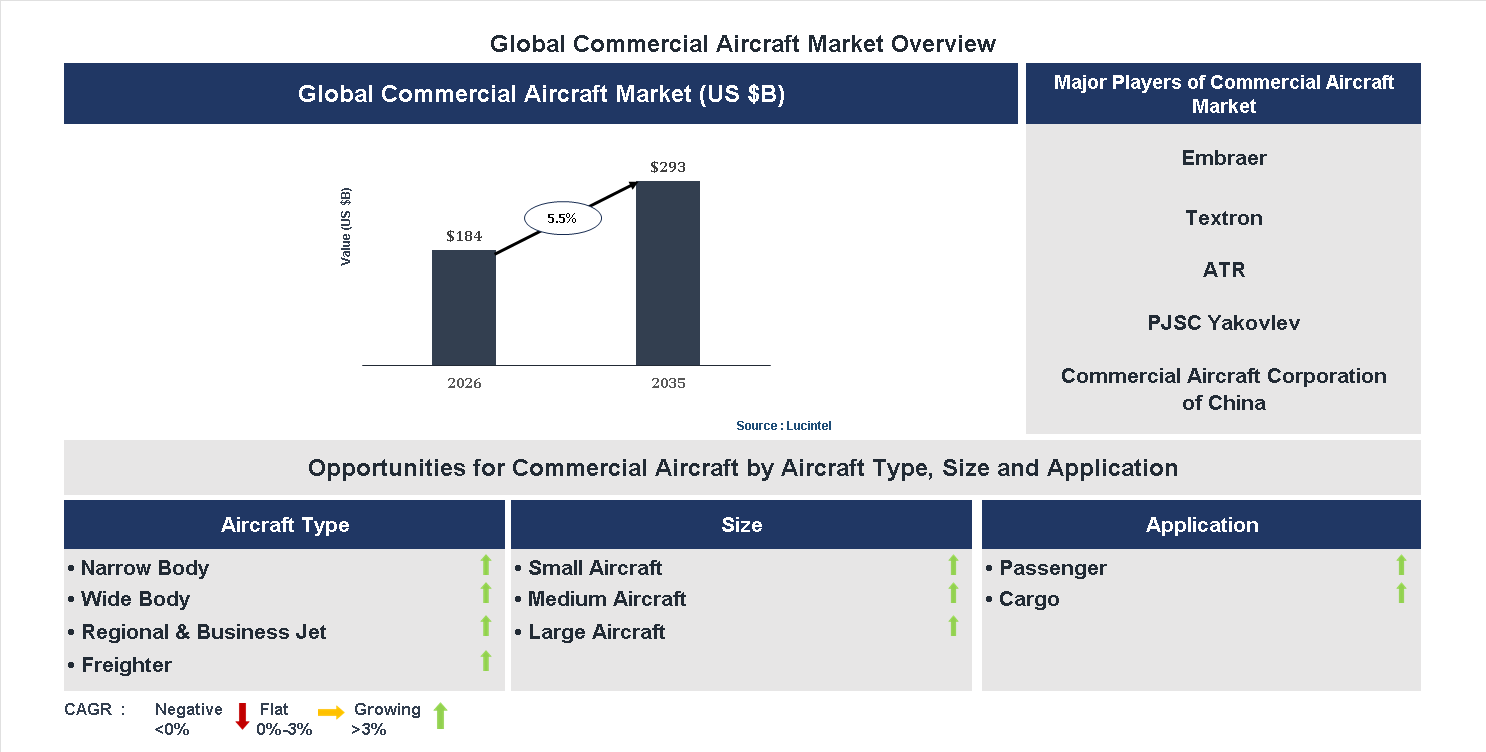
The future of the global commercial aircraft market looks promising with opportunities in the passenger and cargo markets. The global commercial aircraft market is expected to reach an estimated $293 billion by 2035 with a CAGR of 5.5% from 2026 to 2035. The major drivers for this market are the increasing demand for air passenger travel, the rising investments in fleet modernization programs, and the growing expansion of low cost carriers.• Lucintel forecasts that, within the aircraft type category, narrow body is expected to witness the highest growth over the forecast period.
• Within the application category, passenger is expected to witness higher growth.
• In terms of region, APAC is expected to witness the highest growth over the forecast period. Gain valuable insights for your business decisions with our comprehensive 150+ page report. Sample figures with some insights are shown below.
Emerging Trends in the Commercial Aircraft Market
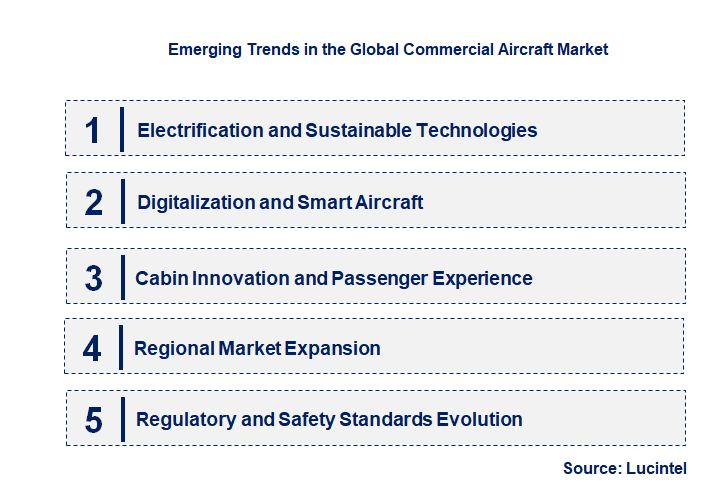
The commercial aircraft market is experiencing rapid transformation driven by technological advancements, shifting consumer preferences, and evolving regulatory landscapes. As airlines seek more efficient, sustainable, and passenger-friendly solutions, manufacturers are innovating to meet these demands. The markets growth is also influenced by emerging economies, increased air travel demand, and the push toward greener aviation practices. These developments are not only reshaping the competitive landscape but also setting new standards for aircraft design, manufacturing, and operational strategies. Understanding these key trends is essential for stakeholders aiming to capitalize on future opportunities and navigate potential challenges effectively.• Electrification and Sustainable Technologies: The push for greener aviation is accelerating the adoption of electric and hybrid propulsion systems. Manufacturers are investing in research to develop aircraft that produce fewer emissions and lower operating costs. This trend is driven by stricter environmental regulations and rising fuel prices, prompting a shift toward sustainable aviation fuels and alternative power sources. The impact includes reduced carbon footprints, increased regulatory compliance, and the opening of new market segments focused on eco-friendly aircraft solutions.
• Digitalization and Smart Aircraft: Integration of digital technologies such as IoT, AI, and big data analytics is transforming aircraft design, maintenance, and operations. Smart aircraft enable real-time monitoring, predictive maintenance, and enhanced passenger experiences through personalized services. This trend improves operational efficiency, reduces downtime, and lowers maintenance costs. Airlines and manufacturers benefit from better data-driven decision-making, leading to increased safety, reliability, and customer satisfaction.
• Cabin Innovation and Passenger Experience: Airlines are prioritizing passenger comfort through innovative cabin designs, advanced entertainment systems, and customizable environments. Features like larger windows, improved lighting, and quieter cabins enhance the travel experience. This trend influences aircraft design to attract premium and economy travelers alike, boosting airline competitiveness. The focus on comfort and connectivity is also driving demand for next-generation aircraft with modular and adaptable cabin configurations.
• Regional Market Expansion: Emerging economies in Asia-Pacific, Africa, and Latin America are experiencing rapid air travel growth, creating new opportunities for aircraft manufacturers. These regions often have less mature aviation infrastructure, prompting demand for smaller, more versatile aircraft suited for regional routes. The expansion supports increased fleet orders and stimulates local manufacturing and maintenance services. This trend diversifies market dynamics and encourages tailored aircraft solutions to meet regional needs.
• Regulatory and Safety Standards Evolution: Stricter safety, noise, and emissions regulations are shaping aircraft design and certification processes. Manufacturers are investing in advanced materials, noise reduction technologies, and safety systems to comply with evolving standards. This trend ensures higher safety levels and environmental compliance but may increase development costs and time-to-market. It also encourages innovation in lightweight materials and aerodynamics, influencing future aircraft architectures. These emerging trends are collectively reshaping the commercial aircraft market by fostering innovation, enhancing sustainability, and expanding regional reach. They are driving a shift toward more efficient, passenger-centric, and environmentally responsible aircraft, positioning the industry for sustainable growth and competitive advantage in the coming decades.
Recent Development in the Commercial Aircraft Market
The commercial aircraft market is experiencing rapid transformation driven by technological advancements, evolving passenger demands, and environmental considerations. These developments are shaping the future landscape, creating new opportunities for manufacturers, airlines, and stakeholders. Innovation in aircraft design, sustainability initiatives, and digital integration are key drivers. As the industry adapts to these changes, market dynamics are shifting, influencing global travel, economic growth, and competitive strategies. Understanding these key developments is essential for stakeholders aiming to capitalize on emerging trends and ensure sustainable growth.• Electric Propulsion Technologies: Revolutionizing Aircraft Efficiency and Sustainability: Electric propulsion is gaining momentum, promising reduced emissions and lower operating costs. Advances in battery technology and hybrid systems are enabling smaller regional aircraft to operate more sustainably. This development impacts the market by encouraging airlines to adopt eco-friendly fleets, meeting stricter environmental regulations, and appealing to environmentally conscious consumers. It also opens new avenues for innovation in aircraft design, potentially transforming regional and short-haul travel segments.
• Autonomous Flight Systems: Enhancing Safety and Operational Efficiency: Autonomous systems are increasingly integrated into commercial aircraft, improving safety, reducing pilot workload, and optimizing flight paths. These technologies include advanced autopilot, AI-driven navigation, and predictive maintenance. The impact on the market is significant, as airlines can reduce operational costs, improve turnaround times, and enhance passenger experience. Regulatory frameworks are evolving to accommodate these innovations, positioning autonomous flight as a key growth driver in the industry.
• Sustainable Aviation Fuels (SAF): Driving Eco-Friendly Industry Practices: The adoption of SAF is accelerating, offering a renewable alternative to traditional jet fuels. These fuels significantly lower carbon emissions and support airlines sustainability commitments. The market impact includes increased investment in biofuel production, partnerships between airlines and fuel producers, and regulatory incentives. As SAF becomes more cost-competitive, it will play a crucial role in enabling the industry to meet climate targets while maintaining profitability.
• Digital Transformation and Connectivity: Redefining Passenger Experience and Operations: Digital innovations such as in-flight connectivity, personalized entertainment, and real-time data analytics are transforming passenger experiences. Airlines are leveraging digital tools for operational efficiency, predictive maintenance, and revenue management. This development impacts the market by increasing customer satisfaction, boosting ancillary revenues, and streamlining operations. The integration of IoT and AI is expected to further enhance the competitiveness of airlines and aircraft manufacturers.
• Advanced Materials and Manufacturing Techniques: Improving Aircraft Performance and Cost Efficiency: The use of lightweight composites, 3D printing, and advanced manufacturing processes is enhancing aircraft performance and reducing costs. These materials contribute to fuel efficiency, durability, and design flexibility. The market benefits from reduced production times and lower maintenance costs, enabling faster delivery of new aircraft models. This development supports the industry’s push toward more sustainable, cost-effective, and innovative aircraft solutions, fostering competitive advantages for manufacturers. These recent developments are significantly impacting the commercial aircraft market by fostering innovation, sustainability, and operational efficiency. They are enabling industry stakeholders to meet evolving regulatory standards, reduce environmental footprints, and enhance passenger experiences. As these trends continue to evolve, they will drive market growth, competitiveness, and technological leadership, shaping the future of global air travel and industry sustainability.
Strategic Growth Opportunities in the Commercial Aircraft Market
The commercial aircraft market is experiencing rapid growth driven by increasing global travel demand, technological advancements, and expanding airline fleets. Emerging markets and the need for fuel-efficient, eco-friendly aircraft are creating new opportunities for manufacturers and service providers. Strategic investments in innovation, maintenance, and customer experience are essential for capturing market share. This dynamic environment offers numerous avenues for growth, collaboration, and competitive advantage, shaping the future of commercial aviation worldwide.• Increasing Demand for Fuel-Efficient Aircraft: The push for sustainability and rising fuel costs are driving airlines to adopt more fuel-efficient aircraft models like the Boeing 787 and Airbus A350. These aircraft reduce operating costs and carbon emissions, appealing to environmentally conscious consumers and regulators. Manufacturers are investing heavily in lightweight materials and advanced aerodynamics to meet this demand, opening opportunities for innovation and market expansion in mid- and long-haul segments.
• Expansion of Low-Cost Carrier Market Segments: The growth of low-cost carriers (LCCs) across Asia, Latin America, and Africa is fueling demand for smaller, cost-effective aircraft such as the Airbus A320neo and Boeing 737 MAX. These airlines prioritize operational efficiency and affordability, creating opportunities for aircraft leasing, aftermarket services, and customized solutions. The LCC models expansion is also encouraging the development of regional and short-haul aircraft tailored to specific market needs.
• Adoption of Advanced Avionics and Digital Technologies: Integration of digital systems, AI, and IoT in aircraft enhances safety, maintenance, and passenger experience. Opportunities lie in developing predictive maintenance tools, cockpit automation, and personalized in-flight services. Airlines and manufacturers investing in these technologies can reduce downtime, improve operational efficiency, and differentiate their offerings, fostering a competitive edge in a technology-driven market.
• Growing Demand for Aircraft Maintenance, Repair, and Overhaul (MRO): As fleets expand, the need for efficient MRO services increases. Opportunities include developing advanced diagnostic tools, sustainable repair techniques, and digital tracking systems. MRO providers can capitalize on the rising number of aging aircraft requiring upgrades and the need for rapid turnaround times, especially in emerging markets where fleet modernization is accelerating.
• Rise of Urban Air Mobility and Electric Aircraft: Emerging segments like urban air mobility (UAM) and electric aircraft present new growth avenues. These innovations aim to reduce congestion and emissions in urban areas, with prototypes and pilot projects already underway. Investment in electric propulsion, autonomous flight, and infrastructure development can position companies at the forefront of this transformative shift, opening markets for short-distance travel, cargo delivery, and regional transportation. The overall landscape of the commercial aircraft market is poised for significant transformation through these growth opportunities, fostering innovation, sustainability, and expanded connectivity. Companies that strategically leverage these trends will be well-positioned to lead in a competitive and evolving industry.
Commercial Aircraft Market Driver and Challenges
The commercial aircraft market is influenced by a complex interplay of technological advancements, economic conditions, and regulatory frameworks. Rapid innovations in aircraft design and materials enhance efficiency and passenger comfort, while economic factors such as global GDP growth and airline profitability drive demand. Regulatory policies concerning safety, emissions, and noise standards shape industry practices and product development. Additionally, geopolitical stability and fuel prices significantly impact market dynamics. Navigating these multifaceted drivers and challenges is essential for stakeholders aiming to capitalize on growth opportunities and mitigate risks in this highly competitive sector. The factors responsible for driving the commercial aircraft market include:-• Technological Innovation: The continuous development of fuel-efficient engines, lightweight materials, and advanced avionics systems significantly enhances aircraft performance, reduces operational costs, and meets stringent environmental standards. These innovations attract airlines seeking to improve profitability and passenger experience, thereby expanding market demand. Moreover, technological progress enables the integration of digital solutions for maintenance and operations, further optimizing efficiency and safety. As aircraft become more sustainable and cost-effective, manufacturers are motivated to invest heavily in R&D, fueling market growth and competitiveness.
• Increasing Air Travel Demand: Rising global income levels, urbanization, and expanding middle classes in emerging economies have led to a surge in air travel. The proliferation of low-cost carriers and increased connectivity between regions further boost passenger numbers. This heightened demand drives airlines to expand their fleets, prompting manufacturers to develop new aircraft models tailored to various routes and passenger capacities. The growth in business travel and tourism also contributes to sustained market expansion, making air travel a vital component of global transportation infrastructure.
• Economic Growth and Airline Profitability: Robust economic conditions in key markets such as North America, Europe, and Asia-Pacific bolster airline revenues, enabling fleet expansion and modernization. Increased profitability allows airlines to invest in newer, more fuel-efficient aircraft, which in turn stimulates demand for advanced commercial aircraft. Economic stability also encourages airline expansion into new routes and markets, creating additional opportunities for aircraft manufacturers. Furthermore, favorable exchange rates and low interest rates facilitate financing for fleet acquisitions, supporting overall market growth.
• Regulatory Environment and Sustainability Initiatives: Stricter safety, noise, and emissions regulations influence aircraft design and operational procedures. Governments and international bodies are pushing for greener aviation through mandates on fuel efficiency and carbon reduction, prompting manufacturers to develop environmentally friendly aircraft. Certification processes and compliance standards also shape product development timelines and costs. These regulatory pressures drive innovation but pose challenges in balancing environmental goals with technological feasibility and cost constraints, impacting market dynamics and strategic planning.
• Supply Chain and Material Advancements: The evolution of lightweight composite materials and advanced manufacturing techniques enhances aircraft durability and reduces weight, leading to better fuel efficiency. A resilient supply chain ensures timely delivery of critical components, minimizing production delays and costs. Innovations in manufacturing, such as 3D printing and automation, improve quality and reduce lead times. However, disruptions in supply chains, geopolitical tensions, and raw material shortages can hinder production schedules and increase costs, posing risks to market stability and growth prospects. The challenges facing the commercial aircraft market include:-
• Fluctuating Fuel Prices: Volatility in global fuel prices directly impacts airline operating costs and profitability. Sudden increases in fuel costs can lead to higher ticket prices, reducing demand and affecting revenue streams. Airlines may delay or cancel fleet expansion plans during periods of high fuel prices, which in turn affects aircraft manufacturers. Conversely, sustained low fuel prices can pressure airlines to optimize existing fleets rather than invest in new aircraft, creating a cyclical impact on market growth. Managing fuel efficiency and hedging strategies remains critical for industry stability amid price fluctuations.
• Regulatory and Environmental Pressures: Increasingly stringent safety, noise, and emissions standards impose additional costs on manufacturers and operators. Compliance with evolving regulations requires continuous technological upgrades and certification processes, which can delay aircraft deliveries and increase development costs. Environmental concerns also lead to restrictions on certain aircraft types and operational practices, challenging manufacturers to innovate within tight regulatory frameworks. Balancing regulatory compliance with market competitiveness remains a persistent challenge, influencing product development and strategic planning.
• Supply Chain Disruptions: The global nature of aircraft manufacturing makes it vulnerable to supply chain disruptions caused by geopolitical tensions, pandemics, or raw material shortages. Delays in sourcing critical components such as engines, avionics, and composites can lead to production bottlenecks, increased costs, and missed delivery deadlines. These disruptions threaten to undermine market growth, strain supplier relationships, and elevate project risks. Ensuring supply chain resilience through diversification and strategic inventory management is essential to mitigate these challenges and sustain industry momentum. The commercial aircraft market is shaped by rapid technological advancements, rising global travel demand, and supportive economic conditions, which collectively foster growth. However, challenges such as fuel price volatility, regulatory pressures, and supply chain vulnerabilities pose significant risks. Navigating these drivers and challenges requires strategic innovation, regulatory compliance, and supply chain resilience. The markets future will depend on how effectively stakeholders adapt to evolving technological, economic, and regulatory landscapes, ensuring sustainable growth and competitiveness in a dynamic global environment.
List of Commercial Aircraft Companies
Companies in the market compete on the basis of product quality offered. Major players in this market focus on expanding their manufacturing facilities, R&D investments, infrastructural development, and leverage integration opportunities across the value chain. With these strategies commercial aircraft companies cater increasing demand, ensure competitive effectiveness, develop innovative products & technologies, reduce production costs, and expand their customer base. Some of the commercial aircraft companies profiled in this report include-• Embraer
• Textron
• ATR
• PJSC Yakovlev
• Commercial Aircraft Corporation of China
• Airbus
• Bombardier
• Boeing
• Leonardo
• Lockheed Martin Corporation
Commercial Aircraft Market by Segment
The study includes a forecast for the global commercial aircraft market by aircraft type, size, application, and region.Commercial Aircraft Market by Aircraft Type [Value from 2019 to 2035]:
• Narrow Body
• Wide Body
• Regional & Business Jet
• Freighter
Commercial Aircraft Market by Size [Value from 2019 to 2035]:
• Small Aircraft
• Medium Aircraft
• Large Aircraft
Commercial Aircraft Market by Application [Value from 2019 to 2035]:
• Passenger
• Cargo
Commercial Aircraft Market by Region [Value from 2019 to 2035]:
• North America
• Europe
• Asia Pacific
• The Rest of the World
Country Wise Outlook for the Commercial Aircraft Market
The commercial aircraft market has experienced significant shifts driven by technological advancements, evolving consumer demands, and geopolitical factors. As countries strive to enhance their aviation infrastructure and sustainability efforts, key developments are emerging across major markets. These changes reflect a combination of innovation, regulatory adjustments, and strategic investments aimed at maintaining competitiveness and addressing environmental concerns. The following summaries highlight recent developments in the United States, China, Germany, India, and Japan, illustrating how each nation is shaping the future of commercial aviation.• United States: The US market has seen increased investments in sustainable aviation fuels and electric aircraft prototypes. Major manufacturers like Boeing are advancing next-generation aircraft designs with improved fuel efficiency and reduced emissions. Additionally, US airlines are expanding their route networks and upgrading fleet technology to meet rising passenger demand and environmental standards. Regulatory agencies are also promoting stricter safety and emissions regulations, fostering innovation in aircraft manufacturing and operations.
• China: China continues to rapidly expand its commercial aircraft fleet, with a focus on domestic manufacturing through COMACs C919 and ARJ21 models. The government is heavily investing in airport infrastructure and technological innovation to support the growth of low-cost carriers and international routes. China is also prioritizing the development of environmentally friendly aircraft and sustainable aviation initiatives, aiming to reduce carbon emissions and enhance its global aviation influence.
• Germany: Germany remains a key player in the European aviation sector, emphasizing digital transformation and eco-friendly aircraft development. Lufthansa and Airbus are collaborating on new aircraft models with advanced aerodynamics and fuel efficiency. The country is also investing in sustainable airport infrastructure and exploring alternative propulsion systems, including hybrid and electric aircraft, to meet EU environmental targets. Regulatory frameworks are evolving to support greener aviation practices.
• India: The Indian commercial aircraft market is experiencing rapid growth driven by rising middle-class income and increased domestic travel. Airlines are expanding their fleets with both narrow-body and wide-body aircraft, often leasing newer models. The government is promoting regional connectivity through initiatives like UDAN and investing in airport infrastructure upgrades. India is also exploring sustainable aviation solutions, including biofuels and electric aircraft, to address environmental concerns amid expanding air traffic.
• Japan: Japan is focusing on technological innovation and sustainability in its aviation sector. The country is investing in research on electric and hybrid aircraft, aiming to reduce reliance on fossil fuels. Major airlines are modernizing their fleets with fuel-efficient models, and airports are adopting smart technologies for better efficiency. Japan is also active in international collaborations to develop next-generation aircraft and promote environmentally sustainable aviation practices aligned with global standards.

Features of the Global Commercial Aircraft Market
Market Size Estimates: Commercial aircraft market size estimation in terms of value ($B). Trend and Forecast Analysis: Market trends (2019 to 2025) and forecast (2026 to 2035) by various segments and regions. Segmentation Analysis: Commercial aircraft market size by aircraft type, size, application, and region in terms of value ($B). Regional Analysis: Commercial aircraft market breakdown by North America, Europe, Asia Pacific, and Rest of the World. Growth Opportunities: Analysis of growth opportunities in different aircraft types, size, applications, and regions for the commercial aircraft market. Strategic Analysis: This includes M&A, new product development, and competitive landscape of the commercial aircraft market. Analysis of competitive intensity of the industry based on Porter’s Five Forces model.
FAQ
Q1. What is the commercial aircraft market size? Answer: The global commercial aircraft market is expected to reach an estimated $293 billion by 2035. Q2. What is the growth forecast for commercial aircraft market? Answer: The global commercial aircraft market is expected to grow with a CAGR of 5.5% from 2026 to 2035. Q3. What are the major drivers influencing the growth of the commercial aircraft market? Answer: The major drivers for this market are the increasing demand for air passenger travel, the rising investments in fleet modernization programs, and the growing expansion of low cost carriers. Q4. What are the major segments for commercial aircraft market? Answer: The future of the commercial aircraft market looks promising with opportunities in the passenger and cargo markets. Q5. Who are the key commercial aircraft market companies? Answer: Some of the key commercial aircraft companies are as follows:• Embraer
• Textron
• ATR
• PJSC Yakovlev
• Commercial Aircraft Corporation of China
• Airbus
• Bombardier
• Boeing
• Leonardo
• Lockheed Martin Corporation Q6. Which commercial aircraft market segment will be the largest in future? Answer: Lucintel forecasts that, within the aircraft type category, narrow body is expected to witness the highest growth over the forecast period. Q7. In commercial aircraft market, which region is expected to be the largest in next 8 years? Answer: In terms of region, APAC is expected to witness the highest growth over the forecast period. Q8. Do we receive customization in this report? Answer: Yes, Lucintel provides 10% customization without any additional cost.
Table of Contents
List of Figures
List of Tables
Methodology
- In-depth interviews of the major players in this market
- Detailed secondary research from competitors’ financial statements and published data
- Extensive searches of published works, market, and database information pertaining to industry news, company press releases, and customer intentions
- A compilation of the experiences, judgments, and insights of Lucintel’s professionals, who have analyzed and tracked this market over the years.


Buy Now
Choose a license that fits your team. Instant PDF delivery.
Prices exclude taxes. Instant delivery. Custom licensing available on request.
Key Questions
- • What are some of the most promising, high-growth opportunities for the commercial aircraft market by aircraft type (narrow body, wide body, regional & business jet, and freighter), size (small aircraft, medium aircraft, and large aircraft), application (passenger and cargo), and region (North America, Europe, Asia Pacific, and the Rest of the World)?
- • Which segments will grow at a faster pace and why?
- • Which region will grow at a faster pace and why?
- • What are the key factors affecting market dynamics? What are the key challenges and business risks in this market?
- • What are the business risks and competitive threats in this market?
- • What are the emerging trends in this market and the reasons behind them?
- • What are some of the changing demands of customers in the market?
- • What are the new developments in the market? Which companies are leading these developments?
- • Who are the major players in this market? What strategic initiatives are key players pursuing for business growth?
- • What are some of the competing products in this market and how big of a threat do they pose for loss of market share by material or product substitution?
- • What M&A activity has occurred in the last 5 years and what has its impact been on the industry? For any questions related to Commercial Aircraft Market, Commercial Aircraft Market Size, Commercial Aircraft Market Growth, Commercial Aircraft Market Analysis, Commercial Aircraft Market Report, Commercial Aircraft Market Share, Commercial Aircraft Market Trends, Commercial Aircraft Market Forecast, Commercial Aircraft Companies, write Lucintel analyst at email: helpdesk@lucintel.com. We will be glad to get back to you soon.


