
Market Report · July 31, 2026

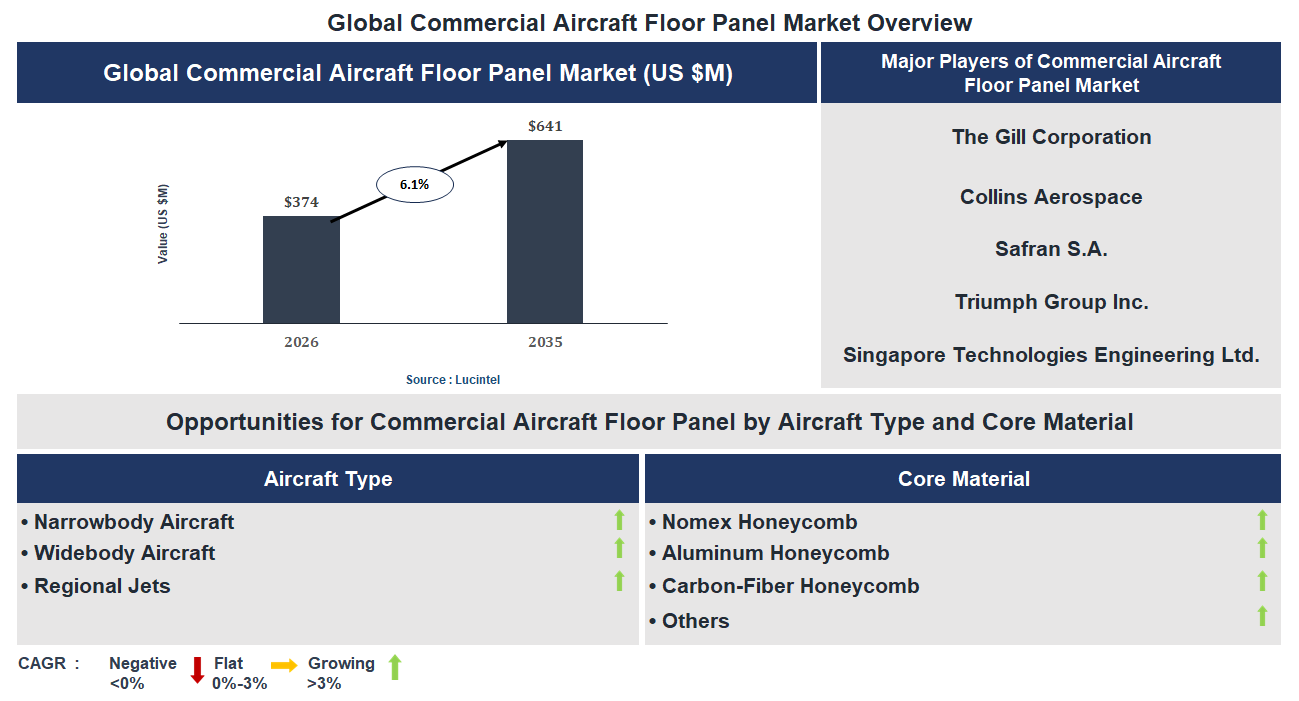
Key data points: The market size in 2035 = $641 million, growth forecast = 6.1% annually for the next 8 years. Scroll below to get more insights. This market report covers trends, opportunities and forecasts in commercial aircraft floor panel market to 2035 by aircraft type (narrowbody aircraft, widebody aircraft, and regional jets), core material (nomex honeycomb, aluminum honeycomb, carbon-fiber honeycomb, and others), and region (North America, Europe, Asia Pacific, and the Rest of the World)
We'll send your sample report shortly.
• Lucintel forecasts that, within the core material category, nomex honeycomb is expected to witness the highest growth over the forecast period.
• Within the aircraft type category, narrowbody aircraft is expected to witness the highest growth.
• In terms of region, APAC is expected to witness the highest growth over the forecast period. Gain valuable insights for your business decisions with our comprehensive 150+ page report. Sample figures with some insights are shown below.
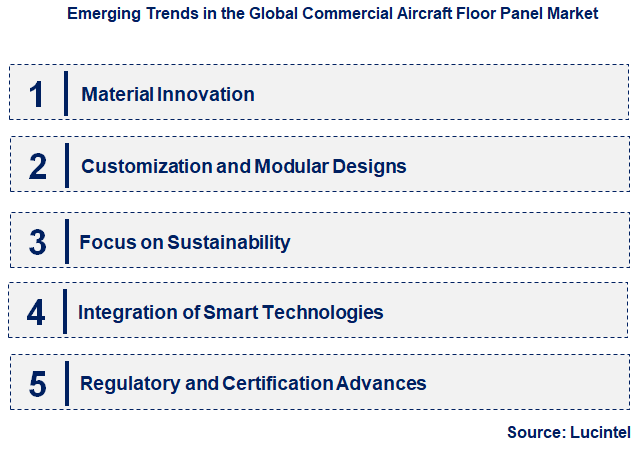
• Material Innovation: Advanced composites and lightweight materials are increasingly used in floor panels, reducing aircraft weight and improving fuel efficiency. These materials offer superior strength-to-weight ratios, enabling airlines to lower operational costs and meet environmental standards. The adoption of such innovative materials also enhances durability and safety, making aircraft more reliable and cost-effective over their lifespan. As material technology progresses, expect further integration of sustainable and high-performance components, shaping the future of aircraft interior design.
• Customization and Modular Designs: Airlines demand more personalized and flexible cabin configurations, prompting manufacturers to develop modular floor panels. These panels allow for easier reconfiguration of cabin layouts, catering to different passenger classes or service needs. Modular designs also facilitate maintenance and upgrades, reducing downtime and operational costs. This trend enhances passenger experience by enabling tailored interior environments and provides airlines with greater operational agility, ultimately influencing market competitiveness and product development strategies.
• Focus on Sustainability: The push for eco-friendly aviation solutions is driving the adoption of sustainable materials and manufacturing processes in floor panel production. Recyclable composites, bio-based materials, and energy-efficient manufacturing techniques are gaining prominence. This shift aligns with global environmental regulations and airline commitments to reduce carbon footprints. Sustainable floor panels not only appeal to eco-conscious consumers but also help airlines meet regulatory standards, fostering a market shift toward greener, more responsible aircraft interior components.
• Integration of Smart Technologies: The incorporation of sensors and IoT-enabled features into floor panels is emerging as a key trend. These smart panels can monitor structural integrity, detect damage, and facilitate predictive maintenance, thereby enhancing safety and reducing maintenance costs. The integration of smart technology also supports cabin management systems, improving passenger comfort and operational efficiency. As connectivity becomes more integral to aircraft systems, smart floor panels are poised to become standard, transforming traditional interior components into intelligent, data-driven assets.
• Regulatory and Certification Advances: Evolving safety standards and certification processes are influencing product development in the market. Manufacturers are investing in research to meet stringent regulations, ensuring compliance with international safety and fire-resistance standards. This focus on certification accelerates innovation and quality assurance, fostering trust among airlines and regulators. As regulatory frameworks become more comprehensive, they drive the adoption of safer, more reliable floor panels, shaping the competitive landscape and encouraging technological advancements. These trends are collectively reshaping the commercial aircraft floor panel market by emphasizing innovation, sustainability, customization, and safety. They are enabling manufacturers to deliver more efficient, adaptable, and environmentally friendly solutions, ultimately transforming the aircraft interior landscape and influencing future market growth trajectories.
• Growing Demand for Lightweight Materials: The market is shifting towards lightweight composites and advanced materials to reduce aircraft weight, improve fuel efficiency, and lower emissions. This trend enhances aircraft performance and operational cost savings, attracting manufacturers to invest in innovative material solutions. The adoption of lightweight panels also supports airlines sustainability goals, making aircraft more environmentally friendly. As regulatory pressures increase, the demand for durable, lightweight floor panels is expected to rise significantly, driving market growth.
• Technological Innovations in Manufacturing: Advanced manufacturing techniques such as automation, 3D printing, and precision engineering are revolutionizing floor panel production. These innovations enable faster, more cost-effective manufacturing with higher quality standards. They also allow for complex designs and customization, meeting specific airline requirements. The integration of digital tools and smart manufacturing processes enhances efficiency, reduces waste, and shortens lead times, positioning the market for sustained growth and increased competitiveness.
• Focus on Sustainability and Eco-Friendly Solutions: Environmental concerns are prompting the industry to adopt sustainable materials and eco-friendly production methods. Biodegradable composites, recycled materials, and low-emission manufacturing processes are gaining traction. These initiatives help airlines meet stringent environmental regulations and corporate social responsibility goals. The push for sustainability is also influencing product design, encouraging the development of recyclable and lightweight panels that contribute to overall aircraft eco-efficiency, thereby expanding market opportunities.
• Increasing Aircraft Orders and Fleet Modernization: The global rise in aircraft orders, especially from emerging markets, is fueling demand for new floor panels. Airlines are modernizing fleets with newer, more efficient aircraft, requiring advanced interior components. This trend supports long-term market growth as manufacturers supply panels that meet evolving standards for safety, durability, and passenger comfort. The ongoing fleet expansion and replacement cycle are expected to sustain high demand for innovative floor panel solutions over the coming years.
• Regulatory Standards and Certification Processes: Stricter safety, fire resistance, and quality standards are shaping product development and certification in the market. Manufacturers must comply with rigorous testing and certification procedures, which influence material selection and manufacturing practices. These regulations ensure safety and reliability but also pose challenges for rapid innovation. As standards evolve, companies investing in compliant, high-performance floor panels will gain competitive advantages, fostering market stability and growth. These developments are significantly transforming the commercial aircraft floor panel market by enhancing product innovation, sustainability, and manufacturing efficiency. The focus on lightweight, eco-friendly materials, coupled with technological advancements and regulatory compliance, is driving industry growth. Increasing aircraft orders and fleet modernization further bolster demand. Overall, these opportunities are creating a more competitive, sustainable, and technologically advanced market, positioning it for sustained expansion and innovation in the coming years.
• Growing Demand for Lightweight and Durable Materials: The shift towards lightweight, high-strength materials like composites and advanced alloys enhances fuel efficiency and reduces operational costs. This trend drives innovation in floor panel manufacturing, enabling airlines to meet strict safety and weight regulations. As passenger comfort and safety standards rise, the adoption of advanced materials becomes crucial, creating opportunities for manufacturers to develop innovative, lightweight floor panels that meet industry demands.
• Increasing Adoption of Modular and Customizable Floor Panels: Airlines seek flexible, easy-to-install floor panels that can be customized for different aircraft models and cabin configurations. Modular designs facilitate maintenance, repairs, and upgrades, reducing downtime and costs. The trend toward personalized cabin experiences also fuels demand for customizable options. Manufacturers investing in modular solutions can capitalize on this need, offering scalable, adaptable products that improve operational efficiency and passenger satisfaction.
• Technological Advancements in Manufacturing Processes: Innovations such as 3D printing, automation, and advanced composites are transforming floor panel production. These technologies enable faster, more precise manufacturing, reducing costs and lead times. Enhanced quality control and design flexibility further improve product performance. Companies adopting cutting-edge manufacturing techniques can gain competitive advantages, meet increasing demand, and deliver high-quality, innovative floor panels that align with evolving industry standards.
• Rising Focus on Passenger Safety and Comfort: Enhanced safety features, noise reduction, and improved cabin aesthetics are key drivers. Advanced floor panels contribute to better sound insulation, fire resistance, and structural integrity, ensuring passenger safety and comfort. As airlines prioritize passenger experience, there is a growing market for innovative floor solutions that meet stringent safety regulations while enhancing cabin ambiance, creating opportunities for manufacturers to develop high-performance, safety-compliant products.
• Expansion of Aircraft Fleet and Modernization Programs: The global increase in new aircraft orders and fleet upgrades boost demand for floor panels. Airlines and leasing companies invest in modernizing existing fleets with advanced interior components, including floor panels. This expansion creates a sustained market opportunity for manufacturers to supply innovative, lightweight, and durable panels that meet evolving industry standards, supporting long-term growth and diversification across different aircraft types and models. The overall market is poised for substantial growth as these opportunities drive innovation, efficiency, and safety improvements, shaping the future landscape of commercial aircraft floor panels.
• Technological Advancements: The development of lightweight, durable materials such as composites and advanced alloys enhances aircraft efficiency by reducing weight, leading to fuel savings and lower emissions. Innovations in manufacturing techniques like 3D printing and automation improve production speed and quality, enabling manufacturers to meet increasing demand. These technological improvements also facilitate the integration of new features, such as enhanced safety and comfort, boosting market competitiveness. As airlines seek more efficient aircraft, the adoption of advanced floor panels becomes a strategic priority, fueling market growth.
• Increasing Aircraft Fleet Expansion: The global rise in air travel has prompted airlines to expand and modernize their fleets. This expansion directly increases demand for new aircraft, which require floor panels that meet strict safety and weight standards. Emerging markets, especially in Asia-Pacific, are experiencing rapid fleet growth, further propelling demand. Additionally, the replacement of aging aircraft with newer models necessitates the procurement of advanced floor panels. This sustained fleet expansion ensures a steady market for manufacturers, supporting long-term growth prospects.
• Regulatory and Safety Standards: Stringent safety regulations imposed by aviation authorities such as the FAA and EASA require the use of fire-resistant, lightweight, and durable materials for aircraft interiors. Compliance with these standards necessitates continuous innovation in floor panel materials and manufacturing processes. Regulatory frameworks also influence design specifications, quality control, and certification procedures, which can impact production timelines and costs. Adherence to evolving safety standards is crucial for market players to maintain certification and market access, thereby shaping product development and strategic planning.
• Focus on Lightweight and Fuel-Efficient Aircraft: The aviation industry’s emphasis on reducing fuel consumption and emissions has led to a demand for lightweight interior components, including floor panels. Lighter materials contribute to overall aircraft weight reduction, resulting in significant fuel savings and environmental benefits. This focus drives research into advanced composites and innovative design solutions. As airlines and manufacturers prioritize sustainability, the market for lightweight, high-performance floor panels is expected to grow, aligning with global environmental goals and economic incentives.
• Growing Demand for Cabin Customization and Comfort: Airlines increasingly seek to enhance passenger experience through customized cabin interiors, which include specialized floor panels that support various interior configurations. This trend encourages manufacturers to develop versatile, aesthetically appealing, and functional floor panels. Innovations in materials and design enable greater flexibility in cabin layouts, catering to premium and economy segments alike. The demand for personalized, comfortable, and stylish interiors is expected to continue fueling market growth, as airlines aim to differentiate their services and improve passenger satisfaction. The challenges facing the commercial aircraft floor panel market include:-
• Fluctuating Raw Material Prices: The market heavily depends on materials such as composites, aluminum, and specialized fire-resistant fabrics. Volatility in raw material prices due to supply chain disruptions, geopolitical tensions, or fluctuating demand can significantly impact manufacturing costs. Increased costs may lead to higher product prices, affecting competitiveness and profit margins. Manufacturers must navigate these fluctuations by optimizing supply chains and exploring alternative materials, which can be resource-intensive and time-consuming, potentially delaying product launches and affecting market stability.
• Stringent Regulatory Compliance: While regulations ensure safety and environmental standards, they also pose significant hurdles for market players. Achieving compliance involves extensive testing, certification, and documentation, which can be costly and time-consuming. Evolving standards require continuous updates to materials and manufacturing processes, increasing R&D expenses. Smaller manufacturers may struggle to meet these rigorous requirements, limiting market entry and innovation. Non-compliance risks include penalties, product recalls, and loss of certification, all of which can hinder market growth and competitiveness.
• Technological Integration Challenges: Incorporating new materials and manufacturing technologies into existing production lines presents operational challenges. Compatibility issues, process adjustments, and workforce training are necessary to adopt innovations like composites and automation. These transitions can cause delays, increase costs, and temporarily disrupt supply chains. Additionally, ensuring the quality and safety of new materials requires extensive testing and validation, which can slow down product development cycles. Overcoming these technological hurdles is essential for maintaining competitiveness but requires significant investment and strategic planning. The commercial aircraft floor panel market is shaped by technological innovations, expanding aircraft fleets, regulatory standards, and sustainability trends. However, it faces challenges such as raw material price volatility, strict compliance requirements, and technological integration hurdles. These drivers and challenges collectively influence market dynamics, pushing manufacturers toward innovation and efficiency while demanding careful navigation of regulatory and operational complexities. The overall impact is a competitive, evolving market with substantial growth potential driven by technological progress and global travel demand, balanced by the need to address cost and compliance challenges.
• The Gill Corporation
• Collins Aerospace
• Safran S.A.
• Triumph Group Inc.
• Singapore Technologies Engineering Ltd.
• LATECOERE
• Aeropair Ltd.
• Elbe Flugzeugwerke GmbH
• VINCORION Advanced Systems GmbH
• Satair
• Narrowbody Aircraft
• Widebody Aircraft
• Regional Jets
• Nomex Honeycomb
• Aluminum Honeycomb
• Carbon-Fiber Honeycomb
• Others
• North America
• Europe
• Asia Pacific
• The Rest of the World
• United States: The US market has seen increased adoption of composite materials for floor panels, driven by airlines focus on weight reduction and fuel efficiency. Leading aerospace manufacturers are investing in R&D to develop fire-resistant and environmentally friendly panels, with significant growth in aftermarket services and customized solutions. The US also emphasizes regulatory compliance and safety standards, fostering innovation in manufacturing processes.
• China: China is rapidly expanding its aerospace manufacturing capabilities, with government initiatives supporting domestic production of aircraft components, including floor panels. The market is witnessing increased collaboration between local firms and international players, leading to technological advancements. China’s focus on cost-effective, lightweight materials and rapid production methods is fueling growth, alongside rising domestic airline demand.
• Germany: Germany remains a key player in the aerospace industry, emphasizing high-quality, precision-engineered floor panels. The market benefits from Germany’s strong engineering expertise and innovation in sustainable materials. German companies are investing in advanced manufacturing techniques such as automation and 3D printing to improve efficiency and product performance, catering to both European and global markets.
• India: The Indian market is experiencing rapid growth due to expanding airline fleets and increasing domestic travel. Local manufacturers are focusing on cost-effective, lightweight, and durable floor panels to meet airline specifications. The government’s push for Make in India and aerospace manufacturing incentives are attracting investments, fostering innovation in material development and manufacturing processes.
• Japan: Japan’s aerospace industry is characterized by technological innovation and high-quality standards. The market is advancing through the development of fire-resistant, lightweight composite panels, and integration of smart materials. Japanese firms are also exploring eco-friendly manufacturing practices and sustainable materials, aligning with global environmental standards and increasing export opportunities.


• The Gill Corporation
• Collins Aerospace
• Safran S.A.
• Triumph Group Inc.
• Singapore Technologies Engineering Ltd.
• LATECOERE
• Aeropair Ltd.
• Elbe Flugzeugwerke GmbH
• VINCORION Advanced Systems GmbH
• Satair Q6. Which commercial aircraft floor panel market segment will be the largest in future? Answer: Lucintel forecasts that, within the core material category, nomex honeycomb is expected to witness the highest growth over the forecast period. Q7. In commercial aircraft floor panel market, which region is expected to be the largest in next 8 years? Answer: In terms of region, APAC is expected to witness the highest growth over the forecast period. Q8. Do we receive customization in this report? Answer: Yes, Lucintel provides 10% customization without any additional cost.


Choose a license that fits your team. Instant PDF delivery.
Prices exclude taxes. Instant delivery. Custom licensing available on request.
Market Report · July 31, 2026
Market Report · July 31, 2026
Market Report · July 22, 2026
Trusted partner for strategic intelligence and business growth


Receive a complimentary market analysis tailored to your industry. Our analysts will identify key growth opportunities and competitive dynamics specific to your business.

Market size, growth rate, and key trend analysis for your specific sector.

Top competitor positioning and market share analysis.

Strategic recommendations backed by data-driven insights.
Get curated market intelligence and competitive moves straight to your inbox.
By subscribing, you agree to receive our monthly insights. Unsubscribe anytime.
Receive a complimentary market analysis tailored to your industry. Our analysts will identify key growth opportunities and competitive dynamics specific to your business.
Market size, growth rate, and key trend analysis for your specific sector.
Top competitor positioning and market share analysis.
Strategic recommendations backed by data-driven insights.
Get curated market intelligence, emerging trends, and competitive moves straight to your inbox each month.
By subscribing, you agree to receive our monthly insights. Unsubscribe anytime.
We'll send your sample report shortly.