
Market Report · July 31, 2026

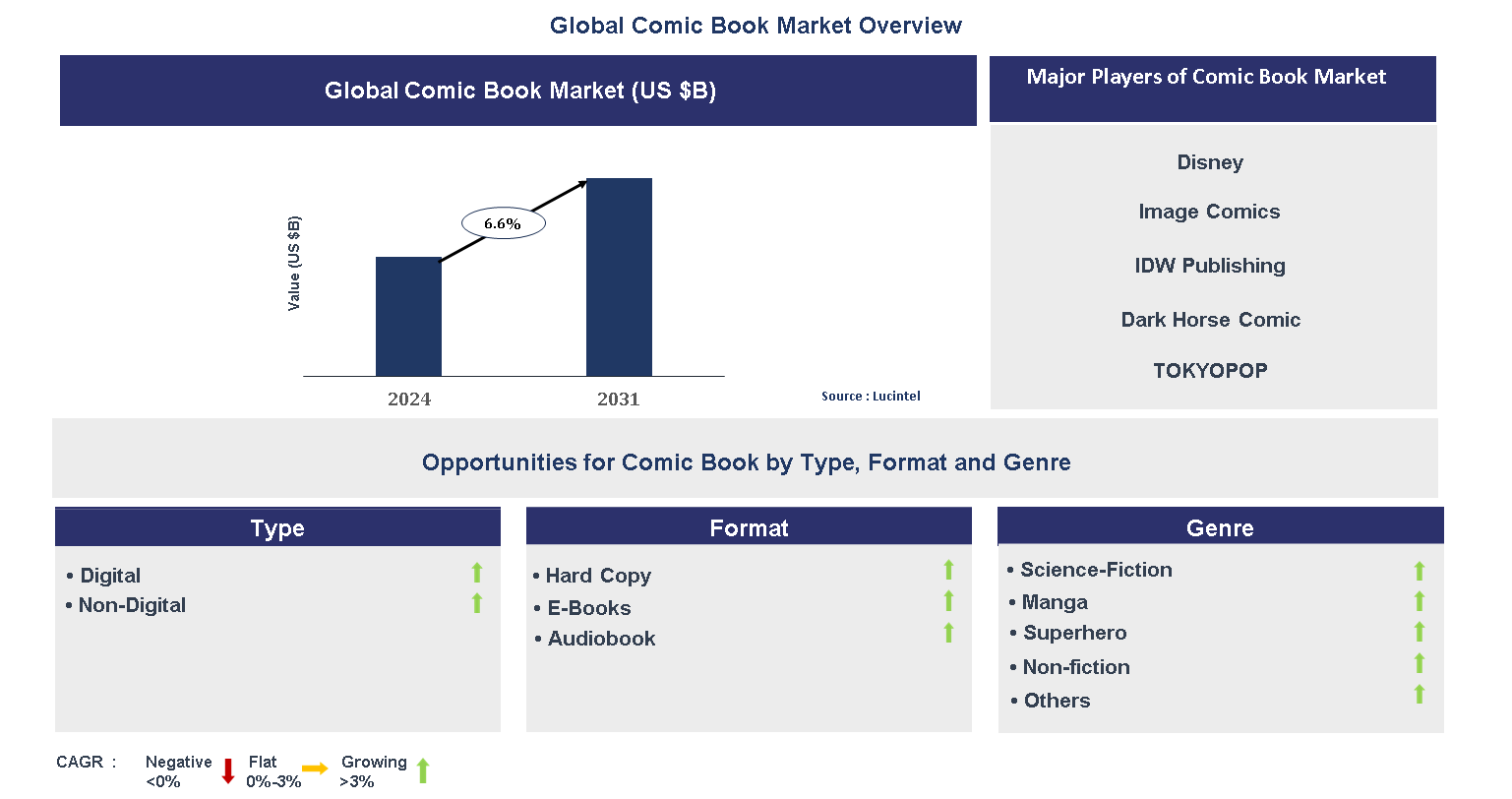
Key data points: The growth forecast = 6.6% annually for the next 7 years. Scroll below to get more insights. This market report covers trends, opportunities and forecasts in comic book market to 2031 by type (digital and non-digital), format (hard copy, e-books, and audiobook), genre (science-fiction, manga, superhero, non-fiction, and others), and region (North America, Europe, Asia Pacific, and the Rest of the World)
We'll send your sample report shortly.
• Lucintel forecasts that, within the type category, non-digital is expected to witness higher growth over the forecast period.
• Within the genre category, manga is expected to witness the highest growth.
• In terms of region, APAC is expected to witness the highest growth over the forecast period. Gain valuable insights for your business decisions with our comprehensive 150+ page report. Sample figures with some insights are shown below.
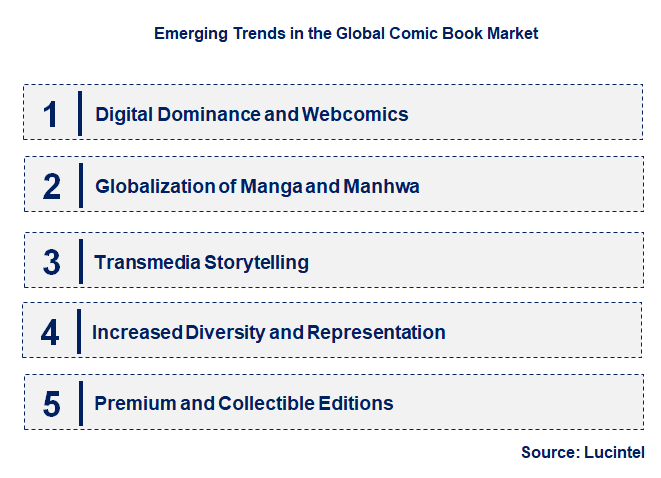
• Digital Dominance and Webcomics: The shift to digital platforms and webcomics is fundamentally changing how stories are created and read. This trend has lowered the barrier to entry for creators, allowing for a wider array of independent and diverse content to emerge. Readers benefit from instant access, lower costs, and innovative formats like vertical-scroll webtoons.
• Globalization of Manga and Manhwa: Japanese manga and Korean manhwa are no longer niche products; they have become a global phenomenon. The international success of anime and K-dramas has fueled a massive demand for their source material. This trend is driving sales in both print and digital formats and influencing storytelling and art styles in Western comics.
• Transmedia Storytelling: Comics are increasingly becoming intellectual property engines for other forms of media. Successful comic series are being adapted into movies, TV shows, and video games. This transmedia approach creates a virtuous cycle where adaptations drive new readers to the original comics, while a comics multimedia success provides new revenue streams for publishers.
• Increased Diversity and Representation: The comic book market is actively responding to demands for more diverse characters and creators. This trend includes stories that feature protagonists from different ethnic, gender, and social backgrounds. This shift not only broadens the audience but also enriches the storytelling landscape with new and authentic perspectives, fostering a more inclusive community.
• Premium and Collectible Editions: Even as digital formats thrive, the physical market is finding new life in high-end, premium products. Publishers are releasing deluxe hardcovers, omnibus editions, and special variant covers. This trend caters to collectors and enthusiasts who value the physical artistry and tactile experience, treating comics as a form of art and an investment. These trends are collectively creating a new market reality where the comic book industry is less about physical sales and more about a holistic entertainment brand. Publishers are now tasked with managing complex portfolios of intellectual properties across various media, while creators can find new paths to success outside of traditional print. The market is becoming a hybrid ecosystem that simultaneously serves the digital-native reader and the nostalgic collector.
• Digital Platforms as a Primary Channel: The rise of digital platforms like ComiXology and Webtoon has fundamentally changed comic distribution. This allows readers to access vast libraries instantly and globally. The convenience and low entry cost of digital comics are attracting new, younger audiences who prefer reading on their mobile devices, significantly boosting the markets reach and growth.
• The Rise of Webtoons and Vertical-Scroll Comics: Webtoons have emerged as a dominant format, particularly in Asia, but with growing global appeal. Their vertical-scroll, mobile-first design makes them perfectly suited for smartphone consumption. This format has democratized comic creation and consumption, fostering a new generation of creators and a thriving ecosystem of serialized, often creator-owned, content.
• Superhero Cinemas Impact on Comic Sales: The continued box office dominance of superhero films and TV shows is a major market driver. Blockbuster adaptations from Marvel and DC create new fans who then seek out the source material. This has led to increased sales of both classic back issues and new titles that tie into the cinematic universes, solidifying comics role as a foundational media for major franchises.
• Expansion of Independent and Creator-Owned Content: Crowdfunding platforms and digital-first publishing have empowered independent creators to bypass traditional gatekeepers. This has led to a boom in creator-owned titles across various genres, from slice-of-life to horror. This development provides readers with a richer, more diverse selection of stories and gives creators greater control over their intellectual property.
• The Collectors Market and High-End Physical Media: Despite the digital surge, the physical comic market remains robust, particularly for high-end, collectible editions. Publishers are catering to this segment with premium hardcovers, artist editions, and variant covers. This trend elevates physical comics from disposable media to valuable art objects, supporting specialty retailers and creating a parallel market for enthusiasts and investors. These developments are pushing the comic book market toward a hybrid model that balances the convenience of digital content with the cultural and financial value of physical collectibles. The market is becoming more global and technologically integrated, with a wider variety of content appealing to a broader audience than ever before. This is a period of reinvention and expansion for the industry.
• Digital Subscription and Webtoon Platforms: The subscription-based model, popularized by platforms like Marvel Unlimited and Webtoon, offers a key growth opportunity. By providing access to vast digital libraries for a monthly fee, these services attract a recurring revenue stream and reduce distribution costs. This application allows publishers to test new content and engage with a global, digital-native audience.
• Merchandising and Licensing: The application of comic book IPs to merchandising and licensing is a significant growth area. By licensing characters and stories for toys, apparel, video games, and other products, publishers can generate substantial revenue far beyond comic sales. This creates an immersive brand experience for fans and provides a low-risk way to capitalize on a comics popularity.
• Transmedia Adaptation: The most impactful growth opportunity is leveraging comic books as the foundation for film, television, and video game adaptations. These adaptations can dramatically increase a propertys visibility and sales. For example, a successful movie can drive millions of new readers to the comic series, making it a powerful and profitable application for content creation.
• Educational and Non-Fiction Comics: Theres a growing market for applying the comic format to educational content. Non-fiction graphic novels on history, science, or mental health are gaining traction. This application presents a unique opportunity to use visual storytelling to make complex subjects more accessible and engaging, targeting a new demographic of readers in schools and libraries.
• Interactive and Augmented Reality Comics: Integrating technology like AR and interactivity into digital and physical comics offers an innovative growth opportunity. By allowing readers to scan a comic panel with their phone to view animations or unlock bonus content, publishers can create a dynamic, multi-sensory experience. This application bridges the gap between digital and physical, enhancing engagement and providing a competitive advantage. These opportunities demonstrate that the comic book markets future isnt solely dependent on the printed page but on the strategic application of intellectual property across a multimedia landscape. By focusing on digital subscriptions, merchandising, transmedia adaptations, and technological innovation, the industry is building a more resilient and profitable business model. The successful implementation of these applications will be crucial for sustained market growth.
• Disney
• Image Comics
• IDW Publishing
• Dark Horse Comic
• TOKYOPOP
• DC Comics
• Archie Comics
• DMG Entertainment
• Shogakukan Inc.
• KODANSHA USA PUBLISHING
• Digital
• Non-Digital
• Hard Copy
• E-Books
• Audiobook
• Science-Fiction
• Manga
• Superhero
• Non-fiction
• Others
• North America
• Europe
• Asia Pacific
• The Rest of the World
• United States: The US market is seeing a major push toward digital platforms and independent creators. The dominance of superhero content remains, but a diversification into genres like horror and fantasy is evident. The rise of collectors editions and special printings continues to support the physical market, while film adaptations drive interest in back catalogs and new series.
• China: Chinas comic market is rapidly expanding, with a significant emphasis on digital platforms and webcomics. Domestic comics, particularly those with themes of traditional Chinese culture, are gaining popularity and competing with imported content. Publishers are focusing on creating relatable, emotionally resonant stories to appeal to a young, tech-savvy audience, often integrating them into other media.
• Germany: While the German market is smaller, its experiencing steady growth, largely propelled by the increasing popularity of manga. Print remains the dominant format, with a strong collector culture and demand for high-quality, physical editions. Digital comics are growing but at a slower pace compared to other regions, as the market values the tangible experience of reading and owning comics.
• India: Indias comic book market is undergoing a significant revival, driven by digital platforms and the re-emergence of indigenous storytelling. Mobile-first platforms are making comics accessible to a broader audience, with content available in multiple regional languages. Film and television adaptations are also playing a crucial role, reigniting interest in classic Indian comic characters and narratives.
• Japan: Japans comic industry, particularly manga, is leading the global digital shift. Digital manga now accounts for more than 70% of the markets revenue, with readers preferring the convenience of reading on smartphones and tablets. Publishers are leveraging subscription services and apps to combat piracy and provide readers with immediate, simultaneous access to new chapters globally.


• Disney
• Image Comics
• IDW Publishing
• Dark Horse Comic
• TOKYOPOP
• DC Comics
• Archie Comics
• DMG Entertainment
• Shogakukan Inc.
• KODANSHA USA PUBLISHING Q5. Which comic book market segment will be the largest in future? Answer: Lucintel forecasts that, within the type category, non-digital is expected to witness higher growth over the forecast period. Q6. In comic book market, which region is expected to be the largest in next 5 years? Answer: In terms of region, APAC is expected to witness the highest growth over the forecast period. Q7. Do we receive customization in this report? Answer: Yes, Lucintel provides 10% customization without any additional cost.


Choose a license that fits your team. Instant PDF delivery.
Prices exclude taxes. Instant delivery. Custom licensing available on request.
Market Report · July 31, 2026
Market Report · July 31, 2026
Market Report · July 31, 2026
Trusted partner for strategic intelligence and business growth


Receive a complimentary market analysis tailored to your industry. Our analysts will identify key growth opportunities and competitive dynamics specific to your business.

Market size, growth rate, and key trend analysis for your specific sector.

Top competitor positioning and market share analysis.

Strategic recommendations backed by data-driven insights.
Get curated market intelligence and competitive moves straight to your inbox.
By subscribing, you agree to receive our monthly insights. Unsubscribe anytime.
Receive a complimentary market analysis tailored to your industry. Our analysts will identify key growth opportunities and competitive dynamics specific to your business.
Market size, growth rate, and key trend analysis for your specific sector.
Top competitor positioning and market share analysis.
Strategic recommendations backed by data-driven insights.
Get curated market intelligence, emerging trends, and competitive moves straight to your inbox each month.
By subscribing, you agree to receive our monthly insights. Unsubscribe anytime.
We'll send your sample report shortly.