
Report Feature
Cogeneration Plant Trends and Forecast
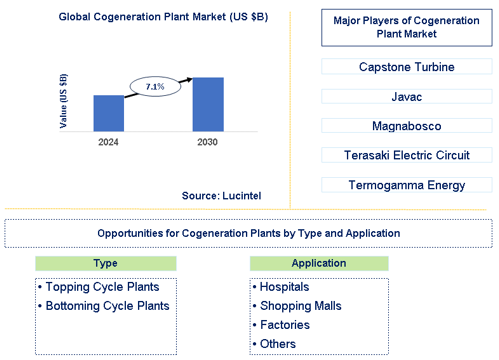
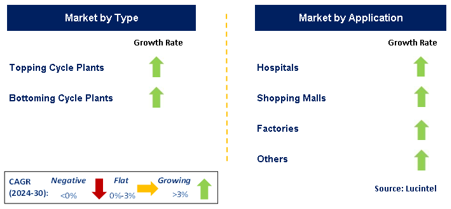
The future of the global cogeneration plant market looks promising with opportunities in the hospital, shopping mall, and factory markets. The global cogeneration plant market is expected to grow with a CAGR of 7.1% from 2024 to 2030. The major drivers for this market are growing focus on reducing greenhouse gas emissions and rising energy costs across the globe.• Lucintel forecasts that, within the type category, within the type category, within the type category topping cycle plant is expected to witness higher growth over the forecast period.
• Within the application category, hospital is expected to witness the highest growth.
• In terms of regions, APAC is expected to witness the highest growth over the forecast period. Gain valuable insights for your business decisions with our comprehensive 150+ page report.
Emerging Trends in the Cogeneration Plant Market
Several emerging trends are shaping the development and adoption of the changeover regulator market, driven by changing technology and evolving market demands.• Integration of Smart Technologies: The application of IoT and AI in changeover regulators enhances real-time monitoring, predictive maintenance, and precision in gas management, improving operational efficiency.
• Focus on Safety and Compliance: The market is increasingly prioritizing safety and regulatory compliance, leading to the development of sophisticated regulators that meet higher safety standards and international regulations.
• Energy Efficiency and Sustainability: There is a trend toward energy-efficient and environmentally friendly changeover regulators, aiming to minimize energy consumption and meet global sustainability goals.
• Customization and Versatility: Growing customer demand for customized and versatile changeover regulators necessitates manufacturing solutions tailored for specific applications across various industries.
• Cost Reduction and Accessibility: Advances in manufacturing technology are driving down costs, making high-quality changeover regulators accessible to a broader range of users, including smaller industrial operations and emerging markets. These trends are transforming the changeover regulator market by enhancing technology, improving safety, and increasing accessibility while promoting efficiency.
Recent Developments in the Cogeneration Plant Market
Recent advancements in the changeover regulator market reflect significant technological and design innovations aimed at enhancing market offerings.• Digital Integration: The introduction of digital changeover regulators allows for advanced control and monitoring capabilities, facilitating real-time data access and improved management for enhanced efficiency and safety.
• Improved Safety Features: New regulators now incorporate enhanced safety mechanisms, such as automatic shut-off and leak detection, which address the growing safety concerns in various industries.
• Eco-Friendly Designs: The design of eco-friendly changeover regulators addresses environmental issues, utilizing sustainable materials and energy-efficient designs to comply with global sustainability initiatives.
• Advanced Materials and Durability: Innovations in materials have led to more durable changeover regulators, extending their life cycle and ensuring reliable performance under extreme conditions.
• Cost-Effective Solutions: The market is seeing the emergence of cost-effective solutions designed for high-performance delivery at lower prices, targeting budget-conscious industries without compromising quality. These developments influence the changeover regulator market by focusing on functionality, safety, and accessibility, ensuring ongoing growth and innovation.
Strategic Growth Opportunities for Cogeneration Plant Market
Numerous strategic growth opportunities exist within the changeover regulator market, fostering innovation and potential market development.• Industrial Applications: There are significant growth opportunities in industrial settings, where advanced changeover regulators can enhance gas management efficiency, particularly high-performance regulators tailored to specific industrial needs.
• Commercial Buildings: Automated changeover regulators present opportunities in commercial buildings, improving gas management and reducing operational costs while enhancing safety.
• Energy Sector: The energy sector holds substantial growth potential, particularly with recent advancements in renewable energy, where energy efficiency and reliability are critical.
• Residential Market: The residential market is experiencing a lucrative opportunity for low-cost, reliable changeover regulators, with innovations making high-quality options accessible to consumers.
• Emerging Markets: Expanding into emerging markets, such as Southeast Asia and Africa, offers growth potential by tailoring changeover regulators to meet specific local needs, driving adoption and market expansion. These strategic opportunities foster innovation, expand applications, and satisfy market demands across various sectors.
Cogeneration Plant Market Driver and Challenges
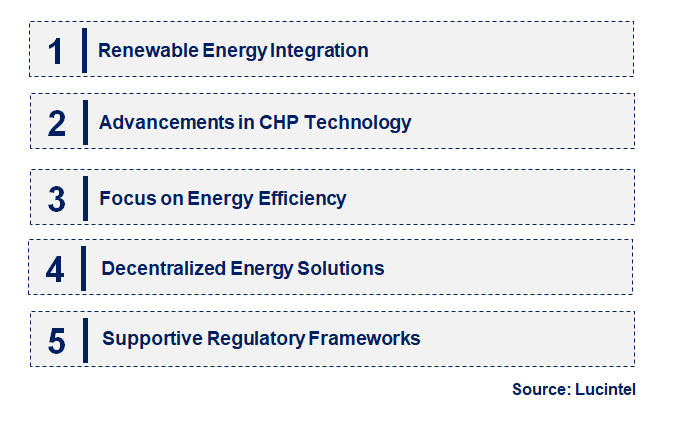
The growth and development of the changeover regulator market are shaped by various drivers and challenges, including technological, market demand, and regulatory factors. The factors responsible for driving the cogeneration plant market include:• Technological Innovation: Advancements in digital controls and smart integrations enhance efficiency, precision, and safety, fueling market growth.
• Increasing Safety Standards: The rising demand for advanced changeover regulators aligns with higher safety standards and regulations across industries.
• Energy Efficiency Demand: The emphasis on energy efficiency and sustainability drives demand for energy-saving applications in changeover regulators.
• Industrial Growth: The expansion of industries worldwide increases the demand for effective gas management solutions, positioning changeover regulators as essential components.
• Price Reductions: Evolving manufacturing processes are reducing the costs of regulators, making them more accessible to a wider range of businesses, including smaller operations and emerging markets. Challenges in the cogeneration plant market are:
• High Initial Costs: Advanced changeover regulators can be costly upfront, which may limit their adoption among budget-conscious users and smaller industries.
• Regulatory Compliance: The complexity and diversity of evolving regulations can pose challenges for manufacturers in ensuring compliance with safety and environmental standards.
• Integration Issues: Integrating new changeover regulators into existing systems can be complex, requiring careful planning and expertise to ensure compatibility. The drivers of the changeover regulator market include technological advancements, heightened safety regulations, energy efficiency demands, industrial growth, and cost reductions, while challenges include high initial costs, regulatory compliance, and integration issues. Balancing these factors is crucial for fostering growth and innovation.
List of Cogeneration Plant Companies
Companies in the market compete on the basis of product quality offered. Major players in this market focus on expanding their manufacturing facilities, R&D investments, infrastructural development, and leverage integration opportunities across the value chain. Through these strategies cogeneration plant companies cater increasing demand, ensure competitive effectiveness, develop innovative products & technologies, reduce production costs, and expand their customer base. Some of the cogeneration plant companies profiled in this report include-• Capstone Turbine
• Javac
• Magnabosco
• Terasaki Electric Circuit Breaker
• Termogamma Energy Solutions
• Power Cogeneration Plant Company
• Thermax
• MWM
• CGT
• Cogen
Cogeneration Plant by Segment
The study includes a forecast for the global cogeneration plant market by type, application, and region.Cogeneration Plant Market by Type [Analysis by Value from 2018 to 2030]:
• Topping Cycle Plants
• Bottoming Cycle Plants
Cogeneration Plant Market by Application [Analysis by Value from 2018 to 2030]:
• Hospitals
• Shopping Malls
• Factories
• Others
Cogeneration Plant Market by Region [Analysis by Value from 2018 to 2030]:
• North America
• Europe
• Asia Pacific
• The Rest of the World
Country Wise Outlook for the Cogeneration Plant Market
The changeover regulator market is evolving rapidly, influenced by technological advancements and increasing demand for efficiency in gas management solutions. Recent developments in the United States, China, Germany, India, and Japan highlight emerging trends toward more sophisticated and reliable changeover regulator systems.• United States: The market favors advanced changeover regulators with comprehensive control and monitoring features, often integrated with smart grids for real-time data management, enhancing efficiency in industrial and commercial applications.
• China: China is ramping up production of high-efficiency changeover regulators with superior safety features, meeting stringent safety standards and expanding capabilities for various gas types to support its growing industrial sector.
• Germany: Germany offers strong potential for eco-friendly and energy-efficient changeover regulators, with innovations aimed at reducing environmental impact and extending equipment lifecycle in compliance with stringent sustainability regulations.
• India: Rapid industrialization in India has led to increasing demand for economical changeover regulators, with new products designed for high-performance applications across diverse industries.
• Japan: Japan is at the forefront of integrating smart technologies with changeover regulators, utilizing IoT and AI to enhance precision and reliability in gas management systems, reflecting a strong focus on technological advancement.

Features of the Global Cogeneration Plant Market
Market Size Estimates: Cogeneration plant market size estimation in terms of value ($B). Trend and Forecast Analysis: Market trends (2018 to 2023) and forecast (2024 to 2030) by various segments and regions. Segmentation Analysis: Cogeneration plant market size by type, application, and region in terms of value ($B). Regional Analysis: Cogeneration plant market breakdown by North America, Europe, Asia Pacific, and Rest of the World. Growth Opportunities: Analysis of growth opportunities in different types, applications, and regions for the cogeneration plant market. Strategic Analysis: This includes M&A, new product development, and competitive landscape of the cogeneration plant market. Analysis of competitive intensity of the industry based on Porter’s Five Forces model.If you are looking to expand your business in this market or adjacent markets, then contact us. We have done hundreds of strategic consulting projects in market entry, opportunity screening, due diligence, supply chain analysis, M & A, and more.

FAQ
Q1. What is the growth forecast for cogeneration plant market? Answer: The global cogeneration plant market is expected to grow with a CAGR of 7.1% from 2024 to 2030. Q2. What are the major drivers influencing the growth of the cogeneration plant market? Answer: The major drivers for this market are growing focus on reducing greenhouse gas emissions and rising energy costs across the globe. Q3. What are the major segments for cogeneration plant market? Answer: The future of the cogeneration plant market looks promising with opportunities in the hospital, shopping mall, and factory markets. Q4. Who are the key cogeneration plant market companies? Answer: Some of the key cogeneration plant companies are as follows:• Capstone Turbine
• Javac
• Magnabosco
• Terasaki Electric Circuit Breaker
• Termogamma Energy Solutions
• Power Cogeneration Plant Company
• Thermax
• MWM
• CGT
• Cogen Q5. Which cogeneration plant market segment will be the largest in future? Answer: Lucintel forecasts that, within the type category topping cycle plant is expected to witness higher growth over the forecast period. Q6. In cogeneration plant market, which region is expected to be the largest in next 6 years? Answer: In terms of regions, APAC is expected to witness the highest growth over the forecast period. Q.7 Do we receive customization in this report? Answer: Yes, Lucintel provides 10% customization without any additional cost.
Table of Contents
Methodology
- In-depth interviews of the major players in this market
- Detailed secondary research from competitors’ financial statements and published data
- Extensive searches of published works, market, and database information pertaining to industry news, company press releases, and customer intentions
- A compilation of the experiences, judgments, and insights of Lucintel’s professionals, who have analyzed and tracked this market over the years.


Buy Now
Choose a license that fits your team. Instant PDF delivery.
Prices exclude taxes. Instant delivery. Custom licensing available on request.
Key Questions
- • What are some of the most promising, high-growth opportunities for the cogeneration plant market by type (topping cycle plants and bottoming cycle plants), application (hospitals, shopping malls, factories, and others), and region (North America, Europe, Asia Pacific, and the Rest of the World)?
- • Which segments will grow at a faster pace and why?
- • Which region will grow at a faster pace and why?
- • What are the key factors affecting market dynamics? What are the key challenges and business risks in this market?
- • What are the business risks and competitive threats in this market?
- • What are the emerging trends in this market and the reasons behind them?
- • What are some of the changing demands of customers in the market?
- • What are the new developments in the market? Which companies are leading these developments?
- • Who are the major players in this market? What strategic initiatives are key players pursuing for business growth?
- • What are some of the competing products in this market and how big of a threat do they pose for loss of market share by material or product substitution?
- • What M&A activity has occurred in the last 5 years and what has its impact been on the industry? For any questions related to Cogeneration Plant Market, Cogeneration Plant Market Size, Cogeneration Plant Market Growth, Cogeneration Plant Market Analysis, Cogeneration Plant Market Report, Cogeneration Plant Market Share, Cogeneration Plant Market Trends, Cogeneration Plant Market Forecast, Cogeneration Plant Market Companies, write Lucintel analyst at email: helpdesk@lucintel.com. We will be glad to get back to you soon.


