
Report Feature
Code Signing as a Service Market Trends and Forecast
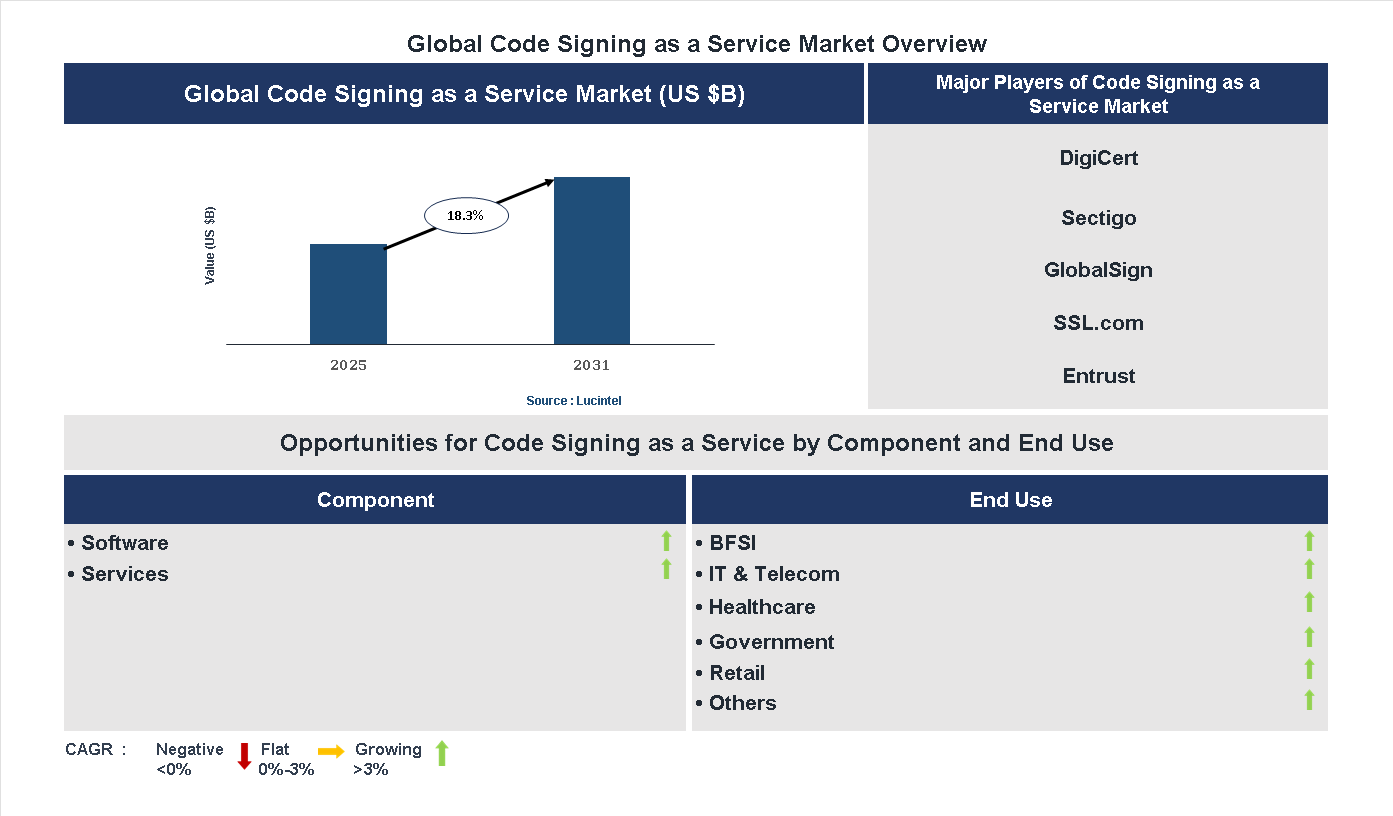
The future of the global code signing as a service market looks promising with opportunities in the BFSI, IT & telecom, healthcare, government, and retail markets. The global code signing as a service market is expected to grow with a CAGR of 18.3% from 2025 to 2031. The major drivers for this market are the increasing demand for automated code signing, the rising cyber risks across software ecosystems, and the growing adoption of cloud native applications.• Lucintel forecasts that, within the component category, software is expected to witness higher growth over the forecast period.
• Within the end use category, BFSI is expected to witness the highest growth.
• In terms of region, APAC is expected to witness the highest growth over the forecast period. Gain valuable insights for your business decisions with our comprehensive 150+ page report. Sample figures with some insights are shown below.
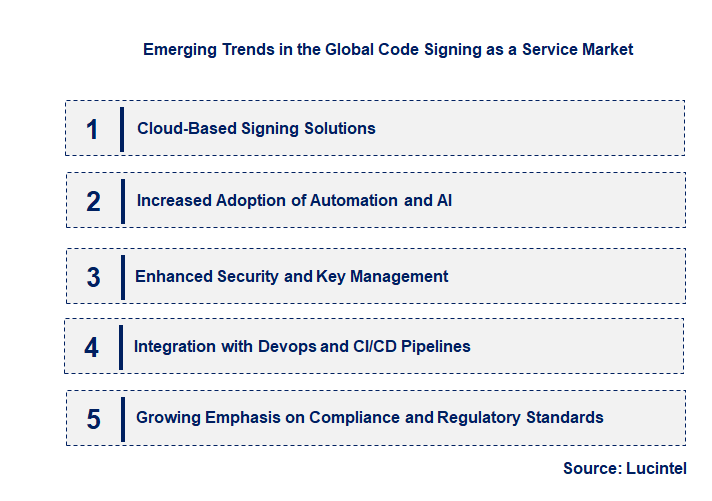
Emerging Trends in the Code Signing as a Service Market
The Code Signing as a Service (CSaaS) market is experiencing rapid growth driven by increasing cybersecurity concerns, the proliferation of software applications, and the need for streamlined, scalable security solutions. As organizations seek to protect their software integrity and build trust with users, innovative trends are emerging to meet these demands. These developments are transforming how companies manage digital signatures, enhance security protocols, and deliver seamless user experiences. The following key trends highlight the evolving landscape of the CSaaS market, reflecting technological advancements and shifting industry priorities that are shaping its future trajectory.• Cloud-Based Signing Solutions: The shift to cloud infrastructure enables scalable, flexible, and cost-effective code signing services. Cloud-based solutions allow organizations to automate signing processes, reduce hardware dependencies, and improve deployment speed. They also facilitate centralized management of signing keys and policies, enhancing security and compliance. This trend supports remote work environments and global software distribution, making code signing more accessible and efficient for diverse organizations.
• Increased Adoption of Automation and AI: Automation tools and artificial intelligence are increasingly integrated into code signing workflows. These technologies streamline the signing process, reduce manual errors, and accelerate release cycles. AI-driven security analytics help detect anomalies and potential threats in real-time, ensuring the integrity of signed code. Automation enhances operational efficiency and strengthens security, making it a critical trend for organizations aiming for rapid, secure software deployment.
• Enhanced Security and Key Management: As cyber threats evolve, so does the focus on robust security measures. Advanced key management solutions, including hardware security modules (HSMs) and multi-factor authentication, are being adopted to safeguard signing keys. These measures prevent unauthorized access and tampering, ensuring the authenticity of signed code. The trend emphasizes compliance with industry standards and builds user trust by demonstrating a commitment to security best practices.
• Integration with DevOps and CI/CD Pipelines: Code signing is increasingly integrated into DevOps workflows and continuous integration/continuous deployment (CI/CD) pipelines. This integration automates signing during the development process, reducing delays and ensuring consistent security practices. It enables developers to sign code seamlessly as part of their deployment cycle, improving efficiency and reducing vulnerabilities. This trend aligns with the broader shift toward agile, automated software development environments.
• Growing Emphasis on Compliance and Regulatory Standards: Regulatory frameworks such as GDPR, HIPAA, and industry-specific standards are driving the adoption of compliant code signing solutions. Vendors are offering features that support audit trails, detailed reporting, and certification management to meet these requirements. Ensuring compliance not only mitigates legal risks but also enhances market credibility. This trend underscores the importance of transparency and accountability in software security practices. In summary, these emerging trends are fundamentally reshaping the Code Signing as a Service market by promoting greater automation, security, and integration within development workflows. They enable organizations to deliver secure, trustworthy software rapidly while maintaining compliance with evolving regulatory standards. As these trends continue to evolve, the market is poised for increased innovation, broader adoption, and enhanced security paradigms that will define the future of digital code signing.
Recent Development in the Code Signing as a Service Market
The code signing as a service market has experienced significant growth driven by increasing cybersecurity concerns, the proliferation of software applications, and the need for streamlined digital trust solutions. As organizations seek more efficient ways to authenticate their software, providers are innovating to meet these demands. Recent developments reflect technological advancements, regulatory changes, and evolving customer expectations, shaping the future landscape of this market. These changes are fostering greater security, compliance, and ease of use, ultimately influencing the adoption rate and market competitiveness. The following are five key recent developments shaping this dynamic industry.• Adoption of Cloud-Based Code Signing Solutions: The shift to cloud-based platforms has enabled organizations to access scalable, flexible, and cost-effective code signing services. This development reduces infrastructure costs and simplifies management, allowing for rapid deployment and updates. It enhances security by integrating advanced encryption and authentication protocols, thereby increasing trustworthiness. As a result, more small and medium-sized enterprises are adopting these solutions, expanding the market reach and driving growth.
• Integration of AI and Machine Learning: Incorporating AI and machine learning into code signing services has improved threat detection and anomaly identification during the signing process. These technologies enable real-time monitoring and automated risk assessment, reducing the likelihood of malicious code signing. This advancement enhances security and compliance, reassuring customers and regulators. Consequently, it boosts confidence in digital signatures and accelerates market adoption, especially among security-conscious organizations.
• Regulatory Compliance and Standardization: Increasing regulatory requirements, such as those from the EU and US authorities, have prompted providers to enhance their offerings to meet compliance standards like eIDAS and FIPS. Standardization efforts ensure interoperability and security across platforms, fostering trust among users. This development encourages organizations to adopt certified code signing services to avoid penalties and ensure legal compliance, thereby expanding the market and encouraging innovation.
• Expansion of Certificate Authority (CA) Partnerships: Collaborations between code signing service providers and major CAs have strengthened trust and broadened service portfolios. These partnerships facilitate issuance of trusted digital certificates, streamline validation processes, and improve customer experience. They also enable providers to offer a wider range of signing options, including multi-factor authentication. This expansion enhances market competitiveness and accelerates adoption across various industries, including software development, healthcare, and finance.
• Focus on User Experience and Automation: Recent developments emphasize simplifying the signing process through automation and intuitive interfaces. Automated workflows reduce manual intervention, minimize errors, and speed up deployment. User-friendly platforms improve accessibility for non-technical users, broadening the customer base. This focus on experience and automation increases efficiency, reduces operational costs, and encourages widespread adoption, thereby fueling market growth. In summary, these developments are significantly impacting the code signing as a service market by enhancing security, ensuring regulatory compliance, expanding accessibility, and fostering innovation. The integration of advanced technologies and strategic partnerships is driving market expansion, making digital trust solutions more reliable and easier to implement. As a result, the market is poised for continued growth, with increased adoption across diverse sectors and regions.
Strategic Growth Opportunities in the Code Signing as a Service Market
The code signing as a service market is experiencing rapid growth driven by increasing cybersecurity concerns, the proliferation of digital applications, and the need for secure software distribution. As organizations seek reliable methods to authenticate their software, this market is expanding across various industries such as technology, healthcare, finance, and government. The shift towards cloud-based solutions and the rising adoption of DevOps practices further fuel this growth. Key applications like software development, IoT, mobile applications, enterprise security, and cloud services are pivotal in shaping the markets trajectory. Exploring these areas reveals significant opportunities for innovation and competitive advantage.• Software Development: Enhanced security and trust : Code signing services ensure software integrity and authenticity, reducing the risk of malware and tampering. This fosters user trust and compliance with industry standards, encouraging developers to adopt these services for secure software deployment.
• Internet of Things (IoT): Securing connected devices : As IoT devices proliferate, the need for secure firmware and software updates becomes critical. Code signing as a service provides a scalable solution to authenticate device communications, preventing malicious attacks and ensuring device integrity.
• Mobile Applications: Protecting app ecosystems : With the surge in mobile app usage, securing app distribution is vital. Code signing services help developers authenticate their apps, prevent tampering, and comply with app store requirements, thereby enhancing user confidence and reducing security breaches.
• Enterprise Security: Strengthening organizational defenses : Enterprises utilize code signing to secure internal and external applications, ensuring only authorized software runs within their networks. This reduces vulnerabilities, supports compliance, and enhances overall cybersecurity posture.
• Cloud Services: Securing cloud-based applications : As cloud adoption accelerates, securing cloud-native applications becomes essential. Code signing as a service offers seamless integration with CI/CD pipelines, enabling secure deployment and management of cloud applications across diverse environments. In summary, these growth opportunities are significantly impacting the code signing as a service market by driving innovation, enhancing security, and enabling organizations to meet evolving compliance standards. The expanding application landscape underscores the markets potential for sustained growth and strategic development.
Code Signing as a Service Market Driver and Challenges
The code signing as a service market is influenced by a variety of technological, economic, and regulatory factors that shape its growth and development. Rapid advancements in cybersecurity and digital trust are driving demand for secure code signing solutions. Increasing adoption of cloud-based services and the need for scalable, efficient security measures further propel market expansion. Regulatory frameworks emphasizing data protection and software integrity also play a crucial role. However, the market faces challenges such as evolving cyber threats, compliance complexities, and the need for seamless integration with existing systems. Understanding these drivers and challenges is essential for stakeholders aiming to capitalize on emerging opportunities while mitigating risks. The factors responsible for driving the code signing as a service market include:• Growing Cybersecurity Concerns: The increasing frequency and sophistication of cyberattacks have heightened the need for secure code signing solutions. Organizations seek reliable methods to verify software authenticity, prevent tampering, and ensure user trust. This demand is amplified by the rise of malware, ransomware, and supply chain attacks, prompting companies to adopt advanced code signing services to safeguard their digital assets. As cybersecurity becomes a top priority globally, the market for code signing services is expected to expand significantly, driven by the need for robust security measures.
• Adoption of Cloud Computing and SaaS Models: The shift towards cloud-based infrastructure and Software-as-a-Service (SaaS) models has revolutionized how organizations deploy and manage software. Code signing as a service offers scalable, flexible, and cost-effective solutions that integrate seamlessly with cloud environments. This trend enables rapid deployment, easier management, and enhanced security for distributed teams and remote workflows. As cloud adoption accelerates across industries, the demand for cloud-native code signing solutions is expected to grow, fueling market expansion.
• Increasing Regulatory and Compliance Requirements: Governments and industry bodies are implementing stringent regulations to ensure software integrity and data security. Standards such as GDPR, HIPAA, and industry-specific compliance mandates compel organizations to adopt secure code signing practices. These regulations not only mandate the use of trusted digital certificates but also require audit trails and secure key management. Compliance pressures are driving organizations to seek reliable, compliant code signing services, thereby expanding the market as companies aim to meet legal and industry standards.
• Rising Use of IoT and Connected Devices: The proliferation of Internet of Things (IoT) devices has created new security challenges, necessitating secure software updates and firmware validation. Code signing as a service provides a trusted mechanism to verify the authenticity of IoT firmware and applications, ensuring device integrity and user safety. As IoT adoption accelerates across sectors like healthcare, manufacturing, and smart homes, the need for scalable, secure code signing solutions becomes critical, contributing to market growth. The challenges in the code signing as a service market are:
• Evolving Cyber Threats and Sophistication of Attacks: Cybercriminals continuously develop advanced techniques to bypass security measures, including code signing solutions. Attackers may attempt to steal private keys, forge certificates, or exploit vulnerabilities in signing processes. These evolving threats demand constant updates and enhancements to security protocols, increasing complexity and costs for service providers. Failure to adapt can lead to breaches, loss of trust, and regulatory penalties, posing significant challenges to market players.
• Complex Regulatory Landscape and Compliance Management: Navigating diverse regulatory requirements across different regions can be complicated and resource-intensive. Ensuring compliance with standards like GDPR, eIDAS, and industry-specific regulations requires ongoing audits, documentation, and secure key management. Small and medium-sized enterprises may find these compliance processes burdensome, hindering adoption. The complexity of maintaining compliance while providing scalable, user-friendly services remains a key challenge for market growth.
• Integration with Legacy Systems and Existing Infrastructure: Many organizations operate with legacy systems that may not be compatible with modern cloud-based code signing solutions. Integrating new services into existing workflows can be technically challenging, time-consuming, and costly. Resistance to change, lack of technical expertise, and the need for customized solutions can impede adoption. Overcoming these integration hurdles is essential for expanding market reach but remains a significant obstacle. In summary, the code signing as a service market is driven by increasing cybersecurity needs, cloud adoption, regulatory pressures, and IoT proliferation. However, it faces challenges from evolving cyber threats, complex compliance requirements, and integration issues. These factors collectively influence the markets trajectory, requiring stakeholders to innovate continuously and adapt strategies to capitalize on growth opportunities while addressing risks. The overall impact suggests a dynamic, rapidly evolving landscape with substantial potential for growth amid ongoing security and technological advancements.
List of Code Signing as a Service Companies
Companies in the market compete on the basis of product quality offered. Major players in this market focus on expanding their manufacturing facilities, R&D investments, infrastructural development, and leverage integration opportunities across the value chain. With these strategies code signing as a service companies cater increasing demand, ensure competitive effectiveness, develop innovative products & technologies, reduce production costs, and expand their customer base. Some of the code signing as a service companies profiled in this report include-• DigiCert
• Sectigo
• GlobalSign
• SSL.com
• Entrust
• GoDaddy
• Comodo CA
• Symantec
• Microsoft
• AWS
Code Signing as a Service Market by Segment
The study includes a forecast for the global code signing as a service market by component, end use, and region.Code Signing as a Service Market by Component [Value from 2019 to 2031]:
• Software
• Services
Code Signing as a Service Market by End Use [Value from 2019 to 2031]:
• BFSI
• IT & Telecom
• Healthcare
• Government
• Retail
• Others
Code Signing as a Service Market by Region [Value from 2019 to 2031]:
• North America
• Europe
• Asia Pacific
• The Rest of the World
Country Wise Outlook for the Code Signing as a Service Market
The code signing as a service market has experienced significant growth driven by increasing cybersecurity concerns, the proliferation of software applications, and the need for secure digital identities. As organizations seek reliable methods to authenticate their software, various countries are adopting innovative solutions and regulatory frameworks to enhance security standards. The markets evolution reflects technological advancements, rising demand for cloud-based services, and the importance of compliance with international security protocols. These developments are shaping the landscape of digital trust and software integrity across different regions, influencing global cybersecurity strategies and industry practices.• United States: The U.S. market has seen rapid adoption of cloud-based code signing services, driven by major tech companies and government agencies prioritizing cybersecurity. Innovations in automated signing processes and integration with DevOps pipelines have enhanced efficiency. Regulatory frameworks like the Cybersecurity Maturity Model Certification (CMMC) are encouraging organizations to adopt secure signing practices. The rise of SaaS providers offering scalable solutions has expanded market reach, and increased awareness about software supply chain security is fueling demand for robust code signing services.
• China: China is witnessing accelerated growth in the code signing as a service market, supported by government initiatives to strengthen cybersecurity infrastructure. Local companies are developing proprietary signing solutions to comply with national security standards. The government’s push for digital sovereignty and the adoption of secure software distribution channels are boosting market expansion. Additionally, partnerships between domestic tech giants and security firms are fostering innovation in secure code signing, with a focus on integrating AI and blockchain for enhanced security and traceability.
• Germany: Germany’s market emphasizes compliance with strict European Union data protection and cybersecurity regulations, such as GDPR and the NIS Directive. Companies are increasingly adopting secure code signing solutions to ensure software integrity and trustworthiness. There is a notable shift towards integrating code signing with broader security frameworks like Secure Software Development Lifecycle (SDLC). The focus on industrial cybersecurity, especially within manufacturing and automotive sectors, is driving demand for specialized, compliant code signing services that support secure software deployment in critical infrastructure.
• India: The Indian market is rapidly expanding, driven by government initiatives like Digital India and increasing adoption of cloud services. Local startups and global providers are offering affordable, scalable code signing solutions tailored to small and medium enterprises. The focus on enhancing cybersecurity awareness and compliance with national standards is fostering growth. Additionally, the rise of mobile app development and e-governance projects necessitates secure code signing to prevent software tampering and ensure trust in digital services.
• Japan: Japan’s market is characterized by a focus on advanced security features and integration with existing enterprise security systems. The adoption of AI-driven signing solutions and automation tools is increasing efficiency and security. The government’s emphasis on cybersecurity resilience and the protection of critical infrastructure is encouraging organizations to adopt comprehensive code signing services. Moreover, collaborations between technology firms and security agencies are fostering innovation, with a focus on ensuring software authenticity and integrity in highly regulated industries like finance and healthcare.

Features of the Global Code Signing as a Service Market
Market Size Estimates: Code signing as a service market size estimation in terms of value ($B). Trend and Forecast Analysis: Market trends (2019 to 2024) and forecast (2025 to 2031) by various segments and regions. Segmentation Analysis: Code signing as a service market size by component, end use, and region in terms of value ($B). Regional Analysis: Code signing as a service market breakdown by North America, Europe, Asia Pacific, and Rest of the World. Growth Opportunities: Analysis of growth opportunities in different components, end uses, and regions for the code signing as a service market. Strategic Analysis: This includes M&A, new product development, and competitive landscape of the code signing as a service market. Analysis of competitive intensity of the industry based on Porter’s Five Forces model.
FAQ
Q1. What is the growth forecast for code signing as a service market? Answer: The global code signing as a service market is expected to grow with a CAGR of 18.3% from 2025 to 2031. Q2. What are the major drivers influencing the growth of the code signing as a service market? Answer: The major drivers for this market are the increasing demand for automated code signing, the rising cyber risks across software ecosystems, and the growing adoption of cloud native applications. Q3. What are the major segments for code signing as a service market? Answer: The future of the code signing as a service market looks promising with opportunities in the BFSI, IT & telecom, healthcare, government, and retail markets. Q4. Who are the key code signing as a service market companies? Answer: Some of the key code signing as a service companies are as follows:• DigiCert
• Sectigo
• GlobalSign
• SSL.com
• Entrust
• GoDaddy
• Comodo CA
• Symantec
• Microsoft
• AWS Q5. Which code signing as a service market segment will be the largest in future? Answer: Lucintel forecasts that, within the component category, software is expected to witness higher growth over the forecast period. Q6. In code signing as a service market, which region is expected to be the largest in next 5 years? Answer: In terms of region, APAC is expected to witness the highest growth over the forecast period. Q7. Do we receive customization in this report? Answer: Yes, Lucintel provides 10% customization without any additional cost.
Table of Contents
List of Figures
List of Tables
Methodology
- In-depth interviews of the major players in this market
- Detailed secondary research from competitors’ financial statements and published data
- Extensive searches of published works, market, and database information pertaining to industry news, company press releases, and customer intentions
- A compilation of the experiences, judgments, and insights of Lucintel’s professionals, who have analyzed and tracked this market over the years.


Buy Now
Choose a license that fits your team. Instant PDF delivery.
Prices exclude taxes. Instant delivery. Custom licensing available on request.
Key Questions
- • What are some of the most promising, high-growth opportunities for the code signing as a service market by component (software and services), end use (BFSI, IT & telecom, healthcare, government, retail, and others), and region (North America, Europe, Asia Pacific, and the Rest of the World)?
- • Which segments will grow at a faster pace and why?
- • Which region will grow at a faster pace and why?
- • What are the key factors affecting market dynamics? What are the key challenges and business risks in this market?
- • What are the business risks and competitive threats in this market?
- • What are the emerging trends in this market and the reasons behind them?
- • What are some of the changing demands of customers in the market?
- • What are the new developments in the market? Which companies are leading these developments?
- • Who are the major players in this market? What strategic initiatives are key players pursuing for business growth?
- • What are some of the competing products in this market and how big of a threat do they pose for loss of market share by material or product substitution?
- • What M&A activity has occurred in the last 5 years and what has its impact been on the industry? For any questions related to Code Signing as a Service Market, Code Signing as a Service Market Size, Code Signing as a Service Market Growth, Code Signing as a Service Market Analysis, Code Signing as a Service Market Report, Code Signing as a Service Market Share, Code Signing as a Service Market Trends, Code Signing as a Service Market Forecast, Code Signing as a Service Companies, write Lucintel analyst at email: helpdesk@lucintel.com. We will be glad to get back to you soon.


