
Market Report · July 22, 2026

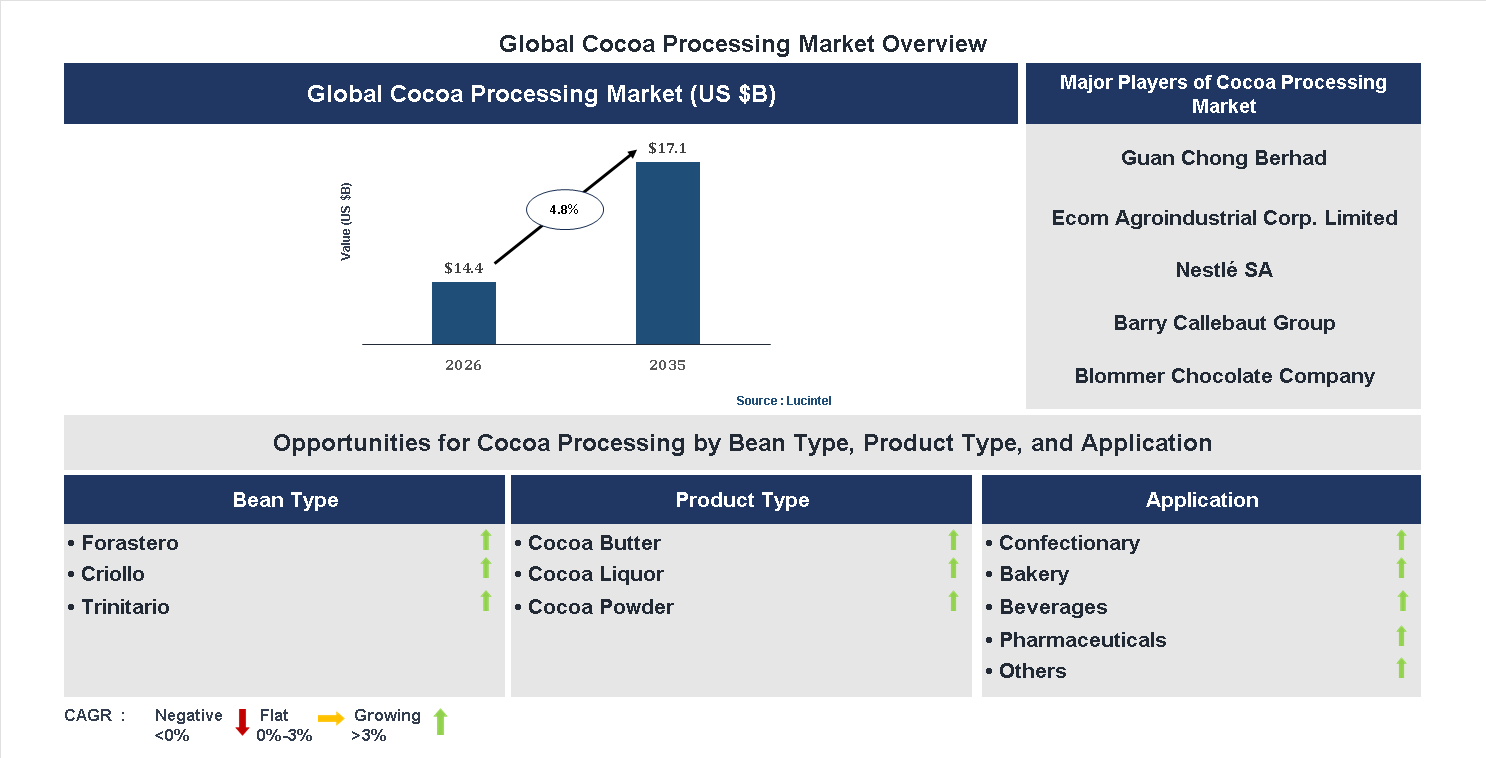
Key data points: The market size in 2035 = $17.1 billion, growth forecast = 4.8% annually for the next 8 years. Scroll below to get more insights. This market report covers trends, opportunities and forecasts in cocoa processing market to 2035 by bean type (forastero, criollo, and trinitario), product type (cocoa butter, cocoa liquor, and cocoa powder), application (confectionary, bakery, beverages, pharmaceuticals, and others), and region (North America, Europe, Asia Pacific, and the Rest of the World)
We'll send your sample report shortly.
• Lucintel forecasts that, within the bean type category, forastero is expected to witness the highest growth over the forecast period.
• Within the application category, confectionary is expected to witness the highest growth.
• In terms of region, APAC is expected to witness the highest growth over the forecast period. Gain valuable insights for your business decisions with our comprehensive 150+ page report. Sample figures with some insights are shown below.
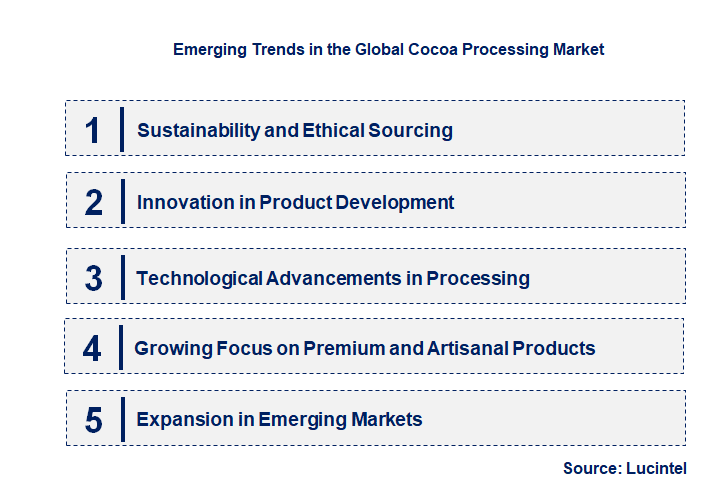
• Sustainability and Ethical Sourcing: Increasing consumer awareness about environmental and social issues is pushing companies to adopt sustainable and ethically sourced cocoa. Certifications like Fair Trade and Rainforest Alliance are becoming standard, ensuring responsible farming practices. This trend encourages transparency and accountability in supply chains, reducing deforestation and promoting fair wages. It also appeals to eco-conscious consumers, enhancing brand loyalty. As sustainability becomes a core business strategy, companies investing in eco-friendly practices are gaining a competitive advantage and fostering long-term industry resilience.
• Innovation in Product Development: The market is witnessing a surge in innovative cocoa-based products, including healthier options like reduced sugar, organic, and functional foods infused with added nutrients. Manufacturers are exploring new formulations to meet diverse consumer preferences, such as plant-based chocolates and functional snacks. This trend drives product differentiation and opens new revenue streams. It also responds to health-conscious trends, expanding the market beyond traditional chocolate products. Continuous innovation is essential for brands to stay relevant and capture emerging market segments.
• Technological Advancements in Processing: Automation, AI, and advanced processing techniques are revolutionizing cocoa manufacturing. These technologies improve efficiency, reduce waste, and enhance product quality. For example, precision roasting and fermentation control optimize flavor profiles, while automation streamlines packaging and logistics. Such innovations lower production costs and increase scalability. They also enable better quality control and traceability, which are critical for meeting regulatory standards and consumer expectations. Embracing technology is vital for industry players aiming to improve competitiveness and sustainability.
• Growing Focus on Premium and Artisanal Products: Consumers are increasingly seeking high-quality, artisanal, and craft cocoa products. This trend emphasizes unique flavors, traditional methods, and limited editions, appealing to a niche but lucrative market segment. Premium products often command higher prices and foster brand loyalty. Producers investing in small-batch, sustainable, and ethically sourced offerings are capitalizing on this demand. The artisanal movement also encourages storytelling and transparency, enhancing consumer engagement. This shift is elevating the perception of cocoa products from mere commodities to luxury items, reshaping market dynamics.
• Expansion in Emerging Markets: Rapid economic growth and rising disposable incomes in regions like Asia, Africa, and Latin America are expanding the cocoa processing market. These markets present new opportunities for production, consumption, and investment. Local processing facilities are emerging to reduce reliance on imports and add value locally. Additionally, cultural shifts towards Western-style confectionery are boosting demand. Market players are increasingly focusing on these regions to diversify their portfolios and tap into growing consumer bases. This expansion is driving global market growth and fostering regional development within the cocoa industry. These trends are collectively transforming the cocoa processing market by emphasizing sustainability, innovation, technological progress, premiumization, and geographic expansion. They are fostering a more responsible, efficient, and consumer-centric industry, poised for sustained growth and diversification in the coming years.
• Growing Demand for Premium Chocolate Products: The rising consumer preference for high-quality, artisanal chocolates is boosting cocoa processing. This trend encourages manufacturers to focus on premium cocoa varieties, enhancing product differentiation. As a result, the market sees increased revenue opportunities, innovation in flavor profiles, and a shift toward sustainable and ethically sourced cocoa, which appeals to conscious consumers. This growth is expected to continue, driving overall industry expansion.
• Technological Innovations in Processing Techniques: Advances in cocoa processing technology, such as improved fermentation and roasting methods, are increasing efficiency and product quality. These innovations reduce waste, lower production costs, and enable the creation of new cocoa-based ingredients. Enhanced processing methods also support the development of functional and health-oriented products, aligning with consumer health trends. This technological progress is fostering industry competitiveness and opening new market segments.
• Expansion in Emerging Markets: Countries in Asia, Africa, and Latin America are experiencing rising demand for processed cocoa products due to urbanization and changing lifestyles. Local manufacturers are investing in processing facilities to meet domestic demand and reduce reliance on imports. This expansion creates new revenue streams, promotes regional economic development, and diversifies the global supply chain. Market players are increasingly focusing on these regions to capitalize on growth opportunities.
• Focus on Sustainable and Ethical Sourcing: Consumers and regulators are demanding transparency and sustainability in cocoa sourcing. Companies are adopting fair trade practices, eco-friendly farming, and traceability initiatives to meet these expectations. This focus enhances brand reputation, ensures supply chain stability, and attracts ethically conscious consumers. Sustainable sourcing also encourages environmental conservation and social responsibility, which are becoming integral to market competitiveness and long-term growth.
• Product Diversification and Health-Oriented Offerings: The market is witnessing a shift toward functional cocoa products, including those with added health benefits like antioxidants and reduced sugar content. Manufacturers are innovating with cocoa ingredients to cater to health-conscious consumers and expanding product portfolios to include beverages, snacks, and dietary supplements. This diversification drives market growth by tapping into new consumer segments and responding to evolving health trends, ultimately broadening market reach and profitability. The overall impact of these developments is a dynamic, innovative, and sustainable cocoa processing market. Increased consumer demand, technological progress, and regional expansion are fueling growth, while sustainability and health trends are shaping future strategies. These factors collectively enhance market competitiveness, diversify product offerings, and promote long-term industry resilience.
• Expansion of Organic and Fair-Trade Cocoa Processing: Growing consumer awareness about sustainability and ethical sourcing is driving demand for organic and fair-trade cocoa products. Processing facilities are increasingly adopting eco-friendly practices and certifications to meet these preferences. This shift opens new market segments, encourages premium pricing, and fosters brand loyalty. Companies investing in organic and fair-trade cocoa processing can differentiate themselves, access niche markets, and capitalize on the rising global demand for ethically sourced products.
• Adoption of Advanced Processing Technologies for Higher Efficiency: Innovations such as automation, improved roasting, and conching techniques are enhancing processing efficiency and product quality. These technologies reduce waste, energy consumption, and production costs while increasing throughput. Implementing advanced processing methods allows manufacturers to meet the growing demand for high-quality cocoa ingredients, expand product portfolios, and improve sustainability. This opportunity supports competitive advantage through operational excellence and product innovation.
• Diversification into Cocoa-Based Functional and Health Products: The rising consumer focus on health and wellness is creating opportunities for cocoa-based functional foods and nutraceuticals. Processing companies are developing products enriched with antioxidants, flavonoids, and other health-promoting compounds. This diversification taps into the expanding health food market, offering new revenue streams. Investing in research and development to create innovative, health-oriented cocoa products can position companies as leaders in the functional food segment.
• Expansion in Emerging Markets with Growing Cocoa Consumption: Rapid economic growth and changing lifestyles in regions like Asia-Pacific and Africa are boosting cocoa consumption. Local processing facilities are emerging to cater to these markets, reducing import reliance and creating regional value chains. Establishing operations in these areas offers strategic advantages, including proximity to raw materials and consumers. This expansion supports market penetration, reduces logistics costs, and aligns with regional economic development initiatives.
• Development of Sustainable and Eco-Friendly Processing Practices: Increasing environmental concerns are prompting the adoption of sustainable processing methods, such as waste reduction, renewable energy use, and water conservation. Companies investing in eco-friendly practices can enhance brand reputation, comply with regulations, and meet consumer expectations. Sustainable processing also reduces operational costs and mitigates environmental impact. This opportunity aligns with global sustainability goals and positions companies as responsible industry leaders, fostering long-term growth and stakeholder trust. The overall landscape of the cocoa processing market is poised for substantial growth through these strategic opportunities. Embracing innovation, sustainability, and market diversification will enable industry players to strengthen their market position, meet evolving consumer demands, and capitalize on emerging regional and product trends. These opportunities collectively support a resilient, competitive, and sustainable future for the cocoa processing industry.
• Technological Advancements: The continuous development of innovative processing techniques enhances efficiency, product quality, and sustainability. Automation and improved extraction methods reduce costs and waste, enabling manufacturers to meet increasing demand for high-quality cocoa products. These technological improvements also facilitate the production of specialty and organic cocoa items, catering to evolving consumer preferences. As technology advances, companies can expand their product portfolios and enter new markets, driving overall industry growth.
• Rising Consumer Demand for Cocoa Products: Increasing awareness of health benefits and a preference for premium, natural, and organic products are fueling demand. Consumers are seeking healthier snacks, chocolates, and beverages, which require high-quality cocoa ingredients. This trend encourages manufacturers to invest in processing capabilities that produce diverse cocoa derivatives, boosting market expansion. Additionally, the growing popularity of artisanal and gourmet chocolates further propels demand for processed cocoa, supporting industry growth.
• Global Trade and Supply Chain Dynamics: The cocoa processing industry benefits from the expansion of international trade, especially between cocoa-producing countries in West Africa, Latin America, and Asia, and consumer markets worldwide. Efficient supply chains and trade agreements facilitate the movement of raw materials and finished products, reducing costs and increasing market reach. Fluctuations in supply and demand, along with trade policies, influence pricing and availability, impacting industry stability and growth prospects.
• Economic Factors and Price Volatility: Fluctuations in cocoa prices due to weather conditions, geopolitical issues, and market speculation directly affect processing margins and profitability. Economic stability in key producing regions influences raw material availability and costs. Companies must navigate price volatility by adopting strategic sourcing and hedging practices to maintain profitability and competitiveness in a dynamic market environment.
• Sustainability and Ethical Sourcing: Growing consumer awareness and regulatory pressures emphasize sustainable and ethically sourced cocoa. Certification standards like Fair Trade and Rainforest Alliance influence processing practices and product positioning. Companies investing in sustainable sourcing can enhance brand reputation and meet regulatory requirements, which can lead to increased consumer loyalty and market share. Sustainability initiatives also promote environmental conservation and social responsibility within the industry. The challenges facing the cocoa processing market include:-
• Supply Chain Disruptions: The cocoa processing industry faces significant challenges from supply chain disruptions caused by climate change, political instability, and logistical issues. These disruptions can lead to raw material shortages, increased costs, and delays in production. Ensuring a stable supply of high-quality cocoa beans is critical for maintaining consistent processing operations and meeting market demand. Companies must develop resilient supply chain strategies and diversify sourcing to mitigate these risks.
• Regulatory and Compliance Pressures: Stringent regulations related to food safety, quality standards, and sustainability practices pose compliance challenges. Navigating diverse regulatory environments across different countries requires significant investment in quality control and certification processes. Non-compliance can result in legal penalties, product recalls, and damage to brand reputation, making regulatory adherence a critical aspect of market operations.
• Price Volatility and Market Uncertainty: Fluctuations in cocoa prices create financial unpredictability for processors. Price swings driven by weather events, market speculation, and geopolitical tensions can impact profit margins and investment decisions. Managing this volatility requires sophisticated risk management strategies, including hedging and flexible sourcing, to ensure financial stability and sustained growth in a competitive environment. The cocoa processing market is shaped by technological innovations, changing consumer preferences, and global trade dynamics, which drive growth and diversification. However, challenges such as supply chain disruptions, regulatory compliance, and price volatility pose significant risks. Navigating these drivers and challenges requires strategic agility, investment in sustainable practices, and technological advancement. Overall, the markets future depends on how effectively stakeholders can leverage opportunities while mitigating risks, ensuring long-term growth and resilience in a competitive landscape.
• Guan Chong Berhad
• Ecom Agroindustrial Corp. Limited
• Nestlé SA
• Barry Callebaut Group
• Blommer Chocolate Company
• Mondelez International
• Cargill Incorporated
• Forastero
• Criollo
• Trinitario
• Cocoa Butter
• Cocoa Liquor
• Cocoa Powder
• Confectionary
• Bakery
• Beverages
• Pharmaceuticals
• Others
• North America
• Europe
• Asia Pacific
• The Rest of the World
• United States: The United States, the largest consumer market, has seen increased investment in sustainable cocoa sourcing and processing technologies, with major companies adopting eco-friendly practices and expanding plant capacities to meet rising demand for premium and organic products. Innovation in flavor enhancement and product diversification also drives growth.
• China: It has emerged as a rapidly growing market for cocoa products, with government initiatives supporting domestic processing facilities. The country is focusing on improving supply chain efficiency, increasing local processing capacity, and expanding its consumer base for chocolate and cocoa-based snacks.
• Germany: It remains a global leader in cocoa processing, emphasizing sustainability and quality standards. Recent developments include the adoption of advanced automation in processing plants, increased focus on fair trade practices, and investments in research for healthier cocoa derivatives to cater to health-conscious consumers.
• India: It is witnessing a surge in cocoa processing capacity driven by rising demand for chocolates and confectionery. The government’s support for agricultural diversification and the establishment of new processing units are key factors, alongside efforts to improve cocoa bean quality and supply chain infrastructure.
• Japan: It continues to innovate in cocoa processing with a focus on premium and artisanal products. Recent advancements include the integration of sustainable sourcing practices, the development of unique flavor profiles, and the adoption of cutting-edge processing technologies to cater to a niche but growing market segment.


• Guan Chong Berhad
• Ecom Agroindustrial Corp. Limited
• Nestlé SA
• Barry Callebaut Group
• Blommer Chocolate Company
• Mondelez International
• Cargill Incorporated Q6. Which cocoa processing market segment will be the largest in future? Answer: Lucintel forecasts that, within the bean type category, forastero is expected to witness the highest growth over the forecast period. Q7. In cocoa processing market, which region is expected to be the largest in next 5 years? Answer: In terms of region, APAC is expected to witness the highest growth over the forecast period. Q8. Do we receive customization in this report? Answer: Yes, Lucintel provides 10% customization without any additional cost.


Choose a license that fits your team. Instant PDF delivery.
Prices exclude taxes. Instant delivery. Custom licensing available on request.
Market Report · July 22, 2026
Market Report · July 22, 2026
Market Report · July 22, 2026
Trusted partner for strategic intelligence and business growth


Receive a complimentary market analysis tailored to your industry. Our analysts will identify key growth opportunities and competitive dynamics specific to your business.

Market size, growth rate, and key trend analysis for your specific sector.

Top competitor positioning and market share analysis.

Strategic recommendations backed by data-driven insights.
Get curated market intelligence and competitive moves straight to your inbox.
By subscribing, you agree to receive our monthly insights. Unsubscribe anytime.
Receive a complimentary market analysis tailored to your industry. Our analysts will identify key growth opportunities and competitive dynamics specific to your business.
Market size, growth rate, and key trend analysis for your specific sector.
Top competitor positioning and market share analysis.
Strategic recommendations backed by data-driven insights.
Get curated market intelligence, emerging trends, and competitive moves straight to your inbox each month.
By subscribing, you agree to receive our monthly insights. Unsubscribe anytime.
We'll send your sample report shortly.