
Market Report · July 22, 2026

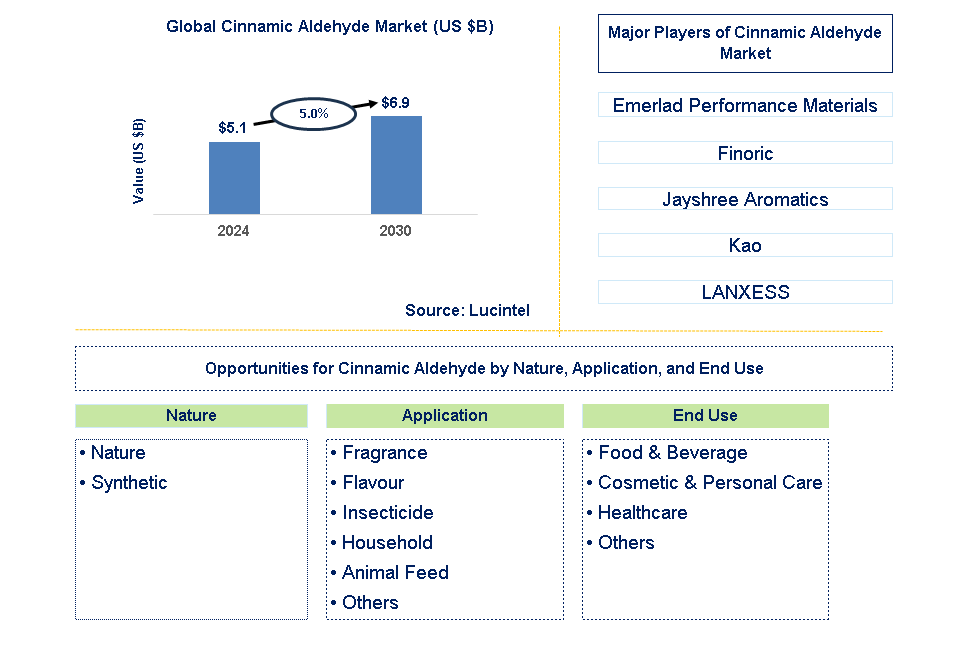
Key data points: The market size in 2030 = $6.9 billion, growth forecast = 5.0% annually for the next 6 years. Scroll below to get more insights. This market report covers trends, opportunities, and forecasts in the global cinnamic aldehyde market to 2030 by nature (nature and synthetic), application (fragrance, flavour, insecticide, household, animal feed, and others), end use (food & beverage, cosmetic & personal care, healthcare, and others), and region (North America, Europe, Asia Pacific, and the Rest of the World)
We'll send your sample report shortly.
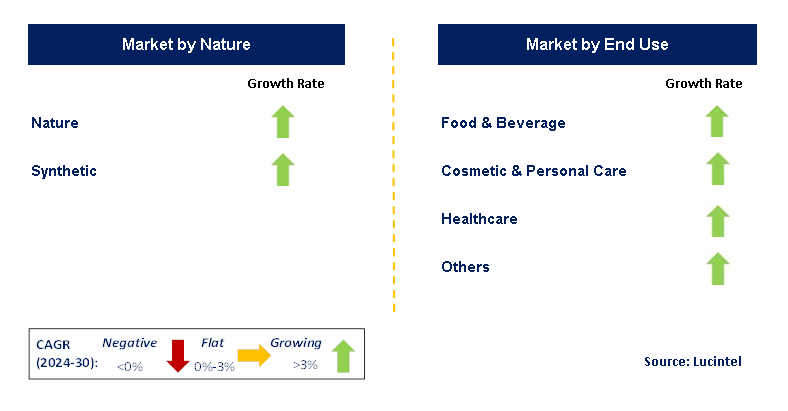
• Lucintel forecasts that flavour will remain the largest segment over the forecast period due to demand for products will be driven by the consumption of large quantities of flavourings in food and beverage applications to enhance taste and quality.
• Within this market, food & beverage is expected to witness the highest growth due to in the food sector, cinnamic aldehyde used to produce fruit flavourings such as apple or cherry which can be incorporated into sweets, ice cream, beverages, gum, cake and tobacco products.
• North America is expected to witness highest growth over the forecast period due to rising demand for aromatic compounds generated from cinnamic aldehyde. Gain valuable insights for your business decisions with our comprehensive 150+ page report.
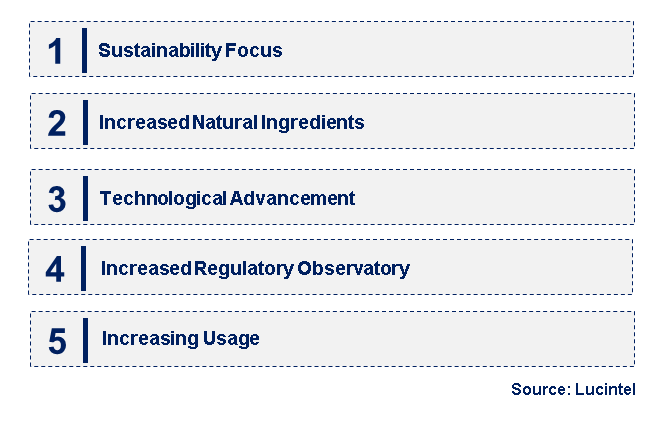
• Sustainability Focus: A key trend is sustainability. Almost all manufacturers are willing to adopt ecologically friendly practices—biotechnological extraction and renewable resources—that consumers demand in the ingredients used. This shift improves their brand reputation and market share.
• Increased Natural Ingredients: Another main driver of cinnamic aldehyde is the rising popularity of natural ingredients in food and cosmetics. As consumers increasingly look for products free from synthetic additives, manufacturers are reformulating their offerings to include a blend of natural compounds, driving growth in the market.
• Technological Advancement: Advancements in extraction and synthesis technologies enhance the cinnamic aldehyde production process through better efficiency and quality. These methods improve the process to such an extent that the cost and environmental impacts of production decrease, serving the global competitiveness and sustainability needs of the market.
• Increased Regulatory Oversight: More regulatory oversight in the cinnamic aldehyde industry impacts this business. In this regard, producers ensure compliance with standards on safety and environmental factors. This is similar to why consumers trust products, as innovation and design are driven by these same needs.
• Increasing Usage: The ongoing diversification of applications for cinnamic aldehyde in food, cosmetics, and pharmaceuticals is opening channels for growth. The versatility of the compound meets a continuously rising demand due to newly discovered uses, opening opportunities for innovation. These trends focus on sustainability and improvements in product quality while offering ample space for various applications. Stakeholders who adapt to changes will be well-positioned for future growth.
• New Extraction Technologies: Recent advances in extraction technologies have led to increased yields and purities of cinnamic aldehyde. Newer processes, such as enzymatic extraction and supercritical fluid extraction, are being developed as replacements for traditional, less effective methods, enhancing efficiency for consumer expectations.
• Improved Production Capacity: Many producers are expanding production capacities to cope with rising global demand. Investment in modern facilities and technologies has enabled companies to produce higher volumes of quality cinnamic aldehyde, thereby improving their competitive position.
• Cooperative Research Programs: Industry-research institute collaborations are driving innovation in the cinnamic aldehyde market. These partnerships synergistically accelerate the development of new applications and improved synthesis methods, adhering to high standards of safety and quality.
• Emerging Markets Growth: Market demand for cinnamic aldehyde is increasing in emerging markets, particularly in Asia. Companies are cautiously penetrating these markets, adapting their products to local tastes and regulations.
• Focus on Compliance with Regulations: With the tightening regulatory framework, organizations are focusing more on compliance with safety and environmental standards. This attention not only manages risk but also conveys a positive message about brand authenticity while ensuring alignment with consumer desires for sustainable products. Innovation promotes sustainability; this is what drives the growth of the cinnamic aldehyde market: changing times shape changing markets. Emerging trends will favor companies that succeed in understanding and adapting to them.
• Food and Beverages Segment: Cinnamic aldehyde finds application in the food and beverage industry as a flavoring agent. Here, the natural preference is shifting consumer attention, enabling manufacturers to offer new formulations for health-conscious consumers, thereby increasing demand.
• Cosmetics and Personal Care: The cosmetics industry is employing cinnamic aldehyde to enhance their fragrances. This trend can be capitalized on through special, environmentally friendly formulations of beauty products, thereby expanding a company’s market reach.
• Pharmaceutical Applications: Cinnamic aldehyde has significant potential in pharmaceuticals, mainly due to its anti-inflammatory and antiseptic properties, thereby increasing growth areas. Research on its therapeutic effectiveness can lead to new product developments beyond traditional uses.
• Natural Fragrances: The growing demand for natural fragrances in perfumery opens vast growth opportunities. Manufacturers can focus on creating high-quality, environmentally friendly products from cinnamic aldehyde to meet the increasing consumer preference for natural and organic products.
• Export Markets: Entering new geographies presents a significant growth opportunity. Positioning products according to local tastes and regulatory requirements can capture the ever-growing demand for natural ingredients in different regions and expand the global footprint. These growth opportunities indicate the potential for market expansion in cinnamic aldehyde. Companies that embrace these opportunities will be well-positioned to take advantage of new trends and fill changing consumer demand gaps.
• Rise in Natural Products: There is an increase in demand for natural flavoring and fragrance agents due to heightened consumer awareness of health and sustainability. Since cinnamic aldehyde is derived from natural products, this demand serves as an impetus for market growth.
• Technological Advancements: New extraction and production technologies make cinnamic aldehyde more effective and sustainable. These technologies encourage cost reduction and lower environmental impact, attracting both consumers and manufacturers.
• Government Incentives towards Sustainability: Government regulations promoting sustainable practices encourage manufacturers to adopt more eco-friendly production processes. This stimulates the development of the natural ingredients market by embracing cinnamic aldehyde in line with consumer preferences. Challenges in the cinnamic aldehyde market include:
• Production Costs: High production costs for quality cinnamic aldehyde, particularly when sustainable, exert economic pressure. Industry players must balance cost control and quality retention to stay ahead of the competition.
• Market Competition: There is inherent competition from synthetic versions, which are cheaper and can impact the market. Consumers are increasingly aware of the benefits of natural products; when buyers perceive natural versions as superior, market competition intensifies.
• Overhead Costs of Regulatory Compliance: Higher regulatory requirements can drive up compliance costs for manufacturers. While securing compliance is essential for safety and market access, these costs may be prohibitive for smaller players. The challenges and drivers outlined above significantly shape the market landscape. By managing these effectively, companies will be better positioned to pursue growth while mitigating risks.
• Emerlad Performance Materials
• Finoric
• Jayshree Aromatics
• Kao
• LANXESS
• Muby Chemicals
• Payan Bertrand
• Yingcheng Wuhan Organic Material
• Graham Chemical
• Merck
• Nature
• Synthetic
• Fragrance
• Flavour
• Insecticide
• Household
• Animal Feed
• Others
• Food & Beverage
• Cosmetic & Personal Care
• Healthcare
• Others
• North America
• Europe
• Asia Pacific
• The Rest of the World
• United States: In the U.S. cinnamic aldehyde market, there is a notable rise in demand for natural flavoring and fragrance agents. Companies are emphasizing sustainable extraction processes to cater to consumer preferences for environmentally friendly products. Innovations in synthesis and application are emerging from collaborations between academic institutions and industry leaders, improving product quality while reducing costs. Compliance with regulations is achieved through safety assessments, compelling companies to focus on compliance for product improvement.
• China: The cinnamic aldehyde market in China is experiencing phenomenal growth, driven by the rising demand in the food and beverage sector. Manufacturers are expanding production capacity to meet domestic and international demand. The government promotes the development of natural flavoring agents, leading companies to invest in research and adopt new extraction technologies. Additionally, local firms are prioritizing product quality and sustainability in alignment with globalization trends towards greener production, positioning China as a significant global player.
• Germany: Innovation and sustainability underpin Germany's cinnamic aldehyde industry. Recent innovations include biotechnological extraction, enhancing yields while reducing environmental impact. The cinnamic aldehyde market is highly regulated, with stringent standards driving manufacturers to incur additional costs to ensure product safety. Collaborations between research institutions and industry will help create quality natural alternatives to synthetic compounds, accelerating the rise of specialty chemicals in Germany.
• India: Rapid growth of cinnamic aldehyde in India is driven by increasing use in the fragrance and flavor industries. Recent investments in production facilities aim to boost production volumes while meeting international quality standards. Eco-friendly practices are becoming increasingly important for Indian manufacturers, who are moving towards renewable resources for extraction. Additionally, government encouragement of organic farming increases the availability of natural raw materials, positioning India as a competitive player in the global cinnamic aldehyde market.
• Japan: Innovations in Japan are being driven by the synthesis and application of cinnamic aldehyde, particularly in cosmetics and food. Companies are focusing on quality enhancement, distinctive applications, and fulfilling specific consumer needs. Research into green extraction methods has intensified, and stringent regulatory frameworks ensure high safety levels while compelling manufacturers to prioritize quality and compliance.


• Emerlad Performance Materials
• Finoric
• Jayshree Aromatics
• Kao
• LANXESS
• Muby Chemicals
• Payan Bertrand
• Yingcheng Wuhan Organic Material
• Graham Chemical
• Merck Q6. Which cinnamic aldehyde market segment will be the largest in future? Answer: Lucintel forecasts that flavour will remain the largest segment over the forecast period due to demand for products will be driven by the consumption of large quantities of flavourings in food and beverage applications to enhance taste and quality. Q7. In cinnamic aldehyde market, which region is expected to be the largest in next 5 years? Answer: North America is expected to witness highest growth over the forecast period due to rising demand for aromatic compounds generated from cinnamic aldehyde. Q.8 Do we receive customization in this report? Answer: Yes, Lucintel provides 10% customization without any additional cost.


Choose a license that fits your team. Instant PDF delivery.
Prices exclude taxes. Instant delivery. Custom licensing available on request.
Market Report · July 22, 2026
Market Report · July 22, 2026
Market Report · July 22, 2026
Trusted partner for strategic intelligence and business growth


Receive a complimentary market analysis tailored to your industry. Our analysts will identify key growth opportunities and competitive dynamics specific to your business.

Market size, growth rate, and key trend analysis for your specific sector.

Top competitor positioning and market share analysis.

Strategic recommendations backed by data-driven insights.
Get curated market intelligence and competitive moves straight to your inbox.
By subscribing, you agree to receive our monthly insights. Unsubscribe anytime.
Receive a complimentary market analysis tailored to your industry. Our analysts will identify key growth opportunities and competitive dynamics specific to your business.
Market size, growth rate, and key trend analysis for your specific sector.
Top competitor positioning and market share analysis.
Strategic recommendations backed by data-driven insights.
Get curated market intelligence, emerging trends, and competitive moves straight to your inbox each month.
By subscribing, you agree to receive our monthly insights. Unsubscribe anytime.
We'll send your sample report shortly.