
Market Report · July 16, 2026

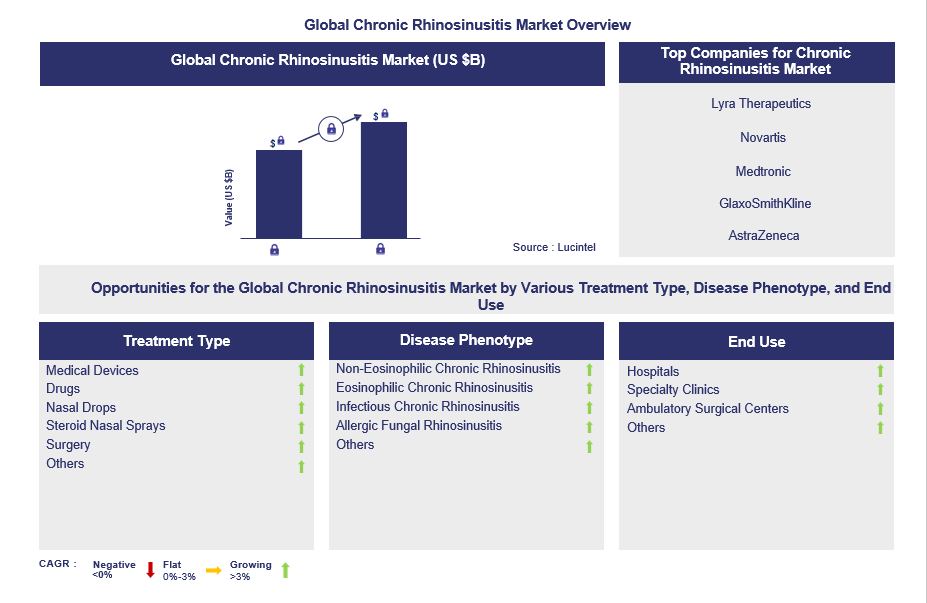
Key data points: The growth forecast = 7.5% annually for the next 7 years. Scroll below to get more insights. This market report covers trends, opportunities, and forecasts in the global chronic rhinosinusitis market to 2031 by treatment type (medical devices, drugs, nasal drops, steroid nasal sprays, surgery, and others), disease phenotype (non-eosinophilic chronic rhinosinusitis, eosinophilic chronic rhinosinusitis, infectious chronic rhinosinusitis, allergic fungal rhinosinusitis, and others), end use (hospitals, specialty clinics, ambulatory surgical centers, and others), and region (North America, Europe, Asia Pacific, and the Rest of the World)
We'll send your sample report shortly.
• Lucintel forecasts that, within the treatment type category, steroid nasal spray is expected to witness the highest growth over the forecast period.
• Within the end use category, hospital is expected to witness the highest growth over the forecast period.
• In terms of regions, North America is expected to witness the highest growth over the forecast period. Gain valuable insights for your business decisions with our comprehensive 150+ page report.
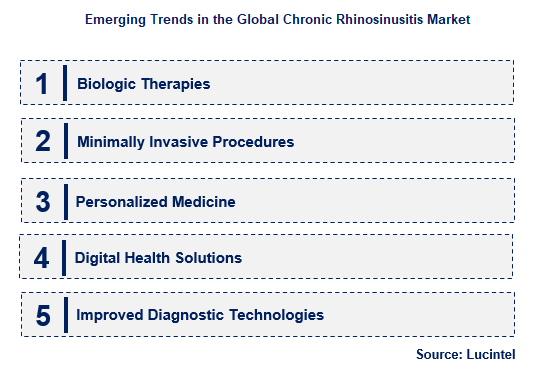
• Biologic Therapies: The dramatic emergence of biologic therapies, which target specific inflammatory pathways, has transformed CRS management. These treatments provide much more effective solutions for patients who do not respond well to conventional therapies.
• Minimally Invasive Procedures: There is also a growing trend toward minimally invasive surgical techniques, including but not limited to balloon sinuplasty. These methods provide faster recovery times and fewer complications than traditional surgeries.
• Personalized Medicine: Genetic research and diagnostics have advanced toward personalized treatment options. Tailoring therapies according to the genetic profile of each individual and specific disease mechanisms is making treatments more effective.
• Digital Health Solutions: Digital health tools, including mobile apps and telemedicine, help improve the monitoring and management of patients. These tools assist in tracking symptoms, improving adherence to medications, and facilitating remote consultations.
• Improved Diagnostic Technologies: Advanced imaging and molecular diagnostics are newer technologies that provide more accurate diagnosis of CRS. Better diagnosis leads to more focused and effective treatment plans. These trends are reshaping the CRS market by improving efficacy, convenience, and overall management strategies for treating CRS.
• Approval of New Biologics: New biologic medications targeting specific inflammatory pathways have been approved for CRS treatment. These newer drugs offer additional targeted and powerful options for treating more serious cases of CRS.
• Improvements in Endoscopic Surgery: Improvements in endoscopic methods, instrumentation, and procedural aspects have resulted in better outcomes and enhanced safety for sinus surgeries in CRS patients.
• Further Use of Nasal Sprays: Nasal sprays are now available in new forms, such as corticosteroid and antihistamine nasal sprays. These sprays offer more effective symptomatic treatment and are easier for patients to use themselves.
• Telemedicine Integration: The incorporation of telemedicine in CRS management enables remote consultations and monitoring. This development increases patient access to care and supports the ongoing management of chronic conditions.
• Personalization of Treatment Plans: Advances in genetic research and diagnostic tools enable personalized treatment plans for CRS. Tailored therapies based on an individual’s profile improve treatment outcomes. These advances are helping to grow the CRS market by offering new treatment options and improving patient management.
• Chronic Management Programs: Advanced chronic management programs with follow-up care present a high-growth opportunity. Long-term disease management improves patient outcomes, leading to better overall care.
• Telehealth Services: Telehealth services can be extended for CRS patients, providing easy access to specialized care. This opportunity aligns with current healthcare trends by enabling remote consultations and monitoring.
• Advanced Drug Development: Growth can be driven through the development of new drugs, including biologics and novel formulations. These drugs can further advance treatment options and meet unmet patient needs.
• Minimally Invasive Surgical Technologies: The development and adoption of newer minimally invasive surgical techniques will improve patient recovery times and reduce risks associated with procedures. This is in line with the growing trend toward less invasive treatments.
• Diagnostic Innovations: There is potential for more precise and timely diagnosis of CRS through the development of high-resolution imaging and molecular diagnostics. Better diagnostics will lead to more targeted therapies. The aforementioned growth opportunities demonstrate the potential for innovation and expansion in the chronic rhinosinusitis market, improving patient care and enhancing treatment effectiveness.
• The Growing Incidence of CRS: The rise in the incidence of chronic rhinosinusitis worldwide fuels the demand for therapies and management solutions. This trend drives expansion and innovation in therapeutic options within the market.
• Increased Investments in Health Care: Increased investments in healthcare infrastructure and research help develop new treatments and diagnostic tools. This has contributed to market growth and improved patient care.
• Personalized Medicine: Advances in genetics and diagnostics offer more personalized treatment options. Targeted therapy based on each patient’s profile yields better outcomes, which drives growth in this market segment.
• Digital Health Integration: The integration of digital health solutions, such as telemedicine and mobile health apps, improves patient monitoring and care. This trend facilitates better access and supports market growth. Challenges in the chronic rhinosinusitis market include:
• Regulatory Hurdles: The complexity of regulatory requirements and processes for approving new treatments can be challenging. Delays in regulation, along with compliance issues, affect market entry and innovation.
• High Treatment Costs: Advanced treatments involving biologics and surgical procedures can be expensive. The high cost of these therapies limits access and may slow market growth, particularly in low-income regions.
• Data Privacy Concerns: Ensuring patient data protection and maintaining compliance with privacy regulations is critical. Concerns about data security can impact consumer trust and the adoption of digital health solutions. Continuous technological advancements, the increasing prevalence of disease, and healthcare investments will drive market growth, while regulatory challenges, high treatment costs, and data privacy issues will present obstacles. Careful attention to these factors will be crucial to sustaining market growth and improving patient care.
• Lyra Therapeutics
• Novartis
• Medtronic
• GlaxoSmithKline
• AstraZeneca
• Sanofi
• Dr. Reddy’s Laboratories
• Stryker Corporation
• Bayer
• Smith & Nephew
• Medical Devices
• Drugs
• Nasal Drops
• Steroid Nasal Sprays
• Surgery
• Others
• Non-Eosinophilic Chronic Rhinosinusitis
• Eosinophilic Chronic Rhinosinusitis
• Infectious Chronic Rhinosinusitis
• Allergic Fungal Rhinosinusitis
• Others
• Hospitals
• Specialty Clinics
• Ambulatory Surgical Centers
• Others
• North America
• Europe
• Asia Pacific
• The Rest of the World
• United States: The USA has also seen dramatic shifts in the management of chronic rhinosinusitis. Innovation in targeted biologics, which act directly on inflammation and genetic mechanisms, along with the extended use of endoscopic sinus surgery, has improved treatment outcomes. This has been accompanied by the development of new biologic therapies receiving FDA approval.
• China: The CRS market in China is still in a developing stage due to increasing investment in healthcare and advancements in diagnostic technologies. Minimally invasive procedures and novel nasal sprays are newer forms of treatment that have become widely available, enhancing patient management and adherence.
• Germany: Germany holds the leading position in European research on CRS, with new guidelines for treatment and innovative approaches emerging in the country. The focus is on personalized medicine, which includes advanced diagnostics combined with an individual approach to treatment to increase its efficiency and improve patients’ quality of life.
• India: The CRS market is growing rapidly in India, with efforts toward providing accessible and more affordable treatment solutions. Developments range from cost-effective nasal sprays to improve access, to more specialized care available through telemedicine, helping manage CRS in underserved areas.
• Japan: The Japanese CRS market is a symbol of the latest technologies and treatments. Recent developments include new drug formulations and highly developed diagnostic tools, which enhance the capability for effective management of chronic symptoms and offer comprehensive care options to patients.


• Lyra Therapeutics
• Novartis
• Medtronic
• GlaxoSmithKline
• AstraZeneca
• Sanofi
• Dr. Reddy’s Laboratories
• Stryker Corporation
• Bayer
• Smith & Nephew Q5. Which chronic rhinosinusitis market segment will be the largest in future? Answer: Lucintel forecasts that steroid nasal spray is expected to witness the highest growth over the forecast period. Q6. In chronic rhinosinusitis market, which region is expected to be the largest in next 5 years? Answer: North America is expected to witness the highest growth over the forecast period. Q.7 Do we receive customization in this report? Answer: Yes, Lucintel provides 10% customization without any additional cost.


Choose a license that fits your team. Instant PDF delivery.
Prices exclude taxes. Instant delivery. Custom licensing available on request.
Market Report · July 16, 2026
Market Report · July 15, 2026
Market Report · July 15, 2026
Trusted partner for strategic intelligence and business growth


Receive a complimentary market analysis tailored to your industry. Our analysts will identify key growth opportunities and competitive dynamics specific to your business.

Market size, growth rate, and key trend analysis for your specific sector.

Top competitor positioning and market share analysis.

Strategic recommendations backed by data-driven insights.
Get curated market intelligence and competitive moves straight to your inbox.
By subscribing, you agree to receive our monthly insights. Unsubscribe anytime.
Receive a complimentary market analysis tailored to your industry. Our analysts will identify key growth opportunities and competitive dynamics specific to your business.
Market size, growth rate, and key trend analysis for your specific sector.
Top competitor positioning and market share analysis.
Strategic recommendations backed by data-driven insights.
Get curated market intelligence, emerging trends, and competitive moves straight to your inbox each month.
By subscribing, you agree to receive our monthly insights. Unsubscribe anytime.
We'll send your sample report shortly.