
Market Report · July 22, 2026

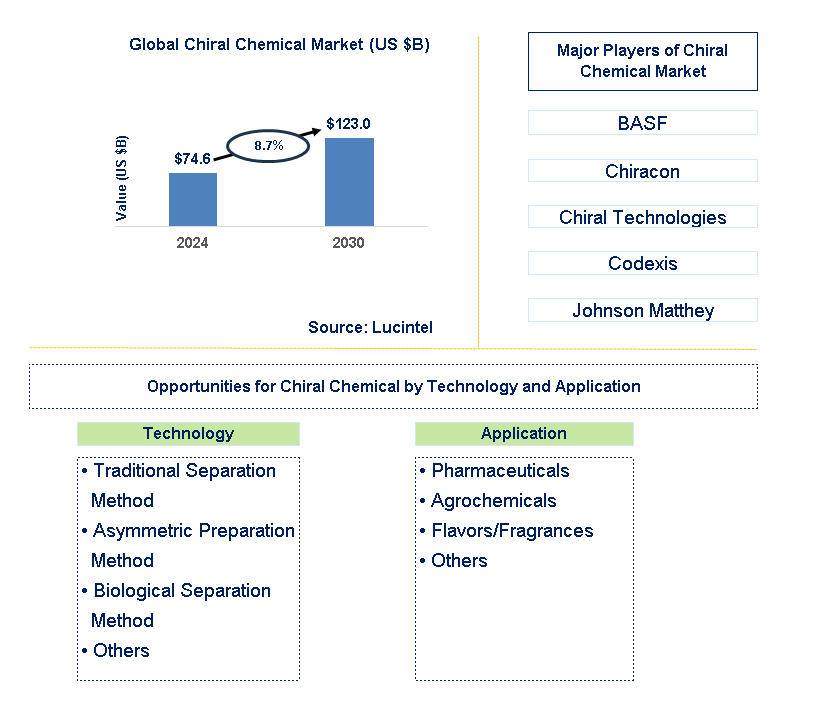
Key data points: The market size in 2030 = $123.0 billion, growth forecast = 8.7% annually next 6 years. Scroll below to get more insights. This market report covers trends, opportunities, and forecast in the global chiral chemical market to 2030 by technology (traditional separation method, asymmetric preparation method, biological separation method, and others), application (pharmaceuticals, agrochemicals, flavors/fragrances, and others), and region (North America, Europe, Asia Pacific, and the Rest of the World)
We'll send your sample report shortly.
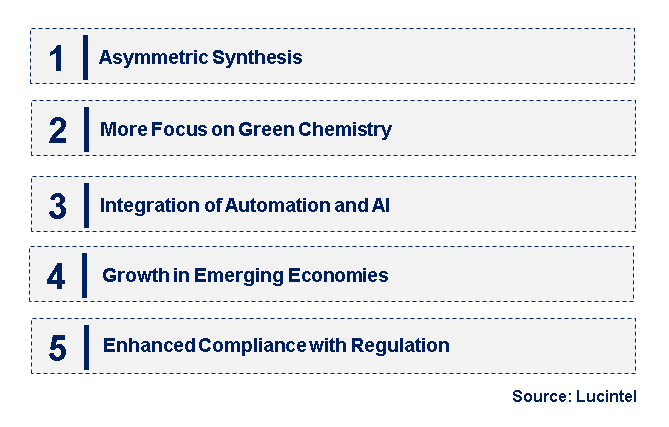
• Asymmetric Synthesis: Recent Developments: Improvements in the methods of asymmetric synthesis are making chiral chemicals more available. New catalysts and reaction conditions enhance yields and purities while reducing costs and increasing the sustainability of production processes.
• More Focus on Green Chemistry: The emphasis on green chemistry is increasing in the chiral chemical marketplace. Firms are focusing more on greener practices and processes, ensuring less waste and a reduced negative environmental impact from chemical production, thus meeting international sustainability goals.
• Integration of Automation and AI: The integration of automation and artificial intelligence into chiral chemical production is rising. This reduces operational costs due to higher efficiencies, precision, and consistency, leading to high-quality products and a reduction in overall operational costs.
• Growth in Emerging Economies: The chiral chemical market has witnessed expansion in emerging markets such as India and Southeast Asia. Growth in these developing nations, driven by rising industrialization and pharmaceutical demand, is creating new opportunities for market players.
• Enhanced Compliance with Regulation: Stricter regulatory controls are emerging in the chiral chemical market. Companies are investing in compliance with international standards to ensure product quality and safety while staying within the limits of such regulatory environments. The forthcoming trends—good news for growth—include developments in asymmetric synthesis, green chemistry, automation, market expansion, and enhanced regulatory compliance. These trends are rapidly restructuring the marketplace for chiral chemicals. They spur innovation, efficiency, and alignment of production with global standards and sustainable development.
• Development of New Catalysts: New catalysts are being developed for chiral synthesis that are more effective and selective than existing catalysts. Improvements in producing high-purity chiral chemicals at lower costs will enable the development of new pharmaceutical and chemical products.
• Green Chemistry Practices: Green chemistry practices are on the rise to minimize environmental impact. Innovations in sustainable solvents and processes across various fields reduce waste and energy consumption in line with global sustainability trends and regulatory requirements.
• Growth in Pharmaceutical Applications: Pharmaceuticals remain one of the fastest-growing segments for chiral chemicals. This growth in demand, especially for high-value chiral intermediates and active pharmaceutical ingredients, is driving the development of advanced synthesis technologies and improved production processes.
• Expansions of Production Facilities: Companies are expanding their production facilities to increase capacity and meet rising demand. Investments in new manufacturing plants and upgrades to existing facilities support large-scale production and improve market competitiveness for chiral chemicals.
• Improved Regulatory Frameworks: The regulatory frameworks regarding chiral chemicals are becoming stronger. As a result, companies are working diligently to adhere to updated regulations, ensuring quality and safety parameters for their products, which in turn influence production patterns and market dynamics. New catalysts, the adoption of green chemistry, growth in pharmaceutical applications, facility expansions, and strong regulatory frameworks are driving key developments in the chiral chemical market. These innovations are fostering the emergence of new products, enhancing production efficiency, and ensuring regulatory compliance that will shape the industry's future.
• Expanding Pharmaceutical Applications: The pharmaceutical industry presents extensive prospects for chiral chemical growth. Stronger demand for chiral drugs and intermediates encourages further development of synthesis technologies, creating new sales opportunities for pharmaceutical-type chiral products.
• Development of Specialty Chemicals: Chiral chemicals are increasingly sought after for use in specialized applications, including agrochemicals and flavors. Developing tailored solutions for different niche markets could bring additional income streams and enhance market position.
• Green Chemistry Technologies Investment: The opportunities for sustainable growth facilitated by investments in green chemistry technologies can support corporate differentiation through the adoption of environmentally friendly practices and the development of greener processes. It is important to consider regulatory standards to meet the demand for sustainable products.
• Emerging Markets Growth: Growth opportunities for chiral chemicals are also found in emerging markets such as India and Southeast Asia. Building production and distribution networks in these countries captures new customer bases and caters to increasing industrial and pharmaceutical demands.
• Integration of Advanced Manufacturing Technologies: The integration of advanced manufacturing technologies into production, such as automation and AI, enhances both production efficiency and product quality. These technologies create opportunities for streamlining operations, reducing costs, and enhancing competitiveness in the global market. Various applications in the pharmaceuticals sector, specialty chemicals, green chemistry, emerging markets, and advanced manufacturing technologies present strategic growth opportunities in chiral chemicals. These opportunities leverage innovation, market reach, and competitive positioning to drive growth in the market.
• Technological Advancements: Advancements in chiral synthesis, including innovative catalysts and automation processes, are driving market growth. Innovations enhance productive efficiency, reduce costs, and improve quality, making chiral chemicals more accessible and competitive.
• Stronger Demand for Chiral Chemicals: The demand for chiral chemicals in pharmaceutical applications is a primary driver. The high purity requirements for chiral intermediates and active pharmaceutical ingredients are influencing this market, necessitating the development of various production technologies.
• Emphasis on Green Chemistry: The emergence of green chemistry is gaining more focus. Increasing awareness of sustainability and reducing carbon footprints has led to trends toward greener practices and technologies. With growing regulatory requirements and environmental concerns, more companies are investing in eco-friendly solutions, contributing to market growth.
• Expanding into Emerging Markets: Growth is also fueled by the rise in chiral chemicals manufactured and supplied in developing markets such as India and Southeast Asia. The industrious nature of these regions, coupled with pharmaceutical needs, opens new avenues for market players.
• Regulatory Pressures: Increasing stringency in regulatory standards for product quality and safety is a key driver for employing advanced technologies in production. Compliance with international standards necessitates certain investments, successfully impacting market dynamics and ensuring product integrity. Challenges in the chiral chemical market include:
• High Production Costs: The high costs associated with advanced technology and raw materials in chiral synthesis hinder market growth. The need for investment in research and development, along with finding cost-effective solutions, presents challenges for market players.
• Complexity in Regulations: The complexity of regulatory requirements, along with variations across different regions, can be difficult to navigate. The differing standards and compliance regulations among countries complicate the manufacturing process and market entry.
• Market Competition: The chiral chemical market is highly competitive and fragmented. This intense competition makes it challenging for firms to differentiate their products, maintain competitive pricing, and acquire market share. These are the major drivers influencing the chiral chemical market, including technological development, pharmaceutical demand, green chemistry, market expansion, and regulatory pressures. Additionally, high production costs, regulatory complexity, and market competition pose challenges. Meeting these drivers and challenges is essential for sustaining growth and gaining a competitive advantage in the chiral chemical market.
• BASF
• Chiracon
• Chiral Technologies
• Codexis
• Johnson Matthey
• PerkinElmer
• Solvias
• Strem Chemicals
• Toray Industries
• W.R. Grace
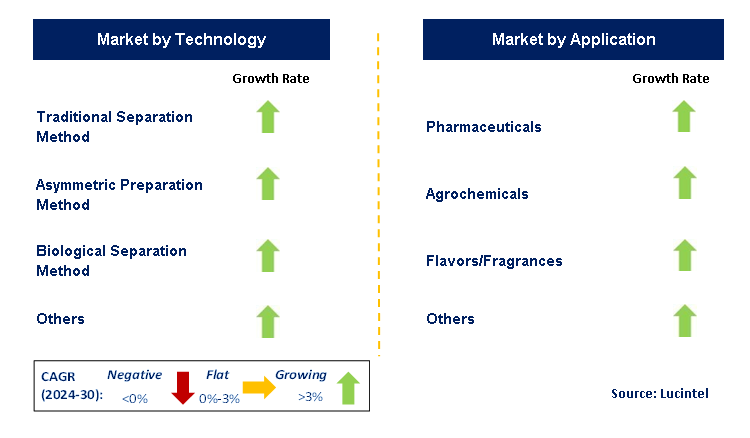
• Traditional Separation Method
• Asymmetric Preparation Method
• Biological Separation Method
• Others
• Pharmaceuticals
• Agrochemicals
• Flavors/Fragrances
• Others
• North America
• Europe
• Asia Pacific
• The Rest of the World
• United States: Significant strides in chiral chemical manufacturing have involved not only the adoption of more efficient asymmetric syntheses but also substantial investments in pharmaceutical R&D. The increasing incidence of green chemistry approaches is welcomed in the market due to environmental concerns and as a means to reduce waste. Each of these changes impacts the competitiveness of U.S. manufacturing.
• China: China has invested heavily in manufacturing infrastructure and technology to develop its chiral chemical market. The country is enhancing the efficiency of chiral synthesis while increasing production capacity to meet current and future domestic and international demand. Improved regulatory mechanisms are also being implemented to ensure quality and safety.
• Germany: With the integration of advanced catalytic technologies for chiral chemical synthesis, Germany is at the forefront of innovation. The country’s emphasis on sustainability drives advancements in green chemistry and waste reduction. Additionally, Germany's strict regulatory environment encourages higher standards in chiral chemical production, influencing industry practices across Europe.
• India: India is experiencing increased investment in the production of chiral chemicals for pharmaceuticals and agrochemicals. The country is enhancing its synthesis techniques to become cost-effective and increase production capacity to compete in the global market. Indian companies are also striving to achieve higher quality standards and improved regulatory compliance.
• Japan: Japan is advancing in the chiral chemical market through high-precision synthesis techniques and automation integration into production processes. The Japanese focus on innovation and quality control drives advancements in pharmaceuticals and specialty chemicals. Regulatory measures ensure that Japanese products meet international standards.


• BASF
• Chiracon
• Chiral Technologies
• Codexis
• Johnson Matthey
• PerkinElmer
• Solvias
• Strem Chemicals
• Toray Industries
• W.R. Grace Q6. Which chiral chemical market segment will be the largest in future? Answer: Lucintel forecasts that traditional separation method is expected to witness the highest growth over the forecast period as it includes manual isomer separation and racemate resolution after diastereomerization. Q7. In chiral chemical market, which region is expected to be the largest in next 5 years? Answer: North America will remain the largest region over the forecast period due to growing desire for fragrances made from natural sources and existence of major players. Q.8 Do we receive customization in this report? Answer: Yes, Lucintel provides 10% customization without any additional cost.


Choose a license that fits your team. Instant PDF delivery.
Prices exclude taxes. Instant delivery. Custom licensing available on request.
Market Report · July 22, 2026
Market Report · July 22, 2026
Market Report · July 22, 2026
Trusted partner for strategic intelligence and business growth


Receive a complimentary market analysis tailored to your industry. Our analysts will identify key growth opportunities and competitive dynamics specific to your business.

Market size, growth rate, and key trend analysis for your specific sector.

Top competitor positioning and market share analysis.

Strategic recommendations backed by data-driven insights.
Get curated market intelligence and competitive moves straight to your inbox.
By subscribing, you agree to receive our monthly insights. Unsubscribe anytime.
Receive a complimentary market analysis tailored to your industry. Our analysts will identify key growth opportunities and competitive dynamics specific to your business.
Market size, growth rate, and key trend analysis for your specific sector.
Top competitor positioning and market share analysis.
Strategic recommendations backed by data-driven insights.
Get curated market intelligence, emerging trends, and competitive moves straight to your inbox each month.
By subscribing, you agree to receive our monthly insights. Unsubscribe anytime.
We'll send your sample report shortly.