
Market Report · July 22, 2026

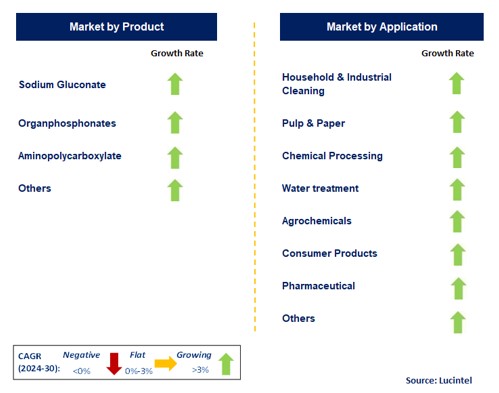
Key data points: The growth forecast = 3.8% annually for the next 6 years. Scroll below to get more insights. This market report covers trends, opportunities, and forecasts in the global chelant market to 2030 by product (sodium gluconate, organphosphonates, aminopolycarboxylate, and others), application (household & industrial cleaning, pulp & paper, chemical processing, water treatment, agrochemicals, consumer products, pharmaceutical, and others), and region (North America, Europe, Asia Pacific, and the Rest of the World)
We'll send your sample report shortly.

• United States: In the United States, there has been a noticeable shift towards eco-friendly chelants in response to increasing environmental regulations and consumer preferences. Companies are investing in the development of biodegradable and non-toxic chelants to replace traditional options. This shift is supported by extensive research and collaboration between industries and academic institutions, leading to the formulation of innovative products that meet sustainability standards. As a result, U.S. manufacturers are not only enhancing their product lines but also improving their market positioning by appealing to environmentally conscious consumers.
• China: China's chelants market is witnessing rapid growth, driven by the country’s expanding industrial base and increasing demand for applications in agriculture and cleaning products. Local manufacturers are focusing on enhancing production capabilities to meet the rising needs of both domestic and international markets. Additionally, the Chinese government’s initiatives to promote sustainable practices in agriculture are fueling interest in biodegradable chelants. This growth trajectory positions China as a significant player in the global chelants market, with a strong emphasis on both innovation and sustainability.
• Germany: Germany is known for its stringent regulatory framework, which significantly influences the chelants market. Recent developments indicate a strong emphasis on quality and compliance with environmental standards. German manufacturers are investing in advanced R&D to create high-performance chelants that meet both industry and regulatory requirements. Additionally, there is a focus on sustainable practices, including the use of renewable resources in chelant production. These efforts are enhancing Germany’s reputation as a leader in the production of safe and effective chelating agents.
• India: In India, the chelants market is expanding rapidly, driven by increasing agricultural activities and industrial applications. The rise in crop production demands effective chelating agents to improve nutrient absorption in plants, prompting local manufacturers to innovate. Additionally, the pharmaceutical and personal care sectors are exploring the use of chelants for various formulations. With government support for the chemical industry and rising awareness of environmental sustainability, India is positioned for robust growth in the chelants market, attracting investments and fostering innovation.
• Japan: Japan is experiencing significant technological advancements in the chelants market, particularly in production efficiency and product formulation. Japanese companies are leveraging cutting-edge technologies to develop high-purity and specialized chelating agents tailored for niche applications in electronics and healthcare. The emphasis on quality and innovation is driving collaborations between manufacturers and research institutions, leading to the creation of advanced products. Furthermore, Japan’s commitment to sustainability is encouraging the development of eco-friendly chelants, enhancing the country's competitive edge in the global market.
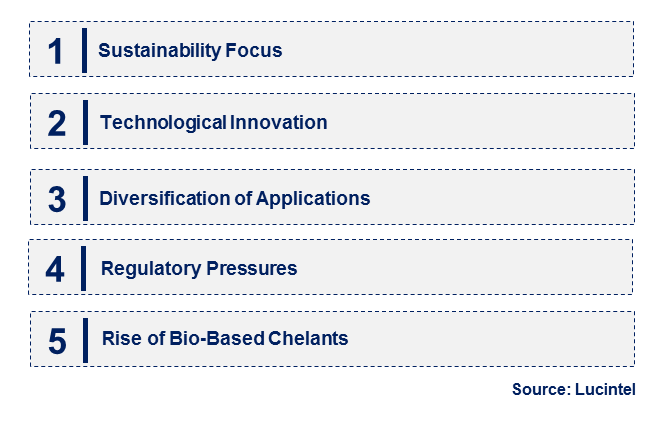
• Sustainability Focus: The trend towards sustainability is gaining momentum in the chelants market. With rising environmental concerns and stricter regulations, manufacturers are increasingly prioritizing the development of biodegradable and non-toxic chelants. This shift not only meets regulatory requirements but also aligns with consumer preferences for environmentally friendly products. Companies investing in sustainable chelants are likely to enhance their market share and brand reputation as they cater to the growing demand for eco-conscious solutions.
• Technological Innovation: Technological innovation is a key driver of change in the chelants market. Advancements in formulation techniques and production processes are enabling manufacturers to create more effective and efficient chelating agents. Innovations such as nanotechnology and biotechnology are being explored to enhance chelant performance across various applications. As companies adopt these technologies, they can improve product efficacy, reduce costs, and respond more effectively to market demands, ultimately reshaping the competitive landscape.
• Diversification of Applications: The diversification of applications for chelants is a significant trend impacting the market. Beyond traditional uses in agriculture and cleaning products, chelants are finding new roles in pharmaceuticals, food processing, and industrial manufacturing. This expansion opens up new revenue streams for manufacturers and allows for greater innovation in product development. As companies explore these new applications, the overall demand for chelants is expected to rise, fostering growth in the market.
• Regulatory Pressures: Regulatory pressures are shaping the chelants market as governments implement stricter compliance and safety standards. Companies are required to demonstrate the safety and efficacy of their products, leading to increased investments in research and development. Compliance with these regulations not only enhances product credibility but also drives innovation in product formulations. Manufacturers that proactively address regulatory challenges are better positioned to succeed in the competitive landscape.
• Rise of Bio-Based Chelants: The rise of bio-based chelants is an emerging trend as manufacturers seek to incorporate renewable resources into their product lines. This shift aligns with sustainability goals and responds to consumer demand for eco-friendly options. By developing bio-based chelating agents derived from natural sources, companies can reduce their environmental footprint while maintaining product effectiveness. This trend is expected to accelerate as industries increasingly prioritize sustainability in their sourcing and production processes. These emerging trends are fundamentally reshaping the chelants market, driving innovations and adaptations across various applications. With a heightened emphasis on sustainability, regulatory compliance, and technological advancements, stakeholders in the chelants market must be agile and forward-thinking to leverage new opportunities and address evolving challenges.
• Shift to Eco-Friendly Chelants: A notable development in the chelants market is the shift towards eco-friendly formulations. Manufacturers are increasingly focusing on developing biodegradable and non-toxic chelants in response to consumer demand for sustainable products and stricter environmental regulations. This transition is not only beneficial for the environment but also enhances the marketability of products, allowing companies to differentiate themselves in a competitive landscape.
• Technological Advancements: Technological advancements are transforming chelant production processes, leading to improved efficiencies and product quality. Innovations in manufacturing techniques, such as automated systems and advanced processing methods, are reducing costs and enhancing the performance of chelating agents. These advancements enable manufacturers to meet rising demand while maintaining compliance with regulatory standards, ultimately strengthening their market position.
• Expansion in Agriculture: The agricultural sector is witnessing a significant increase in the use of chelants for crop management. As farmers seek to enhance nutrient uptake and improve soil health, the demand for effective chelating agents is rising. This trend is prompting manufacturers to develop targeted products that address specific agricultural challenges, thus driving growth in the chelants market and supporting sustainable farming practices.
• Regulatory Compliance Focus: The emphasis on regulatory compliance has intensified within the chelants market, prompting manufacturers to invest in R&D to ensure product safety and efficacy. Stricter regulations require companies to demonstrate the performance of their products, leading to enhanced transparency and consumer trust. As manufacturers align their practices with regulatory expectations, they enhance their competitive edge and mitigate risks associated with non-compliance.
• Growth in Niche Applications: Recent developments indicate a growing focus on niche applications for chelants, particularly in industries such as pharmaceuticals and electronics. As manufacturers explore specialized formulations to cater to these sectors, they are expanding their product offerings and tapping into new revenue streams. This focus on niche markets allows companies to differentiate themselves and meet the specific needs of various industries, contributing to overall market growth. These recent developments are pivotal in shaping the chelants market, highlighting the importance of innovation, safety, and sustainability. As industries adapt to new challenges and opportunities, the market for chelating agents will continue to evolve, presenting both challenges and avenues for growth.
• Agricultural Applications: The agricultural sector presents significant growth opportunities for chelants, particularly in enhancing nutrient availability in crops. As farmers seek to improve yields and soil health, the demand for effective chelating agents is rising. Companies can capitalize on this trend by developing targeted products that address specific agricultural challenges, thereby increasing market share and fostering sustainable farming practices.
• Industrial Cleaning: The industrial cleaning market is experiencing increased demand for chelants, as they play a crucial role in removing metal ions and contaminants. With the growth of various industries, including manufacturing and food processing, there is a rising need for effective cleaning solutions. Companies that innovate and provide high-performance chelating agents tailored for industrial applications can tap into this lucrative market.
• Pharmaceuticals: The pharmaceutical industry offers promising growth opportunities for chelants, particularly in drug formulations and stability. Chelating agents are increasingly used to enhance drug delivery and improve the efficacy of pharmaceutical products. By focusing on R&D to develop specialized chelants for this sector, manufacturers can position themselves advantageously and cater to the growing demand for effective therapeutic solutions.
• Personal Care Products: The personal care industry is witnessing a growing interest in chelants for various formulations, including cosmetics and skincare products. As consumers demand higher-quality and safer products, manufacturers have the opportunity to develop innovative chelating agents that enhance product performance. This trend provides a pathway for companies to expand their product offerings and capture a larger share of the personal care market.
• Environmental Remediation: The emphasis on environmental remediation is creating new opportunities for chelants in addressing contamination issues. As industries seek effective solutions for environmental challenges, chelants can play a critical role in soil and water treatment processes. Companies that develop chelating agents tailored for environmental applications can contribute to sustainability efforts while capitalizing on a growing market demand. These strategic growth opportunities illustrate the dynamic nature of the chelants market across various applications. By focusing on innovation, sustainability, and regulatory compliance, stakeholders can position themselves to capitalize on emerging trends and drive long-term growth in this evolving industry.
• Increasing Demand from Agriculture: The increasing demand for chelants in agriculture is a primary driver of market growth. Farmers are increasingly adopting chelating agents to improve nutrient uptake and enhance crop yields. This trend is prompting manufacturers to innovate and develop targeted products that cater to the specific needs of the agricultural sector, ultimately driving overall demand in the chelants market.
• Technological Advancements in Production: Technological advancements are enhancing production efficiencies in the chelants market. Innovations in formulation techniques and manufacturing processes are enabling companies to create more effective chelating agents while reducing costs. By adopting these technologies, manufacturers can meet rising demand and maintain competitiveness, which is essential for sustaining growth in the market.
• Regulatory Compliance and Safety Standards: Stricter regulatory compliance and safety standards are influencing the chelants market. As governments implement tighter regulations, companies are required to demonstrate the safety and efficacy of their products. This emphasis on compliance drives innovation in product development, ensuring that manufacturers meet industry expectations and enhancing overall market credibility.
• Rising Consumer Awareness of Sustainability: Rising consumer awareness of sustainability is shaping the chelants market. As consumers increasingly seek eco-friendly products, manufacturers are motivated to develop biodegradable and non-toxic chelants. This shift not only aligns with consumer preferences but also positions companies favorably in a market that prioritizes sustainable practices, driving growth in demand.
• Global Trade Opportunities: Global trade opportunities are expanding the reach of chelants manufacturers. As international markets grow, companies are exploring export opportunities to meet rising demand in various regions. By tapping into global markets, manufacturers can diversify their revenue streams and mitigate risks associated with local economic fluctuations, further enhancing their growth potential. Challenges in the chelant market are:
• Regulatory Compliance Complexity: Navigating the complexities of regulatory compliance poses a significant challenge for chelants manufacturers. With varying standards across regions, companies must invest in compliance strategies to meet these requirements. This can increase operational costs and complicate production processes, potentially impacting profitability and market competitiveness.
• Environmental Concerns and Public Perception: Environmental concerns surrounding chelants and their potential impacts on health and ecosystems present a challenge for the market. Negative public perception can lead to increased scrutiny from regulators and consumers. Manufacturers must proactively address these concerns through transparent practices and sustainable initiatives to maintain market credibility.
• Volatile Raw Material Prices: Fluctuations in raw material prices can significantly impact the chelants market. Factors such as geopolitical tensions, supply chain disruptions, and changing demand dynamics contribute to this volatility. Manufacturers face challenges in managing costs and pricing strategies, which can affect profitability and competitiveness in a rapidly changing market environment. The chelants market is shaped by a complex interplay of drivers and challenges that influence its growth trajectory. While increasing demand from agriculture and technological advancements present significant opportunities, navigating regulatory complexities and addressing environmental concerns remain critical challenges. Companies that effectively manage these factors while leveraging growth opportunities are better positioned to succeed in this evolving market landscape.
• Sodium Gluconate
• Organphosphonates
• Aminopolycarboxylate
• Others
• North America
• Europe
• Asia Pacific
• The Rest of the World
• Lucintel forecasts that, within the product category, aminopolycarboxylate will remain the largest segment over the forecast period.
• In terms of regions, APAC is expected to witness highest growth over the forecast period.




Choose a license that fits your team. Instant PDF delivery.
Prices exclude taxes. Instant delivery. Custom licensing available on request.
Market Report · July 22, 2026
Market Report · July 22, 2026
Market Report · July 22, 2026
Trusted partner for strategic intelligence and business growth


Receive a complimentary market analysis tailored to your industry. Our analysts will identify key growth opportunities and competitive dynamics specific to your business.

Market size, growth rate, and key trend analysis for your specific sector.

Top competitor positioning and market share analysis.

Strategic recommendations backed by data-driven insights.
Get curated market intelligence and competitive moves straight to your inbox.
By subscribing, you agree to receive our monthly insights. Unsubscribe anytime.
Receive a complimentary market analysis tailored to your industry. Our analysts will identify key growth opportunities and competitive dynamics specific to your business.
Market size, growth rate, and key trend analysis for your specific sector.
Top competitor positioning and market share analysis.
Strategic recommendations backed by data-driven insights.
Get curated market intelligence, emerging trends, and competitive moves straight to your inbox each month.
By subscribing, you agree to receive our monthly insights. Unsubscribe anytime.
We'll send your sample report shortly.