
Market Report · July 22, 2026

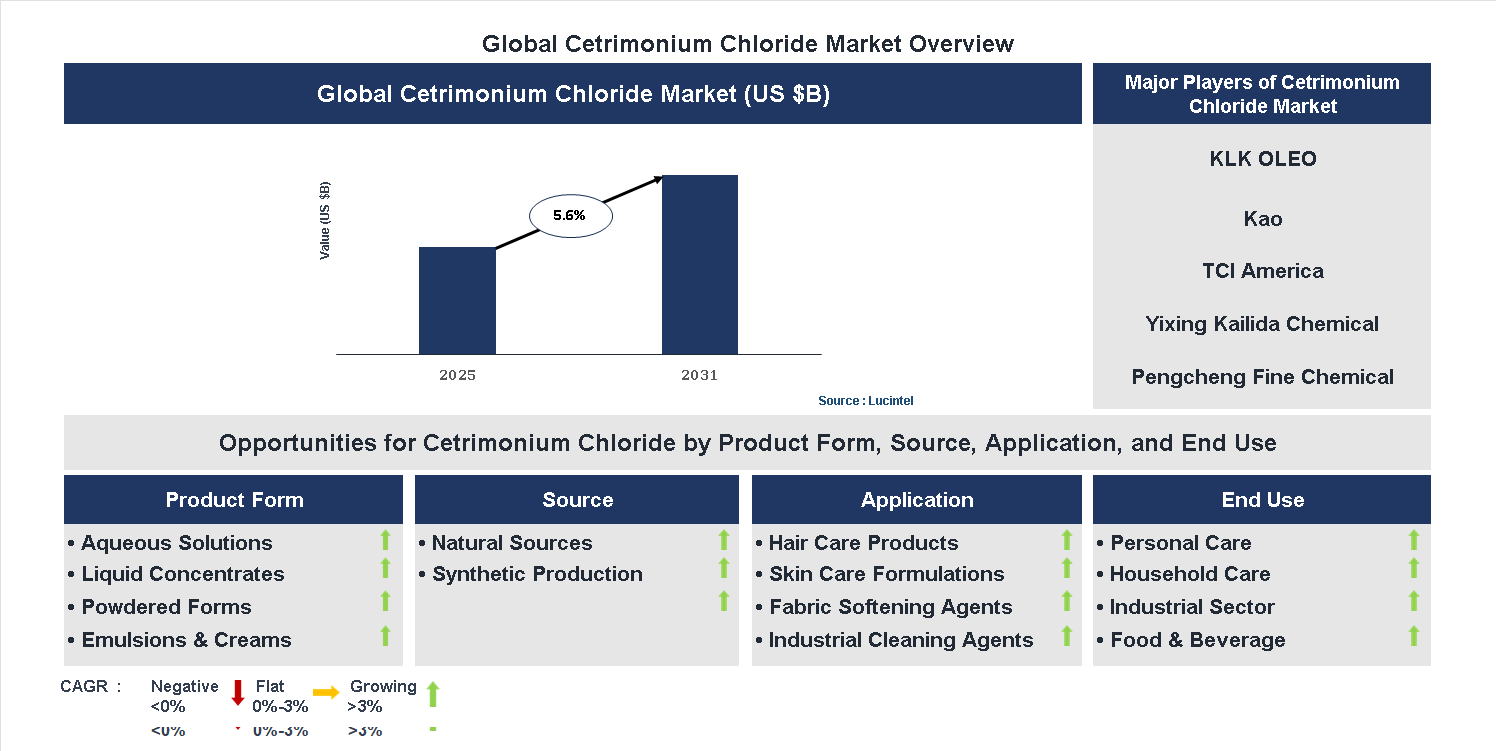
Key data points: The growth forecast = 5.6% annually for the next 7 years. Scroll below to get more insights. This market report covers trends, opportunities and forecasts in cetrimonium chloride market to 2031 by product form (aqueous solutions, liquid concentrates, powdered forms, and emulsions & creams), source (natural sources and synthetic production), application (hair care products, skin care formulations, fabric softening agents, and industrial cleaning agents), end use (personal care, household care, industrial sector, and food & beverage), and region (North America, Europe, Asia Pacific, and the Rest of the World)
We'll send your sample report shortly.
• Lucintel forecasts that, within the product form category, aqueous solution is expected to witness the highest growth over the forecast period.
• Within the end use category, personal care is expected to witness the highest growth.
• In terms of region, APAC is expected to witness the highest growth over the forecast period. Gain valuable insights for your business decisions with our comprehensive 150+ page report. Sample figures with some insights are shown below.
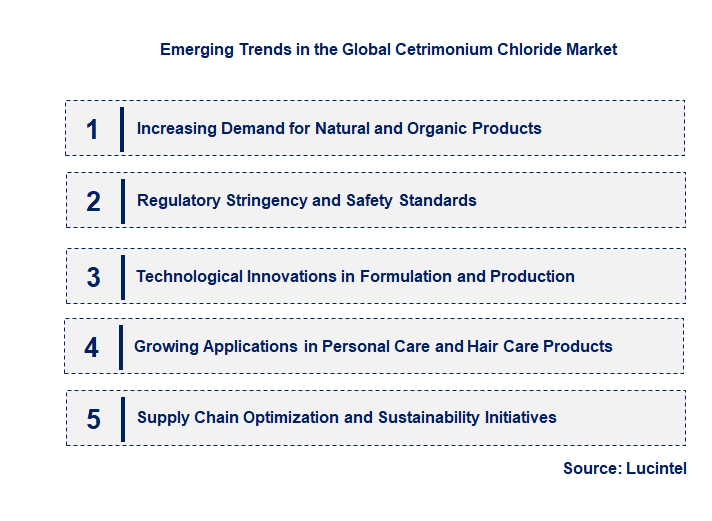
• Increasing Demand for Natural and Organic Products: Consumers are prioritizing natural, organic, and eco-friendly ingredients in personal care and cosmetic products. This shift is driven by growing awareness of health and environmental issues, prompting manufacturers to develop formulations with plant-based and biodegradable ingredients. The demand for cetrimonium chloride derived from sustainable sources is rising, encouraging companies to innovate with greener extraction and production methods. This trend is reshaping product portfolios, emphasizing transparency, and fostering brand loyalty among environmentally conscious consumers.
• Regulatory Stringency and Safety Standards: Governments and regulatory agencies are implementing stricter guidelines concerning the safety, labeling, and environmental impact of chemical ingredients like cetrimonium chloride. These regulations aim to minimize health risks and environmental hazards, compelling manufacturers to reformulate products and adopt safer alternatives. Compliance costs are increasing, but this also encourages innovation in safer, more sustainable ingredients. Companies that proactively adapt to these standards can gain competitive advantages, while non-compliance risks legal penalties and reputational damage.
• Technological Innovations in Formulation and Production: Advances in formulation technology, such as nanotechnology and bioengineering, are enabling the development of more effective and stable cetrimonium chloride-based products. These innovations improve product performance, shelf life, and ease of manufacturing. Additionally, automation and digitalization in production processes enhance efficiency and reduce waste. Such technological progress allows companies to meet evolving consumer demands for high-performance, safe, and environmentally friendly products, thereby strengthening their market position.
• Growing Applications in Personal Care and Hair Care Products: The demand for cetrimonium chloride is expanding beyond traditional uses into new segments like premium hair conditioners, styling products, and skincare formulations. Its surfactant and conditioning properties make it highly desirable for creating smooth, manageable, and nourishing products. As consumers seek personalized and multifunctional products, manufacturers are incorporating cetrimonium chloride into innovative formulations. This trend is driving market growth and encouraging R&D investments to explore new applications and improve product efficacy.
• Supply Chain Optimization and Sustainability Initiatives: Companies are focusing on optimizing supply chains to ensure the sustainable sourcing of raw materials and reduce environmental impact. This includes adopting green logistics, reducing carbon footprints, and establishing transparent supply networks. Sustainability initiatives are becoming a key differentiator, influencing purchasing decisions and brand reputation. Enhanced supply chain resilience also helps mitigate risks associated with raw material shortages and geopolitical uncertainties, ensuring consistent product availability and market stability. In summary, these emerging trends are fundamentally reshaping the cetrimonium chloride market by emphasizing sustainability, safety, technological innovation, and application diversification. Companies that adapt to these developments can capitalize on new opportunities, meet regulatory requirements, and satisfy evolving consumer preferences, ultimately driving growth and competitiveness in this dynamic industry.
• Innovation in Formulations: The development of new, more effective formulations has enhanced product performance, leading to increased consumer satisfaction and demand. This innovation allows manufacturers to create multifunctional products, boosting market growth and expanding application areas.
• Regulatory Changes: Stricter regulations regarding safety and environmental impact have prompted companies to reformulate products and adopt greener manufacturing processes. These changes ensure compliance but may also increase production costs, influencing market dynamics.
• Sustainability Initiatives: Emphasis on eco-friendly ingredients and sustainable sourcing has gained momentum. Companies adopting green practices are gaining a competitive advantage, appealing to environmentally conscious consumers and expanding market share.
• Rising Demand in Personal Care: The increasing popularity of hair and skin care products, especially in emerging markets, has driven demand for cetrimonium chloride. This growth is supported by rising disposable incomes and changing beauty standards.
• Technological Advancements: Improvements in extraction and manufacturing technologies have enhanced product purity and consistency. These advancements reduce costs and improve supply chain efficiency, positively impacting market growth. In summary, recent developments in the cetrimonium chloride market are fostering innovation, emphasizing sustainability, and adapting to regulatory standards. These changes are driving market expansion, improving product quality, and aligning with consumer preferences, thereby shaping a dynamic and competitive landscape.
• Personal Care Products: Market expansion is driven by rising demand for hair conditioners, shampoos, and skincare products containing cetrimonium chloride. Its conditioning and anti-static properties make it a preferred ingredient, boosting product efficacy and consumer satisfaction. This growth enhances brand competitiveness and opens new distribution channels.
• Pharmaceuticals: Increasing use of cetrimonium chloride as an antimicrobial and preservative agent in topical formulations and disinfectants is a key driver. The rising focus on hygiene and infection control, especially post-pandemic, fuels demand, leading to innovations in drug delivery and topical treatments.
• Industrial Applications: The chemical’s surfactant properties are increasingly utilized in industrial cleaning, textile processing, and water treatment. Growing industrialization and stringent cleanliness standards are expanding its application scope, creating new revenue streams for manufacturers.
• Home Care Products: The demand for disinfectants, surface cleaners, and laundry products containing cetrimonium chloride is rising due to heightened awareness of hygiene. This trend supports market growth by encouraging product diversification and innovation in household cleaning solutions.
• Personal Protective Equipment (PPE) and Sanitizers: The surge in PPE and hand sanitizers during health crises has increased the use of cetrimonium chloride as an antimicrobial agent. This application not only boosts sales but also encourages R&D for more effective formulations, expanding market reach. In summary, these key growth opportunities across applications are significantly impacting the cetrimonium chloride market by driving innovation, expanding its application base, and increasing overall demand. This evolution is fostering competitive advantages for industry players and contributing to sustained market growth.
• Technological Innovation: The development of advanced formulation techniques enhances product efficacy and stability. Innovations in delivery systems and compatibility with other ingredients improve consumer appeal and product performance. This technological progress enables manufacturers to create more effective and diverse products, expanding market reach. As R&D investments increase, new applications emerge, further fueling growth. The ability to meet evolving consumer demands for quality and safety through technological advancements is a key driver, fostering competitive advantage and market expansion.
• Rising Demand in Personal Care: The increasing global focus on personal grooming and hygiene significantly boosts demand for hair care and skincare products containing cetrimonium chloride. Consumers seek products that offer conditioning, detangling, and anti-static properties, which cetrimonium chloride provides. The expanding middle-class population in emerging economies and rising awareness about personal appearance contribute to this trend. As brands innovate and expand their product lines, the market experiences sustained growth driven by consumer preferences for effective, affordable, and safe personal care solutions.
• Regulatory Environment: Stringent safety and environmental regulations influence market dynamics. Governments and regulatory bodies impose standards for ingredient safety, labeling, and environmental impact, compelling manufacturers to adapt formulations and processes. Compliance costs may pose challenges, but they also encourage innovation towards safer, eco-friendly alternatives. Navigating these regulations effectively can open new market opportunities, especially in regions with strict standards. Overall, regulatory frameworks shape product development, market entry, and competitive strategies within the cetrimonium chloride industry.
• Growing Cosmetic Industry: The expanding cosmetic and personal care industry globally acts as a major growth catalyst. The demand for hair conditioners, shampoos, and skin care products containing cetrimonium chloride is rising due to increasing consumer awareness and product efficacy. The proliferation of beauty salons and retail outlets further boosts sales. Market players are investing in marketing and product innovation to capture this expanding customer base. The growth of the cosmetic sector directly correlates with increased consumption of cetrimonium chloride, making it a vital driver for market expansion.
• Strategic Partnerships and Mergers: Collaborations between ingredient suppliers, cosmetic companies, and research institutions accelerate innovation and market penetration. Mergers and acquisitions enable companies to expand their product portfolios and geographic reach. These strategic alliances facilitate access to new technologies, markets, and distribution channels, strengthening competitive positioning. As companies seek to leverage synergies, the market benefits from enhanced product offerings and increased investment in R&D, fostering overall industry growth. The challenges facing this cetrimonium chloride market include:
• Regulatory Compliance Costs: Meeting diverse and evolving safety, environmental, and labeling standards across regions imposes high costs on manufacturers. Developing compliant formulations often requires reformulation, testing, and certification, which can delay product launches and increase expenses. Smaller players may find these costs prohibitive, limiting market entry and innovation. Navigating complex regulatory landscapes demands substantial resources and expertise, potentially hindering growth and reducing profit margins for companies operating in multiple jurisdictions.
• Environmental Concerns: Growing awareness of environmental impact associated with chemical ingredients prompts scrutiny of cetrimonium chloride. Concerns over biodegradability, aquatic toxicity, and pollution lead to regulatory restrictions and consumer pushback. Manufacturers are pressured to develop eco-friendly alternatives, which may involve costly research and development. Failure to address environmental concerns can result in product bans or reduced market acceptance, posing a significant challenge to sustained growth and necessitating shifts towards sustainable ingredients.
• Market Saturation and Intense Competition: The cetrimonium chloride market is highly competitive with numerous established players. Market saturation in mature regions limits growth opportunities, forcing companies to compete on price, quality, and innovation. Price wars and commoditization can erode profit margins. Additionally, new entrants face barriers such as regulatory hurdles and high R&D costs. Maintaining differentiation and capturing emerging markets requires strategic investments, which may strain resources and impact profitability, making sustained growth challenging in a crowded marketplace. In summary, the cetrimonium chloride market is shaped by technological advancements, rising personal care demand, regulatory frameworks, industry growth, and strategic collaborations. However, it faces challenges such as compliance costs, environmental concerns, and intense competition. These drivers foster innovation and expansion, while the challenges necessitate adaptive strategies to sustain growth. Overall, the markets future depends on balancing innovation with regulatory and environmental considerations, ensuring long-term viability and competitiveness.
• KLK OLEO
• Kao
• TCI America
• Yixing Kailida Chemical
• Pengcheng Fine Chemical
• Sino Surfactant
• Fusite Oil Technology
• Aqueous Solutions
• Liquid Concentrates
• Powdered Forms
• Emulsions & Creams
• Natural Sources
• Synthetic Production
• Hair Care Products
• Skin Care Formulations
• Fabric Softening Agents
• Industrial Cleaning Agents
• Personal Care
• Household Care
• Industrial Sector
• Food & Beverage
• North America
• Europe
• Asia Pacific
• The Rest of the World
• United States: The US market for Cetrimonium Chloride has seen increased demand in personal care products, especially in hair conditioners and skin creams. Regulatory agencies are emphasizing safety and environmental impact, prompting companies to adopt greener formulations. Innovation in anti-dandruff and anti-static products has driven growth, with major brands investing in R&D. The rise of organic and natural personal care lines has also influenced product formulations, encouraging manufacturers to develop sustainable options. Additionally, the pharmaceutical sector is exploring new applications and expanding market opportunities.
• China: Chinas market for Cetrimonium Chloride is rapidly expanding due to the booming personal care industry and increasing consumer awareness of hair and skin health. Local manufacturers are investing in advanced production techniques to improve quality and reduce costs. The government’s focus on environmental regulations has led to stricter compliance standards, encouraging innovation in eco-friendly formulations. The pharmaceutical and industrial sectors are also contributing to growth, with new applications emerging in disinfectants and textile processing. E-commerce platforms are boosting distribution channels, making products more accessible across the country.
• Germany: Germanys market is characterized by a strong emphasis on sustainability and regulatory compliance. The country is adopting innovative, eco-friendly formulations to meet EU standards, which has spurred R&D activities. The demand for high-quality, dermatologically tested products in personal care is rising, with companies focusing on natural and organic ingredients. The pharmaceutical industry is exploring new uses for Cetrimonium Chloride, particularly in topical formulations. Additionally, Germanys focus on green chemistry is fostering the development of biodegradable and less toxic variants, aligning with broader European environmental goals.
• India: The Indian market for Cetrimonium Chloride is witnessing significant growth driven by expanding personal care and cosmetic sectors. Increasing urbanization and disposable incomes are fueling demand for hair and skin care products containing surfactants. Local manufacturers are adopting cost-effective production methods while adhering to safety standards. The government’s initiatives to promote chemical manufacturing and export are also boosting the market. Moreover, the rising awareness of hair and skin health is encouraging innovation in product formulations, including herbal and natural variants, to cater to diverse consumer preferences.
• Japan: Japans market is characterized by a focus on high-quality, innovative formulations with a strong emphasis on safety and environmental sustainability. The demand for premium personal care products incorporating Cetrimonium Chloride is growing, especially in hair care and skincare. Japanese companies are investing in R&D to develop multifunctional and eco-friendly products that meet strict regulatory standards. The pharmaceutical sector is exploring new topical applications, and there is a trend toward natural and organic ingredients. Additionally, Japan’s aging population is influencing product development, with an emphasis on gentle, effective formulations suitable for sensitive skin.


• KLK OLEO
• Kao
• TCI America
• Yixing Kailida Chemical
• Pengcheng Fine Chemical
• Sino Surfactant
• Fusite Oil Technology Q5. Which cetrimonium chloride market segment will be the largest in future? Answer: Lucintel forecasts that, within the product form category, aqueous solution is expected to witness the highest growth over the forecast period. Q6. In cetrimonium chloride market, which region is expected to be the largest in next 5 years? Answer: In terms of region, APAC is expected to witness the highest growth over the forecast period. Q7. Do we receive customization in this report? Answer: Yes, Lucintel provides 10% customization without any additional cost.


Choose a license that fits your team. Instant PDF delivery.
Prices exclude taxes. Instant delivery. Custom licensing available on request.
Market Report · July 22, 2026
Market Report · July 22, 2026
Market Report · July 22, 2026
Trusted partner for strategic intelligence and business growth


Receive a complimentary market analysis tailored to your industry. Our analysts will identify key growth opportunities and competitive dynamics specific to your business.

Market size, growth rate, and key trend analysis for your specific sector.

Top competitor positioning and market share analysis.

Strategic recommendations backed by data-driven insights.
Get curated market intelligence and competitive moves straight to your inbox.
By subscribing, you agree to receive our monthly insights. Unsubscribe anytime.
Receive a complimentary market analysis tailored to your industry. Our analysts will identify key growth opportunities and competitive dynamics specific to your business.
Market size, growth rate, and key trend analysis for your specific sector.
Top competitor positioning and market share analysis.
Strategic recommendations backed by data-driven insights.
Get curated market intelligence, emerging trends, and competitive moves straight to your inbox each month.
By subscribing, you agree to receive our monthly insights. Unsubscribe anytime.
We'll send your sample report shortly.