
Report Feature
CC Cream Market Trends and Forecast
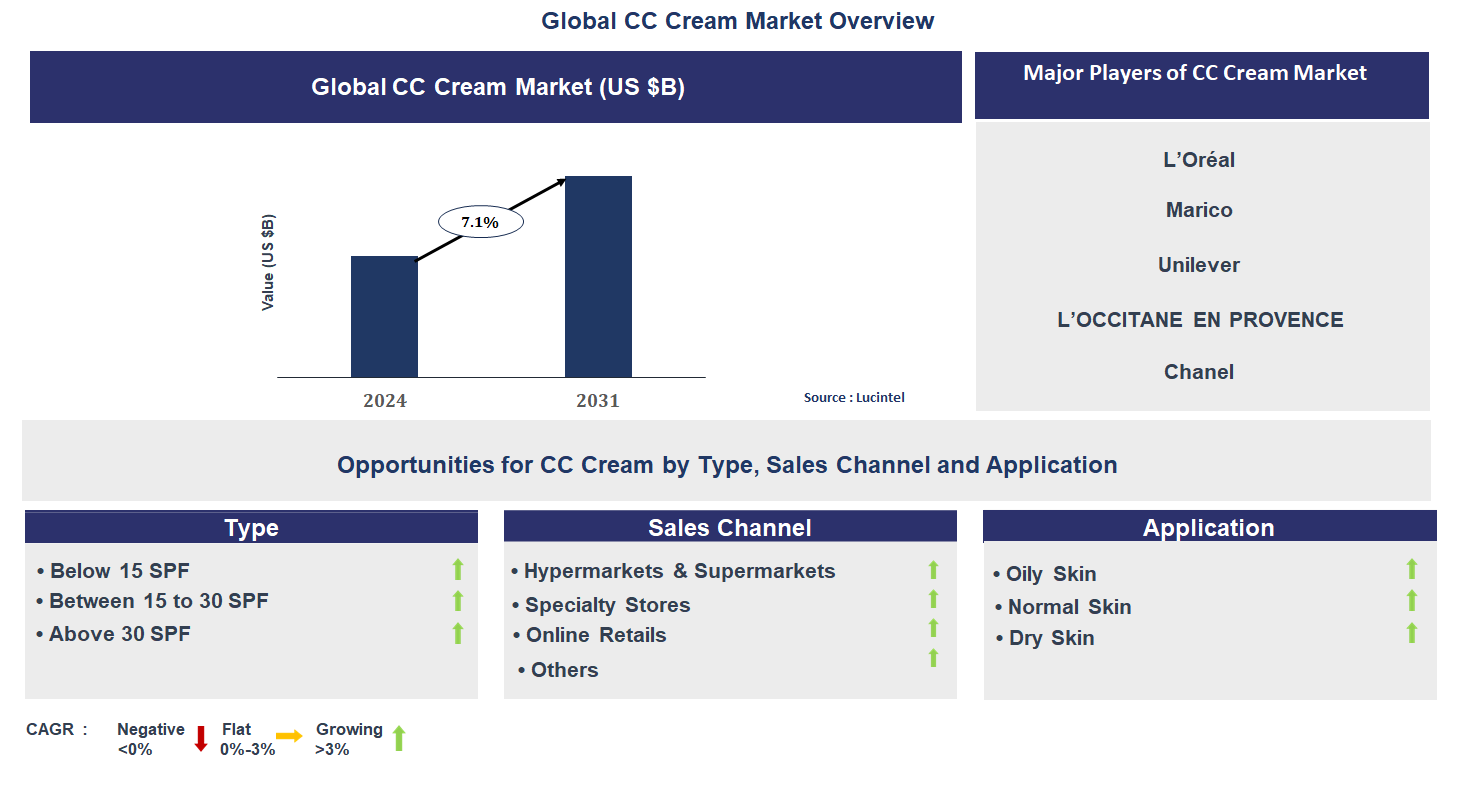
The future of the global CC cream market looks promising with opportunities in the oily skin, normal skin, and dry skin markets. The global CC cream market is expected to grow with a CAGR of 7.1% from 2025 to 2031. The major drivers for this market are the increasing demand for multi-functional skincare products, the rising preference for lightweight makeup solutions, and the growing awareness about skin protection needs.• Lucintel forecasts that, within the type category, above 30 SPF is expected to witness the highest growth over the forecast period.
• Within the application category, oily skin is expected to witness the highest growth.
• In terms of region, APAC is expected to witness the highest growth over the forecast period. Gain valuable insights for your business decisions with our comprehensive 150+ page report. Sample figures with some insights are shown below.
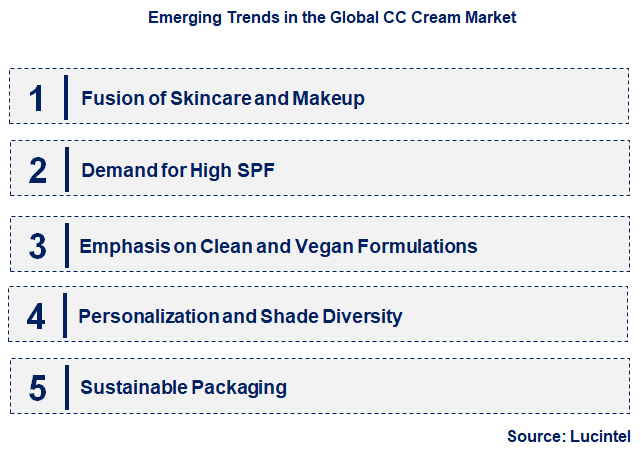
Emerging Trends in the CC Cream Market
The CC cream market is defined by several key trends that reflect a modern consumers desire for efficiency, health, and personalized solutions. These developments are transforming CC creams from a simple cosmetic into a core component of a holistic skincare and makeup routine. Brands are innovating to offer products that are not only effective but also align with ethical and environmental values.• Fusion of Skincare and Makeup: The most significant trend is the fusion of skincare and makeup. Modern CC creams are fortified with active ingredients like hyaluronic acid, peptides, and antioxidants. This innovation is driven by consumers who want to simplify their beauty routine while maximizing benefits. It has led to the development of products that hydrate, protect, and correct skin, offering a true two-in-one solution.
• Demand for High SPF: There is a growing demand for CC creams with a high Sun Protection Factor (SPF). Consumers are increasingly aware of the importance of daily sun protection to prevent aging and skin damage. This trend is prompting brands to formulate CC creams with SPF 30 and higher, making them a convenient and essential part of a daily routine, particularly for those with busy lifestyles.
• Emphasis on Clean and Vegan Formulations: The "clean beauty" movement is a major trend in the CC cream market. Consumers are seeking products free from parabens, sulfates, and other synthetic additives. This trend is leading to an increase in vegan, cruelty-free, and natural ingredient-based formulas. It is pushing brands to be more transparent about their sourcing and manufacturing, appealing to ethically conscious consumers.
• Personalization and Shade Diversity: Brands are increasingly offering a wider range of shades to cater to diverse skin tones, moving away from a limited color palette. This trend is driven by consumer demand for products that truly match their complexion, a shift fueled by social media activism and inclusivity movements. It creates a more personalized experience, building trust and loyalty among consumers.
• Sustainable Packaging: An emerging trend is the adoption of sustainable packaging for CC creams. Brands are exploring options like recyclable materials, refillable containers, and reduced plastic use. This is in response to growing environmental concerns among consumers. The trend helps brands to build a positive reputation and attract eco-conscious shoppers who prefer to support environmentally responsible companies. These trends are fundamentally reshaping the CC cream market by making products more sophisticated, versatile, and ethically aligned. The fusion of skincare and makeup addresses consumer needs for efficiency, while the focus on clean formulations, high SPF, and sustainability highlights a growing commitment to health and environmental responsibility. Personalization and shade diversity are ensuring the market is more inclusive and consumer-centric.
Recent Development in the CC Cream Market
The CC cream market is undergoing significant transformation, with key developments focused on product innovation, technology integration, and distribution strategy. These changes are reshaping how consumers discover, purchase, and use CC creams, making the market more dynamic and responsive to modern lifestyles. The focus is on enhancing the products functionality and accessibility.• Introduction of Hybrid Formulas: A key development is the introduction of hybrid CC creams that offer more than just color correction and SPF. Brands are now adding specific benefits like anti-aging, pore-minimizing, and brightening properties. This innovation caters to the demand for multi-functional products, providing a comprehensive solution that combines the benefits of several skincare products into a single, convenient item.
• Integration of Virtual Try-On Technology: Brands are leveraging augmented reality (AR) to offer virtual try-on features for CC creams, especially on e-commerce platforms. This development allows consumers to test different shades on their own faces from home, reducing the risk of purchasing the wrong color. This technology enhances the online shopping experience, boosts consumer confidence, and is a crucial tool for a growing digital-first market.
• Expansion of Sales Channels: CC creams are now widely available on e-commerce platforms, direct-to-consumer websites, and specialty beauty retailers, in addition to traditional department stores. This expansion has made the product more accessible to a global audience. The rise of these channels has allowed indie and niche brands to compete effectively with established giants, diversifying the market and offering consumers more choices.
• Focus on No-Makeup Makeup Aesthetics: A recent development is the strategic marketing of CC creams as the perfect product for the "no-makeup makeup" look. Brands are emphasizing their lightweight texture and ability to create a natural, flawless complexion without the heavy feel of a foundation. This trend appeals to consumers who prefer a fresh, effortless look and a simplified beauty routine.
• Collaboration with Dermatologists and Experts: Some CC cream brands are partnering with dermatologists and skincare experts to develop and endorse their products. This collaboration builds consumer trust by highlighting the scientific backing and dermatological benefits of the formulas. It positions the product as a reliable and effective skincare solution, distinguishing it from conventional makeup and appealing to health-conscious consumers. These developments are profoundly impacting the CC cream market by enhancing the products value proposition and expanding its reach. The focus on hybrid formulas and virtual try-on technology makes the product more functional and accessible, while the shift in marketing to "no-makeup makeup" and the collaboration with experts builds consumer trust and broadens the appeal of CC creams.
Strategic Growth Opportunities in the CC Cream Market
The CC cream market presents several strategic growth opportunities by targeting specific applications and consumer needs. These opportunities are driven by a growing demand for specialized, multi-functional products that cater to a variety of skin concerns and lifestyles. Brands can leverage these applications to create a more targeted portfolio and capture new market share.• Daily Wear and Skincare: The primary growth opportunity lies in positioning CC cream as an essential product for daily wear. Brands can emphasize its role as a combination of a light foundation, a moisturizer, and a daily sunscreen. This application targets a large consumer segment seeking a simple, effective, and protective product for their daily routine, making it a staple in their beauty arsenal.
• Targeting Specific Skin Concerns: There is a significant opportunity to develop CC creams that specifically address common skin concerns like redness, hyperpigmentation, or dullness. By formulating products with targeted active ingredients, brands can cater to consumers with specific skin issues. This specialization allows for premium pricing and appeals to a more discerning consumer base looking for a solution-oriented product.
• Professional Makeup Artistry: A strategic opportunity is to target professional makeup artists and salons. By offering CC creams in a wider range of shades and with long-wearing, buildable formulas, brands can cater to the needs of professionals. This application builds brand credibility and can influence consumer purchases, as professionals often recommend products to their clients, serving as a powerful endorsement.
• Mens Grooming Market: The growing mens grooming market presents an emerging opportunity. Brands can develop gender-neutral or male-specific CC creams that offer light coverage, SPF, and skincare benefits without a heavy makeup feel. This application taps into a new consumer segment that is increasingly concerned with personal appearance and is looking for simple, discreet grooming products.
• Sustainable and Eco-Friendly Products: The market for sustainable and eco-friendly CC creams is a key growth area. By focusing on products with natural, organic ingredients and sustainable packaging, brands can attract environmentally conscious consumers. This application provides a strong brand differentiator and allows companies to align their products with a growing global movement towards ethical and responsible consumption. These strategic opportunities are reshaping the CC cream market by encouraging greater specialization and innovation. By moving beyond a general-purpose product to a more segmented, application-specific approach, brands can better meet the diverse needs of modern consumers. This targeted strategy will drive market growth and establish a more diversified and resilient industry.
CC Cream Market Driver and Challenges
The CC cream market is shaped by a complex interplay of major drivers and key challenges. Its growth is propelled by consumer trends towards multi-functional products and the rise of digital platforms, while it faces hurdles from intense competition and consumer confusion. Understanding these dynamics is essential for brands to succeed in this evolving industry. The factors responsible for driving the CC cream market include: 1. Increasing Demand for Multi-Functional Products: A primary driver is the consumer demand for multi-functional products that save time and simplify beauty routines. CC creams, which combine color correction, sun protection, and skincare benefits, perfectly align with this trend. This driver is particularly strong among millennials and Gen Z who prioritize convenience and efficiency in their daily lives. 2. Influence of Social Media and Bloggers: The rise of social media platforms and beauty influencers is a significant driver. Bloggers and vloggers are educating consumers on the benefits of CC creams and creating viral trends that drive product demand. This digital influence allows brands to reach a wide audience and build a strong brand presence without traditional advertising, fueling rapid market growth. 3. Growing Awareness of Skincare and Sun Protection: Consumers are becoming more knowledgeable about skincare and the importance of daily sun protection. This heightened awareness is a major driver for CC creams, which often contain SPF and other active skincare ingredients. This trend positions CC creams as a health-conscious choice, appealing to a well-informed consumer base. 4. Urbanization and Changing Lifestyles: As more people move to urban areas, they are exposed to increased pollution and stress, leading to a rise in skin concerns. This has driven demand for products like CC creams that offer protection and color correction. The fast-paced urban lifestyle also increases the need for quick, all-in-one beauty solutions. 5. Technological Advancements in Formulation: Continuous innovation in cosmetic technology, such as the development of micro-encapsulated pigments and lightweight formulas, is a key driver. These advancements allow brands to create CC creams that provide better coverage, a more natural finish, and enhanced skincare benefits. This keeps the market dynamic and encourages consumers to upgrade their products. Challenges in the CC cream market are: 1. Intense Competition from Related Products: The CC cream market faces intense competition from other products like BB creams, tinted moisturizers, and lightweight foundations. This product overlap can create consumer confusion and makes it difficult for brands to differentiate their offerings. Brands must clearly communicate the unique benefits of their CC creams to stand out in a crowded market. 2. Consumer Confusion and Misinformation: A significant challenge is the general consumer confusion about the difference between BB, CC, and DD creams. The lack of clear, consistent definitions across brands can deter new consumers from purchasing. This requires brands to invest heavily in consumer education and marketing to clarify the products benefits and purpose. 3. Ingredient and Regulatory Scrutiny: As the clean beauty movement grows, CC cream brands face increasing scrutiny over their ingredients. Meeting varied and stringent regulatory standards in different countries, especially regarding SPF claims and chemical components, can be a major challenge. Non-compliance can lead to product recalls, fines, and a loss of consumer trust. The CC cream market is at an exciting stage of growth, with strong drivers like consumer demand for multi-functional products and the influence of digital platforms. However, it must also navigate significant challenges, including fierce competition and consumer confusion. The interplay of these forces compels brands to be innovative, transparent, and strategic in their marketing to succeed in a dynamic and highly competitive market.List of CC Cream Companies
Companies in the market compete on the basis of product quality offered. Major players in this market focus on expanding their manufacturing facilities, R&D investments, infrastructural development, and leverage integration opportunities across the value chain. With these strategies CC cream companies cater increasing demand, ensure competitive effectiveness, develop innovative products & technologies, reduce production costs, and expand their customer base. Some of the CC cream companies profiled in this report include-• L’Oréal
• Marico
• Unilever
• L’OCCITANE EN PROVENCE
• Chanel
• KOSE CORPORATION
• ORIFLAME SWEDEN
• Estée Lauder
• Procter & Gamble
• Natura & co
CC Cream Market by Segment
The study includes a forecast for the global CC cream market by type, sales channel, application, and region.CC Cream Market by Type [Value from 2019 to 2031]:
• Below 15 SPF
• Between 15 to 30 SPF
• Above 30 SPF
CC Cream Market by Sales Channel [Value from 2019 to 2031]:
• Hypermarkets & Supermarkets
• Specialty Stores
• Online Retails
• Others
CC Cream Market by Application [Value from 2019 to 2031]:
• Oily Skin
• Normal Skin
• Dry Skin
CC Cream Market by Region [Value from 2019 to 2031]:
• North America
• Europe
• Asia Pacific
• The Rest of the World
Country Wise Outlook for the CC Cream Market
The CC cream market is undergoing a significant evolution, driven by a global shift towards "skinimalism" and multi-functional beauty products. Consumers are increasingly seeking streamlined routines with products that offer both cosmetic and skincare benefits. This trend is compelling brands to innovate with formulas that provide color correction, sun protection, and a range of active ingredients, catering to a diverse and informed clientele.• United States: The U.S. market is prioritizing multi-functional products that offer clean, non-toxic formulations and high SPF. Brands are capitalizing on the "no-makeup makeup" trend by developing lightweight CC creams that provide a natural, dewy finish. This shift is also heavily influenced by social media, where virtual try-on tools and influencer marketing are driving consumer engagement and product discovery.
• China: In China, the market for CC creams is experiencing explosive growth, propelled by a strong skincare culture and the influence of K-beauty trends. Consumers are seeking products that offer high coverage while also addressing skin concerns like hyperpigmentation and uneven tone. E-commerce platforms and livestreaming are the dominant sales channels, with local brands gaining traction by offering innovative and affordable products.
• Germany: The German market shows a strong preference for high-quality, scientifically backed, and natural ingredient-based products. German consumers are cautious and value transparency about ingredients. This has led to an increase in CC creams that are free from parabens, silicones, and synthetic fragrances, aligning with a broader cultural commitment to health, safety, and sustainable beauty practices.
• India: The CC cream market in India is expanding rapidly, fueled by rising disposable incomes and a growing awareness of skincare. Consumers are looking for products that address local concerns like uneven skin tone and sun damage. Brands are responding by launching a wider range of shades to suit diverse Indian skin tones and by making products accessible through both traditional retail and burgeoning e-commerce platforms.
• Japan: Japans market is defined by a demand for sophisticated, minimalist, and high-performance products. Japanese consumers favor CC creams that provide a flawless, porcelain-like finish while also offering substantial skincare benefits like anti-aging properties. The market is seeing a focus on hybrid products that combine skincare, sun protection, and color correction in a single, high-quality formulation.

Features of the Global CC Cream Market
Market Size Estimates: Cc cream market size estimation in terms of value ($B). Trend and Forecast Analysis: Market trends (2019 to 2024) and forecast (2025 to 2031) by various segments and regions. Segmentation Analysis: Cc cream market size by type, sales channel, application, and region in terms of value ($B). Regional Analysis: Cc cream market breakdown by North America, Europe, Asia Pacific, and Rest of the World. Growth Opportunities: Analysis of growth opportunities in different types, sales channels, applications, and regions for the CC cream market. Strategic Analysis: This includes M&A, new product development, and competitive landscape of the CC cream market. Analysis of competitive intensity of the industry based on Porter’s Five Forces model.
FAQ
Q1. What is the growth forecast for CC cream market? Answer: The global CC cream market is expected to grow with a CAGR of 7.1% from 2025 to 2031. Q2. What are the major drivers influencing the growth of the CC cream market? Answer: The major drivers for this market are the increasing demand for multi-functional skincare products, the rising preference for lightweight makeup solutions, and the growing awareness about skin protection needs. Q3. What are the major segments for CC cream market? Answer: The future of the CC cream market looks promising with opportunities in the oily skin, normal skin, and dry skin markets. Q4. Who are the key CC cream market companies? Answer: Some of the key CC cream companies are as follows:• L’Oréal
• Marico
• Unilever
• L’OCCITANE EN PROVENCE
• Chanel
• KOSE CORPORATION
• ORIFLAME SWEDEN
• Estée Lauder
• Procter & Gamble
• Natura & co Q5. Which CC cream market segment will be the largest in future? Answer: Lucintel forecasts that, within the type category, above 30 SPF is expected to witness the highest growth over the forecast period. Q6. In CC cream market, which region is expected to be the largest in next 5 years? Answer: In terms of region, APAC is expected to witness the highest growth over the forecast period. Q7. Do we receive customization in this report? Answer: Yes, Lucintel provides 10% customization without any additional cost.
Table of Contents
List of Figures
List of Tables
Methodology
- In-depth interviews of the major players in this market
- Detailed secondary research from competitors’ financial statements and published data
- Extensive searches of published works, market, and database information pertaining to industry news, company press releases, and customer intentions
- A compilation of the experiences, judgments, and insights of Lucintel’s professionals, who have analyzed and tracked this market over the years.


Buy Now
Choose a license that fits your team. Instant PDF delivery.
Prices exclude taxes. Instant delivery. Custom licensing available on request.
Key Questions
- • What are some of the most promising, high-growth opportunities for the CC cream market by type (below 15 SPF, between 15 to 30 SPF, and above 30 SPF), sales channel (hypermarkets & supermarkets, specialty stores, online retails, and others), application (oily skin, normal skin, and dry skin), and region (North America, Europe, Asia Pacific, and the Rest of the World)?
- • Which segments will grow at a faster pace and why?
- • Which region will grow at a faster pace and why?
- • What are the key factors affecting market dynamics? What are the key challenges and business risks in this market?
- • What are the business risks and competitive threats in this market?
- • What are the emerging trends in this market and the reasons behind them?
- • What are some of the changing demands of customers in the market?
- • What are the new developments in the market? Which companies are leading these developments?
- • Who are the major players in this market? What strategic initiatives are key players pursuing for business growth?
- • What are some of the competing products in this market and how big of a threat do they pose for loss of market share by material or product substitution?
- • What M&A activity has oCCurred in the last 5 years and what has its impact been on the industry? For any questions related to CC Cream Market, CC Cream Market Size, CC Cream Market Growth, CC Cream Market Analysis, CC Cream Market Report, CC Cream Market Share, CC Cream Market Trends, CC Cream Market Forecast, CC Cream Companies, write Lucintel analyst at email: helpdesk@lucintel.com. We will be glad to get back to you soon.


