
Report Feature
CBD Beverage Market Trends and Forecast
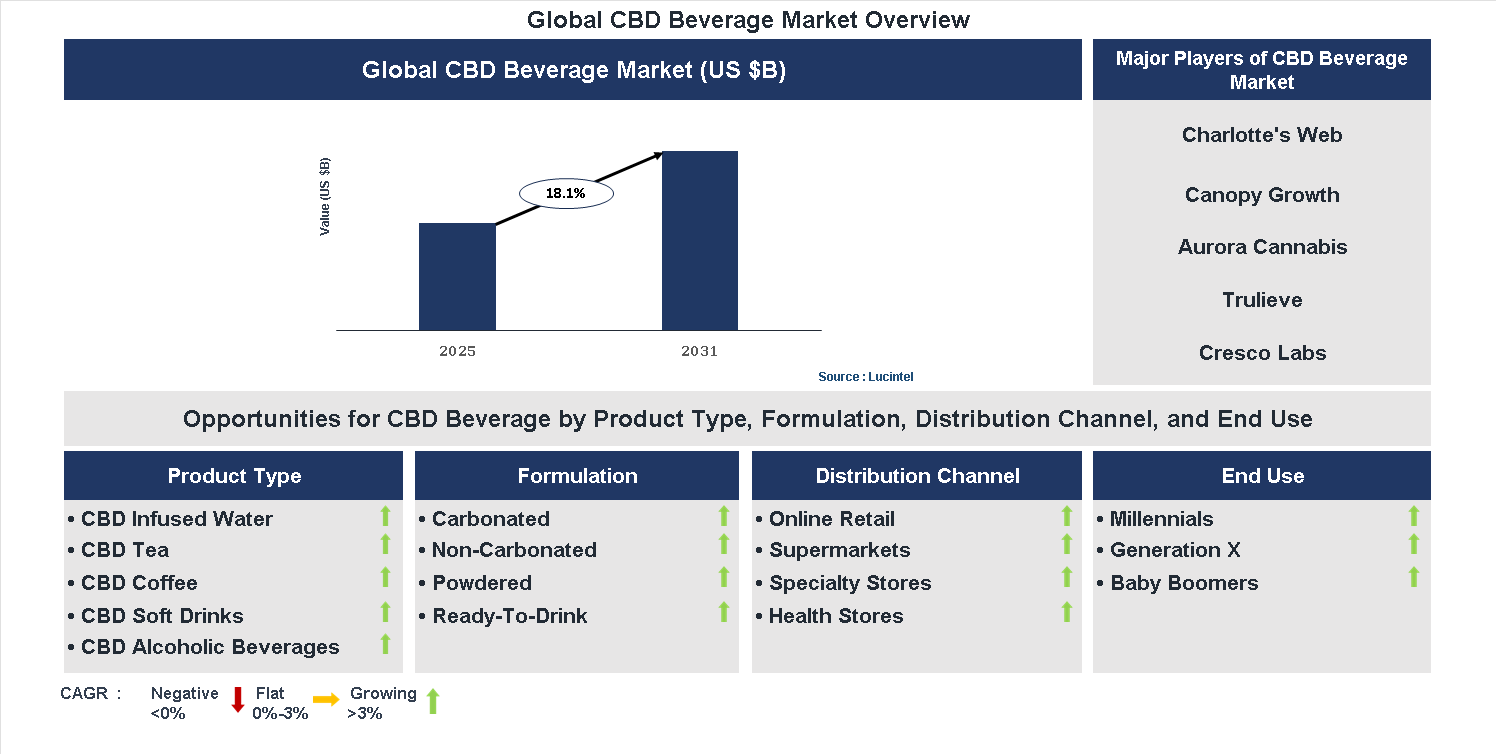
The future of the global CBD beverage market looks promising with opportunities in the online retail, supermarket, specialty store, and health store markets. The global CBD beverage market is expected to grow with a CAGR of 18.1% from 2025 to 2031. The major drivers for this market are the increasing popularity of wellness beverages, the rising consumer interest in natural ingredients, and the growing legalization of cannabis in regions.• Lucintel forecasts that, within the product type category, CBD infused water will remain the largest segment over the forecast period.
• Within the distribution channel category, online retail will remain the largest segment.
• In terms of region, North America will remain the largest region over the forecast period. Gain valuable insights for your business decisions with our comprehensive 150+ page report. Sample figures with some insights are shown below.
Emerging Trends in the CBD Beverage Market
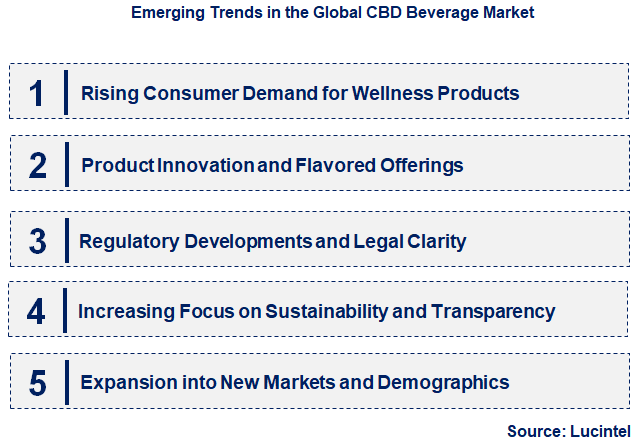
The CBD beverage market is experiencing rapid growth driven by increasing consumer interest in wellness, natural ingredients, and alternative health solutions. As regulations evolve and product innovation accelerates, the market is becoming more diverse and competitive. Consumers are seeking functional beverages that offer health benefits, convenience, and enjoyable flavors. This dynamic environment is fostering new opportunities for brands to differentiate themselves through quality, transparency, and sustainability. The following trends highlight the key developments shaping the future of the CBD beverage industry, reflecting broader shifts in consumer preferences, technological advancements, and regulatory landscapes.• Rising Consumer Demand for Wellness Products: Consumers are increasingly prioritizing health and wellness, seeking beverages that offer functional benefits such as stress relief, improved sleep, and enhanced focus. This trend is driven by a growing awareness of mental health and holistic well-being, prompting brands to develop products with targeted CBD formulations. The demand for natural, organic, and clean-label ingredients further fuels this growth, encouraging companies to innovate with transparent sourcing and ingredient lists. As a result, CBD beverages are becoming a popular choice for health-conscious consumers looking for convenient, enjoyable ways to incorporate wellness into their daily routines.
• Product Innovation and Flavored Offerings: Innovation in flavors, formulations, and delivery formats is a key trend shaping the market. Brands are experimenting with unique flavor combinations, functional add-ins, and novel packaging to attract diverse consumer segments. Ready-to-drink (RTD) beverages, sparkling waters, and teas infused with CBD are gaining popularity due to their convenience and appeal. This trend enhances consumer engagement by providing a variety of options tailored to different tastes and lifestyles. Continuous innovation helps brands differentiate themselves in a competitive landscape, fostering consumer loyalty and expanding market reach.
• Regulatory Developments and Legal Clarity: Evolving regulations around CBD products significantly impact market growth and product development. Clearer legal frameworks in various regions are enabling brands to operate with greater confidence, ensuring product safety and quality standards. However, regulatory uncertainties still pose challenges, requiring companies to stay adaptable and compliant. The ongoing dialogue between regulators, industry stakeholders, and consumers is shaping policies that balance safety with market expansion. This trend influences product formulation, marketing strategies, and distribution channels, ultimately affecting the pace and scope of market growth.
• Increasing Focus on Sustainability and Transparency: Consumers are demanding environmentally responsible products and transparent supply chains. Brands are responding by adopting sustainable sourcing practices, eco-friendly packaging, and ethical production methods. Transparency about CBD sourcing, extraction processes, and ingredient origins builds consumer trust and brand loyalty. This trend aligns with broader environmental and social responsibility movements, influencing product development and marketing strategies. Companies that prioritize sustainability and transparency are better positioned to attract discerning consumers and differentiate themselves in a crowded market.
• Expansion into New Markets and Demographics: The CBD beverage market is expanding beyond early adopters to reach broader demographics, including older adults and diverse geographic regions. This growth is facilitated by increasing legalization, consumer education, and targeted marketing efforts. Brands are customizing products to meet specific needs, such as low-dose options for beginners or formulations tailored to different cultural preferences. Market expansion also involves entering new distribution channels, including convenience stores, gyms, and online platforms. This trend broadens the market scope, creating new revenue streams and fostering mainstream acceptance of CBD beverages. In summary, these trends are collectively transforming the CBD beverage market by fostering innovation, enhancing consumer trust, and expanding accessibility. As wellness continues to be a central focus and regulatory clarity improves, the industry is poised for sustained growth. Companies that adapt to these developments by prioritizing quality, transparency, and sustainability will be best positioned to capitalize on emerging opportunities and shape the future landscape of CBD beverages.
Recent Development in the CBD Beverage Market
The CBD beverage market has experienced rapid growth driven by increasing consumer interest in wellness products, shifting regulatory landscapes, and innovations in product formulations. As consumers seek healthier alternatives and functional beverages, companies are investing heavily in developing new CBD-infused drinks. This evolving market is characterized by technological advancements, expanding distribution channels, and changing legal frameworks, all of which influence market dynamics. The following developments highlight the key trends shaping this industry, reflecting its trajectory toward mainstream acceptance and diversification.• Regulatory Clarifications: Governments and regulatory bodies have begun providing clearer guidelines on CBD products, reducing legal uncertainties. This has facilitated market entry for new brands and increased consumer confidence, leading to expanded product offerings and higher sales volumes.
• Product Innovation: Companies are introducing novel CBD beverage formulations, including functional drinks with added vitamins, adaptogens, and natural flavors. These innovations cater to health-conscious consumers and diversify the product portfolio, boosting market competitiveness.
• Expansion of Distribution Channels: CBD beverages are increasingly available through mainstream retail outlets, online platforms, and specialty stores. This broadening distribution network enhances accessibility, driving sales growth and market penetration.
• Consumer Awareness and Acceptance: Growing awareness of CBD’s potential health benefits and positive consumer perceptions are fueling demand. Educational campaigns and influencer marketing have played vital roles in increasing acceptance and reducing stigma.
• Technological Advancements: Innovations in extraction, formulation, and packaging have improved product quality, shelf life, and consumer experience. These technological improvements support scalability and meet regulatory standards, fostering industry growth. In summary, these developments are collectively propelling the CBD beverage market toward broader acceptance, increased sales, and product diversification. Regulatory clarity and technological progress are particularly influential, enabling companies to innovate and expand their reach. As consumer awareness continues to grow, the market is poised for sustained growth and mainstream integration.
Strategic Growth Opportunities in the CBD Beverage Market
The CBD beverage market is experiencing rapid expansion driven by increasing consumer interest in wellness, natural ingredients, and alternative health solutions. As regulatory landscapes evolve and product innovation accelerates, key growth opportunities are emerging across various applications. These developments are shaping the future landscape of the market, offering brands new avenues for differentiation and consumer engagement. Understanding these opportunities is crucial for stakeholders aiming to capitalize on the burgeoning demand for CBD-infused beverages and to establish a competitive edge in this dynamic industry.• Wellness and Functional Beverages: Growing consumer focus on health and wellness is driving demand for CBD-infused drinks that promote relaxation, stress relief, and overall well-being. These beverages are positioned as functional products that support mental health, sleep, and physical recovery, appealing to health-conscious consumers seeking natural solutions.
• Sports and Fitness Nutrition: The increasing popularity of CBD in sports nutrition presents significant growth potential. CBD beverages targeting athletes and fitness enthusiasts offer benefits such as pain relief, inflammation reduction, and enhanced recovery, making them attractive options for active consumers seeking performance support.
• Social and Lifestyle Beverages: CBD-infused beverages are becoming popular in social settings, offering a non-intoxicating alternative to alcohol. These drinks cater to consumers seeking enjoyable, social experiences with added health benefits, thus expanding the social beverage segment.
• Organic and Natural Product Development: The demand for organic, non-GMO, and natural ingredients is influencing CBD beverage formulations. Companies focusing on clean-label products with transparent sourcing are gaining consumer trust and expanding their market share in premium segments.
• Flavored and Innovative Formulations: Innovation in flavor profiles and formulations is key to attracting diverse consumer segments. Unique combinations, functional additives, and appealing packaging are enhancing product differentiation and driving market growth. In summary, these growth opportunities are significantly impacting the CBD beverage market by broadening product offerings, attracting new consumer segments, and fostering innovation. As these trends continue to evolve, they are expected to propel market expansion, increase competition, and shape the future landscape of CBD-infused beverages globally.
CBD Beverage Market Driver and Challenges
The CBD beverage market is influenced by a complex interplay of technological advancements, economic shifts, and regulatory developments. As consumer awareness of health and wellness grows, demand for CBD-infused products has surged, prompting innovation in formulation and distribution channels. Economic factors such as increasing disposable incomes and the expanding health supplement industry further propel growth. However, regulatory uncertainties and legal restrictions across different regions pose significant challenges, impacting market expansion and product acceptance. Technological innovations in extraction and formulation enhance product quality and safety, while evolving consumer preferences drive market diversification. Navigating these drivers and challenges is crucial for stakeholders aiming to capitalize on the burgeoning CBD beverage sector. The factors responsible for driving the CBD beverage market include:• Increasing Consumer Awareness and Demand: The rising awareness of CBDs potential health benefits, such as anxiety relief, pain management, and anti-inflammatory properties, has significantly boosted consumer interest in CBD beverages. This demand is fueled by the growing trend toward natural and organic products, as well as the desire for convenient, on-the-go wellness solutions. Additionally, social media and influencer marketing have played a vital role in educating consumers and dispelling misconceptions about CBD, leading to increased acceptance and adoption. As a result, manufacturers are expanding their product portfolios to include a variety of CBD-infused drinks, from teas and coffees to functional waters, thereby driving market growth.
• Technological Advancements in Extraction and Formulation: Innovations in extraction techniques, such as CO2 extraction, ensure higher purity and potency of CBD, which enhances product quality and consumer trust. Advances in formulation technology allow for better bioavailability and stability of CBD in beverages, addressing previous challenges related to solubility and taste. These technological improvements enable manufacturers to develop more effective and appealing products, catering to diverse consumer preferences. Moreover, automation and scalable production processes reduce costs and improve efficiency, facilitating wider distribution. As technology continues to evolve, the ability to create innovative, high-quality CBD beverages will further accelerate market expansion.
• Regulatory Developments and Legal Frameworks: The evolving legal landscape significantly influences the CBD beverage market. In regions where regulations have been clarified, such as the legalization of hemp-derived CBD, companies can operate with greater confidence, invest in product development, and expand distribution channels. Conversely, stringent regulations or bans in certain countries pose barriers to market entry and product availability. Regulatory approval processes also impact marketing strategies and product claims, affecting consumer trust. Harmonization of laws and clear guidelines are expected to foster a more stable environment, encouraging investment and innovation, which will ultimately support sustainable growth in the CBD beverage sector.
• Expansion of Distribution Channels: The growth of online retail platforms, specialty health stores, and mainstream supermarkets has broadened access to CBD beverages. E-commerce channels provide convenience and a wider reach, especially to younger, tech-savvy consumers seeking discreet purchasing options. Partnerships with cafes, restaurants, and wellness centers further enhance product visibility and consumer engagement. Additionally, collaborations with major retail chains facilitate mass-market penetration, increasing product availability and brand recognition. The expansion of distribution networks not only boosts sales volume but also helps normalize CBD beverages as everyday wellness products, thereby fueling overall market growth.
• Increasing Investment and Strategic Partnerships: The influx of venture capital and strategic alliances among key players accelerates innovation, product development, and market penetration. Investment funds are directed toward research and development to improve the formulation, safety, and efficacy of CBD beverages. Strategic partnerships with ingredient suppliers, distributors, and marketing firms enable companies to optimize supply chains and expand their consumer base. These collaborations also facilitate entry into new geographic markets, especially in regions with favorable regulatory environments. Increased investment and partnerships are vital for scaling operations, enhancing product offerings, and maintaining competitive advantage in a rapidly evolving market landscape. The challenges facing this CBD beverage market include:
• Regulatory Uncertainty and Legal Restrictions: Despite progress, inconsistent regulations across countries and states create a complex environment for market players. Some regions have strict bans or ambiguous laws regarding CBD products, which hinder market entry and expansion. Regulatory approval processes can be lengthy and costly, delaying product launches and increasing compliance risks. Furthermore, changing policies and evolving legal interpretations can lead to market volatility and uncertainty, discouraging investment. Companies must navigate a patchwork of legal frameworks, which complicates branding, marketing, and distribution strategies, ultimately impacting overall market growth and stability.
• Quality Control and Standardization Issues: Variability in CBD sourcing, extraction methods, and formulation standards poses significant challenges to ensuring product consistency and safety. Lack of standardized testing protocols can lead to contamination, inaccurate labeling, and inconsistent potency, eroding consumer trust. Regulatory bodies are increasingly emphasizing quality assurance, but the absence of universally accepted standards complicates compliance. Manufacturers must invest heavily in quality control measures, which can increase costs and operational complexity. Addressing these issues is critical for building consumer confidence and establishing a reputable market, but the current lack of standardization remains a significant hurdle.
• Consumer Education and Perception Challenges: Despite growing acceptance, misconceptions about CBDs psychoactive effects and safety persist among consumers. Misinformation and lack of awareness can hinder product adoption and acceptance, especially in regions with strict regulations or cultural reservations. Educating consumers about the benefits, proper usage, and safety of CBD beverages requires ongoing effort and strategic communication. Negative publicity or reports of adverse effects can also impact market perception. Overcoming these barriers necessitates transparent marketing, scientific validation, and consumer engagement initiatives to foster trust and drive sustained demand. In summary, the CBD beverage market is propelled by technological innovations, increasing consumer demand, and expanding distribution channels, all supported by evolving regulatory frameworks. However, regulatory uncertainties, quality control issues, and consumer perception challenges pose significant obstacles. The interplay of these drivers and challenges will shape the markets trajectory, requiring stakeholders to adapt strategically. Successful navigation of these factors will determine the pace of growth and the markets long-term sustainability, making it a dynamic and promising sector within the wellness industry.
List of CBD Beverage Companies
Companies in the market compete on the basis of product quality offered. Major players in this market focus on expanding their manufacturing facilities, R&D investments, infrastructural development, and leverage integration opportunities across the value chain. With these strategies CBD beverage companies cater increasing demand, ensure competitive effectiveness, develop innovative products & technologies, reduce production costs, and expand their customer base. Some of the CBD beverage companies profiled in this report include-• Charlottes Web
• Canopy Growth
• Aurora Cannabis
• Trulieve
• Cresco Labs
• Green Thumb Industries
• Hexo Corp
CBD Beverage Market by Segment
The study includes a forecast for the global CBD beverage market by product type, formulation, distribution channel, end use, and region.CBD Beverage Market by Product Type [Value from 2019 to 2031]:
• CBD Infused Water
• CBD Tea
• CBD Coffee
• CBD Soft Drinks
• CBD Alcoholic Beverages
CBD Beverage Market by Formulation [Value from 2019 to 2031]:
• Carbonated
• Non-Carbonated
• Powdered
• Ready-To-Drink
CBD Beverage Market by Distribution Channel [Value from 2019 to 2031]:
• Online Retail
• Supermarkets
• Specialty Stores
• Health Stores
CBD Beverage Market by End Use [Value from 2019 to 2031]:
• Millennials
• Generation X
• Baby Boomers
CBD Beverage Market by Region [Value from 2019 to 2031]:
• North America
• Europe
• Asia Pacific
• The Rest of the World
Country Wise Outlook for the CBD Beverage Market
The CBD beverage market has experienced rapid growth globally, driven by increasing consumer interest in wellness products, legalization efforts, and innovative product offerings. As regulations evolve, key players are expanding their portfolios and entering new markets, leading to significant developments across major economies. The United States, China, Germany, India, and Japan are at different stages of market maturity, with unique trends shaping their respective landscapes. These countries are witnessing innovations in product formulations, strategic partnerships, and regulatory adjustments that influence market dynamics and consumer adoption.• United States: The US market continues to expand with a focus on premium and functional CBD beverages. Recent legalization efforts and clearer regulations have encouraged brands to innovate, offering a variety of infused drinks such as sodas, teas, and energy drinks. Major companies are investing in research to develop new formulations, and retail distribution is broadening through online platforms and health stores. Consumer awareness about health benefits is driving demand, making the US a leading market for CBD beverages.
• China: China is gradually entering the CBD beverage sector, primarily through pilot programs and limited product launches. The government’s cautious approach to CBD regulation has slowed widespread commercialization, but domestic companies are exploring hemp-based products within legal boundaries. International brands are also testing the waters through partnerships with local firms. The focus remains on developing safe, compliant products, with consumer interest growing in wellness and natural ingredients.
• Germany: Germany’s CBD beverage market is gaining momentum, supported by the country’s progressive stance on CBD regulation within the European Union. The market features a range of products, including CBD-infused waters, teas, and functional drinks. Consumer awareness about health benefits and quality standards is high, prompting brands to emphasize transparency and product efficacy. Regulatory clarity has helped foster innovation and increased retail availability across health stores and online channels.
• India: India’s CBD beverage market is in its nascent stages, with limited legal clarity and regulatory hurdles. However, interest in natural wellness products is rising, and some startups are exploring hemp-based beverages within the framework of existing regulations. The focus is on developing herbal and plant-based drinks that incorporate CBD or hemp extracts, targeting health-conscious consumers. As regulations evolve, the market is expected to grow, driven by increasing awareness and demand for alternative health solutions.
• Japan: Japan is cautiously progressing in the CBD beverage sector, with strict regulations governing hemp and CBD products. The market is primarily driven by imported products and local companies researching safe formulations. Consumer interest in wellness and functional drinks is increasing, leading to a gradual expansion of product offerings. Companies are emphasizing quality control and compliance to meet regulatory standards, positioning Japan as a potential growth market in the coming years.

Features of the Global CBD Beverage Market
Market Size Estimates: CBD beverage market size estimation in terms of value ($B). Trend and Forecast Analysis: Market trends (2019 to 2024) and forecast (2025 to 2031) by various segments and regions. Segmentation Analysis: CBD beverage market size by various segments, such as by product type, formulation, distribution channel, end use, and region in terms of value ($B). Regional Analysis: CBD beverage market breakdown by North America, Europe, Asia Pacific, and Rest of the World. Growth Opportunities: Analysis of growth opportunities in different product type, formulation, distribution channel, end use, and regions for the CBD beverage market. Strategic Analysis: This includes M&A, new product development, and competitive landscape of the CBD beverage market. Analysis of competitive intensity of the industry based on Porter’s Five Forces model.
FAQ
Q1. What is the growth forecast for CBD beverage market? Answer: The global CBD beverage market is expected to grow with a CAGR of 18.1% from 2025 to 2031. Q2. What are the major drivers influencing the growth of the CBD beverage market? Answer: The major drivers for this market are the increasing popularity of wellness beverages, the rising consumer interest in natural ingredients, and the growing legalization of cannabis in regions. Q3. What are the major segments for CBD beverage market? Answer: The future of the CBD beverage market looks promising with opportunities in the online retail, supermarket, specialty store, and health store markets. Q4. Who are the key CBD beverage market companies? Answer: Some of the key CBD beverage companies are as follows:• Charlottes Web
• Canopy Growth
• Aurora Cannabis
• Trulieve
• Cresco Labs
• Green Thumb Industries
• Hexo Corp Q5. Which CBD beverage market segment will be the largest in future? Answer: Lucintel forecasts that, within the product type category, CBD infused water will remain the largest segment over the forecast period. Q6. In CBD beverage market, which region is expected to be the largest in next 5 years? Answer: In terms of region, North America will remain the largest region over the forecast period. Q7. Do we receive customization in this report? Answer: Yes, Lucintel provides 10% customization without any additional cost.
Table of Contents
List of Figures
List of Tables
Methodology
- In-depth interviews of the major players in this market
- Detailed secondary research from competitors’ financial statements and published data
- Extensive searches of published works, market, and database information pertaining to industry news, company press releases, and customer intentions
- A compilation of the experiences, judgments, and insights of Lucintel’s professionals, who have analyzed and tracked this market over the years.


Buy Now
Choose a license that fits your team. Instant PDF delivery.
Prices exclude taxes. Instant delivery. Custom licensing available on request.
Key Questions
- • What are some of the most promising, high-growth opportunities for the CBD beverage market by product type (CBD infused water, CBD tea, CBD coffee, CBD soft drinks, and CBD alcoholic beverages), formulation (carbonated, non-carbonated, powdered, and ready-to-drink), distribution channel (online retail, supermarkets, specialty stores, and health stores), end use (millennials, generation X, and baby boomers), and region (North America, Europe, Asia Pacific, and the Rest of the World)?
- • Which segments will grow at a faster pace and why?
- • Which region will grow at a faster pace and why?
- • What are the key factors affecting market dynamics? What are the key challenges and business risks in this market?
- • What are the business risks and competitive threats in this market?
- • What are the emerging trends in this market and the reasons behind them?
- • What are some of the changing demands of customers in the market?
- • What are the new developments in the market? Which companies are leading these developments?
- • Who are the major players in this market? What strategic initiatives are key players pursuing for business growth?
- • What are some of the competing products in this market and how big of a threat do they pose for loss of market share by material or product substitution?
- • What M&A activity has occurred in the last 5 years and what has its impact been on the industry? For any questions related to CBD Beverage Market, CBD Beverage Market Size, CBD Beverage Market Growth, CBD Beverage Market Analysis, CBD Beverage Market Report, CBD Beverage Market Share, CBD Beverage Market Trends, CBD Beverage Market Forecast, CBD Beverage Companies, write Lucintel analyst at email: helpdesk@lucintel.com. We will be glad to get back to you soon.


