
Report Feature
Cast Iron Cookware Market Trends and Forecast
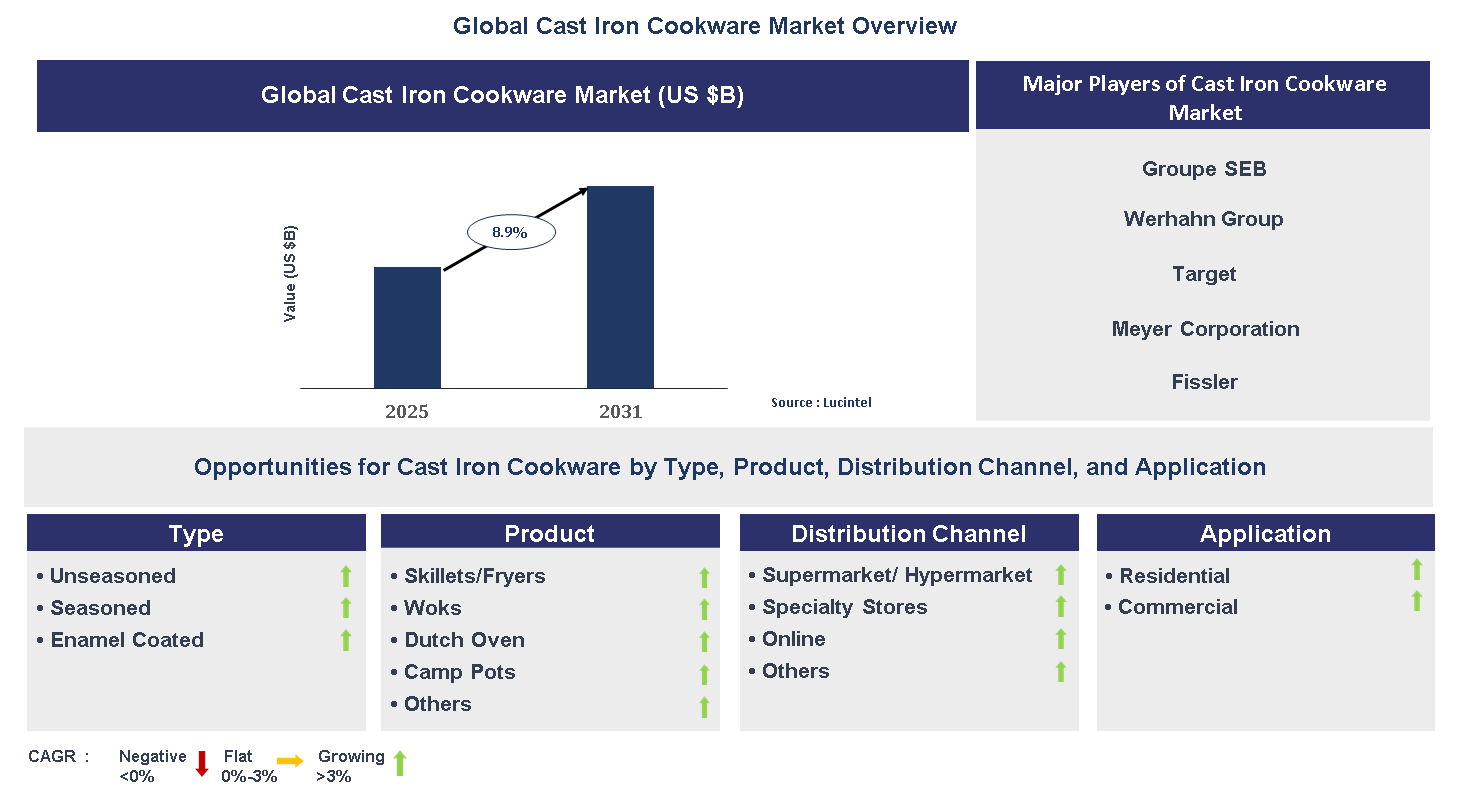
The future of the global cast iron cookware market looks promising with opportunities in the residential and commercial markets. The global cast iron cookware market is expected to grow with a CAGR of 8.9% from 2025 to 2031. The major drivers for this market are the increasing popularity of durable cooking tools, the rising interest in sustainable kitchen products, and the growing demand for versatile cookware options.• Lucintel forecasts that, within the type category, unseasoned is expected to witness the highest growth over the forecast period.
• Within the application category, residential will remain a larger segment.
• In terms of region, North America will remain the largest region over the forecast period. Gain valuable insights for your business decisions with our comprehensive 150+ page report. Sample figures with some insights are shown below.
Emerging Trends in the Cast Iron Cookware Market
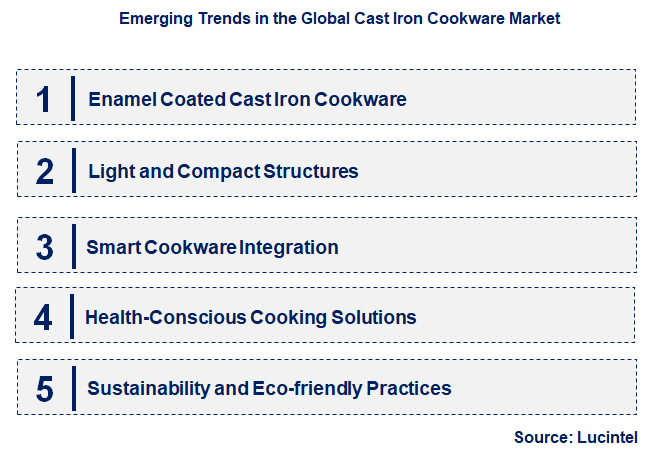
The cast iron cookware industry is experiencing several emerging trends, addressing changing consumer needs for convenience, sustainability, and healthy cooking. With increasing demand for traditional and long-lasting cooking equipment, companies are concentrating on product innovation, design enhancement, and the implementation of new technology. The following are five most prominent trends redefining the market.• Enamel Coated Cast Iron Cookware: The transition to enamel-coated cast iron has greatly influenced the market. They provide the same level of durability and heat retention of regular cast iron but with less maintenance and a better appearance. The enamel coat does not rust and does away with seasoning requirements, which is attractive to consumers who desire the advantages of cast iron without maintenance. This trend is most sought after by city dwellers and those who are new to cooking with cast iron.
• Light and Compact Structures: To meet the needs of todays consumers who value convenience and portability, manufacturers are introducing lighter cast iron cookware products. They have the same heat retention and cooking advantages as classic cast iron but are simpler to carry and store. Lighter constructions are gaining popularity in home cooking and outdoor applications, like camping. This is consistent with increased consumer interest in functional yet quality cooking equipment that is small enough to fit into smaller, more compact kitchens.
• Smart Cookware Integration: As smart home appliances become increasingly popular, integrating technology into cookware has started becoming a trend. Certain cast iron cookware manufacturers are looking at incorporating smart features like temperature sensors and connectivity through an app to track cooking in real-time. Although in its nascent phase, this trend is likely to pick up steam as consumers look for high-tech solutions with precision and ease of use.
• Health-Conscious Cooking Solutions: With health-conscious consumers on the rise, demand for chemical-free and non-toxic cooking solutions is on the increase. Cast iron cookware, which cooks with less oil and encourages natural seasoning, is gaining popularity as a healthier option compared to potentially toxic non-stick cookware. The trend targets people who seek sustainable cooking solutions that also benefit a healthy lifestyle.
• Sustainability and Eco-friendly Practices: Sustainability of the environment has become a major priority for most cookware manufacturers. Customers are now looking for products that are long-lasting, durable, and made of recycled or sustainably obtained material. The high lifespan of cast iron cookware and recyclability make it attractive as an environmentally friendly product. Companies are also becoming more sustainable in their production, e.g., lowering carbon footprints and minimizing waste during production, which also propels the popularity of cast iron products. These emerging trends are reshaping the cast iron cookware market, with a clear focus on consumer convenience, sustainability, and health-conscious cooking. As manufacturers continue to innovate, the market will likely see a broader range of products that combine traditional craftsmanship with modern needs. The increasing adoption of enamel coatings, lightweight designs, and sustainable practices is positioning cast iron cookware as a staple in kitchens worldwide.
Recent Development in the Cast Iron Cookware Market
New trends in the cast iron cookware industry have followed consumer demand for product quality, longevity, and sustainability. With increasing global interest in healthy cooking and classic kitchen utensils, cast iron cookware has seen tremendous changes. New coatings, designs, and incorporation of advanced technology are causing innovations, which are widening the consumer base. The following are five major developments that are impacting the market.• Introduction of Enamel-Coated Cast Iron: Enamel-coated cast iron cookware has been a revolution in the market, providing durability coupled with ease of use. They are free from the need to season, rust-proof, and come in colors and finishes, hence making them more presentable. Enamel coatings also enhance cooking performance through a smoother heat-distribution surface. This development has led to increased adoption among new users who may have previously been deterred by the maintenance requirements of traditional cast iron.
• Focus on Sustainability: Sustainability is becoming an important theme in the cast iron cookware industry. Most companies are going green by using recycled cast iron and reducing waste when manufacturing. Cast iron cookware, which lasts for generations, is also a selling feature to consumers who are concerned about the environment, as it means that products can reduce the amount of household waste. By focusing on sustainability, firms are targeting a segment of consumers who care about green manufacturing and products that help minimize household waste.
• Expansion of Product Lines by Established Brands: Well-established brands such as Lodge, Le Creuset, and Staub have considerably broadened their product offerings to accommodate shifting consumer tastes. New designs, sizes, and specialty pieces such as Dutch ovens, grill pans, and skillets have been added by the brands to allow consumers to easily incorporate cast iron cookware into their everyday lives. The expansion also includes lower-priced options, allowing them to appeal to more income segments.
• Collaborations and Influencer Marketing: Various cookware companies have ventured into collaborations with chefs, influencers, and culinary figures to endorse their products. Such collaborations have helped companies reach younger, tech-enabled consumers who believe in influencer endorsements on social media. Cast iron cookware companies can tap into increasing home cooking and food culture trends as well as reach more consumers by utilizing influencer marketing.
• Customization and Direct-to-Consumer Sales Models: Cast iron cookware companies are now providing customization options, including engravings and special colors. Direct-to-consumer business models have also picked up speed, with most selling on the internet. This means businesses can manage branding, user experience, and pricing more effectively and cater to increasing demand for unique or bespoke cookware items. Current trends in the cast iron cookware industry depict a vibrant change towards products that are more convenient, environmentally friendly, and fashionable and are attuned to consumer preferences. These advances have made classic cast iron cookware remain up-to-date in a changing market and drawn new clients while broadening the products popularity globally.
Strategic Growth Opportunities in the Cast Iron Cookware Market
The cast iron cookware industry has several strategic growth opportunities fueled by customer interest in sustainable, high-performance kitchen equipment. With customers increasingly demanding durable, multi-purpose, and health-friendly cookware, companies have the opportunity to leverage various applications across the culinary sector. Through emphasis on cutting-edge product innovations, enhanced functionality, and sustainable methods, brands can meet emerging market segments. The following are five key growth opportunities for different applications of cast iron cookware.• Health-Conscious Cooking Solutions: As people get more health-oriented, they are looking for cookware that supports healthier ways of cooking. Cast iron cookware, because of its capability to cook with reduced oil and preserve nutrients, aligns perfectly with this market trend. Cast iron can be marketed to health-conscious consumers by advertising the merits of cast iron cooking, which includes improved flavors and healthier meals. Adding to the product line such as non-toxic, easy-to-clean enamel-coated products will also cater to this consumer segment.
• Outdoor Cooking and Camping: As outdoor cooking and camping gain popularity, cast iron cookware presents a special opportunity for expansion. Dutch ovens, grill pans, and cast iron skillets are favorites among outdoorsmen because of their ability to retain heat and cook evenly. Companies can serve this market by creating lightweight, compact versions of the standard cast iron cookware with the purpose of outdoor use. Cross-promotion with outdoor appliance brands and marketing through outdoor lifestyle media can increase awareness and usage.
• Premium Kitchenware Segment: Cast iron cookware has been identified with premium kitchenware for ages, and this segment continues to grow. Luxury cookware brands can capitalize on the emerging needs for high-end, handmade, and visually stunning cookware. Providing customizations, limited edition collections, and special designs can win over affluent consumers who appreciate both quality and beauty. This category is particularly dominant in markets such as North America and Europe, where consumers are eager to spend money on high-quality and long-lasting kitchen items.
• Sustainability and Eco-friendly Products: Sustainability remains a top priority for most consumers. Cast iron cookware is inherently sustainable because it lasts so long and is recyclable. This can be leveraged by producers by highlighting the sustainability of their offerings. Having recycled material cookware and conducting environmentally friendly production processes can also appeal to green consumers. Broadening product lines with sustainable packaging and highlighting energy-efficient manufacturing processes can also enhance this growth driver.
• Cooking of Varied Cuisines: Cast iron cookware is extremely versatile, which makes it perfect for cooking a variety of cuisines, ranging from Western to Asian and Middle Eastern. As people become bolder in their cooking, they are increasingly looking for cookware that is versatile enough to be used in a variety of culinary traditions. Companies can cash in on this aspect by marketing cast iron cookware for international cuisine, including stir-frying, baking, and slow-cooking. By offering specialized products, e.g., cast iron works or tajines, companies are able to address these varied cooking requirements. The market for cast iron cookware is ready for growth based on the growing need for sustainable, long-lasting, and utilitarian cooking products. By emphasizing health-oriented cooking, outdoor activities, premium kitchenware, green practice, and the varied requirements of international cuisine, manufacturers can tap into tremendous opportunities for growth. These uses are not only targeting various consumer groups but also the changing tastes for conventional yet creative cookware.
Cast Iron Cookware Market Driver and Challenges
The cast iron cookware industry is driven by a variety of technological, economic, and regulatory influences. With consumers demanding durable, high-performance cookware, manufacturers both have opportunities and challenges. Though technological progress and the increasing practice of sustainable operations push market growth, raw material prices and regulatory pressures are the challenges. Following are five significant drivers and three main challenges that are influencing the cast iron cookware industry. The factors responsible for driving the cast iron cookware market include: 1. Coating Technologies: The advent of enamel coats and non-stick coatings has transformed cast iron cookware. With these innovations, cast iron is simpler to use and more attractive to contemporary consumers who seek minimalistic kitchen equipment. Enamel-coated cookware also assures rust-free protection and makes the product more visually attractive. As consumers seek more convenience, these technologies propel business growth by streamlining cast iron cookware and making it more versatile and convenient to use. 2. Increasing Demand for Green Products: Consumers are becoming more concerned about sustainability and environmentally friendly products. Cast iron cookware fits well with these concerns because it is durable, has a long life, and can be recycled. Companies are reacting by placing increased focus on the sustainability of cast iron, which does not require replacement like non-stick cookware. As consumers more deeply internalize sustainability as an important value, more cast iron cookware is likely to be demanded. 3. Increased Popularity of Home Preparation: The increasing demand for home-cooked meals, particularly during the COVID-19 pandemic, has greatly increased the demand for quality cookware. Shoppers are increasingly happy to spend money on durable, high-performance items that improve their cooking experience. Cast iron cookware, which is versatile and excellent for even heat distribution, is the most preferred option for home cooks. The trend is likely to be sustained as individuals cook at home more often due to health, cost-cutting, and enjoyment. 4. Increasing Disposable Incomes in Emerging Economies: While disposable incomes increase in emerging markets like India, China, and Brazil, there is growing demand for premium kitchenware products. Cast iron cookware, whose long-term appeal makes it a consistent bestseller, is becoming increasingly popular in these markets because consumers now look for high-quality products. Increased affluence is fueling demand for premium cast iron brands, which are making greater inroads into these markets by providing specialized products and premium designs. 5. Move Towards Health-Focused Cooking: The move towards healthier consumption is impacting cookware buying. Cast iron cookware is generally regarded as a healthier choice since it does not emit unhealthy chemicals like some non-stick types. It also supports lower oil cooking, an appealing feature for health-oriented consumers. The more people become health-conscious in their cooking, the greater the call for cast iron cookware. Challenges in the cast iron cookware market are: 1. High Cost of Manufacturing: Manufacturing cast iron cookware is costly in terms of raw materials and manufacturing processes. Although cast iron is long-lasting, the expense of making high-quality, premium products may be staggering. The demand for specialized casting and enamel coating equipment also incurs additional expenses. Companies have to trade off product quality with competitive pricing in order to sustain profitability, especially in price-conscious markets. 2. Competition from Non-Stick Cookware: Though cast iron cookware is prized for its long lifespan, it competes heavily with lighter, more convenient non-stick options. Non-stick pots and pans are also sold as simpler to use and clean, benefiting a wide range of consumers. To compete, manufacturers of cast iron cookware need to highlight the distinctive advantages of the products, including consistent heat distribution and health advantages, and also find new ways to innovate in terms of design and simplicity of use. 3. Compliance with Regulations and Environmental Issues: Manufacturers are under greater pressure to conform to environmental regulations on waste management, carbon footprint, and resource consumption. With greater emphasis on sustainability, businesses must invest in sustainable manufacturing practices. Furthermore, creating products that conform to health and safety requirements across markets can be problematic. These need to be monitored and adjusted accordingly as regulatory environments evolve. The cast iron cookware industry is influenced by drivers and challenges that define its growth path. Home cooking, sustainability, and technology advances continue to fuel demand, while manufacturing cost and competition from non-stick alternatives are challenges. The companies will need to innovate as they balance regulation and market forces to stay in business in a fast-changing industry.List of Cast Iron Cookware Companies
Companies in the market compete on the basis of product quality offered. Major players in this market focus on expanding their manufacturing facilities, R&D investments, infrastructural development, and leverage integration opportunities across the value chain. With these strategies cast iron cookware companies cater increasing demand, ensure competitive effectiveness, develop innovative products & technologies, reduce production costs, and expand their customer base. Some of the cast iron cookware companies profiled in this report include-• Groupe SEB
• Werhahn Group
• Target
• Meyer Corporation
• Fissler
• Tramontina
• Newell Brands
• SCANPAN
• TTK Prestige
• The Vollrath
Cast Iron Cookware Market by Segment
The study includes a forecast for the global cast iron cookware market by type, product, distribution channel, application, and region.Cast Iron Cookware Market by Type [Value from 2019 to 2031]:
• Unseasoned
• Seasoned
• Enamel Coated
Cast Iron Cookware Market by Product [Value from 2019 to 2031]:
• Skillets/Fryers
• Woks
• Dutch Oven
• Camp Pots
• Others
Cast Iron Cookware Market by Distribution Channel [Value from 2019 to 2031]:
• Supermarket/ Hypermarket
• Specialty Stores
• Online
• Others
Cast Iron Cookware Market by Application [Value from 2019 to 2031]:
• Residential
• Commercial
Cast Iron Cookware Market by Region [Value from 2019 to 2031]:
• North America
• Europe
• Asia Pacific
• The Rest of the World
Country Wise Outlook for the Cast Iron Cookware Market
The world cast iron cookware market has witnessed significant developments fueled by consumer interest in durability, versatility, and cooking performance. As people increasingly shift towards traditional and sustainable cooking practices, cast iron cookware has experienced revived interest. Advances like enamel-coated cast iron and reduced weight are revolutionizing the market, particularly in countries such as the United States, China, Germany, India, and Japan. These trends both indicate a reversion towards traditional cooking equipment and the development of contemporary cooking requirements.• United States: The United States remains a principal market for cast iron cookware owing to an increasing interest in sustainable, high-quality cooking equipment. Domestic manufacturers have increased their product range, including enamel-coated cast iron cookware, which is less maintenance-intensive and more attractive to contemporary consumers. Secondly, environmentally friendly cooking trends and a desire for slow-cooked foods have contributed to higher sales. Top brands like Lodge and Le Creuset have taken advantage of the trend by introducing new lines and placing a special emphasis on durability, ease of use, and looks.
• China: Cast iron cookware sales have increased in China as more consumers have adopted the art and everyday practice of cooking. Traditional Chinese cuisine, which calls for much stir-frying and braising, is therefore well suited to the use of cast iron. High-demand for premium, non-stick enamel-coated cast iron cookware has been a trend in China in recent years. Increased demand for healthier cooking and rising disposable incomes have also driven this growth, and domestic manufacturers are competing to innovate while providing competitive pricing in a traditionally lower-cost cookware market.
• Germany: Germanys cast iron cookware market is dominated by quality brands and an emphasis on environmentally friendly manufacturing processes. As German consumers increasingly emphasize both quality and environmental concerns, demand for long-lasting and eco-friendly products has increased. Brands like Staub have launched new product lines featuring enamel finishes and contemporary designs that integrate both function and style. Additionally, the emerging trend towards home-cooked meals and gourmet foods in Germany has driven consumer demand for higher-quality cast iron products, fueling market growth.
• India: In India, cast iron cookware is seeing a revival as consumers increasingly seek healthier, traditional cooking practices. Demand for cast iron skillets and Kashai (Indian-style wok) has been rising as consumers turn to cooking using natural materials that add flavor and nutrition. With growing urbanization and health-conscious cooking, cast iron cookware is gaining popularity in urban homes. Local and global brands are riding on the trend by launching affordable, long-lasting, and well-designed products that suit Indian culinary culture.
• Japan: In Japan, cast iron cookware is highly regarded for its even heat distribution and long-lasting nature. Japanese consumers have increasingly favored cast iron for preparing traditional dishes like donate (Japanese hot pots) and okonomiyaki. Innovations in enamel coatings and lightweight designs are also gaining popularity among younger consumers seeking convenience without sacrificing quality. The value for aesthetics and functionality placed on Japanese culture has created consistent demand for cast iron cookware, with the industry prioritizing performance and aesthetics.

Features of the Global Cast Iron Cookware Market
Market Size Estimates: Cast iron cookware market size estimation in terms of value ($B). Trend and Forecast Analysis: Market trends (2019 to 2024) and forecast (2025 to 2031) by various segments and regions. Segmentation Analysis: Cast iron cookware market size by various segments, such as by type, product, distribution channel, application, and region in terms of value ($B). Regional Analysis: Cast iron cookware market breakdown by North America, Europe, Asia Pacific, and Rest of the World. Growth Opportunities: Analysis of growth opportunities in different type, product, distribution channel, application, and regions for the cast iron cookware market. Strategic Analysis: This includes M&A, new product development, and competitive landscape of the cast iron cookware market. Analysis of competitive intensity of the industry based on Porter’s Five Forces model.
FAQ
Q1. What is the growth forecast for cast iron cookware market? Answer: The global cast iron cookware market is expected to grow with a CAGR of 8.9% from 2025 to 2031. Q2. What are the major drivers influencing the growth of the cast iron cookware market? Answer: The major drivers for this market are the increasing popularity of durable cooking tools, the rising interest in sustainable kitchen products, and the growing demand for versatile cookware options. Q3. What are the major segments for cast iron cookware market? Answer: The future of the cast iron cookware market looks promising with opportunities in the residential and commercial markets. Q4. Who are the key cast iron cookware market companies? Answer: Some of the key cast iron cookware companies are as follows:• Groupe SEB
• Werhahn Group
• Target
• Meyer Corporation
• Fissler
• Tramontina
• Newell Brands
• SCANPAN
• TTK Prestige
• The Vollrath Q5. Which cast iron cookware market segment will be the largest in future? Answer: Lucintel forecasts that, within the type category, unseasoned is expected to witness the highest growth over the forecast period. Q6. In cast iron cookware market, which region is expected to be the largest in next 5 years? Answer: In terms of region, North America will remain the largest region over the forecast period. Q7. Do we receive customization in this report? Answer: Yes, Lucintel provides 10% customization without any additional cost.
Table of Contents
List of Figures
List of Tables
Methodology
- In-depth interviews of the major players in this market
- Detailed secondary research from competitors’ financial statements and published data
- Extensive searches of published works, market, and database information pertaining to industry news, company press releases, and customer intentions
- A compilation of the experiences, judgments, and insights of Lucintel’s professionals, who have analyzed and tracked this market over the years.


Buy Now
Choose a license that fits your team. Instant PDF delivery.
Prices exclude taxes. Instant delivery. Custom licensing available on request.
Key Questions
- • What are some of the most promising, high-growth opportunities for the cast iron cookware market by type (unseasoned, seasoned, and enamel coated), product (skillets/fryers, woks, dutch oven, camp pots, and others), distribution channel (supermarket/ hypermarket, specialty stores, online, and others), application (residential and commercial), and region (North America, Europe, Asia Pacific, and the Rest of the World)?
- • Which segments will grow at a faster pace and why?
- • Which region will grow at a faster pace and why?
- • What are the key factors affecting market dynamics? What are the key challenges and business risks in this market?
- • What are the business risks and competitive threats in this market?
- • What are the emerging trends in this market and the reasons behind them?
- • What are some of the changing demands of customers in the market?
- • What are the new developments in the market? Which companies are leading these developments?
- • Who are the major players in this market? What strategic initiatives are key players pursuing for business growth?
- • What are some of the competing products in this market and how big of a threat do they pose for loss of market share by material or product substitution?
- • What M&A activity has occurred in the last 5 years and what has its impact been on the industry? For any questions related to Cast Iron Cookware Market, Cast Iron Cookware Market Size, Cast Iron Cookware Market Growth, Cast Iron Cookware Market Analysis, Cast Iron Cookware Market Report, Cast Iron Cookware Market Share, Cast Iron Cookware Market Trends, Cast Iron Cookware Market Forecast, Cast Iron Cookware Companies, write Lucintel analyst at email: helpdesk@lucintel.com. We will be glad to get back to you soon.


