
Market Report · July 22, 2026

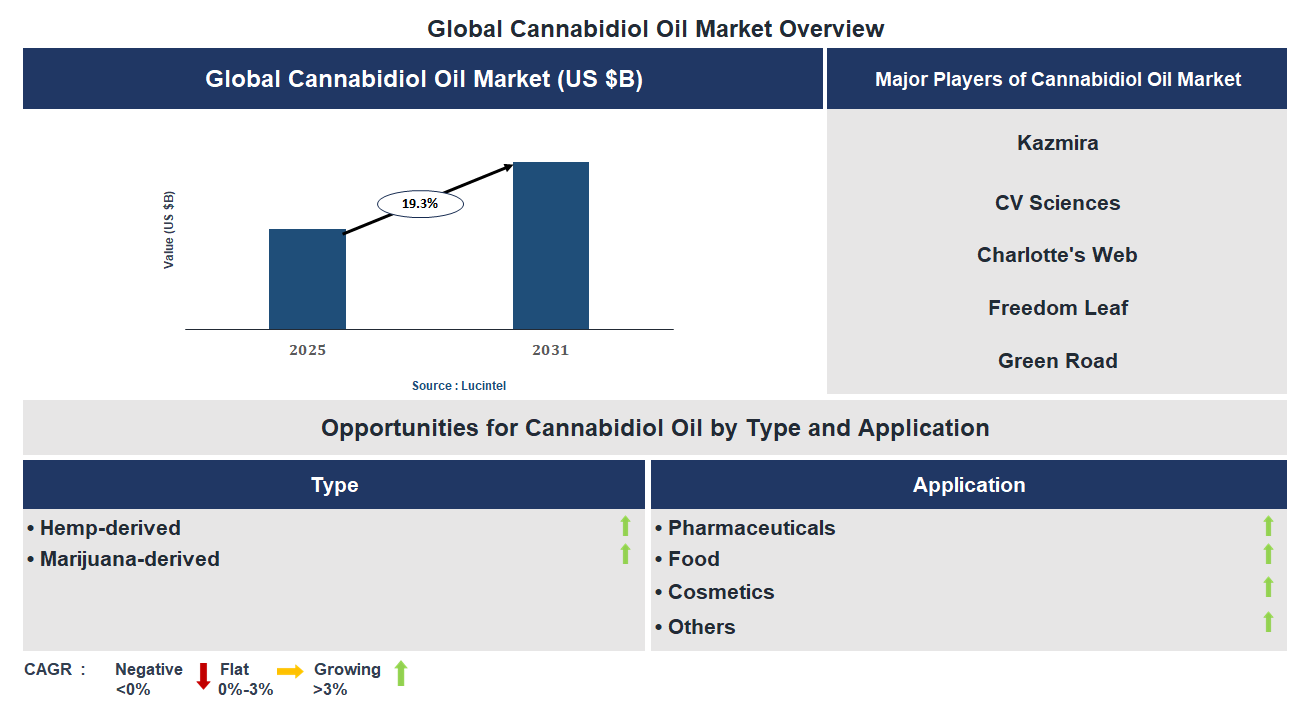
Key data points: The growth forecast = 19.3% annually for the next 7 years. Scroll below to get more insights. This market report covers trends, opportunities and forecasts in cannabidiol oil market to 2031 by type (hemp-derived and marijuana-derived), application (pharmaceuticals, food, cosmetics, and others), and region (North America, Europe, Asia Pacific, and the Rest of the World)
We'll send your sample report shortly.
• Lucintel forecasts that, within the type category, hemp-derived is expected to witness higher growth over the forecast period.
• Within the application category, pharmaceutical is expected to witness the highest growth.
• In terms of region, North America is expected to witness the highest growth over the forecast period. Gain valuable insights for your business decisions with our comprehensive 150+ page report. Sample figures with some insights are shown below.
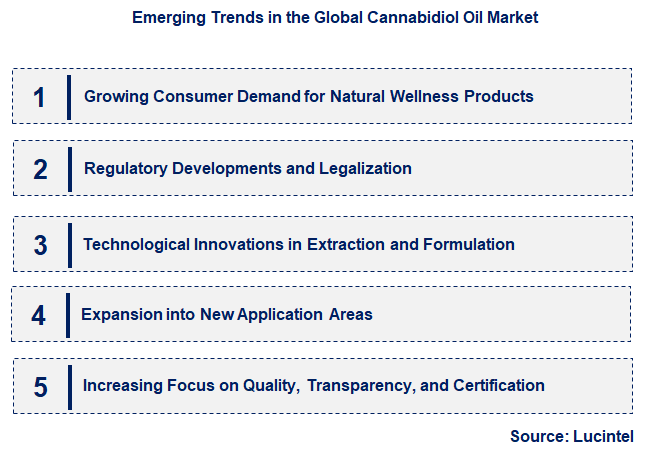
• Growing Consumer Demand for Natural Wellness Products: Increasing awareness of natural health solutions is driving consumers toward CBD oil as a holistic remedy. People are seeking alternatives to traditional pharmaceuticals for pain relief, anxiety, and sleep disorders. This trend is supported by a shift towards organic, plant-based products, and a desire for self-care. As a result, brands are expanding their product lines to include various formulations, including tinctures, edibles, and topicals, to meet diverse consumer needs. The demand is also bolstered by social media influence and endorsements from health influencers, making CBD oil a mainstream wellness product.
• Regulatory Developments and Legalization: Evolving legal frameworks are significantly impacting the CBD market. Many countries and states are clarifying regulations around cultivation, manufacturing, and sale of CBD products, leading to increased market legitimacy. In some regions, legalization has opened doors for larger commercial operations and international trade. Conversely, inconsistent regulations and restrictions in certain areas pose challenges for market expansion. Companies are investing in compliance and quality assurance to meet regulatory standards, which enhances consumer trust and facilitates broader acceptance of CBD products.
• Technological Innovations in Extraction and Formulation: Advances in extraction technologies, such as supercritical CO2 extraction, are improving the purity and potency of CBD oil. Innovative formulation techniques are also enabling the development of more effective and user-friendly products, including nanoemulsions and water-soluble CBD. These innovations enhance bioavailability, ensuring better absorption and efficacy. Additionally, technology is facilitating product customization, such as personalized dosages and targeted delivery systems. This trend is driving product differentiation and improving consumer experience, ultimately expanding the market’s reach and credibility.
• Expansion into New Application Areas: The versatility of CBD oil is leading to its adoption in diverse sectors beyond wellness, including pharmaceuticals, pet care, and beauty. In pharmaceuticals, research is progressing toward CBD-based medications for epilepsy and other neurological conditions. The pet care industry is incorporating CBD for anxiety and pain relief in animals. The beauty sector is leveraging CBD’s anti-inflammatory properties for skincare products. This diversification is broadening the market scope, attracting new customer segments, and fostering innovation across multiple industries, thereby fueling overall growth.
• Increasing Focus on Quality, Transparency, and Certification: Consumers are demanding higher standards for CBD products, emphasizing purity, safety, and transparency. Companies are responding by implementing rigorous testing protocols, obtaining third-party certifications, and providing detailed product information. This focus on quality assurance helps build consumer trust and differentiates brands in a competitive market. Transparency initiatives, such as lab reports and ingredient disclosures, are becoming standard practice. As a result, the market is shifting toward premium, trustworthy products, which encourages responsible manufacturing and supports sustainable industry growth. In summary, these emerging trends are collectively reshaping the CBD oil market by fostering innovation, enhancing regulatory clarity, expanding application areas, and emphasizing quality. This evolution is driving increased consumer confidence, market legitimacy, and global expansion, positioning the industry for sustained growth and diversification in the coming years.
• Regulatory Changes: Relaxation of Laws : Several countries and states have eased restrictions on CBD products, allowing for broader commercialization and distribution. This regulatory shift has opened new markets, increased product availability, and encouraged investment, thereby fueling market growth. However, inconsistent regulations across regions pose challenges for global expansion and compliance.
• Product Innovation: New Formulations and Delivery Methods : Companies are developing innovative CBD products, including edibles, beverages, topicals, and capsules, to cater to diverse consumer preferences. These advancements enhance user experience, improve bioavailability, and expand market reach. Such innovations are driving consumer adoption and creating new revenue streams for industry players.
• Increasing Consumer Awareness: Education and Marketing Efforts : Enhanced marketing campaigns and educational initiatives have increased consumer understanding of CBD benefits and safety. This awareness boosts demand, especially in wellness, skincare, and therapeutic segments. As consumers become more informed, trust and acceptance of CBD products continue to grow, supporting market expansion.
• Expansion of Distribution Channels: E-commerce and Retail Partnerships : The rise of online platforms and strategic retail collaborations have broadened product accessibility. E-commerce provides convenience and wider reach, while retail partnerships enhance brand visibility. These channels are vital for capturing new customer segments and increasing sales volume.
• Market Consolidation and Strategic Alliances: Mergers, Acquisitions, and Collaborations : Industry players are forming alliances, acquiring smaller firms, and consolidating to strengthen market position. These strategies facilitate resource sharing, innovation, and market penetration. Such consolidation enhances competitiveness and accelerates product development, shaping a more robust industry landscape. In summary, these developments are significantly impacting the cannabidiol oil market by fostering innovation, expanding access, and shaping regulatory environments. They are driving growth, increasing consumer trust, and encouraging industry consolidation, ultimately positioning the market for sustained expansion and diversification.
• Enhanced therapeutic potential : Cannabidiol oil is increasingly used for managing chronic pain, epilepsy, and mental health conditions, driving demand for medicinal products and clinical research. This growth improves patient outcomes and opens new revenue streams for pharmaceutical companies.
• Rising consumer interest : The shift towards natural and holistic health solutions boosts cannabidiol oils popularity in supplements, tinctures, and functional foods, fostering a booming wellness industry and expanding retail channels.
• Natural skincare revolution : Incorporating cannabidiol oil into skincare and beauty products offers anti-inflammatory and antioxidant benefits, attracting consumers seeking organic and effective solutions, thus broadening product portfolios.
• Functional consumables : The integration of cannabidiol oil into edibles, beverages, and snacks caters to health-conscious consumers, creating a new segment in the food industry and encouraging product innovation and diversification.
• Veterinary applications : The use of cannabidiol oil for pet health, including anxiety and pain relief, is gaining traction, opening a lucrative market segment and encouraging research into safe, effective pet products. In summary, these growth opportunities are significantly transforming the cannabidiol oil market by expanding its application base, attracting diverse consumer segments, and fostering innovation. This evolution is driving market growth, increasing competition, and encouraging regulatory developments, ultimately shaping a robust and dynamic industry landscape.
• Increasing Consumer Awareness and Demand: The rising awareness of CBDs potential health benefits, such as pain relief, anxiety reduction, and anti-inflammatory properties, has significantly boosted consumer interest. As more individuals seek natural alternatives to pharmaceuticals, demand for high-quality CBD oil products surges. This trend is supported by extensive marketing, positive testimonials, and growing scientific research, which validate CBDs efficacy. Additionally, the shift towards wellness and holistic health practices encourages consumers to incorporate CBD into their daily routines, further expanding the market.
• Technological Innovations in Extraction and Formulation: Advances in extraction techniques, such as CO2 extraction, ensure higher purity and potency of CBD oil, meeting stringent quality standards. Innovations in formulation, including nanoemulsions and encapsulation, improve bioavailability and stability, making products more effective. These technological developments enable manufacturers to produce a diverse range of products, from oils and capsules to topicals and edibles, catering to varied consumer preferences. Enhanced safety, consistency, and efficacy resulting from these innovations foster consumer trust and market growth.
• Legalization and Regulatory Developments: The gradual legalization of cannabis and hemp-derived CBD in numerous countries and states has opened new markets and reduced legal barriers. Clearer regulatory frameworks facilitate product standardization, quality assurance, and consumer safety, encouraging industry growth. Governments are establishing licensing, testing, and labeling requirements, which help legitimize the market and attract investments. These regulatory shifts also enable cross-border trade and international expansion, providing a significant boost to the industry’s global footprint.
• Growing Investment and Strategic Partnerships: Increased investments from venture capitalists, pharmaceutical companies, and consumer brands are fueling market expansion. Strategic partnerships and acquisitions enable companies to expand their product portfolios, improve supply chains, and enhance distribution networks. Investment in research and development accelerates innovation, leading to new product launches and improved formulations. This financial influx supports marketing efforts and helps establish a strong market presence, ultimately driving sales and consumer adoption.
• Expansion of Distribution Channels: The proliferation of online retail platforms, specialty stores, and wellness clinics has broadened access to CBD products. E-commerce channels provide convenience, detailed product information, and competitive pricing, attracting a wider consumer base. Additionally, partnerships with pharmacies, gyms, and health practitioners increase product visibility and credibility. The expansion of distribution channels ensures greater market penetration, enhances brand recognition, and facilitates consumer education, all of which contribute to sustained market growth. The challenges in the cannabidiol oil market are:
• Regulatory Uncertainty and Legal Restrictions: Despite progress, inconsistent regulations across regions create significant hurdles. Some countries maintain strict bans or ambiguous laws regarding CBD, complicating import, export, and sales processes. This uncertainty hampers investment, product development, and market expansion. Companies face legal risks, potential fines, and reputational damage if they fail to comply with varying standards. Moreover, lack of standardized testing and labeling requirements can lead to consumer mistrust and market fragmentation, impeding overall industry growth.
• Quality Control and Standardization Issues: The absence of universally accepted quality standards results in variability in product potency, purity, and safety. Unregulated or poorly manufactured products may contain contaminants like pesticides, heavy metals, or residual solvents, posing health risks. Consumers often struggle to differentiate between legitimate and substandard products, which affects trust and adoption. Manufacturers face challenges in establishing consistent quality control measures, which are essential for regulatory compliance and consumer confidence, thereby hindering market stability.
• Limited Scientific Evidence and Clinical Validation: Although anecdotal evidence and preliminary studies support CBDs benefits, comprehensive clinical trials are limited. The lack of robust scientific validation restricts healthcare professionals endorsement and influences regulatory approval processes. This skepticism affects consumer confidence and restricts mainstream acceptance. Without conclusive evidence, insurance coverage and medical endorsements remain elusive, slowing market growth and innovation in therapeutic applications. In summary, the cannabidiol oil market is driven by technological progress, increasing consumer demand, favorable regulatory changes, strategic investments, and expanded distribution channels. However, regulatory uncertainties, quality control issues, and limited scientific validation pose significant challenges. These factors collectively influence the markets growth trajectory, requiring stakeholders to navigate legal complexities, ensure product quality, and support scientific research. Overall, the industry holds substantial potential for expansion, provided these challenges are effectively addressed through innovation, regulation, and education.
• Kazmira
• CV Sciences
• Charlottes Web
• Freedom Leaf
• Green Road
• Folium Biosciences
• HempLife Today
• Pharma Hemp
• Endoca
• CBD American Shaman
• Hemp-derived
• Marijuana-derived
• Pharmaceuticals
• Food
• Cosmetics
• Others
• North America
• Europe
• Asia Pacific
• The Rest of the World
• United States: The US market for cannabidiol oil has seen rapid expansion, fueled by the legalization of hemp-derived products and growing consumer acceptance. Major brands are investing in research and development to improve product quality and diversify offerings. Regulatory clarity from the Food and Drug Administration (FDA) has facilitated market growth, although ongoing debates about safety and labeling persist. E-commerce sales continue to rise, and new formulations targeting specific health concerns are gaining popularity. The industry is also witnessing increased investment from venture capitalists, indicating strong future growth potential.
• China: China is emerging as a significant player in the cannabidiol oil market, primarily focusing on research, cultivation, and extraction technologies. The government has begun to relax certain regulations around hemp cultivation, aiming to develop a domestic supply chain. Chinese companies are investing heavily in R&D to develop innovative products and improve extraction methods. Export opportunities are expanding, especially to markets with favorable regulations. However, domestic demand remains limited due to regulatory uncertainties and cultural perceptions. The country’s focus on scientific research and technological advancements positions it as a future leader in the industry.
• Germany: Germany is at the forefront of cannabidiol oil regulation within Europe, with a well-established legal framework that permits the sale of CBD products derived from industrial hemp. The market is characterized by high consumer awareness and demand for natural health products. Local companies are expanding their product ranges to include oils, capsules, and topical applications. Regulatory compliance and quality assurance are priorities, fostering consumer trust. The German market also benefits from the European Union’s broader regulatory environment, facilitating cross-border trade. Ongoing research into medical applications of CBD further boosts market confidence and innovation.
• India: India’s cannabidiol oil market is in its nascent stages, with increasing interest driven by traditional medicine practices and growing awareness of natural remedies. Regulatory restrictions on cannabis cultivation have limited large-scale production, but recent policy shifts are encouraging research and pilot projects. Indian startups are exploring the development of CBD-based wellness products, focusing on herbal and Ayurvedic formulations. The domestic market remains small but shows potential for growth as regulations evolve. Export opportunities are also being explored, especially to markets with favorable legal environments. The industry’s future depends on regulatory clarity and technological advancements in extraction and formulation.
• Japan: Japan has a cautious but evolving approach to cannabidiol oil, with strict regulations governing cannabis-derived products. Recent legal amendments have allowed for the sale of hemp-derived CBD products containing minimal THC levels. The market is primarily driven by health-conscious consumers seeking natural remedies. Japanese companies are investing in research to develop high-quality CBD products, including oils and skincare items. Regulatory compliance and product safety are critical concerns, and the industry is closely monitored by authorities. As awareness increases and regulations become clearer, Japan’s market is expected to grow steadily, especially in the wellness and cosmetic sectors.


• Kazmira
• CV Sciences
• Charlottes Web
• Freedom Leaf
• Green Road
• Folium Biosciences
• HempLife Today
• Pharma Hemp
• Endoca
• CBD American Shaman Q5. Which cannabidiol oil market segment will be the largest in future? Answer: Lucintel forecasts that, within the type category, hemp-derived is expected to witness higher growth over the forecast period. Q6. In cannabidiol oil market, which region is expected to be the largest in next 5 years? Answer: In terms of region, North America is expected to witness the highest growth over the forecast period. Q7. Do we receive customization in this report? Answer: Yes, Lucintel provides 10% customization without any additional cost.


Choose a license that fits your team. Instant PDF delivery.
Prices exclude taxes. Instant delivery. Custom licensing available on request.
Market Report · July 22, 2026
Market Report · July 22, 2026
Market Report · July 22, 2026
Trusted partner for strategic intelligence and business growth


Receive a complimentary market analysis tailored to your industry. Our analysts will identify key growth opportunities and competitive dynamics specific to your business.

Market size, growth rate, and key trend analysis for your specific sector.

Top competitor positioning and market share analysis.

Strategic recommendations backed by data-driven insights.
Get curated market intelligence and competitive moves straight to your inbox.
By subscribing, you agree to receive our monthly insights. Unsubscribe anytime.
Receive a complimentary market analysis tailored to your industry. Our analysts will identify key growth opportunities and competitive dynamics specific to your business.
Market size, growth rate, and key trend analysis for your specific sector.
Top competitor positioning and market share analysis.
Strategic recommendations backed by data-driven insights.
Get curated market intelligence, emerging trends, and competitive moves straight to your inbox each month.
By subscribing, you agree to receive our monthly insights. Unsubscribe anytime.
We'll send your sample report shortly.