
Market Report · July 22, 2026

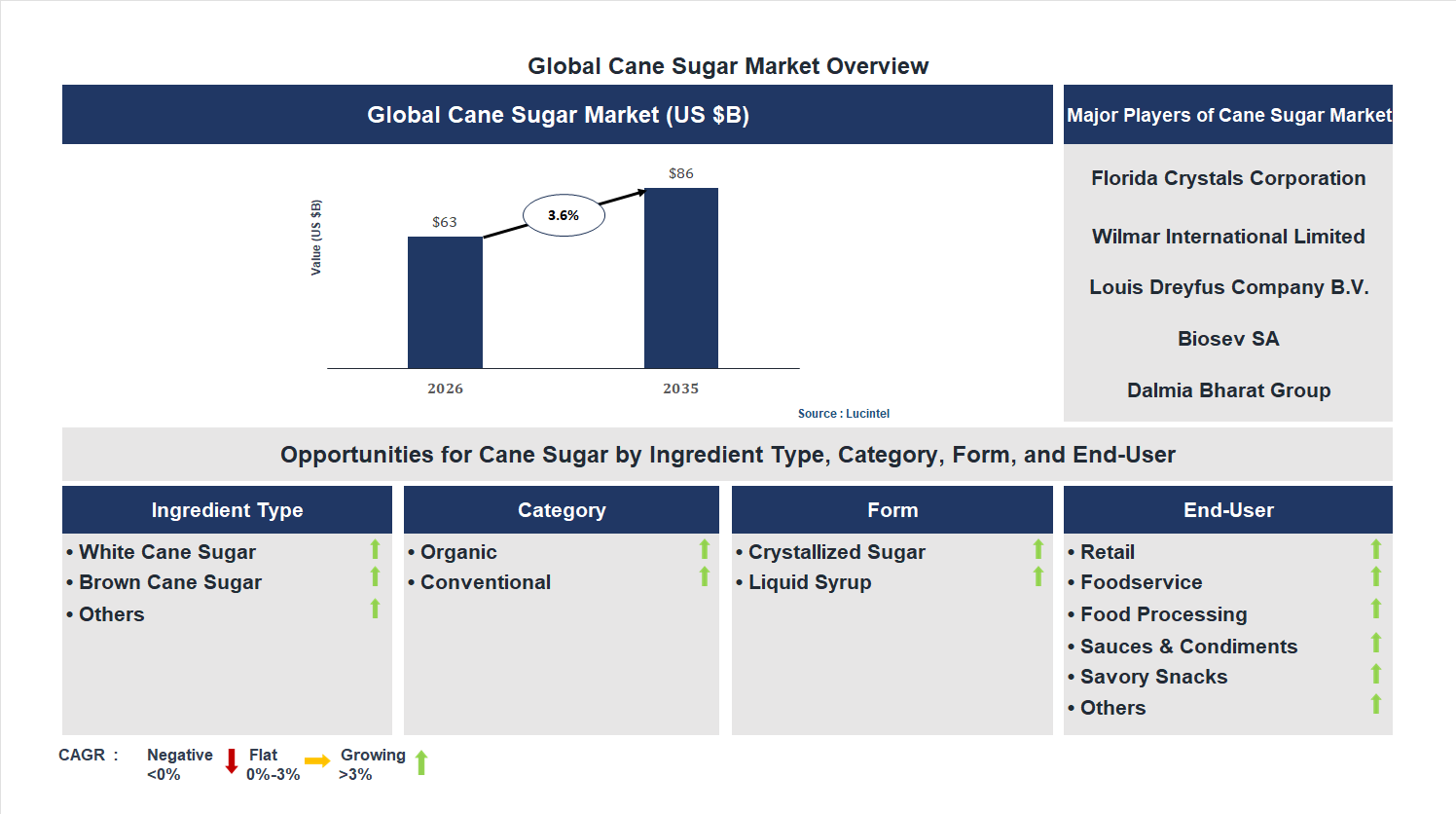
Key data points: The market size in 2035 = $86 billion, growth forecast = 3.6% annually for the next 8 years. Scroll below to get more insights. This market report covers trends, opportunities and forecasts in cane sugar market to 2035 by ingredient type (white cane sugar, brown cane sugar, and others), category (organic and conventional), form (crystallized sugar and liquid syrup), end use (retail, foodservice, food processing, and others), and region (North America, Europe, Asia Pacific, and the Rest of the World)
We'll send your sample report shortly.
• Lucintel forecasts that, within the ingredient type category, white cane sugar is expected to witness higher growth over the forecast period.
• Within the end use category, food processing is expected to witness the highest growth.
• In terms of region, APAC is expected to witness the highest growth over the forecast period. Gain valuable insights for your business decisions with our comprehensive 150+ page report. Sample figures with some insights are shown below.
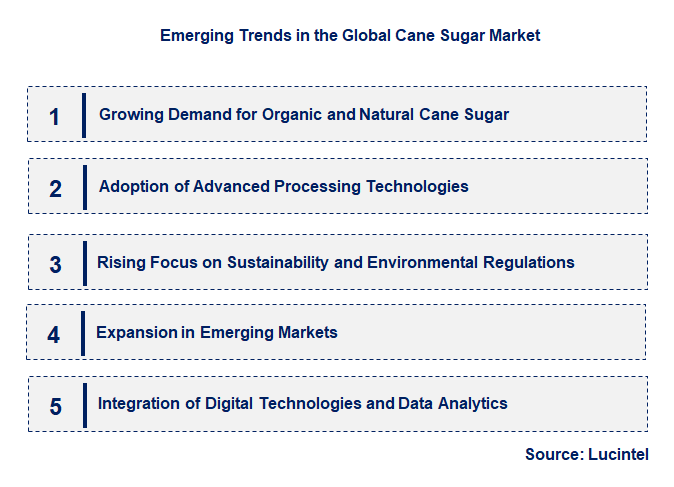
• Growing Demand for Organic and Natural Cane Sugar: Consumers are increasingly seeking organic and natural sugar options due to health consciousness and environmental concerns. This trend encourages producers to shift towards organic farming practices, which often involve sustainable methods and fewer chemicals. The demand for organic cane sugar is expanding in developed markets, prompting companies to invest in certification processes and transparent supply chains. This shift not only enhances product appeal but also allows brands to command premium prices. As consumer preferences continue to evolve, the organic segment is expected to grow rapidly, influencing overall market dynamics and encouraging sustainable agricultural practices.
• Adoption of Advanced Processing Technologies: Technological innovations such as automation, precision agriculture, and improved extraction methods are transforming cane sugar production. These advancements increase efficiency, reduce waste, and lower production costs, making the industry more competitive. For example, the use of sensors and data analytics in farming optimizes crop yields, while modern milling techniques enhance sugar extraction rates. This technological shift also supports environmental sustainability by reducing water and energy consumption. As a result, producers can meet rising demand more sustainably and profitably, positioning the market for long-term growth and resilience against fluctuating raw material prices.
• Rising Focus on Sustainability and Environmental Regulations: Environmental concerns and stricter regulations are compelling industry players to adopt sustainable practices. This includes reducing greenhouse gas emissions, managing water usage efficiently, and minimizing waste. Certification standards such as Fair Trade and Rainforest Alliance are gaining prominence, influencing sourcing and production decisions. Companies are investing in eco-friendly infrastructure and renewable energy sources to meet regulatory requirements and consumer expectations. This trend not only helps mitigate environmental impact but also enhances brand reputation. As sustainability becomes a key differentiator, the market is shifting towards more responsible and transparent supply chains, fostering long-term industry viability.
• Expansion in Emerging Markets: Countries in Asia, Africa, and Latin America are experiencing rapid growth in cane sugar consumption and production. These emerging markets benefit from favorable climatic conditions, increasing urbanization, and rising disposable incomes. Local producers are expanding their capacities to meet domestic demand and explore export opportunities. This growth diversifies the global supply chain and reduces reliance on traditional markets. Additionally, investments in infrastructure and technology in these regions are boosting productivity and quality standards. The expansion in emerging markets is reshaping the global landscape, creating new opportunities for trade, investment, and innovation within the cane sugar industry.
• Integration of Digital Technologies and Data Analytics: Digital transformation is revolutionizing the cane sugar industry through the adoption of IoT, blockchain, and data analytics. These technologies enable real-time monitoring of crop health, supply chain transparency, and efficient inventory management. Blockchain enhances traceability, ensuring ethical sourcing and quality assurance, which appeals to conscious consumers. Data analytics optimize harvesting schedules and resource allocation, improving overall productivity. The integration of digital tools fosters better decision-making, reduces operational risks, and enhances market responsiveness. As digital adoption accelerates, the industry is becoming more agile, transparent, and competitive, paving the way for innovative business models and sustainable growth. These trends are collectively reshaping the cane sugar market by promoting sustainability, technological innovation, and market diversification. They are driving industry stakeholders to adopt more responsible practices, leverage new technologies, and explore emerging markets, ultimately fostering a more resilient and competitive landscape.
• Growing Demand for Natural Sweeteners: Increasing health awareness among consumers is driving demand for natural sugar alternatives, boosting cane sugar consumption. This trend encourages producers to enhance quality and diversify product offerings, leading to expanded market reach. The shift also prompts innovation in processing techniques to retain nutritional value, ultimately strengthening the market position of cane sugar as a natural, versatile sweetener.
• Technological Innovations in Processing: Advances in extraction and refining technologies improve efficiency and reduce costs in cane sugar production. These innovations enable higher yields and better quality, meeting stricter regulatory standards. Enhanced processing methods also minimize environmental impact, aligning with sustainability goals. As a result, companies can offer competitively priced products, expand into new markets, and improve overall profitability, fostering growth in the global cane sugar industry.
• Expansion in Emerging Markets: Rapid urbanization and rising disposable incomes in developing countries are fueling demand for cane sugar. Market expansion strategies include establishing local production facilities and forming strategic partnerships. These efforts help reduce import dependency and cater to regional taste preferences. The growth in emerging markets significantly contributes to global demand, offering substantial opportunities for market players to increase sales and strengthen their presence.
• Sustainability and Environmental Regulations: Increasing focus on sustainable practices and stricter environmental regulations are influencing cane sugar production. Companies are adopting eco-friendly farming and processing methods to reduce carbon footprint and water usage. Certification standards like Fair Trade and Organic are gaining importance, appealing to conscious consumers. These initiatives enhance brand reputation and ensure compliance, ultimately driving market growth while addressing environmental concerns.
• Impact of Trade Policies and Tariffs: Shifts in international trade policies and tariffs affect the global cane sugar supply chain. Favorable trade agreements can boost exports, while tariffs may restrict market access. Companies are diversifying sourcing strategies and exploring new markets to mitigate risks. These policy changes influence pricing, competitiveness, and market stability, requiring industry players to stay agile and adapt to evolving geopolitical landscapes to sustain growth. These recent developments are significantly impacting the cane sugar market by fostering innovation, expanding into new regions, and emphasizing sustainability. Technological advancements and changing consumer preferences are driving product diversification and quality improvements. Trade policies and environmental regulations are shaping supply chains and operational strategies. Collectively, these factors create a dynamic environment that offers growth opportunities while challenging industry players to adapt swiftly, ensuring continued market expansion and competitiveness in the evolving global landscape.
• Expanding Market in Emerging Economies: Growing urbanization and rising disposable incomes in countries like India, Brazil, and Southeast Asia are boosting cane sugar consumption. These regions present vast untapped potential for market penetration, supported by government initiatives promoting agricultural development. Local production and import-export dynamics create opportunities for market players to establish distribution networks, diversify product offerings, and cater to increasing demand for processed and specialty sugars.
• Diversification into Value-Added Sugar Products: Developing specialty sugars such as organic, raw, and functional sugars offers new revenue streams. These products cater to health-conscious consumers seeking natural and minimally processed options. Additionally, innovations like flavored sugars, sugar syrups, and sugar-based ingredients for bakery, confectionery, and beverage industries can enhance product portfolios. This diversification helps companies differentiate themselves and meet specific consumer preferences, driving overall market growth.
• Adoption of Sustainable and Eco-Friendly Practices: Implementing sustainable farming, eco-friendly harvesting, and environmentally conscious processing methods can appeal to eco-aware consumers. Certification programs like Fair Trade and Organic can add value and credibility. Sustainable practices reduce environmental impact, improve brand reputation, and meet regulatory standards. As consumers increasingly prioritize sustainability, companies adopting green initiatives can gain competitive advantage and expand their market share.
• Growth in Food and Beverage Industry Applications: Cane sugar remains a staple in confectionery, bakery, dairy, and beverage sectors. Rising demand for processed foods, soft drinks, and health drinks fuels the need for high-quality sugar ingredients. Innovations in product formulations, such as low-calorie or functional sweeteners derived from cane sugar, open new avenues. Collaborations with food manufacturers and product development tailored to consumer trends will further propel market expansion.
• Technological Innovations in Processing and Refining: Advances in extraction, refining, and packaging technologies improve efficiency, reduce costs, and enhance product quality. Innovations like membrane filtration, enzymatic processing, and automation streamline operations. These improvements enable producers to meet strict quality standards and diversify product offerings. Enhanced processing capabilities also facilitate the development of specialty and customized sugar products, supporting market growth and meeting the evolving needs of consumers and industrial clients. These strategic growth opportunities are poised to significantly influence the cane sugar market by expanding geographic reach, diversifying product lines, and emphasizing sustainability and innovation. Companies that capitalize on these avenues can strengthen their market position, meet consumer demands, and adapt to changing industry dynamics, ensuring sustained growth and competitiveness in the evolving market landscape.
• Technological Innovations: The adoption of advanced extraction and refining technologies enhances yield efficiency and product quality. Automation and process optimization reduce costs and improve scalability, enabling producers to meet increasing global demand. Innovations in sustainable farming practices also minimize environmental impact, aligning with regulatory standards and consumer preferences. These technological advancements foster market growth by increasing production capacity and ensuring product consistency, thus attracting investments and expanding market reach.
• Growing Demand for Processed and Packaged Sugar: Rising consumer preference for convenience foods and beverages containing processed sugar fuels demand. Urbanization and changing lifestyles contribute to increased consumption of packaged foods, which rely heavily on cane sugar. This trend encourages manufacturers to expand production capacities and diversify product offerings, thereby boosting market revenues. Additionally, the growth of the food and beverage industry in emerging economies further propels demand, making processed sugar a vital component of the market.
• Expansion in Emerging Markets: Rapid economic growth and urbanization in regions such as Asia-Pacific and Latin America create new opportunities for cane sugar producers. Rising disposable incomes and changing dietary habits increase sugar consumption, encouraging local cultivation and import activities. Market players are investing in infrastructure, distribution channels, and local partnerships to capitalize on these opportunities. The expansion into emerging markets not only increases sales volumes but also diversifies revenue streams, supporting overall market stability and growth.
• Environmental Sustainability and Organic Trends: Increasing awareness of environmental issues and health concerns drives demand for organic and sustainably produced cane sugar. Producers adopting eco-friendly farming practices and certifications appeal to environmentally conscious consumers. This shift encourages market players to innovate and invest in sustainable cultivation methods, which can command premium prices. The focus on sustainability also aligns with regulatory pressures and global initiatives to reduce environmental impact, fostering long-term growth and market differentiation. The challenges facing the cane sugar market include:-
• Fluctuating Raw Material Prices: The cost of sugarcane is highly susceptible to weather conditions, pests, and global supply-demand dynamics. Price volatility affects profit margins for producers and can lead to market instability. High raw material costs may also increase retail prices, potentially reducing consumer demand. Managing supply chain risks and securing stable sourcing are critical for maintaining profitability and competitive positioning in the market.
• Regulatory and Trade Barriers: Stringent government policies, tariffs, and trade restrictions can hinder market expansion and cross-border trade. Environmental regulations may impose additional compliance costs on producers, while export restrictions can limit access to lucrative markets. Navigating diverse regulatory landscapes requires significant investment and strategic planning, which can pose challenges for smaller players and impact overall market growth.
• Climate Change and Water Scarcity: Adverse climate conditions, including droughts and irregular rainfall, threaten sugarcane cultivation. Water scarcity and changing weather patterns reduce crop yields and increase production costs. These environmental challenges necessitate investment in resilient farming practices and water management systems. Failure to adapt can lead to supply shortages, price fluctuations, and reduced profitability, ultimately impacting the stability and growth of the cane sugar market. The cane sugar market is shaped by technological progress, rising demand, and expanding markets, which drive growth and innovation. However, challenges such as price volatility, regulatory hurdles, and climate change pose significant risks that could hinder development. The market’s future depends on how effectively stakeholders can leverage technological advancements and sustainable practices while mitigating environmental and regulatory risks. Strategic adaptation and innovation will be essential for sustained growth and competitiveness in this evolving landscape.
• Florida Crystals Corporation
• Wilmar International Limited
• Louis Dreyfus Company B.V.
• Biosev SA
• Dalmia Bharat Group
• Global Organics Ltd.
• DO-IT Food Ingredients B.V.
• Cosan S.A.
• Tereos S.A.
• Balrampur Commercial Enterprises Limited
• White Cane Sugar
• Brown Cane Sugar
• Others
• Organic
• Conventional
• Crystallized Sugar
• Liquid Syrup
• Retail
• Foodservice
• Food Processing
• Others
• North America
• Europe
• Asia Pacific
• The Rest of the World
• United States: The U.S. has seen increased investment in sustainable farming practices and biofuel integration, aiming to reduce environmental impact. Innovations in processing technology have improved yield efficiency, while trade policies are shaping export opportunities. The market is also witnessing a shift towards organic cane sugar products driven by consumer demand for healthier options.
• China: China is expanding its cane sugar production capacity to meet domestic consumption growth. The country is adopting advanced cultivation techniques and mechanization to boost productivity. Additionally, China is exploring international trade partnerships to secure raw material supplies and reduce reliance on imports, while also investing in research for alternative sweeteners.
• Germany: Germanys cane sugar market remains relatively small but is growing through increased imports and value-added product development. The focus is on sustainable sourcing and reducing carbon footprints in supply chains. German companies are also investing in innovative packaging and marketing strategies to cater to health-conscious consumers.
• India: India continues to be the worlds largest producer and consumer of cane sugar, with recent developments including modernization of sugar mills and adoption of water-efficient irrigation methods. The government is promoting ethanol blending programs to diversify usage and reduce surplus stock. There is also a push towards organic farming practices to meet export standards.
• Japan: Japans cane sugar market is characterized by high-quality product demand and innovative processing techniques. The country is investing in research to develop low-GI and functional sugar products. Import reliance remains high, but efforts are underway to enhance domestic cultivation and sustainable sourcing to meet health and environmental standards.


• Florida Crystals Corporation
• Wilmar International Limited
• Louis Dreyfus Company B.V.
• Biosev SA
• Dalmia Bharat Group
• Global Organics Ltd.
• DO-IT Food Ingredients B.V.
• Cosan S.A.
• Tereos S.A.
• Balrampur Commercial Enterprises Limited Q6. Which cane sugar market segment will be the largest in future? Answer: Lucintel forecasts that, within the ingredient type category, white cane sugar is expected to witness higher growth over the forecast period. Q7. In cane sugar market, which region is expected to be the largest in next 5 years? Answer: In terms of region, APAC is expected to witness the highest growth over the forecast period. Q8. Do we receive customization in this report? Answer: Yes, Lucintel provides 10% customization without any additional cost.


Choose a license that fits your team. Instant PDF delivery.
Prices exclude taxes. Instant delivery. Custom licensing available on request.
Market Report · July 22, 2026
Market Report · July 22, 2026
Market Report · July 22, 2026
Trusted partner for strategic intelligence and business growth


Receive a complimentary market analysis tailored to your industry. Our analysts will identify key growth opportunities and competitive dynamics specific to your business.

Market size, growth rate, and key trend analysis for your specific sector.

Top competitor positioning and market share analysis.

Strategic recommendations backed by data-driven insights.
Get curated market intelligence and competitive moves straight to your inbox.
By subscribing, you agree to receive our monthly insights. Unsubscribe anytime.
Receive a complimentary market analysis tailored to your industry. Our analysts will identify key growth opportunities and competitive dynamics specific to your business.
Market size, growth rate, and key trend analysis for your specific sector.
Top competitor positioning and market share analysis.
Strategic recommendations backed by data-driven insights.
Get curated market intelligence, emerging trends, and competitive moves straight to your inbox each month.
By subscribing, you agree to receive our monthly insights. Unsubscribe anytime.
We'll send your sample report shortly.