
Report Feature
Cancer Screening Market Trends and Forecast
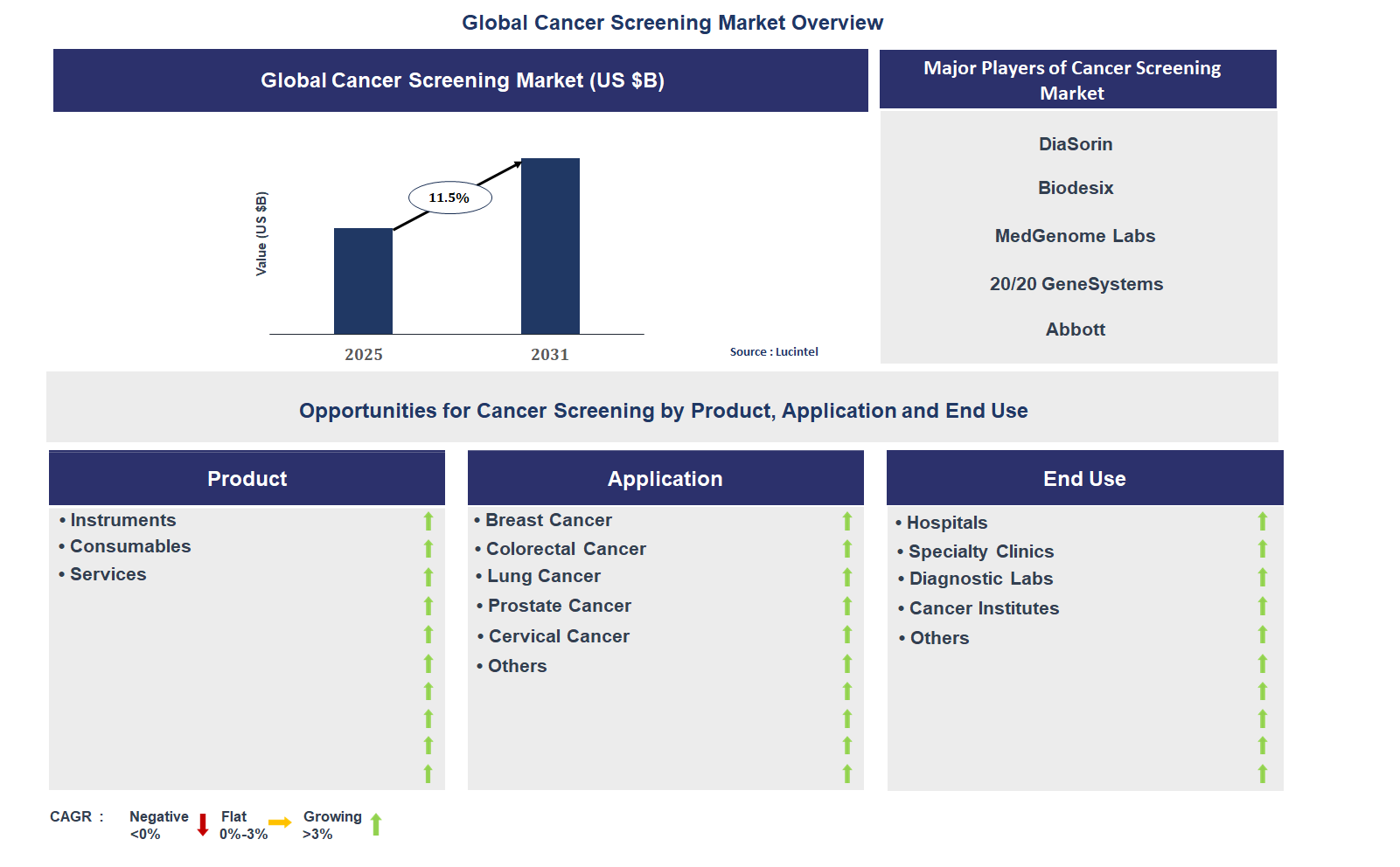
The future of the global cancer screening market looks promising with opportunities in the hospital, specialty clinic, diagnostic lab, and cancer institute markets. The global cancer screening market is expected to grow with a CAGR of 11.5% from 2025 to 2031. The major drivers for this market are the increasing prevalence of various cancer types, the rising awareness about early cancer detection, and the growing advancements in diagnostic screening technologies.• Lucintel forecasts that, within the product category, service is expected to witness the highest growth over the forecast period.
• Within the end use category, diagnostic lab is expected to witness the highest growth.
• In terms of region, APAC is expected to witness the highest growth over the forecast period. Gain valuable insights for your business decisions with our comprehensive 150+ page report. Sample figures with some insights are shown below.
Emerging Trends in the Cancer Screening Market
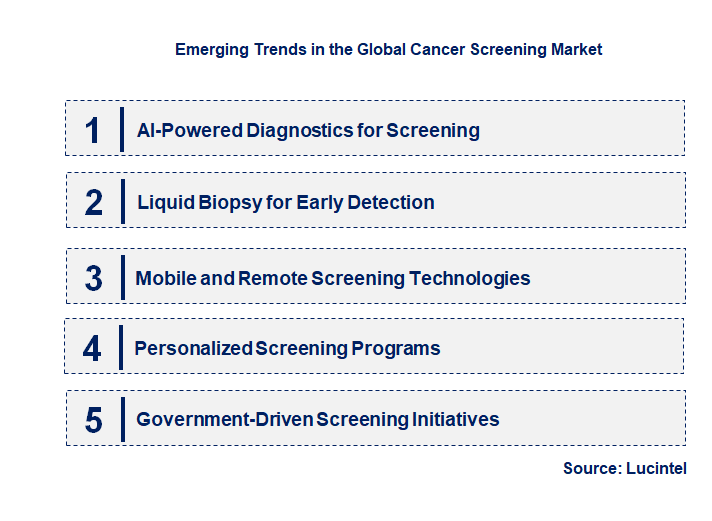
The cancer screening market is evolving with a focus on innovations in early detection, precision, and accessibility. Trends such as AI, liquid biopsy, mobile health, and genetic screening are reshaping how screenings are conducted, improving outcomes, and enabling earlier diagnoses across diverse populations.• AI-Powered Diagnostics for Screening: AI is revolutionizing cancer screening by improving diagnostic accuracy, particularly in imaging tools like mammography and CT scans. AI can analyze large datasets to identify cancerous growths more accurately, thus enhancing early detection rates and reducing human error in diagnosis.
• Liquid Biopsy for Early Detection: Liquid biopsy allows for non-invasive cancer detection through blood tests, detecting tumor DNA with high sensitivity. This method is expanding the potential for routine cancer screenings, allowing for earlier detection of multiple cancer types without the need for invasive biopsies.
• Mobile and Remote Screening Technologies: Mobile health technologies and telemedicine are expanding access to cancer screenings in underserved areas. Mobile diagnostic units are bringing screenings directly to communities, while telemedicine allows for follow-up consultations and continued care, making screening services more widely available.
• Personalized Screening Programs: Personalized cancer screening based on genetic risk factors is gaining momentum. Genetic testing helps identify individuals at higher risk for specific cancers, enabling more targeted and effective screening programs, and ensuring early detection in high-risk groups.
• Government-Driven Screening Initiatives: Governments are increasingly funding and promoting national cancer screening programs. These initiatives, often including free or subsidized screenings for high-risk populations, aim to detect cancers early, reduce healthcare costs, and improve cancer survival rates, making early detection more widely accessible. Emerging trends like AI, liquid biopsy, mobile screening, personalized approaches, and government-led initiatives are driving significant changes in the cancer screening market. These trends are improving the accuracy, accessibility, and efficiency of screenings, ultimately contributing to earlier diagnoses and better cancer outcomes on a global scale.
Recent Development in the Cancer Screening Market
Recent developments in cancer screening have focused on improving early detection through advanced technologies, increased access to screening services, and government initiatives. These innovations are contributing to more accurate, accessible, and affordable screenings, driving better cancer outcomes and reducing overall mortality rates.• Integration of AI in Imaging: AI is enhancing cancer screening by analyzing medical images for signs of cancer with greater precision. AI can detect patterns in mammograms, CT scans, and MRIs that may be overlooked by human radiologists, leading to more accurate diagnoses and fewer missed cancers, thus improving patient outcomes.
• Liquid Biopsy for Multiple Cancer Types: Liquid biopsy technology is gaining popularity for its ability to detect a variety of cancers from a simple blood test. It is a less invasive alternative to traditional biopsies, making it more appealing for routine screenings. This method is improving the early detection of cancers like lung, breast, and colorectal cancer.
• Expansion of Public Health Screening Programs: Many countries are expanding cancer screening programs, offering subsidized or free screenings for high-risk individuals. These initiatives aim to catch cancers early when they are more treatable, thereby improving survival rates. Public health campaigns are also raising awareness about the importance of regular screenings.
• Mobile Screening Units and Telemedicine: Mobile cancer screening units and telemedicine platforms are making screenings more accessible in underserved regions. Mobile units equipped with diagnostic tools such as mammography machines bring screenings directly to communities, while telemedicine enables follow-up consultations without the need for travel, improving overall access to care.
• Genetic Screening and Personalized Approaches: Genetic risk profiling is allowing for more personalized cancer screening. By identifying individuals at higher risk of developing specific cancers, healthcare providers can offer tailored screening schedules and earlier intervention, ensuring that those most at risk are monitored more closely for early signs of cancer. Key developments like AI-driven imaging, liquid biopsy, public health programs, mobile health units, and genetic profiling are transforming the cancer screening landscape. These innovations are improving early detection, expanding access to screenings, and providing more personalized healthcare, all of which are crucial in reducing cancer mortality and improving patient outcomes.
Strategic Growth Opportunities in the Cancer Screening Market
Strategic growth opportunities in cancer screening are being driven by advancements in technology, government initiatives, and increased demand for preventive healthcare. These opportunities span multiple applications, from AI and liquid biopsy to telemedicine and genetic testing, each improving early detection and patient access to life-saving screenings.• AI-Enhanced Screening Technologies: AI-driven tools are offering significant growth opportunities by improving diagnostic accuracy in cancer screenings. These tools enhance image analysis and pattern recognition, reducing human error and identifying early-stage cancers that might otherwise be missed, enabling faster and more accurate diagnoses.
• Expansion of Liquid Biopsy Applications: Liquid biopsy is emerging as a growth opportunity due to its ability to detect multiple cancers non-invasively. With the potential to identify early-stage cancers through blood tests, liquid biopsy is transforming cancer screening by making the process less invasive, faster, and more accessible to patients.
• Telemedicine for Remote Screenings: Telemedicine platforms are creating growth opportunities for remote cancer screenings, particularly in underserved regions. Through telehealth, patients can receive consultations, follow-up care, and screenings without needing to travel to healthcare facilities, increasing access to essential cancer screening services.
• Government-Driven Screening Programs: Governments are investing heavily in national cancer screening programs, driving market growth. These programs often provide free or subsidized screenings for high-risk populations, which improves early detection and reduces the long-term cost burden of cancer treatment by catching the disease early.
• Genetic Risk Profiling for Targeted Screening: Personalized screening based on genetic risk factors is expanding as a growth opportunity. By offering genetic testing, healthcare providers can identify individuals at higher risk for specific cancers and tailor their screening schedules accordingly, improving the effectiveness and efficiency of cancer detection. Growth opportunities in AI, liquid biopsy, telemedicine, government-driven initiatives, and genetic profiling are significantly impacting the cancer screening market. These developments are making screenings more accurate, accessible, and personalized, ultimately improving early detection rates and reducing cancer-related mortality across the globe.
Cancer Screening Market Driver and Challenges
The cancer screening market is influenced by several drivers, such as technological advancements and increased public health awareness, as well as challenges related to cost, accessibility, and regulatory issues. These factors are shaping the future of cancer screening and determining how effectively the market can address rising cancer rates worldwide. The factors responsible for driving the cancer screening market include: 1. Technological Advancements in Screening Tools: Innovations in screening technologies, such as AI-driven imaging and liquid biopsy, are enhancing the accuracy and speed of cancer detection. These technologies enable earlier diagnosis and reduce the number of false positives, which are essential for improving overall cancer survival rates. 2. Increasing Cancer Incidence and Mortality: Rising cancer rates are driving the demand for more efficient and widespread screening methods. Early detection remains critical to improving survival outcomes, and with cancer incidence increasing globally, there is a pressing need to expand and improve screening programs. 3. Government Initiatives and Health Policies: Governments worldwide are increasingly funding national cancer screening programs. These initiatives aim to reduce cancer mortality by offering free or subsidized screenings for high-risk populations. Such initiatives are crucial for expanding access and ensuring that early detection becomes more widely available. 4. Increased Public Awareness and Demand for Prevention: Growing awareness of the importance of early cancer detection is leading to increased demand for screening services. Public health campaigns and education are encouraging individuals to undergo regular screenings, contributing to better outcomes by detecting cancers at earlier, more treatable stages. Challenges in the cancer screening market are: 1. High Cost of Screening Technologies: The high cost of advanced screening technologies, including genetic testing and AI-powered diagnostics, is a major barrier to widespread adoption. While these technologies offer significant benefits, their high cost can limit access, particularly in low-resource settings and developing countries. 2. Disparities in Access to Screening: There are significant disparities in access to cancer screening services, particularly in rural and underserved areas. While urban centers may have access to cutting-edge diagnostic tools, rural areas often lack these resources, making it difficult for underserved populations to benefit from early cancer detection. 3. Regulatory Barriers and Standardization: Regulatory challenges are slowing down the global adoption of new screening technologies. Different countries have varying regulations for cancer screening tools, creating delays in product approvals and limiting access to the latest innovations, which hampers global standardization and implementation. The growth of the cancer screening market is driven by technological advancements, increased government support, and rising public awareness. However, challenges such as high costs, unequal access, and regulatory barriers remain significant. Addressing these issues will be critical to ensuring widespread, equitable access to cancer screening and improving early detection globally.List of Cancer Screening Companies
Companies in the market compete on the basis of product quality offered. Major players in this market focus on expanding their manufacturing facilities, R&D investments, infrastructural development, and leverage integration opportunities across the value chain. With these strategies cancer screening companies cater increasing demand, ensure competitive effectiveness, develop innovative products & technologies, reduce production costs, and expand their customer base. Some of the cancer screening companies profiled in this report include-• DiaSorin
• Biodesix
• MedGenome Labs
• 20/20 GeneSystems
• Abbott
• F. Hoffmann-La Roche
• Thermo Fisher Scientific
• GE Healthcare
• QIAGEN
• Koninklijke Philips
Cancer Screening Market by Segment
The study includes a forecast for the global cancer screening market by product, application, end use, and region.Cancer Screening Market by Product [Value from 2019 to 2031]:
• Instruments
• Consumables
• Services
Cancer Screening Market by Application [Value from 2019 to 2031]:
• Breast Cancer
• Colorectal Cancer
• Lung Cancer
• Prostate Cancer
• Cervical Cancer
• Others
Cancer Screening Market by End Use [Value from 2019 to 2031]:
• Hospitals
• Specialty Clinics
• Diagnostic Labs
• Cancer Institutes
• Others
Cancer Screening Market by Region [Value from 2019 to 2031]:
• North America
• Europe
• Asia Pacific
• The Rest of the World
Country Wise Outlook for the Cancer Screening Market
Recent developments in the cancer screening market highlight advancements in technology, expanding access, and increasing focus on early detection. With growing efforts to reduce mortality rates, countries like the United States, China, Germany, India, and Japan are improving screening technologies, implementing broader programs, and tackling healthcare disparities to enhance cancer detection and prevention.• United States: In the U.S., liquid biopsy technology is becoming more popular for non-invasive cancer detection, offering a quicker and less painful method to identify tumors through blood tests. The integration of AI for data analysis is also improving the precision of screenings, increasing the efficiency of detecting cancers like breast and lung cancer at earlier stages.
• China: China is focusing on expanding its cancer screening programs, particularly for lung and colorectal cancers, through government-led initiatives and public awareness campaigns. The country is also pushing for improved accessibility, offering screenings in both urban and rural regions to tackle the rising cancer burden and reduce late-stage diagnoses in underserved areas.
• Germany: Germany is integrating AI technology in mammography and CT scans to enhance the accuracy of cancer screenings. These AI-driven tools can identify abnormalities and early-stage cancers more reliably than traditional methods, reducing the number of false positives and improving early detection rates, thereby enabling better clinical decision-making.
• India: India is expanding access to affordable cancer screening technologies, particularly for breast and cervical cancer, through mobile healthcare units. These mobile units are making screenings more accessible to rural populations and underserved communities, helping to improve early cancer detection and reduce healthcare disparities across the country.
• Japan: Japan prioritizes gastric cancer screening due to its high prevalence. The government is enhancing endoscopic and imaging screening technologies to detect early stages of stomach cancer. These initiatives aim to reduce mortality rates through early intervention, ensuring more widespread and effective screening, particularly for high-risk populations.

Features of the Global Cancer Screening Market
Market Size Estimates: Cancer screening market size estimation in terms of value ($B). Trend and Forecast Analysis: Market trends (2019 to 2024) and forecast (2025 to 2031) by various segments and regions. Segmentation Analysis: Cancer screening market size by product, application, end use, and region in terms of value ($B). Regional Analysis: Cancer screening market breakdown by North America, Europe, Asia Pacific, and Rest of the World. Growth Opportunities: Analysis of growth opportunities in different products, applications, end uses, and regions for the cancer screening market. Strategic Analysis: This includes M&A, new product development, and competitive landscape of the cancer screening market. Analysis of competitive intensity of the industry based on Porter’s Five Forces model.
FAQ
Q1. What is the growth forecast for cancer screening market? Answer: The global cancer screening market is expected to grow with a CAGR of 11.5% from 2025 to 2031. Q2. What are the major drivers influencing the growth of the cancer screening market? Answer: The major drivers for this market are the increasing prevalence of various cancer types, the rising awareness about early cancer detection, and the growing advancements in diagnostic screening technologies. Q3. What are the major segments for cancer screening market? Answer: The future of the cancer screening market looks promising with opportunities in the hospital, specialty clinic, diagnostic lab, and cancer institute markets. Q4. Who are the key cancer screening market companies? Answer: Some of the key cancer screening companies are as follows:• DiaSorin
• Biodesix
• MedGenome Labs
• 20/20 GeneSystems
• Abbott
• F. Hoffmann-La Roche
• Thermo Fisher Scientific
• GE Healthcare
• QIAGEN
• Koninklijke Philips Q5. Which cancer screening market segment will be the largest in future? Answer: Lucintel forecasts that, within the product category, service is expected to witness the highest growth over the forecast period. Q6. In cancer screening market, which region is expected to be the largest in next 5 years? Answer: In terms of region, APAC is expected to witness the highest growth over the forecast period. Q7. Do we receive customization in this report? Answer: Yes, Lucintel provides 10% customization without any additional cost.
Table of Contents
List of Figures
List of Tables
Methodology
- In-depth interviews of the major players in this market
- Detailed secondary research from competitors’ financial statements and published data
- Extensive searches of published works, market, and database information pertaining to industry news, company press releases, and customer intentions
- A compilation of the experiences, judgments, and insights of Lucintel’s professionals, who have analyzed and tracked this market over the years.


Buy Now
Choose a license that fits your team. Instant PDF delivery.
Prices exclude taxes. Instant delivery. Custom licensing available on request.
Key Questions
- • What are some of the most promising, high-growth opportunities for the cancer screening market by product (instruments, consumables, and services), application (breast cancer, colorectal cancer, lung cancer, prostate cancer, cervical cancer, and others), end use (hospitals , specialty clinics, diagnostic labs, cancer institutes, and others), and region (North America, Europe, Asia Pacific, and the Rest of the World)?
- • Which segments will grow at a faster pace and why?
- • Which region will grow at a faster pace and why?
- • What are the key factors affecting market dynamics? What are the key challenges and business risks in this market?
- • What are the business risks and competitive threats in this market?
- • What are the emerging trends in this market and the reasons behind them?
- • What are some of the changing demands of customers in the market?
- • What are the new developments in the market? Which companies are leading these developments?
- • Who are the major players in this market? What strategic initiatives are key players pursuing for business growth?
- • What are some of the competing products in this market and how big of a threat do they pose for loss of market share by material or product substitution?
- • What M&A activity has occurred in the last 5 years and what has its impact been on the industry? For any questions related to Cancer Screening Market, Cancer Screening Market Size, Cancer Screening Market Growth, Cancer Screening Market Analysis, Cancer Screening Market Report, Cancer Screening Market Share, Cancer Screening Market Trends, Cancer Screening Market Forecast, Cancer Screening Companies, write Lucintel analyst at email: helpdesk@lucintel.com. We will be glad to get back to you soon.


