
Report Feature
Camping Hammock Market Trends and Forecast
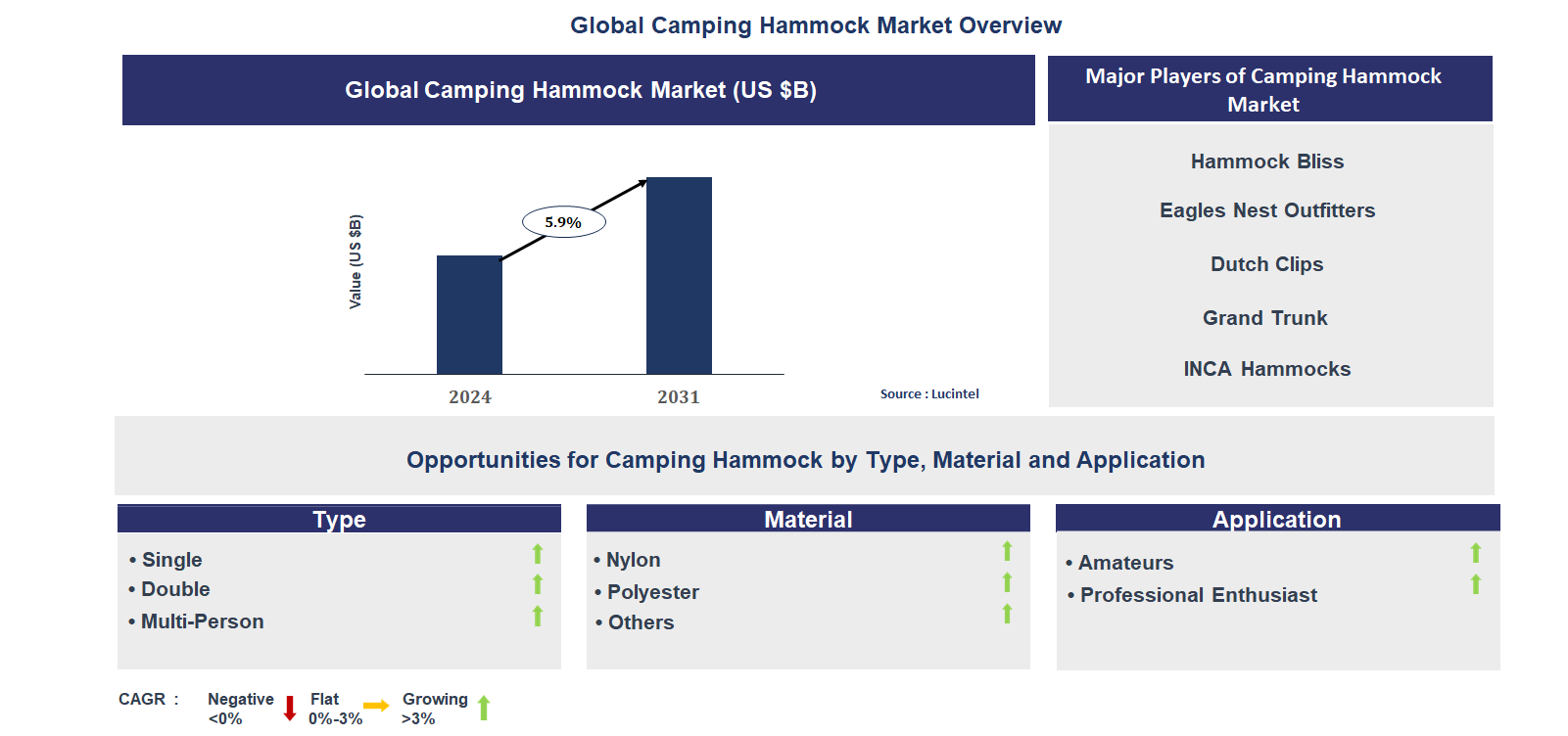
The future of the global camping hammock market looks promising with opportunities in the nylon and polyester markets. The global camping hammock market is expected to grow with a CAGR of 5.9% from 2025 to 2031. The major drivers for this market are the increasing popularity of outdoor recreational activities, the rising demand for lightweight camping gear, and the growing interest in eco-friendly camping solutions.• Lucintel forecasts that, within the type category, double is expected to witness the highest growth over the forecast period.
• Within the material category, nylon is expected to witness higher growth.
• In terms of region, APAC is expected to witness the highest growth over the forecast period. Gain valuable insights for your business decisions with our comprehensive 150+ page report. Sample figures with some insights are shown below.
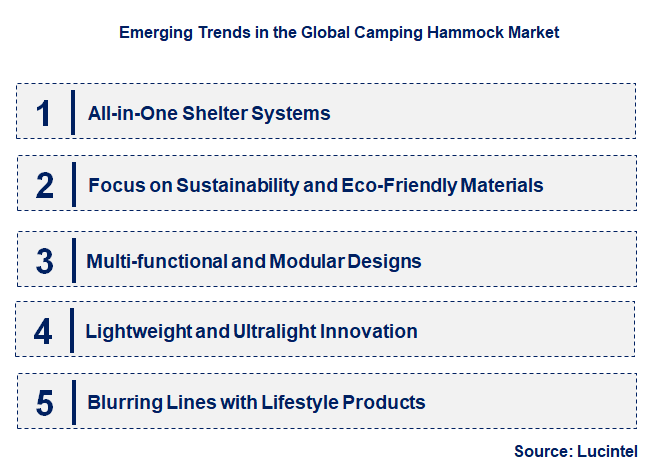
Emerging Trends in the Camping Hammock Market
The camping hammock market is being shaped by several key trends, from technological integration to sustainability, reflecting a shift in consumer values and outdoor practices. These trends are moving the industry beyond traditional hammocks, focusing on all-in-one solutions, eco-conscious production, and blurring the lines between outdoor gear and lifestyle products. This evolution is vital for attracting a new generation of users.• All-in-One Shelter Systems: There is a significant trend towards creating hammocks that serve as a complete shelter. This includes integrated bug nets, rain flies, and insulation systems. This trend is impacting the market by offering a convenient, lightweight alternative to traditional tents, appealing to minimalist backpackers and campers who seek a comprehensive and compact solution for their outdoor adventures.
• Focus on Sustainability and Eco-Friendly Materials: The market is seeing a growing consumer demand for environmentally conscious products. This trend involves using recycled materials, organic cotton, and sustainable manufacturing processes. Adopting sustainable practices not only appeals to a new generation of eco-aware consumers but also positions brands as responsible leaders, enhancing their reputation and marketability.
• Multi-functional and Modular Designs: Manufacturers are developing hammocks that are highly versatile and can be used in various settings, from the campsite to the backyard. This trend includes modular systems that allow users to add or remove components like stands or rain covers. This multi-functionality is impacting the market by broadening its appeal and providing greater value to consumers.
• Lightweight and Ultralight Innovation: There is an increasing focus on developing hammocks that are as light as possible, using high-tech fabrics like ripstop nylon and dyneema. This trend is driven by the rise of long-distance hiking and backpacking. This is impacting the market by catering to a niche segment of users who prioritize reducing pack weight, driving innovation in material science and design.
• Blurring Lines with Lifestyle Products: Camping hammocks are increasingly being marketed not just as outdoor gear but as general lifestyle and relaxation products. This trend is seen in stylish designs, a variety of colors, and marketing that focuses on relaxation and well-being. This is impacting the market by broadening its consumer base beyond traditional campers to include those who seek comfort for their backyard or balcony. The combination of these trends is fundamentally reshaping the camping hammock market. All-in-one systems and ultralight designs are enhancing performance, while a focus on sustainability and modularity is catering to modern consumer values. The shift to lifestyle marketing is changing how products are sold and used, creating a more responsive and consumer-friendly market.
Recent Development in the Camping Hammock Market
The camping hammock market is seeing several significant developments, driven by a blend of technological innovation, changing consumer habits, and a renewed focus on the user experience. These advancements are impacting everything from the design and materials of the hammocks to how they are distributed and marketed, making outdoor relaxation more accessible and enjoyable.• Integrated Bug Nets and Rain Flies: A key development is the widespread integration of bug nets and rain flies into hammock designs. This feature provides an all-in-one shelter system that eliminates the need for separate accessories. This is revolutionizing the user experience by offering protection from insects and rain, making hammock camping a more viable and comfortable option in diverse environments.
• Advanced Material Science: Manufacturers are adopting advanced materials like high-tenacity nylon and ripstop polyester to create hammocks that are both incredibly lightweight and strong. This development allows for products that can support a significant amount of weight while being compact and easy to carry. This is impacting the market by meeting the needs of backpackers and ultralight enthusiasts.
• Stand-Alone Hammock Systems: The development of portable, stand-alone hammock systems is a major recent development. These systems do not require trees for setup, thanks to lightweight, collapsible frames. This is impacting the market by expanding the use of hammocks to a wider variety of environments, such as beaches, open fields, and even backyards, broadening the consumer base.
• Innovative Suspension Systems: Recent developments are focused on creating user-friendly and highly adjustable suspension systems, such as tree-friendly straps and quick-release buckles. These systems make setup and takedown much faster and easier. This is impacting the market by improving the overall user experience and making hammock camping more accessible to beginners.
• Sustainability and Ethical Sourcing: A notable recent development is the growing trend toward sustainability. Manufacturers are exploring the use of recycled materials and are committed to ethical sourcing practices. This is impacting the market by aligning it with global environmental consciousness, attracting a new demographic of consumers and creating a more responsible and ethical industry. These recent developments are collectively transforming the camping hammock market. The integration of all-in-one features and the use of advanced materials are elevating performance standards, while a focus on user-friendly design and sustainability is broadening the user base. The development of stand-alone systems is changing how products are used, making the market more dynamic and responsive to a wider range of consumer needs.
Strategic Growth Opportunities in the Camping Hammock Market
The camping hammock market presents numerous strategic growth opportunities across key applications, driven by a growing global interest in outdoor pursuits and a shift in consumer behavior. By focusing on specific market segments, manufacturers and retailers can tap into new revenue streams and expand their market presence. These opportunities range from serving professional backpackers to catering to the burgeoning leisure and home decor markets.• Professional and Backpacking Applications: This segment presents a key growth opportunity by focusing on high-performance, ultralight hammocks and accessories. This includes products made with advanced materials like Dyneema. The impact is significant as these products command premium prices and are essential for serious backpackers, driving innovation and brand prestige through high-quality, specialized gear.
• Casual and Family Camping: The casual and family camping market is expanding rapidly, offering a substantial growth opportunity. This segment requires durable, comfortable, and easy-to-set-up hammocks. Strategic growth involves creating multi-person hammocks and bundled kits that include everything needed for a family outing. The impact is widespread, as this market segment drives high-volume sales and introduces new consumers to hammock camping.
• Home and Leisure Applications: A significant growth opportunity lies in marketing hammocks as a lifestyle and home decor item. This includes designing stylish, aesthetically pleasing hammocks and portable stands for use in backyards, patios, and even indoors. The impact is a broader market reach beyond traditional camping, attracting a new segment of consumers seeking comfort and relaxation at home.
• Glamping and Resorts: The rise of glamping (glamorous camping) and eco-resorts presents a unique growth opportunity. This application requires premium, high-quality hammocks with enhanced features for comfort and luxury. The impact is a new revenue stream from commercial clients, positioning hammocks as a high-end amenity that enhances the guest experience and drives demand for luxury-focused products.
• Urban and Park Applications: The growing trend of using hammocks in urban parks and public spaces presents a new growth area. This requires lightweight, compact, and easy-to-hang hammocks. The impact is a broader market reach beyond the wilderness, attracting city dwellers and college students who want a convenient way to relax outdoors. This segment focuses on portability and quick setup. These strategic growth opportunities are reshaping the camping hammock market by encouraging companies to diversify their product portfolios and target specific applications. By catering to the distinct needs of professional backpackers, family campers, home leisure enthusiasts, luxury resorts, and urban dwellers, the industry can achieve sustainable growth, innovate new products, and foster a more inclusive and dynamic market.
Camping Hammock Market Driver and Challenges
The camping hammock markets dynamics are shaped by a complex interplay of drivers and challenges, including various technological, economic, and social factors. The market is propelled by a growing global interest in outdoor activities and continuous innovation. However, it is also constrained by high costs and competition from traditional shelters. Navigating these dynamics is crucial for companies to maintain a competitive edge. The factors responsible for driving the camping hammock market include: 1. Rising Popularity of Outdoor Activities: The increasing global interest in outdoor recreational activities, such as camping, hiking, and backpacking, is a significant driver. This growing interest leads to a larger consumer base. The demand for lightweight and comfortable sleeping solutions is increasing as more people seek to connect with nature, driving sales of camping hammocks. 2. Focus on Lightweight and Minimalist Gear: The trend of "ultralight" backpacking and minimalist camping is a major driver. Consumers are seeking to reduce their pack weight and volume. This has created a strong demand for camping hammocks, which are often significantly lighter and more compact than traditional tents, appealing to a core segment of outdoor enthusiasts. 3. Increased E-commerce and Online Presence: The widespread adoption of e-commerce has made camping hammocks more accessible globally. Online stores offer a vast selection, competitive pricing, and direct-to-consumer sales. This driver lowers the barrier to entry for both consumers and smaller brands, democratizing the market and facilitating global reach, especially in regions with limited physical stores. 4. Social Media and Influencer Marketing: The rise of social media platforms like Instagram and YouTube, where influencers showcase their outdoor adventures, is a key driver. This visual marketing creates a sense of aspirational lifestyle, making hammock camping seem cool and accessible. This trend influences purchasing decisions and broadens the markets appeal to a younger, more style-conscious demographic. 5. Versatility and Multi-functionality: The versatility of camping hammocks, which can be used for both sleeping and lounging, is a major driver. Many new designs also integrate features like bug nets and rain flies. This multi-functionality offers a superior value proposition compared to single-purpose gear, attracting a broader consumer base who value flexibility and convenience. Challenges in the camping hammock market are: 1. Seasonal and Regional Dependency: The camping hammock market can be highly seasonal, with demand peaking during warmer months. In regions with long, cold winters, sales can decline significantly. This dependency on climate creates a challenge for maintaining consistent sales and can lead to inventory management issues, making it difficult for brands to achieve year-round profitability. 2. Competition from Traditional Tents: The market faces stiff competition from traditional camping tents, which have a long-established history and are often perceived as a more secure and spacious shelter option. This competition requires hammock manufacturers to continuously innovate and educate consumers on the benefits of hammock camping, such as comfort and a lower environmental footprint. 3. Site Limitations and Setup Issues: A significant challenge is the limitation on where hammocks can be used, as they require suitable trees or a stand for setup. This is a barrier to entry for users who camp in open fields or on rocky terrain. This requires manufacturers to invest in solutions like portable stands, which can add to the products cost and weight. The camping hammock markets landscape is shaped by a dual force of potent drivers and significant challenges. While the rising popularity of outdoor activities, minimalist trends, and e-commerce propel the market forward, it must contend with the hurdles of seasonal demand, competition from traditional shelters, and site limitations. The ability of manufacturers to innovate and adapt will be crucial for sustained growth in this dynamic industry.List of Camping Hammock Companies
Companies in the market compete on the basis of product quality offered. Major players in this market focus on expanding their manufacturing facilities, R&D investments, infrastructural development, and leverage integration opportunities across the value chain. With these strategies camping hammock companies cater increasing demand, ensure competitive effectiveness, develop innovative products & technologies, reduce production costs, and expand their customer base. Some of the camping hammock companies profiled in this report include-• Hammock Bliss
• Eagles Nest Outfitters
• Dutch Clips
• Grand Trunk
• INCA Hammocks
Camping Hammock Market by Segment
The study includes a forecast for the global camping hammock market by type, material, application, and region.Camping Hammock Market by Type [Value from 2019 to 2031]:
• Single
• Double
• Multi-Person
Camping Hammock Market by Material [Value from 2019 to 2031]:
• Nylon
• Polyester
• Others
Camping Hammock Market by Application [Value from 2019 to 2031]:
• Amateurs
• Professional Enthusiast
Camping Hammock Market by Region [Value from 2019 to 2031]:
• North America
• Europe
• Asia Pacific
• The Rest of the World
Country Wise Outlook for the Camping Hammock Market
The camping hammock market is experiencing a period of dynamic growth, driven by a global shift towards lightweight, minimalist outdoor adventures and a renewed focus on comfort and sustainability. Recent developments are centered on improving product durability, weather resistance, and versatility, making hammocks a preferred choice for a new generation of campers and outdoor enthusiasts.• United States: The U.S. market is a leader in innovation and consumer trends. Recent developments include a strong emphasis on integrating features like built-in bug nets and rain flies to create all-in-one shelter systems. The market is also seeing a rise in specialized, ultralight hammocks for backpacking, driven by a consumer base that values portability and efficiency.
• China: China’s market is rapidly expanding, fueled by rising disposable incomes and a growing interest in outdoor activities among its urban population. Developments are focused on mass production of affordable, high-quality camping hammocks. The market is also seeing a surge in demand for products with advanced features, with both domestic and international brands competing for market share.
• Germany: Germanys market is characterized by a strong focus on quality and precision engineering. Developments involve the use of eco-friendly and highly durable materials, such as recycled synthetics. German brands are known for their reliable, long-lasting products that cater to serious campers and outdoor enthusiasts who prioritize safety and sustainability in all weather conditions.
• India: The camping hammock market in India is emerging, driven by a growing inclination towards adventure tourism and outdoor recreational activities. Developments are centered on providing accessible, entry-level products to encourage new participants. The market is heavily reliant on e-commerce, which is making a wide variety of domestic and international brands available to a large, young consumer base.
• Japan: Japan’s market is mature and highly specialized, with developments focused on innovative design and meticulous craftsmanship. Recent trends include the rise of "glamping" and solo camping, which has led to a demand for stylish, compact, and high-quality hammocks that blend aesthetics with functionality. Japanese consumers value products that offer a blend of comfort and minimalist design.

Features of the Global Camping Hammock Market
Market Size Estimates: Camping hammock market size estimation in terms of value ($B). Trend and Forecast Analysis: Market trends (2019 to 2024) and forecast (2025 to 2031) by various segments and regions. Segmentation Analysis: Camping hammock market size by type, material, application, and region in terms of value ($B). Regional Analysis: Camping hammock market breakdown by North America, Europe, Asia Pacific, and Rest of the World. Growth Opportunities: Analysis of growth opportunities in different types, materials, applications, and regions for the camping hammock market. Strategic Analysis: This includes M&A, new product development, and competitive landscape of the camping hammock market. Analysis of competitive intensity of the industry based on Porter’s Five Forces model.
FAQ
Q1. What is the growth forecast for camping hammock market? Answer: The global camping hammock market is expected to grow with a CAGR of 5.9% from 2025 to 2031. Q2. What are the major drivers influencing the growth of the camping hammock market? Answer: The major drivers for this market are the increasing popularity of outdoor recreational activities, the rising demand for lightweight camping gear, and the growing interest in eco-friendly camping solutions. Q3. What are the major segments for camping hammock market? Answer: The future of the camping hammock market looks promising with opportunities in the nylon and polyester markets. Q4. Who are the key camping hammock market companies? Answer: Some of the key camping hammock companies are as follows:• Hammock Bliss
• Eagles Nest Outfitters
• Dutch Clips
• Grand Trunk
• INCA Hammocks Q5. Which camping hammock market segment will be the largest in future? Answer: Lucintel forecasts that, within the type category, double is expected to witness the highest growth over the forecast period. Q6. In camping hammock market, which region is expected to be the largest in next 5 years? Answer: In terms of region, APAC is expected to witness the highest growth over the forecast period. Q7. Do we receive customization in this report? Answer: Yes, Lucintel provides 10% customization without any additional cost.
Table of Contents
List of Figures
List of Tables
Methodology
- In-depth interviews of the major players in this market
- Detailed secondary research from competitors’ financial statements and published data
- Extensive searches of published works, market, and database information pertaining to industry news, company press releases, and customer intentions
- A compilation of the experiences, judgments, and insights of Lucintel’s professionals, who have analyzed and tracked this market over the years.


Buy Now
Choose a license that fits your team. Instant PDF delivery.
Prices exclude taxes. Instant delivery. Custom licensing available on request.
Key Questions
- • What are some of the most promising, high-growth opportunities for the camping hammock market by type (single, double, and multi-person), material (nylon, polyester, and others), application (amateurs and professional enthusiast), and region (North America, Europe, Asia Pacific, and the Rest of the World)?
- • Which segments will grow at a faster pace and why?
- • Which region will grow at a faster pace and why?
- • What are the key factors affecting market dynamics? What are the key challenges and business risks in this market?
- • What are the business risks and competitive threats in this market?
- • What are the emerging trends in this market and the reasons behind them?
- • What are some of the changing demands of customers in the market?
- • What are the new developments in the market? Which companies are leading these developments?
- • Who are the major players in this market? What strategic initiatives are key players pursuing for business growth?
- • What are some of the competing products in this market and how big of a threat do they pose for loss of market share by material or product substitution?
- • What M&A activity has occurred in the last 5 years and what has its impact been on the industry? For any questions related to Camping Hammock Market, Camping Hammock Market Size, Camping Hammock Market Growth, Camping Hammock Market Analysis, Camping Hammock Market Report, Camping Hammock Market Share, Camping Hammock Market Trends, Camping Hammock Market Forecast, Camping Hammock Companies, write Lucintel analyst at email: helpdesk@lucintel.com. We will be glad to get back to you soon.


