
Report Feature
Calving Sensor Market Trends and Forecast
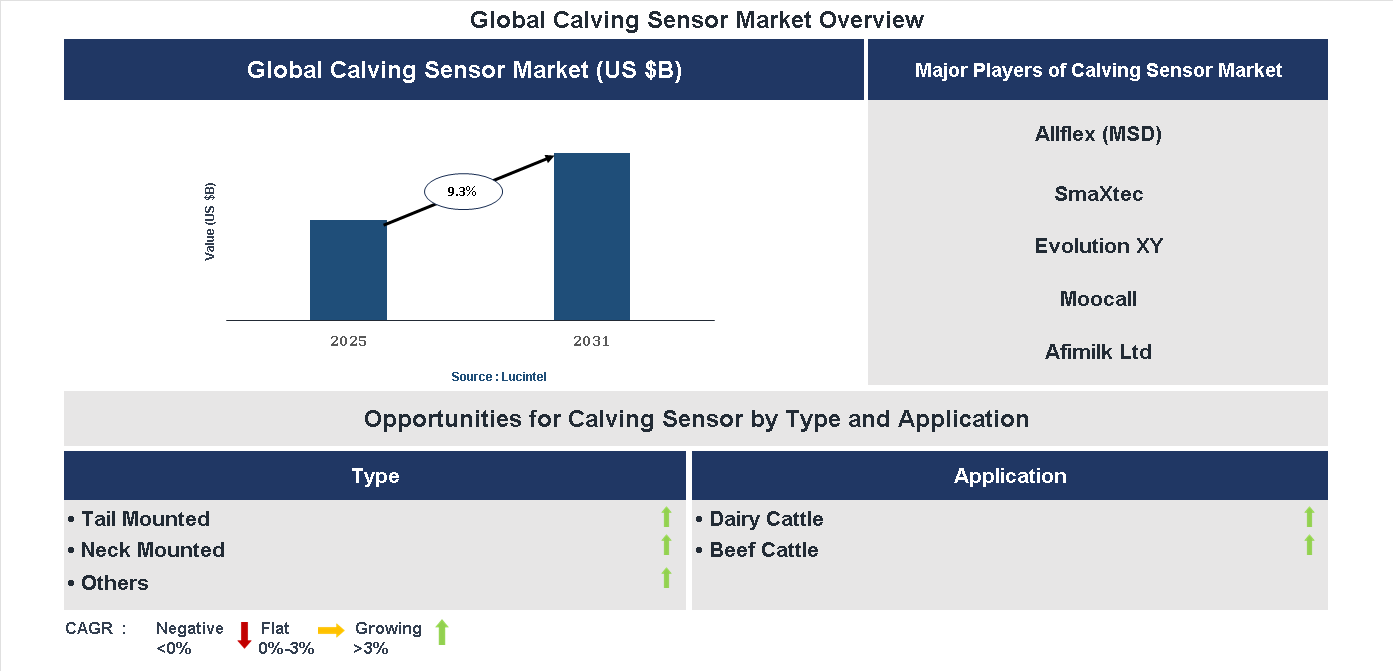
The future of the global calving sensor market looks promising with opportunities in the dairy cattle and beef cattle markets. The global calving sensor market is expected to grow with a CAGR of 9.3% from 2025 to 2031. The major drivers for this market are the increasing adoption of precision livestock farming technology, the growing emphasis on animal health & welfare, and the rising awareness among farmer about long-term ROI.• Lucintel forecasts that, within the type category, tail mounted is expected to witness higher growth over the forecast period.
• Within the application category, beef cattle is expected to witness higher growth.
• In terms of region, APAC is expected to witness the highest growth over the forecast period. Gain valuable insights for your business decisions with our comprehensive 150+ page report. Sample figures with some insights are shown below.
Emerging Trends in the Calving Sensor Market
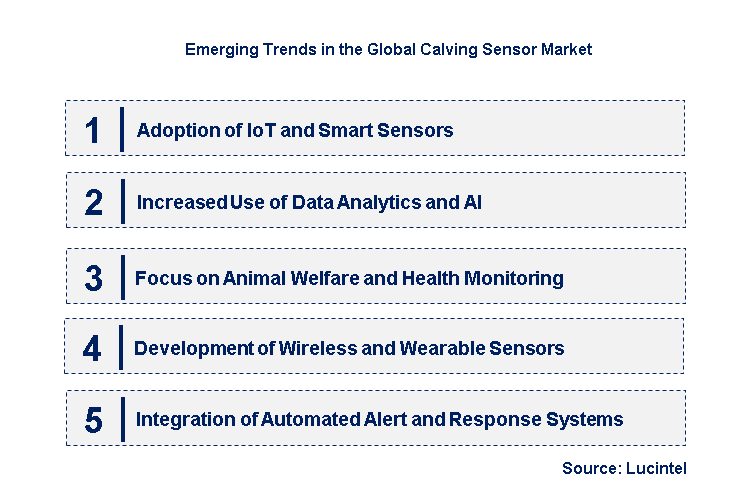
The calving sensor market is experiencing rapid growth driven by advancements in dairy farming technology, increasing demand for precision livestock management, and the need to improve milk production efficiency. As farmers and industry stakeholders seek innovative solutions to monitor and manage calving events more effectively, new trends are emerging that are transforming the landscape of this market. These developments are not only enhancing animal welfare but also optimizing farm productivity and reducing operational costs. The integration of IoT, data analytics, and automation is creating a more connected and intelligent approach to calving management, shaping the future of dairy farming.• Adoption of IoT and Smart Sensors: The integration of Internet of Things (IoT) technology and smart sensors is revolutionizing calving management by providing real-time data on animal health and behavior. These sensors monitor vital signs, movement, and environmental conditions, alerting farmers to impending calving events. This proactive approach reduces calving difficulties, minimizes calf mortality, and improves overall herd health. The widespread adoption of IoT devices is driven by decreasing costs, increased connectivity, and the need for precise, data-driven decision-making in dairy farms.
• Increased Use of Data Analytics and AI: Advanced data analytics and artificial intelligence (AI) are being employed to interpret sensor data, predict calving events, and optimize farm operations. Machine learning algorithms analyze historical and real-time data to forecast calving times accurately, enabling better resource planning and labor management. This trend enhances decision-making accuracy, reduces labor costs, and improves animal welfare by providing timely interventions. The integration of AI-driven insights is making calving management more efficient and less labor-intensive.
• Focus on Animal Welfare and Health Monitoring: There is a growing emphasis on animal welfare, with sensors being used to monitor health indicators such as temperature, activity levels, and rumination patterns. Early detection of health issues allows for prompt treatment, reducing the risk of complications during calving. This trend aligns with consumer preferences for ethically produced dairy products and regulatory standards for animal welfare. Improved health monitoring also leads to better productivity and longevity of dairy cattle, benefiting farmers economically.
• Development of Wireless and Wearable Sensors: Wireless and wearable calving sensors are gaining popularity due to their ease of use and minimal invasiveness. These devices can be attached to animals without restricting movement, providing continuous monitoring without the need for manual checks. Wireless connectivity ensures seamless data transmission to cloud platforms for analysis. This trend enhances farm efficiency, reduces labor requirements, and allows for remote monitoring, making calving management more flexible and scalable across different farm sizes.
• Integration of Automated Alert and Response Systems: Automated alert systems are being integrated with sensors to notify farmers instantly of potential calving issues. Some systems are linked to automated responses, such as adjusting environmental conditions or activating assistive devices. This automation reduces response times, minimizes calving complications, and improves outcomes for both cows and calves. The deployment of such systems is driven by the need for real-time intervention and the desire to reduce manual oversight, ultimately leading to more efficient and safer calving processes. In summary, these emerging trends are collectively transforming the calving sensor market by making calving management more precise, proactive, and efficient. The adoption of IoT, AI, and automation is fostering smarter farms that prioritize animal welfare while optimizing productivity. As these technologies continue to evolve, they will further reshape the dairy industry, enabling farmers to achieve higher yields, better animal health, and sustainable operations.
Recent Development in the Calving Sensor Market
The calving sensor market has experienced significant growth driven by advancements in dairy farm management and the increasing demand for automation in livestock monitoring. As farmers seek to improve productivity and animal health, innovative sensor technologies are becoming essential tools. Recent developments reflect a focus on enhancing accuracy, connectivity, and ease of use, which are transforming traditional dairy practices. These innovations are not only improving calving detection but also enabling better herd management and reducing labor costs. The markets evolution is influenced by technological, economic, and environmental factors, shaping a more efficient and sustainable dairy industry worldwide.• Integration of IoT Technology: The adoption of Internet of Things (IoT) devices has revolutionized calving monitoring by enabling real-time data collection and remote management. Sensors connected to cloud platforms provide instant alerts, improving calving prediction accuracy and reducing labor requirements. This integration enhances overall herd health management and operational efficiency, leading to increased productivity and profitability for dairy farmers.
• Development of Wireless Sensors: Wireless calving sensors have gained popularity due to their ease of installation and flexibility. These sensors eliminate the need for extensive wiring, making them suitable for various farm sizes and layouts. Their ability to transmit data wirelessly ensures continuous monitoring, reducing the risk of missed calving events and improving timely interventions, which ultimately enhances animal welfare and farm output.
• Use of Machine Learning Algorithms: Advanced machine learning algorithms are being incorporated into calving sensors to analyze data patterns and predict calving events more accurately. These algorithms improve the reliability of alerts, minimizing false positives and negatives. The enhanced predictive capability helps farmers plan resources better, reduce calving-related complications, and optimize herd management strategies.
• Focus on Animal Welfare and Data Security: Recent developments emphasize ensuring animal welfare through non-invasive sensors that do not cause discomfort. Additionally, data security measures are being integrated to protect sensitive farm information. These focus areas build trust among users and promote wider adoption of calving sensors, contributing to more ethical and secure livestock management practices.
• Expansion of Market Applications: The market is witnessing diversification with sensors being used for broader applications such as health monitoring, reproductive management, and environmental condition tracking. This expansion provides comprehensive insights into herd health, enabling proactive interventions. The broader application scope increases market potential and encourages technological innovation, supporting sustainable dairy farming practices. In summary, recent developments in the calving sensor market are significantly enhancing monitoring accuracy, operational efficiency, and animal welfare. The integration of IoT, wireless technology, and machine learning is transforming traditional dairy practices into more data-driven and sustainable systems. These advancements are driving market growth, expanding application areas, and fostering innovation, ultimately contributing to a more efficient, ethical, and profitable dairy industry worldwide.
Strategic Growth Opportunities in the Calving Sensor Market
The calving sensor market is experiencing rapid growth driven by advancements in dairy farm management and the increasing demand for automation in livestock monitoring. As farmers seek to improve productivity and animal health, innovative sensor technologies are becoming essential. The markets expansion is fueled by the adoption of smart farming practices, technological integration, and the need for real-time data to optimize calving processes. These developments are creating new opportunities across various applications, transforming traditional dairy farming into more efficient, data-driven operations. The following are five key growth opportunities across different applications in this market.• Enhanced Monitoring and Data Analytics: The integration of calving sensors with data analytics tools allows farmers to predict calving events accurately, reducing labor and improving animal welfare. This application supports proactive management, minimizes calving-related complications, and boosts overall productivity, making dairy operations more efficient and profitable.
• Early Detection and Intervention: Calving sensors enable early detection of health issues by monitoring behavioral and physiological changes. This early warning system helps prevent complications, reduces veterinary costs, and improves animal well-being, leading to healthier herds and increased milk yield.
• Streamlining Operations: Incorporating calving sensors into automated systems facilitates seamless data collection and management. This integration simplifies record-keeping, enhances decision-making, and optimizes resource allocation, thereby increasing operational efficiency and reducing manual labor.
• Improving Genetic Selection: Sensor data provides insights into calving patterns and animal performance, supporting selective breeding strategies. This application accelerates genetic improvement, enhances herd quality, and increases long-term productivity and profitability.
• Rural Adoption and Infrastructure Development: Growing awareness and infrastructure investments in developing regions are expanding the market. Adoption of calving sensors in emerging economies enhances dairy productivity, supports rural livelihoods, and opens new revenue streams for sensor manufacturers. In summary, these growth opportunities are significantly impacting the calving sensor market by driving technological innovation, improving herd management, and expanding market reach. The adoption of advanced sensors and integrated systems is transforming traditional dairy farming into a more efficient, sustainable, and profitable industry worldwide.
Calving Sensor Market Driver and Challenges
The calving sensor market is influenced by a variety of technological, economic, and regulatory factors that shape its growth trajectory. Advances in sensor technology and data analytics are enabling more precise monitoring of livestock, thereby improving productivity and animal welfare. Economic factors such as rising demand for dairy and beef products drive market expansion, while regulatory standards concerning animal health and farm management influence adoption rates. Additionally, increasing awareness about sustainable farming practices and the need for efficient resource utilization are further propelling market growth. However, the market also faces challenges related to high initial investment costs, technological integration issues, and regulatory compliance complexities, which could hinder widespread adoption and growth. The factors responsible for driving the calving sensor market include:• Technological Advancements: The development of sophisticated sensors and IoT devices has revolutionized livestock monitoring. These sensors provide real-time data on cow health, activity, and calving readiness, enabling farmers to make timely decisions. Enhanced accuracy and ease of use have increased adoption among dairy farmers, leading to improved herd management and productivity. Continuous innovation in sensor durability and data analytics further fuels market growth by offering more comprehensive insights.
• Rising Demand for Dairy and Meat Products: Increasing global population and changing dietary preferences are driving higher consumption of dairy and meat products. This surge necessitates efficient livestock management to meet demand, prompting farmers to adopt calving sensors for better herd health and productivity. The ability to reduce calving-related losses and optimize breeding cycles directly impacts profitability, making sensor technology an essential tool in modern livestock farming.
• Regulatory and Animal Welfare Standards: Governments and industry bodies are implementing stricter regulations concerning animal health, welfare, and farm management practices. Calving sensors help ensure compliance by monitoring animal health parameters and providing early warning signs of distress or illness. This not only helps farmers adhere to legal standards but also enhances consumer trust in ethically produced products, thereby supporting market growth.
• Cost Reduction and Efficiency: The integration of calving sensors reduces labor costs and minimizes calving-related losses by enabling timely interventions. Automated alerts and data-driven insights streamline farm operations, leading to increased efficiency. As the technology becomes more affordable and accessible, small and medium-sized farms are increasingly adopting these solutions, broadening the market base and encouraging sustainable farming practices.
• Growing Adoption of IoT and Data Analytics: The proliferation of IoT devices and advanced data analytics platforms has transformed livestock management. Calving sensors generate vast amounts of data that can be analyzed for predictive insights, improving decision-making processes. This technological integration enhances herd health, reduces mortality rates, and boosts overall productivity, thereby accelerating market growth and encouraging further innovation in sensor technology. The challenges facing this Market include:
• High Initial Investment Costs: Implementing calving sensor systems requires significant upfront capital for hardware, installation, and integration with existing farm infrastructure. Small-scale farmers often find these costs prohibitive, limiting widespread adoption. Additionally, ongoing maintenance and data management expenses can strain farm budgets, especially in regions with limited financial resources, thereby impeding market expansion.
• Technological Integration and Compatibility Issues: Integrating sensors with existing farm management systems can be complex due to compatibility issues and a lack of standardized platforms. Farmers may face difficulties in managing multiple devices and interpreting data effectively. This technological fragmentation hampers seamless adoption and reduces the overall efficiency gains expected from sensor deployment.
• Regulatory and Data Privacy Concerns: The use of IoT devices raises concerns regarding data security and privacy. Farmers and stakeholders worry about unauthorized access to sensitive farm data, which could be exploited or lead to competitive disadvantages. Additionally, evolving regulatory frameworks around data ownership and usage create uncertainties, potentially delaying market growth and technological adoption. In summary, the calving sensor market is driven by technological innovations, rising demand for animal products, regulatory compliance needs, cost efficiencies, and the integration of IoT and data analytics. However, high initial costs, integration challenges, and data privacy concerns pose significant hurdles. These factors collectively influence the pace and scope of market growth, with technological advancements and increasing awareness likely to propel expansion despite existing challenges. The markets future will depend on addressing these barriers through cost reduction, standardization, and robust data security measures, ultimately fostering sustainable and efficient livestock management practices.
List of Calving Sensor Companies
Companies in the market compete on the basis of product quality offered. Major players in this market focus on expanding their manufacturing facilities, R&D investments, infrastructural development, and leverage integration opportunities across the value chain. With these strategies calving sensor companies cater increasing demand, ensure competitive effectiveness, develop innovative products & technologies, reduce production costs, and expand their customer base. Some of the calving sensor companies profiled in this report include-• Allflex (MSD)
• SmaXtec
• Evolution XY
• Moocall
• Afimilk Ltd
• MEDRIA
• ALB Innovation
Calving Sensor Market by Segment
The study includes a forecast for the global calving sensor market by type, application, and region.Calving Sensor Market by Type [Value from 2019 to 2031]:
• Tail Mounted
• Neck Mounted
• Others
Calving Sensor Market by Application [Value from 2019 to 2031]:
• Dairy Cattle
• Beef Cattle
Calving Sensor Market by Region [Value from 2019 to 2031]:
• North America
• Europe
• Asia Pacific
• The Rest of the World
Country Wise Outlook for the Calving Sensor Market
The calving sensor market has experienced significant growth driven by advancements in dairy farming technology, increasing demand for precision livestock management, and the need to improve milk production efficiency. Innovations in sensor technology, data analytics, and automation are transforming how farmers monitor and manage calving events, reducing labor costs and enhancing animal welfare. The markets expansion is also fueled by rising awareness of early disease detection and the importance of timely calving assistance. As countries adopt smarter farming practices, the global calving sensor market is poised for continued growth, with regional developments reflecting varying levels of technological adoption and agricultural priorities. United States: The U.S. market has seen rapid adoption of advanced calving sensors, driven by large-scale dairy farms seeking to optimize productivity. Innovations include integration with farm management software and real-time alerts, improving calving success rates. Government initiatives promoting precision agriculture further support market growth, alongside increased investments in IoT-enabled livestock monitoring systems. China: China is experiencing a surge in calving sensor adoption, supported by government policies aimed at modernizing agriculture. The focus is on improving dairy herd health and productivity through affordable sensor solutions. Rapid urbanization and rising dairy consumption are also fueling demand, with local manufacturers expanding their product offerings to meet the growing market. Germany: Germanys market is characterized by high technological adoption and strict animal welfare standards. The focus is on integrating sensors with sustainable farming practices and ensuring data accuracy. Leading companies are developing eco-friendly sensors with enhanced durability, catering to the countrys emphasis on quality and environmental responsibility. India: The Indian calving sensor market is in its nascent stage but shows promising growth potential. Affordability and ease of use are key factors driving adoption among small to medium-sized dairy farmers. Government schemes promoting dairy farming and technological awareness are facilitating market expansion, with local startups innovating cost-effective sensor solutions. Japan: Japans market is marked by high technological sophistication and a focus on automation. Advanced sensors with AI capabilities are being deployed to monitor calving and detect health issues early. The emphasis on animal welfare and farm efficiency aligns with the countrys push towards smart agriculture, fostering steady market growth.
Features of the Global Calving Sensor Market
Market Size Estimates: Calving sensor market size estimation in terms of value ($B). Trend and Forecast Analysis: Market trends (2019 to 2024) and forecast (2025 to 2031) by various segments and regions. Segmentation Analysis: Calving sensor market size by type, application, and region in terms of value ($B). Regional Analysis: Calving sensor market breakdown by North America, Europe, Asia Pacific, and Rest of the World. Growth Opportunities: Analysis of growth opportunities in different types, applications, and regions for the calving sensor market. Strategic Analysis: This includes M&A, new product development, and competitive landscape of the calving sensor market. Analysis of competitive intensity of the industry based on Porter’s Five Forces model.
FAQ
Q1. What is the growth forecast for calving sensor market? Answer: The global calving sensor market is expected to grow with a CAGR of 9.3% from 2025 to 2031. Q2. What are the major drivers influencing the growth of the calving sensor market? Answer: The major drivers for this market are the increasing adoption of precision livestock farming technology, the growing emphasis on animal health & welfare, and the rising awareness among farmer about long-term ROI. Q3. What are the major segments for calving sensor market? Answer: The future of the calving sensor market looks promising with opportunities in the dairy cattle and beef cattle markets. Q4. Who are the key calving sensor market companies? Answer: Some of the key calving sensor companies are as follows:• Allflex (MSD)
• SmaXtec
• Evolution XY
• Moocall
• Afimilk Ltd
• MEDRIA
• ALB Innovation Q5. Which calving sensor market segment will be the largest in future? Answer: Lucintel forecasts that, within the type category, tail mounted is expected to witness higher growth over the forecast period. Q6. In calving sensor market, which region is expected to be the largest in next 5 years? Answer: In terms of region, APAC is expected to witness the highest growth over the forecast period. Q7. Do we receive customization in this report? Answer: Yes, Lucintel provides 10% customization without any additional cost.
Table of Contents
List of Figures
List of Tables
Methodology
- In-depth interviews of the major players in this market
- Detailed secondary research from competitors’ financial statements and published data
- Extensive searches of published works, market, and database information pertaining to industry news, company press releases, and customer intentions
- A compilation of the experiences, judgments, and insights of Lucintel’s professionals, who have analyzed and tracked this market over the years.


Buy Now
Choose a license that fits your team. Instant PDF delivery.
Prices exclude taxes. Instant delivery. Custom licensing available on request.
Key Questions
- • What are some of the most promising, high-growth opportunities for the calving sensor market by type (tail mounted, neck mounted, and others), application (dairy cattle and beef cattle), and region (North America, Europe, Asia Pacific, and the Rest of the World)?
- • Which segments will grow at a faster pace and why?
- • Which region will grow at a faster pace and why?
- • What are the key factors affecting market dynamics? What are the key challenges and business risks in this market?
- • What are the business risks and competitive threats in this market?
- • What are the emerging trends in this market and the reasons behind them?
- • What are some of the changing demands of customers in the market?
- • What are the new developments in the market? Which companies are leading these developments?
- • Who are the major players in this market? What strategic initiatives are key players pursuing for business growth?
- • What are some of the competing products in this market and how big of a threat do they pose for loss of market share by material or product substitution?
- • What M&A activity has occurred in the last 5 years and what has its impact been on the industry? For any questions related to Calving Sensor Market, Calving Sensor Market Size, Calving Sensor Market Growth, Calving Sensor Market Analysis, Calving Sensor Market Report, Calving Sensor Market Share, Calving Sensor Market Trends, Calving Sensor Market Forecast, Calving Sensor Companies, write Lucintel analyst at email: helpdesk@lucintel.com. We will be glad to get back to you soon.


