
Market Report · July 22, 2026

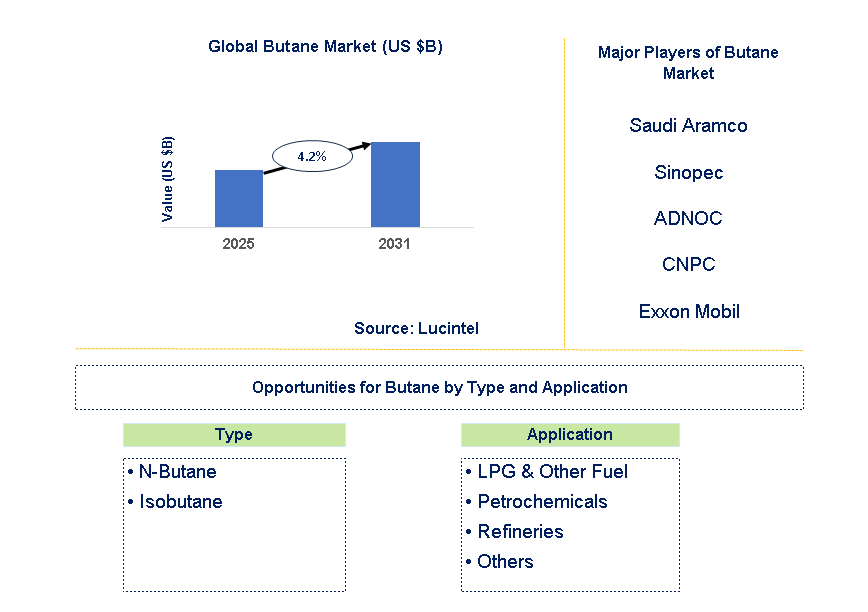
Key data points: The growth forecast = 4.2% annually for the next 7 years. Scroll below to get more insights. This market report covers trends, opportunities and forecasts in butane market to 2031 by type (N-butane and isobutane), application (LPG & fuel, petrochemicals, refineries, and others), and region (North America, Europe, Asia Pacific, and the Rest of the World)
We'll send your sample report shortly.
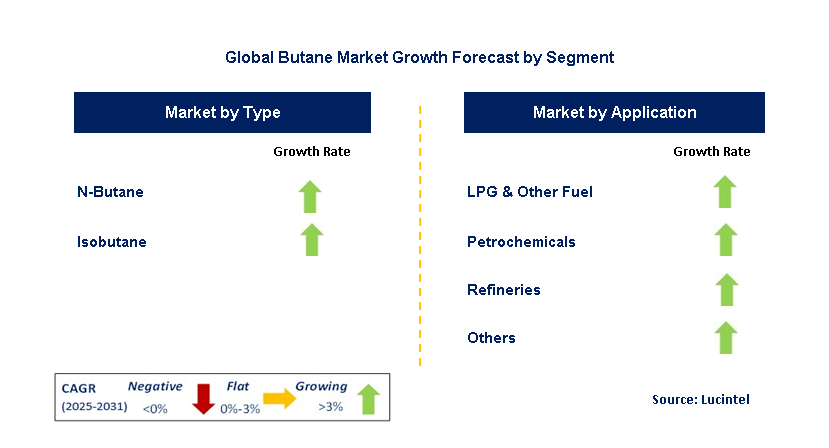
• Lucintel forecasts that, within the type category, N-butane is expected to witness higher growth over the forecast period.
• Within the application category, petrochemical is expected to witness the highest growth.
• In terms of region, APAC is expected to witness the highest growth over the forecast period. Gain valuable insights for your business decisions with our comprehensive 150+ page report. Sample figures with some insights are shown below.
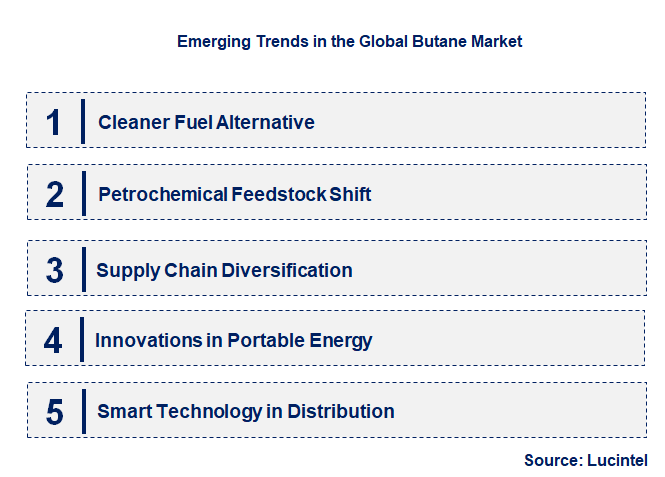
• Cleaner Fuel Alternative: There is a growing trend of using butane as a cleaner alternative to traditional fossil fuels like coal and firewood, particularly for residential and commercial heating. This is driven by global environmental concerns and government initiatives promoting cleaner cooking fuels. The shift is boosting demand for LPG, of which butane is a key component, in developing nations.
• Petrochemical Feedstock Shift: A key trend is the increasing use of butane as a petrochemical feedstock, especially in the production of olefins like ethylene and butadiene. As the cost of butane remains competitive compared to other feedstocks like naphtha, petrochemical producers are adjusting their operations. This trend is solidifying butane's role as a vital raw material for the plastics and synthetic rubber industries.
• Supply Chain Diversification: The market is trending towards supply chain diversification to mitigate geopolitical risks and ensure energy security. While a few countries, like the United States and the Middle East, dominate production, major importing nations are seeking to establish long-term contracts with various suppliers. This trend is leading to new investments in export infrastructure and a more resilient global trade network.
• Innovations in Portable Energy: The market is witnessing a trend of innovation in portable energy solutions, such as butane gas canisters for camping, outdoor cooking, and mobile heaters. These products are gaining popularity due to their convenience and portability. This trend is creating a stable, high-margin niche market, with a focus on product safety, design, and distribution through retail and e-commerce channels.
• Smart Technology in Distribution: The butane market is seeing a trend towards the adoption of smart technologies in its supply chain. This includes the use of IoT sensors to monitor inventory levels in tanks and cylinders, and AI-powered logistics to optimize delivery routes. This trend is improving operational efficiency, reducing costs, and enhancing safety throughout the distribution network. These emerging trends are fundamentally reshaping the butane market. The shift towards cleaner fuels and petrochemical feedstocks is creating new, high-value segments, while innovations in supply chain management and portable energy are improving efficiency and broadening the market's scope. The market is becoming more complex, specialized, and technologically integrated.
• U.S. Shale Gas Boom: A major development is the U.S. shale gas boom, which has led to a significant increase in the production of natural gas liquids, including butane. This surplus has transformed the U.S. into a major exporter, impacting global prices and trade flows. This development has provided a reliable and low-cost source of butane for international markets.
• Rise of Petrochemical Feedstock: A key development is the growing use of butane as a preferred feedstock for petrochemical crackers. As a more economical alternative to other feedstocks like naphtha, butane's use in producing ethylene and butadiene is increasing. This development is solidifying butane's role in the production of essential plastics and synthetic rubbers, driving industrial demand.
• Government Subsidies for LPG: In developing nations, particularly India and China, a key development is government-led subsidy programs to promote the use of LPG (which contains butane) for residential cooking. These initiatives, aimed at replacing polluting fuels like biomass, have significantly boosted domestic consumption and created a massive import market.
• Advancements in Butane Isomerization: There have been recent developments in butane isomerization technology, which converts normal butane into isobutane. Isobutane is a high-value product used in the production of high-octane gasoline. These technological advancements are allowing refineries to enhance their product mix and meet the growing demand for cleaner, more efficient fuels.
• Increased Focus on Bio-Butane: A recent development is the growing research and investment in producing bio-butane from renewable sources. While still a nascent market, this development is driven by the global push for a bio-based economy and reducing dependence on fossil fuels. It represents a long-term strategic shift towards a more sustainable butane supply. These key developments are having a profound impact on the butane market by expanding its applications beyond traditional uses and reconfiguring global trade patterns. The market is becoming more integrated with the petrochemical and energy sectors, driven by technological innovation and a global push towards cleaner and more efficient energy sources.
• Growth in Residential LPG: The most significant opportunity lies in the expanding use of liquefied petroleum gas (LPG) for residential cooking and heating in developing countries. As urbanization and government initiatives promote cleaner fuels, demand for LPG is soaring. This presents a prime opportunity for producers and distributors to expand their supply and logistics networks into these high-growth consumer markets.
• Petrochemical Sector Expansion: A key growth opportunity is in the petrochemical industry, where butane is increasingly used as a feedstock. The global demand for plastics, synthetic rubber, and other chemicals continues to grow, driving a consistent need for butane. This presents an opportunity for producers to invest in feedstock flexibility and long-term contracts with petrochemical manufacturers.
• Automotive Autogas Market: The use of butane as an automotive fuel, or autogas, represents a strategic growth opportunity. As a cleaner-burning alternative to gasoline, autogas is supported by government incentives in many countries. This presents an opportunity to invest in a growing niche market for vehicles and a supporting refueling infrastructure.
• Aerosol Propellants and Foaming Agents: The use of butane as a propellant in aerosols and a foaming agent in insulation and packaging is a stable growth opportunity. As global consumption of consumer goods and construction materials increases, so does the demand for butane in these applications. This provides a consistent and diversified revenue stream.
• Portable Energy for Recreation: The portable energy market for recreational activities like camping and outdoor cooking is a niche but high-growth opportunity. The demand for small, convenient butane gas canisters is increasing. Companies can capitalize on this by focusing on product innovation, brand development, and a strong retail and e-commerce distribution strategy. These strategic growth opportunities are reshaping the butane market landscape. By focusing on high-growth areas like residential LPG and petrochemicals, and by developing niche markets like portable energy, companies can unlock significant new revenue streams. This shift is positioning butane as a more versatile and essential commodity in the global energy and chemical sectors.
• Saudi Aramco
• Sinopec
• ADNOC
• CNPC
• Exxon Mobil
• KNPC
• Phillips66
• Bharat Petroleum
• Pemex
• Total
• N-Butane
• Isobutane
• LPG & Other Fuel
• Petrochemicals
• Refineries
• Others
• North America
• Europe
• Asia Pacific
• The Rest of the World
• United States: The U.S. butane market is heavily influenced by its abundant shale gas production, which has created a surplus of natural gas liquids. This has driven down domestic prices, making U.S. butane a competitive feedstock for petrochemicals and a major export to other regions. Recent developments include significant investments in export terminals and isomerization plants to meet global demand for high-octane gasoline.
• China: As the world's largest consumer, China's butane market is driven by its massive petrochemical sector and widespread use of LPG for residential cooking. Recent developments include a push to use more butane as a feedstock for steam crackers to produce olefins, which are essential for plastics. Government subsidies for LPG are also a key factor in driving consumer demand.
• Germany: In Germany, the butane market is shaped by a strong focus on environmental regulations and a transition to cleaner energy. Butane is used in specialty chemical production and as a component of LPG, which is increasingly viewed as a cleaner alternative to coal for heating. Recent developments are centered on improving the efficiency of butane use and exploring its role in a low-carbon energy mix.
• India: India's butane market is experiencing robust growth, primarily fueled by a government-led push for LPG adoption in households to replace traditional biomass fuels. The "Pradhan Mantri Ujjwala Yojana" scheme has significantly boosted LPG consumption, making India one of the largest importers of butane. This development is creating immense demand for a stable and affordable supply.
• Japan: Japan's butane market is characterized by a strong reliance on imports and a focus on high-efficiency, specialty applications. Recent developments include strategic management of LPG stocks to ensure energy security. Butane is also increasingly used as a feedstock in its petrochemical industry, with a focus on high-value products and a shift towards cleaner fuel blends.


• Saudi Aramco
• Sinopec
• ADNOC
• CNPC
• Exxon Mobil
• KNPC
• Phillips66
• Bharat Petroleum
• Pemex
• Total Q5. Which butane market segment will be the largest in future? Answer: Lucintel forecasts that, within the type category, N-butane is expected to witness higher growth over the forecast period. Q6. In butane market, which region is expected to be the largest in next 5 years? Answer: In terms of region, APAC is expected to witness the highest growth over the forecast period. Q7. Do we receive customization in this report? Answer: Yes, Lucintel provides 10% customization without any additional cost.


Choose a license that fits your team. Instant PDF delivery.
Prices exclude taxes. Instant delivery. Custom licensing available on request.
Market Report · July 22, 2026
Market Report · July 22, 2026
Market Report · July 22, 2026
Trusted partner for strategic intelligence and business growth


Receive a complimentary market analysis tailored to your industry. Our analysts will identify key growth opportunities and competitive dynamics specific to your business.

Market size, growth rate, and key trend analysis for your specific sector.

Top competitor positioning and market share analysis.

Strategic recommendations backed by data-driven insights.
Get curated market intelligence and competitive moves straight to your inbox.
By subscribing, you agree to receive our monthly insights. Unsubscribe anytime.
Receive a complimentary market analysis tailored to your industry. Our analysts will identify key growth opportunities and competitive dynamics specific to your business.
Market size, growth rate, and key trend analysis for your specific sector.
Top competitor positioning and market share analysis.
Strategic recommendations backed by data-driven insights.
Get curated market intelligence, emerging trends, and competitive moves straight to your inbox each month.
By subscribing, you agree to receive our monthly insights. Unsubscribe anytime.
We'll send your sample report shortly.