
Market Report · May 18, 2026

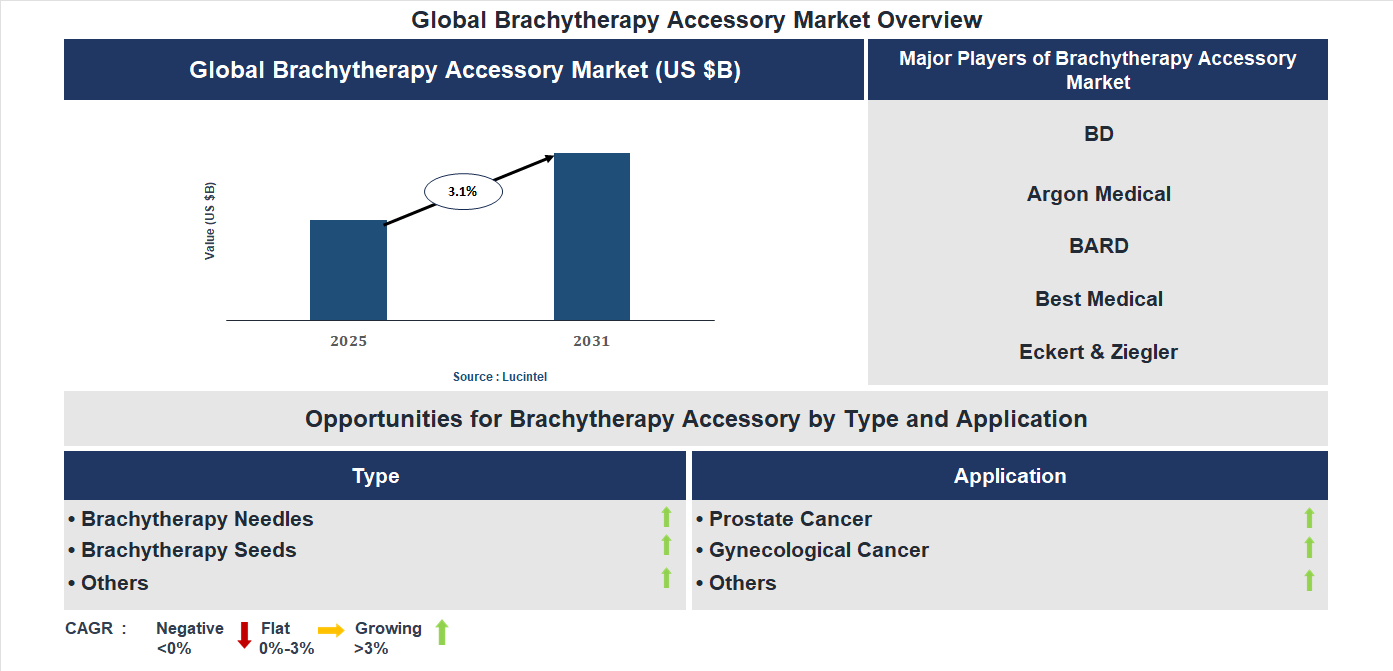
Key data points: The growth forecast = 3.1% annually for the next 7 years. Scroll below to get more insights. This market report covers trends, opportunities and forecasts in brachytherapy accessory market to 2031 by type (brachytherapy needles, brachytherapy seeds, and others), application (prostate cancer, gynecological cancer, and others), and region (North America, Europe, Asia Pacific, and the Rest of the World)
We'll send your sample report shortly.
• Lucintel forecasts that, within the type category, brachytherapy needle is expected to witness higher growth over the forecast period.
• Within the application category, prostate cancer is expected to witness higher growth.
• In terms of region, APAC is expected to witness the highest growth over the forecast period. Gain valuable insights for your business decisions with our comprehensive 150+ page report. Sample figures with some insights are shown below.
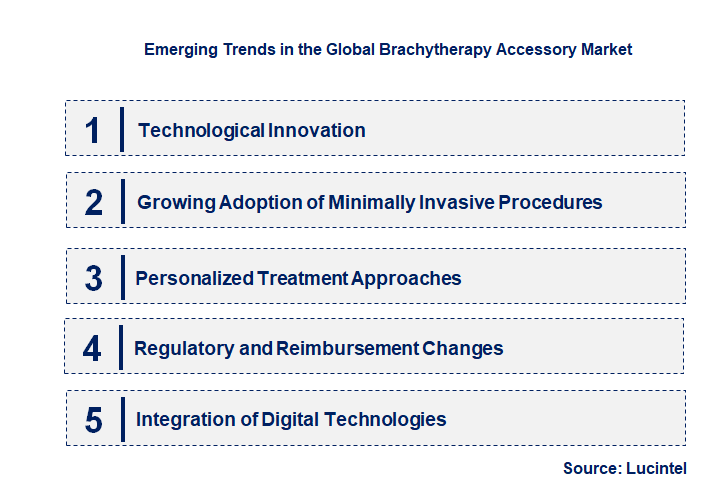
• Technological Innovation: The market is witnessing significant advancements in accessory design, including the development of more precise applicators, catheters, and imaging-compatible devices. These innovations enable better targeting of cancerous tissues, reducing damage to surrounding healthy tissue. Enhanced materials and miniaturization improve ease of use and patient comfort. Digital integration, such as real-time imaging and navigation systems, allows for more accurate placement and dose delivery. This trend is driving improved treatment efficacy, reducing side effects, and expanding the applicability of brachytherapy to complex cases.
• Growing Adoption of Minimally Invasive Procedures: There is an increasing preference for minimally invasive brachytherapy techniques, driven by patient demand for less painful and quicker recovery options. Accessories designed for these procedures, such as flexible applicators and disposable components, are gaining popularity. These tools facilitate outpatient treatments, reduce hospital stays, and lower overall healthcare costs. The trend is also supported by advancements in imaging and guidance systems that enable precise placement through small incisions or natural body openings, broadening the patient base and treatment settings.
• Personalized Treatment Approaches: The shift towards personalized medicine is influencing accessory development, with customizable and adaptable tools tailored to individual patient anatomy and tumor characteristics. 3D printing technology is being used to create patient-specific applicators, improving fit and treatment accuracy. This trend enhances treatment outcomes by ensuring optimal dose distribution and minimizing collateral damage. It also allows for more complex treatment plans, especially in anatomically challenging cases, thereby expanding brachytherapy’s role in comprehensive cancer care.
• Regulatory and Reimbursement Changes: Evolving regulatory standards and reimbursement policies are impacting accessory market growth. Clearer guidelines and approval pathways for new accessories encourage innovation and faster market entry. Reimbursement policies that recognize the value of brachytherapy accessories promote adoption among healthcare providers. These changes reduce financial barriers and foster confidence in new technologies, encouraging manufacturers to invest in research and development. As a result, the market benefits from a steady pipeline of innovative accessories aligned with clinical and regulatory expectations.
• Integration of Digital Technologies: The incorporation of digital tools such as AI, machine learning, and advanced imaging is transforming accessory design and application. AI-driven planning software enhances treatment precision, while smart accessories with embedded sensors provide real-time feedback during procedures. These technologies improve accuracy, safety, and efficiency, leading to better patient outcomes. Digital integration also facilitates data collection for research and quality assurance. This trend is making brachytherapy more precise, personalized, and accessible, ultimately reshaping clinical workflows and expanding the market’s capabilities. In summary, these emerging trends are collectively reshaping the brachytherapy accessory market by enhancing precision, safety, and patient comfort. Technological innovations, minimally invasive techniques, personalized approaches, regulatory support, and digital integration are driving growth and expanding the scope of brachytherapy. These developments are not only improving clinical outcomes but also making the treatment more accessible and adaptable to diverse patient needs, positioning the market for sustained future expansion.
• Technological Innovations: New accessory designs with enhanced precision and ease of use are improving treatment outcomes. These innovations enable more accurate placement of radioactive sources, reducing side effects and increasing efficacy. As a result, healthcare providers are adopting advanced accessories, which boost market growth and encourage further R&D investments.
• Increasing Cancer Incidence: Rising global cancer rates, particularly prostate, cervical, and breast cancers, are driving demand for brachytherapy. The need for effective, minimally invasive treatment options is prompting healthcare facilities to invest in specialized accessories, expanding market size and scope.
• Regulatory Approvals and Reimbursements: Recent approvals of novel brachytherapy accessories by regulatory bodies have facilitated market entry and adoption. Favorable reimbursement policies in key regions are also encouraging hospitals and clinics to incorporate these accessories into standard treatment protocols, thereby accelerating market growth.
• Integration of Imaging Technologies: The adoption of advanced imaging techniques such as MRI and CT scans for precise accessory placement is enhancing treatment accuracy. This integration improves patient outcomes and increases confidence among clinicians, fostering market expansion and technological development.
• Growing Awareness and Training: Increased awareness about brachytherapy benefits and specialized training programs for healthcare professionals are promoting wider adoption. As more practitioners become proficient in using advanced accessories, the market is expected to see sustained growth and innovation. In summary, recent developments in the brachytherapy accessory market—spanning technological advancements, rising cancer cases, regulatory support, imaging integration, and increased awareness—are collectively driving market expansion. These factors are making brachytherapy more effective, accessible, and preferred, ultimately transforming cancer treatment paradigms worldwide.
• Expanding Cancer Treatment Applications: The increasing incidence of cancers such as prostate, cervical, and breast cancer is driving demand for brachytherapy accessories. This growth enhances treatment precision and reduces side effects, leading to broader adoption across healthcare facilities.
• Technological Innovations in Delivery Devices: Advancements in applicators and delivery systems improve accuracy and ease of use. These innovations enable more effective targeting of tumors, reducing treatment times and improving patient comfort.
• Growing Adoption in Emerging Markets: Rising healthcare infrastructure and awareness in developing regions are opening new markets. This expansion offers opportunities for local manufacturers and global players to introduce cost-effective accessories.
• Integration of Imaging and Navigation Technologies: Incorporating real-time imaging and navigation tools enhances treatment precision. This integration minimizes complications and improves outcomes, making brachytherapy more appealing to clinicians.
• Focus on Minimally Invasive Procedures: The shift towards less invasive techniques is boosting demand for specialized accessories. These tools facilitate outpatient procedures, reduce recovery times, and improve patient satisfaction. In summary, these growth opportunities are significantly impacting the brachytherapy accessory market by expanding its application scope, improving treatment efficacy, and increasing accessibility worldwide. As innovation continues, the market is poised for sustained growth, benefiting patients and healthcare providers alike.
• Technological Advancements: The continuous development of innovative brachytherapy accessories, such as improved applicators, imaging tools, and delivery systems, enhances treatment precision and safety. These innovations enable better targeting of cancerous tissues, reduce side effects, and improve patient outcomes. As technology evolves, manufacturers are investing in research and development to create more effective and user-friendly accessories, which in turn drives market growth. The integration of advanced imaging techniques like MRI and CT with brachytherapy accessories further boosts accuracy, making treatments more effective and appealing to healthcare providers.
• Rising Cancer Incidence: The increasing prevalence of cancers such as prostate, cervical, and breast cancer globally is a significant driver. As cancer cases rise, the demand for effective treatment options like brachytherapy grows. Brachytherapy offers targeted radiation therapy with minimal damage to surrounding tissues, making it a preferred choice for many clinicians. This surge in cancer incidence, coupled with the growing awareness of minimally invasive treatments, propels the need for specialized accessories, thereby expanding the market. Governments and healthcare organizations are also promoting early detection and treatment, further fueling demand.
• Favorable Reimbursement Policies: Supportive reimbursement frameworks in various countries encourage the adoption of brachytherapy procedures. Insurance coverage and government subsidies reduce the financial burden on patients and healthcare providers, making advanced treatment options more accessible. These policies incentivize hospitals and clinics to invest in brachytherapy accessories, fostering market expansion. Additionally, reimbursement for innovative accessories that improve treatment efficacy encourages manufacturers to develop new products, creating a positive feedback loop that sustains market growth.
• Increasing Healthcare Expenditure: Rising healthcare spending across developed and developing nations enhances access to advanced cancer treatments, including brachytherapy. Higher budgets allow hospitals to invest in state-of-the-art accessories and training, improving treatment quality. This increased expenditure also supports research initiatives aimed at developing better accessories and delivery systems. As healthcare infrastructure improves, especially in emerging markets, the adoption of brachytherapy accessories is expected to accelerate, contributing to overall market growth and technological progress.
• Growing Awareness and Acceptance: Increased awareness among healthcare professionals and patients about the benefits of brachytherapy drives market demand. Educational campaigns, clinical research, and positive treatment outcomes promote acceptance of brachytherapy as a standard cancer treatment. As more clinicians become proficient in using advanced accessories, and patients seek minimally invasive options, the market experiences expansion. This trend is further supported by the proliferation of specialized training programs and guidelines endorsing brachytherapy, which collectively boost confidence and adoption rates. The challenges facing this Market include:-
• High Costs and Reimbursement Issues: The cost of brachytherapy accessories and associated procedures remains a significant barrier, especially in low- and middle-income countries. High prices for advanced accessories and equipment can limit adoption, while inconsistent reimbursement policies further hinder market growth. Patients and healthcare providers may be reluctant to opt for brachytherapy due to financial concerns, leading to underutilization. Additionally, the need for specialized training and infrastructure adds to the overall expenses, making it less accessible in resource-constrained settings.
• Regulatory and Approval Delays: Stringent regulatory requirements and lengthy approval processes for new brachytherapy accessories pose challenges for manufacturers. Navigating complex regulatory landscapes can delay product launches, reduce innovation pace, and increase costs. These delays can hinder the availability of cutting-edge accessories, impacting treatment options and market competitiveness. Moreover, variations in regulatory standards across regions complicate global commercialization efforts, limiting market expansion in certain areas.
• Limited Awareness and Training: Despite growing acceptance, a lack of awareness and insufficient training among healthcare professionals remain obstacles. Many clinicians in emerging markets are unfamiliar with the latest accessories and techniques, leading to underutilization of advanced brachytherapy options. This knowledge gap hampers market growth and prevents optimal patient outcomes. Additionally, limited training programs and educational resources restrict the dissemination of best practices, slowing adoption rates and technological advancement. In summary, the brachytherapy accessory market is driven by technological innovations, rising cancer prevalence, supportive policies, increased healthcare spending, and growing awareness. However, high costs, regulatory hurdles, and limited training pose significant challenges. These factors collectively influence market dynamics, with technological progress and policy support fostering growth, while economic and educational barriers temper expansion. Addressing these challenges through strategic initiatives can unlock further opportunities, ensuring broader access to effective cancer treatments and sustained market development.
• BD
• Argon Medical
• BARD
• Best Medical
• Eckert & Ziegler
• Elekta
• IsoAid
• GE Healthcare
• Riverpoint Medical
• Team Best
• Brachytherapy Needles
• Brachytherapy Seeds
• Others
• Prostate Cancer
• Gynecological Cancer
• Others
• North America
• Europe
• Asia Pacific
• The Rest of the World
• United States: The U.S. market has seen rapid adoption of advanced brachytherapy accessories, driven by high healthcare expenditure and technological innovation. Leading companies are launching new products with improved precision and safety features. The government’s focus on cancer research and increasing awareness campaigns has boosted market growth. Reimbursement policies are favorable, encouraging wider clinical use. Additionally, the integration of digital technologies and robotics in brachytherapy procedures is gaining traction, enhancing treatment outcomes and operational efficiency.
• China: China’s market is expanding due to rising cancer incidence and government initiatives to improve cancer care infrastructure. Local manufacturers are developing cost-effective accessories to cater to a large patient base. The government’s support for medical innovation and increasing healthcare investments is facilitating market growth. There is a growing trend toward adopting minimally invasive brachytherapy techniques, supported by technological advancements and training programs. International collaborations are also helping to introduce advanced accessories into the Chinese market.
• Germany: Germany’s market benefits from a well-established healthcare system and high adoption of innovative medical technologies. The country emphasizes precision medicine and minimally invasive procedures, driving demand for sophisticated brachytherapy accessories. Regulatory frameworks are stringent but facilitate the entry of high-quality products. German research institutions are actively involved in developing new accessories, and collaborations with industry leaders are common. The focus on patient safety and treatment efficacy remains central to market development.
• India: India’s brachytherapy accessory market is witnessing rapid growth due to increasing cancer cases and expanding healthcare infrastructure. Cost-effective solutions are in high demand, prompting local manufacturers to innovate affordable accessories. Government initiatives to improve cancer treatment access and awareness campaigns are boosting market penetration. The rising number of cancer treatment centers and trained healthcare professionals further supports market expansion. Technological adoption is increasing, with a focus on improving treatment precision and patient comfort, making brachytherapy more accessible across the country.
• Japan: Japan’s market is characterized by high technological adoption and a focus on advanced cancer treatments. The country emphasizes minimally invasive procedures and personalized therapy, driving demand for sophisticated accessories. Regulatory standards are strict, ensuring high-quality product standards. Japanese companies are investing in research and development to create innovative accessories that enhance treatment efficacy. The aging population and rising cancer prevalence are key factors fueling market growth. Additionally, collaborations with global firms are facilitating access to cutting-edge technologies and expanding market reach.


• BD
• Argon Medical
• BARD
• Best Medical
• Eckert & Ziegler
• Elekta
• IsoAid
• GE Healthcare
• Riverpoint Medical
• Team Best Q5. Which brachytherapy accessory market segment will be the largest in future? Answer: Lucintel forecasts that, within the type category, brachytherapy needle is expected to witness higher growth over the forecast period. Q6. In brachytherapy accessory market, which region is expected to be the largest in next 5 years? Answer: In terms of region, APAC is expected to witness the highest growth over the forecast period. Q7. Do we receive customization in this report? Answer: Yes, Lucintel provides 10% customization without any additional cost.


Choose a license that fits your team. Instant PDF delivery.
Prices exclude taxes. Instant delivery. Custom licensing available on request.
Market Report · May 18, 2026
Market Report · May 18, 2026
Market Report · May 18, 2026
Trusted partner for strategic intelligence and business growth


Receive a complimentary market analysis tailored to your industry. Our analysts will identify key growth opportunities and competitive dynamics specific to your business.

Market size, growth rate, and key trend analysis for your specific sector.

Top competitor positioning and market share analysis.

Strategic recommendations backed by data-driven insights.
Get curated market intelligence and competitive moves straight to your inbox.
By subscribing, you agree to receive our monthly insights. Unsubscribe anytime.
Receive a complimentary market analysis tailored to your industry. Our analysts will identify key growth opportunities and competitive dynamics specific to your business.
Market size, growth rate, and key trend analysis for your specific sector.
Top competitor positioning and market share analysis.
Strategic recommendations backed by data-driven insights.
Get curated market intelligence, emerging trends, and competitive moves straight to your inbox each month.
By subscribing, you agree to receive our monthly insights. Unsubscribe anytime.
We'll send your sample report shortly.