
Report Feature
Bone Cement Market Trends and Forecast
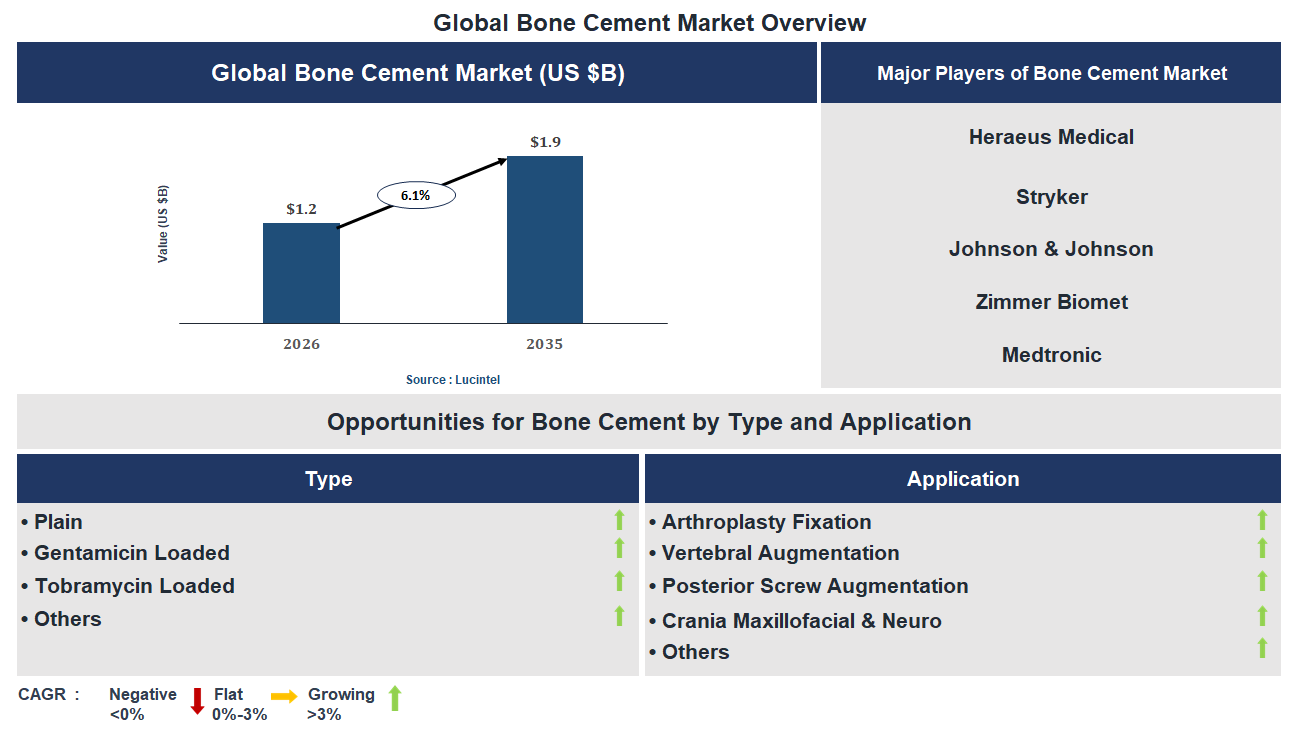
The future of the global bone cement market looks promising with opportunities in the arthroplasty fixation, vertebral augmentation, posterior screw augmentation, and crania maxillofacial & neuro markets. The global bone cement market is expected to reach an estimated $1.9 billion by 2035 with a CAGR of 6.1% from 2026 to 2035. The major drivers for this market are the increasing demand for orthopedic surgeries, the rising aging population with joint issues, and the growing adoption of minimally invasive procedures.• Lucintel forecasts that, within the type category, gentamicin loaded is expected to witness the highest growth over the forecast period.
• Within the application category, vertebral augmentation is expected to witness the highest growth.
• In terms of region, APAC is expected to witness the highest growth over the forecast period. Gain valuable insights for your business decisions with our comprehensive 150+ page report. Sample figures with some insights are shown below.
Emerging Trends in the Bone Cement Market
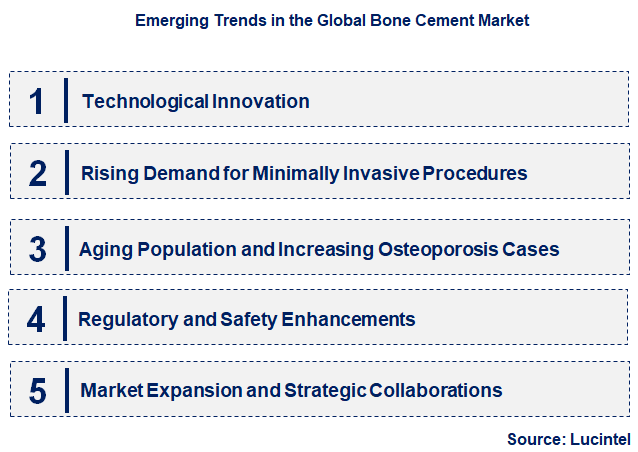
The bone cement market is experiencing rapid evolution driven by technological advancements, increasing demand for minimally invasive procedures, and a growing aging population worldwide. These developments are transforming how orthopedic surgeries are performed, improving patient outcomes, and expanding market opportunities. As healthcare providers seek more effective, durable, and biocompatible solutions, innovative materials and techniques are emerging. Additionally, regulatory changes and rising awareness about osteoporosis and joint degeneration are fueling market growth. These trends collectively are reshaping the landscape, making it more dynamic and competitive, and paving the way for new product development and improved clinical practices.• Technological Innovation: The integration of advanced materials such as bioactive and radiopaque cements is enhancing surgical outcomes. New formulations offer better adhesion, reduced setting times, and improved biocompatibility, leading to more durable repairs. Innovations like 3D printing are enabling customized cement formulations tailored to individual patient needs. These technological advancements are increasing the efficiency of procedures, reducing complications, and expanding the scope of minimally invasive surgeries, thereby driving market growth and opening new avenues for research and development.
• Rising Demand for Minimally Invasive Procedures: The shift towards less invasive surgical techniques is significantly impacting the bone cement market. These procedures offer benefits such as reduced pain, shorter hospital stays, and quicker recovery times. Bone cements that are easy to handle and provide strong fixation are in high demand. This trend is encouraging manufacturers to develop formulations that facilitate percutaneous and other minimally invasive approaches. As patient preference and clinical outcomes favor less invasive options, the market is witnessing increased adoption and innovation in bone cement products suited for these procedures.
• Aging Population and Increasing Osteoporosis Cases: The global rise in elderly populations and osteoporosis prevalence is a key driver for the bone cement market. Osteoporotic fractures often require surgical intervention with bone cement for stabilization. The growing incidence of joint replacements and spinal surgeries further amplifies demand. This demographic shift is prompting manufacturers to focus on developing high-performance, long-lasting cements that cater specifically to osteoporotic bone conditions. Consequently, the market is expanding, with increased investments in research to improve cement formulations suitable for fragile bones.
• Regulatory and Safety Enhancements: Stricter regulations and safety standards are shaping product development in the bone cement market. There is a focus on reducing toxicity, improving radiopacity, and ensuring biocompatibility. Manufacturers are investing in rigorous testing and certification processes to meet these standards, which enhances product credibility and safety profiles. These regulatory changes are also encouraging innovation in eco-friendly and biodegradable cements. As safety remains paramount, compliance with evolving standards is driving the development of more reliable and safer bone cement options, ultimately benefiting patient care.
• Market Expansion and Strategic Collaborations: The bone cement market is witnessing increased geographic expansion, especially in emerging economies with rising healthcare infrastructure. Strategic collaborations, mergers, and acquisitions are facilitating access to new markets and advanced technologies. Companies are partnering with research institutions to develop next-generation products. This trend is fostering innovation, reducing costs, and improving distribution channels. As a result, the market is becoming more competitive and accessible, enabling broader adoption of advanced bone cement solutions worldwide and supporting the overall growth of the orthopedic sector. In summary, these trends are collectively transforming the bone cement market by fostering innovation, improving patient outcomes, and expanding global reach. The focus on technological advancements, minimally invasive techniques, demographic shifts, regulatory compliance, and strategic collaborations is creating a more dynamic, competitive, and patient-centric industry landscape.
Recent Development in the Bone Cement Market
The bone cement market is experiencing rapid advancements driven by technological innovations, increasing orthopedic procedures, and rising geriatric populations worldwide. These developments are transforming the industry, offering improved patient outcomes and expanding market opportunities. Stakeholders are focusing on product enhancements, new application areas, and strategic collaborations to capitalize on emerging trends. As the market evolves, understanding these key developments is essential for businesses aiming to maintain competitiveness and meet growing healthcare demands.• Innovation in Bone Cement Formulations: Advances in biomaterials and polymer technology are leading to the development of more durable, biocompatible, and easy-to-use bone cements. These innovations improve surgical outcomes, reduce complications, and extend implant longevity. Enhanced formulations also enable minimally invasive procedures, attracting a broader patient base. The market benefits from increased adoption of these advanced cements, fostering growth and opening new application avenues in complex surgeries.
• Expansion into New Application Areas: Bone cement is increasingly used beyond traditional orthopedic surgeries, including dental, spinal, and trauma applications. This diversification broadens market scope and drives demand. Innovations tailored for specific procedures, such as vertebroplasty or joint replacements, enhance clinical efficacy. The expanding application spectrum encourages manufacturers to develop specialized products, thereby fueling market growth and creating new revenue streams.
• Technological Advancements in Delivery Systems: The integration of advanced delivery systems, such as robotic-assisted injection and real-time imaging guidance, enhances precision and safety during procedures. These technologies reduce operative time and improve cement placement accuracy. As a result, surgeons prefer these systems, leading to increased adoption. The market benefits from improved procedural outcomes and reduced complication rates, which further stimulate demand for innovative delivery solutions.
• Rising Geriatric Population and Surgical Demand: The global aging population is significantly increasing the need for orthopedic surgeries, including joint replacements and fracture repairs. This demographic shift directly boosts demand for bone cement products. The market experiences growth as healthcare providers seek reliable, high-performance cements to meet the needs of elderly patients. This trend underscores the importance of developing age-specific formulations and expanding manufacturing capacities.
• Strategic Partnerships and Acquisitions: Collaborations between biotech firms, medical device companies, and research institutions are accelerating product development and commercialization. Strategic alliances facilitate access to new technologies, markets, and distribution channels. These partnerships enable rapid innovation, regulatory approval, and market penetration. The trend enhances competitive positioning and drives overall market expansion through shared expertise and resource pooling. The overall impact of these developments is a dynamic, expanding bone cement market characterized by innovative products, diversified applications, and technological integration. These factors collectively improve patient outcomes, increase procedural efficiency, and open new growth avenues. As a result, market players are better positioned to capitalize on emerging opportunities, ensuring sustained growth and competitiveness in the evolving healthcare landscape.
Strategic Growth Opportunities in the Bone Cement Market
The bone cement market is experiencing significant growth driven by advancements in medical technology, increasing orthopedic procedures, and rising geriatric populations worldwide. The demand for durable, biocompatible materials is fueling innovation and expanding application areas. Strategic investments, research collaborations, and regulatory approvals are further accelerating market expansion. This dynamic environment presents numerous opportunities for industry players to innovate, diversify, and capture new segments, ultimately improving patient outcomes and healthcare efficiency.• Market Expansion in Emerging Economies: Growing healthcare infrastructure and increasing orthopedic surgeries in emerging economies present substantial opportunities for bone cement manufacturers. Rising awareness and affordability are driving demand, enabling companies to tap into new customer bases. Local partnerships and tailored product offerings can facilitate market entry and growth, making these regions key targets for strategic expansion.
• Innovation in Biocompatible and Resorbable Bone Cements: Developing advanced, biocompatible, and resorbable bone cements offers significant growth potential. These materials improve patient outcomes by reducing complications and promoting natural bone regeneration. Investment in research and development to create eco-friendly, long-lasting, and easy-to-use formulations can differentiate products and meet evolving clinical needs.
• Increasing Adoption of Minimally Invasive Procedures: The shift towards minimally invasive orthopedic surgeries is boosting demand for specialized bone cements compatible with such techniques. These procedures require materials with specific handling properties and quick setting times. Companies that develop innovative, easy-to-apply cements tailored for minimally invasive methods can capitalize on this trend and expand their market share.
• Strategic Collaborations and Mergers for Market Penetration: Collaborations between industry players, research institutions, and healthcare providers can accelerate product development and market access. Mergers and acquisitions enable companies to expand their portfolios, enhance technological capabilities, and enter new geographic regions. Such strategic moves are crucial for staying competitive and capturing emerging opportunities in the evolving bone cement landscape.
• Focus on Customization and Patient-Specific Solutions: Personalized medicine is influencing the bone cement market, with demand for customized formulations tailored to individual patient needs. Advances in 3D printing and imaging technologies facilitate the development of patient-specific implants and cements. Emphasizing customization can improve surgical outcomes, reduce complications, and open new revenue streams for innovative companies. These growth opportunities collectively shape a promising future for the bone cement market, fostering innovation, expanding geographic reach, and enhancing product offerings. Embracing emerging trends and strategic collaborations will enable industry players to capitalize on increasing demand, improve patient care, and sustain competitive advantage in a rapidly evolving healthcare landscape.
Bone Cement Market Driver and Challenges
The bone cement market is influenced by a variety of technological, economic, and regulatory factors that shape its growth trajectory. Advances in medical technology, increasing demand for orthopedic procedures, and evolving regulatory standards are key drivers. Conversely, challenges such as regulatory hurdles, high costs, and competition from alternative materials pose significant obstacles. Understanding these drivers and challenges is essential for stakeholders to navigate the market effectively and capitalize on emerging opportunities while addressing potential risks. The factors responsible for driving the bone cement market include:-• Technological Innovations: The development of advanced bone cements with improved biocompatibility, strength, and ease of use has significantly propelled market growth. Innovations such as antibiotic-loaded cements and bioactive formulations enhance surgical outcomes and reduce infection risks. These technological advancements meet the increasing demand for minimally invasive procedures and personalized treatments, thereby expanding the market. Continuous R&D efforts are expected to further improve product efficacy and safety, attracting more healthcare providers and patients.
• Rising Prevalence of Osteoporosis and Osteoarthritis: The increasing incidence of osteoporosis and osteoarthritis worldwide has led to a surge in joint replacement surgeries, which heavily rely on bone cement. Aging populations and sedentary lifestyles contribute to this trend, creating a sustained demand for effective fixation materials. This demographic shift ensures a steady growth trajectory for the market, as orthopedic surgeries become more common and accessible across various regions.
• Growing Adoption of Minimally Invasive Surgeries: The shift towards minimally invasive orthopedic procedures has driven the demand for bone cements that facilitate quick, efficient, and less traumatic surgeries. These procedures require specialized cements that provide strong fixation with minimal surgical trauma, leading to faster recovery times. The adoption of such techniques is supported by technological advancements and surgeon preferences, further fueling market expansion.
• Increasing Healthcare Expenditure and Infrastructure Development: Rising healthcare spending and improved medical infrastructure, especially in emerging economies, have increased access to orthopedic surgeries. Governments and the private sector are investing in healthcare facilities, which boosts the adoption of bone cement products. This economic growth enables broader distribution and utilization of advanced bone cements, contributing to market growth.
• Regulatory Approvals and Standards: Stringent regulatory frameworks and approval processes ensure the safety and efficacy of bone cement products. While this can slow down product launches, it ultimately enhances market credibility and consumer trust. Companies investing in compliance and quality assurance are better positioned to succeed, fostering innovation within a regulated environment and expanding market opportunities. The challenges facing the bone cement market include:-
• Regulatory Hurdles and Approval Delays: The stringent regulatory environment for medical devices, including bone cements, often results in lengthy approval processes. These delays can hinder product launches and limit market entry, especially in emerging markets with evolving standards. Companies must invest heavily in compliance and clinical trials, increasing costs and time-to-market, which can impact profitability and competitiveness.
• High Cost of Advanced Bone Cements: Innovative and bioactive bone cements often come with higher manufacturing costs, leading to increased prices for end-users. This can restrict adoption in cost-sensitive markets and among smaller healthcare providers. The high cost may also limit patient access, especially in regions with limited healthcare budgets, thereby constraining market growth.
• Competition from Alternative Materials and Technologies: The market faces competition from alternative fixation materials such as bioresorbable polymers and newer surgical techniques that reduce or eliminate the need for traditional bone cement. These alternatives can offer benefits like reduced complications and improved healing, challenging the dominance of conventional cements. Companies must innovate continuously to maintain their market share amid evolving technological landscapes. In summary, the bone cement market is shaped by significant technological advancements, demographic shifts, and economic factors that promote growth. However, regulatory complexities, high costs, and competitive innovations pose ongoing challenges. Navigating these drivers and challenges requires strategic investments in R&D, compliance, and market expansion. Overall, the markets future depends on balancing innovation with regulatory and economic considerations, ensuring sustainable growth and improved patient outcomes.
List of Bone Cement Companies
Companies in the market compete on the basis of product quality offered. Major players in this market focus on expanding their manufacturing facilities, R&D investments, infrastructural development, and leverage integration opportunities across the value chain. With these strategies bone cement companies cater increasing demand, ensure competitive effectiveness, develop innovative products & technologies, reduce production costs, and expand their customer base. Some of the bone cement companies profiled in this report include-• Heraeus Medical
• Stryker
• Johnson & Johnson
• Zimmer Biomet
• Medtronic
• Tecres
• OSARTIS
• ulrich medical
• Teknimed
• G21
Bone Cement Market by Segment
The study includes a forecast for the global bone cement market by type, application, and region.Bone Cement Market by Type [Value from 2019 to 2035]:
• Plain
• Gentamicin Loaded
• Tobramycin Loaded
• Others
Bone Cement Market by Application [Value from 2019 to 2035]:
• Arthroplasty Fixation
• Vertebral Augmentation
• Posterior Screw Augmentation
• Crania Maxillofacial & Neuro
• Others
Bone Cement Market by Region [Value from 2019 to 2035]:
• North America
• Europe
• Asia Pacific
• The Rest of the World
Country Wise Outlook for the Bone Cement Market
The bone cement market has experienced significant shifts driven by technological innovations, increasing demand for orthopedic procedures, and evolving healthcare policies worldwide. As populations age and the prevalence of osteoporosis and joint disorders rises, countries are investing in advanced materials and techniques to improve patient outcomes. Regulatory changes and the expansion of minimally invasive surgeries further influence market dynamics. Each country’s unique healthcare infrastructure, economic factors, and research initiatives shape their specific developments in this sector. Understanding these regional trends is crucial for stakeholders aiming to capitalize on emerging opportunities and address challenges within the global bone cement landscape.• United States: The US bone cement market has seen rapid growth due to technological advancements and a high prevalence of orthopedic conditions. Innovations in bioactive and antibiotic-loaded cements are gaining popularity, improving patient recovery rates. The adoption of minimally invasive procedures and increased healthcare spending further boost market expansion. Regulatory agencies like the FDA are streamlining approval processes for new materials, encouraging innovation. Additionally, the rise in orthopedic surgeries, especially joint replacements, sustains demand. Market players are investing heavily in R&D to develop more durable, biocompatible, and cost-effective bone cements, maintaining the US as a leading market.
• China: China’s bone cement market is expanding swiftly, driven by a large aging population and increasing orthopedic surgeries. The government’s focus on healthcare infrastructure and rising healthcare expenditure support market growth. Local manufacturers are developing affordable, high-quality bone cements to meet domestic demand, while international companies are entering the market through partnerships. Technological adoption, such as cement with enhanced mechanical properties and bioactivity, is increasing. The surge in minimally invasive surgeries and rising awareness about osteoporosis contribute to market expansion. Regulatory reforms are facilitating faster approval processes, further accelerating growth in this emerging market.
• Germany: Germany’s bone cement market benefits from a well-established healthcare system and high adoption of advanced medical technologies. The focus on improving surgical outcomes has led to innovations in cement formulations, including antibiotic-loaded and radiopaque variants. The country’s emphasis on research and development fosters the development of next-generation bone cements with enhanced biocompatibility and longevity. Growing prevalence of osteoarthritis and osteoporosis among the aging population sustains demand. Additionally, Germany’s strong presence of medical device companies and collaborations with research institutions drive innovation. Regulatory standards are stringent, ensuring high-quality products and fostering trust among healthcare providers.
• India: India’s bone cement market is witnessing rapid growth due to increasing orthopedic surgeries, driven by rising cases of trauma, osteoporosis, and degenerative diseases. The expanding healthcare infrastructure and government initiatives to improve healthcare access are key factors. Local manufacturers are focusing on cost-effective, high-quality bone cements to cater to a large population segment. The adoption of minimally invasive procedures and technological advancements in surgical techniques is boosting market demand. Additionally, rising awareness about joint replacement surgeries and improved healthcare financing options are contributing to market expansion. Regulatory reforms are gradually easing, encouraging innovation and market entry for new players.
• Japan: Japan’s bone cement market is characterized by high technological adoption and a focus on aging-related orthopedic conditions. The country’s aging population significantly drives demand for joint replacements and related procedures. Innovations in bioactive and antibiotic-loaded cements are prevalent, aiming to improve surgical outcomes and reduce infection risks. Japan’s strong research infrastructure supports the development of advanced materials with enhanced durability and biocompatibility. The market also benefits from a high standard of healthcare and strict regulatory standards ensuring product safety and efficacy. Increasing adoption of minimally invasive surgeries and personalized treatment approaches further propel market growth in Japan.

Features of the Global Bone Cement Market
Market Size Estimates: Bone cement market size estimation in terms of value ($B). Trend and Forecast Analysis: Market trends (2019 to 2025) and forecast (2026 to 2035) by various segments and regions. Segmentation Analysis: Bone cement market size by type, application, and region in terms of value ($B). Regional Analysis: Bone cement market breakdown by North America, Europe, Asia Pacific, and Rest of the World. Growth Opportunities: Analysis of growth opportunities in different types, applications, and regions for the bone cement market. Strategic Analysis: This includes M&A, new product development, and competitive landscape of the bone cement market. Analysis of competitive intensity of the industry based on Porter’s Five Forces model.
FAQ
Q1. What is the market size and growth forecast for bone cement market? Answer: The global bone cement market is expected to reach an estimated $1.9 billion by 2035 and grow with a CAGR of 6.1% from 2026 to 2035. Q2. What are the major drivers influencing the growth of the bone cement market? Answer: The major drivers for this market are the increasing demand for orthopedic surgeries, the rising aging population with joint issues, and the growing adoption of minimally invasive procedures. Q3. What are the major segments for bone cement market? Answer: The future of the bone cement market looks promising with opportunities in the arthroplasty fixation, vertebral augmentation, posterior screw augmentation, and crania maxillofacial & neuro markets. Q4. Who are the key bone cement market companies? Answer: Some of the key bone cement companies are as follows:• Heraeus Medical
• Stryker
• Johnson & Johnson
• Zimmer Biomet
• Medtronic
• Tecres
• OSARTIS
• ulrich medical
• Teknimed
• G21 Q5. Which bone cement market segment will be the largest in future? Answer: Lucintel forecasts that, within the type category, gentamicin loaded is expected to witness the highest growth over the forecast period. Q6. In bone cement market, which region is expected to be the largest in next 5 years? Answer: In terms of region, APAC is expected to witness the highest growth over the forecast period. Q7. Do we receive customization in this report? Answer: Yes, Lucintel provides 10% customization without any additional cost.
Table of Contents
List of Figures
List of Tables
Methodology
- In-depth interviews of the major players in this market
- Detailed secondary research from competitors’ financial statements and published data
- Extensive searches of published works, market, and database information pertaining to industry news, company press releases, and customer intentions
- A compilation of the experiences, judgments, and insights of Lucintel’s professionals, who have analyzed and tracked this market over the years.


Buy Now
Choose a license that fits your team. Instant PDF delivery.
Prices exclude taxes. Instant delivery. Custom licensing available on request.
Key Questions
- • What are some of the most promising, high-growth opportunities for the bone cement market by type (plain, gentamicin loaded, tobramycin loaded, and others), application (arthroplasty fixation, vertebral augmentation, posterior screw augmentation, crania maxillofacial & neuro, and others), and region (North America, Europe, Asia Pacific, and the Rest of the World)?
- • Which segments will grow at a faster pace and why?
- • Which region will grow at a faster pace and why?
- • What are the key factors affecting market dynamics? What are the key challenges and business risks in this market?
- • What are the business risks and competitive threats in this market?
- • What are the emerging trends in this market and the reasons behind them?
- • What are some of the changing demands of customers in the market?
- • What are the new developments in the market? Which companies are leading these developments?
- • Who are the major players in this market? What strategic initiatives are key players pursuing for business growth?
- • What are some of the competing products in this market and how big of a threat do they pose for loss of market share by material or product substitution?
- • What M&A activity has occurred in the last 7 years and what has its impact been on the industry? For any questions related to Bone Cement Market, Bone Cement Market Size, Bone Cement Market Growth, Bone Cement Market Analysis, Bone Cement Market Report, Bone Cement Market Share, Bone Cement Market Trends, Bone Cement Market Forecast, Bone Cement Companies, write Lucintel analyst at email: helpdesk@lucintel.com. We will be glad to get back to you soon.


