
Market Report · July 16, 2026

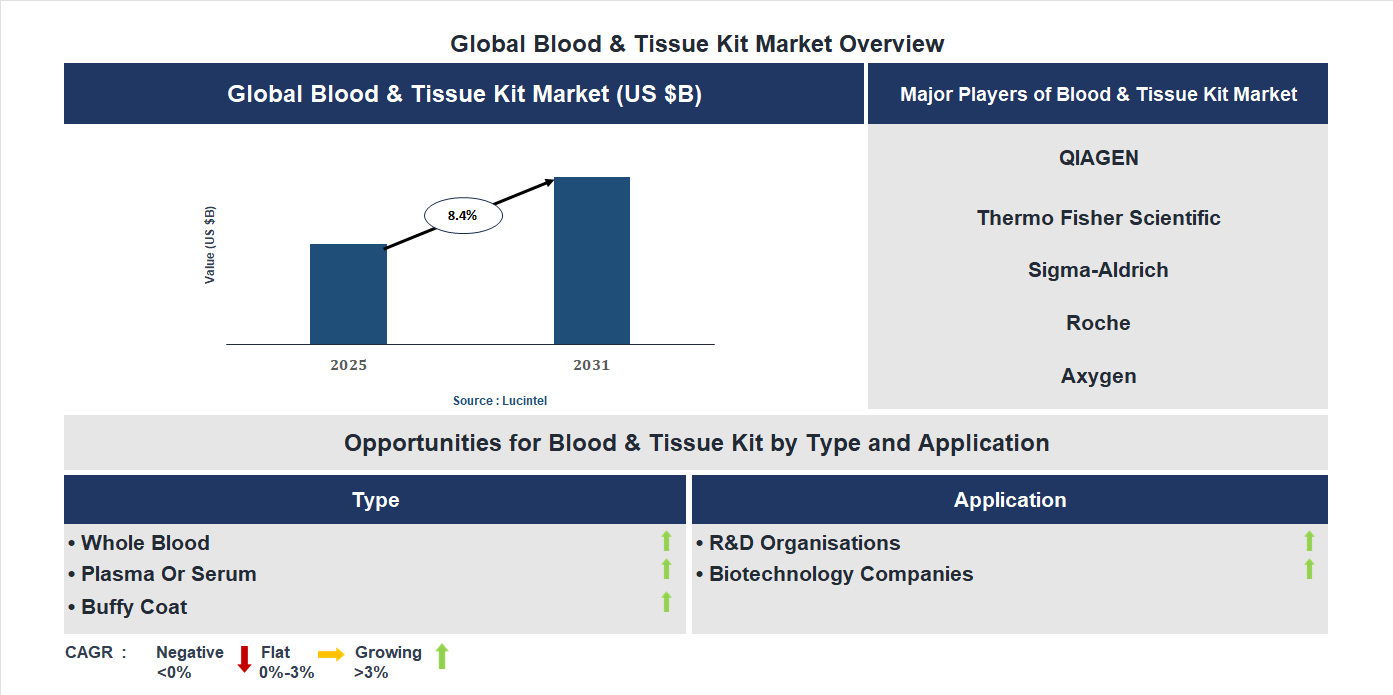
Key data points: The growth forecast = 8.4% annually for the next 7 years. Scroll below to get more insights. This market report covers trends, opportunities and forecasts in blood & tissue kit market to 2031 by type (whole blood, plasma or serum, and buffy coat), application (R&D organisations and biotechnology companies), and region (North America, Europe, Asia Pacific, and the Rest of the World)
We'll send your sample report shortly.
• Lucintel forecasts that, within the type category, whole blood is expected to witness the highest growth over the forecast period.
• Within the application category, biotechnology company is expected to witness higher growth.
• In terms of region, APAC is expected to witness the highest growth over the forecast period. Gain valuable insights for your business decisions with our comprehensive 150+ page report. Sample figures with some insights are shown below.
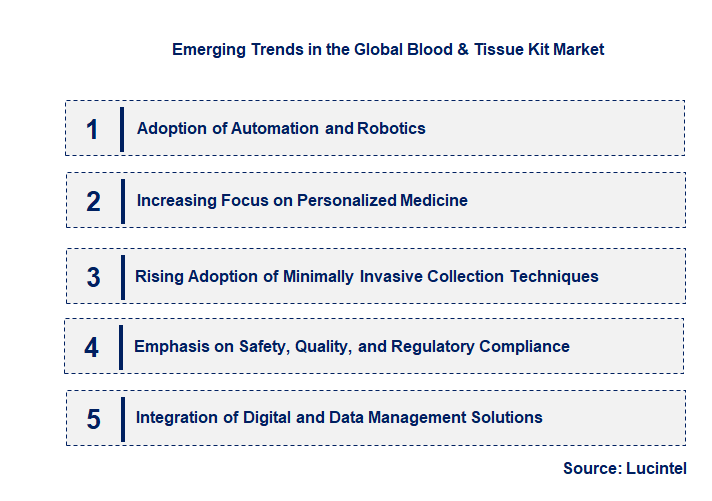
• Adoption of automation and robotics: The integration of automation and robotic systems in blood and tissue collection and processing enhances precision, reduces human error, and increases throughput. Automated kits streamline workflows, improve sample integrity, and enable high-volume processing, which is crucial for large healthcare facilities and research institutions. This trend leads to faster turnaround times, cost savings, and improved safety by minimizing exposure to biohazards. As technology advances, more sophisticated automation solutions are expected to further optimize sample handling and analysis, making procedures more reliable and scalable.
• Increasing focus on personalized medicine: The demand for tailored treatment options is driving innovation in blood and tissue kits designed for specific genetic, molecular, or cellular profiles. These kits facilitate detailed diagnostics, enabling clinicians to identify unique biomarkers and develop targeted therapies. The market is witnessing the development of specialized kits for cancer, genetic disorders, and infectious diseases, which improve diagnostic accuracy and treatment efficacy. This trend enhances patient outcomes by supporting more precise, individualized treatment plans and fosters growth in precision medicine research.
• Rising adoption of minimally invasive collection techniques: There is a growing preference for minimally invasive methods for blood and tissue sampling, driven by patient comfort, safety, and reduced recovery times. Kits designed for less invasive procedures, such as finger-prick blood collection or fine-needle biopsies, are gaining popularity. These kits simplify sample collection, reduce the need for specialized personnel, and lower the risk of complications. The trend supports broader access to diagnostic testing, especially in remote or resource-limited settings, and encourages routine screening and early diagnosis.
• Emphasis on safety, quality, and regulatory compliance: Stringent safety standards and regulatory requirements are shaping the development of blood and tissue kits. Manufacturers are focusing on ensuring biocompatibility, sterility, and traceability of their products to meet global standards. Enhanced quality control measures and compliance with regulations such as FDA and CE mark are critical for market approval and acceptance. This trend boosts confidence among healthcare providers and patients, reduces the risk of contamination or errors, and promotes the adoption of innovative kits that adhere to high safety standards.
• Integration of digital and data management solutions: The incorporation of digital technologies, such as barcode tracking, electronic data capture, and cloud-based management systems, is transforming sample handling and data analysis. These solutions improve traceability, reduce errors, and facilitate real-time monitoring of sample processing. They also enable seamless integration with laboratory information systems (LIS) and electronic health records (EHR), enhancing workflow efficiency. This trend supports data-driven decision-making, accelerates research, and improves overall operational efficiency in blood and tissue testing laboratories. In summary, these emerging trends are collectively reshaping the blood & tissue kit market by fostering greater automation, personalization, safety, and digital integration. They are enabling healthcare providers to deliver faster, more accurate, and patient-centric diagnostics and treatments, ultimately driving market growth and innovation. As these trends continue to evolve, the market is poised for significant transformation, with a focus on improving healthcare outcomes and operational efficiencies.
• Technological Advancements: Introduction of automated and high-throughput testing kits has increased accuracy and reduced turnaround times, enhancing diagnostic efficiency and patient care.
• Regulatory Approvals: Stringent regulatory standards and approvals by agencies like the FDA and EMA have improved product reliability, boosting market confidence and adoption rates.
• Expansion of Blood Donation Programs: Increased government initiatives and awareness campaigns have expanded blood donation drives, leading to higher demand for blood collection and testing kits.
• Rising Prevalence of Blood Disorders: Growing incidences of anemia, hemophilia, and other blood disorders have driven demand for specialized blood and tissue testing kits for early diagnosis and management.
• Integration of Molecular Diagnostics: Adoption of molecular testing techniques in tissue and blood kits has improved detection sensitivity, enabling personalized treatment plans and better disease management. These developments are collectively propelling the blood & tissue kit market towards greater innovation, safety, and accessibility, ultimately benefiting healthcare providers and patients worldwide.
• Diagnostic Applications: Growing demand for early and accurate disease detection is driving the development of advanced blood and tissue kits, improving diagnostic precision and patient outcomes.
• Personalized Medicine: Increasing adoption of personalized treatment approaches is fueling the need for tailored blood and tissue kits, enabling targeted therapies and better patient management.
• Research and Development: Rising investment in biomedical research is expanding the use of blood and tissue kits in laboratories, accelerating discoveries and innovations in disease understanding.
• Regenerative Medicine: The expanding field of regenerative medicine is creating opportunities for specialized tissue kits that support tissue engineering and transplantation procedures.
• Oncology Applications: The rising prevalence of cancer is boosting demand for blood and tissue kits used in tumor profiling, monitoring, and treatment planning, enhancing cancer care. These growth opportunities are significantly impacting the blood & tissue kit market by fostering innovation, expanding application scope, and increasing market size. They are enabling more precise diagnostics, personalized treatments, and advanced research, ultimately improving patient outcomes and driving industry growth.
• Technological Advancements: The continuous development of innovative blood and tissue testing kits enhances diagnostic accuracy and efficiency. Automation, miniaturization, and improved sensitivity of kits enable faster results, which are crucial for timely medical decisions. These technological improvements also facilitate the detection of a broader range of biomarkers, expanding the scope of applications in disease diagnosis, tissue matching, and transplantation. As research progresses, the integration of AI and machine learning further optimizes kit performance, driving market growth and adoption across healthcare settings worldwide.
• Rising Prevalence of Chronic Diseases: The increasing incidence of chronic conditions such as cancer, cardiovascular diseases, and infectious diseases significantly boosts demand for blood and tissue testing kits. Early detection and precise diagnosis are vital for effective treatment, prompting healthcare providers to adopt advanced testing solutions. The growing aging population further amplifies this demand, as older individuals are more susceptible to chronic illnesses requiring regular monitoring and tissue analysis. This trend underscores the importance of reliable, rapid testing kits, fueling market expansion and innovation in product offerings.
• Growing Adoption of Personalized Medicine: The shift towards personalized treatment approaches relies heavily on accurate blood and tissue analysis. Kits that enable genetic and molecular profiling facilitate tailored therapies, improving patient outcomes. This trend is driven by advancements in genomics and proteomics, which require sophisticated testing tools. As healthcare systems increasingly prioritize individualized care, the demand for specialized kits rises, encouraging manufacturers to develop targeted solutions. The integration of these kits into clinical workflows enhances diagnostic precision, fostering market growth and expanding the scope of applications in precision medicine.
• Regulatory Support and Standardization: Governments and regulatory bodies worldwide are establishing stringent standards and approval processes for blood and tissue testing kits. These regulations ensure product safety, efficacy, and quality, fostering trust among healthcare providers and patients. Regulatory support also encourages innovation by setting clear guidelines for product development and commercialization. As a result, companies invest in research and development to meet these standards, leading to higher-quality kits and broader market acceptance. This regulatory environment ultimately promotes market stability and growth by ensuring reliable diagnostic tools. The challenges facing this blood & tissue kit market include:-
• High Costs and Reimbursement Issues: The development, manufacturing, and deployment of advanced blood and tissue kits involve significant costs, which can limit accessibility, especially in low-resource settings. Additionally, reimbursement policies vary across regions, often leading to financial barriers for healthcare providers and patients. Limited insurance coverage for certain tests hampers widespread adoption, constraining market growth. Addressing these economic barriers requires policy reforms and cost-effective innovations to ensure broader availability and utilization of these diagnostic kits.
• Regulatory Complexities and Approval Delays: Navigating the complex regulatory landscape poses a significant challenge for market players. Lengthy approval processes, varying standards across countries, and stringent validation requirements can delay product launches. These hurdles increase costs and reduce the speed at which new kits reach the market, impacting competitiveness. Companies must invest heavily in compliance and clinical validation, which can be resource-intensive, especially for smaller firms. Overcoming these regulatory challenges is crucial for timely market expansion and innovation.
• Supply Chain Disruptions: The global supply chain for raw materials and components used in blood and tissue kits is vulnerable to disruptions caused by geopolitical tensions, pandemics, and logistical issues. Such interruptions can lead to shortages, delays in product delivery, and increased costs. Ensuring a stable supply chain is vital for maintaining market stability and meeting growing demand. Companies need to diversify sourcing strategies and build resilient logistics networks to mitigate these risks and sustain market growth. In summary, the blood & tissue kit market is driven by technological innovations, rising disease prevalence, personalized medicine adoption, and supportive regulations. However, high costs, regulatory hurdles, and supply chain issues present notable challenges. These factors collectively influence market dynamics, requiring stakeholders to innovate, adapt, and collaborate to sustain growth. The markets future depends on balancing these drivers and challenges to deliver reliable, accessible, and advanced diagnostic solutions that meet global healthcare needs.
• QIAGEN
• Thermo Fisher Scientific
• Sigma-Aldrich
• Roche
• Axygen
• Analytik Jena
• Promega
• Zymo Research
• Illumina
• Macherey-Nagel
• Whole Blood
• Plasma Or Serum
• Buffy Coat
• R&D Organisations
• Biotechnology Companies
• North America
• Europe
• Asia Pacific
• The Rest of the World
• United States: The US market has seen significant innovation with the approval of advanced molecular diagnostic kits, boosting personalized medicine. Major companies are investing in R&D to develop rapid, minimally invasive blood and tissue testing solutions. The adoption of AI and automation in laboratories is enhancing accuracy and efficiency. Regulatory agencies like the FDA are streamlining approval processes, encouraging market growth. Additionally, collaborations between biotech firms and hospitals are expanding access to cutting-edge kits, especially for cancer and infectious disease diagnostics.
• China: China is rapidly expanding its blood and tissue testing capabilities, driven by government initiatives to improve healthcare infrastructure. Local companies are developing cost-effective kits with high sensitivity and specificity, catering to a large population. The market is witnessing increased adoption of point-of-care testing devices, especially in rural areas. Investments in biotech startups and partnerships with international firms are fostering innovation. Regulatory reforms are facilitating faster approval processes, enabling quicker market entry for new products. The focus remains on addressing infectious diseases and cancer diagnostics.
• Germany: Germanys market is characterized by a strong emphasis on quality, regulatory compliance, and technological innovation. Leading firms are developing advanced tissue and blood testing kits for clinical and research applications. The country is a hub for biotech research, with collaborations between academia and industry driving new product development. There is a growing demand for kits that support personalized medicine and precision diagnostics. Germanys stringent regulatory environment ensures high standards, but also encourages the development of highly reliable and validated testing solutions. The market is also benefiting from EU-wide regulatory harmonization.
• India: India is witnessing rapid growth in the blood and tissue kit market due to increasing healthcare awareness and expanding diagnostic laboratories. Local manufacturers are producing affordable, high-quality kits to meet the needs of a large, diverse population. The government’s focus on improving healthcare infrastructure and disease screening programs is boosting demand. The rise of private healthcare and diagnostic chains is further accelerating market expansion. Innovations include the development of rapid test kits for infectious diseases like COVID-19, hepatitis, and dengue. The market is also seeing increased adoption of automated and digital diagnostic tools.
• Japan: Japans market is driven by technological innovation and an aging population requiring advanced diagnostic solutions. Companies are developing highly sensitive blood and tissue testing kits for early disease detection, especially for cancer and cardiovascular conditions. The country emphasizes regulatory compliance and product reliability, with a focus on minimally invasive testing methods. Japan is also investing in research to develop personalized medicine approaches, integrating genetic and tissue analysis. The healthcare systems focus on precision diagnostics and the integration of AI technologies are shaping the future of the market, making it highly competitive and innovative.


• QIAGEN
• Thermo Fisher Scientific
• Sigma-Aldrich
• Roche
• Axygen
• Analytik Jena
• Promega
• Zymo Research
• Illumina
• Macherey-Nagel Q5. Which blood & tissue kit market segment will be the largest in future? Answer: Lucintel forecasts that, within the type category, whole blood is expected to witness the highest growth over the forecast period. Q6. In blood & tissue kit market, which region is expected to be the largest in next 5 years? Answer: In terms of region, APAC is expected to witness the highest growth over the forecast period. Q7. Do we receive customization in this report? Answer: Yes, Lucintel provides 10% customization without any additional cost.


Choose a license that fits your team. Instant PDF delivery.
Prices exclude taxes. Instant delivery. Custom licensing available on request.
Market Report · July 16, 2026
Market Report · July 15, 2026
Market Report · July 15, 2026
Trusted partner for strategic intelligence and business growth


Receive a complimentary market analysis tailored to your industry. Our analysts will identify key growth opportunities and competitive dynamics specific to your business.

Market size, growth rate, and key trend analysis for your specific sector.

Top competitor positioning and market share analysis.

Strategic recommendations backed by data-driven insights.
Get curated market intelligence and competitive moves straight to your inbox.
By subscribing, you agree to receive our monthly insights. Unsubscribe anytime.
Receive a complimentary market analysis tailored to your industry. Our analysts will identify key growth opportunities and competitive dynamics specific to your business.
Market size, growth rate, and key trend analysis for your specific sector.
Top competitor positioning and market share analysis.
Strategic recommendations backed by data-driven insights.
Get curated market intelligence, emerging trends, and competitive moves straight to your inbox each month.
By subscribing, you agree to receive our monthly insights. Unsubscribe anytime.
We'll send your sample report shortly.