
Market Report · July 22, 2026

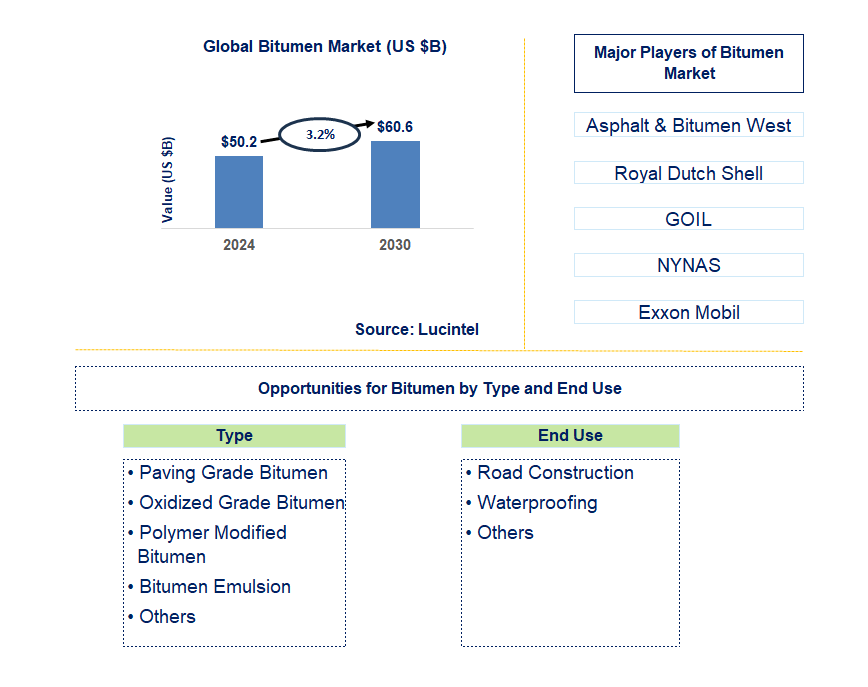
Key data points: The market size in 2030 = $60.6 billion, growth forecasts = 3.2% annually for the next 6 years. Scroll below to get more insights. This market report covers trends, opportunities, and forecasts in the global bitumen market to 2030 by type (paving grade bitumen, oxidized grade bitumen, polymer modified bitumen, bitumen emulsion, and others), end use (road construction, waterproofing, and others), and region (North America, Europe, Asia Pacific, and the Rest of the World)
We'll send your sample report shortly.
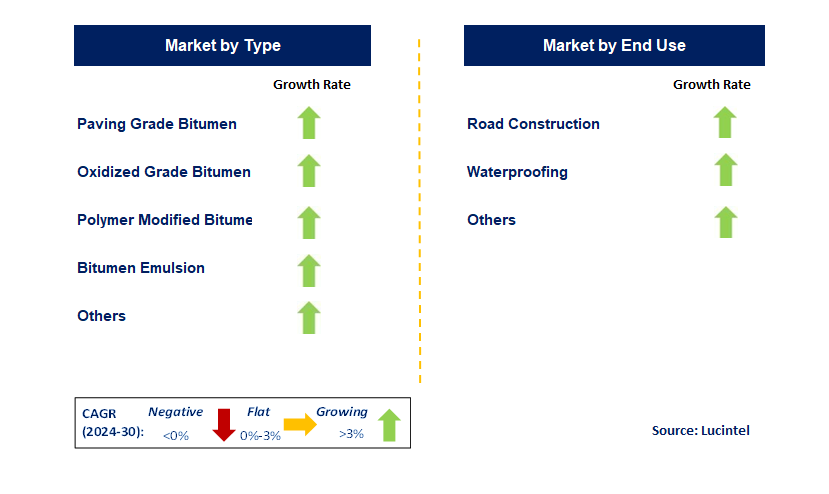
• Lucintel forecasts that, within the type category, paving grade bitumen is expected to witness the highest growth over the forecast period due to its substantial usage to create concrete blocks and coarse and fine materials, including pebbles or crushed rock.
• Within the end use category, road construction is expected to witness the highest growth over the forecast period.
• In terms of regions, APAC will remain the largest region over the forecast period due to quick industrialization and urbanization in the region. Gain Valuable insights for your business decisions with our comprehensive 150+ page report.
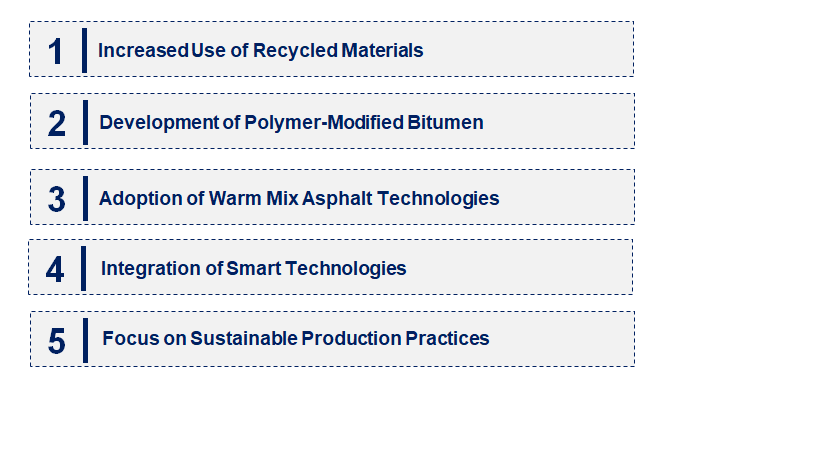
• Increased Use of Recycled Materials: There is a growing trend towards incorporating recycled materials into bitumen products to enhance sustainability and reduce environmental impact. Recycled asphalt pavement and rubberized asphalt are being increasingly used to create more eco-friendly bitumen solutions. This practice helps lower costs and minimizes waste by reusing materials from old roadways. Additionally, the use of recycled materials contributes to reduced carbon emissions and aligns with global sustainability goals, making it a key trend in the evolving bitumen market.
• Development of Polymer-Modified Bitumen : Polymer-modified bitumen is gaining prominence due to its enhanced performance characteristics. PMB offers superior resistance to extreme temperatures, heavy traffic loads, and oxidative aging compared to traditional bitumen. The integration of polymers such as styrene-butadiene-styrene or ethylene-vinyl-acetate improves the flexibility and durability of bitumen, making it ideal for high-stress environments. This trend reflects the industry's focus on producing more resilient and long-lasting road materials.
• Adoption of Warm Mix Asphalt Technologies: Warm mix asphalt technologies are becoming more prevalent as they offer environmental and operational benefits over traditional hot mix asphalt. WMA is produced at lower temperatures, which reduces energy consumption and greenhouse gas emissions during production. This trend is driven by increasing regulatory pressures to lower carbon footprints and the need for more efficient construction processes. WMA technologies are helping the industry meet environmental regulations while maintaining high performance in asphalt applications.
• Integration of Smart Technologies: The integration of smart technologies into bitumen applications is an emerging trend, driven by the need for enhanced performance monitoring and management. Smart road technologies, such as sensors embedded in bitumen, allow for real-time data collection on road conditions, traffic patterns, and environmental factors. This information enables better maintenance planning and improves the overall performance and safety of road infrastructure. The adoption of such technologies is transforming the bitumen market by enhancing the functionality and longevity of roadways.
• Focus on Sustainable Production Practices: There is a strong focus on sustainable production practices within the bitumen industry, driven by environmental concerns and regulatory requirements. Companies are investing in energy-efficient production processes and exploring the use of bio-based and low-impact materials. This trend includes efforts to reduce waste, lower emissions, and minimize the ecological footprint of bitumen manufacturing. By adopting greener production practices, the industry aims to align with global sustainability goals and meet increasing consumer and regulatory demands for environmentally friendly products. Emerging trends in the bitumen market, such as increased use of recycled materials, development of polymer-modified bitumen, adoption of warm mix asphalt technologies, integration of smart technologies, and focus on sustainable production practices, reflect a shift towards more resilient, eco-friendly, and innovative solutions. These trends are shaping the future of the bitumen industry by addressing environmental concerns, enhancing product performance, and leveraging technological advancements. Staying abreast of these trends is crucial for industry stakeholders to capitalize on new opportunities and adapt to evolving market demands.
• Adoption of Recycled Asphalt Pavement: The use of recycled asphalt pavement has become increasingly prevalent as the industry seeks to enhance sustainability and reduce costs. Recycled asphalt pavement involves reusing asphalt from old roadways to create new bitumen products, minimizing waste and conserving resources. This development not only lowers the environmental impact by reducing the need for virgin materials but also decreases production costs. The growing emphasis on recycling aligns with global sustainability goals and supports the industry's efforts to innovate and adapt to environmental regulations.
• Advancements in Polymer-Modified Bitumen: Polymer-modified bitumen has seen significant advancements, with improved formulations enhancing its performance in extreme weather conditions and heavy traffic environments. The incorporation of polymers like styrene-butadiene-styrene or ethylene-vinyl-acetate improves the elasticity, durability, and resistance of bitumen. These advancements address challenges such as thermal cracking and rutting, making PMB a preferred choice for high-stress applications. The trend towards PMB reflects the industry’s focus on producing high-performance materials that extend the lifespan of roadways.
• Development of Warm Mix Asphalt: Warm mix asphalt technologies are gaining traction due to their environmental and operational benefits. Warm mix asphalt is produced at lower temperatures compared to traditional hot mix asphalt, which reduces energy consumption and greenhouse gas emissions during production. This development addresses growing environmental concerns and regulatory requirements aimed at reducing carbon footprints. Warm mix asphalt technologies facilitate more efficient construction processes and improve overall sustainability in road paving, aligning with industry trends towards greener practices.
• Integration of Smart Road Technologies: The integration of smart road technologies into bitumen applications represents a major development in the industry. Embedded sensors and monitoring systems in roadways provide real-time data on traffic conditions, road performance, and environmental factors. This information enables more effective maintenance and management of road infrastructure. The adoption of smart technologies enhances road safety, performance, and durability, and reflects a broader trend towards digital transformation and innovation in infrastructure management.
• Focus on Sustainable Production Practices: The bitumen industry is increasingly focusing on sustainable production practices to address environmental concerns and regulatory pressures. Innovations include energy-efficient manufacturing processes, the use of bio-based materials, and efforts to reduce emissions and waste. This shift towards greener production methods supports global sustainability initiatives and meets consumer demand for environmentally friendly products. Companies are investing in research and development to improve the sustainability of bitumen production and align with stricter environmental regulations. Recent developments in the bitumen market highlight a trend towards enhanced sustainability, performance, and technological innovation. The adoption of recycled materials, advancements in polymer-modified bitumen, development of warm mix asphalt, integration of smart technologies, and focus on sustainable production practices are shaping the industry’s future. These changes reflect a response to environmental challenges, regulatory pressures, and evolving infrastructure needs, driving the market towards more efficient, durable, and eco-friendly solutions.
• Road Construction and Maintenance: Road construction and maintenance represent a significant growth opportunity for the bitumen market. With increasing urbanization and infrastructure development, there is a rising demand for high-quality bitumen to enhance road durability and performance. Innovations such as polymer-modified bitumen and warm mix asphalt are improving road lifespan and sustainability. The focus on maintaining and upgrading existing road networks also drives demand, as countries invest in infrastructure to support economic growth and improve transportation efficiency.
• Waterproofing Applications: Bitumen is increasingly being used in waterproofing applications for buildings and infrastructure. Its excellent waterproofing properties make it ideal for protecting roofs, foundations, and basements from moisture damage. The growing construction and real estate sectors are driving this demand. Advances in bitumen-based membranes and coatings are enhancing performance and ease of application, making bitumen a preferred choice for modern waterproofing solutions. This trend aligns with the need for durable and effective moisture control in both residential and commercial buildings.
• Asphalt Production for Highways: The production of asphalt for highway construction is a key growth area in the bitumen market. The increasing focus on building and expanding highway networks to support economic activities and improve connectivity drives this demand. High-performance asphalt mixes, including those incorporating recycled materials and advanced additives, are being developed to withstand heavy traffic and extreme weather conditions. The emphasis on creating more efficient and durable highways presents significant opportunities for bitumen producers to offer innovative solutions tailored to these needs.
• Industrial and Construction Applications: In industrial and construction applications, bitumen is used for various purposes, including adhesive coatings and sealants. The growth in industrial activities and large-scale construction projects fuels demand for bitumen-based products. Technological advancements in bitumen formulations, such as the development of eco-friendly and high-performance variants, are enhancing their suitability for diverse industrial uses. This trend is driven by the need for reliable and versatile materials in construction, from roadways to specialized industrial applications.
• Energy Sector Applications: The energy sector presents emerging growth opportunities for the bitumen market, particularly in oil sands extraction and as a binder in energy infrastructure. Bitumen’s role in enhancing oil recovery processes and its use in constructing energy-related infrastructure are expanding. The development of more efficient extraction techniques and the integration of bitumen in various energy applications drive this segment. As the energy sector evolves and seeks more sustainable and efficient solutions, bitumen’s applications are likely to grow in significance. The bitumen market is poised for growth across several key applications, including road construction and maintenance, waterproofing, asphalt production for highways, industrial and construction uses, and energy sector applications. Each of these areas presents unique opportunities for innovation and expansion, driven by technological advancements, increasing infrastructure demands, and a focus on sustainability. By leveraging these growth opportunities, stakeholders can position themselves effectively in the evolving bitumen market and meet the diverse needs of modern infrastructure and construction projects.
• Technological Advancements: Technological advancements in bitumen production and application are a major driver in the market. Innovations such as polymer-modified bitumen and warm mix asphalt enhance performance, durability, and sustainability. These technologies address issues like road wear and environmental impact, leading to improved product quality and efficiency. As new technologies continue to emerge, they drive market growth by offering superior solutions for road construction, maintenance, and industrial applications. The continuous development of advanced bitumen products helps meet the evolving needs of modern infrastructure.
• Increasing Infrastructure Investments: Growing investments in infrastructure development and maintenance significantly drive the bitumen market. As countries invest in building and upgrading roads, highways, and other infrastructure, the demand for high-quality bitumen rises. This investment includes both new construction projects and the rehabilitation of existing roadways, which require durable and effective bitumen solutions. The expansion of urban areas and the need for better transportation networks contribute to the increasing demand for bitumen, making infrastructure investment a key growth driver for the market.
• Rising Demand for Sustainable Solutions: The rising demand for sustainable and eco-friendly bitumen solutions is a crucial market driver. There is an increasing emphasis onreducing environmental impact through the use of recycled materials and the development of green bitumen products. Technologies like warm mix asphalt and recycled asphalt pavement support this trend by lowering carbon emissions and promoting sustainability. As regulatory pressures and consumer preferences shift towards greener practices, the bitumen market is responding with innovative solutions that align with environmental goals.
• Fluctuating Raw Material Prices: The fluctuation of raw material prices, particularly crude oil, impacts the bitumen market significantly. Bitumen is derived from petroleum, and changes in oil prices can affect production costs and market pricing. Volatile raw material costs create uncertainty in the bitumen market, influencing both supply and demand dynamics. Companies must navigate these fluctuations by implementing cost-management strategies and exploring alternative materials to mitigate the impact on their operations and pricing strategies.
• Regulatory Pressures: Regulatory pressures related to environmental standards and sustainability are driving changes in the bitumen market. Governments and regulatory bodies are imposing stricter regulations on emissions, waste, and the use of recycled materials. These regulations compel companies to innovate and adapt by adopting greener technologies and improving production processes. Compliance with these regulations not only influences product development but also impacts market dynamics by shaping the demand for eco-friendly and compliant bitumen solutions. Challenges in the bitumen market are:
• Environmental Regulations: Stringent environmental regulations pose a significant challenge for the bitumen market. Regulations aimed at reducing emissions, waste, and environmental impact require companies to invest in cleaner technologies and modify their production processes. Compliance with these regulations can be costly and complex, impacting operational efficiency and profitability. The need to balance regulatory compliance with market demands and cost considerations remains a critical challenge for industry stakeholders.
• Fluctuating Raw Material Costs: The volatility in raw material costs, particularly crude oil prices, affects the bitumen market's stability and profitability. As bitumen is derived from petroleum, fluctuations in oil prices can lead to variations in production costs and market prices. This volatility can create uncertainty in the market, making it challenging for companies to manage budgets, set pricing strategies, and maintain consistent supply levels.
• Market Volatility: Market volatility, driven by economic factors, geopolitical events, and fluctuating demand, presents a challenge for the bitumen industry. Changes in economic conditions and infrastructure investment patterns can lead to unpredictable market dynamics. Companies must navigate this volatility by implementing flexible strategies, diversifying their product offerings, and staying informed about market trends to mitigate risks and capitalize on opportunities effectively The bitumen market is shaped by a complex interplay of drivers and challenges. Technological advancements, increasing infrastructure investments, rising demand for sustainable solutions, raw material price fluctuations, and regulatory pressures drive market growth. However, challenges such as environmental regulations, raw material cost volatility, and market instability impact the industry's dynamics. Addressing these factors effectively is crucial for stakeholders to navigate the market successfully and leverage growth opportunities while mitigating risks.
• Asphalt & Bitumen West
• Royal Dutch Shell
• GOIL
• NYNAS
• Exxon Mobil
• Hindustan Petroleum
• RAHA Bitumen
• Sinopec
• Gazprom
• TotalEnergies
• Paving Grade Bitumen
• Oxidized Grade Bitumen
• Polymer Modified Bitumen
• Bitumen Emulsion
• Others
• Road Construction
• Waterproofing
• Others
• North America
• Europe
• Asia Pacific
• The Rest of the World
• United States: Recent developments in the U.S. bitumen market are characterized by a push towards sustainable and high-performance materials. There is a growing focus on incorporating recycled materials and modified bitumen in road construction to improve durability and environmental impact. Additionally, advancements in polymer-modified bitumen are enhancing performance characteristics, such as resistance to extreme temperatures and heavy traffic loads. Regulatory pressures and incentives are driving innovation towards eco-friendly solutions, contributing to a shift towards more sustainable bitumen products. The market also sees increased investment in infrastructure projects, boosting demand for high-quality bitumen.
• China: China bitumen market is experiencing rapid growth driven by extensive infrastructure development and urbanization. Recent developments include a significant rise in the use of modified bitumen to enhance road quality and longevity, addressing the challenges of heavy traffic and extreme weather conditions. The Chinese government’s emphasis on sustainable development has led to increased adoption of environmentally friendly bitumen products, including those with recycled content. Technological advancements in bitumen production, such as improved refining processes and quality control, are also notable. The market is expected to continue growing with ongoing infrastructure projects and urban expansion.
• Germany: In Germany, recent developments in the bitumen market reflect a strong commitment to environmental sustainability and technological innovation. The focus is on developing high-performance, eco-friendly bitumen solutions that align with stringent European Union regulations. Germany is leading advancements in polymer-modified and bio-based bitumen, which offer improved performance and reduced environmental impact. The adoption of smart road technologies and the integration of recycled materials into bitumen products are key trends. The German market also benefits from significant investments in infrastructure maintenance and upgrades, driving demand for advanced bitumen solutions.
• India: India bitumen market is evolving rapidly due to substantial investments in infrastructure and urban development. Recent developments include the increased use of high-performance and modified bitumen to address the challenges of heavy traffic and extreme weather conditions. The Indian government’s focus on road development projects and infrastructure modernization is driving demand for advanced bitumen products. Additionally, there is a growing emphasis on sustainability, with a push towards incorporating recycled materials and improving the environmental footprint of bitumen production. The market is also seeing advancements in production technologies to enhance product quality and efficiency.
• Japan: Japan bitumen market is characterized by a focus on innovation and sustainability. Recent developments include the adoption of advanced polymer-modified bitumen to improve road durability and performance in varying climatic conditions. The Japanese government’s emphasis on infrastructure resilience and sustainability is driving the use of eco-friendly bitumen solutions, including those with reduced environmental impact and increased longevity. Technological advancements in bitumen production, such as improved refining processes and quality control, are notable. Japan market also benefits from ongoing infrastructure projects and efforts to enhance road safety and efficiency.


• Asphalt & Bitumen West
• Royal Dutch Shell
• GOIL
• NYNAS
• Exxon Mobil
• Hindustan Petroleum
• RAHA Bitumen
• Sinopec
• Gazprom
• TotalEnergies Q6. Which bitumen market segment will be the largest in future? Answer: Lucintel forecasts that paving grade bitumen is expected to witness the highest growth over the forecast period due to its substantial usage to create concrete blocks and coarse and fine materials, including pebbles or crushed rock. Q7. In bitumen market, which region is expected to be the largest in next 5 years? Answer: APAC will remain the largest region over the forecast period due to quick industrialization and urbanization in the region. Q.8 Do we receive customization in this report? Answer: Yes, Lucintel provides 10% customization without any additional cost.


Choose a license that fits your team. Instant PDF delivery.
Prices exclude taxes. Instant delivery. Custom licensing available on request.
Market Report · July 22, 2026
Market Report · July 22, 2026
Market Report · July 22, 2026
Trusted partner for strategic intelligence and business growth


Receive a complimentary market analysis tailored to your industry. Our analysts will identify key growth opportunities and competitive dynamics specific to your business.

Market size, growth rate, and key trend analysis for your specific sector.

Top competitor positioning and market share analysis.

Strategic recommendations backed by data-driven insights.
Get curated market intelligence and competitive moves straight to your inbox.
By subscribing, you agree to receive our monthly insights. Unsubscribe anytime.
Receive a complimentary market analysis tailored to your industry. Our analysts will identify key growth opportunities and competitive dynamics specific to your business.
Market size, growth rate, and key trend analysis for your specific sector.
Top competitor positioning and market share analysis.
Strategic recommendations backed by data-driven insights.
Get curated market intelligence, emerging trends, and competitive moves straight to your inbox each month.
By subscribing, you agree to receive our monthly insights. Unsubscribe anytime.
We'll send your sample report shortly.