
Bitumen Emulsifiers Market Trends and Forecast
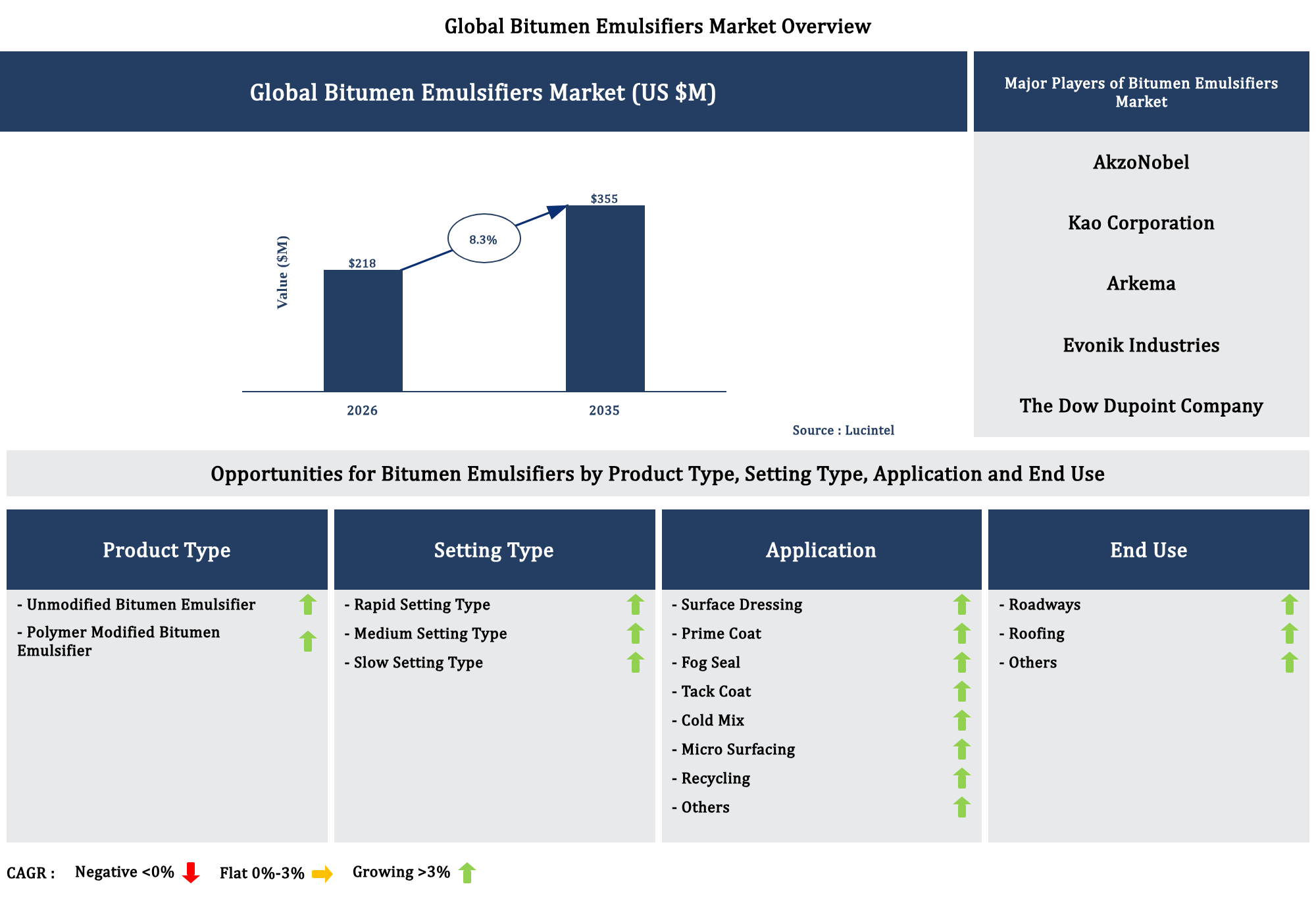
The future of the global bitumen emulsifiers market looks promising with opportunities in the roadway and roofing markets. The global bitumen emulsifiers market is expected to reach an estimated $355 million by 2035 with a CAGR of 4.8% from 2026 to 2035. The major drivers for this market are the growing need for cost-effective road solutions, the increasing need for maintenance & repair of existing roads, and the rising adoption of sustainable & green construction practices.
• Lucintel forecasts that, within the product type category, unmodified bitumen emulsifier is expected to witness higher growth over the forecast period.
• Within the end use category, roadway is expected to witness the highest growth.
• In terms of region, APAC is expected to witness the highest growth over the forecast period.
Gain valuable insights for your business decisions with our comprehensive 150+ page report. Sample figures with some insights are shown below.
Emerging Trends in the Bitumen Emulsifiers Market
The bitumen emulsifiers market is experiencing rapid evolution driven by technological advancements, environmental concerns, and changing infrastructure needs. As the construction and road maintenance sectors seek more sustainable and efficient solutions, the demand for innovative emulsifiers is increasing. Market players are focusing on developing eco-friendly formulations, improving product performance, and expanding applications across various regions. These developments are not only enhancing the durability and safety of road surfaces but also aligning with global sustainability goals. The following key trends highlight the major shifts shaping this market, reflecting its dynamic nature and future growth potential.
• Growing Demand for Eco-Friendly Emulsifiers: Increasing environmental awareness and stricter regulations are pushing manufacturers to develop biodegradable and non-toxic emulsifiers. These eco-friendly options reduce environmental impact during production, application, and disposal, appealing to environmentally conscious consumers and governments. This trend encourages innovation in formulation chemistry, leading to safer, sustainable products that meet regulatory standards while maintaining performance.
• Technological Advancements in Emulsifier Formulations: Innovations in chemistry and material science are enabling the creation of more effective and stable bitumen emulsifiers. These advancements improve the emulsifiers‘ resistance to temperature variations, aging, and water separation, enhancing the longevity and durability of road surfaces. Such technological progress allows for better performance in diverse climatic conditions, expanding application possibilities and reducing maintenance costs.
• Rising Adoption of Warm Mix Asphalt (WMA) Technologies: WMA technologies, which utilize emulsifiers to produce lower-temperature asphalt mixes, are gaining popularity due to their environmental and economic benefits. They reduce energy consumption, emissions, and worker exposure to fumes. The integration of emulsifiers in WMA formulations is driving market growth, especially in regions prioritizing sustainable infrastructure development and cost-effective construction practices.
• Expansion into Emerging Markets: Developing countries are increasingly investing in infrastructure projects, creating significant opportunities for bitumen emulsifier suppliers. The demand is driven by urbanization, road construction, and maintenance needs. Market players are expanding their presence through local partnerships and tailored product offerings to cater to these emerging markets, which are expected to witness substantial growth over the coming years.
• Focus on Product Innovation and Customization: Companies are investing in R&D to develop specialized emulsifiers tailored for specific applications, such as waterproofing, roofing, and industrial uses. Customization enhances product performance, compatibility with various bitumen grades, and application efficiency. This trend allows manufacturers to differentiate their offerings, meet diverse customer needs, and capture a larger market share.
These trends are transforming the bitumen emulsifiers market by promoting sustainability, technological innovation, and market expansion. They are enabling the industry to meet evolving regulatory standards, improve product performance, and address the growing infrastructure demands across the globe. As a result, the market is poised for sustained growth, driven by a focus on eco-friendly solutions and advanced formulations.

Recent Developments in the Bitumen Emulsifiers Market
The bitumen emulsifiers market is experiencing rapid growth driven by infrastructure development, environmental regulations, and technological advancements. As countries invest heavily in road construction and maintenance, the demand for efficient, eco-friendly emulsifiers increases. Innovations in formulation and application methods are also expanding market opportunities. This evolving landscape presents significant prospects for manufacturers and stakeholders aiming to meet the rising global infrastructure needs while adhering to sustainability standards.
• Growing Infrastructure Projects: The surge in road construction and maintenance worldwide is boosting demand for bitumen emulsifiers, which are essential for producing durable, cost-effective asphalt mixes. Governments and private sectors are investing heavily in infrastructure, especially in emerging economies, creating a substantial growth opportunity. This trend enhances market revenue and encourages innovation in emulsifier formulations to meet specific project requirements, ultimately supporting sustainable development and urbanization.
• Environmental Regulations and Eco-Friendly Solutions: Stricter environmental policies are pushing the industry toward eco-friendly emulsifiers that reduce emissions and improve recyclability. Manufacturers are developing biodegradable and low-VOC emulsifiers to comply with regulations, which positively impacts market growth. These sustainable solutions not only meet regulatory standards but also appeal to environmentally conscious consumers, expanding market reach. The shift toward greener products is fostering innovation and opening new avenues for market players.
• Technological Advancements in Emulsifier Formulation: Innovations in chemical formulations are improving the stability, performance, and application efficiency of bitumen emulsifiers. Advanced technologies enable the production of emulsifiers that work effectively in diverse climatic conditions and with various bitumen grades. These developments enhance product performance, reduce costs, and increase adoption in different regions. Continuous R&D efforts are expected to further revolutionize the market, providing competitive advantages to early adopters and fostering industry growth.
• Rising Demand from the Construction Sector: The construction industry’s expansion, especially in developing countries, is a key driver for the bitumen emulsifiers market. The need for high-quality, durable asphalt for roads, airports, and other infrastructure projects fuels demand. Emulsifiers facilitate easier application and better performance of asphalt mixes, making them indispensable. This trend supports market growth by encouraging manufacturers to develop specialized emulsifiers tailored to specific construction needs, thereby boosting sales and market penetration.
• Increasing Adoption of Recycled Materials: The integration of recycled asphalt pavement (RAP) with emulsifiers is gaining traction, promoting sustainability and cost savings. Emulsifiers enable the effective reuse of old asphalt, reducing environmental impact and raw material costs. This trend aligns with global sustainability goals and regulatory pressures to minimize waste. As the industry shifts toward circular economy practices, the demand for compatible emulsifiers is expected to rise, creating new market opportunities and encouraging innovation in formulation and application techniques.
These recent developments are significantly transforming the bitumen emulsifiers market by fostering sustainable practices, enhancing product performance, and supporting infrastructure growth. The integration of eco-friendly solutions, technological innovations, and recycled materials is expanding market opportunities while aligning with environmental standards. As these trends continue, the market is poised for robust growth, driven by increasing demand from construction and infrastructure sectors worldwide, ultimately shaping a more sustainable and efficient industry landscape.
Strategic Growth Opportunities in the Bitumen Emulsifiers Market
The bitumen emulsifiers market is experiencing significant growth driven by infrastructure development, environmental regulations, and technological advancements. Increasing demand for sustainable construction materials and road maintenance solutions is expanding market opportunities globally. Innovations in emulsifier formulations are enhancing performance and environmental compatibility. Market players are focusing on strategic collaborations and product diversification to capture emerging opportunities. This evolving landscape presents substantial potential for growth across various applications, promising a robust future for the industry.
• Expansion of Road Construction Projects Worldwide: The rising need for durable, cost-effective, and environmentally friendly road surfaces is boosting demand for bitumen emulsifiers. Governments and private sectors are investing heavily in infrastructure, especially in developing regions, to improve transportation networks. These emulsifiers facilitate easier application, faster curing, and better performance of asphalt mixes, making them essential for modern road construction. The increasing volume of infrastructure projects directly correlates with heightened market demand and innovation in emulsifier technology.
• Adoption of Eco-Friendly and Biodegradable Emulsifiers: Growing environmental concerns and stricter regulations are driving the shift toward sustainable construction materials. Biodegradable and non-toxic emulsifiers are gaining popularity due to their reduced environmental impact and compatibility with green building standards. Manufacturers are investing in R&D to develop eco-friendly formulations that maintain performance while minimizing ecological footprint. This trend opens new market segments focused on sustainable infrastructure, encouraging industry players to innovate and expand their product portfolios.
• Technological Advancements in Emulsifier Formulations: Continuous research is leading to the development of advanced emulsifiers with superior stability, temperature resistance, and compatibility with various bitumen grades. Innovations such as polymer-modified emulsifiers and nano-enhanced formulations improve performance in challenging conditions. These technological improvements enable longer-lasting roads, reduce maintenance costs, and enhance workability. As a result, the market benefits from higher-quality products that meet diverse application needs, fostering growth through increased adoption and customer satisfaction.
• Growing Demand for Cold Mix Asphalt Applications: Cold mix asphalt, which uses emulsified bitumen, offers advantages like lower energy consumption, faster construction times, and suitability for patch repairs. The increasing need for quick, cost-effective road repairs and maintenance is fueling demand for emulsifiers suitable for cold mixes. This application segment is expanding rapidly, especially in remote or resource-constrained areas. The development of specialized emulsifiers tailored for cold mix asphalt is expected to further accelerate market growth and adoption.
• Strategic Collaborations and Mergers Among Industry Players: Companies are forming alliances to enhance R&D capabilities, expand product offerings, and penetrate new markets. Mergers and acquisitions facilitate access to advanced technologies and broader distribution networks. These strategic moves enable firms to stay competitive, meet evolving customer demands, and accelerate innovation. Such collaborations are vital for addressing market challenges, reducing costs, and capturing emerging opportunities, ultimately driving overall industry growth and market stability.
The overall impact of these opportunities is a dynamic, expanding market characterized by innovation, sustainability, and increased infrastructure investments. Companies that leverage these growth avenues will be well-positioned to capitalize on emerging trends, meet regulatory standards, and satisfy evolving customer needs. This will foster a resilient, competitive landscape with sustained long-term growth prospects for the bitumen emulsifiers market.
Bitumen Emulsifiers Market Driver and Challenges
The bitumen emulsifiers market is influenced by a variety of technological, economic, and regulatory factors that shape its growth trajectory. Advances in emulsifier formulations and application techniques drive innovation, while economic conditions such as infrastructure development and construction activity significantly impact demand. Regulatory standards concerning environmental safety and product quality also play a crucial role in shaping market dynamics. Additionally, the push for sustainable and eco-friendly solutions influences research and development efforts. Navigating these complex drivers and challenges is essential for stakeholders aiming to capitalize on emerging opportunities and address potential risks within this evolving industry landscape.
The factors responsible for driving the bitumen emulsifiers market include:-
• Technological Innovation: The development of advanced emulsifier formulations enhances the stability, workability, and environmental compliance of bitumen emulsions. Innovations such as bio-based emulsifiers and improved manufacturing processes enable better performance in road construction and maintenance, expanding application scope. These technological advancements reduce costs and improve product longevity, making them attractive to industry players. As research continues, the market benefits from more sustainable and efficient solutions, fostering growth and competitiveness.
• Infrastructure Development and Construction Activities: Increasing investments in infrastructure projects, especially in emerging economies, significantly boost demand for bitumen emulsifiers. These emulsifiers are essential in road construction, paving, and maintenance, providing durable and cost-effective solutions. Governments and private sectors focusing on urbanization and transportation networks drive the need for high-quality emulsified bitumen, directly impacting market expansion. The ongoing infrastructure boom ensures a steady demand, supporting market stability and growth prospects.
• Environmental Regulations and Sustainability Initiatives: Stricter environmental standards and a global shift towards sustainable practices influence the market by encouraging the adoption of eco-friendly emulsifiers. Regulations aimed at reducing emissions and minimizing ecological impact push manufacturers to develop biodegradable and non-toxic formulations. This regulatory pressure fosters innovation and creates opportunities for green emulsifiers, aligning industry practices with environmental goals. Compliance with these standards is crucial for market players to maintain competitiveness and access new markets.
• Economic Growth and Urbanization: Rapid economic development and urbanization in various regions increase the demand for infrastructure, including roads and highways, which directly benefits the bitumen emulsifiers market. Rising disposable incomes and increased construction activities lead to higher consumption of emulsified bitumen products. This economic momentum supports market expansion, especially in developing countries where infrastructure projects are prioritized to sustain growth and improve connectivity.
• Technological Adoption in Road Maintenance: The adoption of modern road maintenance techniques utilizing bitumen emulsifiers enhances efficiency and durability. Innovations such as cold mix asphalt and recycled pavement applications rely heavily on advanced emulsifiers, reducing energy consumption and environmental impact. This technological shift improves project timelines and cost-effectiveness, encouraging wider adoption across the industry. As maintenance practices evolve, the market benefits from increased demand for specialized emulsifiers suited to new application methods.
The challenges in the bitumen emulsifiers market are:-
• Stringent Regulatory Frameworks: Increasing environmental and safety regulations impose strict standards on emulsifier formulations and manufacturing processes. Compliance often requires significant investment in R&D and production modifications, which can increase costs for manufacturers. Navigating these regulatory landscapes is complex, especially for small and medium-sized enterprises, potentially limiting market entry and innovation. Failure to meet standards can result in penalties, product recalls, or loss of market access, posing a substantial challenge to industry growth.
• Fluctuating Raw Material Prices: The market heavily depends on raw materials such as surfactants and other chemicals, whose prices are subject to volatility due to geopolitical tensions, supply chain disruptions, and environmental factors. Price fluctuations can impact profit margins and lead to increased costs for end-users, affecting demand. Manufacturers may face difficulties in maintaining stable pricing strategies, which can hinder long-term planning and investment, ultimately restraining market expansion.
• Environmental Concerns and Sustainability Challenges: Despite the push for eco-friendly products, the production and disposal of certain emulsifiers raise environmental concerns. The use of non-biodegradable chemicals and the potential for pollution during manufacturing and application pose sustainability challenges. Addressing these issues requires significant R&D investment and shifts in supply chains, which can delay product launches and increase costs. Balancing performance with environmental responsibility remains a critical challenge for market participants.
The bitumen emulsifiers market is shaped by technological advancements, infrastructure development, regulatory pressures, economic growth, and evolving maintenance practices. While these drivers foster innovation and expansion, challenges such as regulatory compliance, raw material price volatility, and environmental concerns pose risks that require strategic management. Overall, the market‘s future depends on how effectively industry players can leverage opportunities while mitigating these challenges, ensuring sustainable growth and competitiveness in a dynamic environment.
List of Bitumen Emulsifiers Companies
Companies in the market compete on the basis of product quality offered. Major players in this market focus on expanding their manufacturing facilities, R&D investments, infrastructural development, and leverage integration opportunities across the value chain. With these strategies bitumen emulsifiers companies cater increasing demand, ensure competitive effectiveness, develop innovative products & technologies, reduce production costs, and expand their customer base. Some of the bitumen emulsifiers companies profiled in this report include-
• AkzoNobel
• Kao Corporation
• Arkema
• Evonik Industries
• The Dow Dupoint Company
• Honeywell International
• Croda International
• Ingevity
• Petrochem Specialties
• RX Marine International.
Bitumen Emulsifiers Market by Segment
The study includes a forecast for the global bitumen emulsifiers market by product type, setting type, application, end use, and region.
Bitumen Emulsifiers Market by Product Type [Value from 2019 to 2035]:
• Unmodified Bitumen Emulsifier
• Polymer Modified Bitumen Emulsifier
Bitumen Emulsifiers Market by Setting Type [Value from 2019 to 2035]:
• Rapid Setting Type
• Medium Setting Type
• Slow Setting Type
Bitumen Emulsifiers Market by Application [Value from 2019 to 2035]:
• Surface Dressing
• Prime Coat
• Fog Seal
• Tack Coat
• Cold Mix
• Micro Surfacing
• Recycling
• Others
Bitumen Emulsifiers Market by End Use [Value from 2019 to 2035]:
• Roadways
• Roofing
• Others
Bitumen Emulsifiers Market by Region [Value from 2019 to 2035]:
• North America
• Europe
• Asia Pacific
• The Rest of the World
Country Wise Outlook for the Bitumen Emulsifiers Market
The bitumen emulsifiers market has experienced significant growth driven by infrastructure development, urbanization, and the need for sustainable construction materials worldwide. Innovations in emulsifier formulations and increased demand for eco-friendly solutions have shaped recent trends. Countries are investing in research and development to improve product performance and environmental compatibility. Regulatory policies and government initiatives also influence market dynamics, encouraging the adoption of advanced emulsifiers in road construction and waterproofing applications. As infrastructure projects expand globally, the market is poised for continued growth, with regional variations reflecting local economic and environmental priorities.
• United States: The U.S. market has seen increased adoption of eco-friendly bitumen emulsifiers, driven by stringent environmental regulations and infrastructure upgrades. Innovations focus on reducing emissions and improving durability, with key players investing in R&D. The government’s emphasis on sustainable transportation projects has further boosted demand, especially in road construction and maintenance sectors.
• China: China remains the largest consumer of bitumen emulsifiers, fueled by rapid urbanization and extensive infrastructure projects. Recent developments include the adoption of advanced emulsifier formulations that enhance performance in high-temperature conditions. The government’s focus on green construction practices is encouraging the use of environmentally friendly emulsifiers, supporting market growth.
• Germany: Germany’s market is characterized by a strong emphasis on quality and environmental standards. Recent advancements involve the development of biodegradable and low-VOC emulsifiers to meet strict EU regulations. The country’s focus on sustainable infrastructure and innovative road construction techniques has driven demand for high-performance emulsifiers.
• India: India’s market is expanding rapidly due to increasing infrastructure development and government initiatives like the Smart Cities Mission. Recent developments include the adoption of cost-effective and durable emulsifiers suitable for diverse climatic conditions. There is a growing trend toward environmentally sustainable solutions, supported by regulatory push and industry awareness.
• Japan: Japan’s market is marked by technological innovation and environmental consciousness. Recent advancements include the development of emulsifiers with enhanced stability and eco-friendly properties. The focus on disaster-resistant infrastructure and sustainable urban development has spurred demand for advanced bitumen emulsifiers, aligning with Japan’s green technology initiatives.
Features of the Global Bitumen Emulsifiers Market
Market Size Estimates: Bitumen emulsifiers market size estimation in terms of value ($M).
Trend and Forecast Analysis: Market trends (2019 to 2025) and forecast (2026 to 2035) by various segments and regions.
Segmentation Analysis: Bitumen emulsifiers market size by various segments, such as by product type, setting type, application, end use, and region in terms of value ($M).
Regional Analysis: Bitumen emulsifiers market breakdown by North America, Europe, Asia Pacific, and Rest of the World.
Growth Opportunities: Analysis of growth opportunities in different product type, setting type, application, end use, and regions for the bitumen emulsifiers market.
Strategic Analysis: This includes M&A, new product development, and competitive landscape of the bitumen emulsifiers market.
Analysis of competitive intensity of the industry based on Porter’s Five Forces model.
FAQ
Q1. What is the bitumen emulsifiers market size?
Answer: The global bitumen emulsifiers market is expected to reach an estimated $355 million by 2035.
Q2. What is the growth forecast for bitumen emulsifiers market?
Answer: The global bitumen emulsifiers market is expected to grow with a CAGR of 4.8% from 2026 to 2035.
Q3. What are the major drivers influencing the growth of the bitumen emulsifiers market?
Answer: The major drivers for this market are the growing need for cost-effective road solutions, the increasing need for maintenance & repair of existing roads, and the rising adoption of sustainable & green construction practices.
Q4. What are the major segments for bitumen emulsifiers market?
Answer: The future of the bitumen emulsifiers market looks promising with opportunities in the roadway and roofing markets.
Q5. Who are the key bitumen emulsifiers market companies?
Answer: Some of the key bitumen emulsifiers companies are as follows:
• AkzoNobel
• Kao Corporation
• Arkema
• Evonik Industries
• The Dow Dupoint Company
• Honeywell International
• Croda International
• Ingevity
• Petrochem Specialties
• RX Marine International.
Q6. Which bitumen emulsifiers market segment will be the largest in future?
Answer: Lucintel forecasts that, within the product type category, unmodified bitumen emulsifier is expected to witness higher growth over the forecast period.
Q7. In bitumen emulsifiers market, which region is expected to be the largest in next 8 years?
Answer: In terms of region, APAC is expected to witness the highest growth over the forecast period.
Q8. Do we receive customization in this report?
Answer: Yes, Lucintel provides 10% customization without any additional cost.
This report answers following 11 key questions:
Q.1. What are some of the most promising, high-growth opportunities for the bitumen emulsifiers market by product type (unmodified bitumen emulsifier and polymer modified bitumen emulsifier), setting type (rapid setting type, medium setting type, and slow setting type), application (surface dressing, prime coat, fog seal, tack coat, cold mix, micro surfacing, recycling, and others), end use (roadways, roofing, and others), and region (North America, Europe, Asia Pacific, and the Rest of the World)?
Q.2. Which segments will grow at a faster pace and why?
Q.3. Which region will grow at a faster pace and why?
Q.4. What are the key factors affecting market dynamics? What are the key challenges and business risks in this market?
Q.5. What are the business risks and competitive threats in this market?
Q.6. What are the emerging trends in this market and the reasons behind them?
Q.7. What are some of the changing demands of customers in the market?
Q.8. What are the new developments in the market? Which companies are leading these developments?
Q.9. Who are the major players in this market? What strategic initiatives are key players pursuing for business growth?
Q.10. What are some of the competing products in this market and how big of a threat do they pose for loss of market share by material or product substitution?
Q.11. What M&A activity has occurred in the last 5 years and what has its impact been on the industry?
For any questions related to Bitumen Emulsifiers Market, Bitumen Emulsifiers Market Size, Bitumen Emulsifiers Market Growth, Bitumen Emulsifiers Market Analysis, Bitumen Emulsifiers Market Report, Bitumen Emulsifiers Market Share, Bitumen Emulsifiers Market Trends, Bitumen Emulsifiers Market Forecast, Bitumen Emulsifiers Companies, write Lucintel analyst at email: helpdesk@lucintel.com. We will be glad to get back to you soon.