
Report Feature
Bioprocess Container Market Trends and Forecast
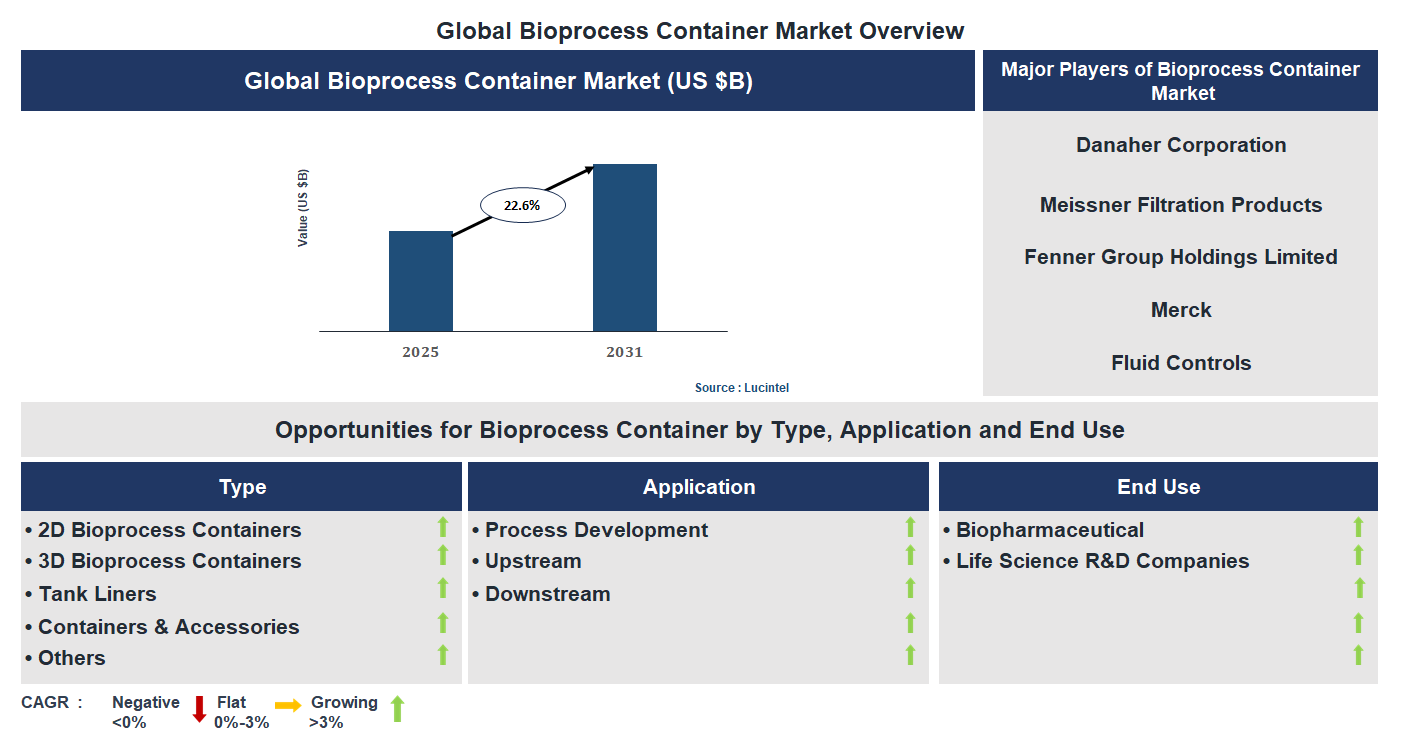
The future of the global bioprocess container market looks promising with opportunities in the process development, upstream, and downstream markets. The global bioprocess container market is expected to grow with a CAGR of 22.6% from 2025 to 2031. The major drivers for this market are the increasing adoption of single-use technologies, the rising demand for biopharmaceutical production, and the growing focus on cost-effective bioprocessing solutions.• Lucintel forecasts that, within the type category, 3D bioprocess container is expected to witness the highest growth over the forecast period.
• Within the application category, upstream is expected to witness the highest growth.
• In terms of region, APAC is expected to witness the highest growth over the forecast period. Gain valuable insights for your business decisions with our comprehensive 150+ page report. Sample figures with some insights are shown below.
Emerging Trends in the Bioprocess Container Market
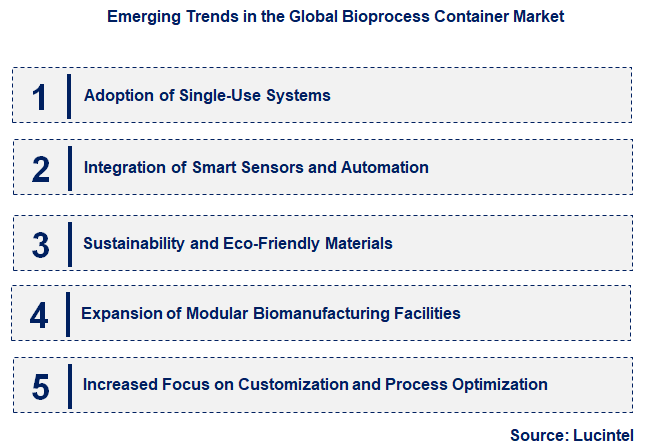
The bioprocess container market is evolving with new materials, integrated monitoring systems, and environmentally responsible designs. As the global biopharmaceutical industry expands biologics and cell-based therapies, demand for contamination-free, flexible bioprocess solutions continues to increase. Manufacturers are incorporating digital and automation technologies to improve process control and traceability. The market is shifting toward sustainable production and modular facility models. These emerging trends are defining the future of bioprocess containers by supporting scalable, efficient, and compliant biomanufacturing operations worldwide.• Adoption of Single-Use Systems: The move toward single-use bioprocess containers is expanding as manufacturers look for cost-effective, contamination-free solutions. Single-use systems reduce cleaning requirements, limit cross-contamination, and increase operational flexibility. They are ideal for small batch and multiproduct manufacturing, aligning with the growing need for personalized medicine. This approach enhances manufacturing speed and maintains sterility standards, becoming a key element in modern bioprocessing.
• Integration of Smart Sensors and Automation: Smart sensors and automated control systems allow real-time monitoring and data collection. These features improve quality control, process consistency, and operational efficiency. Automation reduces manual errors, ensures regulatory compliance, and supports continuous manufacturing. This integration provides predictive maintenance capabilities and enhances transparency, helping companies achieve higher productivity and reliability in bioprocessing.
• Sustainability and Eco-Friendly Materials: Sustainability drives the development of recyclable and bio-based bioprocess containers. Manufacturers are adopting eco-friendly polymers to reduce waste and carbon footprint. Efforts are focused on optimizing design for minimal material use while maintaining durability and performance. This trend supports global environmental goals and fosters long-term responsibility in biomanufacturing operations.
• Expansion of Modular Biomanufacturing Facilities: Modular facilities using flexible bioprocess containers enable quick installation, cost savings, and scalable operations. These systems support rapid facility setup and easy adjustment to changing production volumes. Modular designs are especially valuable during vaccine and biologic production surges. They enhance manufacturing agility and reduce time-to-market, making them essential in competitive biomanufacturing environments.
• Increased Focus on Customization and Process Optimization: Manufacturers are providing customized bioprocess containers designed for specific applications. Optimized shapes, materials, and fittings improve mixing performance and reduce product loss. Custom solutions ensure better system compatibility and precise process control. This trend promotes efficiency, higher yield, and consistent product quality across biopharmaceutical manufacturing lines. These trends are transforming the bioprocess container market by advancing efficiency, flexibility, and environmental responsibility. Single-use systems and smart automation are improving productivity, while sustainability and modular setups strengthen adaptability. Customization enhances precision and quality control. Together, these trends ensure cleaner, faster, and more efficient production processes that will continue to shape the future of global bioprocessing.
Recent Development in the Bioprocess Container Market
The bioprocess container market is evolving rapidly due to technological innovation, increasing biologics demand, and industry-wide adoption of flexible production systems. Manufacturers and research organizations are investing in advanced materials, automation, and scalable systems to meet global healthcare needs. Key developments include expansion of production capacities, strategic collaborations, product innovations, and sustainability initiatives that are shaping the future of bioprocessing efficiency.• Expansion of Manufacturing Capacities: Major players are expanding production facilities across North America, Europe, and Asia to meet rising demand for single-use containers. These expansions ensure greater product availability, shorter delivery times, and enhanced supply chain reliability, particularly for vaccine and biologics manufacturing.
• Advancements in Material Technology: Manufacturers are introducing high-performance polymer films that offer better chemical resistance, transparency, and durability. These innovations enhance container performance under varying process conditions and improve product safety and longevity.
• Strategic Partnerships and Collaborations: Collaborations between biopharma companies and container manufacturers are accelerating product innovation and customization. Joint development agreements are helping align process-specific needs, improve compatibility, and strengthen global market presence.
• Integration of Digital Monitoring Solutions: Companies are embedding digital sensors and data-tracking tools into bioprocess containers for real-time monitoring. This development enhances traceability, process control, and predictive maintenance capabilities, supporting smarter and more efficient biomanufacturing.
• Focus on Sustainability Initiatives: The industry is shifting toward sustainable production by using recyclable polymers and reducing plastic waste. Manufacturers are implementing green packaging and energy-efficient processes, aligning operations with environmental regulations and customer expectations. These developments collectively enhance manufacturing scalability, product safety, and sustainability in the bioprocess container market. Expanding capacities, innovative materials, and digital integration are setting the foundation for smarter, cleaner, and more resilient biomanufacturing systems.
Strategic Growth Opportunities in the Bioprocess Container Market
The bioprocess container market offers strong growth potential across diverse applications including upstream processing, downstream purification, cell culture, and vaccine production. Expanding biologics pipelines, rising demand for flexible systems, and advancements in biomanufacturing efficiency are unlocking new opportunities. Companies are focusing on cost reduction, automation, and process optimization to capture emerging application segments.• Cell Culture and Fermentation: Increasing use of bioprocess containers in cell culture applications supports high-yield biologics production. Single-use systems simplify setup, minimize contamination, and enhance process scalability, offering efficient solutions for monoclonal antibody and vaccine development.
• Vaccine Manufacturing: Global vaccination programs are driving demand for flexible bioprocess containers in large-scale vaccine production. Their disposable design ensures sterility, reduces cleaning needs, and enables rapid scale-up during pandemic or emergency production cycles.
• Gene and Cell Therapy: Growing investments in advanced therapies create opportunities for single-use bioprocess systems that handle small-volume, high-value batches. Containers designed for precise control improve consistency and reduce risk in personalized therapy production.
• Downstream Processing: The use of bioprocess containers in purification, storage, and buffer preparation is expanding. These systems improve workflow flexibility, reduce equipment downtime, and maintain sterility, ensuring consistent product quality in purification stages.
• Media and Buffer Storage: The increasing need for sterile and transportable containers for media and buffer solutions supports strong market growth. Bioprocess containers offer contamination-free handling, easy scalability, and improved operational convenience for biomanufacturers. Strategic growth opportunities in the bioprocess container market lie in applications that prioritize sterility, flexibility, and efficiency. Adoption across cell culture, vaccines, and therapy production highlights the critical role of single-use technologies in modern bioprocessing operations.
Bioprocess Container Market Driver and Challenges
The bioprocess container market is shaped by multiple technological, economic, and regulatory factors. Key drivers include advancements in biomanufacturing, rising biologics demand, and increasing preference for single-use systems. However, challenges such as material compatibility, waste management, and high initial costs continue to influence market dynamics. The factors responsible for driving the bioprocess container market include: 1. Growing Demand for Biologics and Vaccines: The global rise in biologics and vaccine production drives demand for scalable and sterile bioprocess containers. Single-use technologies support faster turnaround and efficient resource utilization. 2. Shift Toward Single-Use and Disposable Systems: The industry preference for single-use systems is accelerating due to reduced contamination risk, simplified cleaning, and faster setup, which enhance productivity and process reliability. 3. Technological Innovation and Automation: Integration of automation and smart monitoring systems improves process control and operational efficiency. Digital solutions enable real-time data analysis and enhance quality assurance. 4. Growing Investment in Biomanufacturing Infrastructure: Governments and private companies are investing heavily in new bioprocessing facilities. These investments expand production capacity and strengthen supply chains in key regions. 5. Rising Focus on Sustainability: Environmental responsibility is driving adoption of recyclable and bio-based materials. Sustainable container designs help companies align with green manufacturing goals. Challenges in the bioprocess container market are: 1. Material Compatibility Issues: Variations in chemical resistance and film integrity can affect product safety and process performance. Manufacturers are focusing on advanced material testing to overcome these challenges. 2. High Initial Investment Costs: Setting up bioprocess container systems involves significant capital expenditure, especially for large-scale operations, which can limit adoption among smaller firms. 3. Disposal and Waste Management: The use of single-use plastics poses environmental challenges. Developing effective recycling and waste management systems remains a top industry priority. The combined influence of technological progress, growing biologics demand, and sustainability efforts is propelling the bioprocess container market forward. While material and cost challenges persist, continuous innovation and infrastructure investment are ensuring long-term market stability and growth.List of Bioprocess Container Companies
Companies in the market compete on the basis of product quality offered. Major players in this market focus on expanding their manufacturing facilities, R&D investments, infrastructural development, and leverage integration opportunities across the value chain. With these strategies bioprocess container companies cater increasing demand, ensure competitive effectiveness, develop innovative products & technologies, reduce production costs, and expand their customer base. Some of the bioprocess container companies profiled in this report include-• Danaher Corporation
• Meissner Filtration Products
• Fenner Group Holdings Limited
• Merck
• Fluid Controls
• Thermo Fisher Scientific
• Rim Bio
• Sartorius
• Lonza
• General Electric Company
Bioprocess Container Market by Segment
The study includes a forecast for the global bioprocess container market by type, application, end use, and region.Bioprocess Container Market by Type [Value from 2019 to 2031]:
• 2D Bioprocess Containers
• 3D Bioprocess Containers
• Tank Liners
• Containers & Accessories
• Others
Bioprocess Container Market by Application [Value from 2019 to 2031]:
• Process Development
• Upstream
• Downstream
Bioprocess Container Market by End Use [Value from 2019 to 2031]:
• Biopharmaceutical
• Life Science R&D Companies
Bioprocess Container Market by Region [Value from 2019 to 2031]:
• North America
• Europe
• Asia Pacific
• The Rest of the World
Country Wise Outlook for the Bioprocess Container Market
The global bioprocess container market has experienced significant evolution driven by the expanding biopharmaceutical industry, rising demand for single-use technologies, and increasing biologics production. Key markets such as the United States, China, Germany, India, and Japan are witnessing rapid technological integration and growing investments in flexible and cost-efficient bioprocessing systems. The market focus is shifting toward scalable production, contamination control, and sustainability. Enhanced research and development activities, partnerships, and facility expansions are enabling biomanufacturers to meet growing therapeutic needs.• United States: The United States bioprocess container market has shown consistent growth supported by higher biologics manufacturing and strong adoption of single-use systems. Leading companies are investing in automation and digital monitoring to improve process control and reduce contamination risk. Collaborations between biotech firms and container manufacturers have encouraged innovation in customized bioprocess solutions. The United States Food and Drug Administration supports flexible manufacturing technologies, boosting market confidence. Continuous progress in sensor integration and sustainability practices is driving wider deployment of Bioprocess Containers across production facilities.
• China: China is becoming a key market for bioprocess containers due to expanding biopharmaceutical capabilities and supportive government policies. Domestic manufacturers are increasing capacity to support vaccine, antibody, and cell therapy development. The push for self-reliance in biomanufacturing has led to major investments in single-use technologies. Partnerships between local and international suppliers are transferring high-quality manufacturing standards. As China expands biologics production, the adoption of disposable and modular bioprocess systems continues to rise, enhancing efficiency, contamination control, and faster market entry for new therapeutics.
• Germany: Germany remains strong in the bioprocess container market with advanced bioprocessing research and a solid pharmaceutical base. Companies are developing high-performance single-use containers with better material compatibility and mechanical strength. Government-supported biotech programs and cleanroom expansions have boosted adoption of disposable bioprocess systems. The German market focuses on sustainability through waste reduction and energy-efficient solutions. Integration of smart technologies and automation improves quality control and production efficiency, reinforcing Germanys leadership in biomanufacturing innovation.
• India: India is experiencing rapid growth in the bioprocess container market due to increased vaccine production and biologics research. The country’s expanding biopharmaceutical infrastructure has raised demand for flexible and cost-effective single-use systems. Domestic and global companies are investing in new manufacturing units to meet export and local needs. Government programs promoting biotechnology and the Make in India initiative are supporting sector growth. With growing emphasis on sterility, scalability, and automation, India is positioning itself as a significant player in global bioprocessing.
• Japan: Japan is advancing in the bioprocess container market through innovation in single-use technologies and process optimization. Major pharmaceutical firms are investing in flexible biomanufacturing setups to increase efficiency and reduce complexity. Strategic collaborations between equipment manufacturers and biotech companies are enabling product customization and performance improvements. Japan’s focus on regenerative medicine and cell therapy production drives adoption of advanced containment systems. Emphasis on precision, compliance, and eco-friendly materials supports continuous market growth and strengthens Japan’s standing in technology-driven bioprocessing.

Features of the Global Bioprocess Container Market
Market Size Estimates: Bioprocess container market size estimation in terms of value ($B). Trend and Forecast Analysis: Market trends (2019 to 2024) and forecast (2025 to 2031) by various segments and regions. Segmentation Analysis: Bioprocess container market size by type, application, end use, and region in terms of value ($B). Regional Analysis: Bioprocess container market breakdown by North America, Europe, Asia Pacific, and Rest of the World. Growth Opportunities: Analysis of growth opportunities in different types, applications, end uses, and regions for the bioprocess container market. Strategic Analysis: This includes M&A, new product development, and competitive landscape of the bioprocess container market. Analysis of competitive intensity of the industry based on Porter’s Five Forces model.
FAQ
Q1. What is the growth forecast for bioprocess container market? Answer: The global bioprocess container market is expected to grow with a CAGR of 22.6% from 2025 to 2031. Q2. What are the major drivers influencing the growth of the bioprocess container market? Answer: The major drivers for this market are the increasing adoption of single-use technologies, the rising demand for biopharmaceutical production, and the growing focus on cost-effective bioprocessing solutions. Q3. What are the major segments for bioprocess container market? Answer: The future of the bioprocess container market looks promising with opportunities in the process development, upstream, and downstream markets. Q4. Who are the key bioprocess container market companies? Answer: Some of the key bioprocess container companies are as follows:• Danaher Corporation
• Meissner Filtration Products
• Fenner Group Holdings Limited
• Merck
• Fluid Controls
• Thermo Fisher Scientific
• Rim Bio
• Sartorius
• Lonza
• General Electric Company Q5. Which bioprocess container market segment will be the largest in future? Answer: Lucintel forecasts that, within the type category, 3D bioprocess container is expected to witness the highest growth over the forecast period. Q6. In bioprocess container market, which region is expected to be the largest in next 5 years? Answer: In terms of region, APAC is expected to witness the highest growth over the forecast period. Q7. Do we receive customization in this report? Answer: Yes, Lucintel provides 10% customization without any additional cost.
Table of Contents
List of Figures
List of Tables
Methodology
- In-depth interviews of the major players in this market
- Detailed secondary research from competitors’ financial statements and published data
- Extensive searches of published works, market, and database information pertaining to industry news, company press releases, and customer intentions
- A compilation of the experiences, judgments, and insights of Lucintel’s professionals, who have analyzed and tracked this market over the years.


Buy Now
Choose a license that fits your team. Instant PDF delivery.
Prices exclude taxes. Instant delivery. Custom licensing available on request.
Key Questions
- • What are some of the most promising, high-growth opportunities for the bioprocess container market by type (2D bioprocess containers, 3D bioprocess containers, tank liners, containers & accessories, and others), application (process development, upstream, and downstream), end use (biopharmaceutical and life science R&D companies), and region (North America, Europe, Asia Pacific, and the Rest of the World)?
- • Which segments will grow at a faster pace and why?
- • Which region will grow at a faster pace and why?
- • What are the key factors affecting market dynamics? What are the key challenges and business risks in this market?
- • What are the business risks and competitive threats in this market?
- • What are the emerging trends in this market and the reasons behind them?
- • What are some of the changing demands of customers in the market?
- • What are the new developments in the market? Which companies are leading these developments?
- • Who are the major players in this market? What strategic initiatives are key players pursuing for business growth?
- • What are some of the competing products in this market and how big of a threat do they pose for loss of market share by material or product substitution?
- • What M&A activity has occurred in the last 5 years and what has its impact been on the industry? For any questions related to Bioprocess Container Market, Bioprocess Container Market Size, Bioprocess Container Market Growth, Bioprocess Container Market Analysis, Bioprocess Container Market Report, Bioprocess Container Market Share, Bioprocess Container Market Trends, Bioprocess Container Market Forecast, Bioprocess Container Companies, write Lucintel analyst at email: helpdesk@lucintel.com. We will be glad to get back to you soon.


