
Report Feature
Biofungicide Market Trends and Forecast
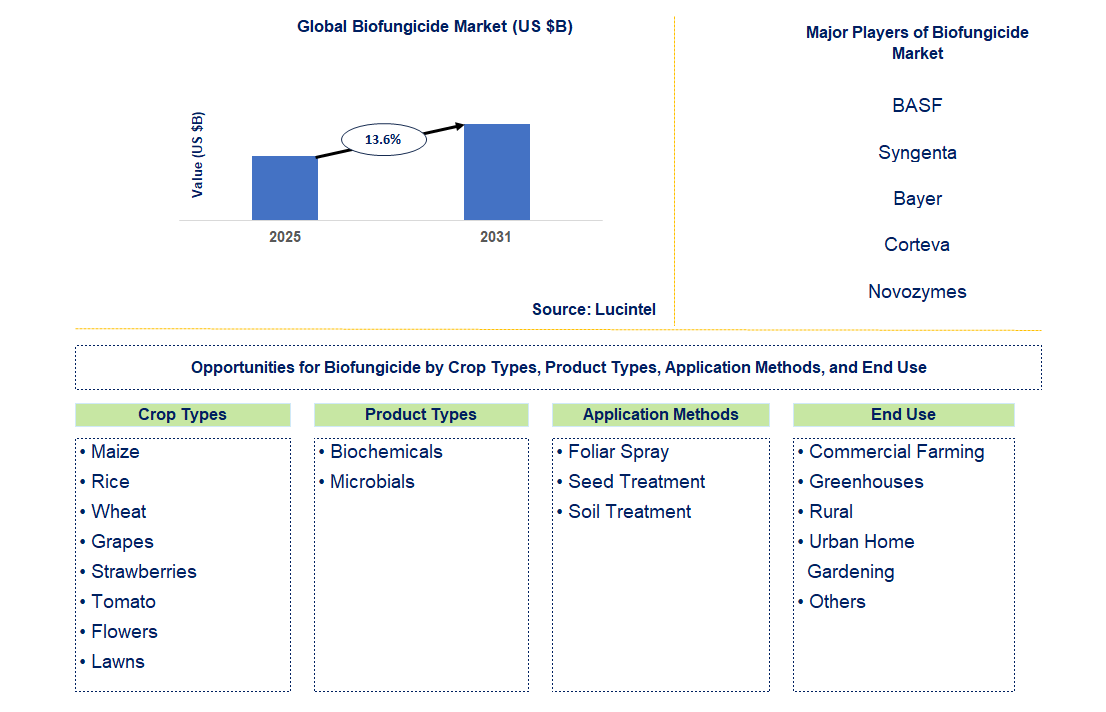
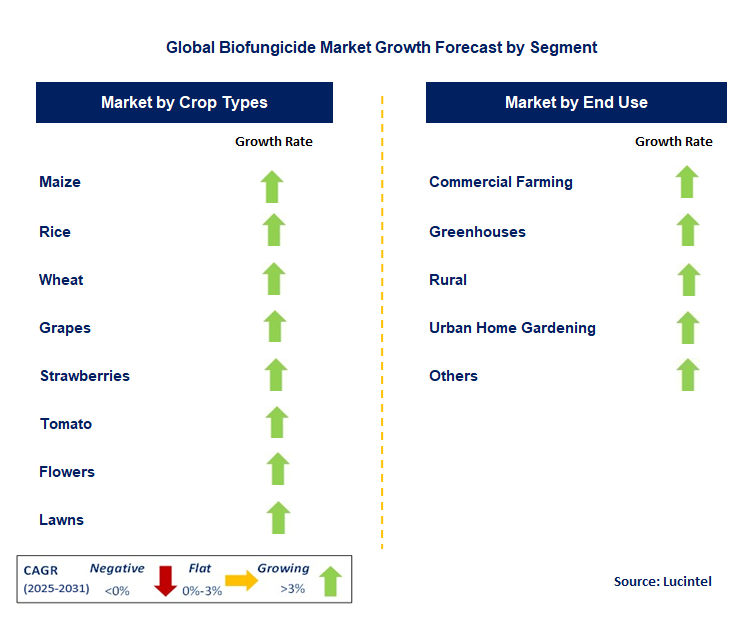
The future of the global biofungicide market looks promising with opportunities in the commercial farming, greenhouse, rural, and urban home gardening markets. The global biofungicide market is expected to grow with a CAGR of 13.6% from 2025 to 2031. The major drivers for this market are the increasing preference for organic farming solutions, the rising demand for safer food production methods, and the growing focus on reducing environmental pesticide impact.• Lucintel forecasts that, within the crop types category, maize is expected to witness the highest growth over the forecast period.
• Within the end use category, commercial farming is expected to witness the highest growth.
• In terms of region, APAC is expected to witness the highest growth over the forecast period. Gain valuable insights for your business decisions with our comprehensive 150+ page report. Sample figures with some insights are shown below.
Emerging Trends in the Biofungicide Market
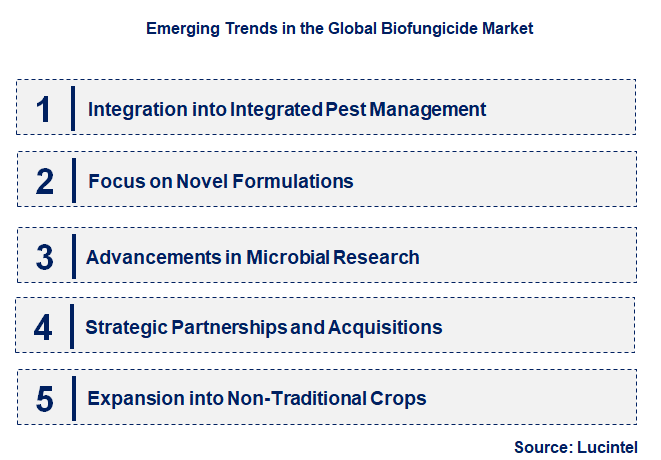
The biofungicide market is being reshaped by several key trends that reflect a global shift towards more sustainable and efficient agricultural practices. These trends are driven by a combination of consumer demand, technological innovation, and a supportive regulatory environment. They are creating new opportunities for market players and influencing the direction of research and development.• Integration into Integrated Pest Management: A major trend is the increased integration of biofungicides into IPM programs. Farmers are no longer using biofungicides as a standalone solution but as part of a comprehensive strategy that combines biological, cultural, and chemical methods. This approach optimizes disease control, reduces the risk of resistance, and minimizes environmental impact.
• Focus on Novel Formulations: There is a strong trend towards developing novel and advanced biofungicide formulations. Companies are focusing on improving product stability, shelf life, and efficacy under various environmental conditions. This includes creating liquid formulations that are easier to apply and nano-biopesticides that offer better plant penetration and targeted action, enhancing overall performance.
• Advancements in Microbial Research: Ongoing advancements in microbial research are a key trend. Scientists are discovering new strains of beneficial microorganisms with enhanced disease-control capabilities and multiple modes of action. This research is leading to the development of biofungicides that are more potent, have a broader spectrum of activity, and can also stimulate plant growth and improve nutrient uptake.
• Strategic Partnerships and Acquisitions: The market is witnessing a trend of increased strategic partnerships, collaborations, and mergers. Large chemical companies are acquiring or partnering with biologicals firms to expand their product portfolios and gain a foothold in the growing biopesticide market. This is accelerating innovation, improving distribution channels, and driving market consolidation.
• Expansion into Non-Traditional Crops: While biofungicides have been widely used in high-value crops like fruits and vegetables, an emerging trend is their expansion into non-traditional and staple crops, such as grains and cereals. This is driven by a need to reduce chemical residue in staple foods and improve the sustainability of large-scale agriculture. These trends are collectively reshaping the biofungicide market by pushing it towards greater sophistication, efficacy, and environmental compatibility. The market is moving away from being a niche sector to a core component of modern agriculture. This shift is driving innovation, new business models, and strategic collaborations, ensuring biofungicides play a central role in a sustainable food future.
Recent Development in the Biofungicide Market
The biofungicide market is experiencing a period of significant development, marked by innovation, strategic realignments, and growing adoption. These developments are a direct response to global demands for sustainable farming practices, food safety, and environmental protection. They are transforming the industry from a niche segment into a mainstream and critical component of modern agriculture.• Rise in Product Registrations: There has been a notable increase in the number of new biofungicide product registrations globally. Regulatory bodies are streamlining approval processes for biologicals, recognizing their environmental benefits. This has accelerated the launch of novel products, such as those with new microbial strains or improved formulations, giving farmers a wider range of eco-friendly tools for disease management.
• Increased R&D Investment: Major agricultural companies are significantly increasing their R&D investments in biofungicides. This is leading to the development of more effective and stable products. Research is focused on improving efficacy and shelf life, making biofungicides a more reliable alternative to chemical counterparts. These investments are critical for bridging the performance gap between biologicals and synthetics.
• Strategic Acquisitions and Collaborations: A key development is the trend of strategic acquisitions and partnerships. Large agrochemical firms are acquiring smaller, innovative biologicals companies. This enables them to quickly integrate biopesticide portfolios and expertise. These collaborations combine the R&D capabilities of startups with the extensive distribution networks of established players, accelerating market penetration.
• Technological Advancements in Formulations: Technological advancements in formulations are a significant development. New formulations, including microencapsulation and liquid concentrates, are improving the stability and application of biofungicides. These innovations are addressing historical challenges such as short shelf life and sensitivity to environmental conditions, making the products more user-friendly and reliable for farmers.
• Expansion of Application Methods: The scope of biofungicide application methods is expanding beyond traditional foliar sprays. Recent developments include their use in seed treatments and soil drenches. This diversification allows for proactive disease control from the earliest stages of plant growth, ensuring healthier crops and a more robust root system. These recent developments are collectively driving the biofungicide market forward by enhancing product efficacy, streamlining access, and diversifying application methods. By addressing historical challenges and capitalizing on the demand for sustainable solutions, these developments are establishing biofungicides as a key and indispensable part of the global crop protection industry.
Strategic Growth Opportunities in the Biofungicide Market
The biofungicide market presents numerous strategic growth opportunities across key applications, driven by a global push for sustainable agriculture and changing consumer preferences. These opportunities are enabling companies to expand their product portfolios and enter new markets. Targeting these specific applications is crucial for capturing a larger market share and fostering long-term growth.• Growth in High-Value Crops: There is a significant growth opportunity in high-value crops, such as fruits, vegetables, and ornamentals. These crops have a lower tolerance for chemical residues, and consumers are willing to pay a premium for organic, chemical-free produce. Biofungicides offer an effective solution for disease management in these crops, providing a competitive edge for producers.
• Expansion in Seed Treatment: Seed treatment is a major growth opportunity for biofungicides. Applying the biofungicide directly to the seed provides protection from soil-borne diseases at the earliest stage of plant development. This method is highly efficient, requires less product, and ensures a strong start for crops, leading to better germination rates and overall yield.
• Application in Soil Health Management: Another strategic opportunity lies in using biofungicides for soil health management. By introducing beneficial microorganisms into the soil, biofungicides can suppress harmful pathogens while improving soil structure and nutrient availability. This holistic approach supports long-term soil fertility and is a key component of regenerative agriculture.
• Use in Post-Harvest Applications: Post-harvest application is an emerging growth opportunity. Biofungicides can be applied to fruits and vegetables after harvesting to prevent spoilage from molds and fungi during storage and transportation. This extends the shelf life of produce, reduces food waste, and meets consumer demand for fresh, chemical-residue-free products.
• Integration in Urban and Home Gardening: The urban and home gardening sector presents a niche but growing opportunity. As more people engage in personal gardening, there is a rising demand for safe, easy-to-use, and environmentally friendly products. Biofungicides, with their low toxicity profile, are an ideal solution for hobbyist gardeners concerned about the safety of their produce. The strategic growth opportunities in the biofungicide market are diverse and extend beyond traditional large-scale farming. By targeting high-value crops, seed treatments, soil health, post-harvest applications, and home gardening, companies can create a robust and diversified business model. These opportunities are positioning biofungicides as a versatile and essential tool for a wide range of agricultural and consumer needs.
Biofungicide Market Driver and Challenges
The biofungicide market is influenced by a dynamic combination of major drivers and challenges, which include various technological, economic, and regulatory factors. These forces shape market expansion, product innovation, and competitive strategies. Understanding their implications is crucial for navigating the market and capitalizing on the growing demand for sustainable agricultural solutions. The factors responsible for driving the biofungicide market include: 1. Increasing Demand for Organic Food: The primary driver is the rising consumer demand for organic and residue-free food. Health-conscious consumers are seeking products cultivated without synthetic pesticides, which directly increases the demand for biofungicides. This trend is especially strong in developed economies and is a key factor pushing farmers to adopt biological alternatives. 2. Stringent Environmental Regulations: Stricter government regulations on conventional chemical pesticides are a major driver. Regulatory bodies worldwide are banning or restricting the use of certain synthetic active ingredients due to environmental and health concerns. This creates a regulatory vacuum that biofungicides can fill, as they are generally considered safer and more eco-friendly. 3. Growing Awareness and Education: There is an increasing awareness among farmers about the long-term benefits of using biofungicides. Educational initiatives and demonstration projects are highlighting their effectiveness in disease control, ability to reduce resistance, and positive impact on soil health. This growing knowledge is overcoming traditional hesitations about adopting biological products. 4. Advancements in Research and Development: Continuous R&D advancements are a significant driver. Innovations in microbial research, fermentation technology, and formulation science are leading to the development of more potent, stable, and user-friendly biofungicides. This improved efficacy is building farmer confidence and making biofungicides a more viable alternative to synthetics. 5. Adoption of Integrated Pest Management: The widespread adoption of Integrated Pest Management (IPM) programs is a strong driver. IPM promotes a holistic approach to crop protection, where biofungicides are used in conjunction with other methods. This strategy reduces reliance on single-mode chemical products, which helps to minimize the development of resistance in pathogens. Challenges in the biofungicide market are: 1. Efficacy and Performance Inconsistency: A key challenge is the perceived inconsistency in the efficacy of biofungicides compared to chemical fungicides. Their performance can be highly dependent on environmental factors like temperature and moisture, and their mode of action can be slower. This variability can make farmers hesitant to rely solely on them for critical disease control. 2. High Cost and Low Shelf Life: Biofungicides often face challenges related to their higher production costs and shorter shelf life. The specialized manufacturing processes and need for live microorganisms can make them more expensive than conventional products. Their biological nature also makes them more susceptible to degradation, requiring specialized storage and timely use. 3. Lack of Farmer Awareness: Despite growing awareness, a significant challenge remains the lack of technical knowledge and trust among farmers, especially in developing regions. Many farmers are accustomed to the quick and predictable results of chemical fungicides and are hesitant to invest in new, less-familiar biological solutions. The biofungicide market is driven by powerful forces such as consumer demand for organic products and a favorable regulatory environment. However, it is simultaneously challenged by issues related to product performance, cost, and farmer acceptance. For the market to reach its full potential, it must continue to innovate to address these challenges, ensuring that biofungicides are seen as a reliable and essential component of modern agriculture.List of Biofungicide Companies
Companies in the market compete on the basis of product quality offered. Major players in this market focus on expanding their manufacturing facilities, R&D investments, infrastructural development, and leverage integration opportunities across the value chain. With these strategies biofungicide companies cater increasing demand, ensure competitive effectiveness, develop innovative products & technologies, reduce production costs, and expand their customer base. Some of the biofungicide companies profiled in this report include-• BASF
• Syngenta
• Bayer
• Corteva
• Novozymes
• UPL Limited
• Koppert
• Certis Biologicals
• Marrone Bio Innovations
• BioWorks
Biofungicide Market by Segment
The study includes a forecast for the global biofungicide market by crop types, product types, application methods, end use, and region.Biofungicide Market by Crop Types [Value from 2019 to 2031]:
• Maize
• Rice
• Wheat
• Grapes
• Strawberries
• Tomato
• Flowers
• Lawns
Biofungicide Market by Product Types [Value from 2019 to 2031]:
• Biochemicals
• Microbials
Biofungicide Market by Application Methods [Value from 2019 to 2031]:
• Foliar Spray
• Seed Treatment
• Soil Treatment
Biofungicide Market by End Use [Value from 2019 to 2031]:
• Commercial Farming
• Greenhouses
• Rural
• Urban Home Gardening
• Others
Biofungicide Market by Region [Value from 2019 to 2031]:
• North America
• Europe
• Asia Pacific
• The Rest of the World
Country Wise Outlook for the Biofungicide Market
The global biofungicide market is undergoing a rapid transformation driven by a strong shift towards sustainable agriculture and stricter regulations on chemical pesticides. Recent developments across key countries highlight a growing demand for eco-friendly crop protection solutions, advancements in product efficacy, and strategic collaborations to meet consumer and regulatory demands. These trends are shaping the future of farming.• United States: The U.S. biofungicide market is experiencing robust growth fueled by a rising demand for organic food and supportive government policies. Recent developments include increased EPA registrations for new biofungicide products and a surge in strategic partnerships between major agricultural companies and biological solution providers. This focus on innovation is enhancing product effectiveness and expanding market adoption.
• China: China’s biofungicide market is developing rapidly, driven by the government’s push to reduce chemical pesticide usage for environmental protection. Key advancements include the promotion of biological alternatives and significant investments in research and development to improve product efficacy and stability. This is creating a favorable environment for both domestic and international biofungicide manufacturers.
• Germany: In Germany and the broader European Union, the biofungicide market is shaped by stringent regulations on conventional pesticides and a strong consumer preference for organic products. Recent developments focus on integrating biofungicides into Integrated Pest Management (IPM) strategies and developing novel formulations that are highly effective under diverse climatic conditions.
• India: India’s biofungicide market is poised for significant growth, driven by an increasing awareness among farmers about the benefits of sustainable farming and rising demand for food security. Recent developments include government support through subsidies and promotion programs, as well as simplified regulatory processes to facilitate the adoption of new biological products.
• Japan: Japan’s biofungicide market is characterized by a high level of technological innovation and a focus on high-quality, specialty products. Recent developments include a push for advanced formulations, such as nano-biopesticides, and a growing emphasis on precision agriculture. This is driving demand for effective and reliable biological solutions that can be used in controlled environments and small-scale farms.

Features of the Global Biofungicide Market
Market Size Estimates: Biofungicide market size estimation in terms of value ($B). Trend and Forecast Analysis: Market trends (2019 to 2024) and forecast (2025 to 2031) by various segments and regions. Segmentation Analysis: Biofungicide market size by various segments, such as by crop types, product types, application methods, end use, and region in terms of value ($B). Regional Analysis: Biofungicide market breakdown by North America, Europe, Asia Pacific, and Rest of the World. Growth Opportunities: Analysis of growth opportunities in different crop types, product types, application methods, end use, and regions for the biofungicide market. Strategic Analysis: This includes M&A, new product development, and competitive landscape of the biofungicide market. Analysis of competitive intensity of the industry based on Porter’s Five Forces model.
FAQ
Q1. What is the growth forecast for biofungicide market? Answer: The global biofungicide market is expected to grow with a CAGR of 13.6% from 2025 to 2031. Q2. What are the major drivers influencing the growth of the biofungicide market? Answer: The major drivers for this market are the increasing preference for organic farming solutions, the rising demand for safer food production methods, and the growing focus on reducing environmental pesticide impact. Q3. What are the major segments for biofungicide market? Answer: The future of the biofungicide market looks promising with opportunities in the commercial farming, greenhouse, rural, and urban home gardening markets. Q4. Who are the key biofungicide market companies? Answer: Some of the key biofungicide companies are as follows:• BASF
• Syngenta
• Bayer
• Corteva
• Novozymes
• UPL Limited
• Koppert
• Certis Biologicals
• Marrone Bio Innovations
• BioWorks Q5. Which biofungicide market segment will be the largest in future? Answer: Lucintel forecasts that, within the crop types category, maize is expected to witness the highest growth over the forecast period. Q6. In biofungicide market, which region is expected to be the largest in next 5 years? Answer: In terms of region, APAC is expected to witness the highest growth over the forecast period. Q7. Do we receive customization in this report? Answer: Yes, Lucintel provides 10% customization without any additional cost.
Table of Contents
Methodology
- In-depth interviews of the major players in this market
- Detailed secondary research from competitors’ financial statements and published data
- Extensive searches of published works, market, and database information pertaining to industry news, company press releases, and customer intentions
- A compilation of the experiences, judgments, and insights of Lucintel’s professionals, who have analyzed and tracked this market over the years.


Buy Now
Choose a license that fits your team. Instant PDF delivery.
Prices exclude taxes. Instant delivery. Custom licensing available on request.
Key Questions
- • What are some of the most promising, high-growth opportunities for the biofungicide market by crop types (maize, rice, wheat, grapes, strawberries, tomato, flowers, and lawns), product types (biochemicals and microbials), application methods (foliar spray, seed treatment, and soil treatment), end use (commercial farming, greenhouses, rural, urban home gardening, and others), and region (North America, Europe, Asia Pacific, and the Rest of the World)?
- • Which segments will grow at a faster pace and why?
- • Which region will grow at a faster pace and why?
- • What are the key factors affecting market dynamics? What are the key challenges and business risks in this market?
- • What are the business risks and competitive threats in this market?
- • What are the emerging trends in this market and the reasons behind them?
- • What are some of the changing demands of customers in the market?
- • What are the new developments in the market? Which companies are leading these developments?
- • Who are the major players in this market? What strategic initiatives are key players pursuing for business growth?
- • What are some of the competing products in this market and how big of a threat do they pose for loss of market share by material or product substitution?
- • What M&A activity has occurred in the last 5 years and what has its impact been on the industry? For any questions related to Biofungicide Market, Biofungicide Market Size, Biofungicide Market Growth, Biofungicide Market Analysis, Biofungicide Market Report, Biofungicide Market Share, Biofungicide Market Trends, Biofungicide Market Forecast, Biofungicide Companies, write Lucintel analyst at email: helpdesk@lucintel.com. We will be glad to get back to you soon.


