
Market Report · July 22, 2026

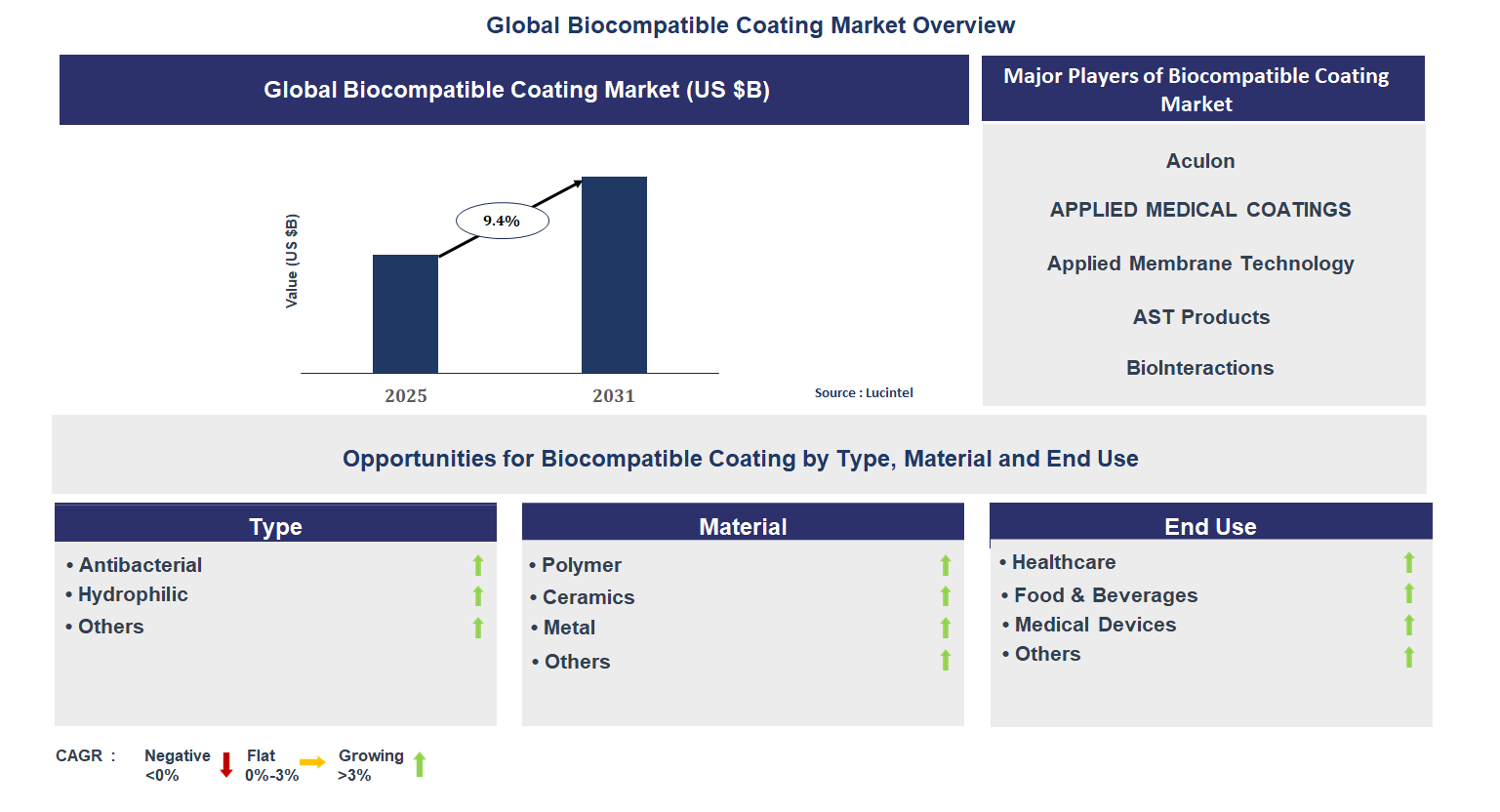
Key data points: The growth forecast = 9.4% annually for the next 7 years. Scroll below to get more insights. This market report covers trends, opportunities and forecasts in biocompatible coating market to 2031 by type (antibacterial, hydrophilic, and others), material (polymer, ceramics, metal, and others), end use (healthcare, food & beverages, medical devices, and others), and region (North America, Europe, Asia Pacific, and the Rest of the World)
We'll send your sample report shortly.
• Lucintel forecasts that, within the type category, antibacterial is expected to witness higher growth over the forecast period.
• Within the end use category, medical device is expected to witness the highest growth.
• In terms of region, APAC is expected to witness the highest growth over the forecast period. Gain valuable insights for your business decisions with our comprehensive 150+ page report. Sample figures with some insights are shown below.
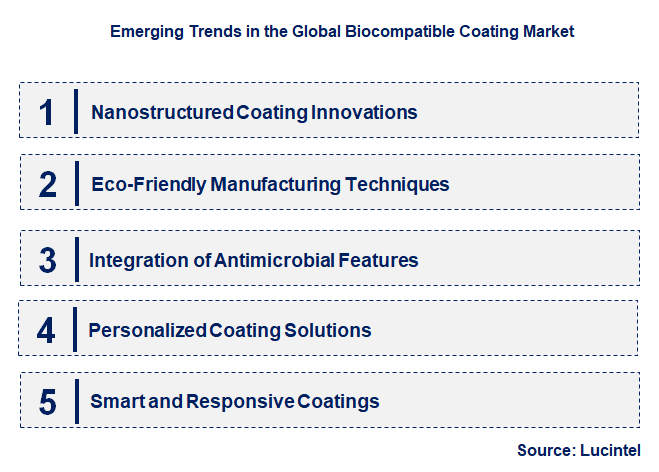
• Nanostructured Coating Innovations: Nanostructured coatings are gaining attention for their enhanced surface properties. They promote better cell adhesion, reduce bacterial colonization, and improve wear resistance, making them ideal for orthopedic and cardiovascular implants requiring high durability and tissue compatibility.
• Eco-Friendly Manufacturing Techniques: Manufacturers are shifting toward solvent-free and energy-efficient coating processes. The development of sustainable coatings reduces environmental impact while maintaining high functional performance, aligning with global sustainability goals and healthcare regulatory requirements.
• Integration of Antimicrobial Features: The incorporation of antimicrobial agents into coatings is becoming a key trend. Silver ions, copper nanoparticles, and bioactive compounds are used to minimize infection risks, improving post-surgical recovery and extending the lifespan of medical implants.
• Personalized Coating Solutions: Customization based on patient needs and device type is emerging as a focus area. Coatings are being tailored to promote specific biological responses such as faster healing, anti-inflammatory effects, or improved blood compatibility for specialized implants.
• Smart and Responsive Coatings: The rise of smart coatings capable of responding to environmental stimuli, such as pH or temperature changes, is revolutionizing device functionality. These coatings provide controlled drug release and adaptive bioactivity, enhancing therapeutic outcomes. Emerging trends emphasize sustainability, nanotechnology, and smart material integration. These innovations are enabling the next generation of biocompatible coatings, enhancing medical device safety, functionality, and long-term patient outcomes.
• Introduction of Antibacterial Nanocoating’s: New coatings incorporating silver and titanium nanoparticles are enhancing infection resistance in implants and surgical tools.
• Launch of Hydrophilic Polymer Coatings: Hydrophilic coatings improve blood compatibility and reduce friction in cardiovascular and vascular devices.
• Development of Bioactive Ceramic Coatings: Ceramic-based coatings are being used to promote bone growth and osseointegration in orthopedic applications.
• Adoption of Plasma Surface Treatment: Plasma-based coating techniques are improving coating uniformity and adhesion on complex medical device surfaces.
• Expansion of Eco-Safe Coating Processes: Manufacturers are adopting environmentally friendly coating formulations that minimize toxic emissions and enhance production sustainability. These developments reflect a growing emphasis on multifunctional, biocompatible, and sustainable coatings that enhance medical device performance and ensure regulatory compliance across healthcare industries.
• Orthopedic Implants: Biocompatible coatings on joint replacements and bone screws enhance osseointegration, reducing rejection risks and improving patient recovery outcomes.
• Cardiovascular Devices: Coatings that reduce thrombosis and improve blood flow compatibility are vital for stents, catheters, and heart valves, supporting safer procedures.
• Dental Implants: Bioactive coatings on dental implants promote better tissue bonding, faster healing, and enhanced implant stability in oral applications.
• Surgical Instruments: Durable, antibacterial coatings on surgical instruments enhance corrosion resistance and sterilization efficiency, extending their operational lifespan.
• Diagnostic and Wearable Devices: Biocompatible coatings improve comfort and sensor performance in diagnostic patches and wearable monitoring systems, ensuring accurate data collection. Strategic applications in orthopedics, cardiology, and diagnostics are driving growth in the biocompatible coating market, fostering innovation that improves patient care and medical device performance.
• Aculon
• APPLIED MEDICAL COATINGS
• Applied Membrane Technology
• AST Products
• BioInteractions
• Covalon Technologies
• DSM
• Formacoat
• Hydromer
• Specialty Coating Systems
• Antibacterial
• Hydrophilic
• Others
• Polymer
• Ceramics
• Metal
• Others
• Healthcare
• Food & Beverages
• Medical Devices
• Others
• North America
• Europe
• Asia Pacific
• The Rest of the World
• United States: The United States is leading in R&D of multifunctional biocompatible coatings that combine antibacterial and anti-corrosion properties. Collaborations between medical device firms and material scientists are resulting in coatings tailored for implants and stents. Emphasis on FDA-compliant coatings with improved biointegration and performance is driving innovation across biomedical and healthcare sectors.
• China: China is advancing its biocompatible coating industry through investments in nanotechnology and biomaterials research. Universities and private firms are developing coatings that promote better tissue interaction and minimize infection risks. The country is emphasizing mass production of cost-effective biocompatible coatings to support the growing domestic medical device manufacturing base.
• Germany: Germany is developing advanced coating systems for orthopedic and dental implants with superior mechanical and biological properties. Manufacturers are focusing on plasma-sprayed and bioactive coatings that improve tissue compatibility and reduce wear. Collaboration between research institutions and industry players is promoting sustainable, high-performance coatings compliant with European medical regulations.
• India: India is expanding its use of biocompatible coatings across the medical device sector, particularly in orthopedic and cardiovascular applications. Domestic manufacturers are adopting cost-effective coating technologies to enhance product performance. Partnerships with international firms are facilitating the transfer of coating technology and improving the quality of locally produced implants and instruments.
• Japan: Japan is focusing on developing coatings that combine mechanical stability with biofunctionality. Research institutions are advancing hydrogel-based and polymeric coatings to improve cell adhesion and reduce immune responses. Integration of precision coating techniques in implant manufacturing is supporting the country’s growth in minimally invasive and long-lasting medical devices.


• Aculon
• APPLIED MEDICAL COATINGS
• Applied Membrane Technology
• AST Products
• BioInteractions
• Covalon Technologies
• DSM
• Formacoat
• Hydromer
• Specialty Coating Systems Q5. Which biocompatible coating market segment will be the largest in future? Answer: Lucintel forecasts that, within the type category, antibacterial is expected to witness higher growth over the forecast period. Q6. In biocompatible coating market, which region is expected to be the largest in next 5 years? Answer: In terms of region, APAC is expected to witness the highest growth over the forecast period. Q7. Do we receive customization in this report? Answer: Yes, Lucintel provides 10% customization without any additional cost.


Choose a license that fits your team. Instant PDF delivery.
Prices exclude taxes. Instant delivery. Custom licensing available on request.
Market Report · July 22, 2026
Market Report · July 15, 2026
Market Report · June 30, 2026
Trusted partner for strategic intelligence and business growth


Receive a complimentary market analysis tailored to your industry. Our analysts will identify key growth opportunities and competitive dynamics specific to your business.

Market size, growth rate, and key trend analysis for your specific sector.

Top competitor positioning and market share analysis.

Strategic recommendations backed by data-driven insights.
Get curated market intelligence and competitive moves straight to your inbox.
By subscribing, you agree to receive our monthly insights. Unsubscribe anytime.
Receive a complimentary market analysis tailored to your industry. Our analysts will identify key growth opportunities and competitive dynamics specific to your business.
Market size, growth rate, and key trend analysis for your specific sector.
Top competitor positioning and market share analysis.
Strategic recommendations backed by data-driven insights.
Get curated market intelligence, emerging trends, and competitive moves straight to your inbox each month.
By subscribing, you agree to receive our monthly insights. Unsubscribe anytime.
We'll send your sample report shortly.