
Non-Stick Coating Market Report: Trends, Forecast and Competitive Analysis to 2035

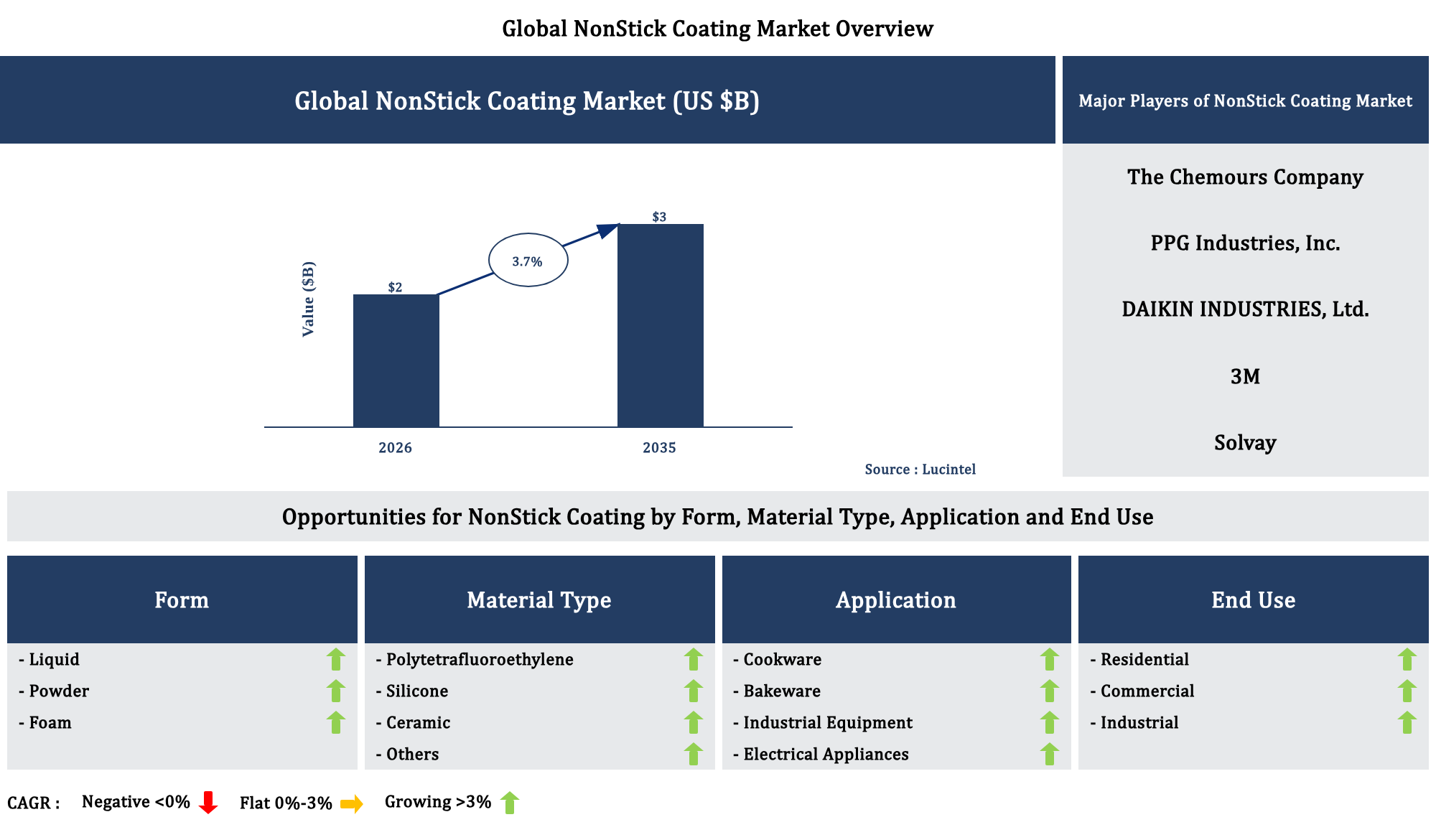
Key data points: The market size in 2035 = $3 billion, growth forecast = 3.7% annually for the next 9 years. Scroll below to get more insights. This market report covers trends, opportunities, and forecasts in the global non-stick coating market to 2035 by form (liquid, powder and foam), material type (polytetrafluoroethylene, silicone, ceramic and others), application (cookware, bakeware, industrial equipment and electrical appliances), end use (residential, commercial and industrial), and region (North America, Europe, Asia Pacific, and the Rest of the World)

Publisher: Lucintel Last Updated: June 2026
See Pricing

Download Sample Report

| ✨ New Download Sample report — Get instant insights! | ✨ New Download Sample report — Get instant insights!

Non-Stick Coating Market Report: Trends, Forecast and Competitive Analysis to 2035

Non-Stick Coating Market


The future of the global non-stick coating market looks promising with opportunities in the residential, commercial and industrial markets. The global non-stick coating market is expected to reach an estimated $3 billion by 2035 with a CAGR of 3.7% from 2026 to 2035. The major drivers for this market are the increasing demand for cookware applications, the rising adoption in food processing industry and the growing preference for easy clean surfaces.

• Lucintel forecasts that, within the form category, liquid will remain the largest segment over the forecast period as the widespread use in cookware and bakeware applications.

• Within the end use category, residential will remain the largest segment due to the the increasing consumer demand for cookware and bakeware with non-stick properties.

• In terms of regions, APAC will remain the largest region over the forecast period due to the the increasing industrial manufacturing activities supported by urbanization.

Gain valuable insights for your business decisions with our comprehensive 150+ page report.
Non-Stick Coating Market

Emerging Trends in the Non-Stick Coating Market

The non-stick coating market is evolving as consumers, regulators, and manufacturers demand safer, more durable, and environmentally responsible solutions. Advances in materials science, shifting cookware preferences, and rising scrutiny of traditional fluoropolymer chemistries are driving a wave of innovation across cookware, bakeware, industrial equipment, and automotive applications. Producers are rethinking formulations, moving beyond legacy PTFE and PFOA-based systems, and investing in new application technologies that extend product life while lowering energy use. At the same time, digitalization and smarter manufacturing are improving consistency and performance, reshaping how non-stick coatings are designed, tested, and brought to market.
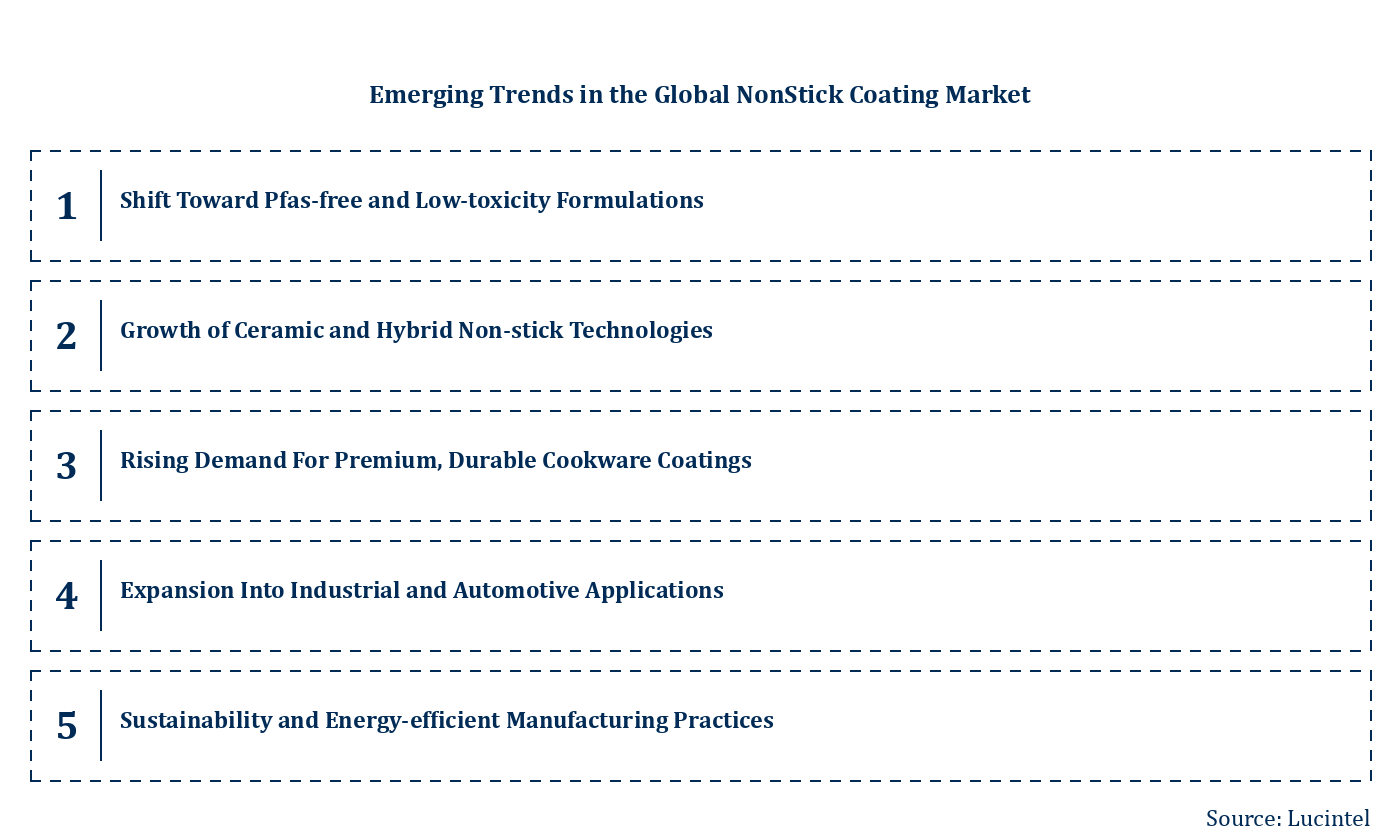
  • Shift Toward PFAS-free and Low-toxicity Formulations: The non-stick coating market is seeing rapid movement away from traditional PFAS-based systems such as PFOA and related fluorochemicals due to regulatory pressure and consumer health concerns, pushing manufacturers to develop ceramic, sol-gel, silicone, and advanced polymer alternatives that deliver comparable release properties without persistent chemicals in the environment.
  • Growth of Ceramic and Hybrid Non-stick Technologies: Ceramic and hybrid non-stick coating technologies are gaining share as they offer high-temperature resistance, improved hardness, and appealing aesthetics, with producers combining inorganic networks and organic binders to enhance scratch resistance, color stability, and long-term release performance while positioning products as cleaner and more modern than legacy PTFE-only options.
  • Rising Demand for Premium, Durable Cookware Coatings: Consumers are increasingly willing to pay for premium non-stick cookware that lasts longer, retains release properties after repeated use, and resists metal utensil damage, encouraging manufacturers to introduce multi-layer reinforced systems, hard-anodized bases, and improved primer technologies that extend warranties and reduce replacement frequency in both residential and professional kitchens.
  • Expansion Into Industrial and Automotive Applications: Beyond cookware, the non-stick coating market is expanding into industrial, food-processing, packaging, and automotive uses, where low-friction and anti-fouling properties improve process efficiency, reduce cleaning downtime, and enhance fuel and energy savings, leading to specialized formulations tailored for conveyors, molds, gaskets, and mechanical components.
  • Sustainability and Energy-efficient Manufacturing Practices: Sustainability is reshaping the non-stick coating market as companies adopt waterborne chemistries, reduce volatile organic compounds, optimize cure temperatures, and incorporate life-cycle assessments, helping brands market greener products while cutting production costs and aligning with corporate environmental, social, and governance objectives across global supply chains.

Non-Stick Coating Market by country

Recent Developments in the Non-Stick Coating Market

The non-stick coating market is undergoing notable transformation as manufacturers respond to evolving regulatory pressures, shifting consumer preferences, and rapid material science innovation. Environmental scrutiny of PFAS and related chemistries is accelerating the shift toward safer, more sustainable solutions, while demand for durable, easy-to-clean cookware and industrial equipment remains strong. At the same time, advances in fluoropolymer alternatives, sol-gel ceramics, and hybrid coatings are redefining performance benchmarks. Strategic mergers, capacity expansions, and geographic diversification are reshaping competitive dynamics. Collectively, these developments are redefining product portfolios, pricing strategies, and long-term growth paths for stakeholders across the non-stick coating value chain.

  • Shift Toward PFAS-free and Low-PFAS Formulations: Regulatory tightening in North America and Europe is pushing producers to replace legacy PTFE and PFOA-related systems with PFAS-free or low-PFAS chemistries, accelerating R&D spending, reformulation of cookware and bakeware ranges, and the launch of eco-labeled product lines that appeal to health- and sustainability-conscious consumers.
  • Rapid Adoption of Advanced Ceramic and Sol-gel Coatings: Next-generation ceramic and sol-gel non-stick systems are gaining share by combining high-temperature resistance, scratch tolerance, and improved release properties, allowing cookware brands and industrial OEMs to differentiate on durability while easing compliance with food-contact regulations and marketing products as metal-utensil-safe and long lasting.
  • Expansion Into Automotive, Industrial, and Food-processing Applications: Beyond cookware, the non-stick coating market is expanding in sectors such as automotive components, molds, conveyor systems, and food-processing equipment, where coatings reduce fouling, simplify cleaning, and improve process efficiency, driving higher volumes, more diversified demand, and long-term contracts with industrial clients.
  • Strategic Partnerships, M&A, and Capacity Investments: Leading chemical companies and coating applicators are engaging in acquisitions, joint ventures, and regional capacity expansions to secure technology, broaden geographic reach, and strengthen supply security, which is reshaping the competitive landscape and enabling faster global rollout of new non-stick technologies.
  • Integration of Digitalization and Customized Application Services: Coating suppliers are increasingly offering digital color-matching, performance simulation, and tailored application processes for OEMs, using data-driven quality control and customized multilayer systems to meet specific end-use requirements, reduce defects, and shorten time-to-market for new non-stick coated products.

Strategic Growth Opportunities in the Non-Stick Coating Market

The non-stick coating market is expanding as consumers and industries demand safer, more durable, and higher-performance surfaces across cookware, bakeware, industrial machinery, automotive components, and medical devices. Innovations in fluoropolymer alternatives, sol-gel ceramics, and hybrid coatings are reshaping performance benchmarks, including scratch resistance, heat stability, and chemical inertness. Sustainability pressures are accelerating the shift toward PFA-free and low-VOC chemistries, while digital manufacturing and precision application techniques improve coating consistency and lifespan. Companies that align product development and partnerships with emerging application-specific needs can capture premium niches, strengthen brand loyalty, and secure long-term contracts across key end-use sectors.

  • Cookware and Bakeware Performance Upgrades: Advanced non-stick coating formulations that deliver superior abrasion resistance, metal-utensil tolerance, and dishwasher durability are redefining value propositions for premium cookware and bakeware. Growth stems from consumers trading up from entry-level pans to multi-layer, reinforced systems that extend product life and enhance cooking performance. Brands can differentiate by combining high-release surfaces with even heat distribution and healthier, low-oil cooking. Collaborations with celebrity chefs, retailers, and e-commerce platforms amplify perceived quality, enabling price premiums and larger basket sizes in both mass and specialty channels worldwide.
  • Commercial Foodservice and Industrial Cooking: The non-stick coating market is seeing robust growth in commercial kitchens, quick-service restaurants, and industrial food processing lines that require high throughput and consistent quality. Durable non-stick solutions on griddles, conveyor belts, molds, and baking trays reduce sticking, cut cleaning time, and lower labor and detergent costs. Higher temperature stability and resistance to aggressive cleaning chemicals are key differentiators. Equipment OEM partnerships and retrofit programs enable recurring revenue streams, while data-backed demonstrations of reduced downtime and food waste help justify higher upfront investments for professional operators.
  • Automotive and Transportation Components: Adoption of non-stick coatings on automotive parts such as windshield wiper blades, seals, fuel system components, and under-the-hood elements presents a strong growth avenue in the non-stick coating market. These coatings reduce friction, resist fouling from dirt and ice, and improve corrosion protection, contributing to extended component life and lower maintenance. In electric vehicles, non-stick surfaces help with thermal management and contamination control in battery and power electronics assemblies. Tier-1 supplier specifications and OEM validation cycles create high entry barriers, rewarding coating providers that meet strict durability, safety, and environmental standards.
  • Industrial Machinery and Chemical Processing: The non-stick coating market is expanding into industrial machinery, rollers, pumps, valves, and reactor interiors where anti-fouling, low-friction properties boost process reliability. Coatings that resist aggressive chemicals, high temperatures, and caking of powders or viscous materials can significantly reduce unplanned shutdowns and cleaning intervals. This improves yield in sectors such as plastics, textiles, pharmaceuticals, and specialty chemicals. Providers that offer turnkey application services, on-site refurbishment, and performance guarantees can lock in long-term service contracts, deepening customer relationships and stabilizing revenue across economic cycles.
  • Medical Devices and Healthcare Equipment: Healthcare applications are emerging as a strategic frontier for the non-stick coating market, particularly in minimally invasive instruments, catheters, syringes, and diagnostic equipment. Biocompatible, low-friction coatings improve patient comfort, enhance device maneuverability, and reduce the risk of tissue damage or clot formation. Non-stick properties also facilitate easier cleaning and sterilization of reusable instruments, supporting infection control protocols. Regulatory-compliant, traceable formulations and validated manufacturing processes are critical success factors. Close collaboration with medical device OEMs and clinicians can accelerate adoption and generate high-margin, specialized product lines.

Non-Stick Coating Market Drivers and Challenges

The global non-stick coating market is shaped by intertwined technological, economic, and regulatory dynamics that influence both demand and supply. Advances in material science, changing consumer lifestyles, and expansion in end-use industries such as cookware, automotive, and industrial machinery are creating strong growth opportunities. At the same time, regulatory scrutiny on fluoropolymers, volatility in raw material prices, and rising sustainability expectations are reshaping product portfolios and competitive strategies. Understanding these drivers and challenges allows manufacturers, distributors, and end-users to prioritize innovation, manage risk, and align investments with long-term trends in performance, safety, and environmental compliance.

The factors responsible for driving the non-stick coating market include:

  • Expansion of Cookware and Kitchenware Demand: Growing urbanization, busier lifestyles, and the popularity of home cooking and baking are increasing global demand for non-stick cookware and bakeware, directly boosting the non-stick coating market. Consumers are seeking convenient, easy-to-clean, and healthier cooking solutions that require less oil or fat, which reinforces the value proposition of high-performance non-stick coatings. Rising disposable incomes in emerging economies are also expanding the middle-class customer base willing to pay premiums for branded, coated cookware. This structural shift in household preferences, supported by e-commerce and organized retail penetration, is expected to sustain long-term volume growth.
  • Technological Advancements in Coating Formulations: Continuous innovation in resin chemistries, fillers, and multilayer coating architectures is significantly enhancing durability, heat resistance, and abrasion performance of non-stick systems. Manufacturers are investing in advanced PTFE, ceramic, and hybrid formulations that can withstand higher temperatures, repeated dishwashing, and metal utensil contact, thereby extending product life cycles. Improved adhesion technologies also enable better bonding to metals and composites used in cookware and industrial components. These technological upgrades allow brands to differentiate products, command premium pricing, and address stricter safety and performance standards, driving both replacement and upgrade demand across end-use segments.
  • Diversification Into Industrial and Automotive Applications: Beyond cookware, non-stick coatings are increasingly adopted in industrial processing equipment, bake ovens, molds, textiles, and automotive components to reduce friction, prevent fouling, and improve operational efficiency. In food processing and packaging, non-stick surfaces enhance hygiene, reduce product wastage, and simplify cleaning, which lowers maintenance costs. In automotive and machinery, low-friction coatings help improve component lifespan and energy efficiency. This diversification broadens the revenue base for coating suppliers, reduces dependence on household cookware cycles, and opens high-value niches such as medical devices, electronics, and aerospace where anti-adhesive and low-friction performance are critical.
  • Shift Toward Healthier and Sustainable Lifestyles: Rising consumer awareness about health, wellness, and sustainable living is encouraging adoption of non-stick cookware that enables low-oil cooking and easier cleaning, which in turn reduces water and detergent consumption. Brands are responding with “PFOA-free,” “PFAS-reduced,” and ceramic-based coatings marketed as safer and more environmentally friendly, resonating strongly with health-conscious demographics. Marketing narratives around clean eating, reduced fat intake, and eco-conscious kitchens are strengthening brand loyalty and driving premiumization. This lifestyle-driven demand trend also pressures manufacturers to reformulate products, invest in greener technologies, and secure certifications, which collectively support market growth and product innovation.
  • Growth in Emerging Economies and Modern Retail Channels: Rapid economic development in Asia, Latin America, and parts of the Middle East and Africa is spurring urban housing, nuclear families, and modern kitchen setups, all of which support higher penetration of non-stick cookware and appliances. Expansion of supermarkets, hypermarkets, and online marketplaces improves product visibility and access to branded coated products at varied price points. Global and regional brands are leveraging these channels with targeted promotions, bundle offers, and localized designs, accelerating adoption. As manufacturing bases also shift to cost-competitive regions, local availability improves and price barriers fall, making non-stick coated products more attainable to a wider consumer base.

The challenges in the non-stick coating market are:

  • Stringent Environmental and Health Regulations: Increasing regulatory scrutiny on fluorinated chemicals, including certain PFAS used in traditional non-stick coatings, is a major challenge for the market. Authorities in North America, Europe, and other regions are tightening rules on emissions, residuals, and end-of-life disposal, forcing manufacturers to reformulate products and invest in compliance testing. Concerns about potential health and environmental impacts can erode consumer confidence and trigger product recalls or litigation. Navigating evolving regulatory landscapes adds cost, complexity, and time to product development cycles, and may limit the use of some high-performance chemistries that previously underpinned market growth.
  • Volatility in Raw Material Prices and Supply Chains: The non-stick coating value chain depends on specialty chemicals, resins, and pigments whose prices are influenced by crude oil fluctuations, energy costs, and capacity constraints. Geopolitical tensions, trade restrictions, and logistics bottlenecks can disrupt supply, extend lead times, and increase procurement risks for coating producers and applicators. These disruptions challenge consistent product quality and delivery commitments, while squeezing margins when cost increases cannot be fully passed on to customers. Smaller and mid-sized players are particularly exposed, as they have less bargaining power and inventory buffers, which may accelerate consolidation and intensify competitive pressures.
  • Performance Trade-offs and Competitive Substitutes: Balancing durability, non-stick performance, safety, and cost remains technically challenging, especially when transitioning away from legacy fluoropolymer systems. Some alternative coatings may offer improved safety perceptions but lower long-term abrasion resistance or heat tolerance, leading to consumer dissatisfaction and premature product replacement. At the same time, competing technologies such as stainless steel with improved surface finishes, cast iron seasoning, or disposable liners can partially substitute for non-stick coatings in certain use cases. This competitive environment forces suppliers to continually justify value, invest in education, and differentiate on performance and sustainability, which raises development costs and marketing complexity.

The overall development of the global non-stick coating market reflects a dynamic balance between robust demand drivers and substantial structural challenges. Expanding applications in cookware, industrial equipment, and automotive components, supported by lifestyle changes and emerging market growth, create strong opportunities for revenue expansion and innovation. However, regulatory constraints, raw material volatility, and intensifying competition require strategic adaptation, investment in safer and more sustainable chemistries, and closer collaboration across the value chain. Companies that can deliver high-performance, compliant, and environmentally responsible coatings while managing supply and cost risks will be best positioned to capture long-term growth and maintain competitive advantage.

List of Non-Stick Coating Market Companies

Companies in the market compete on the basis of product quality offered. Major players in this market focus on expanding their manufacturing facilities, R&D investments, infrastructural development, and leverage integration opportunities across the value chain. Through these strategies non-stick coating market companies cater increasing demand, ensure competitive effectiveness, develop innovative products & technologies, reduce production costs, and expand their customer base. Some of the non-stick coating market companies profiled in this report include-

  • The Chemours Company
  • PPG Industries, Inc.
  • DAIKIN INDUSTRIES, Ltd.
  • 3M
  • Solvay
  • AGC Chemicals
  • Endura Coatings

Non-Stick Coating Market by Segment

The study includes a forecast for the global non-stick coating market by form, material type, application, end use, and region.

  • Non-Stick Coating Market by Form [Value ($B) from 2019 to 2035]:
    • Liquid
    • Powder
    • Foam
  • Non-Stick Coating Market by Material Type [Value ($B) from 2019 to 2035]:
    • Polytetrafluoroethylene
    • Silicone
    • Ceramic
    • Others
  • Non-Stick Coating Market by Application [Value ($B) from 2019 to 2035]:
    • Cookware
    • Bakeware
    • Industrial Equipment
    • Electrical Appliances
  • Non-Stick Coating Market by End Use [Value ($B) from 2019 to 2035]:
    • Residential
    • Commercial
    • Industrial
  • Non-Stick Coating Market by Region [Value ($B) from 2019 to 2035]:
    • North America
    • Europe
    • Asia Pacific
    • The Rest of the World

Country Wise Outlook for the Non-Stick Coating Market

The non-stick coating market has evolved rapidly in recent years, driven by changing consumer expectations around safety, durability, and sustainability. Across major economies, manufacturers are investing in next-generation chemistries, including PFAS-free and ceramic-based systems, while also improving adhesion technologies and wear resistance. Regulatory pressures on traditional PTFE and PFOA-related substances are reshaping product portfolios, particularly in cookware and food-contact applications. At the same time, demand from automotive, industrial, and electronics sectors is supporting innovation in high-performance coatings that can withstand extreme temperatures and harsh environments. These developments are unfolding differently in the United States, China, Germany, India, and Japan.

  • United States: The United States non-stick coating market is seeing accelerated migration away from long-chain PFAS and legacy fluoropolymers, driven by tightening state-level regulations and class-action scrutiny. Leading brands are expanding PFAS-free, waterborne, and ceramic-hybrid product lines, emphasizing scratch resistance and extended warranty periods. OEM partnerships in cookware and bakeware are focusing on multilayer coating stacks and improved bonding to recycled aluminum substrates. In parallel, U.S. industrial users in automotive, aerospace, and chemical processing are adopting advanced fluoropolymer and sol-gel systems with higher temperature stability, while ESG commitments are pushing suppliers to reduce VOCs and improve lifecycle transparency.
  • China: China’s non-stick coating market is expanding on the back of large-scale cookware manufacturing and rising domestic consumption, while also pivoting toward greener formulations to meet export market standards. Local producers are upgrading from low-cost PTFE-only systems to multi-coat technologies that enhance abrasion resistance and color options. Government emphasis on environmental protection and alignment with EU and U.S. regulations is encouraging investment in low-PFAS, waterborne, and sol-gel ceramic technologies. Chinese firms are also increasing automation in coating lines, improving thickness control and consistency, and integrating smart quality-monitoring systems to boost competitiveness in global OEM supply chains.
  • Germany: Germany’s non-stick coating market is shaped by stringent EU chemical regulations and a strong engineering focus on performance and sustainability. Manufacturers are accelerating research into PFAS-free chemistries, including inorganic-organic hybrids and advanced ceramic coatings for cookware and industrial bakeware. German automotive and machinery sectors are adopting high-end non-stick and low-friction coatings to improve energy efficiency, reduce maintenance, and enhance corrosion resistance. There is growing collaboration between coating formulators, equipment makers, and research institutes to optimize curing processes, reduce energy consumption in ovens, and develop durable coatings compatible with stainless steel and high-alloy substrates.
  • India: India’s non-stick coating market is expanding as urbanization and rising disposable incomes fuel demand for branded, higher-quality cookware. Local manufacturers are upgrading from basic single-layer PTFE coatings to multi-layer systems with better gloss, color stability, and metal-utensil tolerance. Increasing alignment with global food-contact safety standards is prompting a gradual move toward safer additives and reduced-PFAS portfolios. At the same time, Indian producers are investing in in-house coating lines and automated spray technologies to enhance consistency and export readiness. Growth in quick-service restaurants, bakery chains, and packaged foods is also boosting demand for industrial non-stick coatings for trays, molds, and processing equipment.
  • Japan: Japan’s non-stick coating market is characterized by high expectations for precision, longevity, and aesthetic quality in both consumer and industrial applications. Japanese cookware brands are refining premium multilayer fluoropolymer and ceramic-hybrid systems that deliver superior release, stain resistance, and uniform heating over long service lives. There is a strong push toward low-PFAS and enhanced safety profiles without compromising thin-film performance. In electronics and automotive sectors, Japanese firms are using highly engineered non-stick and low-friction coatings on connectors, sensors, and mechanical components to improve reliability in compact designs. Continuous process innovations, including advanced surface pretreatments and plasma technologies, support tight quality control and material efficiency.

Features of the Non-Stick Coating Market

  • Market Size Estimates: Non-stick coating market size estimation in terms of value ($B).
  • Trend and Forecast Analysis: Market trends (2019 to 2025) and forecast (2026 to 2035) by various segments and regions.
  • Segmentation Analysis: Non-stick coating market size by various segments, such as by form, material type, application, end use and region in terms of value ($B).
  • Regional Analysis: Non-stick coating market breakdown by North America, Europe, Asia Pacific, and the Rest of the World.
  • Growth Opportunities: Analysis of growth opportunities in different form, material type, application, end use and regions for the non-stick coating market.
  • Strategic Analysis: This includes M&A, new product development, and competitive landscape of the non-stick coating market.
  • Analysis of competitive intensity of the industry based on Porter's Five Forces model.

Article

Non-Stick Coating Market: Are New Surface Technologies About to Reshape Everyday Products?

Dallas, June 29, 2026 – The non-stick coating market is entering a decisive phase of reinvention as sustainability pressures, performance demands, and digital manufacturing converge. Once associated mainly with cookware, non-stick technologies are now permeating electronics, industrial machinery, medical devices, and advanced packaging. Emerging chemistries, smarter application methods, and tighter regulation are shifting competitive dynamics and creating new winners across the value chain.

Why Are New Chemistries and Sustainable Formulations Redefining Non-Stick Coating Strategy?

A defining trend in the non-stick coating market is the pivot away from legacy fluoropolymer systems toward safer and more sustainable chemistries. Regulatory pressure on PFAS and PFOA-related materials, alongside changing consumer expectations, is forcing producers to redesign product portfolios and rethink long-term R&D priorities. Innovation is focused on high-performance ceramic-based coatings, waterborne systems, and hybrid formulations that balance durability, food safety, and processability.

  • Coating suppliers are accelerating the shift from traditional PTFE-only systems to multi-layer stacks that combine primers, mid-coats, and topcoats to achieve non-stick behavior without relying on controversial substances.
  • Ceramic and sol-gel technologies are gaining prominence, offering high temperature stability, scratch resistance, and aesthetically differentiated finishes that appeal to premium brands across cookware and consumer devices.
  • Waterborne and low-VOC formulations are moving from niche to mainstream, as manufacturers and OEMs aim to align with sustainability goals while avoiding future compliance risks.
  • Brand owners in household goods and electronics are quietly using material shifts in non-stick coatings as a marketing lever, emphasizing toxin-free, long-life, and recyclable propositions.

Which Markets Stand to Benefit Most from These Emerging Non-Stick Innovations?

The retooling of non-stick technologies is poised to reshape several downstream markets, with differentiated impacts across consumer, industrial, and technology-driven segments. Cookware remains the most visible application, but the most disruptive effects will be felt in sectors where surface performance directly underpins device lifespan, efficiency, and total cost of ownership.

  • The consumer cookware and bakeware segment benefits from safer, more durable coatings that can withstand higher temperatures and more aggressive cleaning, enabling premium pricing and longer replacement cycles.
  • The packaging industry sees value in non-stick coatings for molds, conveyor systems, and film surfaces that reduce fouling, support higher line speeds, and cut cleaning downtime in food and pharmaceutical plants.
  • The medical device sector gains from ultra-thin non-stick coatings on needles, catheters, and surgical tools that lower insertion forces, reduce biofouling, and improve patient comfort.
  • The automotive and mobility sector exploits non-stick coatings on engine components, sensors, wiper systems, and exterior trim to minimize icing, contamination, and surface drag, improving reliability and aesthetics.
  • The technology industry experiences some of the most strategic impacts, with non-stick surfaces integrated into consumer electronics, semiconductor tooling, and advanced manufacturing lines.

How Is the Technology Industry Turning Non-Stick Coatings into a Performance and Reliability Lever?

Within the technology industry, non-stick coatings are shifting from a functional afterthought to a deliberate design element that influences device performance, manufacturability, and maintenance. The convergence of miniaturization, higher power densities, and precision manufacturing is driving demand for coatings that simultaneously offer low surface energy, thermal stability, and chemical resistance.

  • In consumer electronics, non-stick and oleophobic coatings are widely used on smartphone and tablet displays, touch panels, and wearable devices to improve fingerprint resistance, ease of cleaning, and perceived product quality.
  • In semiconductor fabrication, non-stick coatings on process tools, wafer carriers, and deposition chambers help control particle adhesion, reduce contamination events, and extend tool uptime.
  • In additive manufacturing and 3D printing, specially engineered non-stick build plates and nozzle coatings minimize part adhesion where it is not desired, improving print removal, quality, and repeatability.
  • In robotics and automation, non-stick coatings on grippers, guides, and conveyor components reduce friction and material buildup, enabling smoother, higher-speed handling of components and packaging.
  • In data center and power electronics, non-stick coatings on heat sinks and fans help limit dust buildup, preserve airflow, and stabilize cooling performance over time.

What Key Trends Are Reshaping Competition and Innovation in the non-stick coating market?

Several structural trends are reshaping how producers compete, collaborate, and invest in the non-stick coating market. Competitive advantage is increasingly built on systems thinking, where chemistry, surface engineering, and process technology are integrated into turnkey solutions for OEMs and end users.

  • A notable trend is the migration toward multi-functional coatings that offer non-stick behavior alongside scratch resistance, anti-microbial properties, UV stability, or conductivity control, allowing OEMs to consolidate layers and simplify bill of materials.
  • Digital and precision application technologies, including robotic spraying, plasma treatment, and laser texturing, are improving adhesion, layer uniformity, and throughput while reducing waste of high-value coating materials.
  • Co-development partnerships between coating formulators, application equipment vendors, and OEMs are intensifying, particularly in electronics, medical devices, and automotive, where system-level qualification is essential.
  • Standardization and testing protocols for non-stick performance, abrasion resistance, and chemical durability are becoming more rigorous, enabling clearer differentiation among premium and commodity products.
  • Supply chain localization trends are prompting regional production footprints for key coating components, with players investing in backup suppliers for resins, pigments, and additives to mitigate disruption risks.

How Will These Innovations Disrupt Existing Business Models and Value Chains?

The innovation wave in non-stick coatings is altering where value is captured and how players position themselves along the value chain. Traditional model structures that focused on selling commoditized fluoropolymer coatings into cookware lines are giving way to more sophisticated, service-oriented propositions.

  • Coating suppliers increasingly position as solution partners, offering design support, application process optimization, and lifecycle performance analytics rather than only supplying materials by volume.
  • OEMs in technology-heavy sectors integrate non-stick coatings deeper into their proprietary architectures, making switching suppliers more complex and elevating the strategic importance of coating choices.
  • Equipment manufacturers leverage coating performance to redefine maintenance contracts, promoting longer service intervals and predictive maintenance models based on coating wear data.
  • Brand owners use differentiated non-stick performance as a basis for extended warranties and subscription-style replacement programs, particularly in high-usage industrial and professional kitchen environments.
  • Mergers and acquisitions are likely to intensify as chemical majors seek access to specialty formulations, digital application capabilities, and strong OEM relationships in high-growth niches.

What Challenges Threaten to Slow Adoption Despite Strong Innovation Momentum?

Despite robust innovation activity, the non-stick coating market faces a series of strategic and operational challenges that could slow adoption or compress margins if not managed proactively. These challenges are especially pronounced in markets that rely on strict certification and long qualification cycles.

  • Regulatory uncertainty around PFAS-related substances complicates product roadmap planning and may trigger costly reformulation efforts, retesting, and requalification in sensitive applications.
  • Performance trade-offs between sustainability, durability, and processing ease can constrain rapid substitution of legacy chemistries, particularly where extreme temperature resistance or low friction is non-negotiable.
  • High capital intensity for advanced coating lines and curing systems can deter smaller manufacturers from upgrading equipment, limiting their ability to adopt next-generation formulations.
  • Customer skepticism persists in some segments due to historical concerns about coating longevity, abrasion, and safety, requiring extensive education and transparent performance proof.
  • Volatility in prices of key raw materials, along with logistics disruptions, can erode margins and complicate long-term supply agreements.

Where Do the Most Attractive Opportunities Emerge for Innovators and Investors?

Even as challenges mount, the opportunity landscape in the non-stick coating market is broadening beyond legacy applications. Players that can combine materials science with process know-how and regulatory fluency are well positioned to capture outsize value.

  • Specialty segments such as medical devices, advanced packaging, and semiconductor tooling offer higher margins and stickier customer relationships for coating innovators that can meet stringent qualification criteria.
  • Sustainability-centered, PFAS-free product lines create opportunities for differentiated branding and premium pricing, especially in consumer-facing sectors and green public procurement channels.
  • Retrofitting and refurbishment services for industrial equipment with upgraded non-stick coatings enable recurring revenue streams and tighter partnerships with end users.
  • Data-enabled coatings, where wear patterns and surface condition are monitored as part of predictive maintenance programs, open pathways to integrated service models in manufacturing and logistics.
  • Emerging markets with growing middle classes are accelerating demand for non-stick cookware and appliances, offering volume growth for players that can balance cost, safety, and performance.

What Recent Developments Signal the Direction of the non-stick coating market?

Recent announcements and product launches across the ecosystem provide clear signals on how the non-stick coating market is evolving. Corporate strategies increasingly highlight sustainability, multifunctionality, and collaboration with technology-oriented customers.

  • Leading chemical companies have expanded portfolios of PFAS-free non-stick systems targeted at cookware, bakeware, and small appliances, often paired with third-party certifications for health and environmental criteria.
  • New ceramic-based coating lines with enhanced color stability and improved abrasion resistance have been introduced for consumer electronics housings and small domestic appliances, blending aesthetic and functional benefits.
  • Coating providers and semiconductor tool manufacturers have announced partnerships focused on next-generation low-adhesion and anti-contamination coatings for advanced node processes, reflecting the growing strategic importance of surface engineering in chip manufacturing.
  • Startups are entering the market with nanostructured non-stick surfaces inspired by biomimicry, such as lotus-leaf and insect-wing analogs, promising ultra-low adhesion with minimal chemical usage.
  • Several equipment makers have unveiled upgraded spray, roll-coat, and curing systems designed to handle new chemistries more efficiently, cutting energy use and coating waste while improving consistency.

How Should Stakeholders Position Themselves for the Next Phase of Non-Stick Coating Evolution?

As the non-stick coating market transitions into a more regulated, innovation-driven, and application-diverse landscape, strategic positioning becomes critical. Success will depend on the ability to anticipate regulatory shifts, co-create solutions with downstream industries, and communicate tangible performance advantages clearly.

  • Coating suppliers should invest in modular technology platforms that allow rapid adaptation to regulatory changes and tailored performance profiles for different industries.
  • OEMs in technology-intensive sectors need to integrate materials experts earlier in product development cycles to capture the full performance and cost benefits of advanced non-stick systems.
  • Investors should focus on businesses that combine proprietary formulation capabilities with strong application engineering and close customer integration, as these are better insulated from pure price competition.
  • Regulators and industry consortia can accelerate safe and sustainable adoption by harmonizing standards, sharing toxicology data, and promoting best practices for application and end-of-life management.
  • End users across manufacturing, technology, and consumer markets can unlock new efficiencies by viewing non-stick coatings not as a simple add-on but as a strategic lever for productivity, reliability, and brand differentiation.

Top 5 Companies

1. The Chemours Company

  • Headquarters: Wilmington, Delaware, USA
  • Website: https.www.chemours.com
  • Total Revenue: $6,000,000,000 (2023)
  • Establishment Year: 2015

The Chemours Company is a leading global chemistry business and one of the most important suppliers to the non-stick coating market through its fluoropolymer and fluorochemical portfolio. Headquartered in Wilmington, Delaware and established in 2015 as a spin-off from DuPont, the company employs thousands of people across North America, Europe, Asia-Pacific, and Latin America. Chemours is best known in the non-stick segment for its Teflon branded fluoropolymer coatings used in cookware, bakeware, small domestic appliances, and industrial processing equipment. Its product range spans PTFE, PFA, and other fluoropolymer-based dispersions and powders formulated for low-friction, easy-clean, and chemically resistant surfaces. In recent years, Chemours has focused on developing next-generation, more sustainable non-stick technologies, including low- or non-PFAS systems tailored to evolving regulatory and customer requirements. The company has expanded its geographic reach in non-stick coatings by enhancing distribution networks and technical centers in Europe and Asia to support regional cookware manufacturers and OEMs. While Chemours’ major mergers and acquisitions have centered on broader fluorochemical portfolios rather than only non-stick coatings, its separation from DuPont and subsequent portfolio optimization strengthened its position as a dedicated fluoromaterials supplier. Through application development labs and close collaboration with pan manufacturers and industrial clients, Chemours continues to innovate non-stick coating systems that offer improved durability, scratch resistance, and food-contact compliance, reinforcing its role as a key global participant in the non-stick coating market.

2. PPG Industries, Inc.

  • Headquarters: Pittsburgh, Pennsylvania, USA
  • Website: https.www.ppg.com
  • Total Revenue: $18,220,000,000 (2023)
  • Establishment Year: 1883

PPG Industries, Inc. is a diversified global coatings and specialty materials company with a strong position in functional and non-stick coating technologies. Founded in 1883 and headquartered in Pittsburgh, Pennsylvania, PPG employs tens of thousands of people and operates in more than 70 countries across North America, Europe, Asia-Pacific, Latin America, and the Middle East. Within the non-stick coating market, PPG offers advanced coatings for cookware, bakeware, and food-contact applications, as well as low-friction and easy-clean coatings for industrial and consumer goods. Its portfolio includes multi-layer fluoropolymer systems, sol-gel and ceramic-based non-stick solutions, and high-durability interior and exterior coatings designed to meet stringent regulatory and performance standards. PPG has extended its geographic presence in non-stick and functional coatings by investing in manufacturing and R&D capabilities in Europe and Asia, frequently localizing production to serve regional appliance and cookware OEMs. The company’s broader M&A activity, such as acquisitions of specialty coatings and high-performance materials companies, has expanded its technology base in surface engineering, indirectly reinforcing its offerings to the non-stick market. PPG also collaborates with appliance brands and cookware manufacturers to develop tailor-made, branded non-stick systems that combine color, aesthetics, and functional performance. With a strong global distribution network, customer technical service, and regulatory expertise, PPG is positioned as a key solutions provider for non-stick coatings serving both consumer and industrial segments worldwide.

3. DAIKIN INDUSTRIES, Ltd.

  • Headquarters: Osaka, Japan
  • Website: https.www.daikin.com
  • Total Revenue: $28,000,000,000 (2023)
  • Establishment Year: 1924

DAIKIN INDUSTRIES, Ltd., headquartered in Osaka, Japan and founded in 1924, is widely recognized for air conditioning systems but is also a major global producer of fluorochemicals and fluoropolymers that underpin many non-stick coating technologies. The company operates across Asia, Europe, North America, Latin America, and the Middle East, employing tens of thousands of people worldwide. Within the non-stick coating market, Daikin supplies PTFE, PFA, FEP, and related fluoropolymer resins and dispersions used in cookware, bakeware, food-processing equipment, and industrial non-stick applications such as rollers, chutes, and chemical processing components. Its Fluorochemicals business develops low-friction, anti-fouling, and easy-clean coatings that can be applied to metals, glass, and composites, supporting both consumer kitchenware brands and industrial OEMs. Daikin has expanded its geographic reach through investments in production and R&D facilities in the United States, Europe, and key Asian markets, strengthening local supply and technical support for non-stick coating customers. The company has also advanced environmentally oriented fluoropolymer technologies that respond to regulatory changes around fluorinated substances, offering alternatives and optimized formulations for safer and more sustainable non-stick performance. While Daikin’s high-profile acquisitions have mainly targeted HVAC and climate solutions, its ongoing capacity expansions and partnerships in fluorochemicals reinforce its competitive position in non-stick coatings. With a deep materials science foundation and global technical network, Daikin is a critical upstream supplier enabling high-performance non-stick coating solutions across numerous end-use sectors.

4. 3M

  • Headquarters: St. Paul, Minnesota, USA
  • Website: https.www.3m.com
  • Total Revenue: $32,700,000,000 (2023)
  • Establishment Year: 1902

3M, established in 1902 and headquartered in St. Paul, Minnesota, is a diversified global technology company with a broad portfolio spanning abrasives, adhesives, tapes, films, and advanced materials, many of which intersect with non-stick and low-friction surface technologies. The company employs tens of thousands of people and maintains operations in more than 70 countries worldwide, giving it significant geographic reach across North America, Europe, Asia-Pacific, Latin America, and the Middle East. In relation to the non-stick coating market, 3M provides fluoropolymer-based films, surface treatments, and specialty coatings designed to deliver low surface energy, easy-release, anti-fouling, and abrasion-resistant properties. These materials are used in cookware accessories, industrial rollers and belts, packaging equipment, printing systems, and other applications where non-stick and easy-clean performance are critical. 3M’s product portfolio includes PTFE-based tapes and films, engineered surface treatments, and hybrid coatings that combine mechanical robustness with low friction. The company operates application development centers around the world, enabling close collaboration with OEMs and converters to customize non-stick solutions for region-specific requirements. Over the years, 3M has adjusted its fluorochemical business and engaged in portfolio rationalization while continuing to advance next-generation materials that meet increasingly strict environmental and regulatory expectations. Its global customer support, diagnostics, and testing capabilities help end users optimize coating durability, food-contact compliance, and process efficiency. While 3M’s major mergers and acquisitions have tended to focus on healthcare, safety, and industrial technologies rather than exclusively on non-stick coatings, they have broadened the company’s material science platform, indirectly supporting new release-coating and non-stick surface innovations.

5. Solvay

  • Headquarters: Brussels, Belgium
  • Website: https.www.solvay.com
  • Total Revenue: $9,300,000,000 (2023)
  • Establishment Year: 1863

Solvay, founded in 1863 and headquartered in Brussels, Belgium, is a global chemical and materials group with a strong footprint in specialty polymers and advanced materials that serve the non-stick coating market. The company operates manufacturing sites, R&D centers, and commercial offices across Europe, North America, South America, and Asia-Pacific, employing thousands of people worldwide. Solvay’s portfolio for non-stick applications centers on high-performance fluoropolymers and specialty polymers, including PTFE, PFA, FEP, and other engineered resins that can be formulated into durable, high-temperature, and chemically resistant non-stick coatings. These materials are widely used in premium cookware and bakeware, food processing equipment, industrial rolls and belts, chemical processing plants, and semiconductor and automotive components where low friction and easy-clean surfaces are essential. Solvay has invested in technology platforms aimed at improving the environmental profile of fluoropolymer-based non-stick systems, focusing on new polymerization technologies and optimized formulations in line with evolving PFAS regulations. The company has expanded its geographic presence in non-stick-related materials through capacity additions and technical hubs in Europe and Asia, strengthening supply security and localized technical support for cookware brands and industrial OEMs. Solvay’s M&A activities and portfolio reshaping in recent years, including divestments and reorganizations of commodity assets and reinforcement of specialty businesses, have sharpened its focus on high-value materials such as fluoropolymers and advanced polymers that underpin many high-end non-stick solutions. Through close collaboration with coating formulators, applicators, and end users, Solvay continues to develop materials that enhance coating adhesion, wear resistance, and long-term non-stick performance across global markets.

Table of Contents

1. Executive Summary

List of Figures

List of Tables

Methodology

Lucintel has been in the business of market research and management consulting since 2000 and has published over 1000 market intelligence reports in various markets / applications and served over 1,000 clients worldwide. This study is a culmination of four months of full-time effort performed by Lucintel's analyst team. The analysts used the following sources for the creation and completion of this valuable report:

  • In-depth interviews of the major players in this market
  • Detailed secondary research from competitors' financial statements and published data
  • Extensive searches of published works, market, and database information pertaining to industry news, company press releases, and customer intentions
  • A compilation of the experiences, judgments, and insights of Lucintel's professionals, who have analyzed and tracked this market over the years.

Extensive research and interviews are conducted across the supply chain of this market to estimate market share, market size, trends, drivers, challenges, and forecasts. Below is a brief summary of the primary interviews that were conducted by job function for this report.

Lucintel's methodology for market research

Thus, Lucintel compiles vast amounts of data from numerous sources, validates the integrity of that data, and performs a comprehensive analysis. Lucintel then organizes the data, its findings, and insights into a concise report designed to support the strategic decision-making process. The figure below is a graphical representation of Lucintel's research process.

Primary interviews by job function

Buy Now

Choose a license that fits your team. Instant PDF delivery.

Market Report

1 User PDF

$4,850
Buy Now

Market Report

2-5 Users PDF

$6,700
Buy Now

Market Report

Corporate PDF

$8,850
Buy Now

Market Report

Global PDF

$10,000
Buy Now

Prices exclude taxes. Instant delivery. Custom licensing available on request.

Frequently Asked Questions

What is the Non-Stick Coating Market size?
The global Non-Stick Coating Market is expected to reach an estimated $3 billion by 2035.
What is the growth forecast for Non-Stick Coating Market?
The global Non-Stick Coating Market is expected to grow with a CAGR of 3.7% from 2026 to 2035.
What are the major drivers influencing the growth of the Non-Stick Coating Market?
The major drivers for this market are the increasing demand for cookware applications, the rising adoption in food processing industry and the growing preference for easy clean surfaces.
What are the major segments for Non-Stick Coating Market?
The future of the Non-Stick Coating Market looks promising with opportunities in the Residential, Commercial, and Industrial markets.
Who are the key Non-Stick Coating Market companies?
Some of the key Non-Stick Coating Market companies are as follows: • The Chemours Company • PPG Industries, Inc. • DAIKIN INDUSTRIES, Ltd. • 3M • Solvay • AGC Chemicals • Endura Coatings
Which Non-Stick Coating Market segment will be the largest in future?
Lucintel forecasts that, within the Form category, Liquid will remain the largest segment over the forecast period.
In Non-Stick Coating Market, which region is expected to be the largest in next 9 years?
In terms of region, APAC is expected to witness the highest growth over the forecast period.
Do we receive customization in this report?
Yes, Lucintel provides 10% customization without any additional cost.

Key Questions

  • What are some of the most promising, high-growth opportunities for the Non-Stick Coating Market by Form (Liquid, Powder, and Foam), Material Type (Polytetrafluoroethylene, Silicone, Ceramic, and Others), Application (Cookware, Bakeware, Industrial Equipment, and Electrical Appliances), End Use (Residential, Commercial, and Industrial), and region (North America and Asia Pacific)?
  • Which segments will grow at a faster pace and why?
  • Which region will grow at a faster pace and why?
  • What are the key factors affecting market dynamics? What are the key challenges and business risks in this market?
  • What are the business risks and competitive threats in this market?
  • What are the emerging trends in this market and the reasons behind them?
  • What are some of the changing demands of customers in the market?
  • What are the new developments in the market? Which companies are leading these developments?
  • Who are the major players in this market? What strategic initiatives are key players pursuing for business growth?
  • What are some of the competing products in this market and how big of a threat do they pose for loss of market share by material or product substitution?
  • What M&A activity has occurred in the last 9 years, and what has its impact been on the industry?
Why Choose Us

The Lucintel Advantage

Trusted partner for strategic intelligence and business growth

25+ Years Excellence

25+ Years Excellence

Quarter century of proven expertise in management consulting and market research across global markets.
Game-Changer Ideas

Game-Changer Ideas

Innovative strategies and actionable insights that help clients become the smartest in their industry.
Global Reach

Global Reach

Extensive coverage across 50+ industries and markets worldwide with localized expertise.
Start Your Growth Journey

Get Your Free
Market Intelligence
Briefing

Receive a complimentary market analysis tailored to your industry. Our analysts will identify key growth opportunities and competitive dynamics specific to your business.

Custom Market Snapshot

Market size, growth rate, and key trend analysis for your specific sector.

Competitive Landscape Overview

Top competitor positioning and market share analysis.

Growth Opportunity Identification

Strategic recommendations backed by data-driven insights.

Subscribe

Subscribe to our Newsletter

Get curated market intelligence and competitive moves straight to your inbox.

By subscribing, you agree to receive our monthly insights. Unsubscribe anytime.

Industry Trends Market Signals Opportunities Competitor Moves