
Market Report · July 22, 2026

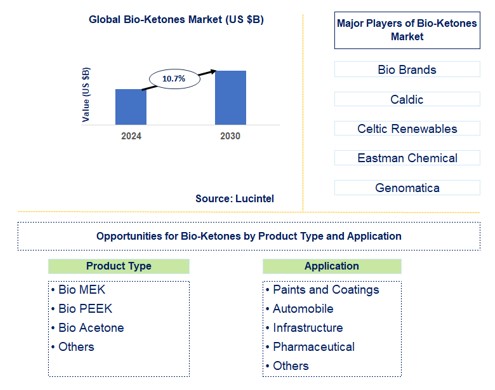
Key data points: The growth forecast = 10.7% annually for the next 6 years. Scroll below to get more insights. This market report covers trends, opportunities, and forecasts in the global bio-ketones market to 2030 by product type (bio MEK, bio PEEK, bio acetone, and others), application (paints and coatings, automobile, infrastructure, pharmaceutical, and others), and region (North America, Europe, Asia Pacific, and the Rest of the World)
We'll send your sample report shortly.
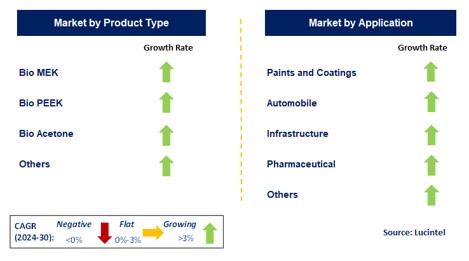
• Lucintel forecasts that, within the application category, bio PEEK will remain the largest segment over the forecast period due to its increasing adoption in the automotive industry as it helps in weight reduction and improved fuel efficiency of vehicles.
• Within the application category, automobile will remain the largest segment.
• In terms of regions, APAC will remain the largest region over the forecast period due to a more sustainable and resource-efficient industrial landscape and rising demand from the pharmaceutical industry in the region. Gain valuable insights for your business decisions with our comprehensive 150+ page report. The bio-ketones industry is becoming more advanced and innovative due to the increasing demand for greener and environmentally friendly products across various sectors. These products are becoming more prevalent in key global markets such as the US, China, Germany, India, and Japan, with the future of the sector being shaped by innovation, policy changes, and strategic investments. This write-up surveys what is happening in these regions, shedding light on how they have impacted the bio-ketones market.
• United States: The United States bio-ketones market has seen an increase in R&D spending, specifically towards bio-based chemical production. Companies are pushing to develop high-quality pharmaceutical-grade bio-ketones as alternatives to the unsustainable ones currently available. For example, regulations that support the growth of bio-based chemicals continue, with several initiatives promoting green chemistry.
• China: Strong government backing for bio-based industries has fueled the expansion of China’s bio-ketones market. In its drive for large-scale production and commercialization of bio-ketones, China has begun to exploit its advanced bioprocessing technologies. Chinese enterprises are also collaborating internationally to improve product offerings and expand into global markets.
• Germany: The automotive and pharmaceutical sectors are driving the German bio-ketones industry forward. One area of focus is the development of solvents based on bio-ketones, as well as intermediates used in chemical synthesis. German companies have also heavily invested in green processes to reduce carbon footprints and comply with increasingly stringent environmental regulations.
• India: Increased awareness about sustainable agricultural practices among farmers, coupled with rising consciousness about sustainable healthcare practices among consumers, is contributing to growth in the Indian bio-ketones market. Indian companies are exploring the application of bio-ketones in pesticides and drugs. Government initiatives supporting bio-based products, along with investments in biotechnology research, are further propelling the country forward.
• Japan: Innovation within the food and beverages industry characterizes Japan’s bio-ketones market, where bio-ketones are being used as flavor enhancers. The use of bioprocessing technologies has also benefited the market. Japanese companies are focusing on producing high-quality bio-ketones that could be used in specialty chemicals. This is driven by Japan’s commitment to sustainability and high quality. A more than 150-page report is developed to help in your business decisions.
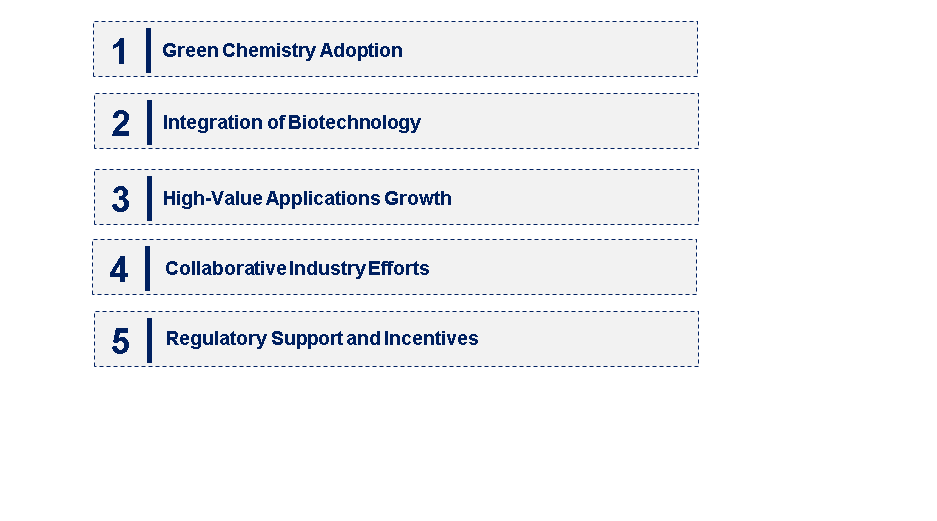
• Green Chemistry Adoption: The global movement towards sustainable development has led to increased use of green chemistry in the production of bio-ketone products. It emphasizes the utilization of renewable resources, the employment of environmentally benign processes, and the reduction of waste generation. Green chemistry not only reduces the environmental impacts arising from chemical manufacturing but also meets regulatory requirements, thereby driving growth in this sector.
• Integration of Biotechnology: New biotechnologies are enabling better production efficiency for bio-ketones from renewable sources. Advancements in synthetic biology and metabolic engineering have optimized microbial fermentation, leading to higher yields at lower costs. Recent developments have made petrochemical-derived alternatives more competitive, thus expanding their use in several industries where bio-ketones can now be applied.
• High-Value Applications Growth: High-value applications such as pharmaceuticals, cosmetics, and specialty chemicals are increasingly using bio-ketones. Their superior purity, capacity for biodegradation, and low toxicity to the environment make them ideal for these sectors. Based on this trend, more funds are being invested in R&D to produce tailor-made bio-ketone products that meet the specific needs of industries, thus further facilitating market expansion.
• Collaborative Industry Efforts: The bio-ketones industry is witnessing increased collaboration between firms, research institutions, and governments. These partnerships aim to speed up product development, scale production, and lower costs. Knowledge sharing, as well as innovations through collaborations, also help develop new bio-ketone products that are commercially viable and can reach wider markets.
• Regulatory Support and Incentives: Governments worldwide have provided political support alongside incentives for the manufacture and usage of bio-ketones. Deployment policies for bio-based chemicals, tax breaks, and green technology grants have promoted investment in this market by companies. Regulatory support is vital in driving the adoption of bio-ketones, particularly in areas with strict environmental regulations. These emerging trends are reshaping the bio-ketones market by driving innovation, expanding applications, and increasing collaboration. Stakeholders must, therefore, embrace these trends if they want to take advantage of new opportunities while ensuring sustainable growth amidst a constantly changing market.
• Advancements in Biocatalysis: The introduction of novel biocatalysts has revolutionized the production process of bio-ketones, making it more efficient and cost-effective than before. These biocatalysts enable selective and sustainable transformations, reducing the need to use harsh chemicals. This not only improves product quality but also creates new methods of producing bio-ketones on an industrial scale.
• Expansion of Production Capacity: Several companies are increasing their production capacities to meet the rise in demand for bio-ketones. Among them are the establishment of new biorefineries or even upgrading existing ones. This increase in production capacity has resulted in lower costs and more stable supply chains, making bio-ketones accessible across a broader range of markets.
• Strategic Partnerships and Collaborations: Strategic collaborations among companies, research institutions, and government agencies are driving innovation within the bio-ketones market. These collaborations focus on speeding up research, sharing resources, and commercializing new bio-ketone products. Such partnerships offer solutions to technical challenges and fast-track the release of new products into the market.
• Regulatory Approvals and Certifications: Regulatory approvals and certifications play a major role in the commercialization of bio-ketones. Firms that have been certified with credentials like ISO or REACH compliance gain a competitive advantage over others operating within this space. They can also build trust among consumers, as regulatory approvals are needed before they can penetrate markets with strong environmental regulations.
• Diversification of Applications: The diversification of applications for bio-ketones is driving its growth rate. Bio-ketones are now applied across many sectors, including pharmaceuticals, cosmetics, agriculture, and automobiles, among others. The move towards diversification helps firms generate revenue from various sources while reducing reliance on a single segment, thus strengthening overall market resilience. These key developments are significantly impacting the bio-ketones market by enhancing production efficiency, expanding applications, and fostering innovation through collaboration. These trends will be important in shaping the future direction of growth in the market.
• Pharmaceutical Applications: The growing utilization of bio-ketones in pharmaceuticals is attributed to their high purity and biocompatibility. Bio-ketones are currently being developed as intermediates in the production of active pharmaceutical ingredients (APIs). This segment has considerable growth potential, with increasing demand for green and sustainable pharmaceutical products.
• Cosmetic and Personal Care Products: In the cosmetics industry, bio-ketones are increasingly used as natural and alternative raw materials. They are used to form emollients, preservatives, or fragrances. Market players can tap into a demanding customer base that seeks greener beauty options as part of their clean beauty objectives.
• Agrochemicals: The application scope of bio-ketones includes agrochemicals such as pesticides and herbicides due to their degradability and low toxicity. Some companies are developing bio-ketones as replacements for synthetic chemicals, thanks to their sustainability properties and environmental benefits. This trend is particularly strong in regions with strict chemical regulations, increasing the business opportunities for bio-ketone producers.
• Food and Beverage Industry: As a flavor enhancer or preservative agent, bio-ketones are adopted by food processors and sometimes added to soft drinks (Nrel.gov). These natural additives offer safe alternatives compared to lab-made substances (HTF MI 2018). The trend toward organic and all-natural food is driving the use of bio-ketones in this sector, thereby opening up new opportunities for market stakeholders.
• Automotive Industry: The automotive industry is exploring the use of bio-ketones as solvents and intermediates in the production of coatings, adhesives, and lubricants. This application is supported by the need to enhance environmental sustainability by reducing VOC emissions in the transportation industry. The invention of bio-based alternatives makes bio-ketones important within the automotive sector due to their eco-friendly nature. These strategic growth opportunities are reshaping the bio-ketones market by expanding applications across key industries. As demand for sustainable and bio-based products continues to rise, these opportunities will drive market expansion and innovation, offering significant potential for stakeholders.
• Sustainability Demand: The growing global demand for sustainable and eco-friendly products is a primary driver of the bio-ketones market. Consumers and industries are increasingly prioritizing products with lower environmental impacts, pushing companies to adopt bio-based alternatives. This trend is particularly strong in sectors such as pharmaceuticals, cosmetics, and food, where sustainability has become a decisive criterion during purchases.
• Regulatory Support: Governments globally are increasingly implementing policies in favor of bio-based chemicals rather than petrochemical derivatives. These regulations include tax incentives, grants for green technologies, and stricter environmental standards, all of which encourage the adoption of bio-ketones. Regulatory support is crucial for driving market growth, especially in areas with strict environmental regulations.
• Technological Advancements: Biotechnology and bioprocessing technologies have advanced, leading to efficient and cost-effective production of bio-ketones. Innovations such as metabolic engineering and synthetic biology optimize microbial fermentation processes, resulting in enhanced yields and reduced production costs. Consequently, these technological advancements enhance the competitiveness of bio-ketones against traditional chemicals, thus driving their market adoption.
• Consumer Awareness: Increased awareness among consumers about the eco-friendliness and health benefits of bio-based products has led to a rise in demand for bio-ketones. Consumers are now more aware of the environmental impacts associated with petrochemical products and prefer sustainable alternatives that safeguard their health and safety. Such changes can be seen in the cosmetics, food, and beverage industries, among others.
• Industry Collaborations: Increased collaboration between companies, research institutions, and governments benefits the bio-ketones market. Through such partnerships, the development and commercialization of new bio-ketone products are accelerated, overcoming technical challenges while reducing costs. Collaborative efforts help businesses scale production and widen their market reach. Challenges in the bio-ketones market include:
• High Production Costs: Despite advances in the field, bio-ketones still face higher production costs compared to conventional oil-based petrochemicals. Expensive raw materials, along with high-cost fermentation processes, limit the availability of viable options for using bio-ketones in price-sensitive markets. As a result, scaling up production becomes difficult, as the reasons mentioned above often impede large-scale deployment.
• Regulatory Hurdles: While regulatory support exists, navigating complex and sometimes differing regulations across various regions can be quite challenging for firms. For example, compliance with stringent standards such as REACH in Europe or FDA regulations in the U.S. might require immense resources and time, which could delay market entry and increase costs.
• Market Penetration: It is difficult for bio-ketones to break into well-established markets dominated by petrochemical products. Traditional chemical companies have a stronger presence, and existing supply chains, coupled with customer loyalty, make it difficult for bio-based products to capture significant market share. This challenge requires strategic marketing efforts and competitive pricing to overcome. The growth and development of the bio-ketones market are shaped by a combination of drivers and challenges. While sustainability demand, regulatory support, and technological advancements are driving market expansion, high production costs and market penetration barriers must be addressed for the full potential of bio-ketones to be realized.
• Bio Brands
• Caldic
• Celtic Renewables
• Eastman Chemical
• Genomatica
• Green Biologics
• Lanzatech
• Merck
• Nutra Green Biotechnology
• Sigma-Aldrich
• Bio MEK
• Bio PEEK
• Bio Acetone
• Others
• Paints and Coatings
• Automobile
• Infrastructure
• Pharmaceutical
• Others
• North America
• Europe
• Asia Pacific
• The Rest of the World


• Bio Brands
• Caldic
• Celtic Renewables
• Eastman Chemical
• Genomatica
• Green Biologics
• Lanzatech
• Merck
• Nutra Green Biotechnology
• Sigma-Aldrich Q5. Which bio-ketones market segment will be the largest in future? Answer: Lucintel forecasts that bio PEEK will remain the largest segment over the forecast period due to its increasing adoption in the automotive industry as it helps in weight reduction and improved fuel efficiency of vehicles. Q6. In bio-ketones market, which region is expected to be the largest in next 5 years? Answer: APAC will remain the largest region over the forecast period due to a more sustainable and resource-efficient industrial landscape and rising demand from the pharmaceutical industry in the region. Q7. Do we receive customization in this report? Answer: Yes, Lucintel provides 10% customization without any additional cost.


Choose a license that fits your team. Instant PDF delivery.
Prices exclude taxes. Instant delivery. Custom licensing available on request.
Market Report · July 22, 2026
Market Report · July 22, 2026
Market Report · July 22, 2026
Trusted partner for strategic intelligence and business growth


Receive a complimentary market analysis tailored to your industry. Our analysts will identify key growth opportunities and competitive dynamics specific to your business.

Market size, growth rate, and key trend analysis for your specific sector.

Top competitor positioning and market share analysis.

Strategic recommendations backed by data-driven insights.
Get curated market intelligence and competitive moves straight to your inbox.
By subscribing, you agree to receive our monthly insights. Unsubscribe anytime.
Receive a complimentary market analysis tailored to your industry. Our analysts will identify key growth opportunities and competitive dynamics specific to your business.
Market size, growth rate, and key trend analysis for your specific sector.
Top competitor positioning and market share analysis.
Strategic recommendations backed by data-driven insights.
Get curated market intelligence, emerging trends, and competitive moves straight to your inbox each month.
By subscribing, you agree to receive our monthly insights. Unsubscribe anytime.
We'll send your sample report shortly.