
Market Report · July 22, 2026

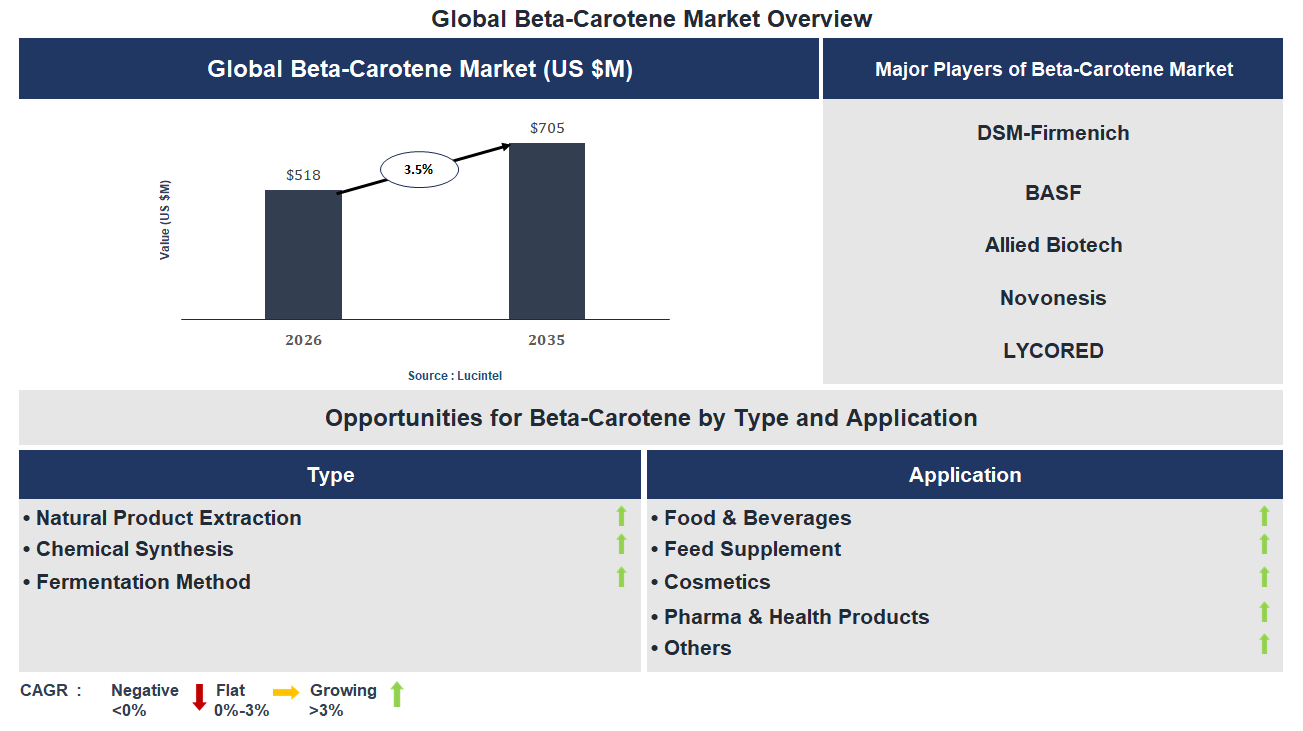
Key data points: The market size in 2035 = $705 million, growth forecast = 3.5% annually for the next 8 years. Scroll below to get more insights. This market report covers trends, opportunities and forecasts in beta-carotene market to 2035 by type (natural product extraction, chemical synthesis, and fermentation method), application (food & beverages, feed supplement, cosmetics, pharma & health products, and others), and region (North America, Europe, Asia Pacific, and the Rest of the World)
We'll send your sample report shortly.
• Lucintel forecasts that, within the type category, fermentation method is expected to witness the highest growth over the forecast period.
• Within the application category, food & beverage is expected to witness the highest growth.
• In terms of region, APAC is expected to witness the highest growth over the forecast period. Gain valuable insights for your business decisions with our comprehensive 150+ page report. Sample figures with some insights are shown below.
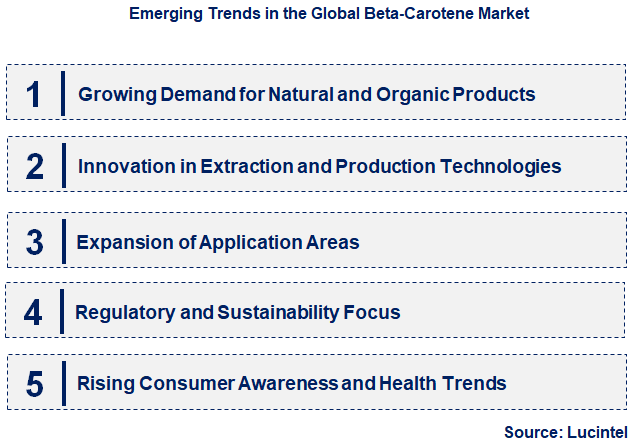
• Growing Demand for Natural and Organic Products: Consumers are increasingly prioritizing natural, organic, and non-synthetic ingredients in their diets and supplements. This shift is driven by health consciousness and concerns over synthetic additives. As a result, manufacturers are focusing on sourcing high-quality, natural beta-carotene from sustainable sources, which enhances product appeal and marketability. This trend encourages transparency in supply chains and promotes eco-friendly practices, ultimately boosting consumer trust and driving market growth.
• Innovation in Extraction and Production Technologies: Advances in extraction methods, such as supercritical fluid extraction and biotechnology, are improving yield efficiency and reducing costs. These innovations also enable the production of purer, more stable beta-carotene with enhanced bioavailability. Such technological progress allows manufacturers to meet increasing demand while maintaining quality standards. It also opens avenues for developing novel formulations and applications, thereby expanding the market’s scope and competitiveness.
• Expansion of Application Areas: Beyond dietary supplements and food coloring, beta-carotene is increasingly used in cosmetics, skincare, and functional foods. Its antioxidant properties and skin health benefits are driving demand in personal care products. The rise of plant-based and clean-label products further fuels this expansion. This diversification broadens the market, attracting new customer segments and creating opportunities for cross-industry collaborations, ultimately strengthening the market’s resilience and growth potential.
• Regulatory and Sustainability Focus: Governments and industry bodies are implementing stricter regulations on ingredient sourcing, labeling, and environmental impact. There is a growing emphasis on sustainable harvesting and eco-friendly production practices. Companies adopting these standards can differentiate themselves and gain consumer trust. Compliance with regulations also minimizes legal risks and enhances brand reputation, making sustainability a key competitive factor in the evolving beta-carotene landscape.
• Rising Consumer Awareness and Health Trends: Increasing awareness of the health benefits of beta-carotene, such as immune support and eye health, is boosting demand. The trend towards preventive healthcare and wellness lifestyles encourages consumers to seek functional foods and supplements containing beta-carotene. This heightened awareness drives innovation in product formulations and marketing strategies, fostering a more health-conscious market environment and accelerating growth. These emerging trends are collectively reshaping the beta-carotene market by emphasizing natural ingredients, technological innovation, diversified applications, regulatory compliance, and health consciousness. They are fostering a more sustainable, innovative, and consumer-centric industry landscape, poised for continued expansion and evolution.
• Growing Demand for Natural Colorants: The shift towards natural ingredients in food and beverages is boosting beta-carotene demand as a natural colorant, replacing synthetic dyes. This trend enhances product appeal and aligns with health-conscious consumer preferences, leading to increased market penetration and diversification of product offerings across various sectors.
• Advances in Extraction Technologies: Innovative extraction and purification techniques, such as supercritical fluid extraction, improve yield and purity of beta-carotene. These technological advancements reduce production costs and environmental impact, enabling manufacturers to meet rising demand efficiently and sustainably, thereby expanding market capacity and competitiveness.
• Expansion in Pharmaceutical Applications: Beta-carotenes antioxidant properties are increasingly utilized in dietary supplements and medicinal formulations. Growing awareness of its health benefits, including immune support and eye health, drives pharmaceutical industry adoption, opening new revenue streams and fostering product innovation within the market.
• Rising Investment in R&D: Significant investments by companies and research institutions aim to develop novel formulations and enhance bioavailability. These efforts lead to improved product efficacy, broader application scopes, and competitive advantages, ultimately accelerating market growth and encouraging innovation-driven expansion.
• Increasing Regulatory Support and Standards: Governments and industry bodies are establishing clearer regulations and quality standards for beta-carotene products. This regulatory framework boosts consumer confidence, facilitates international trade, and encourages industry compliance, thereby fostering a stable environment for market growth and attracting new entrants. The overall impact of these developments is a robust, innovative, and expanding beta-carotene market. Enhanced product quality, diversified applications, and technological progress are driving increased demand globally. Market players are better positioned to meet consumer needs, resulting in sustained growth, competitive advantages, and a more resilient industry landscape.
• Expanding Use in Functional Foods and Dietary Supplements: The rising consumer focus on health and wellness is boosting demand for beta-carotene as a natural antioxidant and vitamin A source. Manufacturers are developing fortified foods, beverages, and supplements to cater to this trend, creating new revenue streams. The integration of beta-carotene into functional products enhances nutritional value, supports immune health, and appeals to health-conscious consumers, thereby expanding market reach and driving growth.
• Increasing Adoption in Cosmetic and Personal Care Products: The cosmetic industry is increasingly incorporating beta-carotene for its antioxidant and skin-nourishing properties. It is used in creams, serums, and sunscreens to protect against environmental damage and improve skin health. The demand for natural, plant-based ingredients in beauty products is propelling market growth. Innovations in formulation and rising consumer preference for clean-label products are further expanding beta-carotene’s application in this sector.
• Technological Advancements in Extraction and Synthesis: New extraction techniques, such as supercritical fluid extraction, improve yield and purity of beta-carotene from natural sources. Synthetic production methods are becoming more cost-effective and environmentally friendly. These innovations reduce production costs, ensure consistent quality, and meet regulatory standards, enabling manufacturers to scale up supply and diversify product offerings, thus supporting overall market expansion.
• Growing Demand for Natural and Organic Products: Consumers are increasingly seeking natural, organic, and non-GMO ingredients, which boosts the preference for plant-derived beta-carotene. This trend influences product development in food, beverages, and cosmetics, encouraging companies to source high-quality natural beta-carotene. Certification and transparency in sourcing are becoming critical, fostering trust and expanding market penetration in health-conscious markets globally.
• Strategic Collaborations and Market Expansion in Emerging Economies: Companies are forming strategic alliances and joint ventures to penetrate emerging markets with high growth potential. Local partnerships facilitate understanding of regional preferences, regulatory compliance, and distribution channels. Market expansion efforts are supported by increasing disposable incomes and rising health awareness, enabling companies to tap into new customer bases and diversify revenue streams, thereby accelerating overall market growth. These growth opportunities collectively position the beta-carotene market for sustained expansion by addressing evolving consumer demands, technological innovations, and strategic market entry. Emphasizing natural, high-quality products and leveraging technological advancements will enable industry players to capitalize on emerging trends. As a result, the market is poised for robust growth, driven by increased applications across food, cosmetics, and health sectors, ultimately benefiting stakeholders and consumers worldwide.
• Technological Advancements: The development of innovative extraction and synthesis methods has significantly reduced production costs and improved product purity. These technological improvements enable manufacturers to meet increasing demand for natural and high-quality beta-carotene, especially in the food, beverage, and cosmetic industries. Enhanced extraction techniques from natural sources like carrots and algae have also expanded supply options, making the product more sustainable and environmentally friendly. As technology continues to evolve, the market is expected to benefit from increased efficiency, scalability, and product diversification, further fueling growth.
• Rising Consumer Health Awareness: Consumers are increasingly seeking natural, plant-based ingredients due to growing health consciousness and a preference for clean-label products. Beta-carotene, being a natural antioxidant and vitamin A precursor, aligns well with these consumer preferences. The demand for dietary supplements, functional foods, and beverages fortified with beta-carotene is rising globally. This trend is driven by increasing awareness of the benefits of antioxidants in preventing chronic diseases and promoting overall health, thereby boosting market demand across various regions.
• Expansion in End-Use Industries: The application scope of beta-carotene is expanding across multiple industries, including food and beverages, cosmetics, and pharmaceuticals. In the food industry, it is used as a natural colorant and nutritional supplement. In cosmetics, it is valued for its antioxidant properties and skin health benefits. The pharmaceutical sector leverages beta-carotene for its potential in preventing oxidative stress-related diseases. This diversification of applications is creating new growth opportunities and increasing market penetration, especially as industries seek natural and multifunctional ingredients to meet consumer demands.
• Regulatory Support and Standards: Governments and regulatory bodies worldwide are establishing guidelines and standards for natural food additives and supplements, which favor the growth of the beta-carotene market. Clear regulations around labeling, safety, and quality assurance help build consumer trust and facilitate market entry for new products. Compliance with these standards ensures product safety and enhances brand credibility, encouraging manufacturers to innovate and expand their offerings. Regulatory support also helps in standardizing product quality, which is crucial for international trade and market expansion. The challenges facing the beta-carotene market are:
• Supply Chain Disruptions: The beta-carotene supply chain is vulnerable to disruptions caused by seasonal variations, climate change, and agricultural issues affecting raw material availability. Dependence on natural sources like carrots and algae makes the supply susceptible to environmental factors, leading to price volatility and inconsistent supply. Additionally, logistical challenges and transportation delays can hamper timely delivery, impacting production schedules and market stability. These disruptions pose significant risks to manufacturers and can hinder market growth, especially in regions heavily reliant on natural extraction methods.
• Regulatory Compliance Complexities: Navigating the complex regulatory landscape across different countries presents a significant challenge. Variations in safety standards, labeling requirements, and permissible usage levels can complicate product development and market entry. Non-compliance can result in legal penalties, product recalls, and damage to brand reputation. As regulations become more stringent, especially concerning natural ingredients and health claims, companies must invest heavily in compliance processes, which can increase costs and slow down innovation and expansion efforts.
• Competition from Synthetic Alternatives: The availability of cheaper synthetic beta-carotene poses a challenge to natural product manufacturers. Synthetic variants often have lower production costs and longer shelf lives, making them attractive to price-sensitive markets. This competition pressures natural beta-carotene producers to lower prices or invest heavily in marketing and quality assurance to differentiate their products. The preference for synthetic options in certain applications, especially in processed foods, can limit the growth potential of natural beta-carotene, requiring continuous innovation and branding efforts to maintain market share. The beta-carotene market is driven by technological innovations, increasing health consciousness, expanding applications, and supportive regulations. However, it faces challenges such as supply chain vulnerabilities, regulatory complexities, and competition from synthetic alternatives. These factors collectively influence market dynamics, requiring stakeholders to adapt strategies to capitalize on opportunities while mitigating risks. Overall, the markets growth prospects remain promising, provided that companies effectively navigate these drivers and challenges through innovation, compliance, and strategic planning.
• DSM-Firmenich
• BASF
• Allied Biotech
• Novonesis
• LYCORED
• Givaudan
• Zhejiang Medicine
• HJ-Rise International
• Wuhan Xingchen Modern Bioengineering
• Cabio
• Natural Product Extraction
• Chemical Synthesis
• Fermentation Method
• Food & Beverages
• Feed Supplement
• Cosmetics
• Pharma & Health Products
• Others
• North America
• Europe
• Asia Pacific
• The Rest of the World
• United State: United States, the market has seen increased demand for natural and organic Beta-Carotene products, driven by rising health consciousness and clean-label trends. Major companies are investing in advanced extraction techniques and sustainable sourcing methods to meet consumer preferences. Regulatory agencies are also tightening standards, prompting innovation in product safety and quality. Additionally, the application of Beta-Carotene in dietary supplements and functional foods is expanding, supported by growing awareness of its antioxidant benefits. The U.S. market is characterized by strong R&D activities and strategic partnerships to enhance product portfolio and market reach.
• China: Chinas beta-carotene market is rapidly growing, fueled by a large consumer base and increasing demand for natural ingredients in food and cosmetics. The country is focusing on domestic production to reduce reliance on imports, with significant investments in extraction technology and quality control. Government policies promoting health and wellness are boosting market expansion. Chinese companies are also exploring innovative applications, such as in traditional medicine and functional foods. The market benefits from a robust supply chain and increasing export opportunities. Overall, China is positioning itself as a key player in the global Beta-Carotene industry through technological advancements and strategic collaborations.
• Germany: Germanys market is characterized by a focus on high-quality, sustainably sourced Beta-Carotene products, driven by stringent EU regulations and consumer preferences for natural ingredients. The country is a hub for research and innovation, with companies investing in eco-friendly extraction methods and product development. The demand for Beta-Carotene in cosmetics, food, and health supplements is rising, supported by a growing awareness of its health benefits. Germanys emphasis on sustainability and quality standards is fostering the development of premium products. The market also benefits from strong distribution networks within Europe, facilitating the expansion of local and international brands.
• India: Indias beta-carotene market is witnessing rapid growth due to increasing health awareness and a rising middle class seeking nutritious products. The country is focusing on domestic production to meet local demand and reduce imports. Investments are being made in advanced extraction and purification technologies to improve product quality. The application scope is expanding in dietary supplements, fortification of foods, and traditional medicine. Government initiatives promoting wellness and organic farming are further supporting market growth. Additionally, the growing popularity of plant-based and natural ingredients is driving innovation and market penetration across various sectors in India.
• Japan: Japans beta-carotene market is characterized by a strong emphasis on quality, safety, and innovation. The country is a leader in functional foods and dietary supplements, with consumers seeking products that promote health and longevity. Japanese companies are investing in research to develop novel formulations and improve bioavailability. The market is also influenced by strict regulatory standards and a preference for natural, sustainably sourced ingredients. The application of Beta-Carotene in cosmetics and health foods is expanding, supported by a culture of health-conscious consumption. Japans focus on technological advancement and quality assurance continues to drive growth in this sector.


• DSM-Firmenich
• BASF
• Allied Biotech
• Novonesis
• LYCORED
• Givaudan
• Zhejiang Medicine
• HJ-Rise International
• Wuhan Xingchen Modern Bioengineering
• Cabio Q6. Which beta-carotene market segment will be the largest in future? Answer: Lucintel forecasts that, within the type category, fermentation method is expected to witness the highest growth over the forecast period. Q7. In beta-carotene market, which region is expected to be the largest in next 8 years? Answer: In terms of region, APAC is expected to witness the highest growth over the forecast period. Q8. Do we receive customization in this report? Answer: Yes, Lucintel provides 10% customization without any additional cost.


Choose a license that fits your team. Instant PDF delivery.
Prices exclude taxes. Instant delivery. Custom licensing available on request.
Market Report · July 22, 2026
Market Report · July 22, 2026
Market Report · July 22, 2026
Trusted partner for strategic intelligence and business growth


Receive a complimentary market analysis tailored to your industry. Our analysts will identify key growth opportunities and competitive dynamics specific to your business.

Market size, growth rate, and key trend analysis for your specific sector.

Top competitor positioning and market share analysis.

Strategic recommendations backed by data-driven insights.
Get curated market intelligence and competitive moves straight to your inbox.
By subscribing, you agree to receive our monthly insights. Unsubscribe anytime.
Receive a complimentary market analysis tailored to your industry. Our analysts will identify key growth opportunities and competitive dynamics specific to your business.
Market size, growth rate, and key trend analysis for your specific sector.
Top competitor positioning and market share analysis.
Strategic recommendations backed by data-driven insights.
Get curated market intelligence, emerging trends, and competitive moves straight to your inbox each month.
By subscribing, you agree to receive our monthly insights. Unsubscribe anytime.
We'll send your sample report shortly.