
Report Feature
Beef Market Trends and Forecast
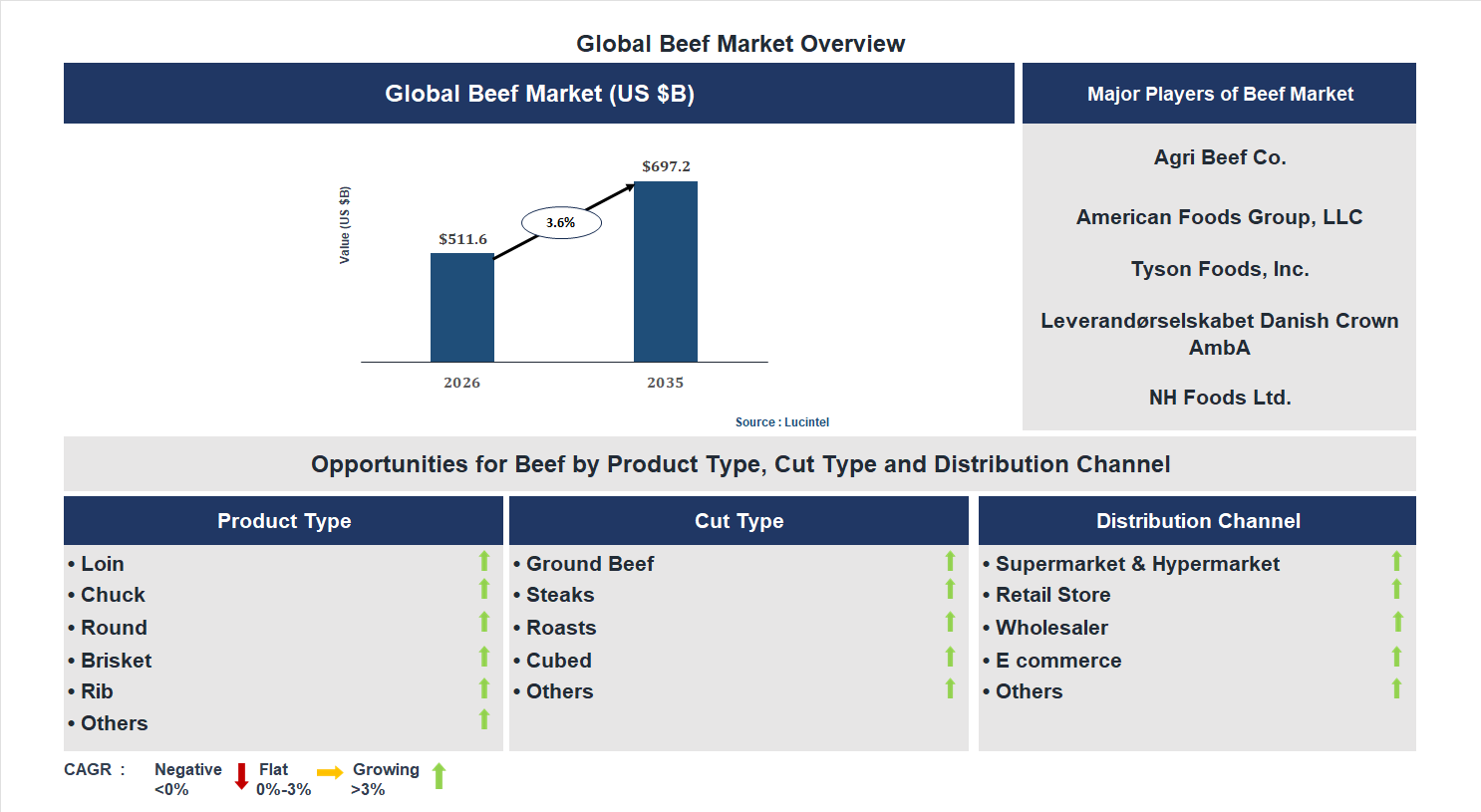
The future of the global beef market looks promising with opportunities in the supermarket & hypermarket, retail store, wholesaler, and e commerce markets. The global beef market is expected to reach an estimated $697.2 billion by 2035 with a CAGR of 3.6% from 2026 to 2035. The major drivers for this market are the increasing demand for protein rich beef, the rising demand for quick service restaurant processed beef, and the growing demand for export opportunities & international trade of beef products.• Lucintel forecasts that, within the product type category, loin is expected to witness the highest growth over the forecast period.
• Within the distribution channel category, supermarket & hypermarket is expected to witness the highest growth.
• In terms of region, APAC is expected to witness the highest growth over the forecast period. Gain valuable insights for your business decisions with our comprehensive 150+ page report. Sample figures with some insights are shown below.
Emerging Trends in the Beef Market
The beef market is experiencing significant transformations driven by changing consumer preferences, technological advancements, and sustainability concerns. These developments are reshaping production, distribution, and consumption patterns worldwide. As consumers become more health-conscious and environmentally aware, industry players are adapting to meet new demands. Innovations in supply chain management and marketing strategies are also influencing market dynamics. Additionally, regulatory changes and ethical considerations are prompting shifts toward more sustainable practices. These emerging trends are not only redefining how beef is produced and consumed but also creating new opportunities and challenges for stakeholders across the supply chain. Understanding these key trends is essential for navigating the evolving landscape of the beef market.• Growing Demand for Sustainable and Ethical Beef: Consumers are increasingly prioritizing sustainability and animal welfare, leading to a rise in demand for ethically produced beef. This trend encourages producers to adopt more transparent and humane practices, such as grass-fed and organic options. Certification programs and eco-labels are gaining popularity, influencing purchasing decisions. The shift impacts supply chains by emphasizing sustainable sourcing and reducing environmental footprints. Companies investing in ethical practices can differentiate themselves in a competitive market, attracting environmentally conscious consumers. Overall, this trend promotes more responsible production methods and aligns market growth with sustainability goals.
• Technological Innovations in Supply Chain and Production: Advances in technology are revolutionizing beef production and distribution. Precision agriculture, IoT sensors, and data analytics enable better herd management, resource efficiency, and quality control. Blockchain technology enhances traceability, ensuring transparency from farm to fork. Automated processing and packaging improve efficiency and safety standards. These innovations reduce costs, minimize waste, and improve product quality, benefiting both producers and consumers. As technology becomes more integrated, the beef industry can respond more swiftly to market demands and regulatory requirements, fostering a more resilient and efficient supply chain.
• Shift Toward Plant-Based and Alternative Proteins: The rise of plant-based and lab-grown meat alternatives is impacting traditional beef consumption. Consumers seek healthier, sustainable, and ethical options, leading to increased investment in alternative proteins. This trend challenges conventional beef markets by offering comparable products with lower environmental impacts. Food companies are expanding their portfolios to include plant-based burgers, nuggets, and other products. The shift influences pricing, marketing, and product development strategies within the beef industry. While traditional beef remains dominant, the growth of alternatives is prompting the sector to innovate and adapt to changing consumer preferences.
• Health and Wellness Focus Influencing Consumer Choices: Increasing awareness of health issues associated with red meat consumption is shaping market trends. Consumers are seeking leaner cuts, organic options, and products with reduced fat and sodium content. Functional beef products enriched with nutrients or designed for specific dietary needs are gaining popularity. This focus on health encourages producers to develop new product lines and improve existing ones. Retailers and marketers emphasize transparency, nutritional information, and health benefits to attract health-conscious buyers. The trend drives innovation and influences pricing strategies, ultimately reshaping product offerings and consumer engagement in the beef market.
• Regulatory Changes and Environmental Policies: Governments worldwide are implementing stricter regulations related to environmental impact, animal welfare, and food safety. These policies influence production practices, requiring industry compliance and adaptation. For example, emissions reduction targets and water usage restrictions push producers toward more sustainable methods. Animal welfare laws promote humane treatment and transparency. Regulatory pressures can increase costs but also create opportunities for innovation and differentiation. Companies that proactively adapt to these policies can gain competitive advantages. Overall, evolving regulations are fostering a more responsible and sustainable beef industry, aligning market practices with global environmental and ethical standards. These trends are collectively transforming the beef market by emphasizing sustainability, technological advancement, health consciousness, and regulatory compliance. They are encouraging innovation, promoting responsible practices, and reshaping consumer preferences, ultimately leading to a more sustainable and competitive industry landscape.

Recent Development in the Beef Market
The beef market has experienced significant shifts driven by technological advancements, changing consumer preferences, and global trade dynamics. These developments are shaping the future landscape, creating new opportunities for producers, retailers, and consumers alike. Understanding these key growth areas is essential for stakeholders aiming to capitalize on emerging trends and navigate market challenges effectively. The following outlines five critical developments impacting the beef industry today.• Growing Demand for Sustainable Beef: Consumers increasingly prioritize environmentally friendly products, prompting producers to adopt sustainable practices. This shift encourages the industry to reduce carbon footprints, improve resource efficiency, and promote ethical farming. As a result, sustainable beef offerings are gaining market share, attracting environmentally conscious buyers, and enhancing brand loyalty. This trend is expected to drive innovation and investment in eco-friendly production methods, ultimately reshaping supply chains and market strategies.
• Adoption of Technology in Supply Chain Management: Advanced technologies like blockchain, IoT, and AI are revolutionizing beef supply chains by enhancing traceability, transparency, and efficiency. These innovations enable real-time tracking of cattle from farm to fork, reducing fraud and ensuring quality standards. Improved logistics and data analytics help minimize waste and optimize inventory management. Consequently, stakeholders benefit from increased consumer trust, reduced costs, and better compliance with regulations, fostering a more resilient and responsive beef market.
• Expansion of Plant-Based and Alternative Protein Options: The rise of plant-based and lab-grown meat alternatives is influencing beef consumption patterns. Consumers seeking healthier, ethical, and sustainable options are reducing traditional beef intake, prompting industry adaptation. This shift encourages beef producers to diversify product lines and explore hybrid offerings. The growth of alternatives also stimulates innovation in food technology, creating competitive pressure but offering opportunities for collaboration and market expansion, ultimately transforming the beef industry landscape.
• Impact of Global Trade Policies and Tariffs: Trade agreements, tariffs, and geopolitical tensions significantly affect beef export and import dynamics. Favorable policies open new markets and boost exports, while restrictive measures can limit access and increase costs. These fluctuations influence pricing, supply availability, and industry profitability. Stakeholders must navigate complex regulatory environments and adapt strategies accordingly. Overall, trade policy developments are critical drivers shaping the global competitiveness and growth prospects of the beef market.
• Consumer Preferences Shifting Towards Premium and Organic Beef: Increasing demand for high-quality, organic, and locally sourced beef is transforming retail and foodservice sectors. Consumers are willing to pay premium prices for products perceived as healthier and more ethically produced. This trend encourages producers to adopt organic certification and sustainable practices, fostering premium branding and niche market development. The focus on quality and transparency enhances consumer trust and loyalty, driving market segmentation and creating new revenue streams within the beef industry. The overall impact of these developments is a more dynamic, innovative, and sustainable beef market. Stakeholders are compelled to adapt to changing consumer demands, technological advancements, and global trade conditions, fostering growth opportunities and competitive advantages. These trends collectively contribute to a resilient industry poised for future expansion and transformation.
Strategic Growth Opportunities in the Beef Market
The beef market is experiencing dynamic growth driven by changing consumer preferences, technological advancements, and expanding global demand. Opportunities for strategic expansion are emerging across various applications, including retail, foodservice, and processed products. Companies that leverage innovation, sustainability, and market diversification can capitalize on these trends to enhance competitiveness and profitability. Understanding these key growth avenues is essential for stakeholders aiming to strengthen their market position and meet evolving consumer needs effectively.• Expansion into Emerging Markets Offers Significant Growth Potential: Emerging economies present increasing demand for beef due to rising disposable incomes and urbanization. Companies can tap into these markets by establishing local supply chains, adapting products to regional tastes, and forming strategic partnerships. This expansion not only broadens customer bases but also mitigates risks associated with mature markets. Tailoring marketing strategies and ensuring compliance with local regulations are crucial for successful penetration and sustained growth in these regions.
• Innovation in Product Offerings to Meet Health-Conscious Consumer Demands: The rising trend of health and wellness influences beef consumption patterns. Developing leaner cuts, organic options, and functional beef products with added health benefits can attract health-conscious consumers. Incorporating plant-based ingredients or offering portion-controlled packaging also appeals to modern dietary preferences. Continuous product innovation helps differentiate brands, capture niche markets, and respond to regulatory pressures for healthier food options, thereby driving sales and market share.
• Adoption of Sustainable and Ethical Sourcing Practices to Enhance Brand Value: Consumers increasingly prioritize sustainability and animal welfare in their purchasing decisions. Implementing eco-friendly farming methods, reducing carbon footprints, and obtaining certifications like organic or humane-raised beef can boost brand reputation. Transparent supply chains and storytelling around ethical practices resonate with consumers, fostering loyalty. Sustainability initiatives also open avenues for premium pricing and partnerships with environmentally conscious retailers, supporting long-term market growth and compliance with evolving regulations.
• Integration of Advanced Technology for Supply Chain Efficiency and Quality Control: Technologies such as blockchain, IoT, and AI enable real-time tracking, quality assurance, and inventory management. These innovations reduce waste, improve traceability, and ensure product safety, which are critical for consumer trust and regulatory compliance. Automation in processing and packaging enhances productivity and reduces costs. Embracing digital transformation allows companies to respond swiftly to market demands, optimize operations, and gain competitive advantages in a rapidly evolving beef industry landscape.
• Diversification into Processed and Value-Added Beef Products: The demand for convenient, ready-to-eat, and premium beef products is rising globally. Developing processed items like beef jerky, sausages, and marinated cuts caters to busy lifestyles and premium markets. Value-added products can command higher margins and open new distribution channels, including retail and foodservice sectors. Innovation in packaging, flavor profiles, and product formats further enhances appeal. Diversification reduces reliance on traditional cuts, mitigates market volatility, and supports sustained revenue growth. These strategic growth opportunities—market expansion, product innovation, sustainability, technological integration, and product diversification—are poised to significantly influence the beef market. Embracing these avenues enables industry players to meet evolving consumer preferences, improve operational efficiencies, and strengthen their competitive edge. As the market continues to evolve, leveraging these opportunities will be essential for long-term success and resilience in a competitive global landscape.
Beef Market Driver and Challenges
The beef market is influenced by a complex interplay of technological, economic, and regulatory factors that shape its growth and sustainability. Advances in farming technology, supply chain innovations, and consumer preferences are driving demand and efficiency. Conversely, economic fluctuations, regulatory policies on environmental impact, and health concerns pose significant challenges. These factors collectively determine market dynamics, influencing production, distribution, and consumption patterns worldwide. Understanding these drivers and challenges is essential for stakeholders to navigate the evolving landscape, capitalize on opportunities, and mitigate risks effectively. The factors responsible for driving the beef market include:-• Technological Advancements: Innovation in breeding, feed efficiency, and processing technologies enhances productivity and quality, reducing costs and meeting consumer demands for high-quality beef. Automation and data analytics optimize supply chains, improve traceability, and ensure food safety, thereby increasing market confidence and expanding consumer base.
• Rising Global Demand: Increasing population, urbanization, and rising income levels in emerging economies boost beef consumption. Consumers are seeking convenient, protein-rich diets, which drives demand for beef products across various regions, especially in Asia and Africa, fostering market expansion.
• Health and Wellness Trends: Growing awareness of health benefits associated with lean beef and functional meat products influences consumer choices. Market players are innovating with organic, grass-fed, and hormone-free options to cater to health-conscious consumers, thereby expanding product offerings and market reach.
• Supply Chain Innovations: Improvements in logistics, cold storage, and distribution networks facilitate fresher products and reduce wastage. These innovations enable producers to access new markets, improve shelf life, and meet increasing consumer expectations for quality and freshness, thus supporting market growth. The challenges in the beef market are:
• Environmental Regulations: Stricter policies aimed at reducing greenhouse gas emissions, water usage, and land degradation impact beef production practices. Compliance costs increase, and producers face pressure to adopt sustainable methods, which may limit output and raise prices.
• Ethical and Animal Welfare Concerns: Growing awareness and activism around animal rights influence consumer preferences and regulatory frameworks. Producers are compelled to improve animal welfare standards, which can increase operational costs and complicate supply chain management.
• Price Volatility: Fluctuations in feed prices, currency exchange rates, and global trade policies create instability in beef prices. This volatility affects profitability for producers and can lead to unpredictable market conditions, impacting investment and long-term planning. The beef market is shaped by technological innovations, rising demand, and evolving consumer preferences, which drive growth and diversification. However, environmental regulations, ethical concerns, and price volatility pose significant hurdles that could constrain expansion and profitability. The interplay of these drivers and challenges will determine the market’s trajectory, requiring stakeholders to adapt strategically to sustain growth and meet future demands.
List of Beef Companies
Companies in the market compete on the basis of product quality offered. Major players in this market focus on expanding their manufacturing facilities, R&D investments, infrastructural development, and leverage integration opportunities across the value chain. With these strategies beef companies cater increasing demand, ensure competitive effectiveness, develop innovative products & technologies, reduce production costs, and expand their customer base. Some of the beef companies profiled in this report include-• Agri Beef Co.
• American Foods Group, LLC
• Tyson Foods, Inc.
• Leverandørselskabet Danish Crown AmbA
• NH Foods Ltd.
• Marfrig Global Foods S.A.
• The Kroger Co.
• JBS S.A.
• Smithfield Foods, Inc
• Cargill
Beef Market by Segment
The study includes a forecast for the global beef market by product type, cut type, distribution channel, and region.Beef Market by Product Type [Value from 2019 to 2035]:
• Loin
• Chuck
• Round
• Brisket
• Rib
• Others
Beef Market by Cut Type [Value from 2019 to 2035]:
• Ground Beef
• Steaks
• Roasts
• Cubed
• Others
Beef Market by Distribution Channel [Value from 2019 to 2035]:
• Supermarket & Hypermarket
• Retail Store
• Wholesaler
• E commerce
• Others
Beef Market by Region [Value from 2019 to 2035]:
• North America
• Europe
• Asia Pacific
• The Rest of the World
Country Wise Outlook for the Beef Market
The beef market has experienced significant shifts driven by technological innovations, changing consumer preferences, and evolving regulatory landscapes. Countries are adapting to sustainability concerns, trade policies, and health trends, which influence production, consumption, and export strategies. These developments reflect broader economic and environmental priorities, shaping the future of beef industry dynamics worldwide. As nations seek to balance growth with sustainability, understanding regional trends becomes crucial for stakeholders aiming to navigate this complex market.• United States: The U.S. beef market has seen increased adoption of sustainable farming practices and technological innovations such as precision agriculture. Consumer demand for organic and grass-fed beef continues to grow, prompting producers to diversify offerings. Trade policies and tariffs have impacted exports, especially to China and Mexico. Additionally, plant-based alternatives are gaining popularity, influencing traditional beef consumption patterns. The industry is also focusing on reducing environmental impact through water conservation and methane reduction initiatives.
• China: China’s beef market is expanding rapidly due to rising disposable incomes and urbanization. Domestic production struggles to meet demand, leading to increased imports from countries like Australia and Brazil. The government is promoting sustainable farming and improving supply chain infrastructure. Consumer preferences are shifting towards higher-quality beef, with a growing interest in premium and imported products. Efforts are underway to modernize slaughterhouses and ensure food safety standards. The market is also influenced by health trends, with some consumers seeking leaner beef options.
• Germany: Germany’s beef industry is characterized by a focus on sustainability and animal welfare. The country is investing in eco-friendly farming practices and reducing greenhouse gas emissions. Consumer awareness about ethical sourcing has increased, leading to higher demand for organic and locally produced beef. The market is also influenced by EU regulations on environmental standards and food safety. Importation of beef from non-EU countries remains significant, but there is a push to boost domestic production through improved breeding and farming techniques. The trend towards plant-based diets is also impacting beef consumption levels.
• India: India’s beef market is primarily driven by buffalo meat, which is a significant export commodity. Domestic consumption is influenced by cultural and religious factors, with beef consumption varying across regions. The industry faces challenges related to supply chain infrastructure and regulatory restrictions. Government initiatives aim to modernize slaughterhouses and promote export growth. There is a rising demand for processed and value-added beef products. Additionally, concerns about sustainability and animal welfare are prompting some producers to adopt more ethical practices. The market is also impacted by fluctuating global demand and trade policies.
• Japan: Japan’s beef market is renowned for high-quality Wagyu and Kobe beef, which command premium prices. The industry emphasizes breeding, genetics, and sustainable farming practices to maintain quality standards. Domestic production is supplemented by imports from Australia and the U.S., especially for leaner cuts. Consumer preferences lean towards premium, organic, and health-conscious beef options. The market is also influenced by aging populations and health trends favoring leaner meats. Efforts are underway to innovate in meat processing and enhance traceability to meet strict food safety standards. Sustainability initiatives are gradually gaining importance in production practices.

Features of the Global Beef Market
Market Size Estimates: Beef market size estimation in terms of value ($B). Trend and Forecast Analysis: Market trends (2019 to 2025) and forecast (2026 to 2035) by various segments and regions. Segmentation Analysis: Beef market size by product type, cut type, distribution channel, and region in terms of value ($B). Regional Analysis: Beef market breakdown by North America, Europe, Asia Pacific, and Rest of the World. Growth Opportunities: Analysis of growth opportunities in different product types, cut types, distribution channels, and regions for the beef market. Strategic Analysis: This includes M&A, new product development, and competitive landscape of the beef market. Analysis of competitive intensity of the industry based on Porter’s Five Forces model.
FAQ
Q1. What is the market size and growth forecast for beef market? Answer: The global beef market is expected to reach an estimated $697.2 billion by 2035 and grow with a CAGR of 3.6% from 2026 to 2035. Q2. What are the major drivers influencing the growth of the beef market? Answer: The major drivers for this market are the increasing demand for protein rich beef, the rising demand for quick service restaurant processed beef, and the growing demand for export opportunities & international trade of beef products. Q3. What are the major segments for beef market? Answer: The future of the beef market looks promising with opportunities in the supermarket & hypermarket, retail store, wholesaler, and e commerce markets. Q4. Who are the key beef market companies? Answer: Some of the key beef companies are as follows:• Agri Beef Co.
• American Foods Group, LLC
• Tyson Foods, Inc.
• Leverandørselskabet Danish Crown AmbA
• NH Foods Ltd.
• Marfrig Global Foods S.A.
• The Kroger Co.
• JBS S.A.
• Smithfield Foods, Inc
• Cargill Q5. Which beef market segment will be the largest in future? Answer: Lucintel forecasts that, within the product type category, loin is expected to witness the highest growth over the forecast period. Q6. In beef market, which region is expected to be the largest in next 5 years? Answer: In terms of region, APAC is expected to witness the highest growth over the forecast period. Q7. Do we receive customization in this report? Answer: Yes, Lucintel provides 10% customization without any additional cost.
Table of Contents
List of Figures
List of Tables
Methodology
- In-depth interviews of the major players in this market
- Detailed secondary research from competitors’ financial statements and published data
- Extensive searches of published works, market, and database information pertaining to industry news, company press releases, and customer intentions
- A compilation of the experiences, judgments, and insights of Lucintel’s professionals, who have analyzed and tracked this market over the years.


Buy Now
Choose a license that fits your team. Instant PDF delivery.
Prices exclude taxes. Instant delivery. Custom licensing available on request.
Key Questions
- • What are some of the most promising, high-growth opportunities for the beef market by product type (loin, chuck, round, brisket, rib, and others), cut type (ground beef, steaks, roasts, cubed, and others), distribution channel (supermarket & hypermarket, retail store, wholesaler, e commerce, and others), and region (North America, Europe, Asia Pacific, and the Rest of the World)?
- • Which segments will grow at a faster pace and why?
- • Which region will grow at a faster pace and why?
- • What are the key factors affecting market dynamics? What are the key challenges and business risks in this market?
- • What are the business risks and competitive threats in this market?
- • What are the emerging trends in this market and the reasons behind them?
- • What are some of the changing demands of customers in the market?
- • What are the new developments in the market? Which companies are leading these developments?
- • Who are the major players in this market? What strategic initiatives are key players pursuing for business growth?
- • What are some of the competing products in this market and how big of a threat do they pose for loss of market share by material or product substitution?
- • What M&A activity has occurred in the last 7 years and what has its impact been on the industry? For any questions related to Beef Market, Beef Market Size, Beef Market Growth, Beef Market Analysis, Beef Market Report, Beef Market Share, Beef Market Trends, Beef Market Forecast, Beef Companies, write Lucintel analyst at email: helpdesk@lucintel.com. We will be glad to get back to you soon.


