
Report Feature
Beauveria Bassiana Market Trends and Forecast
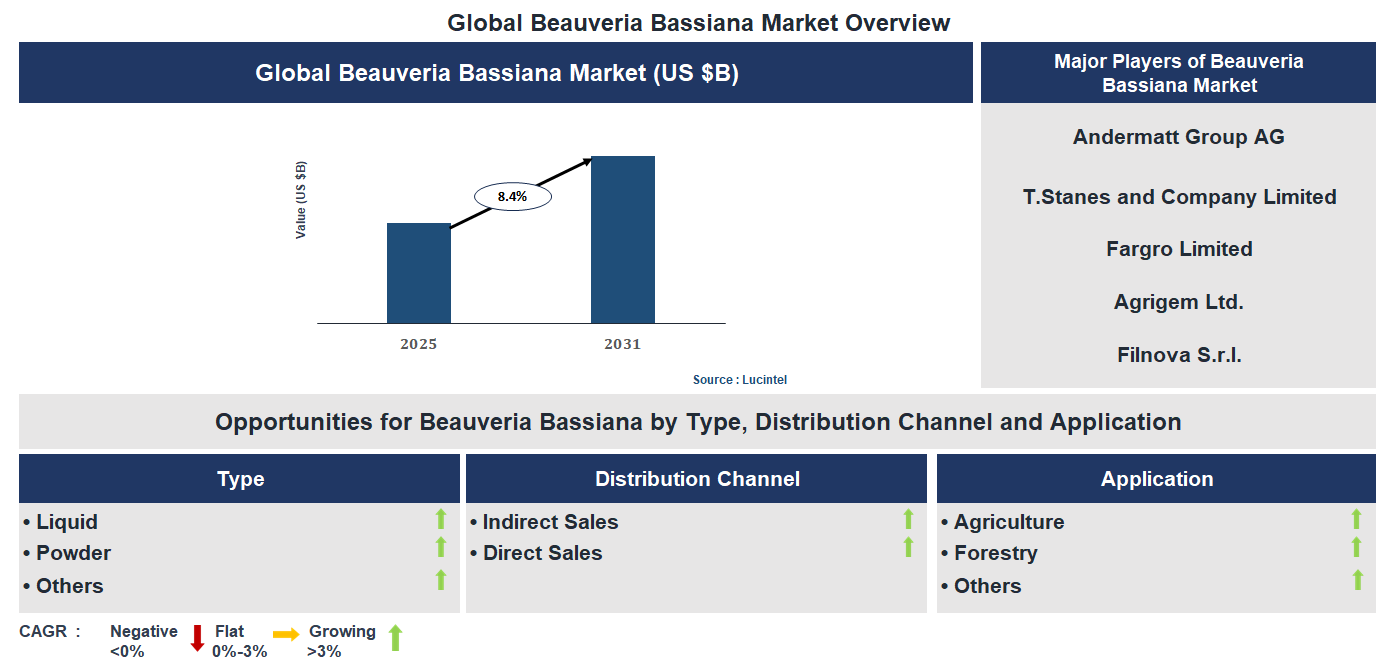
The future of the global beauveria bassiana market looks promising with opportunities in the agriculture and forestry markets. The global beauveria bassiana market is expected to grow with a CAGR of 8.4% from 2025 to 2031. The major drivers for this market are the increasing demand for biological pest control, the rising adoption of sustainable farming practices, and the growing preference for eco-friendly crop protection.• Lucintel forecasts that, within the type category, liquid is expected to witness higher growth over the forecast period.
• Within the application category, agriculture is expected to witness higher growth.
• In terms of region, North America is expected to witness the highest growth over the forecast period. Gain valuable insights for your business decisions with our comprehensive 150+ page report. Sample figures with some insights are shown below.
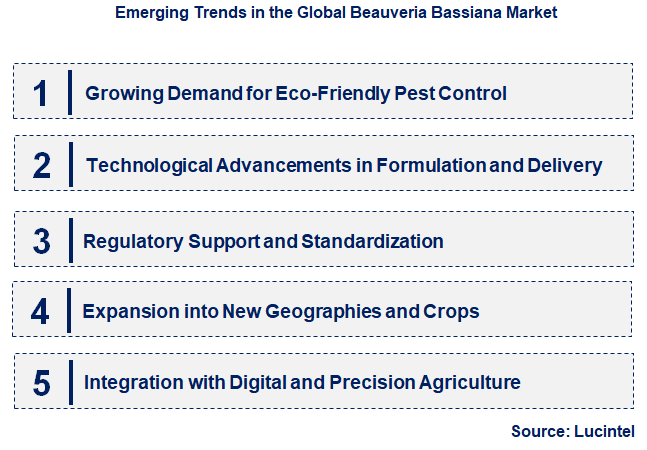
Emerging Trends in the Beauveria Bassiana Market
The beauveria bassiana market is experiencing rapid growth driven by increasing demand for eco-friendly pest control solutions, advancements in biotechnology, and a shift towards sustainable agriculture. As farmers and pest management professionals seek alternatives to chemical pesticides, natural biocontrol agents like Beauveria Bassiana are gaining prominence. Innovations in formulation, application methods, and regulatory support are further accelerating market expansion. These developments are not only transforming pest management practices but also influencing related industries such as agriculture, horticulture, and organic farming. Understanding these emerging trends is crucial for stakeholders aiming to capitalize on the markets potential and promote sustainable practices worldwide.• Growing Demand for Eco-Friendly Pest Control: The shift towards environmentally sustainable agriculture is fueling demand for natural biopesticides like Beauveria Bassiana. Farmers prefer these biological agents over chemical pesticides due to their safety, biodegradability, and minimal impact on non-target species. This trend is driven by increasing awareness of health and environmental issues, stricter regulations, and consumer preferences for organic produce. As a result, the market is witnessing a surge in adoption, with more companies investing in research and development to improve efficacy and formulation. This trend is expected to continue, making Beauveria Bassiana a key player in integrated pest management strategies.
• Technological Advancements in Formulation and Delivery: Innovations in formulation techniques, such as microencapsulation and wettable powders, are enhancing the stability, shelf life, and ease of application of Beauveria Bassiana products. These advancements improve the viability of the spores under various environmental conditions, increasing their effectiveness in controlling pests. Additionally, novel delivery methods like drone spraying and precision agriculture tools are enabling targeted application, reducing waste and increasing efficiency. These technological improvements are expanding the usability of Beauveria Bassiana across different crops and regions, making it a more versatile and reliable pest control option.
• Regulatory Support and Standardization: Governments and regulatory bodies are increasingly recognizing the benefits of biopesticides and are establishing guidelines for their approval and use. This support facilitates market entry for new products and encourages adoption among farmers. Standardization efforts ensure product quality, safety, and efficacy, boosting consumer confidence. Regulatory approval processes are becoming more streamlined, reducing time-to-market for innovative formulations. This trend is crucial for market growth, as it provides a clear framework for manufacturers and users, fostering trust and wider acceptance of Beauveria Bassiana-based solutions.
• Expansion into New Geographies and Crops: The market is expanding beyond traditional regions like North America and Europe into emerging markets in Asia, Africa, and Latin America. These regions present significant growth opportunities due to increasing agricultural activities, rising awareness of sustainable practices, and government initiatives promoting organic farming. Additionally, Beauveria Bassiana is being adapted for use on a broader range of crops, including vegetables, fruits, and ornamentals. This geographic and crop diversification is broadening the market scope, enabling companies to tap into new customer bases and address diverse pest management needs globally.
• Integration with Digital and Precision Agriculture: The adoption of digital tools and precision agriculture techniques is transforming pest management practices. Data analytics, remote sensing, and IoT devices enable precise monitoring of pest populations and environmental conditions, allowing targeted application of Beauveria Bassiana products. This integration reduces chemical usage, lowers costs, and enhances pest control efficiency. It also facilitates real-time decision-making and improves product performance. As digital adoption accelerates, Beauveria Bassiana is becoming an integral component of smart farming systems, aligning pest control with sustainable and data-driven agricultural practices. In summary, these emerging trends are reshaping the beauveria bassiana market by promoting sustainable, efficient, and technologically advanced pest management solutions. The market is becoming more global, innovative, and regulated, which will likely lead to increased adoption and continued growth in the coming years.
Recent Development in the Beauveria Bassiana Market
The beauveria bassiana market has experienced significant growth driven by increasing demand for eco-friendly pest control solutions and advancements in biopesticide technology. As farmers and agricultural sectors shift towards sustainable practices, the market is evolving rapidly with new product innovations and expanding geographic reach. Regulatory support and rising awareness about environmental impacts of chemical pesticides further bolster this trend. These developments are shaping the future landscape of biopesticides, making the market more competitive and diverse. The following key developments highlight the recent shifts and opportunities within the beauveria bassiana market.• Expansion of Product Portfolio: Companies are developing new formulations of Beauveria Bassiana, including wettable powders, granules, and liquid concentrates, to enhance efficacy and ease of application. This diversification allows for broader use across different crops and pest types, increasing market penetration and customer adoption.
• Technological Advancements: Innovations in fermentation and formulation techniques have improved the stability, shelf life, and bioavailability of Beauveria Bassiana products. These advancements result in more reliable pest control solutions, boosting farmer confidence and expanding market reach.
• Regulatory Approvals and Support: Governments and regulatory bodies are increasingly approving biopesticides like Beauveria Bassiana, recognizing their environmental benefits. Such approvals facilitate market entry and encourage adoption among farmers seeking sustainable alternatives to chemical pesticides.
• Growing Adoption in Organic Farming: The rising popularity of organic farming practices is driving demand for natural pest control agents. Beauveria Bassiana is gaining traction as a preferred biocontrol agent, contributing to market growth in regions with strict organic standards.
• Geographic Expansion: The market is witnessing expansion into emerging economies in Asia, Africa, and Latin America, where agricultural practices are increasingly adopting biopesticides. This geographic diversification opens new revenue streams and accelerates overall market growth. In summary, these developments are significantly impacting the beauveria bassiana market by enhancing product efficacy, expanding application areas, and increasing regulatory support. The market is becoming more competitive and accessible, driven by technological innovations and growing demand for sustainable pest control solutions. This evolution is poised to sustain long-term growth and global adoption of Beauveria Bassiana-based biopesticides.
Strategic Growth Opportunities in the Beauveria Bassiana Market
The beauveria bassiana market is experiencing significant growth driven by increasing demand for eco-friendly pest control solutions across various industries. As consumers and businesses shift towards sustainable practices, the application of biological pesticides like Beauveria Bassiana is gaining traction. This shift is supported by advancements in formulation technologies, regulatory support, and rising awareness of environmental impacts associated with chemical pesticides. Key applications such as agriculture, horticulture, forestry, and residential pest control are witnessing expanding opportunities. These developments are creating a dynamic landscape, encouraging innovation and investment, and ultimately transforming the market into a more sustainable and profitable sector.• Enhanced crop protection : The use of Beauveria Bassiana in agriculture is expanding due to its effectiveness against a wide range of insect pests, reducing reliance on chemical pesticides. This promotes sustainable farming practices, improves crop yields, and minimizes environmental impact, making it a preferred choice for farmers seeking eco-friendly solutions.
• Pest management in nurseries : In horticulture, Beauveria Bassiana is increasingly used for controlling pests in nurseries and ornamental plant production. Its targeted action helps protect delicate plants without harming beneficial insects, supporting healthy plant growth and reducing chemical residues.
• Pest control in forest ecosystems : The application of Beauveria Bassiana in forestry is gaining importance for managing insect infestations such as bark beetles and defoliators. Its environmentally safe profile helps preserve biodiversity and forest health while controlling pest populations effectively.
• Eco-friendly household solutions : Growing consumer awareness about chemical pesticide hazards is driving demand for biological alternatives like Beauveria Bassiana in residential pest control. It offers a safe, effective, and sustainable option for controlling pests in homes and gardens.
• Integrated pest management strategies : Commercial pest control companies are adopting Beauveria Bassiana as part of integrated pest management programs. Its compatibility with other biological agents and reduced environmental impact enhance its role in sustainable pest control solutions. In summary, these growth opportunities are significantly impacting the beauveria bassiana market by expanding its application scope, encouraging sustainable practices, and fostering innovation. The increasing adoption across key sectors is driving market growth, reducing environmental risks, and positioning Beauveria Bassiana as a vital component of eco-friendly pest management strategies worldwide.
Beauveria Bassiana Market Driver and Challenges
The beauveria bassiana market is influenced by a variety of technological, economic, and regulatory factors that shape its growth and development. Advances in biotechnology and sustainable agriculture practices are driving demand for biological pest control solutions, while economic shifts impact investment and adoption rates. Regulatory frameworks around pesticide use and environmental safety also play a crucial role in market dynamics. Additionally, increasing awareness of eco-friendly alternatives and the need for integrated pest management strategies further influence market trends. These drivers and challenges collectively determine the pace and direction of market expansion, requiring stakeholders to adapt to evolving technological innovations, economic conditions, and regulatory landscapes. The factors responsible for driving the beauveria bassiana market include:• Technological Advancements: The development of more efficient and targeted formulations of Beauveria Bassiana has significantly enhanced its effectiveness as a biological pesticide. Innovations in fermentation technology and formulation techniques have improved shelf life, ease of application, and pest specificity. These advancements have made the product more appealing to farmers seeking sustainable alternatives to chemical pesticides, thereby expanding market reach. Continuous R&D efforts are expected to further optimize product performance, reduce costs, and facilitate integration into existing pest management systems, ultimately accelerating market growth.
• Growing Demand for Organic Farming: The rising consumer preference for organic and chemical-free produce has propelled farmers to adopt eco-friendly pest control methods like Beauveria Bassiana. As organic farming practices gain popularity worldwide, the demand for biological pesticides increases, creating new opportunities for market expansion. This trend is supported by government incentives and certification standards that promote sustainable agriculture. The shift towards organic farming not only boosts sales but also encourages innovation in biological pest control solutions, reinforcing the market’s long-term growth prospects.
• Environmental Regulations and Policies: Stringent environmental regulations aimed at reducing chemical pesticide usage are a major driver for the beauveria bassiana market. Governments across the globe are implementing policies that favor biological alternatives to minimize ecological and health risks. These regulations incentivize farmers and agricultural companies to adopt biopesticides, thereby expanding the market. Moreover, regulatory approvals and safety standards ensure product credibility and consumer confidence, fostering wider acceptance. As environmental concerns continue to grow, regulatory support is expected to further propel the adoption of Beauveria Bassiana-based solutions.
• Increasing Pest Resistance to Chemical Pesticides: The widespread and repeated use of chemical pesticides has led to the development of resistant pest populations, diminishing their effectiveness. This challenge has created a pressing need for alternative pest control methods, with Beauveria Bassiana emerging as a viable biological solution. Its ability to target resistant pests without harming beneficial insects makes it an attractive option. The shift towards biological control agents helps mitigate resistance issues, ensuring sustainable pest management. This trend is expected to sustain demand for Beauveria Bassiana, encouraging ongoing research and product development to address evolving pest challenges.
• Rising Awareness of Sustainable Agriculture: Growing awareness among farmers, consumers, and policymakers about the environmental and health impacts of chemical pesticides is fueling the adoption of biological alternatives like Beauveria Bassiana. Educational campaigns, success stories, and demonstration projects highlight the benefits of biopesticides, encouraging wider acceptance. This increased awareness supports sustainable agriculture practices, reduces chemical residues in food, and promotes biodiversity. As stakeholders prioritize eco-friendly solutions, the market for Beauveria Bassiana is poised for continued growth, driven by a collective shift towards environmentally responsible farming. The challenges facing this beauveria bassiana market include:
• Regulatory Hurdles and Approval Processes: Despite the benefits of Beauveria Bassiana, lengthy and complex regulatory approval procedures pose significant barriers to market entry and product commercialization. Different countries have varying standards and testing requirements, which can delay product launches and increase costs. Navigating these regulatory landscapes requires substantial expertise and resources, potentially limiting the number of new entrants and slowing innovation. Additionally, ongoing compliance with evolving regulations demands continuous monitoring and adaptation, which can strain companies, especially smaller players, and hinder market expansion.
• Limited Awareness and Adoption in Developing Regions: While awareness of biological pesticides is growing, many developing regions still face challenges related to education, infrastructure, and access. Farmers in these areas often rely on traditional chemical pesticides due to familiarity, cost considerations, or lack of technical support. This limited awareness and adoption hinder market penetration and growth potential in emerging markets. Overcoming these barriers requires targeted outreach, training programs, and affordable product offerings, which can be resource-intensive and time-consuming.
• Production and Cost Challenges: Manufacturing Beauveria Bassiana at scale involves complex fermentation processes, quality control, and formulation techniques that can be costly. Ensuring consistent product quality and stability remains a challenge, impacting pricing and competitiveness. High production costs may limit affordability for smallholder farmers, restricting market expansion in price-sensitive regions. Additionally, supply chain disruptions and raw material shortages can further complicate production, affecting product availability and market stability. Addressing these challenges requires technological innovations and cost-effective manufacturing strategies to make Beauveria Bassiana more accessible. In summary, the beauveria bassiana market is shaped by technological innovations, environmental and regulatory drivers, and shifting agricultural practices. While these factors promote growth, challenges such as regulatory complexities, limited awareness in emerging markets, and production costs pose hurdles. The overall impact is a dynamic landscape where continued innovation, strategic regulatory navigation, and market education are essential for sustained expansion. As stakeholders address these challenges, the market is poised for significant growth driven by increasing demand for sustainable pest control solutions worldwide.
List of Beauveria Bassiana Companies
Companies in the market compete on the basis of product quality offered. Major players in this market focus on expanding their manufacturing facilities, R&D investments, infrastructural development, and leverage integration opportunities across the value chain. With these strategies beauveria bassiana companies cater increasing demand, ensure competitive effectiveness, develop innovative products & technologies, reduce production costs, and expand their customer base. Some of the beauveria bassiana companies profiled in this report include-• Andermatt Group AG
• T.Stanes and Company Limited
• Fargro Limited
• Agrigem Ltd.
• Filnova S.r.l.
• Certis USA L.L.C.
• ARBICO Organics
• Novozymes A/S.
• Tari- Biotech
• BASF SE
Beauveria Bassiana Market by Segment
The study includes a forecast for the global beauveria bassiana market by type, distribution channel, application, and region.Beauveria Bassiana Market by Type [Value from 2019 to 2031]:
• Liquid
• Powder
• Others
Beauveria Bassiana Market by Distribution Channel [Value from 2019 to 2031]:
• Indirect Sales
• Direct Sales
Beauveria Bassiana Market by Application [Value from 2019 to 2031]:
• Agriculture
• Forestry
• Others
Beauveria Bassiana Market by Region [Value from 2019 to 2031]:
• North America
• Europe
• Asia Pacific
• The Rest of the World
Country Wise Outlook for the Beauveria Bassiana Market
The beauveria bassiana market has experienced significant growth driven by increasing demand for eco-friendly pest control solutions worldwide. As agricultural practices evolve and environmental concerns rise, countries are adopting biopesticides like Beauveria Bassiana to replace chemical pesticides. Technological advancements, regulatory support, and expanding organic farming sectors have further propelled market expansion. Each country’s unique agricultural landscape and regulatory environment influence the pace and nature of developments. Understanding these regional trends is crucial for stakeholders aiming to capitalize on the markets potential and promote sustainable pest management practices globally.• United States: The U.S. market for Beauveria Bassiana has seen rapid growth due to rising organic farming and integrated pest management practices. Regulatory agencies have approved several biopesticides, boosting adoption among farmers seeking eco-friendly alternatives. Innovations in formulation technology have improved product efficacy and shelf life, encouraging wider use across various crops. The government’s support for sustainable agriculture initiatives further accelerates market expansion, with increasing investments in research and development to enhance biopesticide effectiveness and application methods.
• China: China’s beauveria bassiana market is expanding driven by a large agricultural sector and government policies promoting green pest control solutions. The country has seen a surge in organic farming, which favors biopesticide use. Local manufacturers are investing in research to develop cost-effective and highly effective formulations. Additionally, China’s focus on reducing chemical pesticide dependency aligns with global sustainability goals, leading to increased regulatory approvals and adoption of Beauveria Bassiana in rice, vegetables, and fruit crops.
• Germany: Germany’s market is characterized by high regulatory standards and a strong emphasis on organic farming. The adoption of Beauveria Bassiana is supported by strict pesticide regulations and consumer demand for chemical-free produce. Technological advancements in biopesticide formulation have improved product stability and ease of application. The country’s focus on sustainable agriculture and environmental protection has fostered collaborations between research institutions and industry players, further driving innovation and market growth.
• India: The Indian beauveria bassiana market is witnessing rapid expansion due to increasing awareness of chemical pesticide hazards and a shift towards organic farming. Government initiatives promoting biopesticides and subsidies for organic agriculture have facilitated market growth. Local companies are developing affordable, effective formulations suitable for diverse climatic conditions. The rising adoption of Beauveria Bassiana in crops like cotton, vegetables, and spices reflects a broader trend towards sustainable pest management practices across the country.
• Japan: Japan’s market for Beauveria Bassiana is growing steadily, supported by stringent regulations on chemical pesticides and a strong consumer preference for organic produce. The country invests heavily in research to improve biopesticide formulations, focusing on efficacy and environmental safety. Japan’s advanced agricultural technology sector is integrating Beauveria Bassiana into precision farming systems, enhancing pest control efficiency. The government’s initiatives to promote sustainable agriculture and reduce chemical residues are key drivers of market development in the region.

Features of the Global Beauveria Bassiana Market
Market Size Estimates: Beauveria bassiana market size estimation in terms of value ($B). Trend and Forecast Analysis: Market trends (2019 to 2024) and forecast (2025 to 2031) by various segments and regions. Segmentation Analysis: Beauveria bassiana market size by type, distribution channel, application, and region in terms of value ($B). Regional Analysis: Beauveria bassiana market breakdown by North America, Europe, Asia Pacific, and Rest of the World. Growth Opportunities: Analysis of growth opportunities in different types, distribution channels, applications, and regions for the beauveria bassiana market. Strategic Analysis: This includes M&A, new product development, and competitive landscape of the beauveria bassiana market. Analysis of competitive intensity of the industry based on Porter’s Five Forces model.
FAQ
Q1. What is the growth forecast for beauveria bassiana market? Answer: The global beauveria bassiana market is expected to grow with a CAGR of 8.4% from 2025 to 2031. Q2. What are the major drivers influencing the growth of the beauveria bassiana market? Answer: The major drivers for this market are the increasing demand for biological pest control, the rising adoption of sustainable farming practices, and the growing preference for eco-friendly crop protection. Q3. What are the major segments for beauveria bassiana market? Answer: The future of the beauveria bassiana market looks promising with opportunities in the agriculture and forestry markets. Q4. Who are the key beauveria bassiana market companies? Answer: Some of the key beauveria bassiana companies are as follows:• Andermatt Group AG
• T.Stanes and Company Limited
• Fargro Limited
• Agrigem Ltd.
• Filnova S.r.l.
• Certis USA L.L.C.
• ARBICO Organics
• Novozymes A/S.
• Tari- Biotech
• BASF SE Q5. Which beauveria bassiana market segment will be the largest in future? Answer: Lucintel forecasts that, within the type category, liquid is expected to witness higher growth over the forecast period. Q6. In beauveria bassiana market, which region is expected to be the largest in next 5 years? Answer: In terms of region, North America is expected to witness the highest growth over the forecast period. Q7. Do we receive customization in this report? Answer: Yes, Lucintel provides 10% customization without any additional cost.
Table of Contents
List of Figures
List of Tables
Methodology
- In-depth interviews of the major players in this market
- Detailed secondary research from competitors’ financial statements and published data
- Extensive searches of published works, market, and database information pertaining to industry news, company press releases, and customer intentions
- A compilation of the experiences, judgments, and insights of Lucintel’s professionals, who have analyzed and tracked this market over the years.


Buy Now
Choose a license that fits your team. Instant PDF delivery.
Prices exclude taxes. Instant delivery. Custom licensing available on request.
Key Questions
- • What are some of the most promising, high-growth opportunities for the beauveria bassiana market by type (liquid, powder, and others), distribution channel (indirect sales and direct sales), application (agriculture, forestry, and others), and region (North America, Europe, Asia Pacific, and the Rest of the World)?
- • Which segments will grow at a faster pace and why?
- • Which region will grow at a faster pace and why?
- • What are the key factors affecting market dynamics? What are the key challenges and business risks in this market?
- • What are the business risks and competitive threats in this market?
- • What are the emerging trends in this market and the reasons behind them?
- • What are some of the changing demands of customers in the market?
- • What are the new developments in the market? Which companies are leading these developments?
- • Who are the major players in this market? What strategic initiatives are key players pursuing for business growth?
- • What are some of the competing products in this market and how big of a threat do they pose for loss of market share by material or product substitution?
- • What M&A activity has occurred in the last 5 years and what has its impact been on the industry? For any questions related to Beauveria Bassiana Market, Beauveria Bassiana Market Size, Beauveria Bassiana Market Growth, Beauveria Bassiana Market Analysis, Beauveria Bassiana Market Report, Beauveria Bassiana Market Share, Beauveria Bassiana Market Trends, Beauveria Bassiana Market Forecast, Beauveria Bassiana Companies, write Lucintel analyst at email: helpdesk@lucintel.com. We will be glad to get back to you soon.


