
Report Feature
Beauty Device Market Trends and Forecast
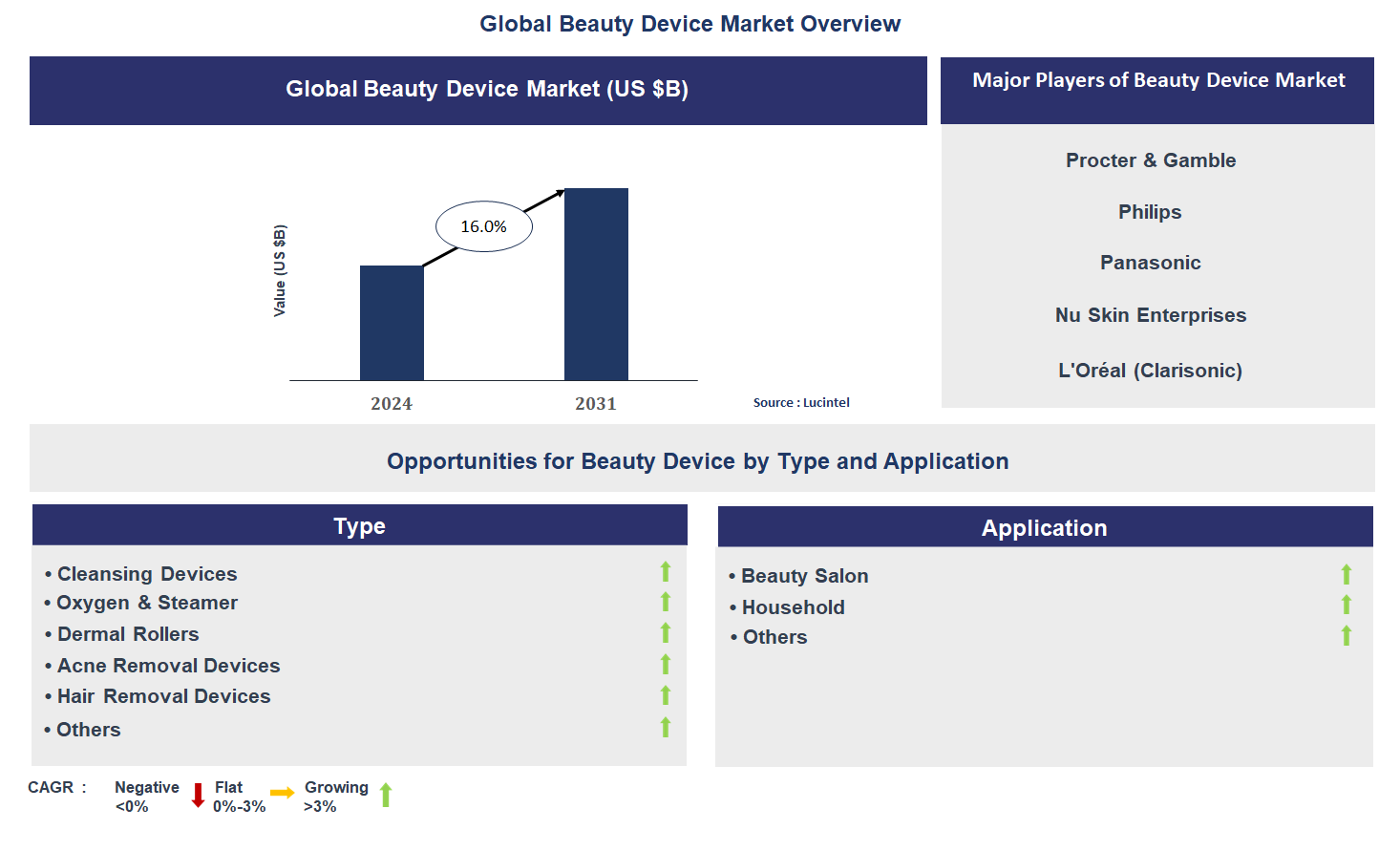
The future of the global beauty device market looks promising with opportunities in the beauty salon and household markets. The global beauty device market is expected to grow with a CAGR of 16% from 2025 to 2031. The major drivers for this market are the increasing popularity of at-home beauty treatments, the rising consumer interest in non-invasive skincare, and the growing advancements in beauty device technology.• Lucintel forecasts that, within the type category, hair removal device is expected to witness the highest growth over the forecast period.
• Within the application category, household is expected to witness higher growth.
• In terms of region, APAC is expected to witness the highest growth over the forecast period. Gain valuable insights for your business decisions with our comprehensive 150+ page report. Sample figures with some insights are shown below.
Emerging Trends in the Beauty Device Market
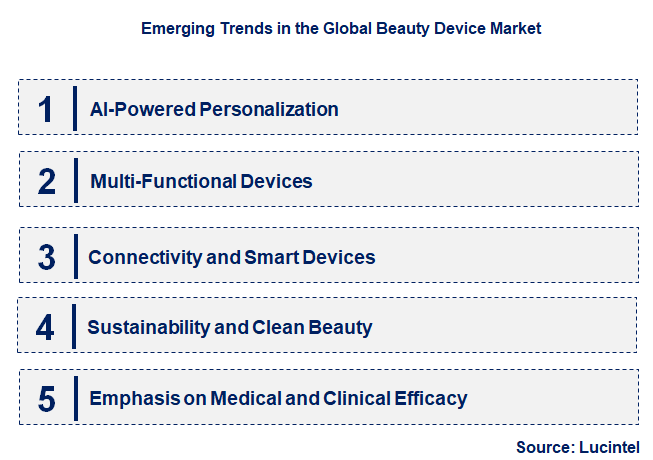
The beauty device market is being reshaped by a confluence of evolving consumer preferences, technological advancements, and a heightened focus on personalization. These trends are moving beyond the basic function of a single-purpose device, transforming the market into a holistic ecosystem of interconnected, data-driven, and multi-functional tools. This shift indicates an industry that is maturing and responding to the diverse needs and values of modern consumers.• AI-Powered Personalization: The integration of artificial intelligence is enabling hyper-personalization. Devices are now equipped with AI-powered skin analysis tools that diagnose individual skin concerns and create customized treatment plans. This trend makes at-home beauty routines more precise and effective, giving consumers a personalized experience that was previously only available in professional settings.
• Multi-Functional Devices: Consumers are increasingly seeking value and convenience. Brands are responding by developing multi-functional devices that combine various technologies, such as LED light therapy, microcurrent, and radiofrequency, into a single tool. This trend simplifies a consumers beauty routine, reduces clutter, and provides a cost-effective alternative to purchasing multiple devices.
• Connectivity and Smart Devices: The rise of smart beauty devices, such as those with app connectivity, is transforming user engagement. These devices allow users to track their progress, receive tailored recommendations, and access educational content. This connectivity creates a seamless, interactive user experience and fosters brand loyalty by making the product an integrated part of a consumer’s daily life.
• Sustainability and Clean Beauty: There is a growing consumer demand for products that are both effective and environmentally conscious. In the beauty device market, this translates to a focus on sustainable materials, recyclable packaging, and long-lasting, durable devices. This trend aligns with the broader clean beauty movement and appeals to a new generation of eco-conscious consumers.
• Emphasis on Medical and Clinical Efficacy: There is an increasing focus on the medical and clinical validation of beauty devices. Brands are conducting clinical trials and partnering with dermatologists to prove the efficacy and safety of their products. This trend builds consumer trust and positions beauty devices as credible, therapeutic tools rather than just cosmetic gadgets. These emerging trends are fundamentally reshaping the beauty device market by shifting the focus from a generic product to a highly personalized and specialized wellness tool. The emphasis on AI, multi-functionality, connectivity, sustainability, and medical benefits reflects a market that is becoming more sophisticated and responsive to the evolving needs of modern consumers, setting a new standard for at-home beauty and self-care.
Recent Development in the Beauty Device Market
The beauty device market has seen rapid evolution, driven by consumer preference for convenient, at-home treatments and a greater focus on personalized solutions. New product categories are expanding, while innovative business models and marketing strategies are reshaping the industry landscape. This shift reflects a move toward more conscious consumption and an increased awareness of the benefits associated with technology as a powerful and versatile tool in personal care.• Proliferation of At-Home Devices: The market has seen a significant increase in the availability of at-home versions of professional-grade devices. Technologies like microcurrent, LED light therapy, and radiofrequency, once limited to clinics, are now accessible for home use. This development has democratized beauty treatments, allowing consumers to achieve salon-like results from the comfort and privacy of their own homes.
• Integration of Smart Technology: A key development is the integration of smart technology into beauty devices. Many new products feature app connectivity, allowing users to track their skins progress, receive personalized treatment plans, and control device settings. This creates a more interactive and data-driven user experience, enhancing both efficacy and consumer engagement with the brand.
• Direct-to-Consumer (D2C) Market Expansion: The proliferation of D2C brands has disrupted traditional retail channels. These brands leverage e-commerce and social media platforms to build strong community ties, offering transparent sourcing and a direct line of communication with customers. This model allows for greater personalization and brand loyalty, bypassing the need for extensive physical retail presence and making products more accessible.
• Focus on Multi-functional Devices: There is a notable shift towards devices that serve multiple purposes. For instance, a single device may combine a cleansing brush with a microcurrent function, or a facial toner with LED light therapy. This development caters to consumers seeking value and convenience, simplifying their beauty routines and offering a single solution for various skin concerns.
• Collaborations with Healthcare Professionals: The market is witnessing a strong trend of brands collaborating with dermatologists and aestheticians. This professional endorsement and clinical validation build consumer trust in a product’s efficacy and safety. This development helps to differentiate premium devices in a crowded market and appeals to consumers who prioritize a products scientific backing over its marketing claims. The recent developments in the beauty device market highlight a shift towards a more sophisticated and consumer-centric industry. The focus on at-home accessibility, smart technology, D2C models, multi-functionality, and professional validation demonstrates a market that is not only growing but also maturing to meet the evolving demands of a modern, values-driven consumer base.
Strategic Growth Opportunities in the Beauty Device Market
The beauty device market presents numerous strategic growth opportunities across key applications, driven by increasing consumer awareness and a shift towards technology-driven solutions. By focusing on specific product segments and innovative marketing, companies can capitalize on rising demand and differentiate themselves. These opportunities are rooted in consumer needs for effective, convenient, and specialized personal care solutions, offering pathways for market expansion and brand loyalty.• Targeting the Male Grooming Segment: The male grooming market is a largely untapped area for beauty devices. Strategic opportunities lie in developing devices for specific male concerns like hair removal, beard care, and anti-aging. By creating and marketing devices that are gender-neutral or specifically designed for men, brands can capture a high-growth demographic with increasing disposable income and a growing interest in self-care.
• Expansion into Hair Care Devices: While a significant portion of the market is focused on skincare, there is a major growth opportunity in hair care devices. Developing products that stimulate hair growth, improve scalp health, or enhance styling with minimal damage can appeal to consumers seeking holistic beauty solutions. This allows for product diversification and a new revenue stream beyond facial care.
• Subscription-Based Models: Implementing a subscription or membership model for device consumables (e.g., replacement heads, gels, serums) and software updates can create a stable, recurring revenue stream. This strategy also fosters long-term customer relationships and brand loyalty. Offering a "device-as-a-service" model can make high-end products more accessible through a lower initial cost.
• Leveraging AI for Personalized Marketing: Strategic growth can be achieved by investing in AI-driven marketing that tailors product recommendations and content to individual consumers. By analyzing data on user behavior and preferences, brands can create highly effective marketing campaigns. This hyper-personalized approach increases customer conversion rates and builds a stronger brand connection.
• Developing Devices for Body Contouring: The body contouring and cellulite reduction segment offers significant growth potential. By creating safe, effective, and non-invasive at-home devices, brands can tap into a market traditionally dominated by expensive, in-clinic treatments. This strategy provides a cost-effective solution for consumers and a new application for existing technologies. Strategic growth in the beauty device market is driven by specialization, multi-functionality, and targeted marketing. By developing products for specific needs, extending use into underserved segments like male grooming and hair care, and leveraging digital channels, brands can differentiate themselves. These opportunities are vital for long-term success, positioning companies as key players in the global wellness industry.
Beauty Device Market Driver and Challenges
The beauty device markets evolution is shaped by a complex interplay of major drivers and challenges, including various technological, economic, and regulatory factors. These dynamics influence product innovation, consumer purchasing behavior, and market accessibility. Understanding these forces is crucial for both manufacturers and retailers to effectively navigate the industry landscape and sustain growth. The factors responsible for driving the beauty device market include: 1. Growing Desire for At-Home Solutions: The increasing consumer desire for convenience and privacy has fueled the demand for at-home beauty devices. These products offer a cost-effective and time-saving alternative to frequent salon and clinic visits. This shift in consumer behavior is a powerful driver, encouraging brands to develop user-friendly and effective devices for a wide range of treatments. 2. Technological Advancements and Innovation: Continuous innovation in technologies like microcurrent, LED light therapy, and radiofrequency is a major driver of market growth. The miniaturization of these technologies into safe, effective, and compact devices has made professional-grade treatments accessible to the average consumer. This constant evolution keeps the market dynamic and encourages repeat purchases. 3. Social Media and Influencer Marketing: The rise of social media platforms and beauty influencers has played a crucial role in market expansion. Influencers showcase the devices benefits and provide tutorials, building trust and creating demand among their followers. This digital-first marketing approach allows brands to reach a broad, targeted audience and generate viral interest. 4. Rising Disposable Incomes: In many developing and emerging economies, rising disposable incomes are enabling consumers to spend more on personal care products. As these devices are often considered a luxury item, this economic factor directly contributes to the expansion of the market, creating new consumer bases and driving sales. 5. Increased Focus on Skincare and Wellness: The global shift towards a more proactive approach to skincare and overall wellness is a key driver. Consumers are becoming more knowledgeable about their skins needs and are willing to invest in devices that provide long-term benefits, such as anti-aging, hydration, and acne prevention, positioning the products as an essential part of a healthy lifestyle. Challenges in the beauty device market are: 1. High Cost of Devices: The high initial investment cost of many advanced beauty devices remains a significant challenge. This can be a barrier to entry for price-sensitive consumers, particularly in developing markets, limiting the widespread adoption of the products and affecting a brands ability to compete with more affordable, traditional beauty products. 2. Intense Competition and Market Saturation: The market has become crowded with numerous new entrants, leading to intense competition. This saturation makes it challenging for brands to differentiate themselves and gain a foothold. Without a clear value proposition, companies may face price wars and a struggle to build customer loyalty, affecting profitability. 3. Regulatory and Safety Concerns: The lack of standardized regulations for at-home beauty devices in some regions poses a significant challenge. Concerns about safety, potential side effects, and exaggerated claims can erode consumer trust. Brands must invest in clinical trials and transparent communication to address these issues and comply with evolving regulatory frameworks. The beauty device market is propelled by a strong consumer desire for at-home solutions and is empowered by technological innovation and digital marketing. However, it faces notable challenges, including the high cost of products, intense market competition, and regulatory hurdles. Navigating this landscape requires a strategic approach that addresses these challenges while capitalizing on the prevailing drivers, ultimately shaping the industrys future trajectory.List of Beauty Device Companies
Companies in the market compete on the basis of product quality offered. Major players in this market focus on expanding their manufacturing facilities, R&D investments, infrastructural development, and leverage integration opportunities across the value chain. With these strategies beauty device companies cater increasing demand, ensure competitive effectiveness, develop innovative products & technologies, reduce production costs, and expand their customer base. Some of the beauty device companies profiled in this report include-• Procter & Gamble
• Philips
• Panasonic
• Nu Skin Enterprises
• LOréal (Clarisonic)
• Conair
• MTG
• Hitachi
• Remington
• YA-MAN
Beauty Device Market by Segment
The study includes a forecast for the global beauty device market by type, application, and region.Beauty Device Market by Type [Value from 2019 to 2031]:
• Cleansing Devices
• Oxygen & Steamer
• Dermal Rollers
• Acne Removal Devices
• Hair Removal Devices
• Others
Beauty Device Market by Application [Value from 2019 to 2031]:
• Beauty Salon
• Household
• Others
Beauty Device Market by Region [Value from 2019 to 2031]:
• North America
• Europe
• Asia Pacific
• The Rest of the World
Country Wise Outlook for the Beauty Device Market
The global beauty device market is undergoing a significant transformation, driven by a convergence of technological innovation, changing consumer habits, and a heightened focus on at-home wellness. As consumers seek professional-grade results from the comfort of their homes, the industry is responding with a wave of smart, personalized, and multi-functional devices. This has created a dynamic landscape where digital integration, sustainability, and clinical validation are becoming key differentiators.• United States: The U.S. market is characterized by a high demand for advanced, tech-enabled devices, with a particular emphasis on anti-aging and hair removal. Recent developments include the rise of smart mirrors and AI-powered skin analysis tools that provide personalized product recommendations. Social media influencers and e-commerce platforms are key in driving consumer awareness and purchase decisions.
• China: China’s market is rapidly expanding, with a strong consumer appetite for "light medical beauty" that offers subtle, non-invasive improvements. Recent developments include the growth of domestic brands offering comparable efficacy at lower prices. Stricter regulations on devices like radiofrequency tools are professionalizing the market and eliminating unqualified players, fostering a shift toward product innovation and scientific validation.
• Germany: The German market is a key player in Europe, with a strong demand for high-quality, scientifically backed devices. Recent developments include the increased adoption of LED light therapy devices for various skin conditions. The market is also seeing a rise in at-home hair removal and body contouring devices, reflecting a trend towards convenient and non-invasive treatments.
• India: The Indian beauty device market is experiencing a significant boom, fueled by rising disposable incomes and a growing interest in at-home grooming. Recent developments include a surge in demand for multi-functional devices that offer cost-effective and convenient solutions. The expanding e-commerce landscape is a major driver, making international and local brands accessible to a broader consumer base.
• Japan: The Japanese market is defined by a demand for compact, ergonomic, and high-performance devices. Recent developments include a strong focus on devices that address anti-aging concerns, with new product launches often featuring advanced, biomimetic ingredients. There is also a notable trend toward multi-purpose devices that can be used for both skincare and body care, appealing to a consumer base that values efficiency and minimalism.

Features of the Global Beauty Device Market
Market Size Estimates: Beauty device market size estimation in terms of value ($B). Trend and Forecast Analysis: Market trends (2019 to 2024) and forecast (2025 to 2031) by various segments and regions. Segmentation Analysis: Beauty device market size by type, application, and region in terms of value ($B). Regional Analysis: Beauty device market breakdown by North America, Europe, Asia Pacific, and Rest of the World. Growth Opportunities: Analysis of growth opportunities in different types, applications, and regions for the beauty device market. Strategic Analysis: This includes M&A, new product development, and competitive landscape of the beauty device market. Analysis of competitive intensity of the industry based on Porter’s Five Forces model.
FAQ
Q1. What is the growth forecast for beauty device market? Answer: The global beauty device market is expected to grow with a CAGR of 16% from 2025 to 2031. Q2. What are the major drivers influencing the growth of the beauty device market? Answer: The major drivers for this market are the increasing popularity of at-home beauty treatments, the rising consumer interest in non-invasive skincare, and the growing advancements in beauty device technology. Q3. What are the major segments for beauty device market? Answer: The future of the beauty device market looks promising with opportunities in the beauty salon and household markets. Q4. Who are the key beauty device market companies? Answer: Some of the key beauty device companies are as follows:• Procter & Gamble
• Philips
• Panasonic
• Nu Skin Enterprises
• LOréal (Clarisonic)
• Conair
• MTG
• Hitachi
• Remington
• YA-MAN Q5. Which beauty device market segment will be the largest in future? Answer: Lucintel forecasts that, within the type category, hair removal device is expected to witness the highest growth over the forecast period. Q6. In beauty device market, which region is expected to be the largest in next 5 years? Answer: In terms of region, APAC is expected to witness the highest growth over the forecast period. Q7. Do we receive customization in this report? Answer: Yes, Lucintel provides 10% customization without any additional cost.
Table of Contents
List of Figures
List of Tables
Methodology
- In-depth interviews of the major players in this market
- Detailed secondary research from competitors’ financial statements and published data
- Extensive searches of published works, market, and database information pertaining to industry news, company press releases, and customer intentions
- A compilation of the experiences, judgments, and insights of Lucintel’s professionals, who have analyzed and tracked this market over the years.


Buy Now
Choose a license that fits your team. Instant PDF delivery.
Prices exclude taxes. Instant delivery. Custom licensing available on request.
Key Questions
- • What are some of the most promising, high-growth opportunities for the beauty device market by type (cleansing devices, oxygen & steamer, dermal rollers, acne removal devices, hair removal devices, and others), application (beauty salon, household, and others), and region (North America, Europe, Asia Pacific, and the Rest of the World)?
- • Which segments will grow at a faster pace and why?
- • Which region will grow at a faster pace and why?
- • What are the key factors affecting market dynamics? What are the key challenges and business risks in this market?
- • What are the business risks and competitive threats in this market?
- • What are the emerging trends in this market and the reasons behind them?
- • What are some of the changing demands of customers in the market?
- • What are the new developments in the market? Which companies are leading these developments?
- • Who are the major players in this market? What strategic initiatives are key players pursuing for business growth?
- • What are some of the competing products in this market and how big of a threat do they pose for loss of market share by material or product substitution?
- • What M&A activity has occurred in the last 5 years and what has its impact been on the industry? For any questions related to Beauty Device Market, Beauty Device Market Size, Beauty Device Market Growth, Beauty Device Market Analysis, Beauty Device Market Report, Beauty Device Market Share, Beauty Device Market Trends, Beauty Device Market Forecast, Beauty Device Companies, write Lucintel analyst at email: helpdesk@lucintel.com. We will be glad to get back to you soon.


